This Week in AI | Week 19

Neha
Last updated on June 30, 2026

This week, we have seen some major updates in artificial intelligence. New developments include a better way to create videos, a powerful new AI model, and a new company focused on making AI safe.
These changes show us how fast AI is growing and how it is being used in more ways every day. Let us take a closer look at these updates.
Runway has released the Gen-3 Alpha, its newest and most advanced product. This is a big step forward in AI video generation technology, introducing significant improvements in visual quality, motion consistency, and prompt accuracy. While Runway excels at generating AI videos, many creators use tools like Adobe Express to edit, customize, and publish their projects. If you’re looking for an easy way to create videos, Adobe Express offers templates, AI-powered editing features, and a beginner-friendly workflow that complements AI-generated content.
This is the first of a new series of models built on cutting-edge infrastructure for large-scale multimodal training.
It shows improvements in fidelity, consistency, and motion, pushing the boundaries towards building general world models
Artifact feature preview
Anthropic has launched Claude 3.5 Sonnet, a new AI model that sets industry standards. This model excels in graduate-level reasoning, undergraduate knowledge, and coding proficiency, showcasing significant enhancements in handling complex tasks and producing content with a natural tone.

The founder of Safe Superintelligence (SSI), Ilya Sutskever, was formerly the top scientist at OpenAI. The company’s sole goal is to create artificial intelligence (AI) technologies that are more advanced than human intelligence while maintaining ethical and safety norms. This project shows his ongoing dedication to properly advance AI technology, which follows his departure from OpenAI.
That’s all for this week in AI! These advancements show us how quickly AI technology progresses and how it impacts various aspects of our lives, from creating videos to the tools we use for work or fun. Each week brings something new, and it’s exciting to think about what we might see next. See you next week for more AI news!

TL;DR Claude Fable 5 launched on June 9, 2026, was pulled offline three days later under a US export control order, and returned on July 1 after the order was lifted. For support teams, Fable 5 is best suited for long-horizon tickets across billing, CRM, shipping, and documents not basic FAQ deflection. Its biggest support […]


At YourGPT, we’ve always believed businesses need one platform for customer support, sales, and engagement. These are not separate parts of the customer journey. They shape how businesses communicate, build relationships, and move conversations forward. That belief continues to guide how we evolve YourGPT, building toward a more connected way for teams to manage communication, […]
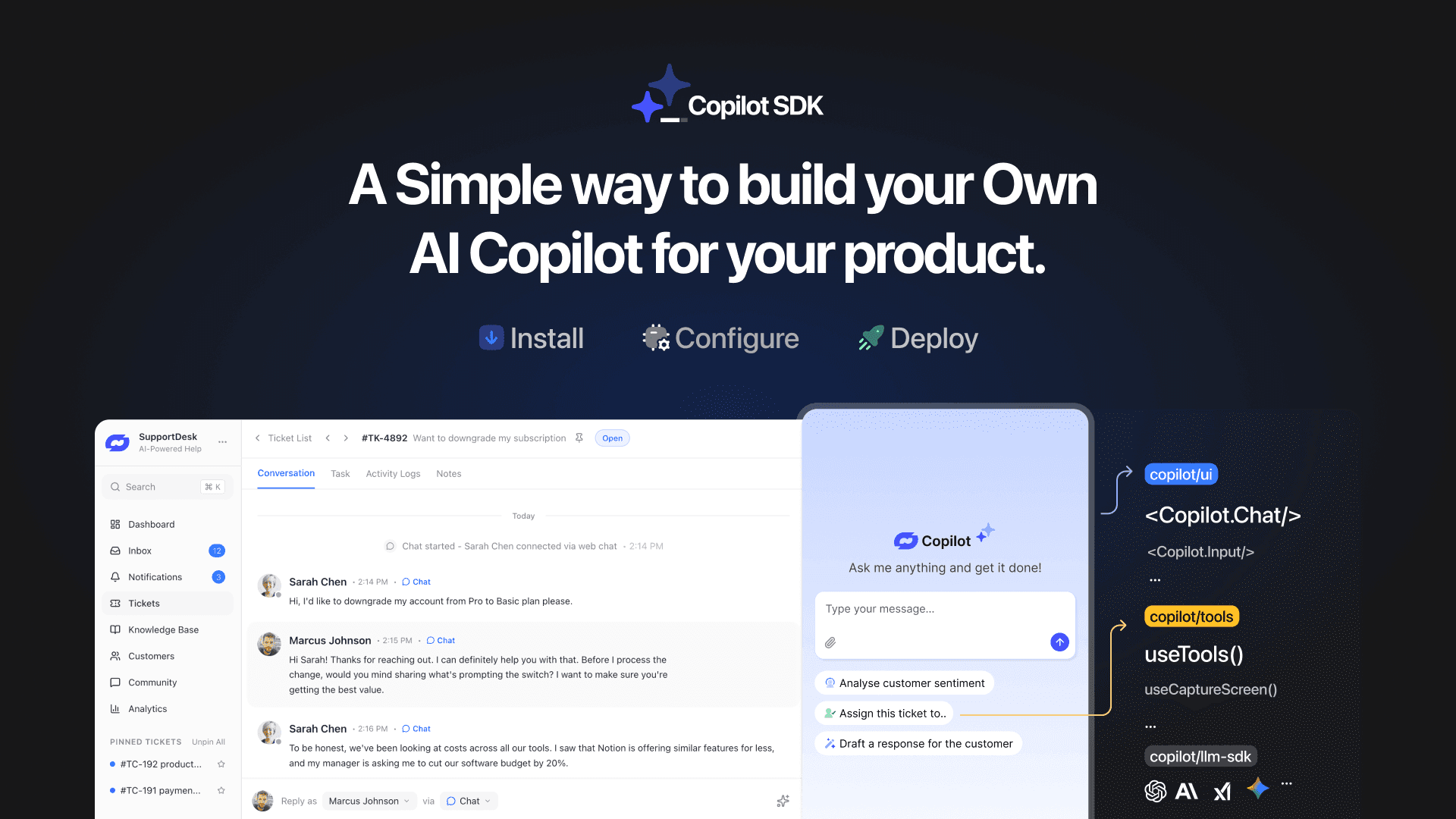
TL;DR YourGPT Copilot SDK is an open-source SDK for building AI agents that understand your application state, user context, and what is happening inside your product. Instead of working like isolated chat widgets, these agents connect directly with your product and can take real actions within existing workflows. This helps teams build contextual AI experiences […]

Happy New Year! We hope 2026 brings you closer to everything you’re working toward. Throughout 2025, you’ve seen the platform evolve. We shipped the AI Copilot Builder so your AI could execute actions on both frontend and backend, not just answer questions. We added AI assistance inside Studio to help you generate workflows without starting […]
Grok 4 is xAI’s most advanced large language model, representing a step change from Grok 3. With a 130K+ context window, built-in coding support, and multimodal capabilities, Grok 4 is designed for users who demand both reasoning and performance. If you’re wondering what Grok 4 offers, how it differs from previous versions, and how you […]
OpenAI officially launched GPT-5 on August 7, 2025 during a livestream event, marking one of the most significant AI releases since GPT-4. This unified system combines advanced reasoning capabilities with multimodal processing and introduces a companion family of open-weight models called GPT-OSS. If you are evaluating GPT-5 for your business, comparing it to GPT-4.1, or […]