The Future of Custom GPT: Introducing GPTs by OpenAI

Neha
Last updated on November 10, 2023

Artificial intelligence and machine learning are important in todays world. Customization is essential for making AI models operate successfully for a variety of users. OpenAI opens the road for personalised AI. GPTs (Generative Pre-trained Transformers) are a new feature that allows users to create their own versions of ChatGPT to meet their specific needs. In this blog post, we will look at GPTs and how they may be really useful in several aspects of our lives.
GPTs, or Generative Pre-trained Transformers, are the latest evolution of AI models developed by OpenAI. They are designed to let users create customized versions of ChatGPT, enabling a more personalized and efficient experience. Whether you want to learn the rules of a board game, teach your children math, or design stickers, GPTs can be tailored to suit your needs without requiring any coding skills.
OpenAI has put the power of AI customization into the hands of the people. No longer do you need to be a coding expert to create your own GPT. You can build GPTs for personal use, within your company, or even share them with the world. The process is as simple as starting a conversation, giving instructions and extra knowledge, and selecting the functions you want your GPT to perform.
OpenAI has made it even easier to get started with GPTs by providing example GPTs that ChatGPT Plus and Enterprise users can try out. These examples include Canva and Zapier AI Actions. OpenAI also plans to make GPTs accessible to more users in the future, further expanding the capabilities of this revolutionary technology.
Soon, OpenAI will launch the GPT Store, where users can publicly share their GPT creations. Verified builders will populate the store with a variety of GPTs, making them searchable and allowing them to climb leaderboards. This initiative is designed to spotlight the most useful and delightful GPTs in categories such as productivity, education, and “just for fun.” In the future, you will also have the opportunity to earn money based on the popularity of your GPT.
OpenAI takes privacy and safety seriously. Your chats with GPTs remain private and are not shared with builders. If a GPT uses third-party APIs, you have control over whether your data is sent to those APIs. Additionally, builders can choose whether user chats with their GPTs can be used for model training, giving you control over how your data is utilized.
OpenAI has implemented systems to review GPTs against their usage policies to prevent harmful content, including fraudulent activity, hateful content, or adult themes. Builders can also verify their identity, enhancing user trust. If you have concerns about a specific GPT, you can use the reporting feature on the GPT shared page to notify OpenAI’s team.
The Future of GPTs
OpenAI envisions a future where GPTs can take on real-world tasks and be considered as “agents” in the field of AI. This incremental progression will require careful technical and safety work, as well as time for society to adapt. OpenAI is actively exploring the societal implications and plans to share more analysis in the future.
Developers and Custom Actions
Developers can extend GPTs’ capabilities by defining custom actions that integrate external data or enable interactions with the real world. This flexibility allows for a wide range of applications, such as connecting GPTs to databases, email inboxes, or e-commerce platforms.
Enterprise customers can take advantage of GPTs to create internal-only versions of ChatGPT tailored to their business needs. This customization can enhance marketing materials, support staff, or assist with onboarding processes. OpenAI ensures that all usage within ChatGPT Enterprise is secure and private.
The introduction of GPTs by OpenAI is a major change in the field of AI customization. GPTs have the potential to change how we interact with technology in our daily lives due to their ability to construct personalised AI models that respond to specific demands. This developer day release opens up a whole new universe of possibilities, ranging from education and productivity to entertainment and beyond. As OpenAI advances the capabilities of GPTs, we may expect a future in which AI is more accessible, safer, and adaptive to our unique requirements.
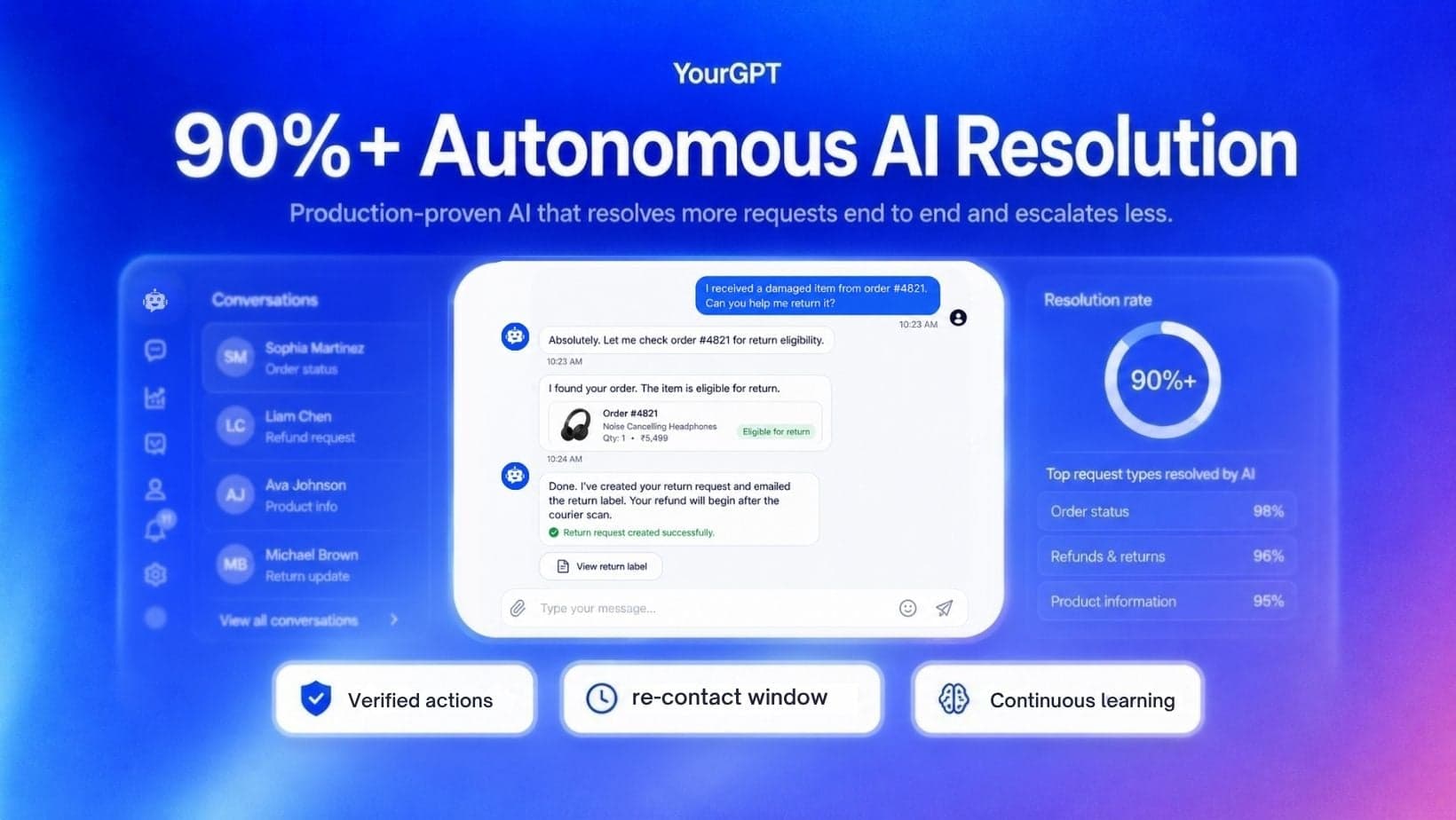
YourGPT has progressed from production deployments reaching around 80% AI resolution to 90%+ on eligible repeated requests in maintained deployments. Here is what changed, how we measure resolution, and how we apply that work with organizations that want to raise their own rates.


TL;DR Claude Fable 5 launched on June 9, 2026, was pulled offline three days later under a US export control order, and returned on July 1 after the order was lifted. For support teams, Fable 5 is best suited for long-horizon tickets across billing, CRM, shipping, and documents not basic FAQ deflection. Its biggest support […]

At YourGPT, we’ve always believed businesses need one platform for customer support, sales, and engagement. These are not separate parts of the customer journey. They shape how businesses communicate, build relationships, and move conversations forward. That belief continues to guide how we evolve YourGPT, building toward a more connected way for teams to manage communication, […]
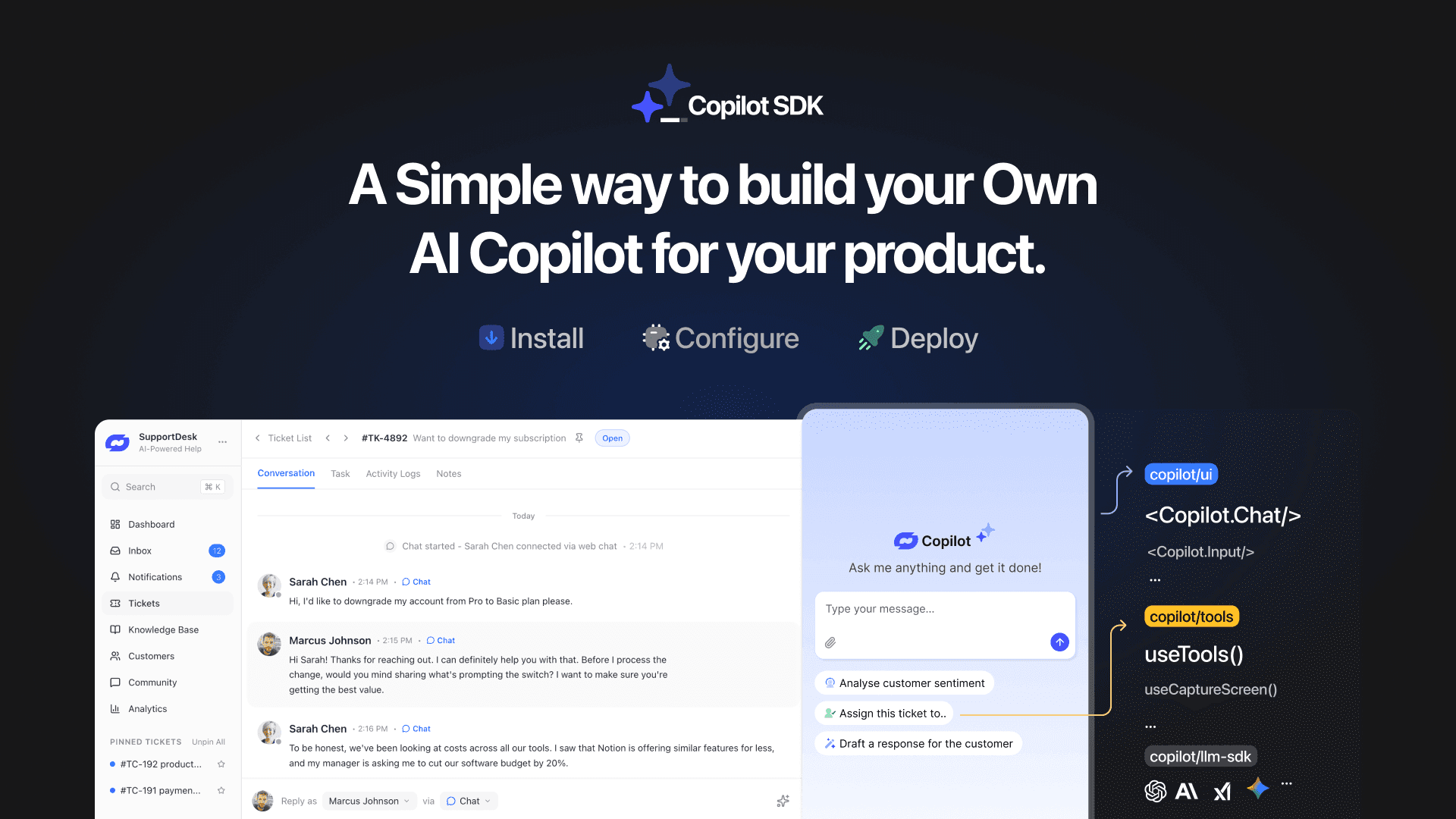
TL;DR YourGPT Copilot SDK is an open-source SDK for building AI agents that understand your application state, user context, and what is happening inside your product. Instead of working like isolated chat widgets, these agents connect directly with your product and can take real actions within existing workflows. This helps teams build contextual AI experiences […]

Happy New Year! We hope 2026 brings you closer to everything you’re working toward. Throughout 2025, you’ve seen the platform evolve. We shipped the AI Copilot Builder so your AI could execute actions on both frontend and backend, not just answer questions. We added AI assistance inside Studio to help you generate workflows without starting […]
Grok 4 is xAI’s most advanced large language model, representing a step change from Grok 3. With a 130K+ context window, built-in coding support, and multimodal capabilities, Grok 4 is designed for users who demand both reasoning and performance. If you’re wondering what Grok 4 offers, how it differs from previous versions, and how you […]