7 Ways AI Chatbots in Banking Can Improve Customer Engagement

Rajni
Last updated on February 5, 2026

Chatbots in banking are transforming customer service and operational efficiency. With advancing technology, chatbots are becoming essential for banks looking to enhance their services. 46% of financial institutions using artificial intelligence have reported improved customer experience and a study suggest, 75% of financial institutions are expected to implement AI-driven chatbots by the end of the year to improve customer interactions.
These chatbots bring several advantages, such as increased customer satisfaction and lower operational costs. In this blog, we will discuss seven ways chatbots are reshaping customer engagement in the banking sector.
A banking AI chatbot is a assistant that uses artificial intelligence and is intended to replicate human-like conversations. It uses Large Language Models advanced natural language processing to help customers with banking related queries.
It offer quick responses, efficiently manages routine banking operations and customer support, and is accessible around the clock. A survey reveals that 68% of consumers prefer using AI chatbots for routine inquiries because they are fast and available around the clock. This trend shows that financial institutions are increasingly using these digital assistants to improve service quality and streamline their operations.

AI Chatbots are now becoming essential in modern banking, transforming how financial institutions interact with their customers. AI chatbot provide quick responses and are available 24/7, which significantly improves customer service. Accenture study found that personalised chatbot interactions can boost customer retention by 25%, showing just how effective they are at creating positive customer experiences.
AI chatbots have transformative benefits for customer service.
Chatbots do more than just enhance customer service—they also improve operational efficiency. According to Deloitte, 40% of institutions experienced a 20% boost in customer satisfaction after adopting chatbots. By handling routine tasks automatically, chatbots reduce wait times and offer more personalised support. This not only makes customers happier but also helps banks operate more efficiently.
Data shows a clear shift towards chatbots for handling customer interactions. As mentioned earlier, 68% of consumers prefer chatbots because of their self-service, speed and convenience. This growing preference underscores the increasing importance of chatbots in today’s banking services. Integrating custom ChatGPT chatbot technology into banking services can enhance customer satisfaction and improve the day-to-day banking experience, offering customers efficient, personalized financial services.

Chatbots impact various aspects of banking, enhancing customer engagement in several ways:
AI Chatbots simplify processes such as loan applications and personal finance management. They offer quick, tailored guidance, which makes banking more efficient and easier to use.
| Customer Service Feature | Benefits |
|---|---|
| Loan Application Process | Faster application process |
| Custom Financial Advice | Personalized recommendations |
| Real-time Account Management | 24/7 accessibility |
Chatbots help address customer requests and improve customer service. They provide real-time answers and can learn from interactions to enhance their responses over time.
Chatbots can gather customer feedback, which financial institutions can use to enhance their services. Additionally, analyzing this feedback helps improve the chatbot’s responses and functionality. By leveraging this data, chatbots can better address customer needs and improve their performance, potentially leading to higher customer satisfaction.
Chatbots analyze individual behaviors to offer highly personalized services, such as recommending credit cards based on spending habits and financial goals.
| Chatbot Feature | Personalization Aspect |
|---|---|
| Spending Pattern Analysis | Tailored credit card offers |
| Behavioral Adaptation | Context-aware service suggestions |
Chatbots enhance marketing efforts by analyzing customer data to deliver personalized offers. They ensure compliance with regulations and improve customer engagement through tailored recommendations.
Chatbots proactively initiate conversations to provide timely advice or reminders about important tasks. This approach helps keep customers informed and engaged with their banking needs.
Chatbots handle repetitive tasks, allowing staff to focus on more complex activities. This improves productivity and ensures that human agents can concentrate on high-value tasks.
Chatbots offer numerous advantages for the banking sector, including cost savings and improved service quality:
Chatbots reduce operational costs by handling inquiries and transactions around the clock. According to a report by PwC, institutions can save up to 30% in operational costs by implementing chatbots. This cost reduction allows banks to allocate resources more effectively and enhance service quality.
Chatbots contribute to efficient banking operations by providing timely financial information. They assist in processing transactions and help prevent operational inefficiencies.
Chatbots engage customers through their preferred communication channels, enhancing interaction and building trust.
Chatbots streamline banking operations, reducing the need for outsourcing and improving cost management.
| Operational Aspect | Efficiency Improvement |
|---|---|
| Customer Service | Faster response times |
| Payment Processing | Automated transactions |
| Development Focus | More resources for innovation |
| Cost Management | Reduced outsourcing costs |
Chatbots enhance lead generation by analyzing customer data and ensuring regulatory compliance. They identify potential clients and offer personalized financial solutions.
Chatbots improve data accuracy and minimize errors through rigorous data handling and anomaly detection.
Chatbots offer multilingual support, breaking down language barriers and ensuring global customer engagement.
Suggested Reading
A banking AI chatbot is a digital assistant that uses artificial intelligence to manage customer inquiries and perform routine banking operations efficiently. These chatbots provide quick responses and are available 24/7, enhancing overall customer service.
AI chatbots improve customer engagement by offering:
The benefits of AI chatbots in banking include:
AI chatbots boost operational efficiency by:
AI chatbots positively impact customer service by:
Chatbots in banking are transforming the financial services sector by enhancing customer engagement and operational efficiency. With their ability to provide real-time, personalized assistance and handle various tasks, chatbots are becoming indispensable tools for modern banks. As technology continues to advance, chatbots will play an increasingly vital role in shaping the future of customer service in banking.
By integrating AI into their operations, banks are not only improving customer experiences but also positioning themselves at the forefront of digital innovation in the financial industry.
TL;DR AI is now part of most SEO workflows, but the real advantage comes from using it within a disciplined process rather than simply producing content faster. As Google AI Overviews and tools like ChatGPT answer more queries directly, content must be structured to earn both traditional search rankings and citations from AI assistants. AI […]

TL;DR Restaurant AI agents help reduce staffing pressure by handling reservations, food orders, and customer inquiries around the clock without increasing headcount. Unlike basic chatbots, they integrate with booking systems, POS platforms, and messaging channels to automate reservations, order processing, and routine customer support. The biggest benefits include automated reservation management, order intake across phone, […]
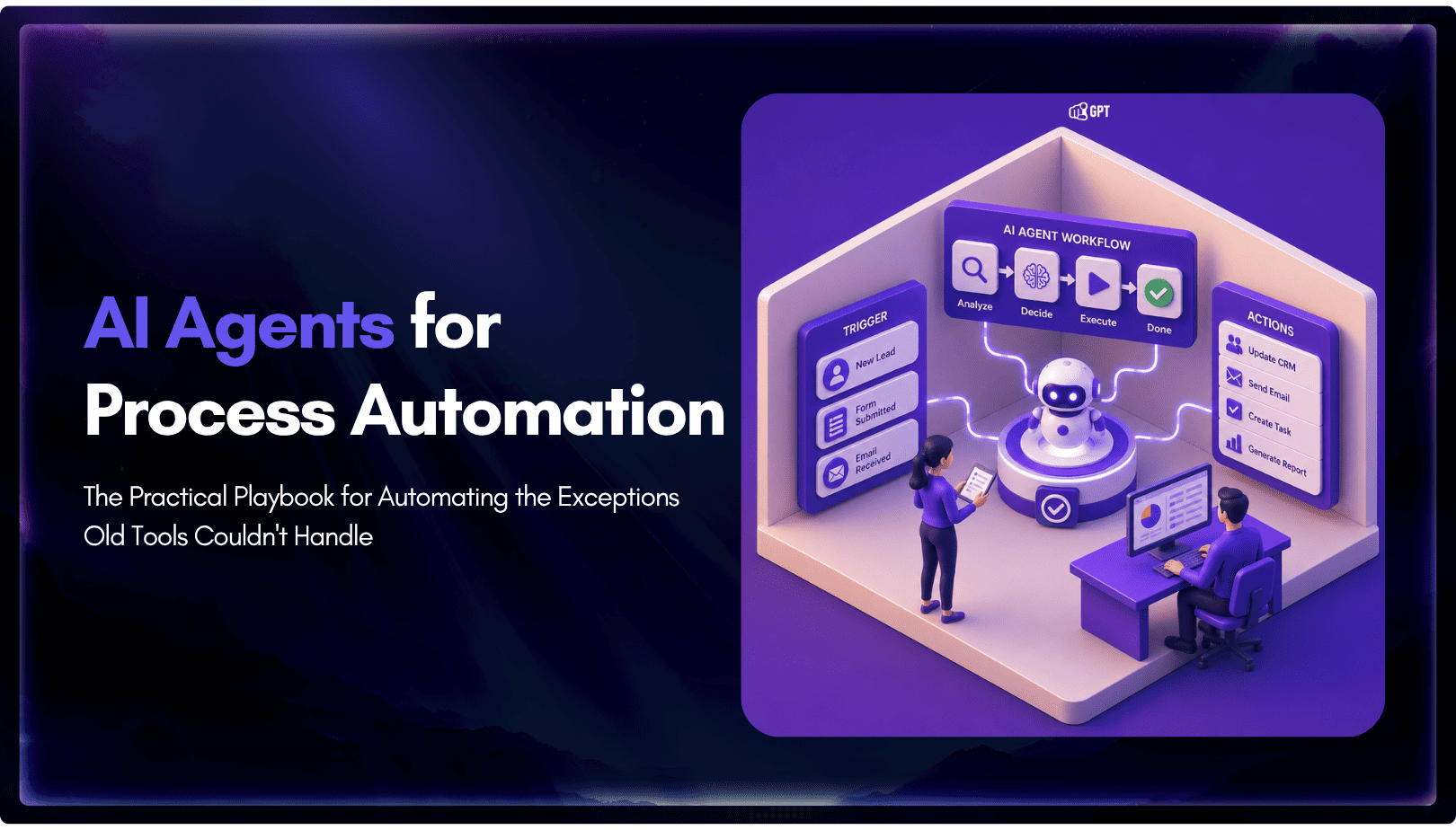
TL;DR Business process automation with AI agents lets software plan multi-step work, call tools, and handle exceptions instead of following fixed scripts like traditional RPA. AI agents can adapt when a process changes, but that flexibility also requires clear permission boundaries, reliable data, and human oversight for consequential actions. Start with one repetitive process, document […]
TL;DR AI web scraping replaces hardcoded selectors with an agent that reads a page, decides what matters, and returns structured output, even after the layout changes. Script-based scraping is being layered with agent-based extraction. Scripts still fetch the page. The model decides what to keep. A fetch layer renders the page, a conversion step strips […]
TL;DR The Shift: Support bots used to answer questions. In 2026, AI agents resolve them by reading live order and carrier data, then taking direct action. They can issue refunds, update addresses, and close WISMO tickets without human involvement. The Stakes: WISMO and refund requests already account for a large share of a typical support […]
TL;DR A customer experience strategy is a documented plan for how people, process, and technology work together across every customer touchpoint, not just a support-team initiative. Strong CX optimization can drive 5 to 10 percent revenue growth and reduce costs by 15 to 25 percent within two to three years, making it an executive-level priority. […]