7 AI Chatbot Advantages and 4 Problems They Solve for a Better 2026

Rajni
Last updated on September 21, 2026
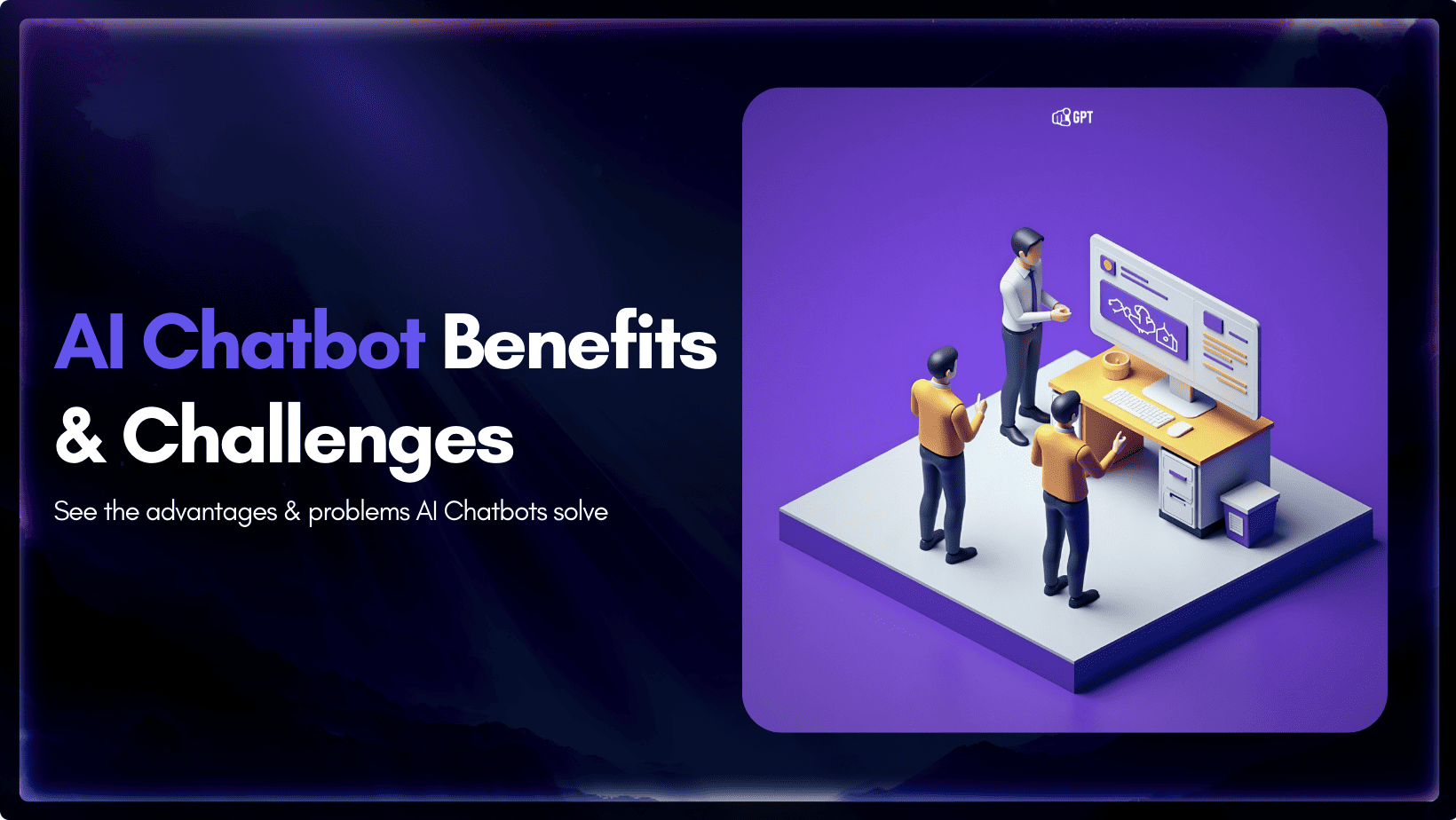
AI chatbots deliver seven practical benefits, including 24/7 availability, lower support costs, faster response times, instant scalability, and personalized omnichannel support.
These advantages help businesses improve customer satisfaction while allowing support teams to handle more conversations without adding proportional headcount.
AI chatbots also address four major support challenges: long wait times, repetitive queries, peak traffic overload, and rising customer service costs.
Customer expectations for support have shifted. People want fast, accurate answers on their terms, whether that’s at 2pm or 2am, and businesses that can’t deliver that fall behind fast.
AI chatbots close that gap. They handle everything from simple order questions to more complex troubleshooting, cut response times, and free up support teams without adding headcount. According to IBM, businesses using AI chatbots can reduce customer service costs by up to 30% by automating routine, repetitive queries.
This blog breaks down the seven advantages driving that shift and the four recurring support challenges chatbots solve, so you can see exactly where they fit into your customer service strategy heading into 2026.
Each of these solves a specific, measurable problem rather than being a vague feature checkbox. Here’s what actually changes when a chatbot is running well.
1. 24/7 Availability : AI chatbots provide continuous support, giving customers instant assistance at any hour. This eliminates long wait times and keeps satisfaction high even outside business hours, when a support team would otherwise be offline. This matters most for businesses with customers across time zones or anyone browsing late at night, since a question left unanswered until morning is often a sale or a support ticket lost in the meantime.
2. Reduced Operational Costs : By automating repetitive tasks, chatbots reduce the need for additional support hires. This makes them a cost-effective way to handle rising ticket volume without proportionally scaling headcount. As covered earlier, this is where the widely cited 30% cost reduction comes from: the savings scale with how many routine queries the bot can resolve without a human touching them, so a well-trained bot on a narrow set of FAQs pays for itself faster than one thrown at open-ended support.
3. Personalized Interactions : Chatbots tailor responses based on a customer’s previous interactions, order history, or stated preferences. That context makes the experience feel less like a script and more like the business actually remembers them. A returning customer asking about a delivery doesn’t have to repeat their order number if the bot already has it, which shortens the interaction and avoids the most common source of chatbot frustration: starting from zero every time.
4. Scalable Support : Chatbots handle multiple conversations at once, so service quality doesn’t drop during peak periods the way it would with a fixed-size human team. A product launch or holiday sale that spikes inquiries tenfold doesn’t require hiring or training temporary staff. The bot absorbs the volume, and human agents stay available for the harder cases instead of getting buried in simple ones.
5. Quick Resolutions for Routine Issues : Chatbots resolve common queries, like order tracking, return policies, or account questions, in seconds. That frees human agents to focus on the complex or sensitive cases that actually need a person. This is usually where the fastest, most visible win shows up after launch: the queries that used to sit in a ticket queue for hours get answered instantly instead.
6. Omnichannel Integration : Chatbots connect across websites, social media, and messaging apps, so customers get the same quality of support no matter where they reach out. A customer who starts a conversation on the website and follows up on WhatsApp doesn’t have to re-explain their issue if the context carries over, which matters more as customers increasingly expect to reach a business wherever they already are.
7. Increased Customer Engagement : Beyond answering questions, chatbots can proactively engage users with recommendations, quizzes, or guided flows, turning a support tool into a small driver of loyalty and repeat interaction. A chatbot that suggests a related product after resolving a return, or checks in after a purchase, shifts the tool from purely reactive to something that adds value even when nothing’s gone wrong.
AI chatbots help businesses handle common operational hurdles by automating responses, improving customer support, and reducing manual workload. Here are four key challenges they solve to improve efficiency, speed, and customer experience.
Waiting for support can frustrate customers and damage brand loyalty.
AI chatbots solve this issue by providing instant, 24/7 responses. They handle both basic questions and complex requests, ensuring timely assistance.
This approach enhances customer satisfaction and builds trust in the brand.
Repetitive questions, like “What’s the refund policy?” or “How do I track my order?” consume valuable time for human agents.
AI chatbots efficiently manage these queries, freeing human agents to focus on complex and high-value tasks.
This not only improves operational efficiency but also enables personalized customer interactions when needed.
Seasonal sales, product launches, and other high-traffic events can overwhelm support teams. This often leads to delays and customer dissatisfaction.
AI chatbots handle multiple inquiries at once without any fatigue, ensuring prompt support for every customer.
They serve as the first point of contact, maintaining consistent service quality even during busy periods.
Maintaining large customer service teams is expensive, especially for small businesses and startups.
AI chatbots offer a cost-effective solution by automating up to 80% of routine interactions.
Businesses save significantly while ensuring consistent, high-quality support. This scalability is particularly beneficial for growth-focused organizations.
AI chatbots help businesses solve key problems like slow response times, repetitive questions, and high support costs. They make customer service faster, simpler, and more efficient, making them a must-have for businesses today.
AI chatbots do more than solving routine problems. They help businesses understand customers better and help in improving products and services.
By providing fast and reliable support, they make customer service better and help businesses grow.
AI chatbots are revolutionizing various industries by addressing specific challenges and improving customer experiences. Here are some of the key sectors benefiting from chatbots:
By integrating AI chatbots into their customer service strategy, businesses across industries can streamline operations, enhance customer satisfaction, and maintain a competitive edge in 2025.
Successfully integrating an AI chatbot into your business requires thoughtful planning and execution. To maximize its value, follow these key steps:
Defining your chatbot’s purpose is essential for its success. Whether you aim to enhance customer service, boost sales, or capture leads, clear goals ensure the chatbot’s functionality aligns with your business objectives. For example:
Aligning the chatbot’s role with your business goals increases the likelihood of achieving meaningful results, making it a crucial part of YourGPT and other AI support chatbot solutions.
Select an AI chatbot platform that meets your needs. Look for ease of integration, scalability, and features like multilingual support, lead generation, and advanced analytics.
Evaluate platforms based on technical requirements, ease of use, and their ability to address your business’s unique challenges.
Once your AI chatbot is live, continuous monitoring and refinement are vital to its success. Key steps include:
By continuously improving your AI chatbot solution, you ensure it remains relevant and provides optimal service to customers.
AI chatbots handle routine tasks, while humans manage complex issues. Ensure smooth handoffs. This hybrid approach offers key benefits:
This combination of AI chat support and human intervention ensures efficient and personalized service, contributing to a positive customer experience and AI support chatbot optimization.
AI chatbots offer benefits such as 24/7 availability, reduced operational costs, personalized customer interactions, scalable support, quick resolution of routine issues, omnichannel integration, and faster responses to common customer questions.
AI chatbots reduce operational costs by handling repetitive questions and routine tasks automatically. This allows support teams to manage more conversations without increasing headcount at the same rate and gives human agents more time for complex issues.
Yes. AI chatbots can manage many customer conversations simultaneously, helping businesses respond consistently during high-traffic periods such as seasonal sales, promotions, and product launches.
AI chatbots can provide instant answers, recommend relevant products or resources, guide users through processes, and maintain conversational interactions across different stages of the customer experience.
AI chatbots are widely used across ecommerce, SaaS, customer support, healthcare, financial services, education, travel, and other industries where businesses need to answer recurring questions and assist users at scale.
Yes. AI chatbots can be customized around different business goals. Platforms like YourGPT allow businesses to configure chatbot behavior, knowledge sources, workflows, integrations, and communication channels for use cases such as customer support, lead generation, sales assistance, and internal help.
Yes. AI chatbots can handle routine conversations and transfer complex, sensitive, or high-value requests to human agents when needed. This allows automation and human support to work together within the same customer service process.
AI chatbots improve customer service and efficiency by quickly handling routine tasks and personalizing interactions. They help streamline workflows, boost satisfaction, and lower costs by automating common inquiries, allowing staff to focus on more complex issues.
By solving common AI chatbot challenges like long wait times, repetitive queries, staffing limitations, and inconsistent service, AI chatbots make it easier for businesses to provide reliable, high-quality support, fostering customer loyalty and operational efficiency. With YourGPT AI chat support, businesses can ensure customer satisfaction through a seamless, multilingual, and omnichannel experience.
Looking ahead to 2025, implementing AI chatbots into your customer service strategy will contribute to long-term success. They can contribute by Optimizing resources, improving response times, and providing an enhanced customer experience, businesses can position themselves for sustainable growth in a competitive market.
Join thousands of businesses transforming customer interactions with YourGPT AI
No credit card required • Full access • Limited time offer
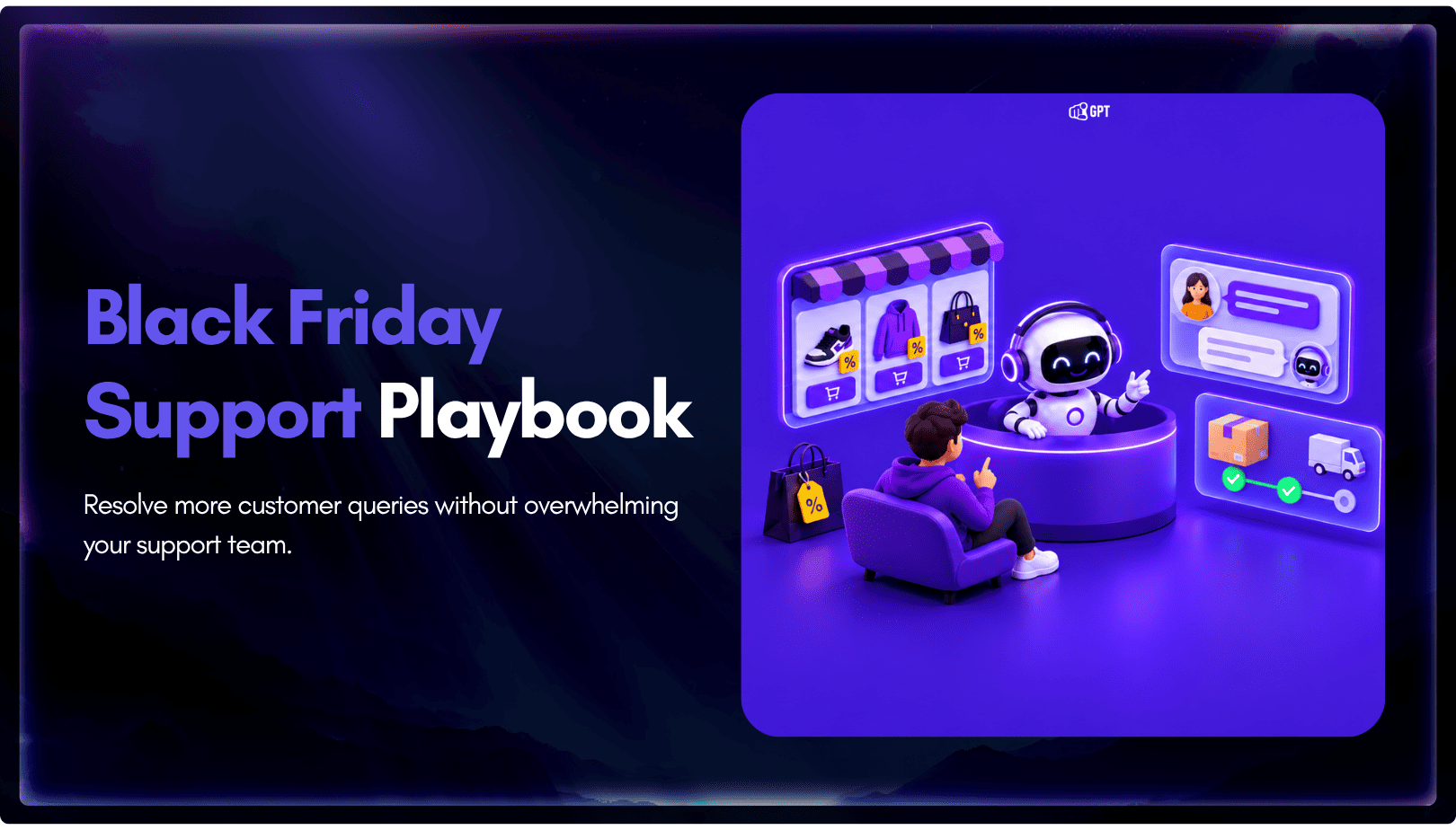
Use YourGPT to help Black Friday shoppers choose products, check orders and understand returns. Prepare your answers and team before the sale.

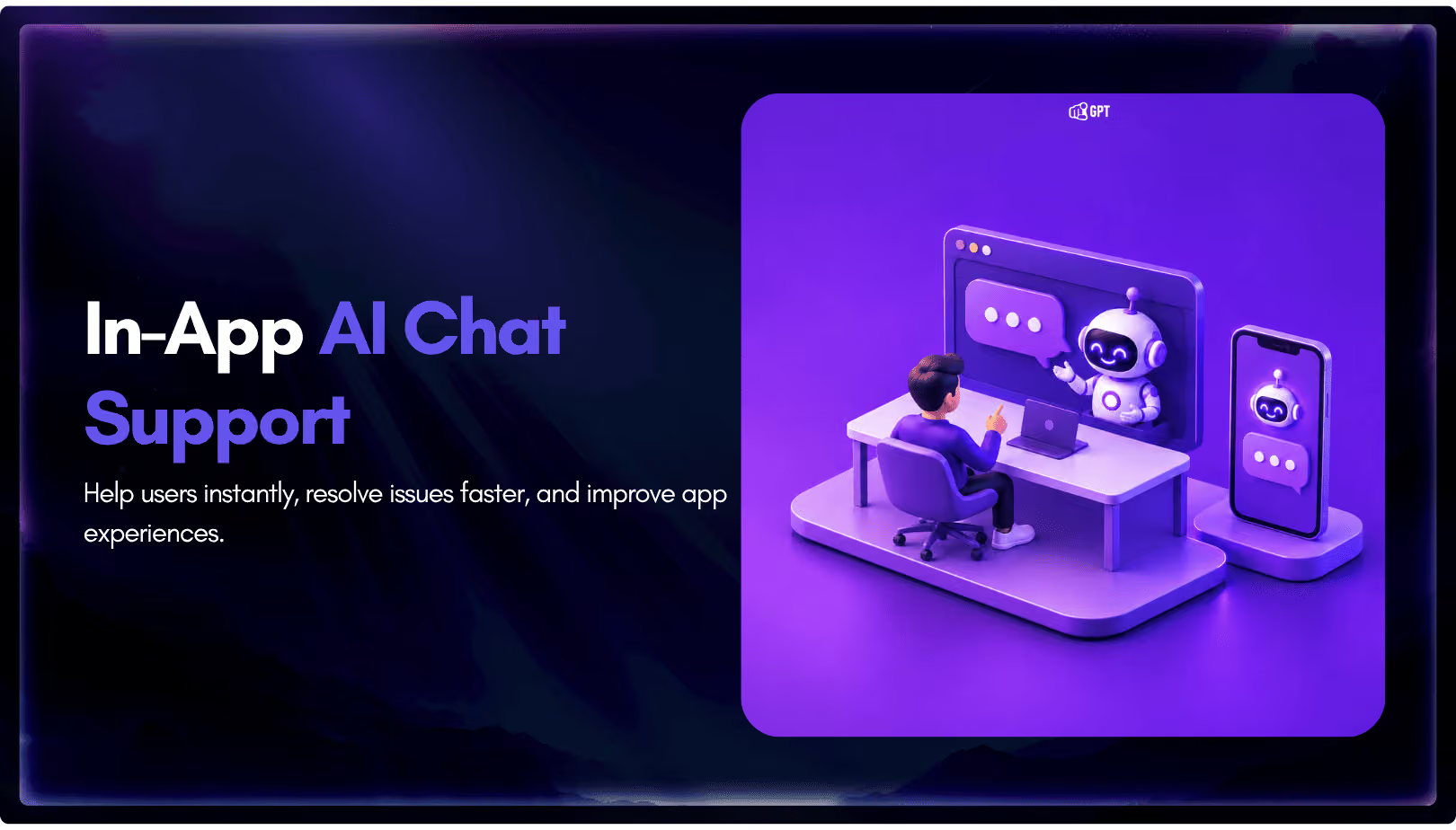
Add in-app chat support to your SaaS or mobile app. Place it on the screens where users stall, pass who they are, and hand hard cases to your team.
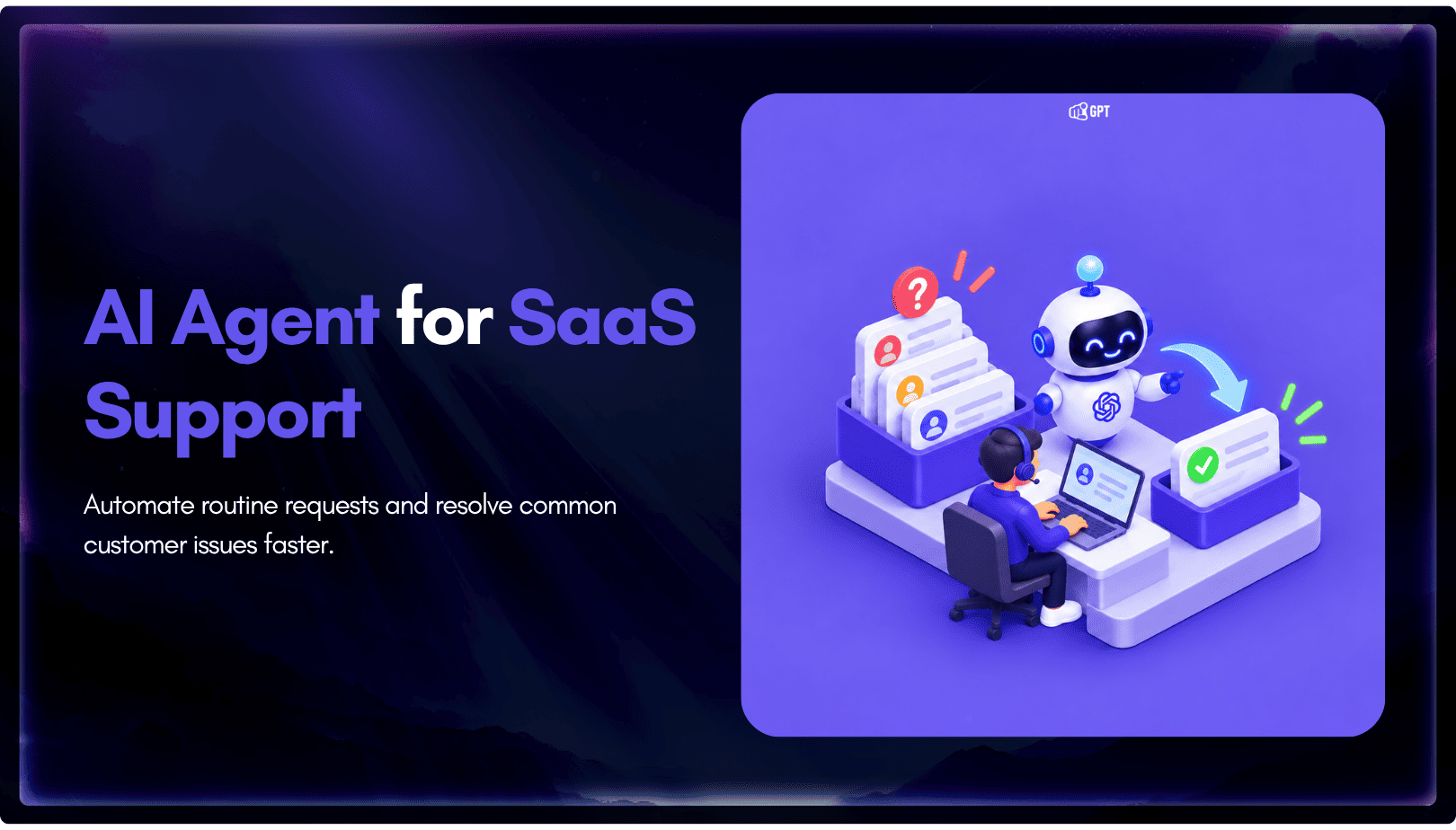
Group new-account tickets by onboarding stage, train an AI agent on your docs, and place it in the product where new users get stuck.

AI agents can now find and buy products for shoppers. See what agentic commerce changes for a Shopify store and which support jobs stay yours.
Build a Halloween shopping assistant for Shopify with YourGPT. Set up product recommendations, stock checks, cart actions and human support before launch.

See what a good customer effort score looks like, how to word and calculate CES on each scale, and which support habits raise customer effort.