75+ Best Inspirational Customer Service Quotes for Your Team

Akansha
Last updated on August 23, 2026
Customer service quotes work best when connected to specific operational moments rather than posted as passive wall decor. This curated guide organizes 75+ quotes into seven practical categories: empathy, de-escalation, customer retention, speed, team culture, leadership, and daily motivation. Support leaders can use the situational reference table and four daily coaching rituals to turn these quotes into active conversational habits across their team.
Every customer interaction is a moment where trust is either earned or lost.
Customer support teams handle high ticket volumes, complex technical issues, and frustrated users every day. Even experienced agents face moments of fatigue when queues spike or difficult conversations test their patience. In these moments, technical knowledge alone is not enough. The mindset and emotional resilience of the agent determine whether a customer leaves feeling valued or dismissed.
The right words at the right time give support teams a clear compass. Memorable customer service principles act as mental shortcuts, helping agents stay calm during heated exchanges, listen with genuine empathy, and take pride in resolving customer problems.
Below are 75+ curated customer service quotes organized by practical support scenarios, along with a quick-reference situational table and four team rituals to put them into daily practice.
Different support situations call for different motivational reminders. Use this quick-reference table during team standups, 1-on-1 coaching sessions, or quality reviews to match the right principle to your current team focus.
| Support Scenario | Recommended Quote | Author | Coaching Focus |
|---|---|---|---|
| Handling Angry Customers | “Your most unhappy customers are your greatest source of learning.” | Bill Gates | Treat complaints as product feedback and de-escalate with curiosity. |
| High Queue Backlog | “Quality in a service or product is not what you put into it. It is what the customer gets out of it.” | Peter Drucker | Focus on thorough first-contact resolution over rushed partial answers. |
| Agent Empathy Training | “People will forget what you said, people will forget what you did, but people will never forget how you made them feel.” | Maya Angelou | Acknowledge customer frustration before delivering technical instructions. |
| Preventing Churn | “Loyal customers, they do not just come back, they do not simply recommend you, they insist that their friends do business with you.” | Chip Bell | Build long-term trust by solving root causes rather than closing tickets quickly. |
| Team Morale and Burnout | “Customers will never love a company until the employees love it first.” | Simon Sinek | Support frontline agents with clear tools, fair workloads, and team recognition. |
| Support Leadership | “There is only one boss. The customer. And he can fire everybody in the company from the chairman on down.” | Sam Walton | Align internal product and operations roadmaps around real customer needs. |
Understanding which principle fits your current challenge makes coaching conversations direct and relevant. The sections below break down these quotes across seven core operational themes.
Customer conversations often become tense when customers feel ignored or misunderstood. Empathy is the ability to recognize the emotional state of the customer and validate their concern before offering a solution. In modern support, understanding what is customer service starts with treating every ticket as a conversation with a person rather than a task to clear.
These quotes remind frontline teams to listen actively, understand intent, and respond with genuine care.
Coaching Takeaway: Encourage agents to use reflective listening in their opening responses. Repeating the customer’s issue in their own words confirms understanding before providing steps to a resolution.
Customer complaints are inevitable in any business. How your team responds during difficult moments determines whether the customer churns or becomes a loyal advocate. When handling critical escalations, following a structured human escalation workflow helps support agents address urgent customer concerns with speed and composure.
These quotes help support representatives reframe complaints as valuable opportunities for improvement.
Coaching Takeaway: Run de-escalation drills where team members practice acknowledging user frustration, taking ownership of the issue, and offering clear next steps without making defensive excuses.
Acquiring a new customer costs significantly more than retaining an existing one. True retention is built on consistent, positive interactions over time rather than one-time marketing discounts. Support teams that focus on how to improve customer satisfaction build customer retention into every ticket they close.
These quotes emphasize the compounding business value of customer loyalty and trust.
Coaching Takeaway: Track customer retention signals in post-resolution surveys. Celebrate support agents who turn negative feedback into positive 5-star ratings through dedicated follow-through.
Customers value their time above almost everything else. When an issue occurs, they expect fast answers, accurate information, and zero unnecessary friction. Evaluating live chat versus AI chatbots shows that customers prefer whichever channel delivers accurate answers with the least effort.
These quotes remind teams that operational precision and clear answers create great customer experiences.
Coaching Takeaway: Review your internal knowledge base structure regularly so agents have instant access to verified troubleshooting steps, reducing customer hold times and transfer rates.
Frontline customer support is emotionally demanding. When leaders support their agents with the right training, clear policies, and fair workloads, agents naturally pass that care on to their customers. Building a strong internal culture directly protects your team from support burnout and high agent turnover.
These quotes highlight the vital link between employee experience and customer satisfaction.
Coaching Takeaway: Hold weekly team retrospectives where agents can share difficult tickets, suggest policy clarifications, and recognize peers who stepped in to assist during queue surges.
Customer service is not just a department; it is an organizational mindset that starts at the leadership level. When founders, executives, and managers prioritize customer feedback, every team member understands that customer outcomes outweigh internal bureaucracy.
These quotes illustrate how visionary leaders build customer-first organizations.
Coaching Takeaway: Encourage leaders to spend two hours per month handling frontline support tickets. Seeing real customer friction firsthand shapes smarter product roadmaps and operational decisions.
On heavy ticket days, frontline support agents need quick reminders of the value of their daily work. Resolving a login error, fixing a billing glitch, or guiding a confused user makes a tangible difference in someone’s day.
These short quotes serve as daily affirmations for team chat channels and morning standups.
Coaching Takeaway: Pick one quote at the start of each week as your team focus theme. Have agents share real ticket examples on Friday where they put that theme into action.
Posting quotes in a shared document rarely changes team behavior. To make these principles stick, support managers need structured routines that integrate them into daily operations.
Start your morning standup by highlighting one relevant quote. Instead of just reading the text, ask one agent to share a specific customer interaction from the previous day that reflected that principle.
For example, when discussing Bill Gates’ quote on unhappy customers, ask: “What was the toughest ticket we received yesterday, and what product improvement does it point toward?” This turns abstract inspiration into practical problem-solving.
Create a dedicated recognition channel (such as #customer-wins or #kudos) in your team messaging tool, whether your company operates on Slack, Microsoft Teams, or Discord. In many SaaS and developer-focused businesses, Discord also serves as a primary customer community channel where public recognition and product feedback happen in real time. When a customer leaves a positive CSAT rating, sends an appreciative note, or posts praise in your community, share that feedback alongside a matching quote.
Tag the agent who handled the ticket and highlight the specific behavior they demonstrated, such as staying patient during a billing dispute or following up until an issue was resolved.
During monthly quality assurance (QA) reviews, avoid focusing exclusively on numeric scores and ticket handle times. Use quotes as reflective coaching prompts to discuss communication style and customer sentiment.
Using conversational support analytics helps managers identify patterns where agents excel or struggle. If an agent struggles with de-escalation, frame the coaching session around Donald Porter’s principle: “People do not expect you to be perfect. They expect you to fix things when they go wrong.”
Spend 15 minutes every two weeks running peer roleplay drills. Have one agent play a frustrated customer with a lost shipment, while another agent practices calming the customer using active listening frameworks.
Analyzing ecommerce customer operations reveals that agents who practice simulated de-escalations feel significantly less stress when facing real upset customers on live channels.
Support teams cannot deliver deep empathy when overwhelmed by hundreds of repetitive tier-1 tickets. Asking agents to stay motivated while manually answering “Where is my order?” or “How do I reset my password?” all day leads directly to cognitive overload and agent burnout.
The most effective support organizations use a hybrid model. Deploying a verified customer support AI agent handles high-volume, routine requests instantly from your documented knowledge base. By achieving reliable autonomous AI resolution on repetitive questions, human support agents preserve their emotional energy and focus for complex escalations, high-value sales conversations, and empathetic customer care.
Connecting an omnichannel support strategy ensures that customer data and conversation history follow the user across website chat, email, Discord, and messaging channels, giving human agents complete context whenever a ticket escalates.
Introduce quotes only when paired with real ticket examples. Rather than sharing quotes as abstract slogans, connect each quote to a recent customer challenge or a practical de-escalation technique during team standups.
Acknowledge the workload directly, celebrate real-time customer wins in team channels, and ensure clear routing rules so agents can focus on one ticket at a time without feeling overwhelmed by total queue volume.
Quotes act as memorable mental anchors for company values. New hires retain service principles more effectively when abstract support guidelines are framed as simple, memorable rules of thumb.
Automating routine tier-1 inquiries removes repetitive tasks from human queues. This reduces cognitive fatigue and gives support agents the time and bandwidth needed to handle meaningful customer conversations with empathy.
Great customer service is defined by the consistent daily habits of your frontline team. The right inspirational quotes serve as guiding principles that shape how support agents listen, solve problems, and build trust with customers.
Select two or three principles that reflect your team’s current focus, incorporate them into your daily standups and QA coaching, and give your agents the support, tools, and encouragement they need to deliver memorable service every day.
Train an AI support agent on verified documents to respond to customers and help your team work more efficiently
Learn how to judge Shopify AI resolution rates with clear formulas, a worked example, ticket-level checks and practical ways to improve support quality.

TL;DR B2B customer service means supporting multiple people within the same account, including end users, admins, finance or procurement contacts, and executive sponsors, each with a different definition of a resolved ticket. Traditional support bots handle one conversation at a time and often lose account context when requests move between contacts, channels, or teams, forcing […]
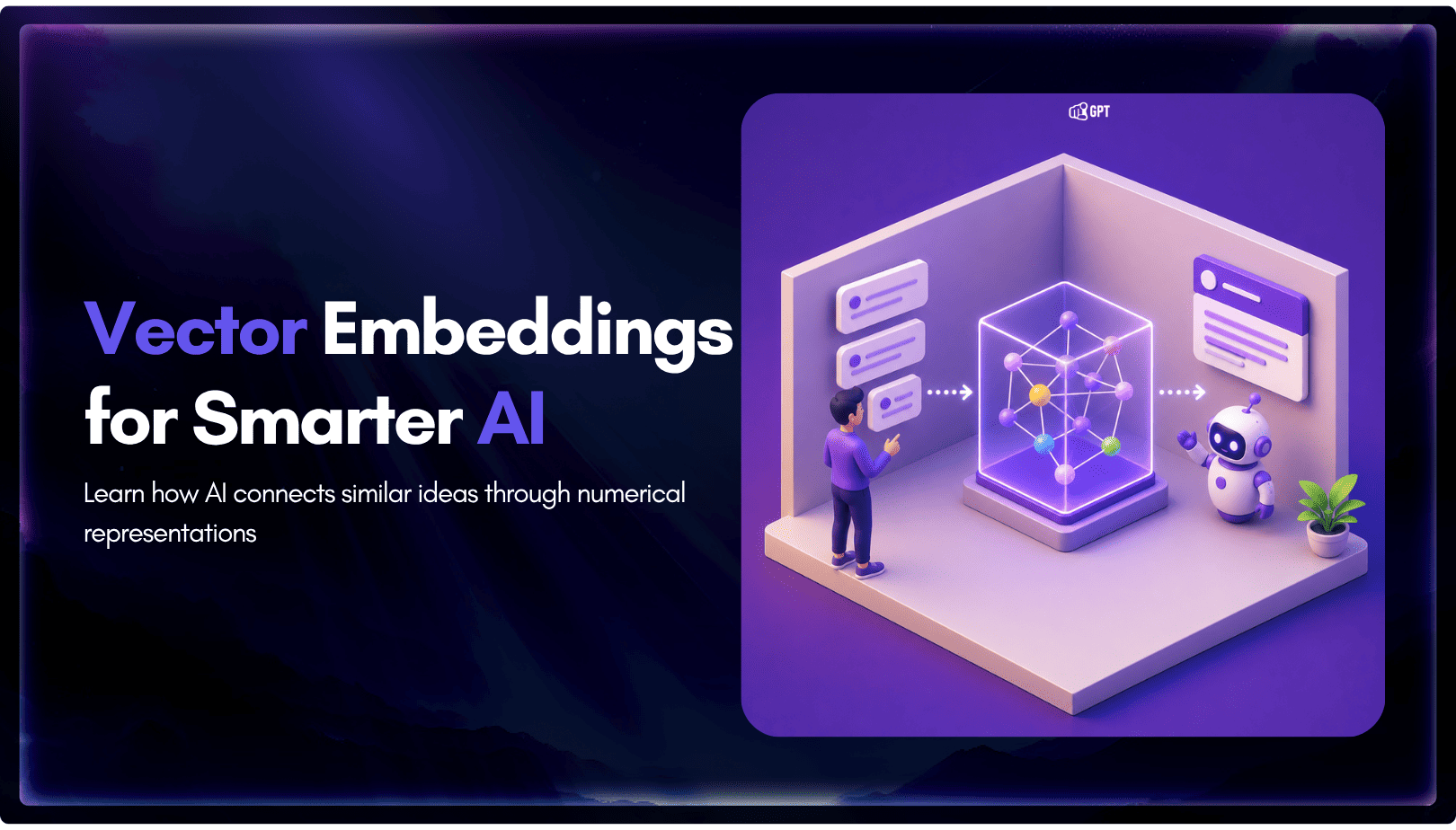
TL;DR A vector embedding is a list of numbers that represents meaning, placing similar concepts closer together in a mathematical space. AI chatbots use embeddings to match questions by meaning rather than exact wording, which is a core part of retrieval-augmented generation (RAG). Anthropic recommends Voyage AI for embeddings, while OpenAI, Google, and Cohere provide […]

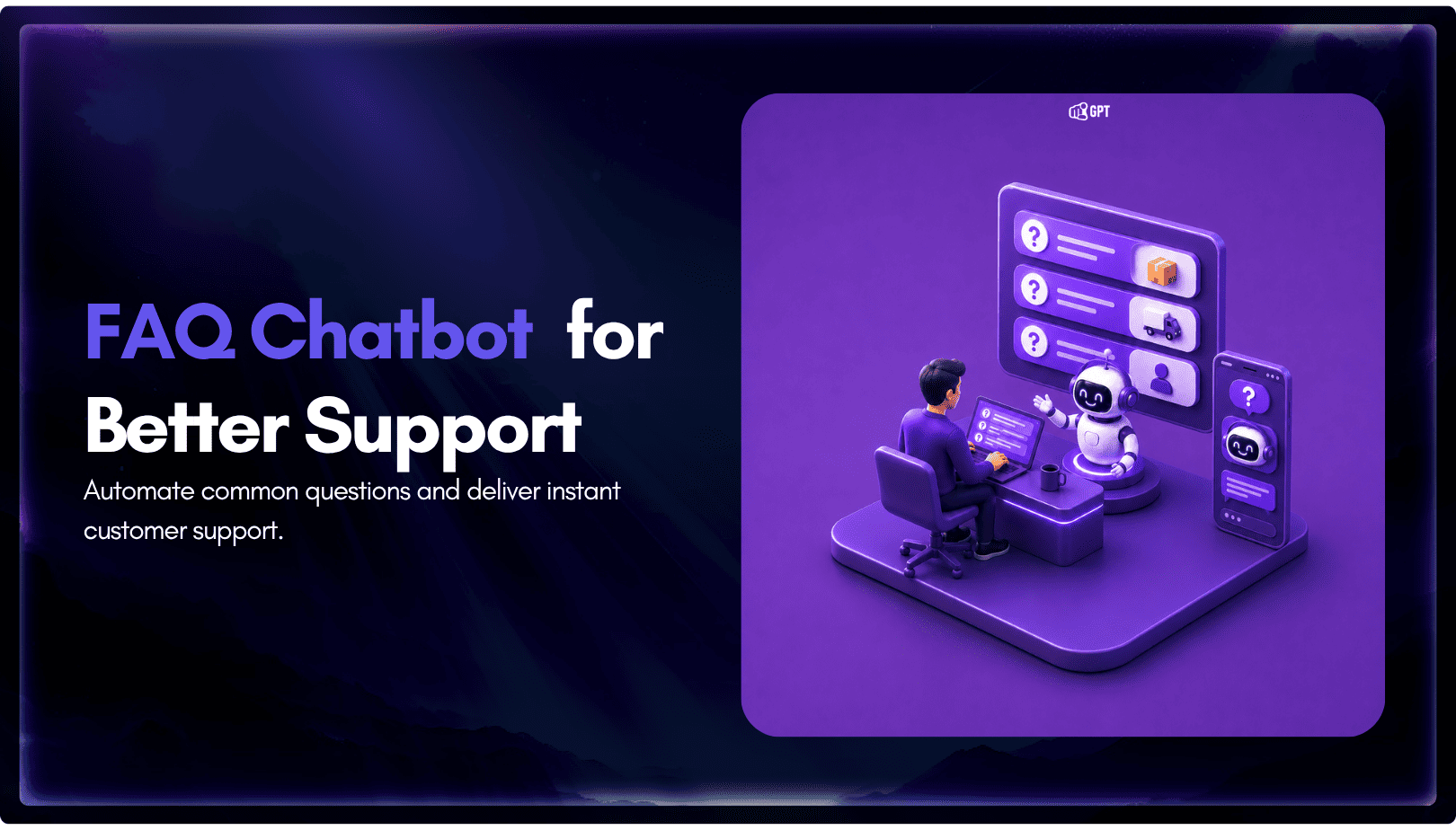
TL;DR An FAQ chatbot answers repetitive questions by matching user queries with a knowledge base and returning grounded responses using rules, AI retrieval, or both. Modern FAQ chatbots use confidence checks to deliver instant answers for strong matches and fall back to broader retrieval or human handoff when confidence is low. Rule-based bots work well […]
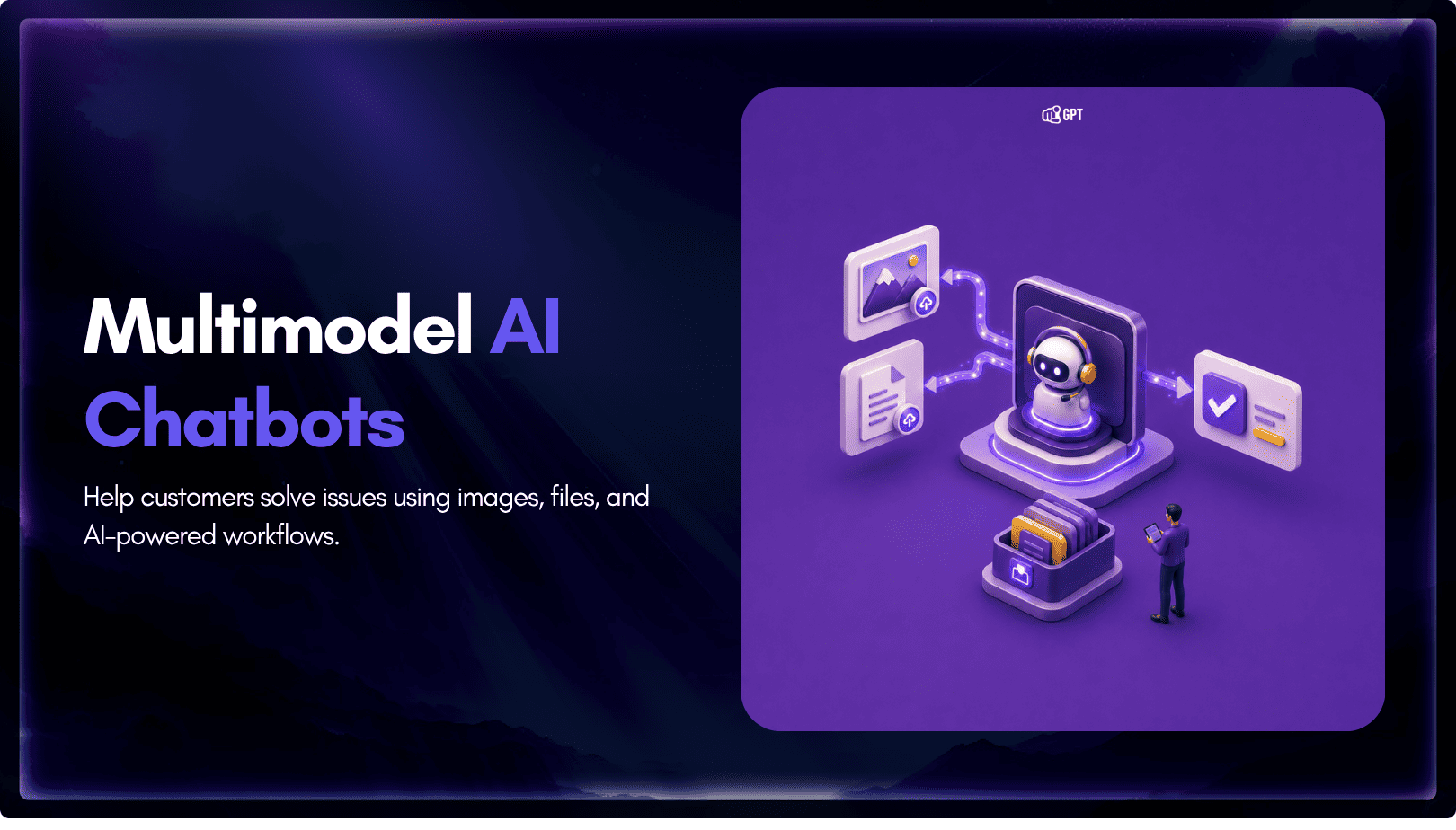
TL;DR Multimodal chatbots let customers share photos, screenshots, documents, video, or audio directly in a conversation, giving AI more context than text alone. YourGPT’s Attachment Capture node in AI Studio can collect these files mid-conversation, while vision-capable AI models can analyze and understand their contents. Key use cases include ecommerce returns, insurance and warranty claims, […]
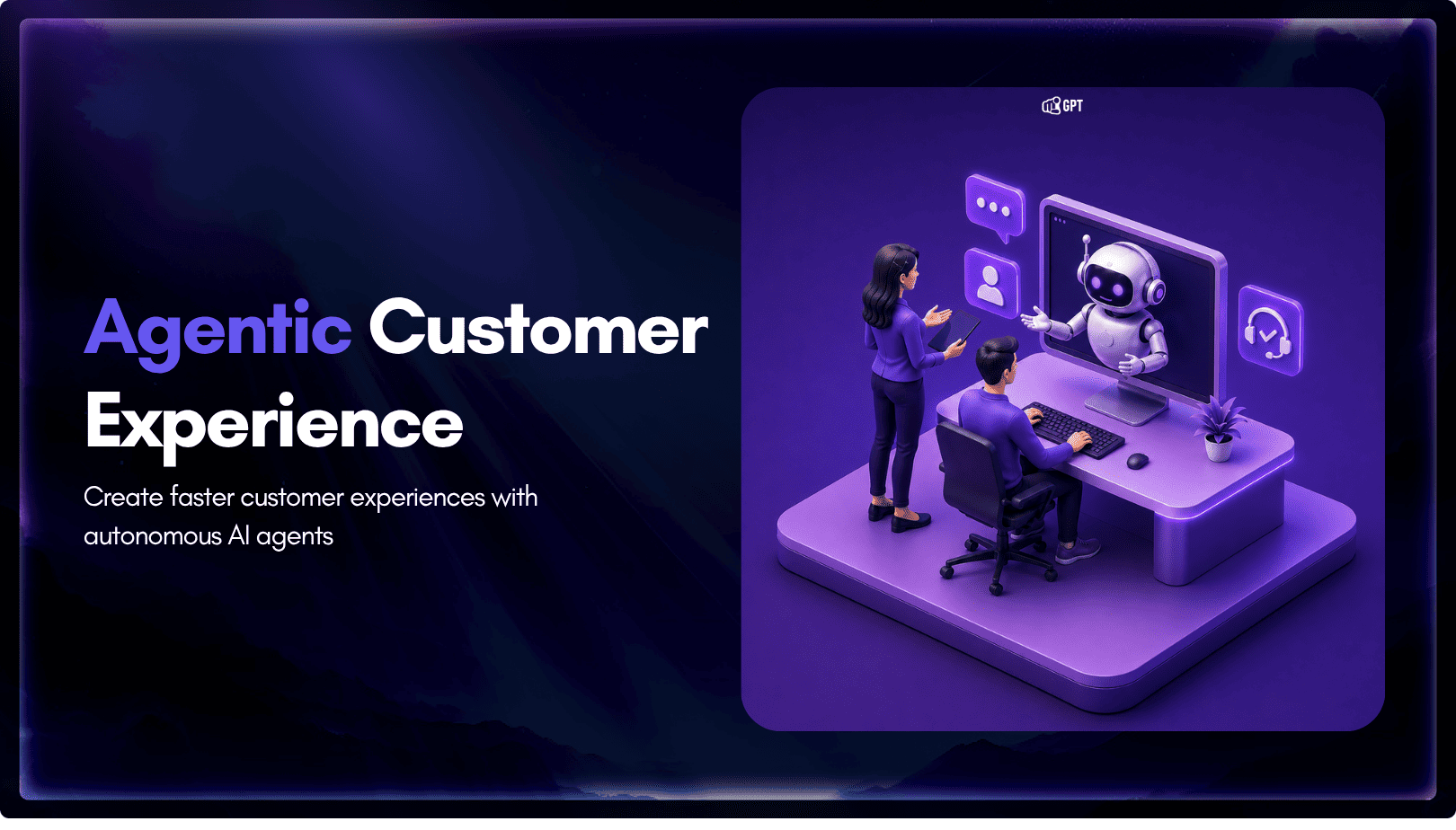
A customer asks where their order is. A traditional bot pastes a tracking link and calls it done. An agentic system checks the carrier API, sees the shipment stuck at a depot, applies a credit under the delay policy, updates the CRM, and messages the customer before they’ve had time to get annoyed. Same question. […]