How AI Chatbots Solve Customer Support Challenges (2026)

Neha
Last updated on August 24, 2026
AI chatbots cut response times, reduce repetitive support work, and keep answers consistent across every channel a business uses.
Current-generation chatbots ground responses in real business data through RAG, work in 100+ languages, connect to existing tools, and hand off to a human when needed. Some go further and take action on a request instead of just answering it.
Businesses get the most value by starting with one high-impact workflow, tracking resolution and response time, then expanding automation across support, sales, and other customer journeys.
AI chatbots have moved far beyond simple scripted replies. In 2026, businesses use them to answer customer questions, reduce repetitive support work, qualify leads, and complete actions across websites, messaging apps, and support channels.
The biggest shift is that modern AI chatbots can work with real business data instead of relying on fixed responses. With technologies such as RAG, integrations, multilingual support, and human handoff, they can provide more accurate answers while fitting into existing customer service and sales workflows.
For businesses, the goal is not to automate every conversation at once. The most effective approach is to start with a high-impact use case, measure how well the chatbot resolves requests, and expand automation where it creates the most value.
AI chatbots are software programs that are made to simulate human like conversations with users. In 2026, the most advanced chatbots are powered by Generative Pre-trained Transformer (GPT) AI models, which are trained on huge amounts of text and conversation, will be used to power the most advanced chatbots in 2026.
When a consumer interacts with a GPT-powered chatbot, the AI immediately analyses their request to determine intent and context. It does this by understanding the words used, their meaning, and the overall conversation history.
In real time, GPT chatbots produce responses that match like us (human). They are not dependent on predefined responses .They generate context-relevant and personalised responses for every user.
In 2026, many businesses are starting to adopt Retrieval-Augmented Generation (RAG) based chatbots. RAG uses data from your business to specifically train the chatbot. This helps the chatbot deliver more accurate and relevant answers that match your business and customers.
Businesses evaluating different platforms can also compare AI chatbot software, features, and user reviews on G2
These chatbots are always learning from their interactions. They become better at giving accurate, appropriate responses over time, which enhances customer satisfaction and results in more efficient customer service.

Customer support is the backbone of any successful business. A report by Salesforce says, 84% of customers say that their experience with a company is just as important as its products or services.
Also, 67% of customers claim they switched brands because they had a bad experience with customer service.
Here are some common pain points customers face when interacting with support:
Delayed responses frustrate customers. AI chatbots offer quicker solutions.
Language differences hinder effective communication.
Contacting multiple agents for one issue causes frustration.
Poor systems lead to lost tickets and delays.
Frustrated customers abandon requests, losing opportunities.
Generic responses make customers feel undervalued.
Varying responses erode customer trust.
Dropped calls disrupt interactions.
Poorly trained agents lead to negative reviews.

Customers want answers to their questions quickly and clearly. Customers sometimes get frustrated when you do not respond quickly or communicate clearly, which hurts your business.
AI chatbots are helpful since they can answer questions right away, any time. They know a lot about your company and your policies so the responses are accurate and helpful. This makes things less frustrating and helps customers get what they need more quickly.
YourGPT provides an AI chatbot platform that lets you build customised chatbots designed around your business needs. It includes unique features to help your chatbot deliver better, more effective customer interactions.
YourGPT combines no-code setup, RAG on your data, omnichannel messaging, voice, secure API actions, and built-in analytics to deliver fast, accurate support at scale. These capabilities reduce costs, boost CSAT, and convert more conversations into revenue.
YourGPT supports connection with various data sources, ensuring your chatbot provides diverse, context-aware responses.
Business Use: An e-commerce AI assistant using YourGPT can access multiple product databases, suggesting items based on customer browsing patterns and purchase history.
YourGPT’s form-fill feature turns website visitors into qualified leads, improving your digital marketing strategy.
Sales Improvement: A B2B software company’s lead generation chatbot can pre-qualify prospects by asking specific questions about their business needs, allowing sales teams to focus on promising opportunities.
YourGPT integrates with popular platforms like WhatsApp, Telegram, Slack, Messenger, Instagram, website and more providing consistent customer engagement.
Customer Service Improvement: A retail brand’s customer service chatbot can offer uniform support across WhatsApp and Facebook Messenger, maintaining brand consistency on all customer-preferred channels.
YourGPT allows for the development of flow guided agents that create flexible conversation paths based on user intents and triggers, enabling chatbots to handle complex interactions.
User Experience Improvement: An AI travel assistant can identify a user’s flight booking intent and guide them through a personalized reservation process, offering relevant options and collecting necessary details.
YourGPT allows smooth API calls and code execution, creating a robust tool for developing advanced AI solutions.
Application: A YourGPT-powered customer support chatbot can connect with backend systems to obtain current inventory data, giving customers accurate product availability information without delay.
YourGPT replaces standard search functions with AI-powered immediate answers, boosting user experience and engagement metrics.
Healthcare Application: A medical information chatbot can offer personalized health guidance based on individual user inputs, providing specific advice that considers unique symptoms and medical backgrounds.
YourGPT prioritizes data protection and conversation privacy, adhering to information security standards. We are currently undergoing a SOC 2 audit and will achieve SOC 2 compliance by early 2026.
Secure Data Handling: A banking chatbot can safely process sensitive financial information, maintaining customer trust and regulatory compliance.
YourGPT’s Voice AI feature offers accurate speech recognition, enabling voice-based interactions in various languages and accents.
Improved Accessibility: A telecommunications company’s virtual assistant can accurately interpret and respond to voice queries in multiple languages, offering inclusive support for a diverse customer base.
You can use self-learning training option to train based on unable to answer interactions and feedback to improve performance over time.
Adaptive Customer Service: An e-commerce chatbot can refine its product suggestions based on past customer interactions, resulting in more accurate and personalized shopping recommendations.
YourGPT uses advance natural language processing to interpret users queries.
Information Retrieval: Chatbot can understand and respond to nuanced questions, providing thorough answers by combining information from multiple sources.
AI chatbot solution has one major advantage: it improves customer satisfaction by providing quick responses and frees up human support agents to focus on more complex or unique issues.
This helps businesses like yours retain more customers and enhance the reputation of your brands in addition to improving support operations.
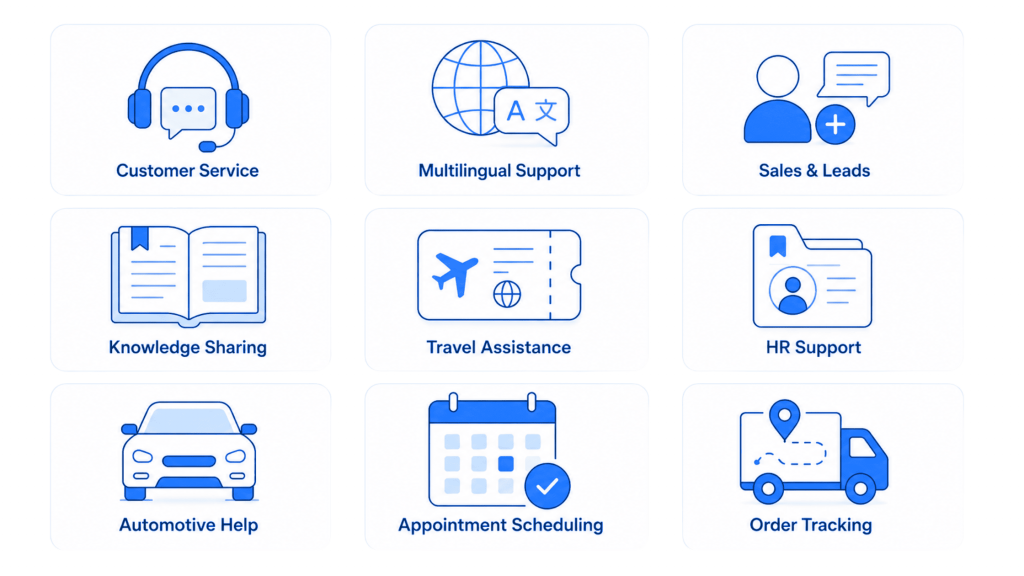
AI chatbots can be useful in a various industries. Here are some of the following use cases, we have highlighted:
Use Case: AI chatbots can transform customer service by:
Industry Growth Statistic: According to Gartner, chatbots are expected to become a primary customer service channel within five years.
Use Case: Our chatbot supports over 100 languages, allowing businesses to:
Industry Growth Statistic: The chatbot market size is projected to grow from $5.4 billion in 2023 to $15.5 billion by 2027, according to Statista.
Use Case: YourGPT chatbots can:
Use Case: YourGPT can be used for internal training purposes:
Use Case: YourGPT chatbots can assist travelers with:
Use Case: In HR, YourGPT chatbots can:
Use Case: YourGPT chatbots can help customers by:
Use Case: YourGPT chatbots can manage appointments by:
Use Case: For e-commerce and delivery services, YourGPT chatbots can:
These use case show how YourGPT AI chatbots can be effectively used in different settings. By leveraging features like multilingual support and integration with existing systems, businesses can significantly enhance customer service, streamline processes, and improve overall efficiency.

Customer service is no longer a 9-to-5 profession. Customers increasingly want brands to respond to their questions as soon as they come up with them.
A well-trained AI chatbot may assist satisfy such expectations by operating around the clock, speaking in your brand’s voice, and answering from your own data to provide accurate, personalised responses. It handles mundane requests, allowing your team to focus on tough, revenue-generating interactions.
Here’s why adding a customer support chatbot is no longer optional it’s the lifeline your business needs.
Last month one of our clients used YourGPT to answer overnight order-status questions. Instead of a hour wait, customers got their info in seconds and support tickets dropped by 40%.
YourGPT handles routine “How do I reset my password?” or “What’s my delivery date?” queries so your agents can focus on tricky issues like resolving escalations or crafting new product features.
Scaling support teams is expensive salaries, training, and overtime add up fast. By handling up to 70% of first-level queries, YourGPT lets you serve more customers without proportional headcount growth, freeing budget for innovation instead of extra salaries.
Customers who receive relevant product tips are 3× more likely to purchase. YourGPT analyzes browsing behavior and past orders to offer on-point recommendations at key moments no pushy pop-ups, just helpful guidance that drives average order values up.
Whether it’s a special sale, holiday launch or a viral tweet, support spikes happen without warning. YourGPT scales instantly no needing you to hires more people to keeping your response times stable even when request volumes jump 5× or more.
Inconsistent answers damage brand credibility. YourGPT draws from a single, centrally managed knowledge base, ensuring every response aligns with your latest policies and pricing so every customer hears the same accurate information.
A lot of people who might want to buy from you visit your website after hours. If you do not get in touch with these leads right away, they could quickly go away. AI chatbots are always on duty, gathering information about leads right away and even asking them important questions to see if they qualify. Your sales staff wakes up to leads that they can follow up on, which makes the sales process faster.
Common pain points include long response times, lack of personalization, inconsistent experiences, and inefficient ticketing systems. These issues lead to customer frustration and decreased satisfaction.
YourGPT AI chatbots provide quick, personalized interactions, consistent experiences, and multilingual support. They utilize generative search technology to enhance responses and improve customer satisfaction.
Key features include build No Code Chatbot, Sequential Agents (Chatbot Studio), Autonomous AI Agents (function calling), You Can integrate it with multi-source data, lead generation, omni-channel support, Advance AI Analytics, Self Learning Capabilities, contextually relevant conversations and much more.
Yes! They can transform customer service, assist in content creation, facilitate lead generation, and support internal training across various sectors such as healthcare, finance, and e-commerce.
By providing instant responses, personalized recommendations, and consistent support, YourGPT enhances customer loyalty and fosters a positive brand perception in the competitive landscape.
AI chatbots provide 24/7 availability, scalability, cost efficiency, and valuable insights, outperforming traditional methods in enhancing customer engagement and operational efficiency.
Businesses can automate routine inquiries, manage high volumes of requests, and provide quick support through multiple channels, freeing human agents for more complex tasks.
Personalized AI chatbots enhance user engagement with tailored interactions, boosting conversion rates and customer loyalty, which is vital for business growth in today’s digital marketplace.
Absolutely! YourGPT offers extensive customization options for the bot’s appearance, tone, and language, ensuring it aligns perfectly with your brand identity and operational needs.
Your customers measure your brand by the speed and accuracy. YourGPT chatbot can quickly respond to common questions like order updates, password resets, and product information at any time. This reduces wait times and allows your team to focus on more complex customer needs.
YourGPT connects directly to your business systems, it can pull real-time data, trigger actions like refunds or order updates, and always reflect your latest policies and inventory. This means customers get
If your support team is overburdened, begin with a single task such as order tracking. Monitor the outcomes and expand based on what works. Most businesses notice measurable changes within a few weeks.

Tier 1 support handles first contact. See how Tiers 0 to 3 differ and what changes when an AI agent becomes your first line.

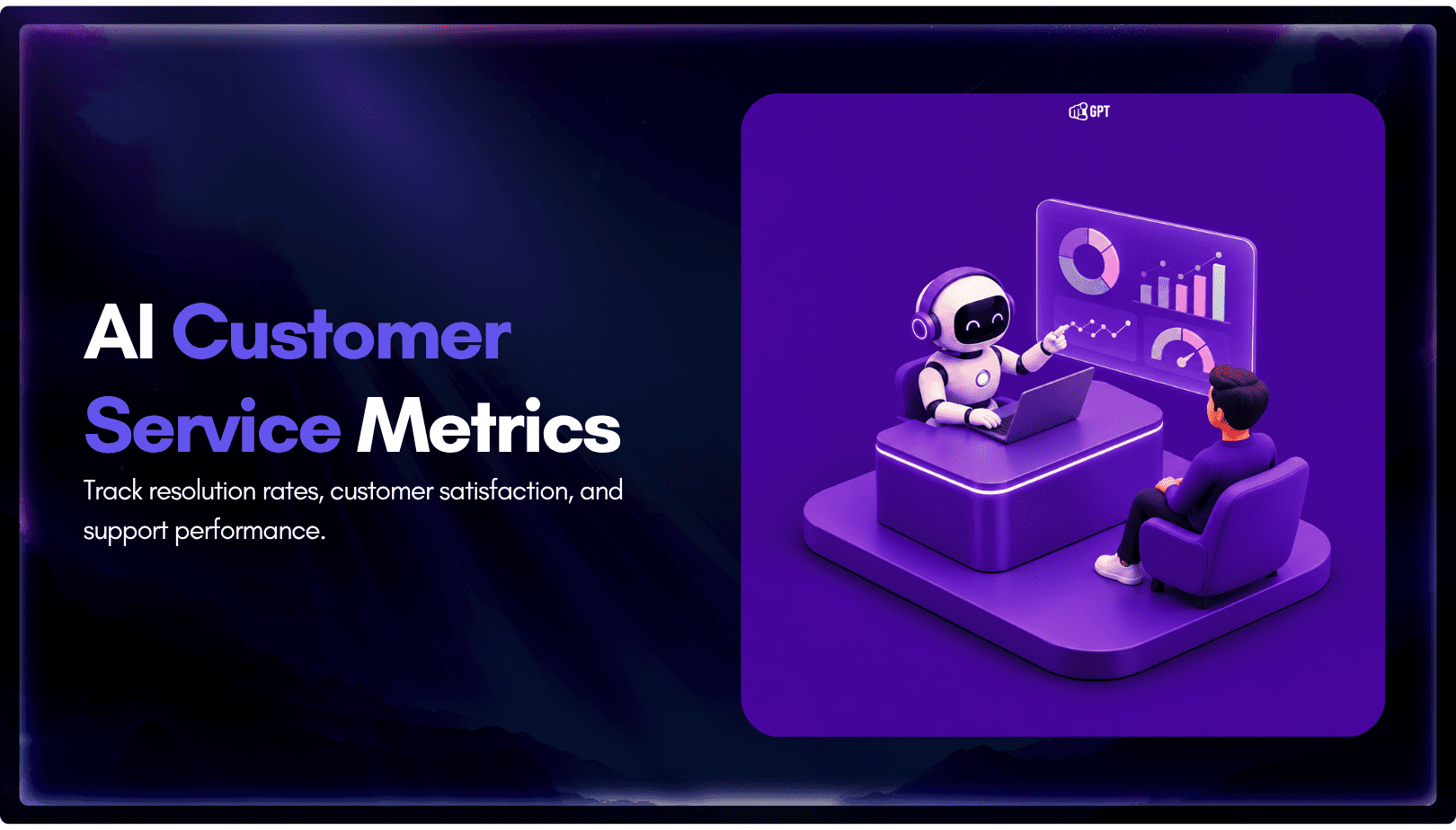
The 12 customer service metrics to track when an AI agent resolves tickets, with a formula for each and a baseline built from your own last month.

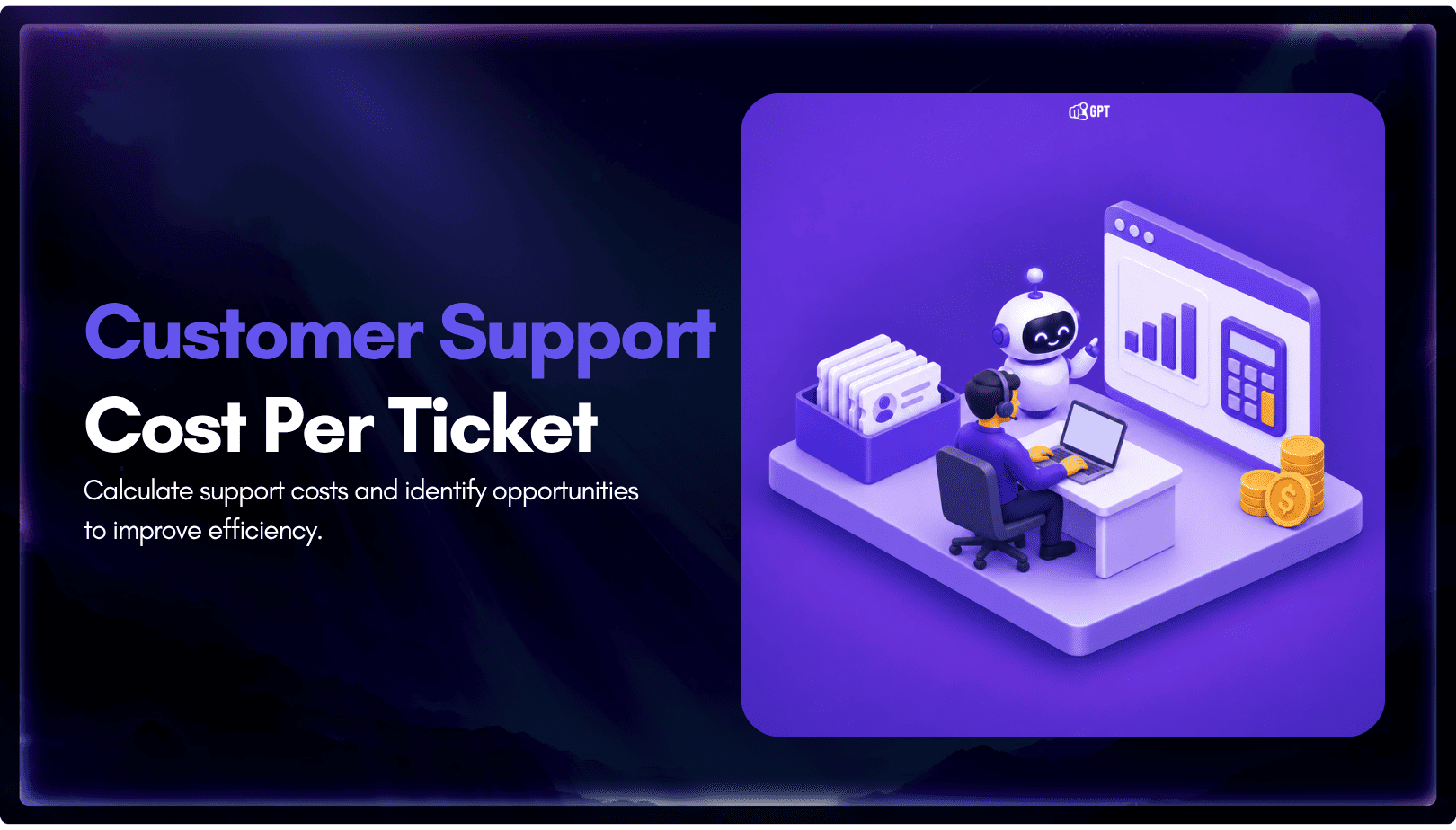
Calculate cost per ticket with one formula and a free calculator, then compare it with the cost of a conversation an AI agent resolves.
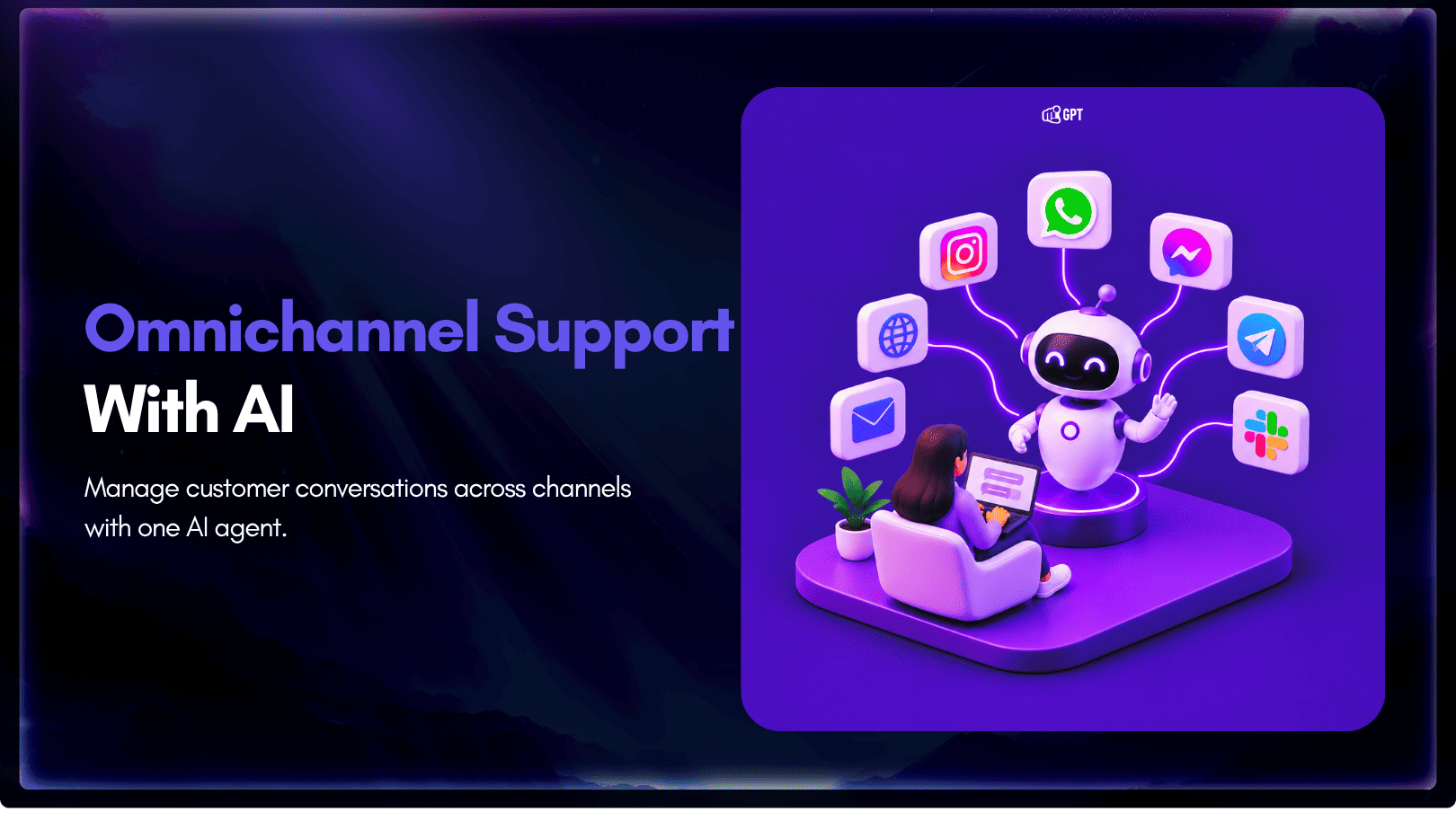
Omnichannel support means every channel answers from the same knowledge. Train one AI agent, pick your first channel, and test that answers match.
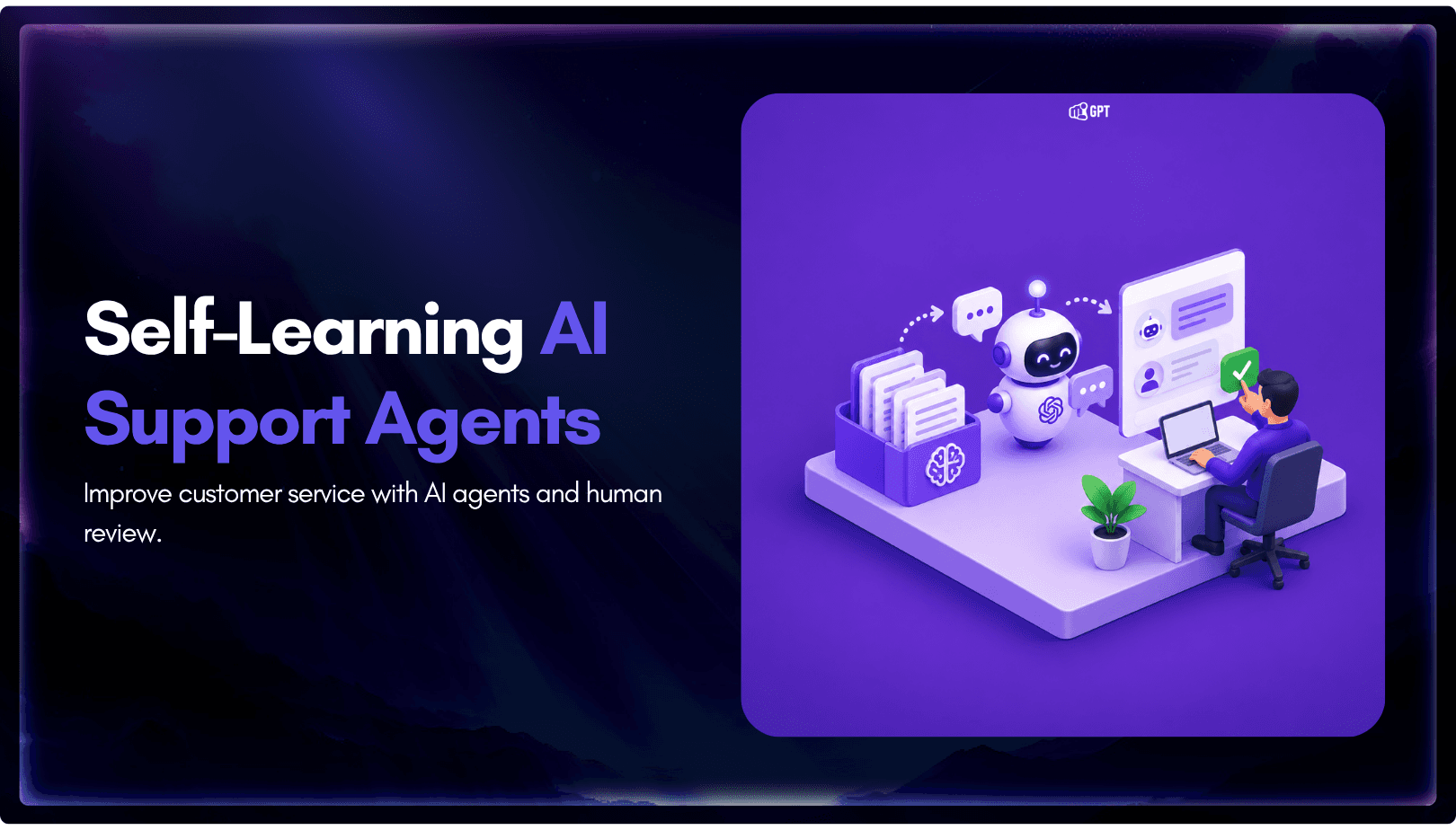
Self-learning AI agents log the questions they miss. Learn how human review turns those gaps into trained answers and how to run the weekly loop.
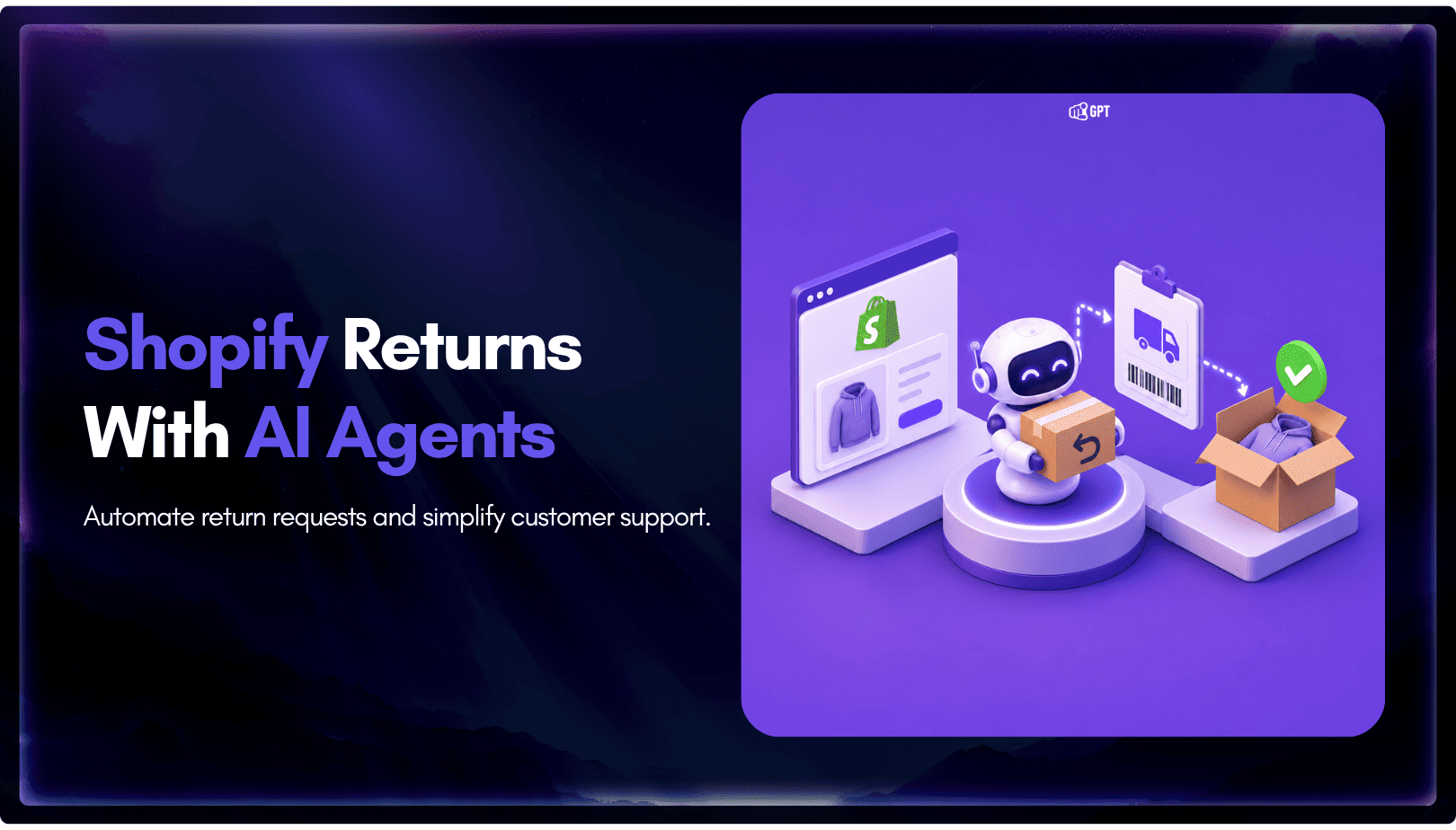
Train an AI agent on your return policy, connect the Shopify template in AI Studio to check real orders, and route exceptions to your team.