How to Integrate GPT Chatbot with SMS Messaging

Neha
Last updated on May 4, 2026

SMS is one of the most immediate ways to reach your customers, with most texts being read within minutes. It remains a widely used communication channel, with over 5 billion active mobile users globally.
Integrating GPT-powered chatbots with SMS messaging can significantly enhance customer engagement, offering businesses a seamless way to provide personalized support.
This blog will guide you through the process of GPT chatbot integration with SMS messaging, offering practical steps to improve your customer communication strategy.
For businesses like yours, integrating SMS with GPT automates responses, speeds up communication, and boosts customer satisfaction, helping you build stronger relationships and drive growth.
To maximize the impact of your SMS chatbot integration, consider these best practices:
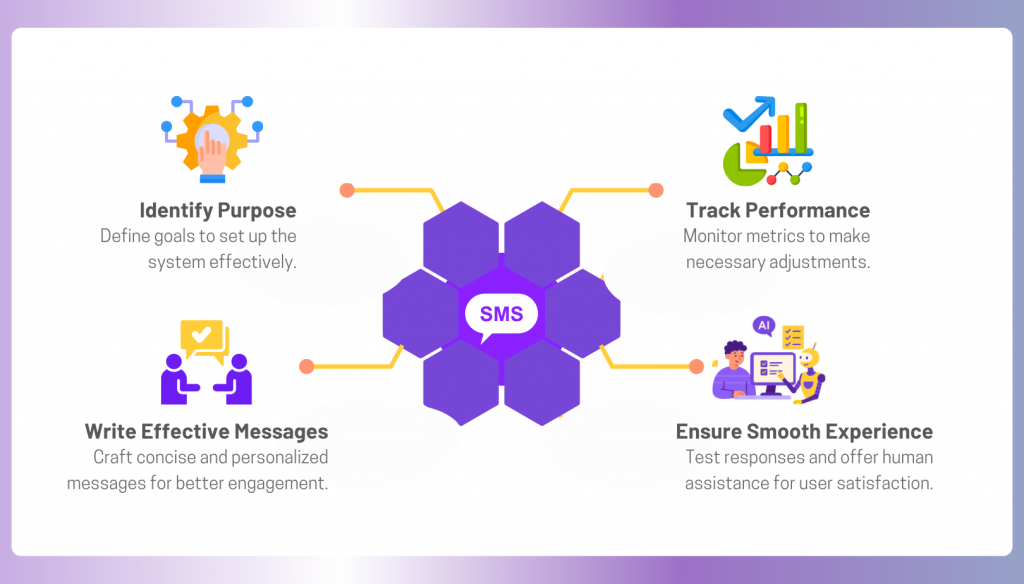
Start by figuring out what you want to achieve with your SMS chatbot. Knowing your goals will help you set up the system effectively. Here are some popular uses:
When sending messages via SMS, keep these tips in mind:
To ensure that users have a great experience, consider the following:
Once your SMS chatbot is up and running, it’s important to measure its effectiveness. Here are some metrics to consider:
By focusing on these areas, businesses can successfully integrate GPT chatbots with SMS messaging, enhancing customer communication and overall satisfaction.
Integrating a YourGPT chatbot with Twilio SMS messaging is an effective way to enhance communication. Follow this guide to complete the integration successfully.


You have successfully enabled Twilio SMS integration with your YourGPT chatbot. Test the setup by sending messages to your Twilio number to ensure everything is functioning as expected.By following these steps, you can effectively set up and integrate Twilio into your application, enabling powerful SMS capabilities.
Integrating AI chatbots with SMS comes with unique challenges that businesses need to address for effective communication. Here are the key obstacles:
SMS messages are limited to 160 characters, which makes it challenging for GPT chatbots to convey complex information or provide detailed context. To overcome this, careful crafting of concise, clear messages is essential.
SMS lacks the interactive features of other channels, requiring creative strategies like quick reply options or interactive links to engage users within the format’s constraints. Learn more about enhancing customer experience with interactive messages.
Users may send unclear or vague messages via SMS, making it challenging for chatbots to accurately interpret intent and respond appropriately.
By addressing the message length constraint effectively, you can ensure your SMS chatbot provides value while maintaining clarity.
Integrating GPT chatbots with SMS helps businesses respond instantly and keep customers engaged. SMS grabs user attention faster than any other channel, ensuring messages are read almost immediately. This improves communication while also reducing support costs.
The GPT chatbot processes incoming SMS messages, understands the user’s intent, and generates a responses using your knowledge. If needed, it can escalate issues to a human agent.
Twilio provides a reliable and scalable SMS platform with API support, global reach, and easy integration with GPT-powered chatbots for real-time messaging and automation.
Regularly train your chatbot using real customer interactions, refine its responses based on user feedback, and implement fallback options for unclear queries to improve accuracy.
Yes, most SMS chatbots can recognize when a user needs human assistance and seamlessly transfer the conversation to a live agent.
Integrating GPT-powered chatbots with SMS helps businesses communicate with customers quickly and efficiently. SMS is widely accessible, has a high open rate, and offers instant communication, making it ideal for delivering timely support and updates.
By automating responses and personalizing messages, businesses can improve customer service while reducing operational costs. This integration allows businesses to handle more interactions without sacrificing quality.
To make the most of this integration, focus on clear messaging, a smooth user experience, and tracking performance. This approach strengthens customer relationships and contributes to business growth.
Join thousands of businesses transforming customer interactions with YourGPT AI
No credit card required • 7 days access • Limited time offer
Use YourGPT to help Black Friday shoppers choose products, check orders and understand returns. Prepare your answers and team before the sale.

Add in-app chat support to your SaaS or mobile app. Place it on the screens where users stall, pass who they are, and hand hard cases to your team.

Group new-account tickets by onboarding stage, train an AI agent on your docs, and place it in the product where new users get stuck.
AI agents can now find and buy products for shoppers. See what agentic commerce changes for a Shopify store and which support jobs stay yours.
Build a Halloween shopping assistant for Shopify with YourGPT. Set up product recommendations, stock checks, cart actions and human support before launch.

See what a good customer effort score looks like, how to word and calculate CES on each scale, and which support habits raise customer effort.