Real Estate AI Chatbots: Everything You need to know

Neha
Last updated on August 25, 2026
Property inquiries, viewing schedules, and lead qualification can run around the clock without requiring additional headcount.
CRM and listing integrations keep property information current and ensure serious buyers are handed to human agents when conversations become more complex.
Omnichannel deployment across WhatsApp, website chat, and Messenger, combined with multilingual support, helps real estate businesses reach buyers on the channels they already use.
No-code platforms like YourGPT make it possible to launch a trained, branded real estate chatbot in days without a lengthy development sprint.
Self-learning AI can improve response accuracy over time by learning from real customer conversations, unresolved queries, and evolving business information.
Most real estate leads go cold before an agent returns the call. The buyer does not wait. They move on to the next listing already open in another tab.
Real estate AI chatbots close that window. They answer availability, pricing, and scheduling questions the moment a lead raises a hand, pull live data from listings and CRM records, and hand off anything complex to a human agent with the full conversation attached.
Done well, this changes what an agent’s day looks like. Leads get captured at midnight the same as at noon, viewing requests get scheduled without phone tag, and agents spend their time on buyers who are ready to move, not on repeating the same square-footage answer for the tenth time that week.
This article covers the benefits of AI chatbots in real estate, their impact on the industry, their potential, and how to set one up.
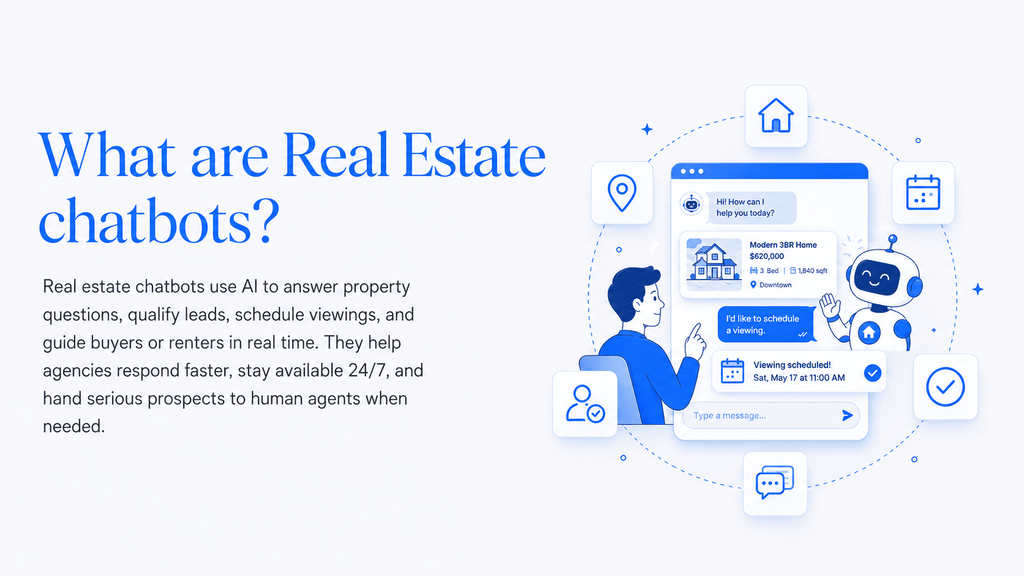
A real estate AI chatbot is a virtual assistant that uses conversational AI to handle buyer and renter inquiries, property searches, and viewing scheduling on a website or messaging channel. It pulls information from listings, CRM records, and internal documents to answer in real time, then hands off complex questions to a human agent when needed.
That last part is what separates it from an FAQ widget. A basic bot matches keywords to canned answers. A real estate AI chatbot reasons through what a specific buyer is asking, checks it against live property data, and takes the next step, whether that’s booking a viewing slot or flagging a hot lead for a human to call.
For a brokerage or agency, this shows up as fewer repeated questions eating agent time and fewer leads sitting untouched overnight.
The gains split cleanly by who’s on each end of the conversation. Agencies get lower cost per lead and cleaner data, buyers get faster answers and fewer repeated calls.

AI chatbots in real estate offer a wide range of functionalities, including:

AI chatbots have several advantages for customers and business:
Building a real estate AI chatbot is easy with YourGPT AI Chatbot. Follow these simple steps to set it up and start engaging with your clients efficiently.
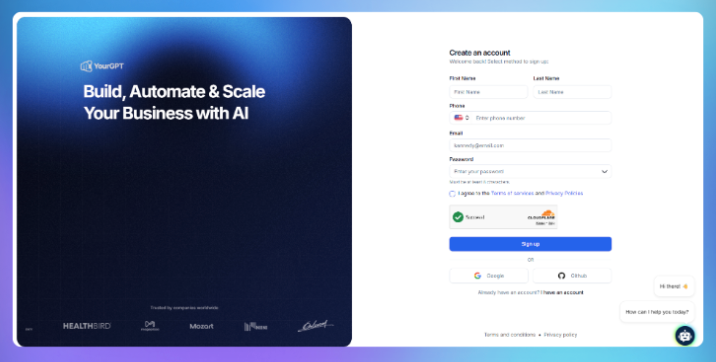
Go to the YourGPT Chatbot page and register for an account. This will give you access to your dashboard the central hub for training, customizing, and deploying your chatbot.
Upload the text, documents, and FAQs that contain your core business information. This allows the AI to give accurate, context-aware answers tailored to your visitors.

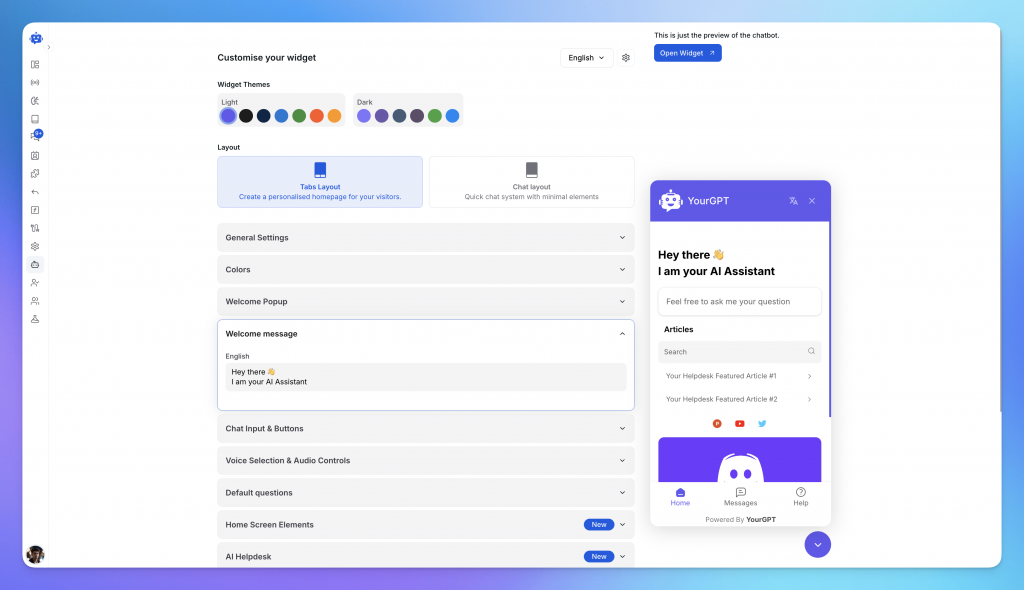
Adjust the chatbot’s colors, chat bubble design, welcome message, and tone so it feels like a natural extension of your brand.
Connect the chatbot to your property data, business tools, and customer-facing channels.
Integrate your CRM, property listings, MLS or IDX feeds, lead management tools, calendars, and customer database so the chatbot can check availability, qualify leads, capture preferences, schedule viewings, and update records.
Deploy it across your website, WhatsApp, Messenger, Instagram, live chat, and other messaging channels used by buyers, renters, and sellers.
You can also add AI voice agents for phone support using the same data, workflows, and integrations.
Once connected, the chatbot can retrieve current property information, complete approved tasks, and transfer complex or high-intent inquiries to a human agent.

Activate your chatbot and watch it interact in real-time! With YourGPT, deploying your chatbot is as simple as the click of a button. Once activated, your chatbot is ready to assist your customers, answer queries, and improve your customer service operations in real estate.
Read these valuable insights from our curated collection of real estate reports and statistics:
These reports and insights show the growing significance of AI integration, particularly in the real estate industry, and underline the immense potential for businesses to use AI-driven solutions like YourGPT AI Chatbot.
Real estate chatbot pricing depends on conversation volume, integrations, channels, number of chatbots, and team size. Smaller brokerages can start with a standard AI chatbot plan, while larger agencies may need advanced or custom plans for higher usage, multiple locations, and deeper CRM or property listing integrations.
No. A real estate chatbot handles repetitive and time-sensitive tasks such as answering property questions, qualifying leads, collecting requirements, and scheduling viewings. Negotiations, relationship building, complex decisions, and closing deals still benefit from a human real estate agent.
Yes. When connected to a calendar, CRM, or booking system, the chatbot can check available time slots, collect buyer details, schedule a property viewing, and send confirmation automatically. Special scheduling requests can also be transferred to the assigned agent.
A real estate chatbot can learn from property websites, listing databases, CRM records, FAQs, spreadsheets, PDFs, and other approved business sources. For frequently changing information such as availability and pricing, live CRM or property listing integrations help keep responses current.
Yes. Real estate chatbots can be deployed across websites, WhatsApp, Messenger, Instagram, live chat, and other messaging channels. This allows buyers, renters, and sellers to get assistance through the platforms they already use.
Yes. A real estate AI chatbot can be especially useful for small brokerages that cannot monitor every inquiry around the clock. It can respond instantly, answer common property questions, qualify leads, and schedule viewings so agents can focus on serious prospects and active deals.
Yes. The chatbot can ask prospects about their budget, preferred location, property type, move-in timeline, financing status, and other qualification criteria. It can then save those details in the CRM and route high-intent leads to the appropriate real estate agent.
Yes. When connected to current property data, the chatbot can use a buyer’s budget, preferred location, property type, bedroom requirements, and other preferences to surface relevant listings and help narrow down suitable options.
The variety of advantages provided by AI chatbots are having a big impact on the real estate sector. These solutions improve customer service, offer 24/7 help, and make various processes more efficient. They also offer personalised assistance, interactive property tours, and support in multiple languages to cater to a global audience.
Recent reports from Grand View Research, McKinsey, and Deloitte show that the chatbot business is expanding quickly, because of advances in AI technology. The real estate industry is increasingly adopting AI solutions such as chatbots, which leads to improved customer interaction, faster procedures, and useful insights. The trend is projected to continue, leading to better client interactions and smoother transactions in the future.
Buyers get instant property answers, relevant recommendations, viewing support, and lead qualification without waiting for your team.
Calculate cost per ticket with one formula and a free calculator, then compare it with the cost of a conversation an AI agent resolves.

Omnichannel support means every channel answers from the same knowledge. Train one AI agent, pick your first channel, and test that answers match.

Self-learning AI agents log the questions they miss. Learn how human review turns those gaps into trained answers and how to run the weekly loop.
Train an AI agent on your return policy, connect the Shopify template in AI Studio to check real orders, and route exceptions to your team.
WISMO means Where Is My Order. Measure your WISMO share from last month’s tickets, fix the tracking gaps, and let an agent answer order status.
Run WordPress customer service alone. Train a YourGPT agent on your help pages, test it on real tickets, install the plugin, and get only the exceptions.