This week in AI | Week 2

Neha
Last updated on February 26, 2024

This week in the field of artificial intelligence, Google revealed Gemma, HuggingFace introduction to Cosmopedia. Additionally, Amazon announced that open-source, high-performing Mistral models will soon be accessible on Amazon Bedrock. By bringing such powerful AI to more users via cloud-based services, new applications may emerge. These advancements show how quickly AI is developing; in certain areas, systems are already capable of doing some tasks that humans could not perform. As a result, the frontiers of what is possible are being redefined at a rapid rate. There are exciting times ahead as the AI community is coming up with new and seemingly unimaginable achievements every week.
Google introduced Gemma, marking a pivotal moment in the democratisation of AI technology. Derived from the same technological lineage as the acclaimed Gemini models, Gemma is designed to foster responsible AI development, offering a suite of lightweight, state-of-the-art open models that promise to revolutionise how developers and researchers build and innovate.
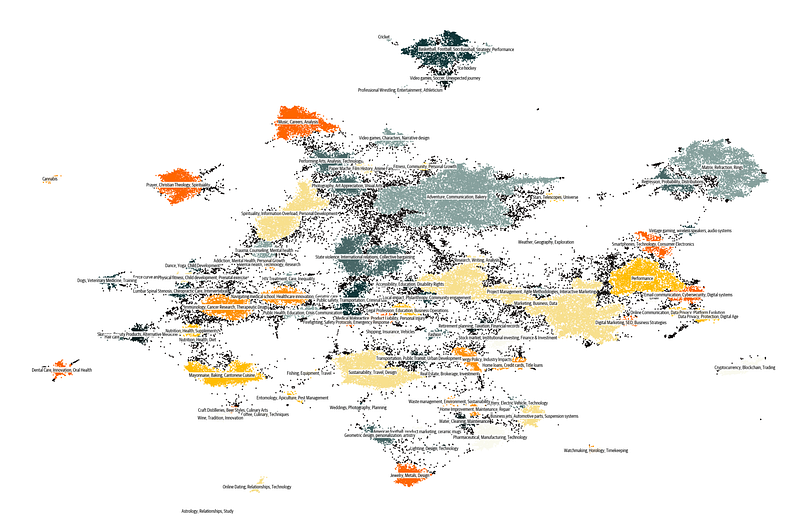
Hugging Face has recently unveiled Cosmopedia v0.1, the largest open synthetic dataset, consisting of over 30 million samples generated by Mixtral 7b. This dataset, comprising various content types such as textbooks, blog posts, stories, and WikiHow articles, totals an impressive 25 billion tokens.
Cosmopedia v0.1 stands out as a gigantic attempt to assemble world knowledge by mapping data from web datasets such as RefinedWeb and RedPajama. It is divided into eight distinct splits, each created from a different seed sample, and covers a wide range of topics, appealing to a variety of interests and inclinations.
Hugging Face includes code snippets for loading certain dataset splits to make it easier to use. A smaller subset, Cosmopedia-100k, is also available for individuals looking for a more easily maintained dataset. The development of Cosmo-1B, a larger model trained on Cosmopedia, demonstrates the dataset’s scalability and adaptability.
Cosmopedia was designed with the goal of maximising diversity while minimising redundancy. Through targeted prompt styles and audiences, continual prompt refining, and the use of MinHash deduplication algorithms, the dataset achieves a remarkable breadth of coverage and originality in content.

In another exciting development, Mistral AI, a France-based AI company known for its fast and secure large language models (LLMs), is set to make its models available on Amazon Bedrock. Mistral AI will join as the 7th foundation model provider on Amazon Bedrock, alongside leading AI companies.
Mistral AI models are set to be publicly available on Amazon Bedrock soon, promising to provide developers and researchers with more tools to innovate and scale their generative AI applications.
This week’s developments highlight a huge drive for more open, accessible, and responsible AI technologies. The AI community continues to push for inclusive, diverse, and ethically grounded innovation, with Google’s Gemma offering cutting-edge models for responsible development, Hugging Face’s Cosmopedia expanding the scope of synthetic data research, and Mistral AI’s strategic move to Amazon Bedrock.
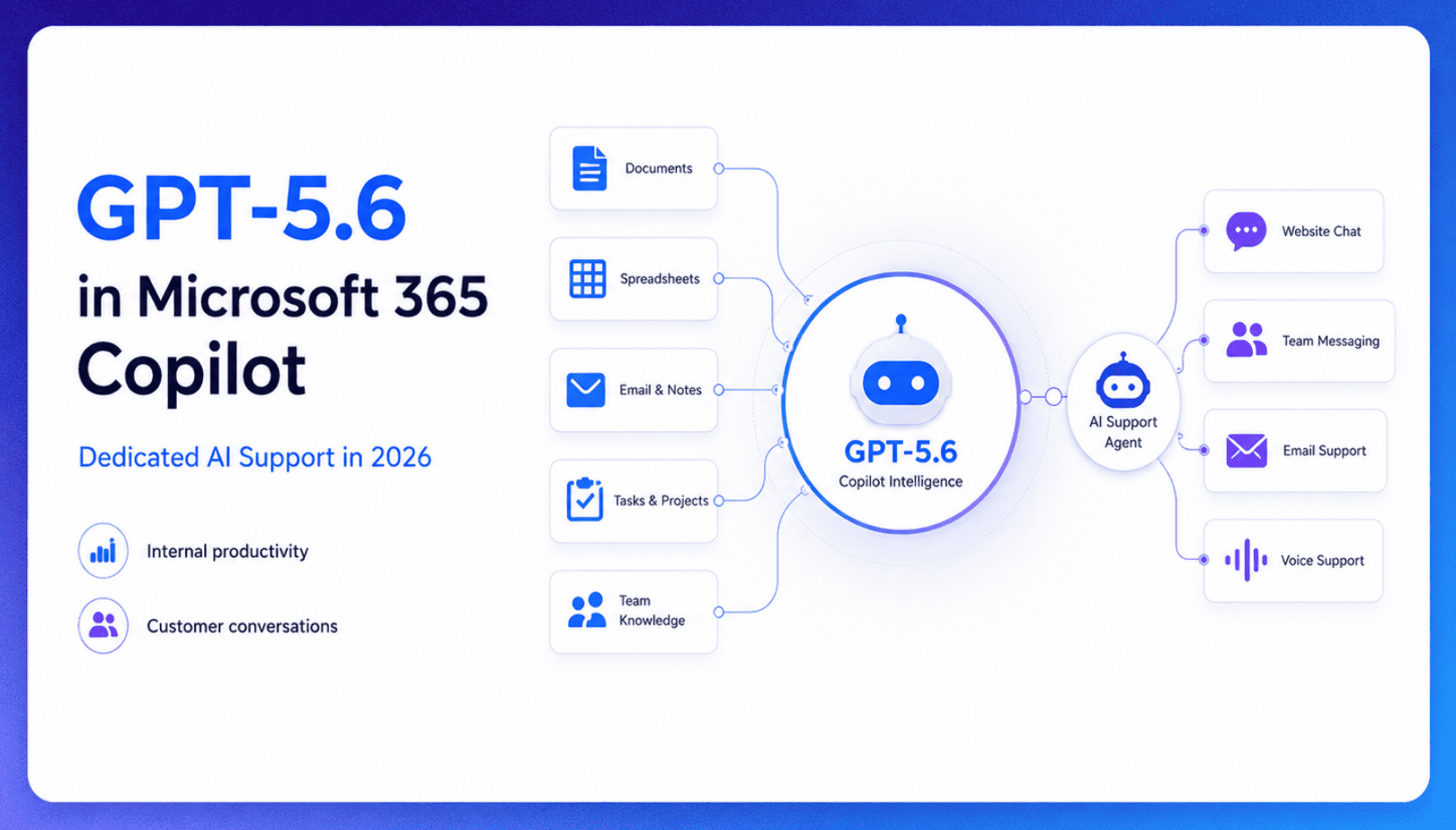
TL;DR Microsoft made GPT-5.6 the preferred model across Word, Excel, PowerPoint, Copilot Chat, and Cowork on July 9, 2026, focusing on internal workplace productivity rather than customer-facing support. Dynamics 365 Service Agent also reached general availability, but it mainly helps human support representatives manage cases within Microsoft’s existing permission structure and requires separate licensing. A […]


TL;DR Cheap frontier models now compete for the same high-volume support workloads, with DeepSeek V4 remaining the lowest-cost option in this comparison. Kimi K2.6 and GLM-5.2 are open-weight and self-hostable, while Qwen 3.7 Plus is proprietary and available only through an API. Claude Haiku 4.5 is the only model here that its developer explicitly recommends […]
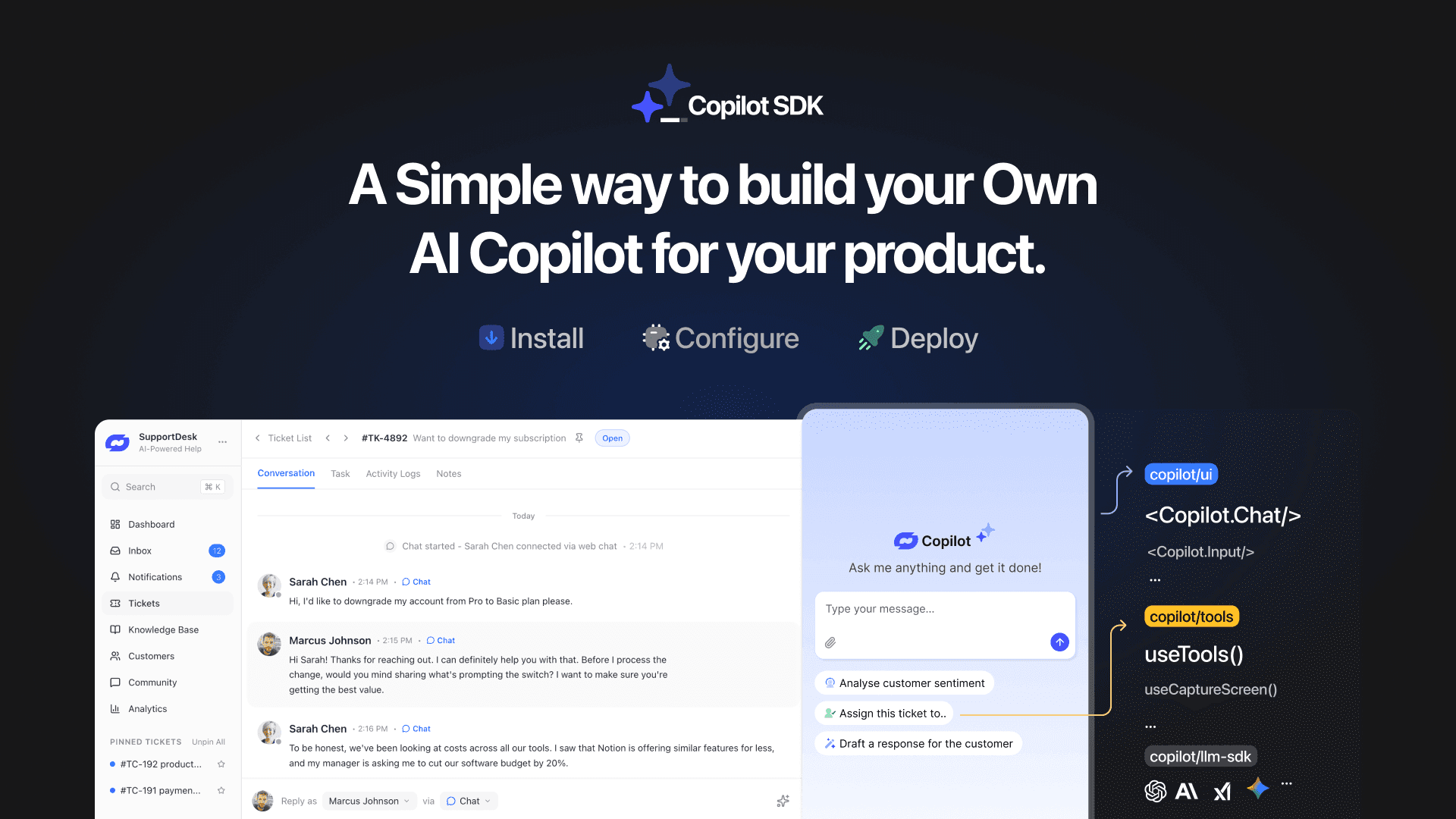
TL;DR YourGPT Copilot SDK is an open-source SDK for building AI agents that understand application state and can take real actions inside your product. Instead of isolated chat widgets, these agents are connected to your product, understand what users are doing, and have full context. This allows teams to build AI that executes tasks directly […]

TL;DR YourGPT 2.0 adds AI Studio for building, testing, and debugging automated workflows. It includes native MCP integration for more than 100 tools, upgraded voice agents, and native SDKs for iOS and Android applications. With shared context across web, WhatsApp, Instagram, Telegram, and mobile, YourGPT turns conversations into real actions across support, sales, and operations. […]

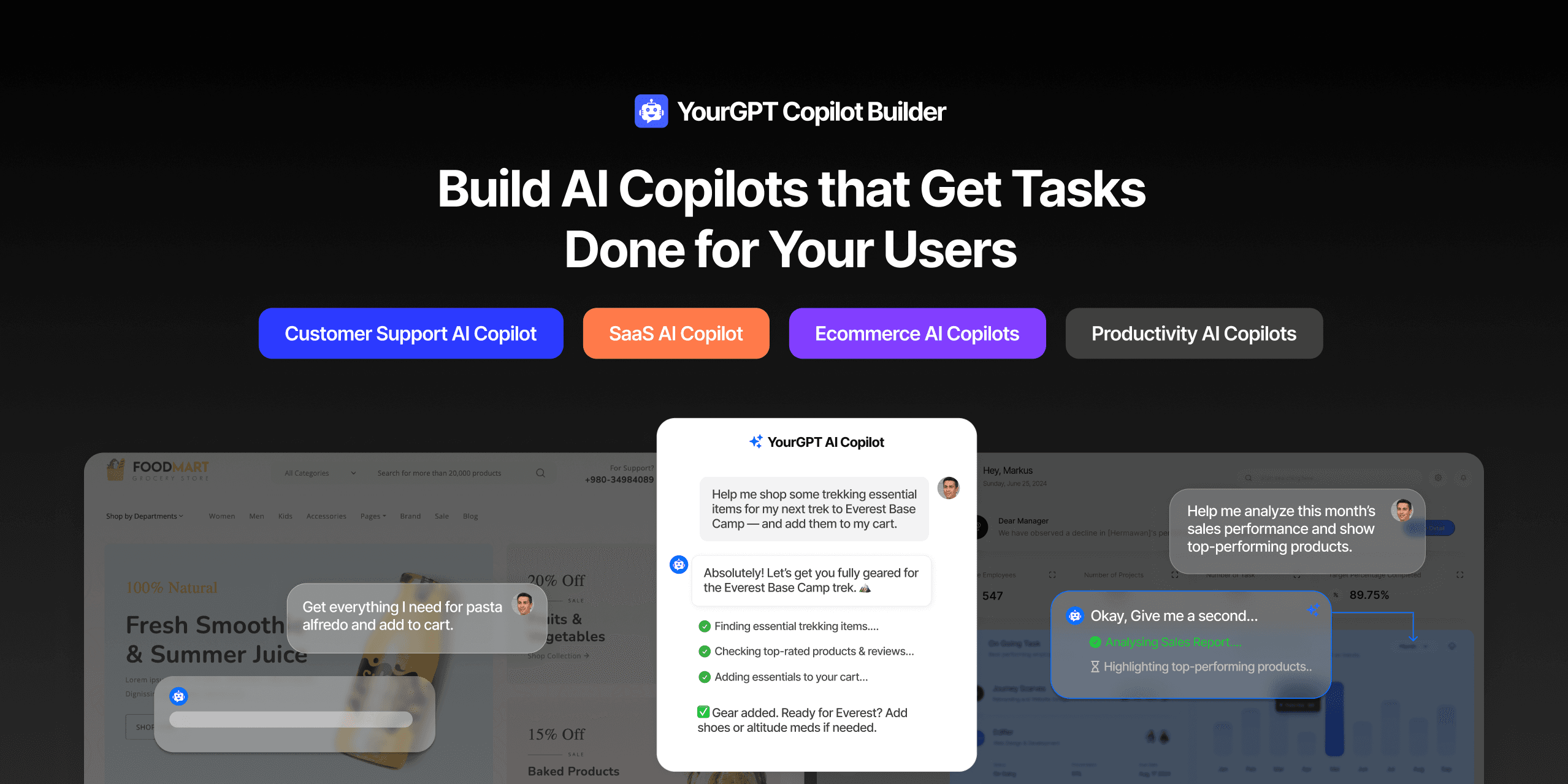
TL;DR Most AI tools provide answers but still leave users to complete the task through search results, settings pages, or checkout flows. AI Copilot Builder closes that gap by executing registered actions directly inside the product instead of only explaining what to do. Search, cart updates, account changes, and multi-step bookings can all happen within […]
TL;DR Building an AI-powered Telegram bot does not require custom development. BotFather provides the Telegram bot token, while a no-code platform like YourGPT handles AI training, free-form conversations, and the Telegram connection. This guide covers the full setup, from creating the bot in BotFather to connecting it with YourGPT and taking it live. Most Telegram […]