Improve Customer Satisfaction with AI-powered Chatbots

Rohit Joshi
Last updated on August 5, 2026
AI-powered chatbots help customer support teams answer routine questions faster and provide consistent support around the clock.
By reducing wait times and automating everyday requests, chatbots give human agents more time to handle complex or sensitive cases.
When connected to a reliable knowledge base with clear handoff rules, chatbots keep responses accurate across channels and languages while strengthening customer relationships.
In today’s competitive business environment, customer satisfaction plays a major role in business growth. Customers do not judge a company only by its products or services anymore. They also care about how quickly, clearly, and personally a business responds to their needs.
Whether a customer has a question about pricing, needs help with an order, wants to book an appointment, or is facing a technical issue, they expect fast support at any time of the day. Delayed responses, long waiting times, and limited support hours can quickly lead to frustration.
This is where AI-powered chatbots can make a real difference.
AI chatbots are changing what customers expect from support. Businesses adopting AI-driven customer service are increasingly able to respond faster, reduce wait times, and handle customer queries more efficiently at scale. By making support more accessible, consistent, and immediate, AI chatbots play a key role in improving overall customer satisfaction.
In this blog, we will explore how AI-powered chatbots work, how they improve customer satisfaction, and how businesses can use solutions like YourGPT AI Chatbot to deliver smarter customer support.
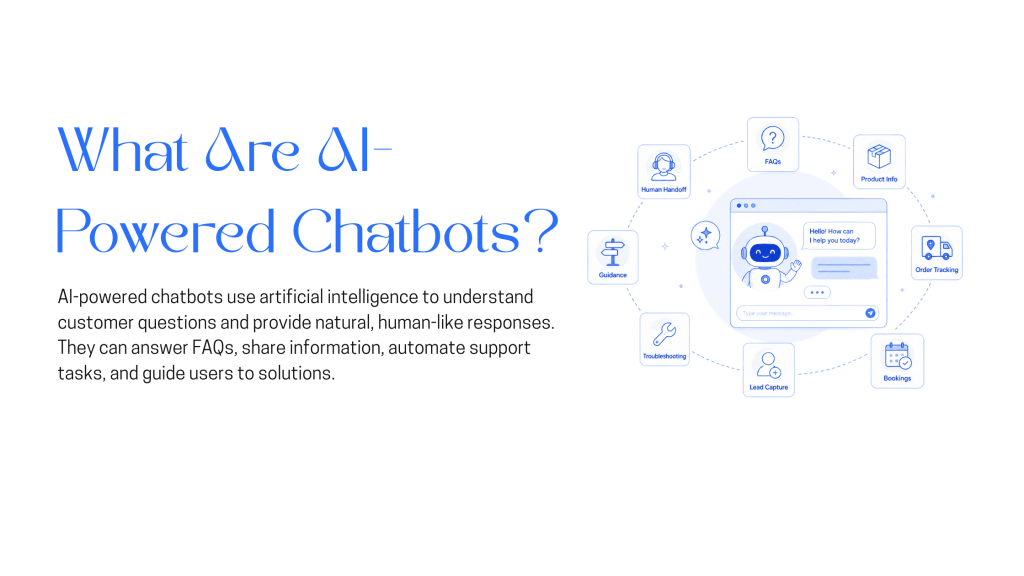
AI-powered chatbots are intelligent virtual assistants that can communicate with users through websites, mobile apps, messaging platforms, and customer support systems.
Unlike traditional rule-based chatbots that follow fixed scripts, AI chatbots use technologies such as artificial intelligence, natural language processing, and machine learning to understand customer questions and respond in a more natural way.
They can help customers with tasks such as:
Over time, AI chatbots can also improve by learning from customer interactions, helping businesses deliver more accurate and relevant support.
Customer satisfaction is directly connected to business success. A satisfied customer is more likely to return, recommend your business, leave positive reviews, and trust your brand.
On the other hand, poor customer support can damage the customer experience. Even if a product is good, customers may leave if they cannot get help when they need it.
Common customer service problems include:
AI-powered chatbots help solve many of these challenges by making customer support faster, more consistent, and more available.
Discover how AI chatbots help businesses deliver faster support, personalised customer experiences, and 24/7 assistance while reducing response times and improving overall customer satisfaction.
Speed is one of the most important factors in customer satisfaction. Customers do not want to wait hours or days for simple answers.
AI chatbots can respond instantly to common customer questions, such as:
The average AI chatbot responds in under three seconds, compared to an average 12-hour wait for email support. By providing immediate answers, chatbots reduce waiting time and help customers solve problems faster.
Customers may need help outside regular business hours, especially if your business serves people in different cities, countries, or time zones.
AI-powered chatbots are available 24 hours a day, 7 days a week. This means customers can get support at night, on weekends, and during holidays without waiting for a human agent to become available.
34.7% of customers say 24/7 availability is the single improvement they most want from customer service (Salesforce, 2024). This always-on availability improves customer satisfaction because customers feel supported whenever they need assistance.
Support teams often spend a lot of time answering the same questions again and again. These repetitive tasks can slow down response times and reduce team productivity.
AI chatbots can automate routine tasks such as:
Support teams using AI are handling up to 10x more tickets without additional headcount (Zoom, 2025). This allows human support agents to focus on more complex, sensitive, or high-value customer issues.
Modern customers expect support that feels relevant to their needs. AI-powered chatbots can provide more personalised responses based on customer behaviour, previous interactions, preferences, or the information shared during the conversation.
For example, a chatbot can:
Personalised support makes customers feel understood, which helps build trust and loyalty.
Language should not be a barrier between a business and its customers. AI-powered chatbots can support customers in multiple languages, making it easier for businesses to connect with a wider audience.
YourGPT AI Chatbot supports conversations in 100+ languages, helping businesses communicate with customers from different regions and cultures.
This is especially useful for e-commerce companies, SaaS businesses, travel brands, educational platforms, and global service providers.
Human agents can usually handle only a limited number of conversations at a time. During peak hours, this can lead to long queues and delayed responses.
AI chatbots can manage multiple conversations at the same time without reducing response speed. Whether 10 customers or 1,000 customers need help, chatbots can respond instantly and consistently.
This makes AI chatbots highly useful for businesses that experience seasonal traffic, product launches, high customer demand, or growing support needs.
Customers expect reliable information. If different support agents provide different answers, it can create confusion and reduce trust.
AI chatbots can be trained using a company’s knowledge base, FAQs, policies, product documents, and support content. This helps them provide consistent answers across different conversations.
87.2% of consumers report positive or neutral experiences with AI chatbots (Ecommerce Bonsai, 2024), which reflects how far the technology has come in delivering reliable, trustworthy support. Consistent support improves the customer experience and helps businesses maintain a professional brand image.
AI chatbots help businesses automate customer conversations, provide instant support, and complete routine tasks across industries. From answering FAQs to booking appointments and generating leads, they improve customer experience while reducing manual workload.
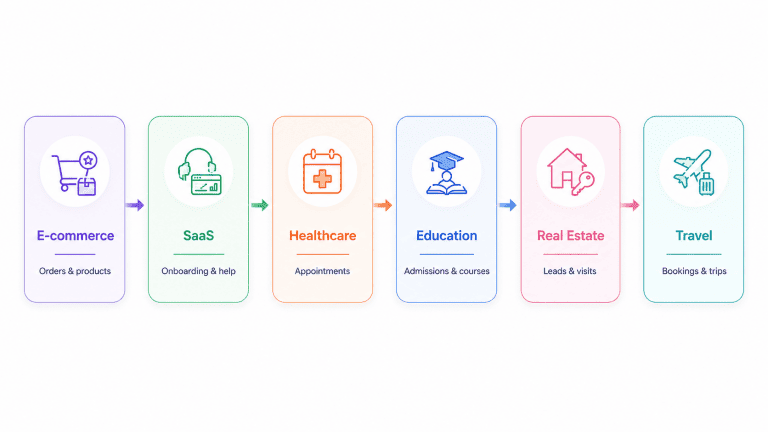
AI-powered chatbots can be used across many industries. Here are some practical examples:
AI chatbots are not meant to completely replace human support agents. Instead, they work best when they support human teams.
Chatbots can handle simple and repetitive queries, while human agents can focus on complex problems that require empathy, judgement, or detailed attention.
For example, a chatbot can answer a basic question about refund policy. But if a customer has a serious complaint or a special case, the chatbot can transfer the conversation to a human support agent.
This combination creates a better customer support system:
The key is giving customers the right type of support at the right moment.
A conversational AI tool earns strong satisfaction scores by getting the basics right: fast, accurate, consistent answers, in the customer’s own language, without losing context when a case needs a person. YourGPT AI Chatbot is built around those requirements, with model choice across OpenAI, Anthropic, Google, and xAI rather than a single provider.
What that looks like in practice:
The common thread is control: businesses decide what the chatbot answers, when it hands off, and how performance gets measured.
To get the best results from an AI chatbot, businesses should use it strategically. A chatbot becomes more effective when it is properly trained, monitored, and connected to useful business information.
For those interested in AI-powered chatbots and looking to implement them in their businesses, here are some recommended resources:
Don’t miss the opportunity to redefine your customer service standards.
Modern AI chatbots use natural language processing to interpret customer intent, which lets them handle phrasing variations and follow-up questions within a conversation. Accuracy depends heavily on training. A chatbot connected to a business’s own FAQs, policies, and product documentation answers far more reliably than one relying on generic knowledge alone.
Pricing varies by platform, conversation volume, and included features, spanning free basic tools for very small teams to enterprise plans with custom pricing and dedicated support. Most vendors offer tiered monthly plans, so businesses typically start on a lower tier and scale up as conversation volume grows.
A well-configured chatbot recognizes low-confidence situations and hands the conversation to a human agent, carrying the conversation history along so the customer does not repeat themselves. Skipping this handoff step risks frustrating customers with generic or incorrect answers on edge cases.
Most AI chatbot platforms support integrations with common CRM, helpdesk, and messaging tools, letting the chatbot pull customer records, log tickets, or push leads without manual data entry. Integration depth varies by vendor, so checking a platform’s integration list against the tools already in use is a useful step before choosing one.
Reputable AI chatbot platforms encrypt data in transit and at rest, offer role-based access controls, and publish compliance certifications such as SOC 2 or GDPR alignment. Businesses handling sensitive information should confirm a vendor’s specific certifications and data-retention policies, since standards vary between providers.
Basic setup, connecting a chatbot to a website with a handful of FAQs, often takes under an hour on no-code platforms. Training the chatbot on a full knowledge base, testing edge cases, and configuring handoff rules for a production-ready deployment typically takes anywhere from a few days to a few weeks, depending on the size of the knowledge base and the number of channels involved.
Customer satisfaction is ultimately about one thing: making people feel heard and helped at the moment they need it most. AI-powered chatbots give businesses the tools to do that at scale, without sacrificing quality or consistency.
The businesses seeing the strongest results are not those who simply installed a chatbot. They are the ones who trained it well, connected it to real customer data, and paired it with human agents for the conversations that genuinely need them.
YourGPT AI Chatbot is built to help businesses get that balance right. Start improving your customer support today.
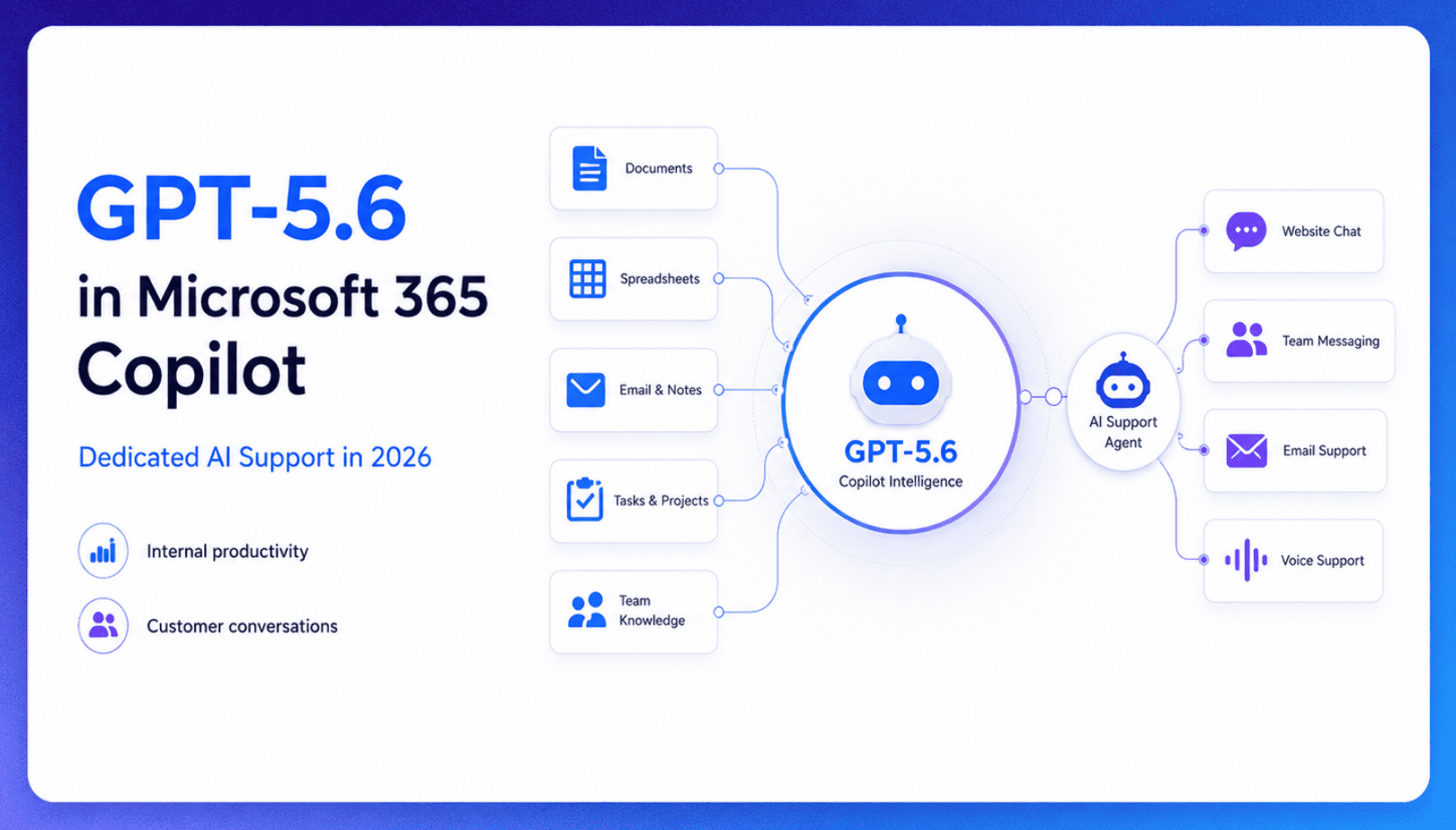
TL;DR Microsoft made GPT-5.6 the preferred model across Word, Excel, PowerPoint, Copilot Chat, and Cowork on July 9, 2026, focusing on internal workplace productivity rather than customer-facing support. Dynamics 365 Service Agent also reached general availability, but it mainly helps human support representatives manage cases within Microsoft’s existing permission structure and requires separate licensing. A […]

TL;DR Cheap frontier models now compete for the same high-volume support workloads, with DeepSeek V4 remaining the lowest-cost option in this comparison. Kimi K2.6 and GLM-5.2 are open-weight and self-hostable, while Qwen 3.7 Plus is proprietary and available only through an API. Claude Haiku 4.5 is the only model here that its developer explicitly recommends […]
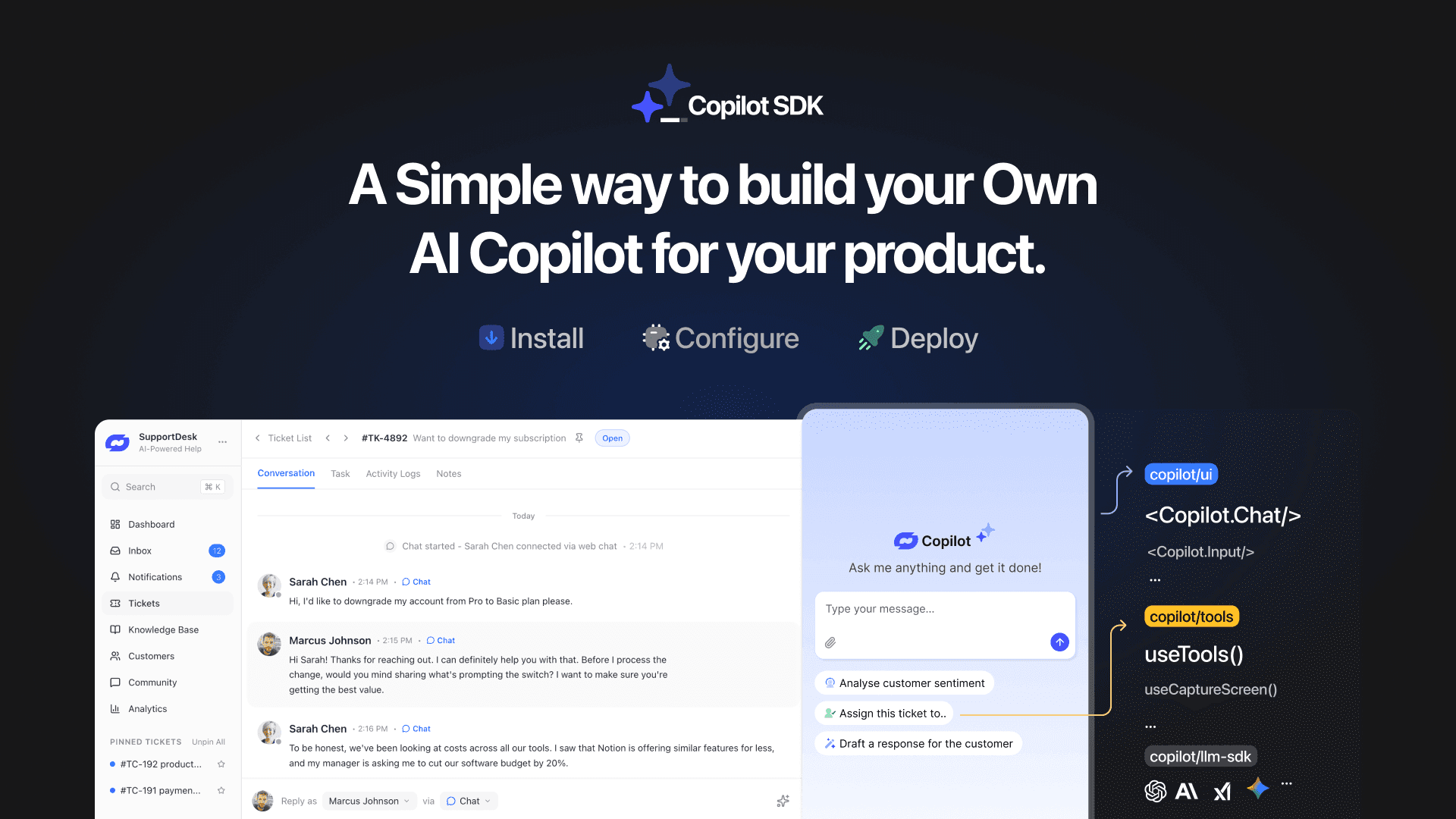
TL;DR YourGPT Copilot SDK is an open-source SDK for building AI agents that understand your application state, user context, and what is happening inside your product. Instead of working like isolated chat widgets, these agents connect directly with your product and can take real actions within existing workflows. This helps teams build contextual AI experiences […]

TL;DR YourGPT 2.0 adds AI Studio for building, testing, and debugging automated workflows. It includes native MCP integration for more than 100 tools, upgraded voice agents, and native SDKs for iOS and Android applications. With shared context across web, WhatsApp, Instagram, Telegram, and mobile, YourGPT turns conversations into real actions across support, sales, and operations. […]
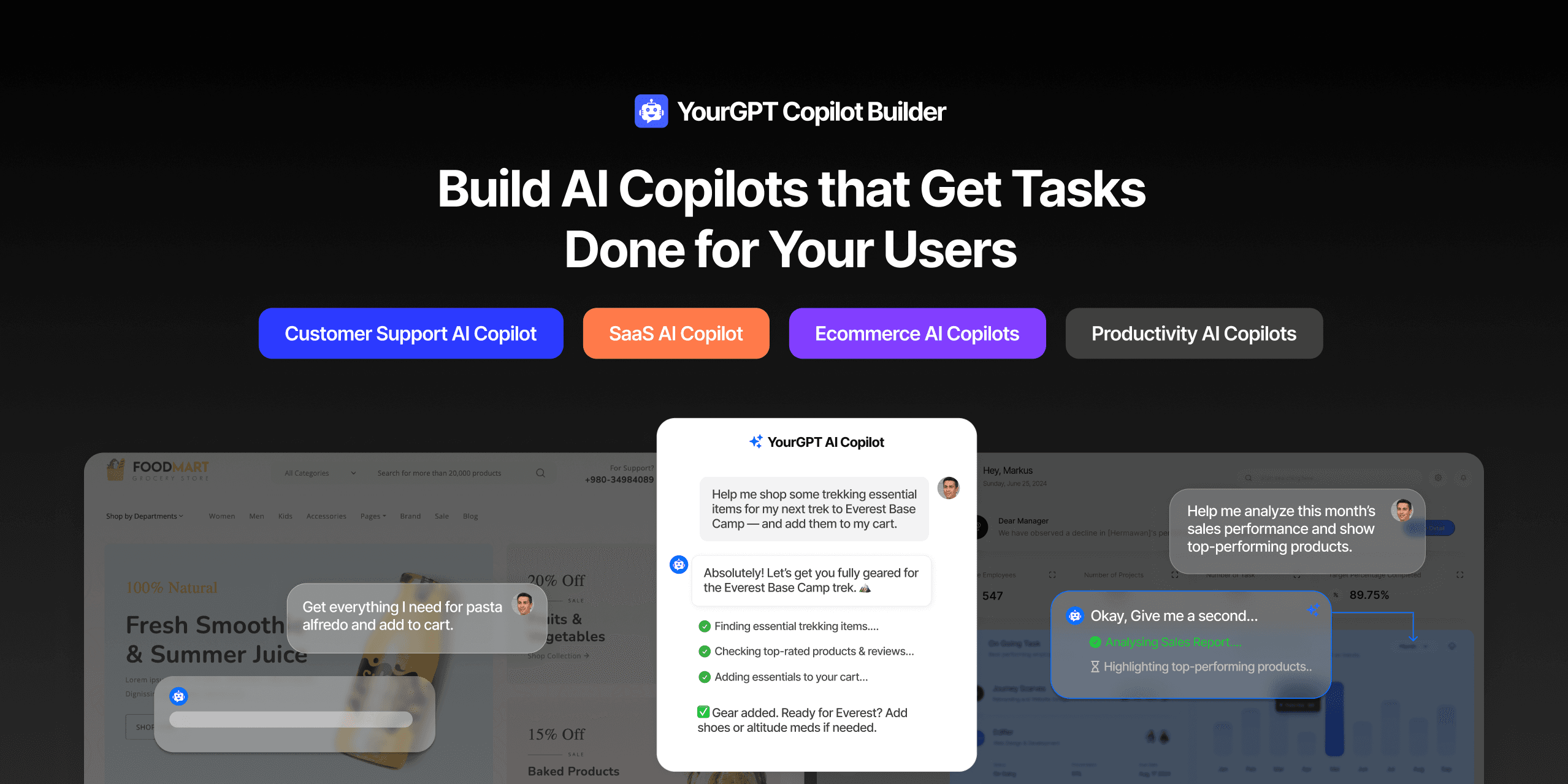
TL;DR Most AI tools provide answers but still leave users to complete the task through search results, settings pages, or checkout flows. AI Copilot Builder closes that gap by executing registered actions directly inside the product instead of only explaining what to do. Search, cart updates, account changes, and multi-step bookings can all happen within […]
TL;DR Building an AI-powered Telegram bot does not require custom development. BotFather provides the Telegram bot token, while a no-code platform like YourGPT handles AI training, free-form conversations, and the Telegram connection. This guide covers the full setup, from creating the bot in BotFather to connecting it with YourGPT and taking it live. Most Telegram […]
