No-Code ChatGPT Integration with Line App: A Step-by-Step Tutorial

Rohit Joshi
Last updated on July 27, 2026
YourGPT lets you connect a chatbot to LINE without coding by using a Channel ID and Channel Access Token from the LINE Developer Console.
The setup takes five simple steps: create a chatbot, generate LINE credentials, add them to YourGPT, activate the integration, and enable webhook notifications.
Once configured, your LINE chatbot can automatically receive and respond to customer messages without custom integrations or technical expertise.
The Line app is one of the most popular messaging apps in Asia such as Japan, Taiwan, Thailand, and Indonesia. Around 73% of its users are active every day. The integration of GPT with the Line chat app, achievable without any coding expertise, marks a transformative moment in user engagement and operational efficiency, making it easier for businesses targeting the Asian market to boost their operations. With GPT, it is now possible to automate tasks and have creative conversations with customers seamlessly, providing a unique experience that sets the Line app apart from other messaging apps.
This integration allows users to have more meaningful and productive interactions, while businesses can greatly improve their customer service. This demonstrates the developing nature of online communication tools, where ease of use meets advanced AI technology. Let’s look at how this Line chatbot integration works and what opportunities it opens up for both individuals and businesses.
The Line app is more than just a messaging platform and has become more popular in Asia over 84 million of its users active monthly. You can now use ChatGPT with Line to have creative conversations, automate tasks, and enjoy interactive experiences.
The Line app has a large audience in Asia, integrating ChatGPT with line presents an unparalleled opportunity for businesses to improve their customer service.
You can use ChatGPT to turn your Line app into a hub of unlimited possibilities. Let us see how you can do this!

The Line app is a versatile communication platform that offers a wide range of features beyond just text messaging. It allows users to join group chats and share multimedia files. The line has established itself as a reliable messaging app. You can integrate ChatGPT into your Line app by following the below steps.
1. Create Your Account on YourGPT:

Start the process by registering or logging in to YourGPT to create and personalise ChatGPT for your Line chatbot.
2. Create Your Chatbot:
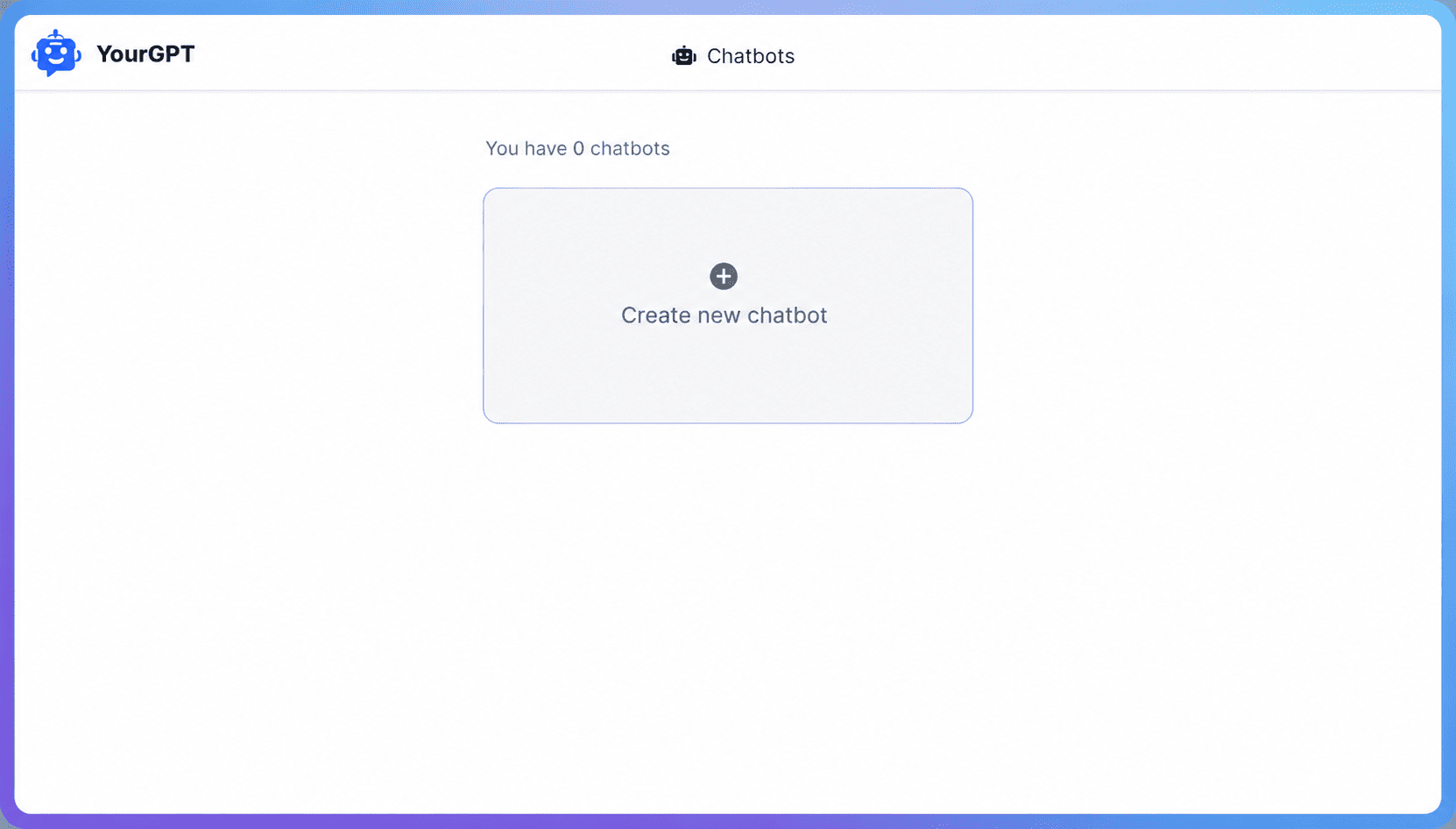
Once registered, navigate to the chatbot section. Simply add your chatbot’s name, upload relevant documents, and customise the base prompt.
3. Get Channel ID and Access Token for Line Integration:

4. Go to Integration -> Line:
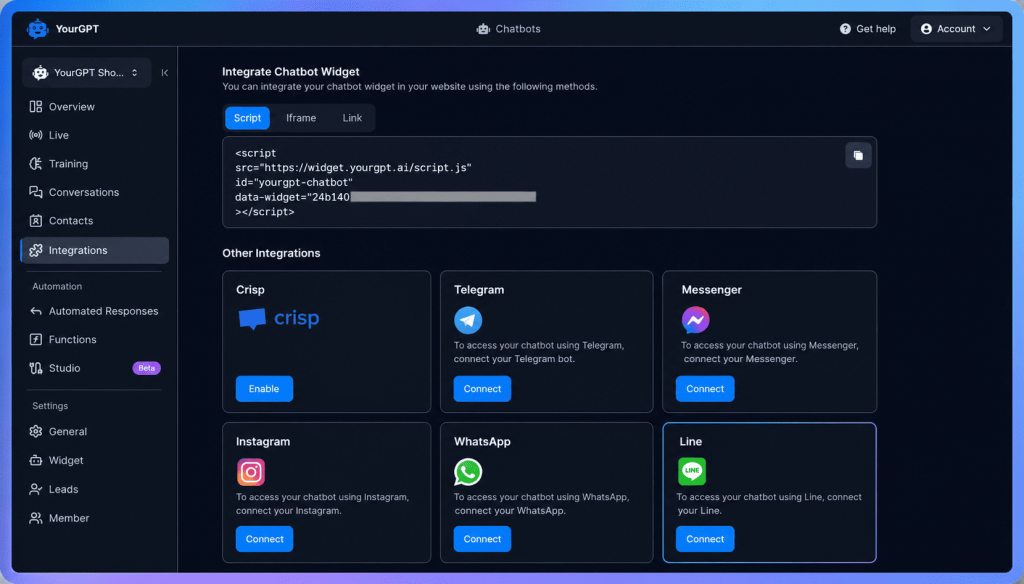
5. Enable Line:

Activate your ChatGPT Bot by clicking on enable, and now your Line chat app is ChatGPT integrated, and your ChatGPT Bot is ready to engage with users!
6. Webhook Notifications:
For a detailed guide, you can refer to the documentation for integrating GPT with the Line chat App.
Suggested Reading
Connecting ChatGPT to Line does more than automate replies across a market of roughly 194 million monthly active users. It changes what a support or sales team can realistically handle at that scale.
2. Streamlined Cross-Platform Integration:
3. Dynamic Multilingual Communication:
4. Enhanced Customer Engagement:
5. Automated Task Efficiency:
LINE chatbots require a Messaging API to work. Since API is just a set of code that enables data to pass seamlessly between your bot server and the LINE platform, it doesn’t have any user interface (UI) which your team can use to respond to customer queries. And for that, you need a Customer Messaging Software which provides a common interface to your team using which they can respond to customer queries.
LINE bots make it easy for you to help your customers with common queries while significantly reducing their wait time. Here’s a list of the top 8 things a LINE chatbot can do for your customers.
Using an AI chatbot for Line can significantly enhance user engagement by providing instant and intelligent responses. It automates routine tasks, improves customer service efficiency, and enables dynamic interactions, making it easier for businesses to connect with their audience in the Asian market.
AI for Line app enhances customer service by providing quick and contextually relevant responses. It automates common inquiries, offers 24/7 support, and engages users in meaningful conversations, thereby improving overall satisfaction and streamlining communication processes.
AI chatbots can bring numerous benefits to Line app businesses. Here are some key advantages:
To set up a Line app chatbot with ChatGPT, follow these steps:
Integrating an AI chatbot with Line app opens several opportunities for businesses, including enhanced customer service through quick and intelligent responses, improved engagement with dynamic conversations, and expanded reach through multilingual communication. It also allows for automation of routine tasks, leading to more efficient operations and better resource allocation.
The integration of ChatGPT with Line enhances customer engagement by enabling personalized and interactive conversations. GPT’s advanced natural language processing allows for tailored responses and meaningful interactions, which help in building a stronger connection with users and keeping them engaged with your brand.
ChatGPT offers features such as automated responses to frequently asked questions, context-aware interactions, multilingual support, and the ability to handle complex queries when used as a Line app chatbot. For businesses, it facilitates engaging conversations and streamlines communication.
The integration of ChatGPT with the Line chat app is a significant step towards expanding your communication capabilities. By using GPT’s cutting-edge capabilities within Line, you can bring a unique combination of creativity and automation to your business By following the simple steps outlined, you can position your business at the forefront of customer service excellence, setting yourself apart from the competition. By integrating ChatGPT seamlessly into the fabric of your Line app interactions, you open up a world of boundless potential and possibilities. So why to wait? Take advantage of this solution today and unlock the true potential of AI for your business!
Group new-account tickets by onboarding stage, train an AI agent on your docs, and place it in the product where new users get stuck.

AI agents can now find and buy products for shoppers. See what agentic commerce changes for a Shopify store and which support jobs stay yours.

Build a Halloween shopping assistant for Shopify with YourGPT. Set up product recommendations, stock checks, cart actions and human support before launch.

See what a good customer effort score looks like, how to word and calculate CES on each scale, and which support habits raise customer effort.
Tier 1 support handles first contact. See how Tiers 0 to 3 differ and what changes when an AI agent becomes your first line.
The 12 customer service metrics to track when an AI agent resolves tickets, with a formula for each and a baseline built from your own last month.