The 7 Best Alternatives to Ada CX for Customer Service in 2026

Rajni
Last updated on August 6, 2026

Ada CX is an enterprise-focused AI customer support platform designed to automate conversations across chat, voice, email, and other service channels. It helps large organizations manage high support volumes, automate complex resolutions, and deliver consistent customer experiences at scale.
Its enterprise capabilities make it a strong option for global brands with established support operations, dedicated implementation resources, and complex security or compliance requirements. However, that enterprise-first approach may not suit every support team.
Businesses may look for Ada alternatives when they need faster deployment, more control over workflows, transparent pricing, easier customization, or a platform that works well without a large technical or customer experience team. Some organizations may also prefer a solution that combines AI automation, human handoff, integrations, and knowledge management in a simpler setup.
For growing startups, mid-sized businesses, and enterprise customer service teams, choosing the right AI support platform directly affects resolution speed, agent workload, operational costs, and customer satisfaction. The right platform should match the complexity of your support operation rather than adding unnecessary implementation overhead.
In this blog, we review seven strong alternatives to Ada CX. The comparison focuses on the factors that matter in daily customer service operations: automation depth, setup requirements, workflow flexibility, human handoff, integrations, pricing, and scalability. The goal is to help you choose a platform that fits how your support team actually works in 2026.
Ada CX is widely used for customer service automation, but it does not suit every business or support workflow. As support operations grow, some limitations become harder to ignore, which leads many teams to consider other platforms.
1. Cost Efficiency: Support volume increases quickly, and costs often rise with it. Ada’s pricing can become difficult to manage for small businesses and growing teams. Many alternatives offer pricing that scales more gradually and remains predictable.
2. Customisation Options: Brand voice and conversation behavior directly shape customer experience. Some teams find Ada restrictive when deeper control over chatbot logic, workflows, or interface design is needed. Alternatives often allow more flexibility to match brand and operational requirements.
3. Automation Flexibility: Ada is effective for predefined intents, but complex or multi-step support cases require more adaptable automation. Platforms that support conditional logic and dynamic workflows handle these scenarios more effectively.
4. Integration Capabilities: Customer support depends on connected systems such as CRM, billing, and ecommerce tools. Limited integrations increase manual effort, while many alternatives provide broader options to connect and automate across existing systems.
| Platform name | Best for |
|---|---|
| YourGPT AI | Businesses looking for an AI-first platform to build custom chatbots trained on their own data with advanced automation |
| Zendesk | Support teams needing a mature ticketing system with analytics and omnichannel support |
| Aivo | Companies focused on AI-driven conversations for personalised customer interactions |
| Certainly IO | Businesses aiming to improve customer engagement through personalised automation |
| Freshdesk | Teams that need an easy-to-use ticketing platform with built-in automation and AI assistance |
| Gorgias | E-commerce brands that want a helpdesk tightly integrated with store and order data |
| Hiver | Teams managing shared inboxes who need collaborative workflows and visibility |
Let us explore these alternatives based on key criteria such as features, pricing, user interface, customer support, integration options, and unique selling points.
YourGPT is a flexible AI customer support platform for businesses looking for an alternative to Ada CX. It helps teams automate customer support, sales, and operational workflows using AI agents, no-code tools, and customizable automation.
Businesses can train AI chatbots on their own websites, documents, FAQs, and internal knowledge, then deploy them across web chat, WhatsApp, Instagram, email, and other customer touchpoints. The platform also supports human handoff, API actions, integrations, and visual workflows for handling more than basic support questions.
Compared with enterprise-focused platforms like Ada, YourGPT gives teams greater control over chatbot behavior, workflows, integrations, and deployment without requiring a large implementation team. It is suitable for growing businesses and support teams that need faster setup, flexible automation, and the ability to build AI-driven customer experiences around their existing processes.
Starts at $59/month, with a 7-day free trial and access to all core features (no credit card required).
Visual no-code editor with full customisation over tone, branding, and logic flows.
Includes live agent collaboration, smart routing, and detailed analytics for CSAT and resolution tracking.
Supports multi-source training and offers API access for advanced workflows (developer help may be needed).
Why choose YourGPT over Ada CX?
YourGPT offers more than just automated chat it brings chat, voice, human handoff, and internal team tools into one platform. Ideal for teams that want full control over their AI operations without jumping between tools.
Discover how YourGPT AI chatbot can streamline your customer service
No credit card • 7 days full access

Zendesk is a customer service platform built around a robust ticketing system that helps businesses manage, track, and resolve customer enquiries at scale. It centralizes conversations from email, chat, social channels, and voice into a single workspace for support teams. Zendesk offers automation tools, reporting, and analytics to improve response times and visibility across support operations. It is commonly used by mid-sized and enterprise teams that require structured workflows and detailed performance tracking.

Aivo is a conversational AI platform focused on automating customer support through chatbots and virtual assistants. It uses natural language processing to handle customer enquiries across multiple channels, including web and messaging apps. The platform is designed to deliver personalized responses based on user intent and context. Aivo is often used by businesses that want to reduce support workload while maintaining consistent, AI-driven customer interactions.

Certainly is a conversational AI platform designed to automate customer support and improve customer engagement. It enables businesses to build AI-powered chatbots that deliver personalized responses across web and messaging channels. The platform focuses on guiding customers through conversations, reducing repetitive enquiries, and improving resolution rates. Certainly is often used by teams looking to combine automation with structured customer journeys.

Freshdesk is a customer support platform centered on ticketing and helpdesk management. It brings customer enquiries from email, chat, phone, and social channels into a single workspace. The platform includes automation, SLA management, and AI-assisted tools to help teams respond faster and stay organized. Freshdesk is commonly used by small to mid-sized businesses that need a structured yet easy-to-use support system.

Gorgias is a customer support platform built specifically for e-commerce businesses. It centralizes support conversations from email, live chat, and social channels while connecting directly to store and order data. The platform uses automation and AI to handle repetitive enquiries such as order status, refunds, and shipping updates. Gorgias is commonly used by online stores that need fast, context-aware support tied closely to their ecommerce operations.

Hiver is a customer support platform built around shared inboxes for teams using Google Workspace. It helps support teams manage customer enquiries directly from Gmail without switching tools. Hiver offers features such as assignment rules, SLAs, automation, and analytics to improve response times and accountability. It is commonly used by teams that rely heavily on email-based support and collaborative workflows.
Below is a quick comparison of the seven best Ada CX alternatives.
| Feature | Ada CX | YourGPT AI | Zendesk | Aivo | Certainly | Freshdesk | Gorgias | Hiver |
|---|---|---|---|---|---|---|---|---|
| Primary focus | Intent-based AI automation | AI-first workflows & agents | Ticketing & support ops | Conversational AI | Guided AI conversations | Helpdesk ticketing | Ecommerce support | Email collaboration |
| Automation depth | Moderate | Advanced workflows | Rules & macros | AI-driven flows | Structured automation | Basic automation | Order-based automation | Email rules |
| Handles complex queries | Limited | Strong | Agent handled | Good | Moderate | Agent handled | Good for ecommerce | Manual |
| Omnichannel support | Chat-focused | Web, messaging, email, voice | Email, chat, phone | Web & messaging | Web & chat | Email, chat, phone | Email, chat, social | Email only |
| Integrations | Limited actions | Deep system integrations | Extensive marketplace | API focused | CRM integrations | Helpdesk tools | Shopify, ecommerce | Google Workspace |
| Best fit | FAQ automation | AI-first teams | Large support teams | Conversational AI needs | Guided customer journeys | SMB helpdesks | Ecommerce brands | Email-driven teams |
Ada CX may become less suitable when a support team needs more flexible workflows, transparent pricing, faster deployment, or greater control over complex customer conversations. Teams handling account-specific and multi-step issues may prefer a platform that provides customizable workflows and deeper integrations.
Yes. YourGPT AI lets teams train agents on their websites, PDFs, FAQs, Notion pages, and other business data. Agents can be deployed across web chat, WhatsApp, Messenger, Telegram, LINE, email, and voice, with workflow automation and live agent handoff included. Plans start at $59 per month with a seven-day free trial. Disclosure: YourGPT AI is a Delta4 Infotech product.
Intent-based bots match customer queries to predefined categories and scripted paths. AI-first platforms use customer context, business knowledge, and connected tools to provide relevant answers and trigger actions. This makes them more effective for multi-step requests that cannot be handled through a fixed conversational flow.
It depends on the support model. Ticketing is important for structured queues, ownership, and SLA tracking. Automation matters when the goal is to reduce ticket volume by resolving repetitive requests immediately. Many teams benefit from a platform that combines both capabilities.
Choose a platform with conditional logic, contextual follow-up questions, workflow steps, and integrations. These capabilities let the AI collect the required information, access connected systems, complete approved actions, and escalate the conversation when human judgment is needed.
An ecommerce-focused helpdesk connects support conversations with customer, product, order, shipping, and returns data. This reduces manual searching and helps agents or AI resolve common requests such as order tracking, delivery updates, cancellations, and refunds more quickly.
Yes. Effective AI support depends on accurate training data, clear workflow boundaries, and reliable escalation rules. The AI should resolve straightforward requests quickly and transfer conversations to a human when a customer needs judgment, empathy, or an exception.
A shared inbox platform built around Gmail can help the team keep its familiar workflow while adding assignments, internal notes, collision detection, SLAs, automation, and reporting. This improves accountability without forcing agents to manage customer emails in a separate system.
Integrations determine whether the AI can only answer questions or complete an entire support process. Connecting CRM, billing, ecommerce, scheduling, and helpdesk systems gives the AI access to accurate information and lets it perform approved actions without manual copy-pasting.
Teams should plan to transfer knowledge content, identify high-value conversational flows, reconnect integrations, test escalation rules, and review analytics requirements. Platforms with no-code builders and flexible data training can reduce the amount of manual rebuilding required.
A future-ready platform combines AI automation, agent assistance, customizable workflows, human handoff, omnichannel support, analytics, and integrations. It should reduce repetitive work while preserving customer access to human support whenever escalation is required.
Choosing an alternative to Ada CX should be based on how your support team works every day. As teams grow, customer questions become more complex. Response speed, system integrations, and automation quality start to matter more than basic chatbot features.
The platforms covered in this guide serve different needs. Some work best for ticket-based support. Others focus on ecommerce or email-driven workflows. These tools can be effective, but many teams still need multiple systems to cover automation gaps or handle real customer scenarios.
Among the options reviewed, YourGPT stands out as the most complete solution for teams that want flexible ai automation without added complexity. It supports AI-driven workflows, multi-channel conversations, and controlled human involvement in one platform. This makes it easier to manage support, sales, and operational tasks together.
Before making a final choice, test each platform with real customer conversations. Check how it handles edge cases, integrations, and handoffs to human agents. The right platform should reduce manual work, improve response quality, and continue to support your team as your business grows.
Build smarter conversations, reduce manual work, and support customers across every channel using one AI-first platform.
No credit card • 7 days full access
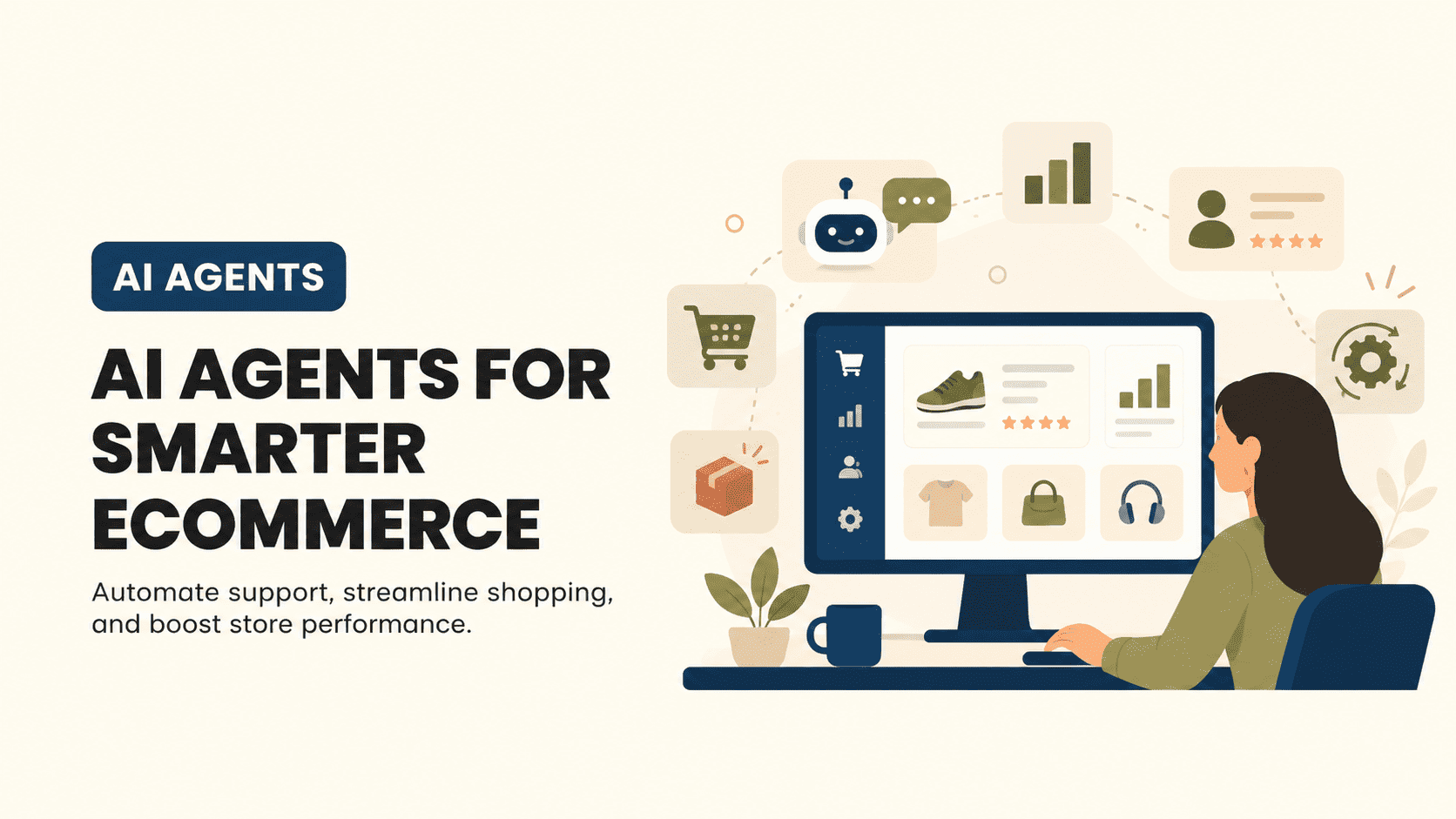
The reader can shortlist one or two platforms by primary job, existing stack, action depth, handoff, governance, and billing unit.
A practical breakdown of Gorgias Helpdesk and AI Agent pricing, including what counts toward each allowance, how to compare plans and how to budget with your own volumes.
Choose Halloween ecommerce campaigns that fit your products, with AI agent workflows, offer worksheets, launch tests and order measurement.
Compare outsourcing customer service with an AI agent using your own ticket mix, a cost model you fill in, and a clear rule for a hybrid split.
Export the Zendesk ticket archive, train an AI Agent on the help center, and test one real ticket before you stop the old queue.


Compare six Yuma alternatives by ecommerce capabilities, helpdesk compatibility, pricing and human handoffs to choose a replacement for your support team.
