Top 10 Character AI Competitors for AI Conversations in 2026

Rajni
Last updated on July 21, 2026
The best Character AI alternative depends on whether you need casual roleplay, custom characters, multimodal conversations, fewer content restrictions, or agents that can perform real business tasks.
Platforms such as Janitor AI, Talkie, Sakura AI, Chai AI, and RolePlai focus mainly on entertainment and storytelling, while Poe provides access to multiple AI models through one interface.
YourGPT is a better option for businesses that need no-code AI characters with memory, custom knowledge, API connections, and deployment across web chat, voice, email, WhatsApp, and other channels.
Character AI is a conversational platform built around custom personas, fictional characters, and historical figures. Launched in beta in September 2022 by former Google engineers, it became popular for immersive roleplay, natural conversations, and its ability to retain context across chats.
The platform is available on the web and mobile, with a free plan for everyday use and a paid c.ai+ subscription that offers faster responses, priority access, and shorter wait times.
However, Character AI may not suit every user. Some alternatives provide deeper character customisation, more flexible moderation, stronger memory, offline deployment, or better tools for professional and business use.
In this blog, we compare ten leading Character AI alternatives in 2026 to help you find the right platform for roleplay, storytelling, personal conversations, or custom AI agents.
Character AI is built primarily for entertainment, roleplay, creative writing, and casual conversation. Users can chat with fictional characters, historical personalities, original personas, or bots created by other members of the community.
Its large character library and simple interface make it easy to start a conversation without any technical setup. However, the platform’s entertainment-first approach also creates limitations for users who need stronger memory, fewer restrictions, or more practical applications.
| Pros | Cons |
|---|---|
| Large library of community-created characters | Strict or inconsistent content moderation |
| Free access with an easy-to-use interface | Characters may forget details from earlier conversations |
| Mobile apps available for iOS and Android | Responses can slow down during busy periods |
| Well suited to casual roleplay and storytelling | Limited support for business workflows and external integrations |
These limitations are why some users look for alternatives with better customisation, more reliable memory, flexible moderation, multimodal features, or the ability to connect AI characters with real systems and data.
We evaluated each Character AI alternative based on the features that have the greatest effect on conversation quality and long-term usability.
Using these criteria, we selected platforms that offer a meaningful advantage over Character AI in at least one area, rather than listing tools that provide nearly the same experience.

YourGPT lets you create AI characters that go beyond roleplay and are built for real-world tasks and interactive conversations.
While most users on Character AI focus on fun or storytelling, YourGPT gives you the tools to build smart, branded AI agents that can understand complex tasks, remember past interactions, and work across channels like WhatsApp, email, web chat, and even voice.
Custom building with API integrations may still require developer involvement, even though the platform is designed for easy onboarding.
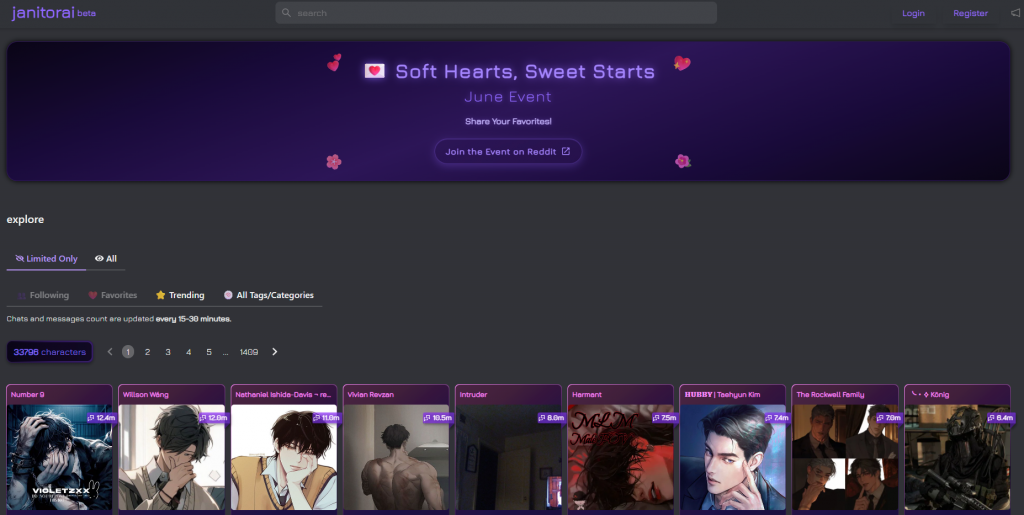
Janitor AI is a conversational roleplay platform designed for users who want custom characters, detailed scenarios, and more flexible storytelling experiences.
Compared with Character AI, Janitor AI gives users greater control over character personalities, prompts, and roleplay settings. It is commonly used for fantasy, romance, science fiction, and other character-driven conversations.
The setup can be more complicated than Character AI, particularly when connecting external models or API keys. Response quality, memory, speed, and reliability may also vary depending on the selected model and server availability.
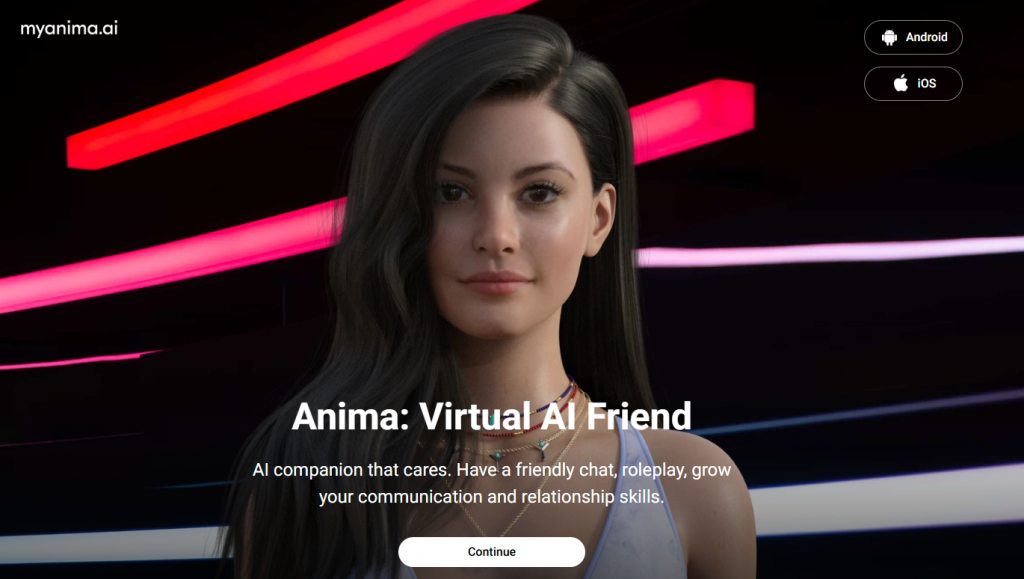
Anima AI is a personal AI companion designed for casual conversation, emotional interaction, relationship-style chats, and roleplay. Users can customise a companion’s personality, appearance, voice, and communication style to create a more personal experience.
Compared with Character AI’s large public bot library, Anima focuses more on building an ongoing one-to-one connection with a personalised virtual companion.
Anima is mainly designed for companionship and roleplay, so it is not ideal for factual research, business automation, customer support, or complex productivity tasks. Some of its more advanced customisation, voice, video, and adult-oriented features are also limited to paid access.
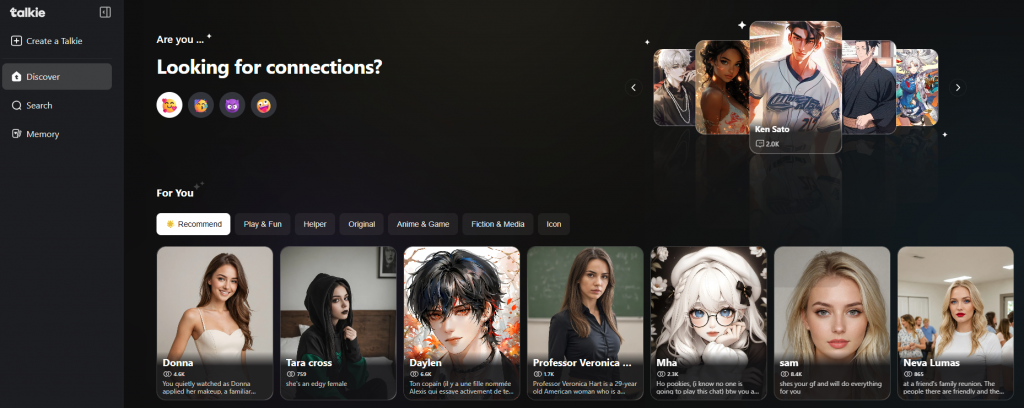
Talkie is an AI character and creative community built around personalised conversations, roleplay, and user-created personas. Users can discover characters made by the community or create their own by defining an appearance, personality, backstory, and speaking style.
Compared with Character AI, Talkie places more emphasis on visual character design, voice interaction, community participation, and gamified collectibles.
The quality, consistency, and memory of conversations can vary between community-created characters. Public creations are also subject to Talkie’s review process and community guidelines, so new characters or updates may not appear immediately.
Talkie is mainly designed for entertainment, roleplay, and creative interaction. It offers fewer tools for factual research, business automation, external integrations, or customer-facing workflows.
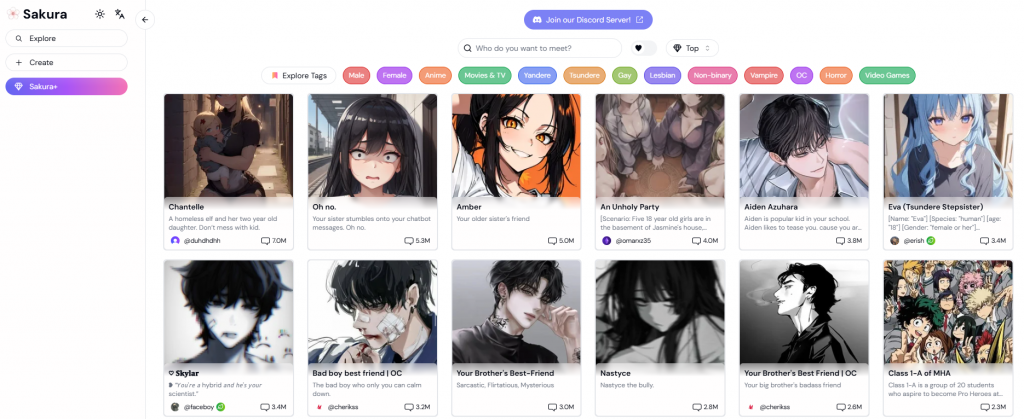
Sakura AI is a character-chat platform focused on personalised roleplay, fictional scenarios, and user-created companions. It provides more flexibility around character behaviour and mature themes than many mainstream platforms, while still operating under its own terms and platform rules.
Compared with Character AI, Sakura places greater emphasis on detailed personas, open-ended storytelling, and user control over how characters respond.
Conversation quality and consistency can vary between community-created characters. The platform may also expose users to mature, suggestive, or potentially uncomfortable content, so discovery settings should be adjusted carefully.
Sakura is primarily designed for entertainment and roleplay. It is not intended for reliable research, customer support, business automation, or connecting AI agents with external tools and workflows.
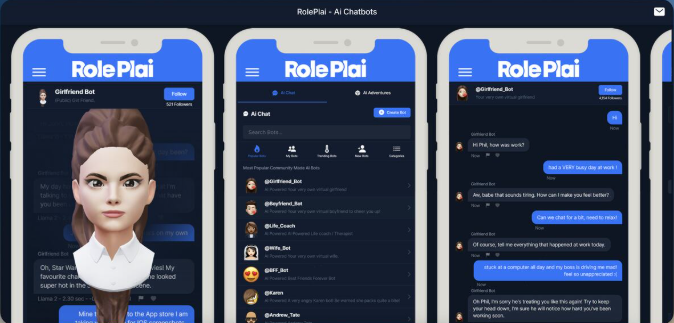
RolePlai is an AI character and roleplay platform for creating personalised companions, exploring interactive stories, and chatting through text or voice. Users can design original characters or choose from community-created personas across genres such as romance, fantasy, gaming, history, and fiction.
Compared with Character AI, RolePlai places greater emphasis on interactive adventures, character memory, AI-generated visuals, and social experiences where characters can post and interact even when the user is offline.
Some advanced features, including stronger memory and improved model performance, require RolePlai Pro. Voice and face features may also be unavailable or under development during major platform updates.
RolePlai is mainly intended for roleplay, companionship, and interactive storytelling. It offers limited support for business workflows, customer service, factual research, or integrations with external systems.
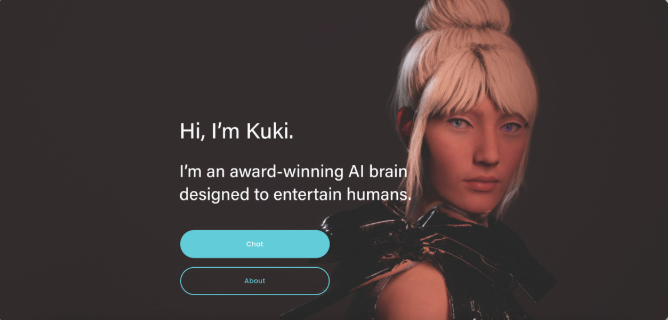
Kuki AI, formerly known as Mitsuku, is an entertainment-focused chatbot created by Steve Worswick and developed by ICONIQ, a Pandorabots subsidiary. It is known for open-ended conversation, humour, companionship, and its established virtual influencer persona. Kuki has also won the Loebner Prize five times.
Unlike Character AI, which offers a large library of user-created personas, Kuki centres on one carefully developed character with a consistent voice and personality.
Kuki provides little control over its core appearance, personality, or backstory. Users cannot create and publish a wide range of distinct characters as they can on Character AI, Talkie, or Janitor AI.
It is designed primarily for entertainment, companionship, and branded engagement rather than complex roleplay, factual research, business automation, or custom AI agents connected to company systems.
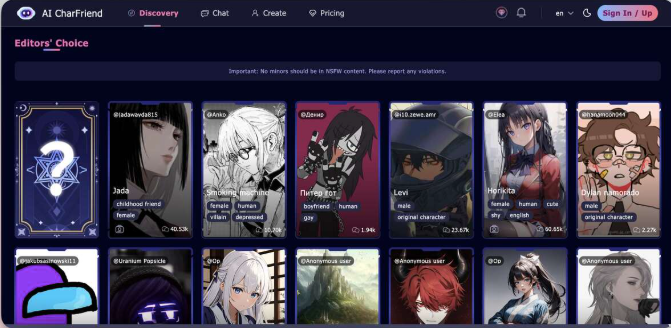
CharFriend AI is a character-chat platform focused on personalised roleplay, fictional companions, and conversations with fewer content restrictions than Character AI. Users can browse existing characters or create personas for different stories and relationship-based scenarios.
Compared with Character AI, CharFriend places greater emphasis on mature roleplay and user control over character behaviour. However, current official information about its pricing, ownership, and feature limits is limited.
Current pricing, message allowances, and platform policies are not documented clearly across reliable official sources. Users should review the latest terms, privacy policy, and billing information before sharing personal details or purchasing a subscription.
Conversation quality and memory may also vary between characters. Because the platform includes mature content, it may not be appropriate for minors, workplace use, factual research, or business applications.
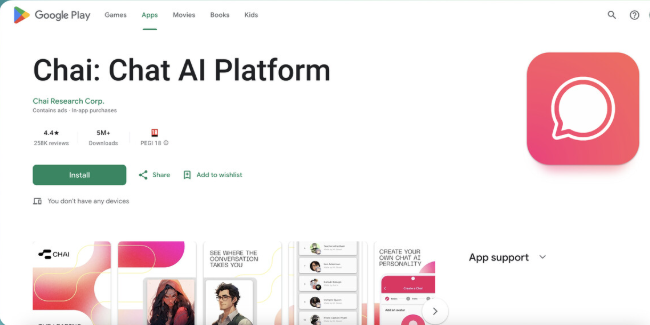
CHAI AI is a social character-chat platform where users can discover, create, and share conversational AI personas. Its library includes fictional characters, celebrities, historical figures, companions, and original community creations.
Compared with Character AI, CHAI focuses on fast character discovery, casual conversations, user-created bots, and an entertainment-first mobile experience.
Conversation quality, accuracy, and memory can vary because many characters are created by users and follow different prompts. Some bots may become repetitive, lose earlier context, or behave inconsistently during longer conversations.
CHAI is primarily designed for entertainment and social character chats. It offers limited support for factual research, business automation, external integrations, or customer-facing AI workflows.
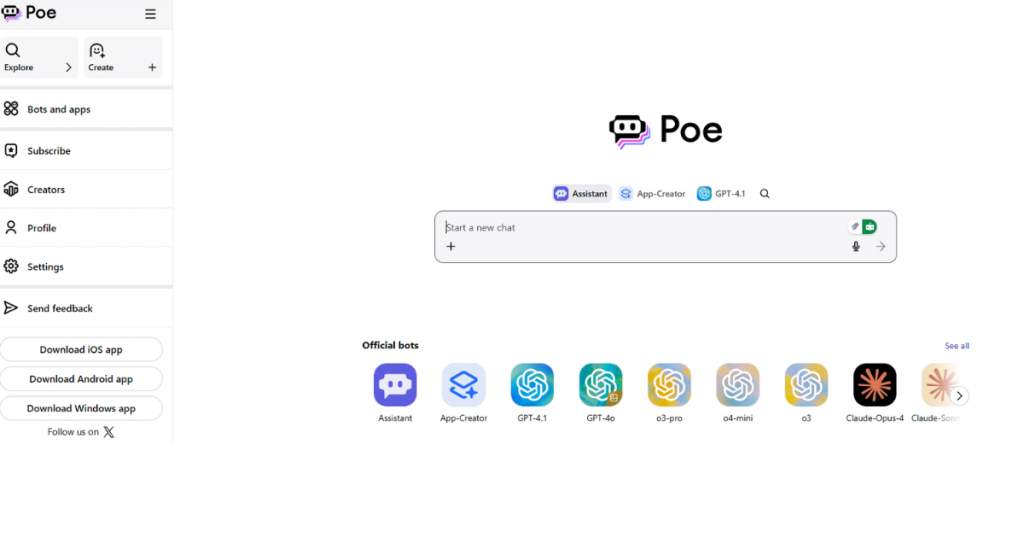
Poe AI is a multi-model platform from Quora that brings leading text, image, video, and audio models into one interface. Users can switch between official models, explore creator-built bots, or compare responses from multiple bots within the same conversation.
Compared with Character AI, Poe focuses less on immersive fictional roleplay and more on model variety, AI content creation, custom workflows, and developer access.
Poe’s point-based system can make usage harder to predict because advanced reasoning, image, video, and audio models may consume points at different rates. Access to longer context windows and heavier model usage may also require a paid subscription.
Conversation quality, memory, response controls, and accuracy depend heavily on the selected model or creator-built bot. Although developers can build advanced workflows through Script Bots, Server Bots, and the API, Poe is not a complete no-code platform for deploying customer-facing agents across support, sales, and business communication channels. This is an inference based on Poe’s current model, bot, and developer-focused feature set.
Here’s a comparison of all the platforms mentioned above:
| Platform | Best For | Main Strength | No-Code | Voice | Custom Persona | Multimodal | Best Choice For |
|---|---|---|---|---|---|---|---|
| YourGPT | Business AI agents and custom characters | Agents that connect to business systems and execute multi-step workflows | Yes | Yes | Yes | Partial | Teams building AI agents for support, sales, and operations |
| Janitor AI | Flexible roleplay and custom scenarios | Detailed persona prompts and support for external AI models | Yes | Limited | Yes | Limited | Users who want greater control over roleplay prompts and models |
| Anima AI | AI companionship and personal conversations | Personalised one-to-one companion experiences | Yes | Yes | Yes | Yes | Users seeking friendship, romance, or emotional conversation |
| Talkie | Visual characters and community roleplay | Character visuals, voice interaction, and collectible content | Yes | Yes | Yes | Yes | Users who prefer visually rich and gamified character chats |
| Sakura AI | Flexible and mature roleplay | Detailed persona controls and fewer roleplay interruptions | Yes | Limited | Yes | Limited | Adult users wanting open-ended fictional conversations |
| RolePlai | Interactive stories and AI adventures | Branching adventures, group chats, voice, and AI-generated images | Yes | Yes | Yes | Yes | Users who want story-driven conversations and character groups |
| Kuki AI | Casual conversation and branded engagement | A consistent, established virtual influencer personality | No | Yes | Limited | Yes | Users who prefer one polished chatbot with a fixed personality |
| CharFriend AI | Personalised and mature character chats | Flexible persona and roleplay controls | Yes | Not clearly documented | Yes | Limited | Users prioritising flexible fictional and relationship-based roleplay |
| CHAI AI | Mobile character discovery and casual chats | Large social library of community-created characters | Yes | Yes | Yes | Limited | Mobile users who want quick access to many community bots |
| Poe AI | Comparing AI models and building custom bots | Access to multiple text, image, video, and audio models | Yes | Limited | Yes | Yes | Users who want many AI models and creator-built bots in one place |
Selecting the ideal Character AI alternative hinges on matching platform capabilities to your core objectives whether that’s richer storytelling, more customisation, or enterprise-grade controls. Focus on these six criteria:
Use these criteria to evaluate two or three platforms in hands-on pilots. If your use case leans toward animated storytelling or content creation, pairing your chosen platform with free stop motion software lets you quickly prototype scenes based on character-driven dialogue.
Measure performance under expected loads, memory consistency, and ease of integration. The right Character AI alternative will grow with your vision and deliver engaging, reliable experiences.
Janitor AI and Sakura AI are good options for detailed and flexible roleplay. Talkie and RolePlai are better suited to visual characters, interactive stories, and voice-based experiences.
Yes. Most platforms let you define a character’s personality, backstory, greeting, appearance, and conversation style. Some also support voice, custom knowledge, APIs, or advanced prompt controls.
Janitor AI, Sakura AI, and CharFriend AI generally offer more flexible roleplay settings. However, each service still has its own content policies, age requirements, and moderation rules.
Memory varies by platform, selected model, character settings, and subscription plan. Some tools can remember important details, but long conversations may still lose context or become inconsistent.
Many platforms provide free access, but free accounts may include message limits, advertisements, slower responses, or restricted access to premium models, stronger memory, and voice features.
Talkie, Anima AI, RolePlai, and CHAI offer voice or visual character features. Poe provides access to multiple image, video, audio, and text models through one account.
Privacy practices differ between services. Avoid sharing passwords, financial information, private documents, or sensitive personal details. Review the platform’s privacy policy and data deletion options before using it.
Yes, but entertainment-focused tools may not support business data or external workflows. YourGPT lets teams build no-code AI agents that connect with company systems and work across chat, voice, email, WhatsApp, and other channels.
Start with your main goal, such as roleplay, companionship, storytelling, model comparison, or business automation. Then compare memory, customisation, content controls, voice support, pricing, privacy, and conversation quality.
Choosing a Character AI alternative starts with understanding what your project really needs.
Begin by outlining your requirements the channels to support, the desired memory persistence, the level of persona customisation, and compliance obligations. Run a targeted pilot based on your most critical use case to evaluate setup speed, performance under load, and the platform’s ability to maintain conversational context over time.
YourGPT is designed to fill these gaps. Non-technical teams can quickly build and train AI characters without code, while developers gain full access to APIs and webhooks for custom business logic. YourGPT supports web chat, voice, messaging apps, and more out of the box, which reduces setup hurdles and simplifies integration.
Switching to the right Character AI alternative lets you deliver richer, more reliable interactions while freeing your team to focus on high-value tasks. Continuous review and iteration will ensure your AI characters stay engaging and effective as your audience and requirements evolve.
Build your own AI character in minutes. Compare top platforms by features, pricing —all in one place.
No credit card required • 7 days access • Works with Framer

The reader can shortlist one or two platforms by primary job, existing stack, action depth, handoff, governance, and billing unit.

A practical breakdown of Gorgias Helpdesk and AI Agent pricing, including what counts toward each allowance, how to compare plans and how to budget with your own volumes.
Choose Halloween ecommerce campaigns that fit your products, with AI agent workflows, offer worksheets, launch tests and order measurement.
Compare outsourcing customer service with an AI agent using your own ticket mix, a cost model you fill in, and a clear rule for a hybrid split.
Export the Zendesk ticket archive, train an AI Agent on the help center, and test one real ticket before you stop the old queue.


Compare six Yuma alternatives by ecommerce capabilities, helpdesk compatibility, pricing and human handoffs to choose a replacement for your support team.
