7 Best Customer Engagement Platforms in 2026 Based on Real User Reviews

Rajni
Last updated on August 14, 2026

Building relationships with customers is what sets brands apart in 2026. When a business replies quickly or remembers a customer’s last order, it makes a lasting impression. Today, people expect support and answers on their terms, whether by chat, email, or social media.
Many companies now use customer engagement platforms to keep every conversation on track. The right tool does more than automate replies. It helps teams listen better, respond faster, and show that every customer matters.
In this post, you will see a closer look at seven customer engagement platforms that businesses are using to grow loyalty. You will find what each platform is known for, how users rate the experience, and tips for finding the best fit for your own business.
The best customer engagement platforms combine AI automation, omnichannel communication, personalization, integrations, and analytics. The right choice depends on your support workflows, customer channels, existing tech stack, and scalability needs.
Choose a platform around the customer journeys you actually need to automate. For businesses looking for no-code AI agents, knowledge-based support, workflow automation, and omnichannel deployment, YourGPT is one option worth considering.
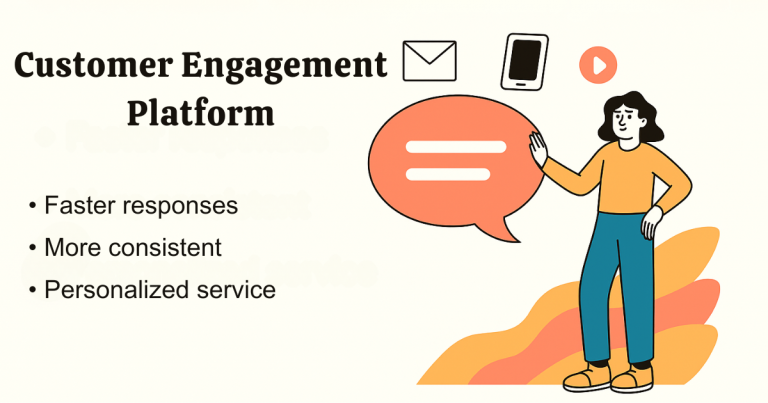
A customer engagement platform is a centralized system that helps businesses manage and improve customer interactions across multiple communication channels. These channels typically include email, live chat, website chat widgets, social media messaging, SMS, and messaging apps such as WhatsApp or Instagram.
Instead of handling each channel separately, the platform brings all conversations into a single workspace. This allows teams to view previous conversations, customer details, preferences, and activity history before responding, which improves accuracy and response quality.
Modern customer engagement platforms often include:
By combining communication tools, automation, and customer data in one system, a customer engagement platform helps businesses respond faster, reduce manual work, and maintain consistent communication across channels. This results in more relevant interactions, better customer satisfaction, and improved retention over time.
A customer engagement platform supports the full customer interaction lifecycle, from first contact to ongoing support and long term engagement.
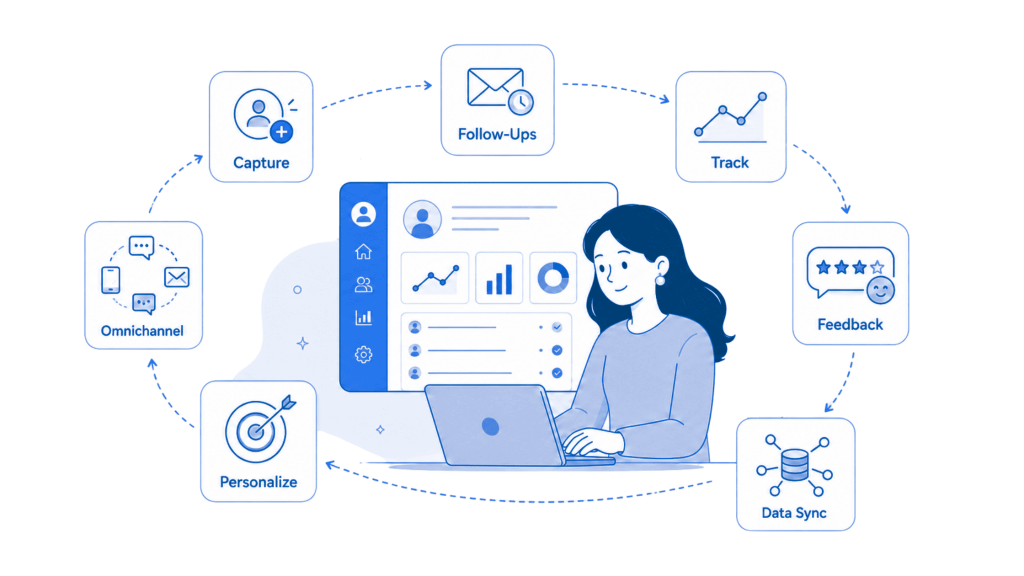
Customer engagement platforms offer a unified view of customer interactions, helping you personalize communications and automate tasks. Here’s a breakdown of how they operate:
Today, customers expect more. A McKinsey report found that 71% of customers want a personalized experience.
When businesses don’t meet this expectation, 76% of customers end up frustrated. This shows how important it is to engage customers in a way that feels personal.
But here’s the problem: only 11% of companies manage to do this consistently across all channels.
So, how can businesses overcome these challenges? It starts with choosing the right customer engagement platform. These platforms help you connect with customers through different touchpoints whether it’s apps, social media, or email. These platforms help you connect with customers through apps, social media, and email.
With the right startup tools, you can make sure every interaction with your brand is positive and personalized. This leads to happier customers and stronger loyalty, which means more revenue and steady growth.
Here are the top 7 customer engagement platforms that can help you connect better with your customers and improve communication:
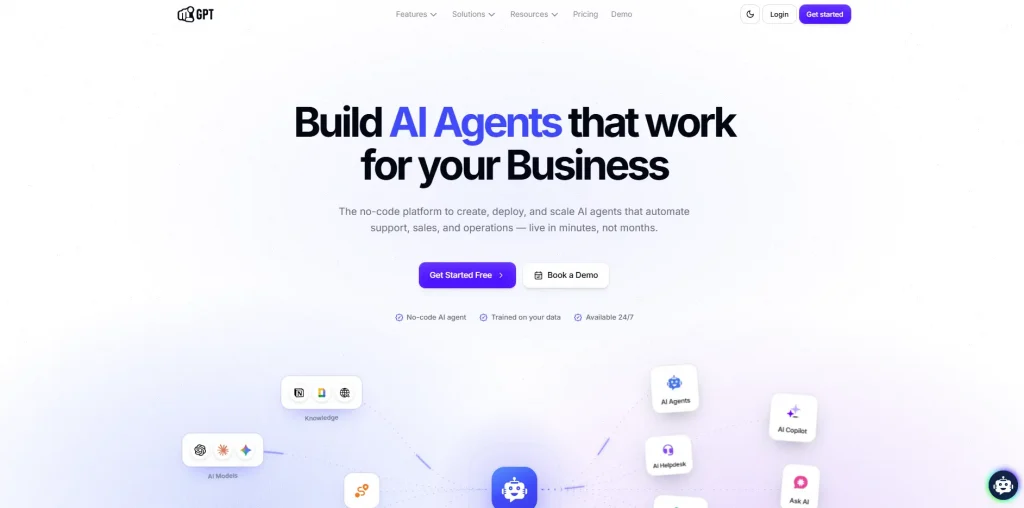
YourGPT is an AI-first platform designed to build and run AI agents for customer support, sales, and operations across websites, apps, and messaging channels.
It provides a no-code builder for creating standard AI agents and an AI Studio for designing advanced, action-based workflows. This allows teams to create both simple and complex agents without technical effort.
YourGPT goes beyond basic chatbot functionality. AI agents can perform multi-step actions in real time, handle operational tasks, manage customer conversations with full context, and support internal workflows. The platform helps businesses improve response quality, reduce manual work, and scale customer engagement efficiently.
YourGPT.ai offers flexible pricing plans to support businesses of all sizes:
All plans come with access to the Chatbot Studio, API and webhook integrations, and multichannel support.

Make customer support faster and more consistent with YourGPT.

Zendesk simplifies customer service by consolidating various communication channels into a single platform. It helps manage customer interactions, track support tickets, and offers tools to analyze and improve customer satisfaction.
Zendesk offers several pricing tiers to accommodate different business needs:
1. Suite Team – $55/month per agent (billed annually)
2. Suite Professional – $115/month per agent (billed annually)


HubSpot provides an all-in-one solution for marketing, sales, and customer service, offering tools to attract, engage, and retain customers effectively.
HubSpot Service Hub offers several pricing tiers to accommodate different business needs:
1. Service Hub Professional – $90/month per user
2. Service Hub Enterprise – $150/month per user


Freshdesk offers a platform to streamline customer interactions across various channels, equipping support teams with tools for faster and more effective service.
Freshdesk offers several pricing tiers to accommodate different business needs:
1. Free Plan – $0/month per agent
2. Growth – $15/month per agent (billed annually)
3. Pro – $49/month per agent (billed annually)
4. Enterprise – $79/month per agent (billed annually)


Klaviyo excels in email marketing with its powerful automation and analytics features, allowing businesses to create impactful email campaigns.
Klaviyo offers several pricing tiers to accommodate different business needs:
1. Free Plan – $0/month
2. Email Plan – Starting at $20/month
3. Email & SMS Plan – Starting at $35/month


Sprinklr provides a comprehensive customer engagement platform for consistent service across all channels, integrating case management and agent interactions.
Sprinklr offers several pricing tiers to accommodate different business needs:
1. Self-Serve Plan – $199/month per user (billed annually)
2. Advanced Plan – $299/month per user (billed annually)
3. Enterprise Plan – Custom Pricing


Tidio is designed to help businesses engage with website visitors through a range of messaging tools, including live chat, email, and Messenger bots.
Tidio offers several pricing tiers to accommodate different business needs:


| Platform | Best For | Key Strengths | Ideal Users |
|---|---|---|---|
| YourGPT | Advanced conversational AI | Natural conversations, omnichannel integration, personalized workflows | Businesses wanting scalable, human-like AI communication |
| Zendesk | Omnichannel support & ticketing | Ticket management, live chat, analytics, centralized service | Teams managing high-volume support tickets and multiple channels |
| HubSpot | Marketing, sales & service suite | CRM, automated marketing, support ticketing, analytics | Companies needing a complete CRM and service stack |
| Freshdesk | Customer support with knowledge base | Mobile app, customer feedback, self-service portal | Support teams aiming to reduce ticket volume with automation |
| Klaviyo | Email marketing automation | Customer data, behavior-driven automation, segmentation | Marketers targeting users with behavior-based campaigns |
| Sprinklr | Enterprise customer engagement | Unified customer view, AI personalization, feedback management | Large enterprises focused on AI-led omnichannel service |
| Tidio | Live chat & website automation | Live chat, AI bots, eCommerce integrations | eCommerce and service businesses needing fast chat automation |
With so many options available, selecting a good customer engagement vendor might be hard. Here is how you can find the right tool fit:
| Criteria | Considerations |
|---|---|
| Features | Look for a vendor that provides a robust set of features, including analytics, personalization, and support for multiple channels. |
| Integration | Check if the tool integrates well with your current systems, facilitating smooth data exchange and workflow management. |
| Scalability | Choose a vendor capable of growing with your business, handling increased demands and expanding engagement needs. |
| Customization | Ensure the tool allows customization according to your business requirements, tailoring engagement strategies effectively. |
| Customer Support | Evaluate the vendor’s support services, including availability, response times, and expertise, to ensure help is available when needed. |
| Reputation and Reviews | Research the vendor’s reputation and customer reviews to assess overall satisfaction and identify potential issues. |
| Pricing and ROI | Compare the pricing structure with the expected return on investment, considering both immediate costs and long-term benefits. |
| Security and Compliance | Verify that the tool meets relevant data protection requirements and provides appropriate security controls to safeguard customer information. |
| User Experience | Assess how easy the platform is to use, including its interface, onboarding process, documentation, and training resources. |
| Future Roadmap | Review the vendor’s product roadmap and update history to determine whether the platform can support your long-term engagement strategy. |
Customer engagement is how your business interacts with people through chat, email, social media, or your website. When done well, it builds trust, improves loyalty, and helps you grow through stronger relationships and better communication.
A CRM stores customer info and helps manage contacts or sales tasks. A customer engagement platform lets you actively talk to customers across channels, personalize messages, and create a smoother, more connected experience.
Any business that deals with customers—whether online or offline—can benefit. These tools help you answer questions faster, personalize messages, and build better connections without needing a large support or sales team.
Yes, most platforms include marketing tools. You can send automated emails, segment your audience, and track what’s working. This helps you reach the right people with the right message at the right time.
The right tool should feel easy to use, connect well with your other systems, and make customer communication smoother. If it saves your team time and improves the customer experience, it’s likely a good fit.
Yes, many platforms support all three. They let support teams manage tickets, help sales teams follow up with leads, and give marketers tools to run campaigns—all in one place without switching tools.
No, most modern platforms are built for non-technical users. They offer visual builders, templates, and guides so you can get started without needing to code or hire developers.
Start with a free trial or demo. Try connecting your website or sending test messages. This helps you see how the platform fits into your workflow before making a decision.
Choosing a customer engagement platform is a practical decision that shapes how you support and retain customers every day. Start by listing what you need faster replies, better support across channels, or more automation. Then test platforms that meet those needs using demos or trials.
A good platform should help your team respond faster, stay organized, and make every customer interaction feel smooth and consistent. It should also fit your existing tools and be simple enough for your team to use without extra training.
Tools like YourGPT are built to do exactly that help you manage support, automate conversations, and stay connected across channels. The right choice won’t just save time. It will make support feel easier for both your team and your customers.
Deliver faster, more consistent customer experiences with YourGPT, an AI-first platform built for customer service, sales, and operational workflows across channels.
No credit card required • Full access for 7 days
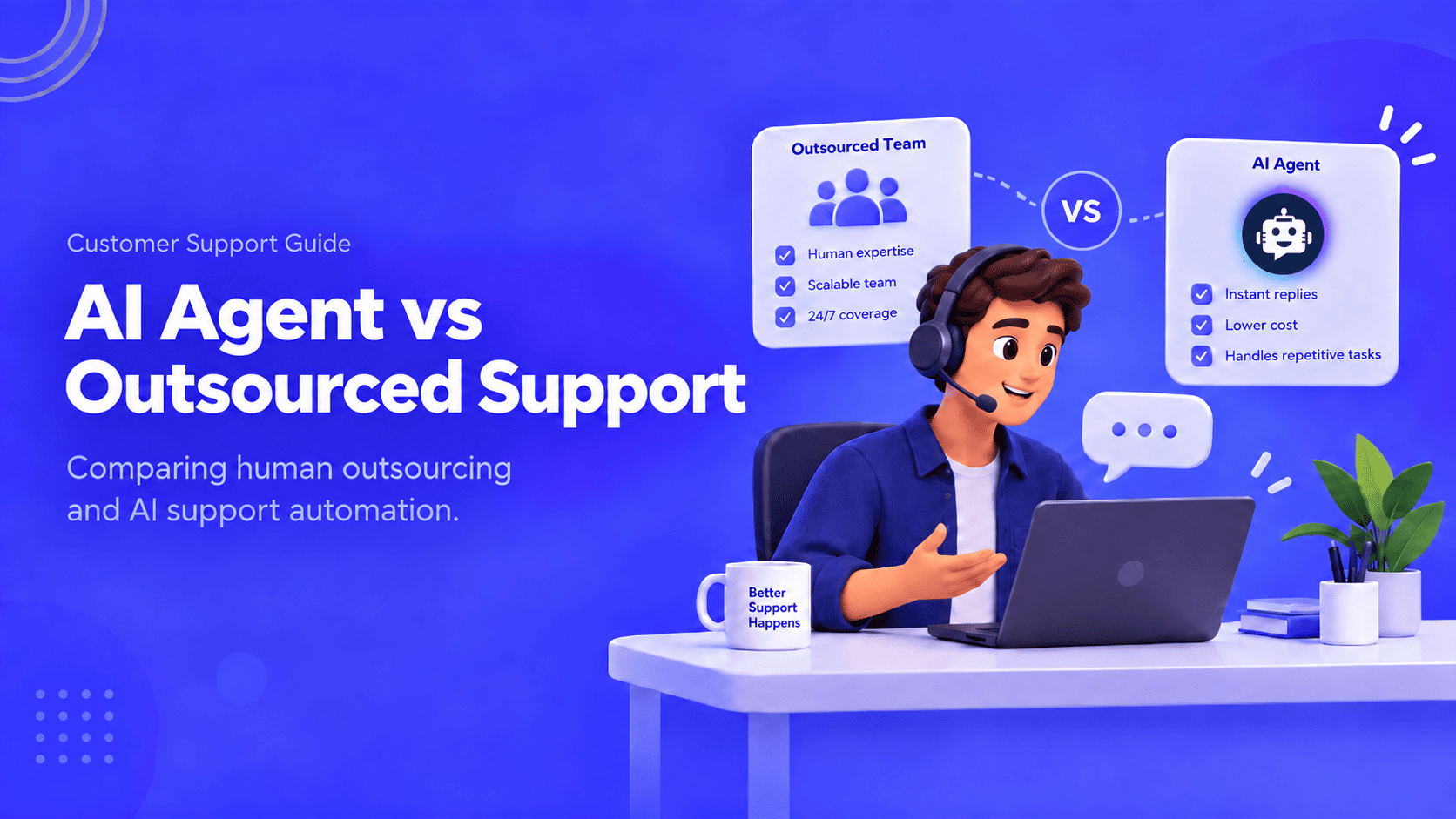
Compare outsourcing customer service with an AI agent using your own ticket mix, a cost model you fill in, and a clear rule for a hybrid split.
Export the Zendesk ticket archive, train an AI Agent on the help center, and test one real ticket before you stop the old queue.

Compare six Yuma alternatives by ecommerce capabilities, helpdesk compatibility, pricing and human handoffs to choose a replacement for your support team.

Move from Gorgias with a verified ticket archive, tested AI workflows, human handoff and a channel cutover plan before ending your subscription.
TL;DR The Gorgias AI Agent is the automation layer inside the Gorgias helpdesk, split between a Shopping Assistant for pre-purchase conversations and a Support Agent for post-purchase support. A connected Shopify store is required, and Gorgias documentation rules out platforms such as BigCommerce, Magento, and WooCommerce for the AI Agent. Billing runs on two separate […]

TL;DR Gorgias is the closest Richpanel alternative for Shopify stores that need native order actions directly inside support tickets. YourGPT fits stores that want one AI agent handling requests across web, WhatsApp, Instagram, and email, while Tidio and Re:amaze suit smaller teams looking for lighter, lower-cost options. Richpanel’s AI pricing starts around $500/month for two […]