7 Best Landbot Alternatives for Customer Support in 2026

Rajni
Last updated on August 17, 2026

Landbot is a popular no-code chatbot platform that helps businesses create conversational experiences for websites and messaging channels. Its visual builder makes it easy to design basic chat flows without technical skills, which is why many teams use it for lead generation and simple customer interactions.
Landbot does not fit every customer support requirement. Teams that need advanced automation, higher conversation limits, broader multi-channel support, deeper integrations, or AI-driven workflows often look for alternatives that provide greater flexibility and operational control.
In this blog, we review seven of the best Landbot alternatives for customer support in 2026. Each platform is evaluated based on its features, strengths, and real-world use cases. The goal is to help small businesses, startups, and customer support teams choose a solution that improves response efficiency, supports growth, and delivers better customer experiences across channels.
Landbot is a no-code chatbot builder designed around visual, rule-based conversation flows. It works well for simple, guided interactions, but many businesses encounter limitations as customer support and automation needs become more complex. Modern teams often require stronger AI capabilities, deeper integrations, and platforms that can support growth without increasing operational overhead.
Below are the main reasons businesses evaluate Landbot alternatives.
Here are the reasons businesses are moving toward Landbot alternatives:
Landbot is a good option for building guided, flow-based chatbot experiences, especially for teams starting with basic automation or lead capture. Its visual builder makes it easy to design structured conversations without technical effort, which works well in controlled scenarios.
However, customer support environments change quickly. As businesses grow, conversations become less predictable, customer expectations increase, and automation needs extend beyond simple question-and-answer flows. Support teams begin handling edge cases, follow-up questions, system lookups, and actions that require real-time data and decision-making.
At this point, limitations of flow-based chatbot tools become more noticeable. Teams may need bots that can understand intent rather than rely solely on predefined paths, maintain context across longer conversations, and trigger actions within internal systems such as CRMs, ticketing tools, or order management platforms.
There is also a shift in how customers communicate. Interactions no longer happen only on websites. Customers move between messaging apps, email, and other channels, expecting continuity and context at every step. Managing these conversations efficiently often requires a platform designed for unified, multi-channel engagement rather than isolated chat experiences.
For these reasons, businesses exploring long-term scalability, operational automation, and consistent customer experiences often evaluate Landbot alternatives. The goal is not just to replace a chatbot, but to adopt a platform that can support evolving support, sales, and operational needs as the business grows.
Here is a list of the top 7 alternatives to Landbot for 2026:
Let us explore these alternatives based on key criteria such as features, pricing, user interface, customer support, integration options, and unique selling points.
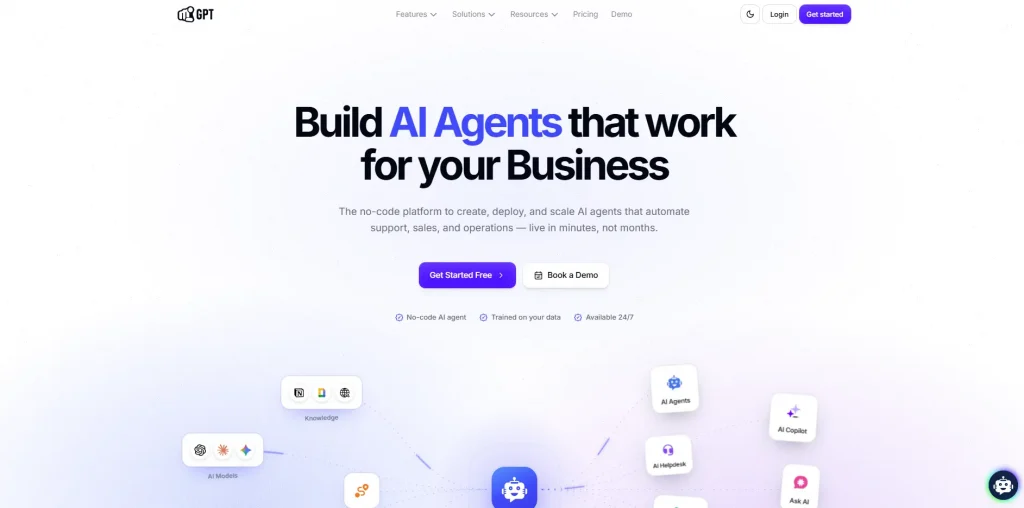
YourGPT is an AI-first platform for building and running AI agents that support customer service, sales, and business operations across websites, apps, and messaging channels.
It includes a visual no-code agent builder for everyday conversational use cases and a more advanced AI Studio for creating structured, multi-step operational workflows, all without requiring engineering resources.
Unlike basic chatbots that only respond with static answers, YourGPT agents can perform multi-step actions, execute API-driven workflows, and automate real tasks. This makes the platform suitable for both customer-facing interactions and internal operational automation.
Why choose YourGPT over Landbot?
While Landbot is built around visual, flow-based chatbot experiences, YourGPT offers a broader AI-first platform designed for real operational automation. YourGPT goes beyond predefined chat flows by enabling AI agents to understand intent, maintain context, and execute multi-step actions across systems.
YourGPT combines chat, voice, AI Studio, human handoff, team collaboration, and analytics in a single platform. This makes it suitable for teams that need scalable automation across customer support, sales, and internal operations without relying on separate tools or complex workarounds.
Discover how YourGPT AI chatbot can streamline your customer service
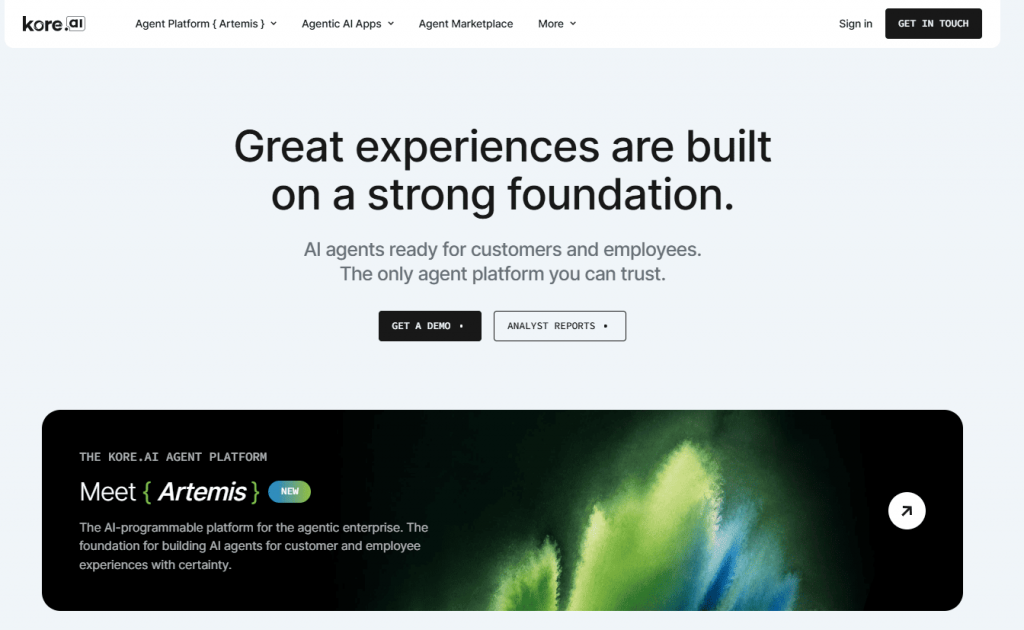
Kore AI is a conversational AI platform designed to build and deploy virtual assistants for customer support and internal employee use cases across digital and voice channels.
The platform focuses on enterprise-grade automation, enabling organizations to design AI-driven workflows for routine tasks, support interactions, and internal processes. Kore AI supports both rule-based and AI-powered conversational experiences, making it suitable for structured and large-scale deployments.
Unlike basic chatbot builders, Kore AI emphasizes automation depth, workflow orchestration, and integration with enterprise systems, which makes it more suitable for organizations with complex operational requirements.

Verloop.io is a conversational AI platform focused on automating customer support interactions across multiple digital channels.
The platform is designed to help support teams handle common customer queries, route conversations intelligently, and improve response times using AI-driven chat automation. Verloop.io emphasizes contextual conversations and workflow-based automation to support real-time customer assistance.
Unlike basic chatbot builders, Verloop.io is built specifically for customer support use cases, making it suitable for businesses looking to reduce agent workload while maintaining conversation quality.

Haptik is a conversational AI platform focused on automating customer engagement and support through AI-driven chat and messaging experiences.
The platform is commonly used by businesses to handle high-volume customer interactions, particularly across messaging channels. Haptik combines rule-based automation with AI capabilities to support customer service use cases such as FAQs, lead handling, and transaction-related conversations.
Haptik is positioned primarily for customer engagement and support automation, with a strong emphasis on messaging-first experiences.

Zendesk is a customer support platform built around ticketing and case management, designed to help businesses handle customer enquiries at scale.
The platform focuses on organizing, tracking, and resolving support requests across multiple channels. Zendesk is widely used by support teams that require structured workflows, reporting, and visibility into customer interactions rather than conversational-first automation.
Unlike chatbot builders, Zendesk is primarily a support management system, often combined with automation or AI tools to enhance efficiency.

Hiver is an email-based customer support platform built specifically for teams using Google Workspace.
The platform helps support teams manage shared inboxes directly inside Gmail, making it easier to assign emails, track ownership, and collaborate on customer conversations without leaving the inbox. Hiver is commonly used by teams that rely heavily on email for customer support and internal communication.
Unlike chatbot or AI-first platforms, Hiver focuses on improving email-based workflows rather than automating conversations through AI agents.

Certainly is an AI conversational platform focused on building chatbots and virtual assistants for customer support use cases.
The platform emphasizes personalization, automation, and analytics to help businesses manage customer interactions more effectively. Certainly is often used by organizations that want AI-driven conversations combined with performance insights to improve customer engagement.
Compared to simple chatbot builders, Certainly places a stronger focus on analytics and conversational optimization rather than purely visual flow design.
Choosing the right Landbot alternative is not only about comparing features. The decision should be based on how well a platform supports real customer conversations, operational workflows, and long-term scalability as business needs evolve.
The following criteria help evaluate platforms more effectively.
A no-code chatbot platform allows you to create and manage chatbots without needing any programming skills. This makes it accessible for users with limited technical expertise.
Each alternative offers distinct features, integrations, and pricing structures. YourGPT, for instance, layers AI-driven conversation automation on top of a no-code builder, which is worth weighing against Landbot’s more visual, flow-based approach. To find the best fit for your needs, evaluate which platform aligns with your specific requirements and goals.
Most of these platforms are designed to offer extensive integration options, allowing them to work seamlessly with a wide range of tools and channels you may already be using.
Yes, many of these platforms are scalable and offer solutions that are ideal for businesses of all sizes, including small businesses. They provide flexibility to grow with your needs.
Consider factors such as the features offered, ease of use, customization capabilities, pricing, and the quality of customer support. These aspects will help you select a platform that best meets your needs.
To gauge your chatbot’s effectiveness, track metrics such as user engagement, response times, and overall customer satisfaction. These metrics will help you understand how well your chatbot is performing and where improvements may be needed.
Choosing the right chatbot platform has a direct impact on how efficiently your team supports customers and how consistently those customers experience your brand. The right solution should not only answer questions, but also fit into your existing workflows, scale with conversation volume, and support the channels your customers actually use.
The Landbot alternatives covered in this guide address different needs, from AI-driven automation and omnichannel support to deeper integrations and operational flexibility. Evaluating these platforms based on real use cases, long-term scalability, and ease of management helps ensure you select a tool that continues to deliver value as your business grows.
If you want to explore an AI-first approach without committing upfront, YourGPT offers a 7-day trial that allows teams to test AI agents across support, sales, and operational scenarios. Taking time to evaluate platforms hands-on can help you choose a solution that improves response quality, reduces manual effort, and creates more consistent customer experiences across channels.
Join 10000+ Business using YourGPT AI to transform business operations!
No credit card required • 7 days access
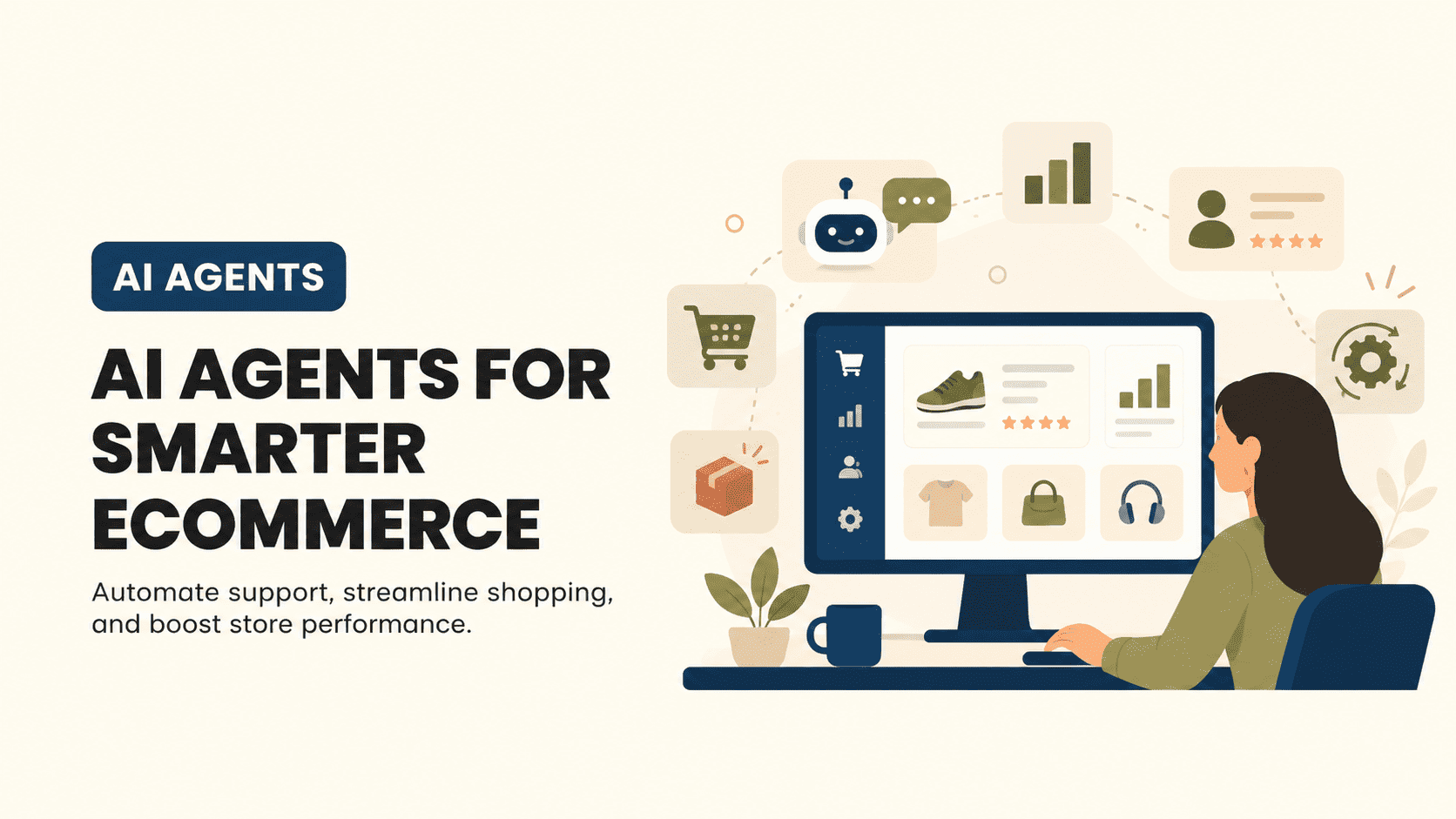
The reader can shortlist one or two platforms by primary job, existing stack, action depth, handoff, governance, and billing unit.
A practical breakdown of Gorgias Helpdesk and AI Agent pricing, including what counts toward each allowance, how to compare plans and how to budget with your own volumes.
Choose Halloween ecommerce campaigns that fit your products, with AI agent workflows, offer worksheets, launch tests and order measurement.
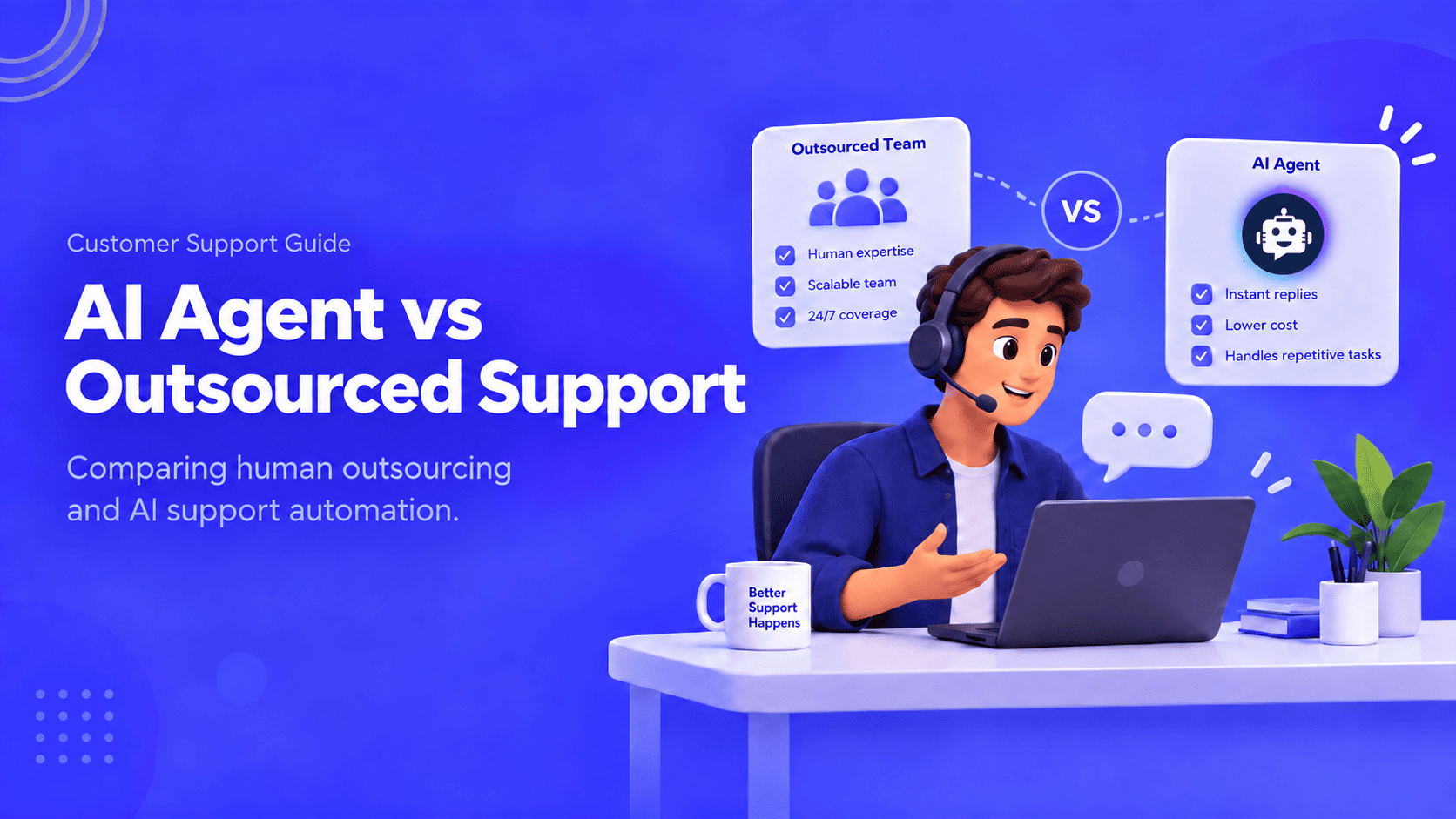
Compare outsourcing customer service with an AI agent using your own ticket mix, a cost model you fill in, and a clear rule for a hybrid split.
Export the Zendesk ticket archive, train an AI Agent on the help center, and test one real ticket before you stop the old queue.


Compare six Yuma alternatives by ecommerce capabilities, helpdesk compatibility, pricing and human handoffs to choose a replacement for your support team.
