Top 7 Front Alternatives & Competitors in 2026

Rajni
Last updated on September 8, 2026

Front’s shared inbox works well for small teams, but limited automation, reporting, and customization can become restrictive as support operations grow.
This roundup compares seven Front alternatives, from AI-first platforms like YourGPT to collaboration-focused tools such as Gmelius and Missive.
Pricing, omnichannel coverage, and automation depth are the biggest differences, so the right choice depends on whether your priority is AI-powered support, affordability, or broader channel coverage.
Front is a customer communication platform known for its shared inbox, collaborative workflows, and seamless integrations. However, as businesses grow and customer support needs become more complex, many companies seek more advanced alternatives to enhance their operations.
Front often faces challenges such as limited automation, basic AI capabilities, and scalability constraints. Businesses looking for more flexibility, customization, and powerful AI-driven tools may find better-suited alternatives.
This blog lists the top 7 Front alternatives in 2026, highlighting their key features, integrations, and scalability to improve customer communication and team workflows.
If you’re exploring customer service software to improve customer experience (CX), you’ve likely come across Front. It helps teams collaborate across customer service, sales, operations, and account management.
Front automates tasks like routing, assigning, and escalating customer requests. It also provides internal communication tools, reporting, and message templates.
However, while Front serves as an “omnichannel inbox,” it lacks some features businesses need as they scale. For example, its Starter plan doesn’t include key integrations like automation and CRM. It also falls short in advanced reporting and pre-built integrations, limiting how businesses extend its capabilities. Since Front doesn’t focus solely on CX, support teams may not get the same level of expertise found in dedicated customer service platforms.
Choosing the right Front alternative can help businesses scale efficiently, improve AI-driven automation, and customize workflows to better fit their needs.
This blog explores the top competitors, highlighting key features, capabilities, and pricing to help you make an informed decision.
The table outlines each platform’s primary fit, published baseline, and billing meter before the in-depth reviews.
| Platform | Best For | Main Strength | Front Alternative Use Case | Channel & Collaboration Fit | Best Choice For |
|---|---|---|---|---|---|
| 1. YourGPT | AI-powered support, sales, and workflow automation | No-code AI agents that answer questions and execute business actions | Move beyond shared inboxes with autonomous resolution, lead qualification, and workflow execution | Supports web chat, WhatsApp, Instagram, Messenger, Telegram, Slack, Discord, Line, and human handoff | Teams that want AI-first automation rather than mainly human-managed inbox workflows |
| 2. Gmelius | Gmail and Google Workspace teams | Shared inboxes, email collaboration, and workflow automation inside Gmail | Replace Front for teams mainly focused on collaborative email management | Strong Gmail collaboration with assignments, internal notes, shared drafts, and integrations | Teams that want Front-style collaboration directly inside Gmail |
| 3. Kustomer | Customer service teams needing a complete customer view | Customer CRM, AI automation, and unified customer timelines | Replace Front with a more customer-centric CRM and service workspace | Strong omnichannel support across email, chat, SMS, voice, WhatsApp, and social channels | Larger support teams that need customer context, automation, and omnichannel service |
| 4. Richpanel | Ecommerce businesses prioritizing self-service support | Self-service, AI automation, and ecommerce customer context | Reduce repetitive Front conversations by letting customers resolve common issues themselves | Centralized support inbox with automation and ecommerce-focused customer data | Online stores that want self-service and automation alongside human support |
| 5. Missive | Teams combining email, messaging, and internal collaboration | Shared inboxes, internal chat, assignments, and collaborative workflows | A lightweight Front alternative for collaborative inbox and team communication | Strong collaboration with internal chat, comments, assignments, tasks, and shared inboxes | Small and mid-sized teams that prioritize simple inbox collaboration |
| 6. Trengo | Businesses managing customer conversations across multiple channels | Omnichannel inbox, AI automation, and communication workflows | Replace Front when multi-channel messaging and automation are a priority | Strong fit for WhatsApp, email, Instagram, Messenger, live chat, and team collaboration | Teams that need centralized omnichannel communication and automated routing |
| 7. Re:amaze | Ecommerce and online businesses needing customer support tools | Live chat, shared inboxes, AI, self-service, and ecommerce integrations | Replace Front with a support platform more focused on ecommerce conversations and order context | Supports email, live chat, social messaging, SMS, FAQs, and team collaboration | Ecommerce brands that want messaging, self-service, and customer support in one workspace |
YourGPT stands apart in this list because its core value is not simply managing conversations in a shared inbox. Platforms such as Gmelius and Missive are built primarily for team collaboration, while Kustomer, Richpanel, Trengo, and Reamaze are centered more on customer service workflows, omnichannel messaging, or helpdesk operations. YourGPT takes a different route by making AI agents the main layer handling customer interactions.
That means the system is designed around what the AI can understand, retrieve, and do on behalf of the support team. The agent can work from connected knowledge, interact across supported channels, trigger approved actions, and escalate conversations when human involvement is needed. For teams trying to reduce repetitive support work rather than just organize incoming messages, this creates a more automation-focused approach.
Let us explore these alternatives based on key criteria such as features, pricing, user interface, customer support, integration options, and unique selling points.
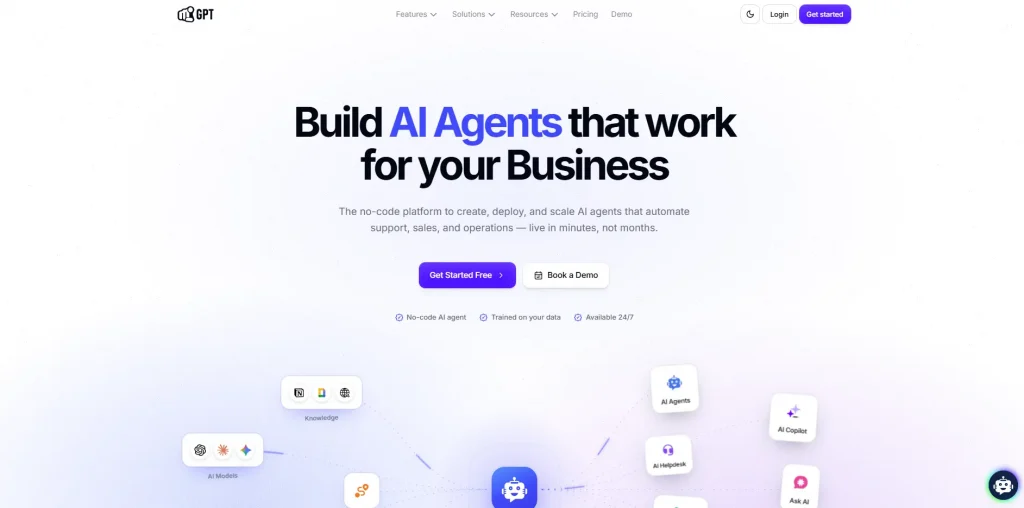
YourGPT is a no-code AI platform for customer service, sales, and operational automation. Teams connect their business data, policies, processes, and rules, then build AI agents without writing code agents that can answer questions, resolve customer requests, qualify leads, guide prospects, and execute multi-step actions across connected systems and APIs.
Agents can also be deployed across the channels a business already uses, giving customers and prospects a consistent experience wherever they reach out, with the option to hand a conversation to a human when a case calls for it.
YourGPT makes AI-powered messaging simple and effective, helping businesses automate communication while keeping conversations personal and responsive.
YourGPT AI agent builder is ideal for businesses that need an AI solution to automate customer support, sales, marketing, or internal workflow.

Gmelius is an AI-powered email collaboration and shared inbox platform designed primarily for teams working in Gmail and Google Workspace. It turns team inboxes such as support@, sales@, billing@, or info@ into collaborative workspaces where conversations can be assigned, discussed, automated, and tracked without requiring teams to move to a separate helpdesk.
Alongside shared inbox management, Gmelius provides AI assistants and automation tools that help teams draft replies, organize incoming emails, route conversations, schedule meetings, and reduce repetitive email work. Teams can also connect Gmelius with CRM, communication, and productivity tools to automate workflows around email.
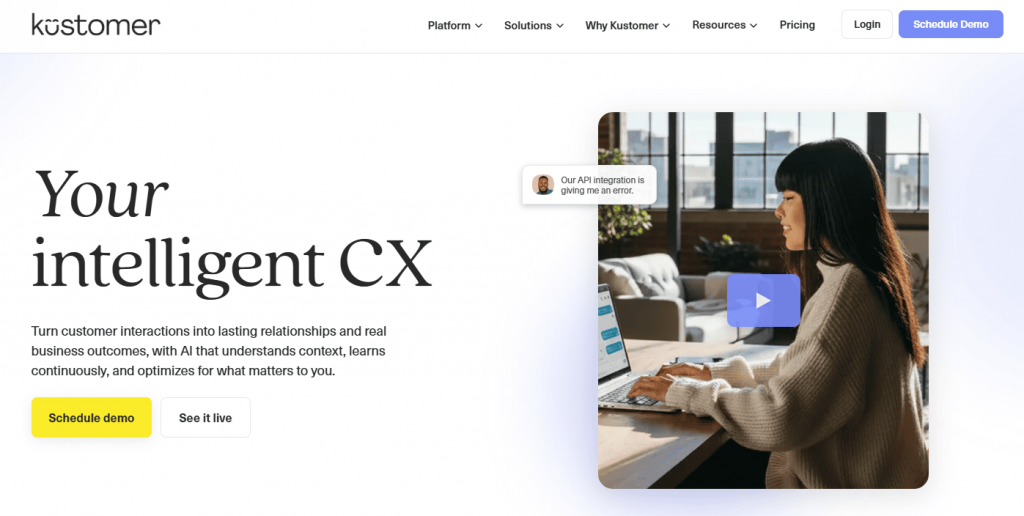
Kustomer is an AI-powered customer service CRM platform built to help support teams manage customer conversations, data, and workflows from a single workspace.
Instead of treating every support request as an isolated ticket, Kustomer gives agents a complete customer timeline that includes past conversations, activity, and relevant account information.
Its AI and automation capabilities help businesses handle repetitive requests, route conversations, personalize responses, and support customers across multiple communication channels.
Kustomer is ideal for businesses that need CRM-focused customer support, AI automation, and omnichannel communication in one platform.

Richpanel is a customer support platform built for ecommerce and digital-first businesses, combining self-service, AI-powered automation, and omnichannel communication in one workspace.
It helps support teams reduce repetitive queries by letting customers resolve common issues on their own while giving agents a unified view of conversations, customer details, and order-related information.
Richpanel also supports automation workflows and integrations that help businesses streamline support without losing the ability to provide personalized human assistance when needed.
Richpanel is ideal for businesses that want to combine self-service, automation, and human support in a single customer service platform.

Missive is a collaborative team inbox and messaging platform that brings email, internal chat, tasks, and customer conversations into one shared workspace.
It is designed for teams that want to work together on customer communication without constantly forwarding emails or switching between separate collaboration tools.
Missive also combines assignments, automation, templates, and integrations to help teams organize conversations and respond more efficiently.
Missive is ideal for teams that want to centralize email, messaging, and internal collaboration in one shared workspace.

Trengo is an AI-powered customer communication platform that brings messages from multiple channels into one centralized inbox.
It helps support and sales teams manage conversations across channels such as WhatsApp, email, social messaging, and live chat without switching between separate tools.
Trengo also combines automation, AI assistance, and team collaboration features to help businesses respond faster and handle higher conversation volumes more efficiently.
Trengo is ideal for businesses that want to centralize multi-channel communication, automate repetitive conversations, and improve team collaboration from one platform.

Re:amaze is a customer support and messaging platform designed to help ecommerce and online businesses manage customer conversations from one shared inbox.
It brings together email, live chat, social media, SMS, and other communication channels while giving support teams tools for automation, collaboration, and self-service.
Re:amaze also includes AI agents, chatbots, FAQs, and ecommerce integrations that help businesses automate common requests while giving agents access to customer and order information.
Annual billing discounts are also available.
Re:amaze is ideal for ecommerce and online businesses that want to combine omnichannel support, automation, AI, and customer conversations in one platform.
Selecting the right customer communication platform depends on your business needs. Here are a few key factors to consider:
Each alternative has its strengths, so evaluate them based on your priorities to find the best fit for your business.
Front’s Starter plan limits you to one channel type at a time and caps at 10 seats, and AI features like Copilot and Smart QA are paid add-ons until you reach the $105/seat Enterprise tier. If your team needs true omnichannel support or built-in AI without extra fees, it’s worth comparing alternatives.
YourGPT is built specifically for AI-driven automation, with no-code agent building, over 100 languages, and native connections to WhatsApp, Instagram, Messenger, Telegram, Slack, Discord, and Line.
Kustomer and Trengo both centralize email, chat, social, and messaging apps into one inbox, making them strong picks for teams managing several channels at once.
Missive carries a genuine free plan and a 4.6-star G2 rating, making it the more budget-friendly option in this list. Gmelius is close behind, starting around $24 per user per month on G2’s current listing.
Gmelius connects with 8 core tools including Gmail, Google Calendar, Google Meet, Slack, Trello, and Zapier, covering most day-to-day workflow needs out of the box.
YourGPT and Missive are both built for self-serve setup, with no-code agent building on YourGPT’s side and a straightforward checkout and onboarding flow on Missive’s.
Front sits around 4.6 to 4.7 stars, Missive around 4.6, Gmelius around 4.4, Kustomer around 4.5, and Trengo around 4.3, based on live G2 listings rather than vendor claims.
Selecting the right alternative to Front is essential for improving team collaboration, customer engagement, and communication workflows.
The Top 7 Front Alternatives in 2026 include platforms with advanced features, ease of use, and extensive customization, enabling businesses to centralize their communications, optimize service delivery, and enhance productivity.
These alternatives offer scalable solutions tailored to your business’s needs, ensuring seamless integration with your existing tools and workflows.
Evaluate the platform that best aligns with your communication and support goals, enhances team collaboration, and drives higher customer satisfaction through efficient engagement and automation.
Connect your help documentation, test live API actions in web chat, and transition your support queue without missing a message.


Compare outsourcing customer service with an AI agent using your own ticket mix, a cost model you fill in, and a clear rule for a hybrid split.

Export the Zendesk ticket archive, train an AI Agent on the help center, and test one real ticket before you stop the old queue.


Compare six Yuma alternatives by ecommerce capabilities, helpdesk compatibility, pricing and human handoffs to choose a replacement for your support team.


Move from Gorgias with a verified ticket archive, tested AI workflows, human handoff and a channel cutover plan before ending your subscription.
TL;DR The Gorgias AI Agent is the automation layer inside the Gorgias helpdesk, split between a Shopping Assistant for pre-purchase conversations and a Support Agent for post-purchase support. A connected Shopify store is required, and Gorgias documentation rules out platforms such as BigCommerce, Magento, and WooCommerce for the AI Agent. Billing runs on two separate […]

TL;DR Gorgias is the closest Richpanel alternative for Shopify stores that need native order actions directly inside support tickets. YourGPT fits stores that want one AI agent handling requests across web, WhatsApp, Instagram, and email, while Tidio and Re:amaze suit smaller teams looking for lighter, lower-cost options. Richpanel’s AI pricing starts around $500/month for two […]