Top 5 Facebook Messenger AI Chatbots for Customer Support in 2026

Rajni
Last updated on August 20, 2026
Facebook Messenger AI chatbots help businesses respond instantly, stay available around the clock, and manage conversations at scale. In 2026, teams use them to reduce support load, improve response times, personalize interactions, and capture leads without adding headcount. The right solution depends on your business size, automation needs, and how well it fits into your existing tools.
Facebook Messenger chatbots are changing how businesses connect with customers. With over 1.3 billion users on Messenger, there is a huge opportunity for businesses to engage with their audience. ChatGPT for Messenger can further improve these interactions.
Online shopping is on the rise and AI chatbots can greatly improve customer service while helping businesses attract new customers. Studies show that companies using chatbots can respond to inquiries up to 80% faster. This quick assistance leads to happier customers and a better overall experience.
Online shopping is on the rise and AI chatbots can greatly improve customer service while helping businesses attract new customers. Studies show that companies using chatbots can respond to inquiries up to 80% faster. This quick assistance leads to happier customers and a better overall experience.
Chatbots can also be customized for different industries, like ecommerce, real estate or hospitality and much more. By offering personalized support, chatbots boost customer satisfaction and help businesses grow.
| Platform Name | Best For |
|---|---|
| YourGPT | Businesses seeking an AI-first, no-code Messenger chatbot with omnichannel and voice AI integration |
| Engati | Companies building multilingual bots with quick deployment and multi-platform reach |
| Botsify | Brands automating sales, lead generation, and Messenger-based customer interactions |
| ItsAlive | Non-technical users creating drag-and-drop Facebook Messenger bots with built-in analytics |
| Flow XO | Teams needing workflow automation and cross-channel chatbot deployment |
A Messenger chatbot is an automated system that interacts with users directly through Facebook Messenger. It handles conversations in real time, answers common questions, and guides customers through tasks such as onboarding, support requests, or purchase decisions. In sectors such as banking and insurance, Messenger chatbots help reduce manual workload while keeping customer interactions fast and consistent. For example, a chatbot can request documents for a loan application or explain coverage details for an insurance policy without involving an agent at every step.
Always-on availability is one of the strongest advantages. Customers increasingly expect quick replies, regardless of time or channel. Businesses using Messenger chatbots have seen measurable improvements in service performance. Photobucket reported a rise in customer satisfaction after introducing automated support, while Siemens Financial Services recorded a significant productivity increase by automating routine customer interactions. For financial institutions, this means uninterrupted service without proportionally increasing support costs.
Modern Messenger chatbots powered by artificial intelligence go beyond scripted responses. They can understand intent, manage spelling errors, and adapt replies based on context. LATAM Airlines dramatically reduced response times and resolved the majority of customer questions without human involvement by using an AI-driven chatbot. In insurance workflows, similar systems help customers take the correct steps after filing a claim and escalate to a human advisor only when needed.
For regulated industries, consistency and security are equally important. Platforms such as YourGPT AI focus on compliance and data protection, ensuring sensitive information such as financial or personal data is handled securely while delivering reliable, policy-aligned responses across every conversation.
Messenger chatbots change how customer support operates at a structural level. Instead of support being reactive and agent-driven, conversations become system-led, where common requests are handled automatically and human input is reserved for exceptions. This shift allows support teams to operate with clearer priorities and fewer interruptions.
Another advantage is conversational continuity. Messenger chatbots retain context within a conversation, allowing customers to move naturally between questions without restarting or repeating information. This creates smoother interactions and reduces friction across longer support journeys, especially when a case needs to be escalated to a human agent.
Messenger chatbots also standardize communication. In traditional support setups, responses vary by agent, shift, or region. A chatbot enforces consistent language, policy alignment, and tone across every interaction. This is particularly valuable for teams operating across multiple locations or handling regulated workflows.
From a system design perspective, Messenger chatbots act as a coordination layer between customers and internal tools. They sit in front of ticketing systems, CRMs, and knowledge bases, routing conversations and information without exposing internal complexity to the customer. This keeps support workflows cleaner and easier to manage as volume grows.
Finally, Messenger chatbots provide visibility into customer intent and behavior at scale. Every interaction becomes structured data that teams can analyze to understand recurring issues, content gaps, and friction points. Over time, this insight helps teams refine support processes and product communication rather than reacting to issues one conversation at a time.
Integrating chatbots into Facebook Messenger can bring many advantages for your business, helping you improve customer service and increase efficiency:
Using chatbots on Facebook Messenger can enhance customer service, simplify operations, and drive growth for your business. This technology helps you better meet customer needs and stay relevant in today’s market.

To help you choose the best option, let’s explore each platform in detail, starting with YourGPT Chatbot.
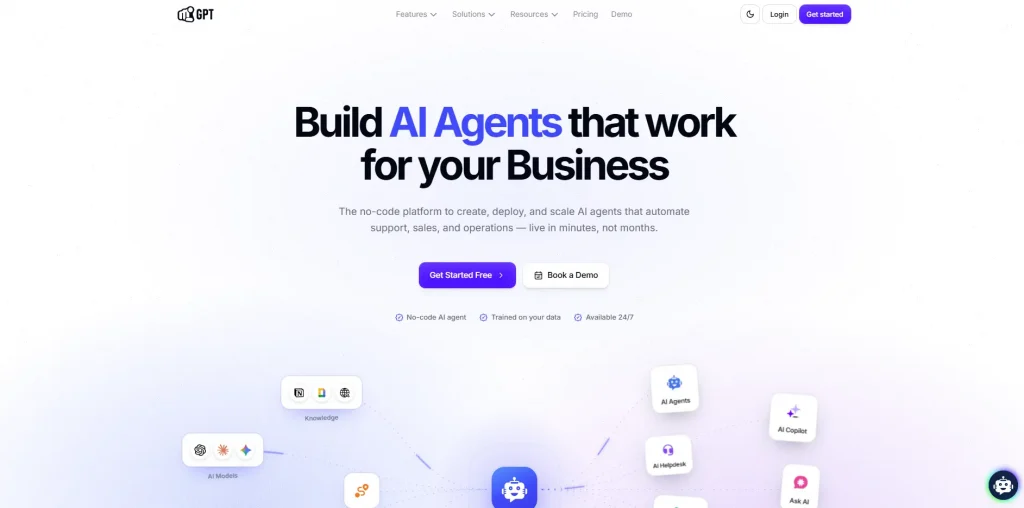
YourGPT is an AI-first platform built to manage real customer and internal conversations at scale. It helps businesses deploy AI agents for customer support, sales, and operations from a single system across websites, apps, and messaging channels.
Unlike basic chatbots that only answer questions, YourGPT is designed to take action. Its AI agents can handle multi-step workflows, interact with external systems, and support both simple requests and complex operational tasks. Teams can automate meaningful work without relying on engineering resources or maintaining multiple disconnected tools.
Custom Integration Needs: Advanced API use cases may require developer support.
Discover how YourGPT AI chatbot can streamline your customer service

Engati enables bots to connect with customers across various channels such as Facebook Messenger, helping businesses manage conversations from a single platform. It supports multilingual interactions, basic automation flows, and integration with common business tools. Teams use it to handle FAQs, route conversations, and maintain consistent responses across channels.

Botsify offers a user-friendly platform for implementing Facebook Messenger bots to automate customer interactions and improve support. It allows teams to create conversational flows without technical setup and manage common customer queries efficiently. Botsify is often used for basic support automation, lead capture, and simple sales conversations on Messenger.

ItsAlive provides a straightforward platform for creating Facebook chatbots without requiring coding skills. It focuses on simple conversation flows, making it easy for small teams to get started quickly. The platform also offers basic analytics to track user interactions and chatbot performance on Messenger.

Flow XO delivers a versatile platform for building chatbots across multiple channels, including Facebook Messenger and Slack. It supports workflow automation and integrations with common third-party tools. Teams often use Flow XO to connect chatbots with existing systems and manage structured conversation flows across channels.
A Facebook Messenger chatbot is an automated tool that interacts with users on the Messenger app. It provides instant answers to questions, guides customers through processes, and offers support 24/7. Designed for convenience, chatbots allow customers to get quick responses without waiting for a live agent.
Using a Facebook Messenger chatbot can significantly enhance customer engagement by providing immediate responses to inquiries. This not only keeps customers satisfied but also helps generate leads and automate repetitive tasks. By guiding users through their purchasing journey, chatbots create a smooth and efficient customer experience.
Absolutely! You can customize both the responses and appearance of your chatbot. YourGPT allows you to tailor interactions based on customer preferences, specific user data, or allow the bot to answer on your business-specific data.
Facebook Messenger chatbots can handle a variety of tasks, including answering frequently asked questions, booking appointments, processing orders, collecting feedback, and suggesting products. They are designed to help customers quickly find the information or services they need.
No technical skills are required! Many chatbot platforms, including YourGPT, offer user-friendly setup options with intuitive builders. This means that even those without tech experience can easily create and customize their own chatbot.
Most chatbot platforms provide dashboards to track key metrics, such as customer engagement rates, response times, and user satisfaction levels. These insights help you assess how well your chatbot meets customer needs and where improvements may be needed.
The costs can vary depending on the platform you choose. Some platforms offer free basic plans, while others charge based on features or usage. It’s important to assess your needs and compare different options to find a solution that fits your budget.
Choosing the right Facebook Messenger chatbot comes down to how well it fits your support and engagement needs. The tools covered in this list show that Messenger chatbots are no longer just add-ons. They play a practical role in handling customer questions, reducing response times, and keeping conversations moving without adding pressure on support teams.
What matters most is alignment. Some chatbots work best for simple support and lead capture, while others support deeper workflows or multi-channel operations. Evaluating how a chatbot integrates with your existing tools, handles handoffs, and scales with message volume will help you avoid short-term fixes that break as your business grows.
As customer conversations continue to shift toward messaging apps, a well-implemented Messenger chatbot helps businesses stay responsive, consistent, and accessible. Investing time in choosing the right solution now sets a stronger foundation for customer support and long-term engagement.
Join 10000+ Business using YourGPT AI to transform business operations!
No credit card required • 7 days access
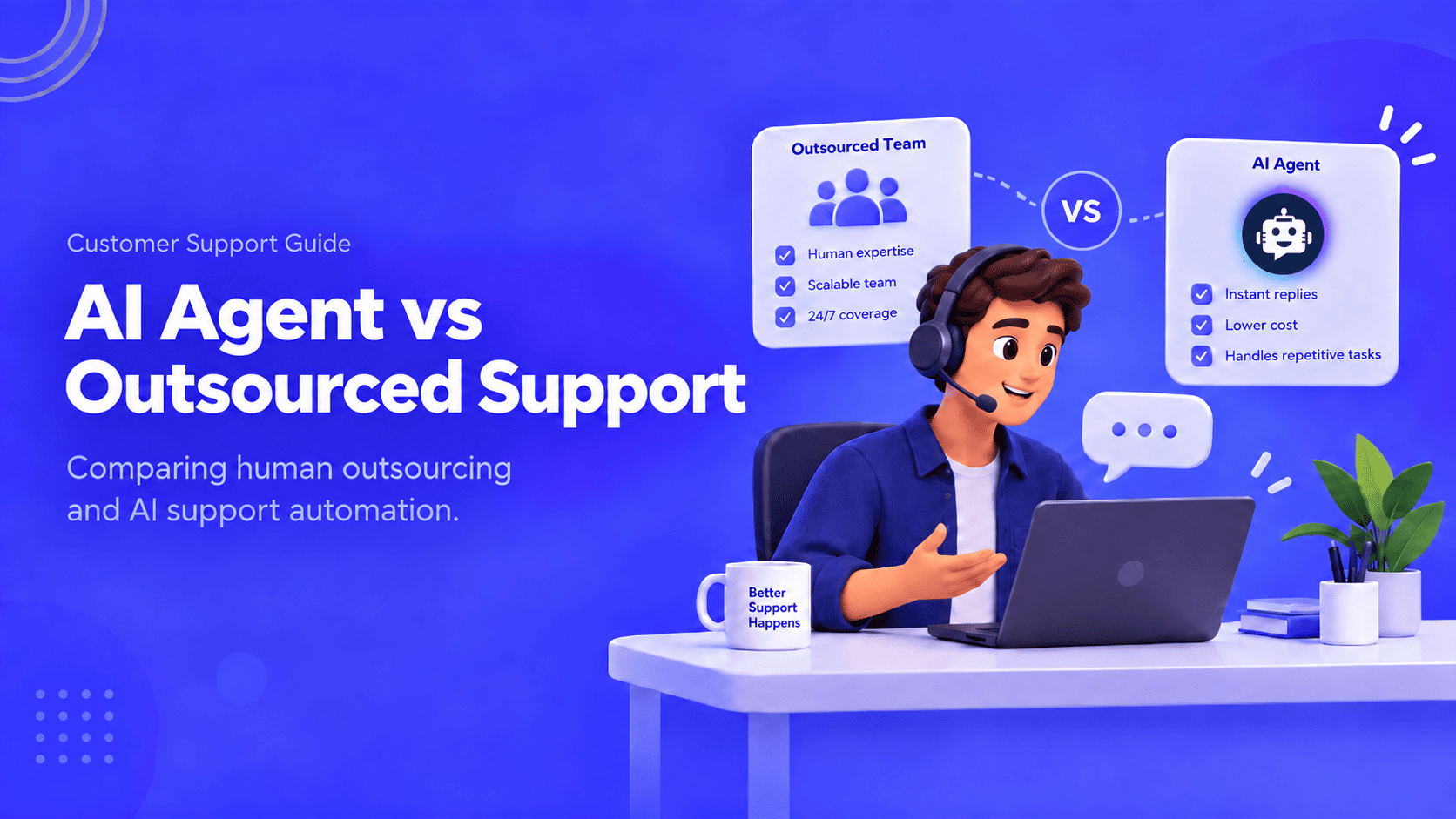
Compare outsourcing customer service with an AI agent using your own ticket mix, a cost model you fill in, and a clear rule for a hybrid split.
Export the Zendesk ticket archive, train an AI Agent on the help center, and test one real ticket before you stop the old queue.


Compare six Yuma alternatives by ecommerce capabilities, helpdesk compatibility, pricing and human handoffs to choose a replacement for your support team.

Move from Gorgias with a verified ticket archive, tested AI workflows, human handoff and a channel cutover plan before ending your subscription.
TL;DR The Gorgias AI Agent is the automation layer inside the Gorgias helpdesk, split between a Shopping Assistant for pre-purchase conversations and a Support Agent for post-purchase support. A connected Shopify store is required, and Gorgias documentation rules out platforms such as BigCommerce, Magento, and WooCommerce for the AI Agent. Billing runs on two separate […]

TL;DR Gorgias is the closest Richpanel alternative for Shopify stores that need native order actions directly inside support tickets. YourGPT fits stores that want one AI agent handling requests across web, WhatsApp, Instagram, and email, while Tidio and Re:amaze suit smaller teams looking for lighter, lower-cost options. Richpanel’s AI pricing starts around $500/month for two […]