YourGPT vs Manychat: Best Choice for Businesses in 2026

Rajni
Last updated on December 31, 2025
YourGPT vs Manychat is a comparison many businesses are making in 2026. The two platforms are popular, but they are built with very different goals in mind.
Manychat is known for creating marketing flows for Instagram, Messenger, and WhatsApp automation. It works well for promotional campaigns and lead capture but falls short when businesses need advanced AI, customer support automation, or a unified system across multiple channels.
YourGPT is designed as an AI-first platform. It provides self-learning AI, persistent memory, advanced training, and workflow automation for customer support, sales, and operations. With integrations across web, voice, and messaging apps, it offers a future-ready solution for companies preparing to scale.
This blog compares YourGPT and Manychat across features, AI capabilities, integrations, pricing, and scalability to help you choose the right platform for your business in 2026.
| Feature | YourGPT | Manychat |
|---|---|---|
| Who Should Use It | SMBs, mid-market, and enterprises needing AI for support, sales, and automation | Small businesses focused on marketing bots for WhatsApp, Messenger, Instagram |
| AI Capabilities | Self-learning AI, persistent memory, advanced automation, multi-model support | Predefined marketing flows with no self-learning |
| Training on Data | Yes — multi-source including documents, websites, chat history, and CRMs | No — limited templates and rules |
| Workflows | Advanced multi-step automation, backend API calls, and integrations | Marketing sequences only |
| Channels | Web, email, WhatsApp, Messenger, Telegram, Slack, LINE, Voice, unified inbox | WhatsApp, Messenger, Instagram |
| Mobile App | Yes | Yes |
| Web Extension | Yes | No |
| Integrations | Shopify, Salesforce, HubSpot, CRMs, APIs, custom endpoints | Marketing CRMs and eCommerce tools |
| Brand and Workflow Control | Adaptive conversation paths, fallback logic, and brand tone control | Limited to templates and standard flows |
| Analytics | Advanced analytics and reporting | Basic campaign and user analytics |
| Pricing | Starts at $59 per month — usage-based model | Starts at around $15 per month — limited to marketing automation |
| Best Fit | Businesses scaling customer support, sales, and operations across multiple channels | Small businesses running marketing campaigns |
Manychat is a chatbot builder launched in 2015 that focuses on marketing automation. It became popular for enabling small businesses to build campaigns on Messenger, Instagram, and WhatsApp without technical expertise.
Its strength lies in simplicity. With a visual flow builder and ready-to-use templates, Manychat allows businesses to capture leads, run promotions, send reminders, and drive engagement through messaging apps.
While Manychat is effective for marketing, it does not support advanced AI training, self-learning, or multi-channel automation.
YourGPT is a no-code AI platform built for businesses that need more than marketing bots. It is designed as an AI-first system that automates customer support, sales, and operations in one unified platform.
Unlike Manychat, YourGPT can train on company data, adapt to real conversations, and manage complex workflows across multiple channels. It is used by eCommerce brands, SaaS companies, and enterprises that want to scale customer engagement with advanced AI.
YourGPT is built for businesses that want flexibility, scalability, and full control of their customer experience.
Manychat is good for starting and creating simple marketing campaigns but offers less flexibility when it comes to customer support, workflow automation, and long-term business growth.
Compare how YourGPT and Manychat perform across AI, integrations, training, and support channels. This side-by-side breakdown highlights which platform is better aligned with your business requirements.
| Feature | YourGPT | Manychat |
|---|---|---|
| Easy Setup | Yes | Yes |
| Training and Data | Yes — multi-source training on documents, websites, CRMs, and chat logs | No — limited to templates and predefined rules |
| Self Learning AI | Yes | No |
| Persistent Memory | Yes | No |
| Advanced Automation | Yes — workflows, backend API calls, and system actions | No — limited to marketing flows |
| Multi Step Workflows | Yes | No |
| API and Backend Actions | Yes | No |
| Omni Channel (web, mobile, voice, social) | Yes — full coverage across web, WhatsApp, Messenger, Telegram, Slack, LINE, email, and voice | Partial — only WhatsApp, Messenger, and Instagram |
| Unified Inbox | Yes | No |
| Mobile App | Yes | Yes |
| Web Extension | Yes | No |
| Integrations | Shopify, Salesforce, HubSpot, CRMs, APIs, custom endpoints | Marketing CRMs and eCommerce tools only |
| Brand and Workflow Control | Full control with adaptive paths and fallback logic | Limited — templates and standard flows only |
| Analytics and Reports | Advanced analytics and reporting dashboards | Basic campaign analytics |
| Security and Compliance | SOC2, GDPR compliant | Standard security |
| Pricing | Starts at $59/month — usage-based, no per-seat fees | Starts at $15/month — affordable but limited in scope |
| Best Fit | Businesses scaling support, sales, and operations across multiple channels | Small businesses running marketing campaigns |
While both platforms help businesses automate conversations, YourGPT stands out as a complete AI platform with advanced training, self-learning capabilities, and multi-channel scalability.
YourGPT provides a no-code setup that makes it easy to deploy an agent in minutes. For advanced needs, its AI Studio includes a drag-and-drop interface to design workflows, create automation logic, and train on custom data. It scales from simple FAQs to complex operations within the same platform.
Manychat is also simple to set up with a flow builder. However, it is limited to predefined marketing sequences, making it less flexible for support or operational use cases.
YourGPT supports multi-source ingestion:
Manychat, in contrast, does not offer custom training or adaptive learning. It relies on fixed rules and templates.
YourGPT:
Manychat:
YourGPT provides full customization over workflows, fallback logic, and brand tone. Bots can adapt mid-conversation, escalate to humans, or switch contexts.
Manychat offers reliable templates for marketing but does not allow the same depth of adaptive conversation logic.
YourGPT goes beyond simple bots with:
Manychat is effective for marketing broadcasts but:
YourGPT
Manychat
YourGPT is better for customer support because it offers self-learning AI, persistent memory, and one inbox to manage all channels. Manychat is mainly designed for marketing campaigns and does not provide advanced support automation.
No. Manychat is limited to simple marketing flows. YourGPT supports multi-step workflows, backend API calls, and real-time actions, making it better for complex tasks.
Manychat starts at around $15 per month, which works well for small businesses that only need marketing automation. YourGPT starts at $59 per month but includes advanced AI features that cover customer support, sales, and operations.
YourGPT supports web, email, WhatsApp, Messenger, Telegram, Slack, LINE, and voice. All conversations are managed in a single inbox. Manychat only supports WhatsApp, Instagram, and Messenger.
Yes. YourGPT helps capture leads, qualify prospects, and provide customer service in one platform. Manychat is mainly used for marketing flows and does not cover advanced support use cases.
No. Manychat is limited to templates and rules. YourGPT can be trained on documents, websites, CRMs, and past chats, which makes it more accurate and adaptable.
Both are easy to set up. Manychat is simple for creating quick marketing campaigns. YourGPT offers a no-code studio that allows you to start small with FAQs and grow into advanced workflows.
YourGPT supports live agent handoff through its helpdesk and unified inbox. Manychat does not include full live support tools and is focused on automation only.
YourGPT includes advanced analytics with detailed reporting on both sales and support performance. Manychat provides only basic campaign analytics.
YourGPT offers more value for businesses planning to grow, since it covers customer support, sales, and operations. Manychat is best for small businesses that only need affordable marketing automation.
Manychat good for basic marketing. For businesses scaling in 2026, YourGPT offers more flexibility and AI power.
Manychat is a good choice for small businesses that only need simple automation for Instagram, Messenger, and WhatsApp. It is affordable, easy to set up, and effective for running marketing campaigns.
However, businesses looking for more advanced support and automation often explore Manychat alternatives such as YourGPT, Drift, Wati, and Ada. These platforms offer stronger AI capabilities, multi-channel coverage, and better scalability for growing teams.
But businesses today often need more than campaign flows. They want AI that can support customers, automate sales, and manage operations across multiple channels.
YourGPT provides that level of flexibility. With self-learning AI, advanced workflows, and omnichannel coverage, it adapts as companies grow. For businesses preparing for the future, YourGPT is the stronger platform.
The difference is in long-term value. Manychat works well if your focus is short-term marketing. YourGPT ensures your AI investment grows with your business, making it a platform you won’t outgrow as your needs become more complex.
See how YourGPT delivers faster automation, multilingual agents, and clear outcomes compared to Manychat. Test it yourself or book a demo to see the difference.
No credit card · Instant access · Cancel anytime

The reader can shortlist one or two platforms by primary job, existing stack, action depth, handoff, governance, and billing unit.

A practical breakdown of Gorgias Helpdesk and AI Agent pricing, including what counts toward each allowance, how to compare plans and how to budget with your own volumes.
Choose Halloween ecommerce campaigns that fit your products, with AI agent workflows, offer worksheets, launch tests and order measurement.
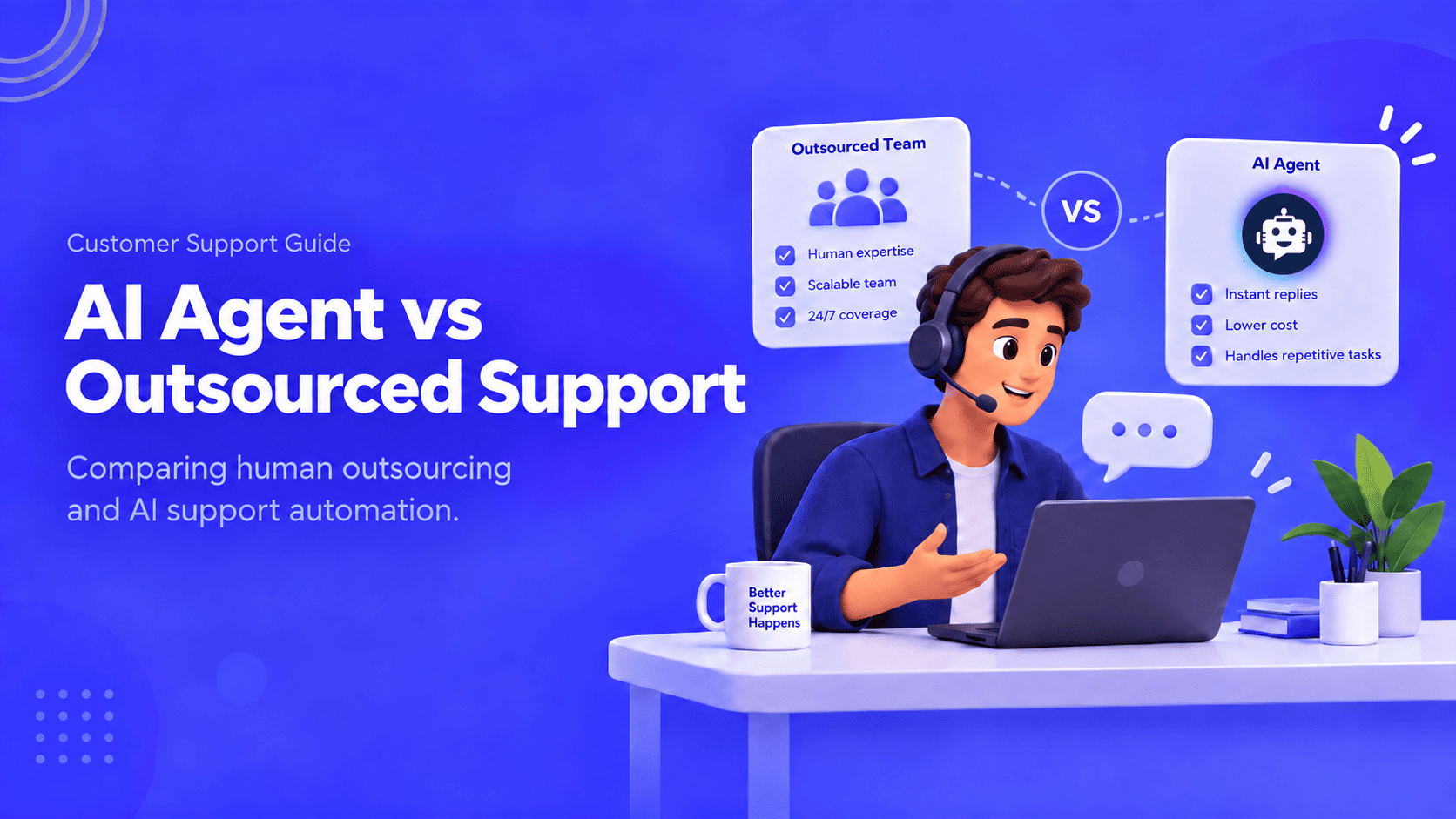
Compare outsourcing customer service with an AI agent using your own ticket mix, a cost model you fill in, and a clear rule for a hybrid split.
Export the Zendesk ticket archive, train an AI Agent on the help center, and test one real ticket before you stop the old queue.


Compare six Yuma alternatives by ecommerce capabilities, helpdesk compatibility, pricing and human handoffs to choose a replacement for your support team.
