Best 5 ManyChat Alternatives and Competitors in 2026

Rajni
Last updated on July 3, 2026

ManyChat is strong for Messenger and Instagram, but it falls short on advanced AI, omnichannel reach, and deep integrations. In 2026, businesses need chatbots that provide accurate answers, keep context, trigger real-time actions, work across channels, and integrate with CRMs and helpdesks.
These platforms give businesses more flexibility, stronger AI automation, and deeper integrations than ManyChat.
ManyChat is one of the most recognized chatbot platforms, best known for Facebook Messenger and Instagram automation. For years, it has helped businesses build structured conversation flows for lead generation, marketing campaigns, and basic customer support.
As customer expectations continue to evolve, businesses are looking for more than rule-based automation. They need chatbots that can understand context, support conversations across WhatsApp, Slack, websites, and other channels, integrate with CRMs and helpdesks, and perform real-time actions inside their existing business tools.
As a result, many teams are exploring alternatives to ManyChat that offer greater flexibility, broader integrations, and more advanced AI capabilities.
In this blog, we compare the best 5 ManyChat alternatives and competitors in 2026. Each platform is evaluated based on AI capabilities, supported channels, integrations, pricing, and ideal use cases, helping you choose the right solution for your business.
ManyChat works well for simple Facebook Messenger and Instagram automation. It is a useful platform for basic lead capture, campaign flows, and social messaging. But as businesses grow, they often need more than predefined chatbot paths and social-channel automation.
Today, teams expect chatbots to understand customer context, work across multiple channels, connect with CRMs and helpdesks, and automate real tasks inside their existing systems. This is where ManyChat can feel limited for growing support, sales, and operations teams.
ManyChat is mainly built around flow-based automation. It uses predefined triggers, rules, and templates, which are useful for simple conversations but less effective when users ask unexpected questions or need personalized responses.
More advanced chatbot platforms use contextual AI to understand intent, handle multilingual conversations, and respond based on customer history, business rules, and knowledge sources. This makes them better suited for customer support, lead qualification, and sales workflows where conversations are not always predictable.
ManyChat is strongly focused on Facebook Messenger, Instagram, and social automation. These channels are still valuable, especially for social commerce and creator-led businesses, but many companies now need support across more customer touchpoints.
Businesses often want one chatbot system that works across websites, WhatsApp, Slack, email, and other messaging channels. Omnichannel platforms help teams manage conversations from a central dashboard instead of switching between multiple tools.
ManyChat can handle structured automations, but it may feel restrictive when businesses need advanced logic, live data retrieval, or deeper workflow execution during a conversation.
For example, support teams may want a chatbot to check an order status, update a CRM record, create a helpdesk ticket, verify customer details, or trigger an internal workflow in real time.
AI-first chatbot platforms are designed for this type of automation. They can connect with internal tools, call APIs, run workflows, and personalize responses using live business data.
ManyChat connects with popular marketing and automation tools, but businesses with more complex sales or support operations often need deeper CRM and helpdesk syncing.
When customer conversations, ticket history, and profile data are spread across different systems, teams spend more time switching tools and updating records manually.
Modern alternatives focus on stronger integrations with CRMs, helpdesks, and internal databases. This helps teams keep customer context in one place, improve follow-ups, and reduce manual work.
ManyChat is easy to set up for predefined flows, but complex use cases often require more flexible customization. If a business needs advanced conditional logic, industry-specific workflows, or chatbot behavior based on internal data, the setup can become harder to manage.
More flexible alternatives allow teams to build custom chatbot experiences, connect their own data sources, and design workflows that fit specific support, sales, and operations needs.

Here are five AI-powered Chatbot platforms to help you improve your customer service and engagement.
Let us explore these alternatives based on key criteria such as features, pricing, user interface, customer support, integration options, and unique selling points.

YourGPT is an AI-first platform designed to help businesses run customer support, sales, and operations using AI agents trained on their own data. Instead of relying on static flows, it combines a no-code agent builder, a unified inbox for multi-channel conversations, and smooth AI-to-human handoff. This allows teams to automate repetitive queries while staying in control of complex or sensitive cases.
YourGPT also supports voice agents for real-time calling use cases, making it suitable for businesses that need more than a basic website or social media chatbot.
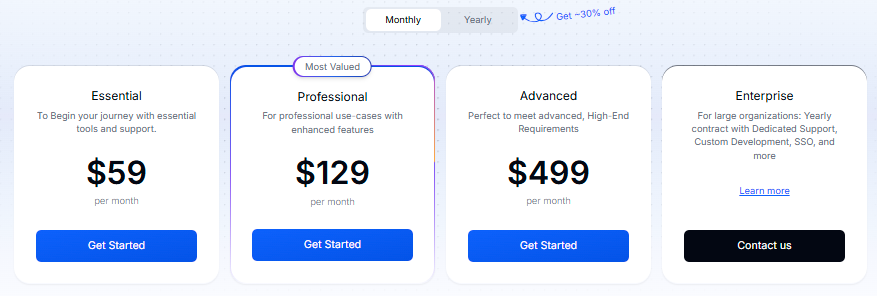
Free trial for 7 days (no credit card required). Paid plans start at $59/month and include all core features.
Why choose YourGPT over ManyChat?
ManyChat is mainly built for marketing use cases. It works well for Instagram and Messenger campaigns where conversations follow fixed flows. That’s usually enough when the goal is lead capture or promotions.
YourGPT is built for day-to-day operations. It handles real customer questions, lead qualification, internal routing, and voice calls, not just scripted replies. Teams can automate common requests and still hand conversations to humans when things get complex, without losing context.
If your use case goes beyond marketing flows and includes customer support, sales conversations, or internal workflows across multiple channels, YourGPT is a better fit. It gives teams one system to manage AI and human conversations together, instead of stitching multiple tools together.
Discover how YourGPT AI chatbot can streamline your customer service

BotPenguin is a no-code chatbot platform designed for small and mid-sized businesses that want to automate basic customer conversations across popular messaging channels. It focuses on rule-based automation with light AI support, making it suitable for lead capture, FAQs, and simple customer interactions.
Unlike platforms built for complex workflows or deep integrations, BotPenguin is positioned as an easy entry point for businesses looking to deploy chatbots quickly without technical setup.

Landbot.io is a no-code chatbot builder focused on creating interactive conversational experiences, especially for websites, WhatsApp, and Messenger. It combines a visual drag-and-drop flow builder with optional AI-assisted responses, making it easy for teams to launch automation without coding expertise.

Chatfuel is a no-code chatbot platform focused on conversational marketing and messaging automation, primarily across social channels. It is commonly used by businesses to automate Instagram, Facebook Messenger, and WhatsApp conversations for lead generation, customer engagement, and basic support.
Chatfuel is best suited for structured, campaign-driven interactions rather than complex operational workflows. While it includes AI-assisted replies, most automation is still based on predefined flows and rules.

Freshchat is a modern customer messaging and chatbot platform from Freshworks designed to help businesses automate support, engage website visitors, and manage conversations across multiple channels. It combines rule-based automations with AI-assisted bots and integrates deeply with CRM, helpdesk, and support workflows.
Here’s a side-by-side look at how the top ManyChat alternatives compare on AI depth, channel coverage, pricing, and best-fit use cases.
| Platform | AI Capabilities | Channels Supported | Voice AI | Live Agent Handoff | Integrations & Actions | Pricing Starts | Best For |
|---|---|---|---|---|---|---|---|
| YourGPT | Advanced AI agents, contextual responses | Web, WhatsApp, Instagram, Telegram, LINE | ✅ Yes | Slack, Email, Internal Inbox | APIs, workflows, CRM & system actions | $59/month | AI-first teams handling support, sales, and workflows |
| BotPenguin | Basic AI with rule-based flows | WhatsApp, Instagram, Website | ❌ No | Limited | Basic integrations, limited automation | $150/month | Simple chatbot flows and lead capture |
| Landbot.io | Rule-based logic with optional AI assist | Web, WhatsApp, Messenger | ❌ No | Limited | Zapier and app integrations | €40/month (~$43) | Interactive web and form-like experiences |
| Chatfuel | Light AI with marketing automation | Instagram, Facebook, WhatsApp | ❌ No | Basic | Marketing tools, limited system actions | $60/month | Social media marketing chatbots |
| Freshchat | Intent-based AI and agent assist | Website, Mobile App, WhatsApp | ❌ No | Native live agent support | Strong CRM & helpdesk integrations | $19/agent/month | Customer support teams with live chat focus |
ManyChat works well for simple, scripted conversations. Businesses usually move on when they need better AI responses, WhatsApp support, or deeper integration with their internal systems.
Yes, ManyChat remains useful for basic Instagram and Facebook automation. It’s a good option if your chatbot is focused on lead generation or simple campaign tasks.
ManyChat feels limiting when conversations break away from pre-built flows. It struggles with customer support, order tracking, and managing complex or multi-channel chats.
ManyChat relies on predefined flows. AI-first platforms use natural language understanding to interpret intent, answer open-ended questions, and personalize responses based on context.
Not necessarily. Many modern alternatives offer no-code builders too. The key difference is that they offer more flexibility and control for complex workflows.
Yes, many businesses switch to alternatives specifically for WhatsApp. These tools typically provide better automation, live agent handoff, and conversation tracking.
No, not for basic setups. But for custom APIs and advanced workflows, developer assistance is often needed—just like with any robust platform.
Live handoff ensures a smooth customer experience. Agents can review the conversation history, avoid repeated questions, and solve issues faster.
Yes. Platforms that offer AI, human handoff, and shared inboxes can consolidate live chat and automation into one system, reducing tool overload.
If your chatbot is now used for support or sales—not just marketing—then it’s likely time to consider a more flexible, AI-powered platform.
ManyChat is a solid starting point for Messenger and Instagram flows. But once your inbox grows, customers ask unpredictable questions, and your team needs real handoff plus system updates, flow-only automation starts to slow you down.
Before you switch, map your must-haves. Decide which channels you need (WhatsApp, web, Slack, email), what the bot should do besides reply (create tickets, update CRM, check order status, route to the right teammate), and what data it must use (help docs, policies, PDFs, Notion, Sheets). Then shortlist platforms based on three things: accuracy on your content, reliable omnichannel coverage, and integrations that work without hacks.
If your current setup feels restrictive, move to a platform built for support and operations, not only marketing flows. Tools like YourGPT fit teams that want contextual answers, smooth AI to human handoff, and action-based workflows connected to the systems they already use.
Join 10000+ Business using YourGPT AI to transform business operations!
No credit card required • 7 days access

The reader can shortlist one or two platforms by primary job, existing stack, action depth, handoff, governance, and billing unit.

A practical breakdown of Gorgias Helpdesk and AI Agent pricing, including what counts toward each allowance, how to compare plans and how to budget with your own volumes.
Choose Halloween ecommerce campaigns that fit your products, with AI agent workflows, offer worksheets, launch tests and order measurement.
Compare outsourcing customer service with an AI agent using your own ticket mix, a cost model you fill in, and a clear rule for a hybrid split.
Export the Zendesk ticket archive, train an AI Agent on the help center, and test one real ticket before you stop the old queue.


Compare six Yuma alternatives by ecommerce capabilities, helpdesk compatibility, pricing and human handoffs to choose a replacement for your support team.
