Top 6 Yuma Alternatives & Competitors in 2026

Shreya Sharma
September 17, 2026

The six Yuma alternatives compared here are YourGPT, Intercom Fin, Richpanel, Gorgias, Zendesk and Siena AI. YourGPT suits teams seeking AI-native, omnichannel agents that take action across support and sales. Fin and Siena offer options for keeping a supported helpdesk; Richpanel, Gorgias and Zendesk combine AI with a support workspace. Choose based on the tasks your agent must complete, the channels your customers use and the total cost of the setup.
Ecommerce conversations often connect service with a sale. A question about a product can lead to a recommendation; a delivery question may need an order lookup or an address change. The AI agent you choose needs access to the right information and permission to act, with a clear handoff when a person should take over.
Yuma is one option for that work. This guide compares six alternatives by their commerce integrations, support workflows and pricing, so you can see which fits your business. Whether you want to keep your current helpdesk or bring AI and your team into a different workspace, the starting point is what you want customers to be able to do.
A different AI agent is worth evaluating when you need more control over answers and actions, a different setup process, broader use cases or a pricing model that fits your volume. Start with the issue your team actually needs to solve:
Use this table to narrow the shortlist by the support setup you want. The product sections explain the capabilities and pricing behind each choice.
| Product | Reason to shortlist | What happens to your helpdesk | Costs to include |
|---|---|---|---|
| 1. YourGPT | AI-native omnichannel agents that take action across ecommerce support and sales | Decide which existing support workflows to retain and connect | Selected subscription, AI Credit usage and any retained tools |
| 2. Intercom Fin | Add Fin to a supported helpdesk or use Intercom | Depends on standalone or Intercom deployment | Outcomes and any required helpdesk seats |
| 3. Richpanel | Evaluate AI alongside the team’s support workspace | Keep Richpanel if already using it or plan a migration | Applicable plan, seats, AI usage and required add-ons |
| 4. Gorgias | Evaluate ecommerce helpdesk and AI together | Existing Gorgias users can evaluate its AI without moving the queue | Helpdesk ticket allowance, AI usage and overages |
| 5. Zendesk | Evaluate AI within a wider support operation | Existing Zendesk users can retain their workspace | Relevant Support or Suite plan, seats and additional AI usage |
| 6. Siena AI | Add ecommerce automation to a supported helpdesk | Retain the connected helpdesk | Platform fee, automated-ticket usage and the existing helpdesk |
We compared these platforms using official product pages, integration catalogs and pricing reviewed in September 2026. The focus is on ecommerce capabilities, compatibility with your helpdesk, control over actions and total cost. YourGPT publishes this guide and is included in the comparison; this is a documentation-based review, not a hands-on performance ranking.
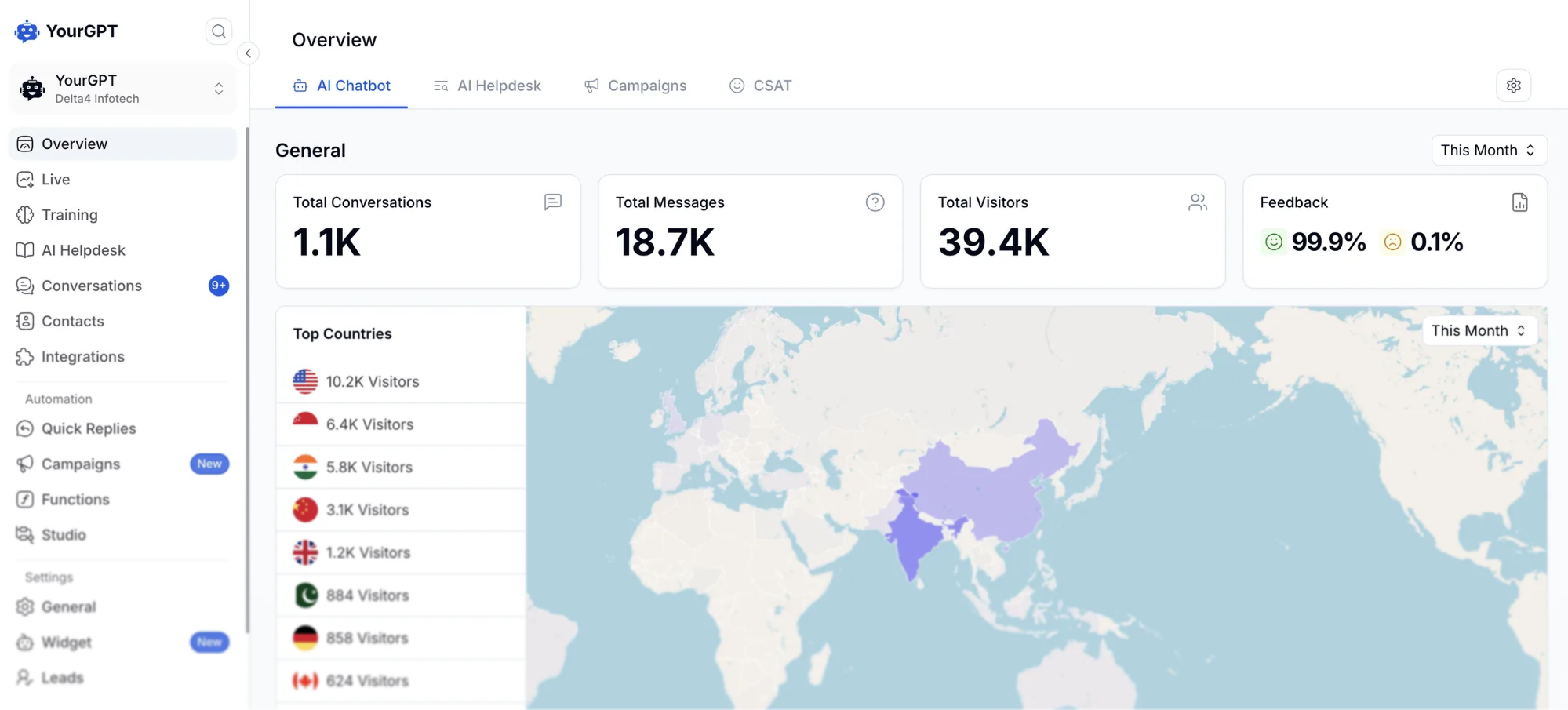
Best for: Teams that want an AI-native platform with omnichannel agents that take action across support, sales and operations
YourGPT is our AI-native platform for customer support, sales and operations. Train an agent on your product catalog, website, PDFs and store policies, deploy it across customer channels, and connect the tools it needs to complete tasks within conversations. Teams can start without code and add more involved workflows as their requirements grow.
For an ecommerce business, that can mean recommending a product before a purchase, tracking an order afterward or handling an approved order change within the conversation. Refunds, CRM updates and bookings require the relevant connected tools and workflow permissions. When a request needs personal attention, the agent can hand it to your team.
Shopify and WooCommerce are examples of commerce connections, while Salesforce, Zapier and Make connect other parts of your operation. The actions available depend on the connected system, its API and the permissions you configure.
Strengths: High resolution rates for repetitive requests and self-learning are central strengths. Our agents can resolve up to 90% of repeated queries, with results depending on the knowledge, workflows and requests involved. Self-learning helps your team close knowledge gaps identified in real conversations, while connected actions let agents complete tasks across support and sales. AI Credits provide usage-based billing rather than a fixed charge for each resolved ticket.
Limitations: Advanced workflows take more setup and testing than a basic knowledge-based agent. Connected actions need permissions and clear rules, and model choice affects credit consumption. Self-learning still includes human review of suggested knowledge improvements.
Pricing: Our plans start at $39 per month billed annually for Essential, $79 for Professional and $349 for Advanced, with custom Enterprise pricing available. Month-to-month prices are $59, $129 and $499. Professional includes Functions and API/webhook support, making it the relevant starting comparison for custom action workflows.
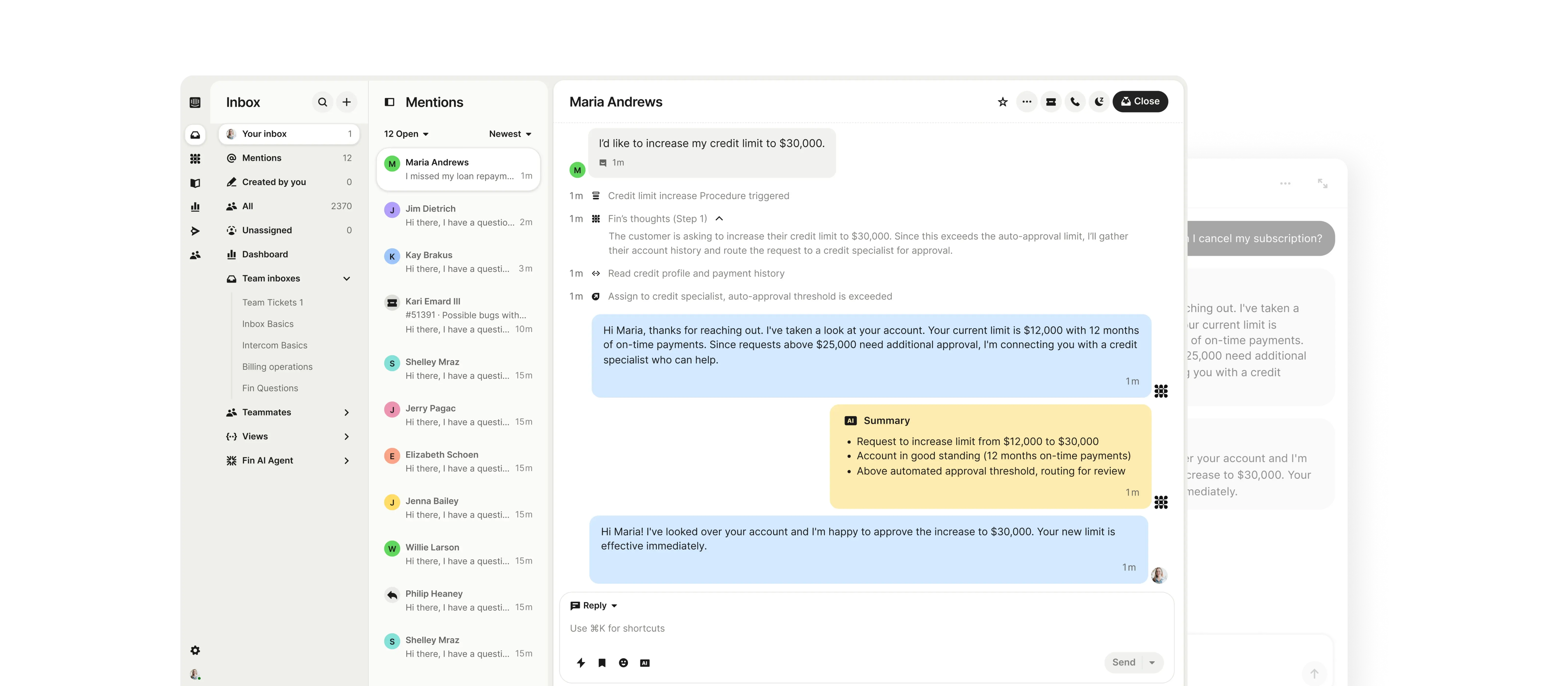
Best for: Teams that want an AI agent for their current helpdesk or an integrated Intercom setup
Fin offers two buying paths: add it to a supported helpdesk, or use it with Intercom’s own inbox. Separate those options when comparing costs. Using Fin does not automatically mean paying for Intercom seats.
Fin’s capabilities extend beyond retrieving an answer:
Strengths: You can evaluate Fin without first committing to a helpdesk migration. Teams choosing Intercom can combine the agent, inbox and ticketing in one platform. The published billing rules also distinguish ordinary escalation from completed Procedure work.
Limitations: A billable outcome does not always mean an issue was resolved without a human. Under Fin’s outcome rules, a successfully completed Procedure that deliberately hands off is billable; default or workspace-rule escalations are not. Failed Procedures are not billed as completed outcomes. Keep those categories separate when comparing automation performance.
Pricing: Using Fin with the Intercom platform means paying both the seat subscription and AI usage. Intercom plans cost $29 per seat per month for Essential, $85 for Advanced or $132 for Expert, billed annually, plus Fin from $0.99 per outcome. Optional add-ons and usage-based channels can increase the total.
Fin can also run on a supported third-party helpdesk. That option has a minimum monthly commitment and does not require Intercom seats, but you still pay for the helpdesk you retain. Compare the complete setup rather than treating the AI rate as the whole bill.
Fin charges at most once per conversation under its outcome rules. Voice and specialized requirements need a separate quote, so do not apply the text-support rate to every deployment.

Best for: Merchants evaluating a new helpdesk alongside customer self-service and AI
Richpanel deserves a place on the shortlist when the human support workspace needs attention too. Its helpdesk puts conversations, order history and connected customer data in the same workspace, so an agent can investigate an exception without opening a separate application for every detail.
Its AI agents use order data and store policies to handle requests through connected tools. Richpanel describes permissions for individual actions, allowing lookups to run automatically while refunds or order edits can require approval. That conversational automation is separate from the self-service portal customers navigate themselves.
The integration directory names Shopify, WooCommerce and Magento, alongside Recharge, Loop Returns, AfterShip and Klaviyo. For a subscription-heavy store, include Recharge history and a subscription change in the pilot alongside a normal order inquiry.
Strengths: Richpanel combines an ecommerce support workspace with self-service options. Its named commerce integrations make it easier to evaluate how customer and order data will reach the team.
Limitations: A full helpdesk move adds work around history, routing, permissions and reporting. Channel availability and store limits vary by plan, so a lower seat price may not cover a multibrand operation.
Pricing: Richpanel charges for helpdesk seats and AI usage. Its public pricing shows inconsistent rates across the pricing page and calculator as of September 2026, so obtain a current written quote before budgeting. Ask for the seat price, AI-handled conversation rate, billing commitment and any add-ons as separate line items.
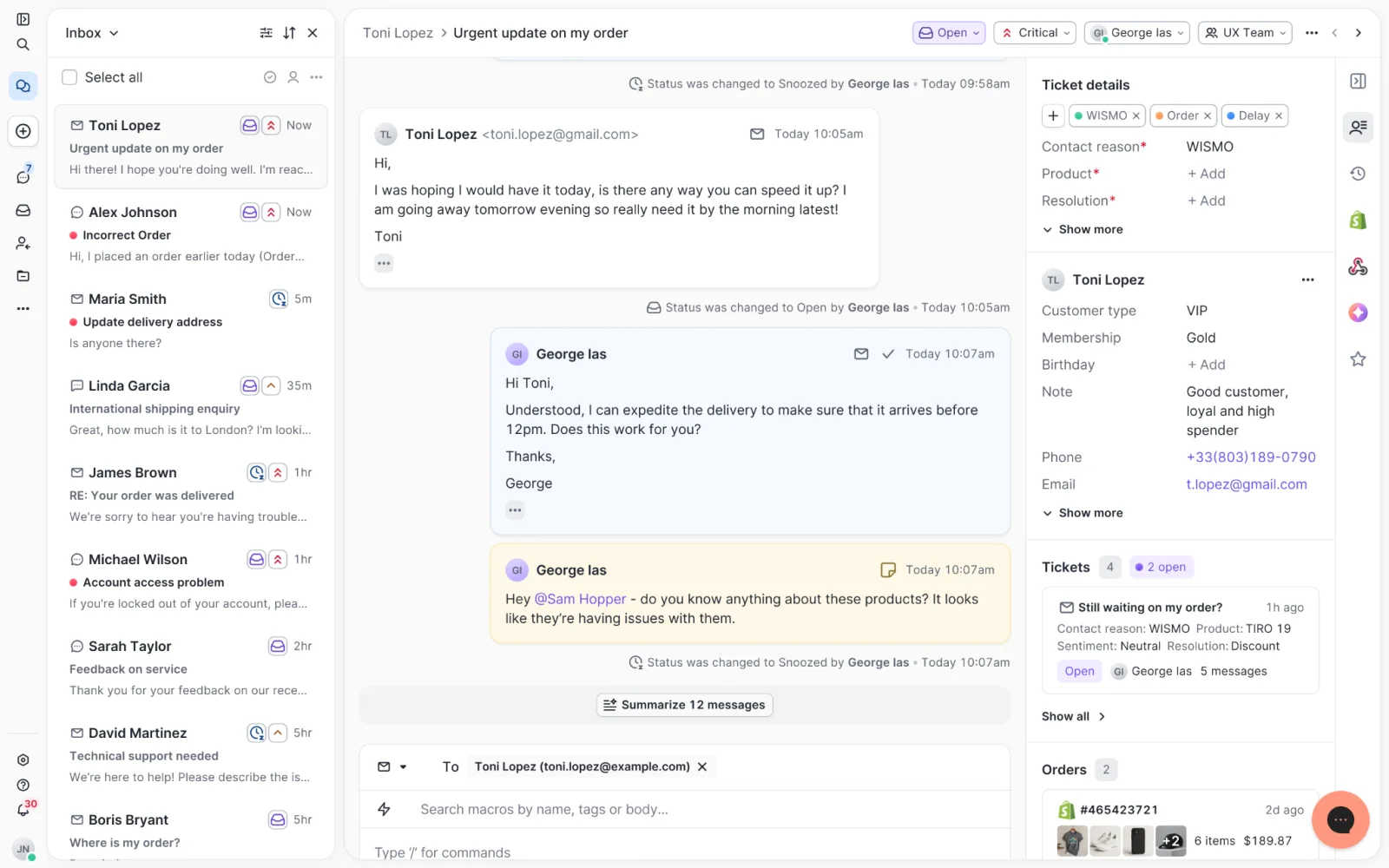
Best for: Shopify teams that want AI working inside their Gorgias helpdesk
If Yuma already runs on top of your Gorgias inbox, replacing it with Gorgias AI Agent does not require moving the inbox. The decision is whether Gorgias’s own automation can handle your store’s requests well enough to replace the separate AI layer.
For teams using another helpdesk, the evaluation also includes Gorgias’s ticketing workspace and the work needed to move into it.
Gorgias AI Agent uses store knowledge, guidance and connected data to answer customers. Its capabilities extend beyond rules that send canned replies:
Strengths: Existing Gorgias customers can evaluate native AI while keeping their established inbox. Helpdesk pricing follows ticket volume rather than charging separately for each human agent.
Limitations: The base helpdesk charge and AI automation charge can apply to the same conversation. Seasonal increases therefore need a forecast for both meters, plus any Voice or SMS add-ons.
Pricing: Gorgias charges for the helpdesk subscription plus the AI Agent add-on. Its Basic plan with AI Agent shows $77 per month billed annually: $50 for the helpdesk and $27 for AI Agent, including 300 helpdesk tickets and 30 automated interactions per month. Automated interactions beyond that allowance cost $1.50 each; helpdesk ticket overages are billed separately.
Starter with AI Agent is $40 per month on monthly billing: $10 for the helpdesk plus $30 for AI Agent, including 50 tickets and 30 automated interactions. Its additional automated interactions also cost $1.50 each. The $1.50 is an overage rate, not an extra charge on every interaction already included in the AI allowance.
A billable helpdesk ticket requires a message sent from Gorgias by a person, AI Agent or Rule; receiving an unanswered ticket alone does not qualify. Current pricing can count an AI-resolved conversation toward both helpdesk and automation usage. Some accounts created before May 28, 2025 retain legacy either-or billing, depending on their AI Agent subscription and Shopping Assistant upgrade status.

Best for: Teams whose AI decision must fit an established Zendesk support operation
Zendesk is particularly relevant if your team already uses its ticketing, routing and reporting. Evaluating native AI in that environment does not automatically mean replacing the helpdesk. A merchant moving from another platform has a separate decision to make about the support workspace itself.
The official Shopify integration displays Shopify customer and order information inside Zendesk Support and Chat. For autonomous order lookups, Zendesk documents connecting an AI agent to customer-order data.
Keep that distinction in a demo. Ask the vendor to show the AI retrieving the correct customer’s order and handling the required exception. Seeing a Shopify sidebar in a human agent’s ticket is not evidence that the AI can cancel or refund the order.
Strengths: Existing Zendesk teams can compare AI options around the workflows they already use. The broader support platform provides routing, knowledge and reporting capabilities alongside automation.
Limitations: Seat subscriptions, AI usage and optional add-ons need separate budgeting. Plan-level feature differences matter, and a vendor’s automated-resolution classification does not replace your own checks for correct answers and completed actions.
Pricing: Zendesk pricing lists Suite Team at $55 per agent per month billed annually and Suite Professional at $115. Support Team starts at $19, but it is the basic support plan, not a like-for-like substitute for the full Suite configuration described here. Confirm the included automated-resolution allowance and additional usage charges for your proposed setup.
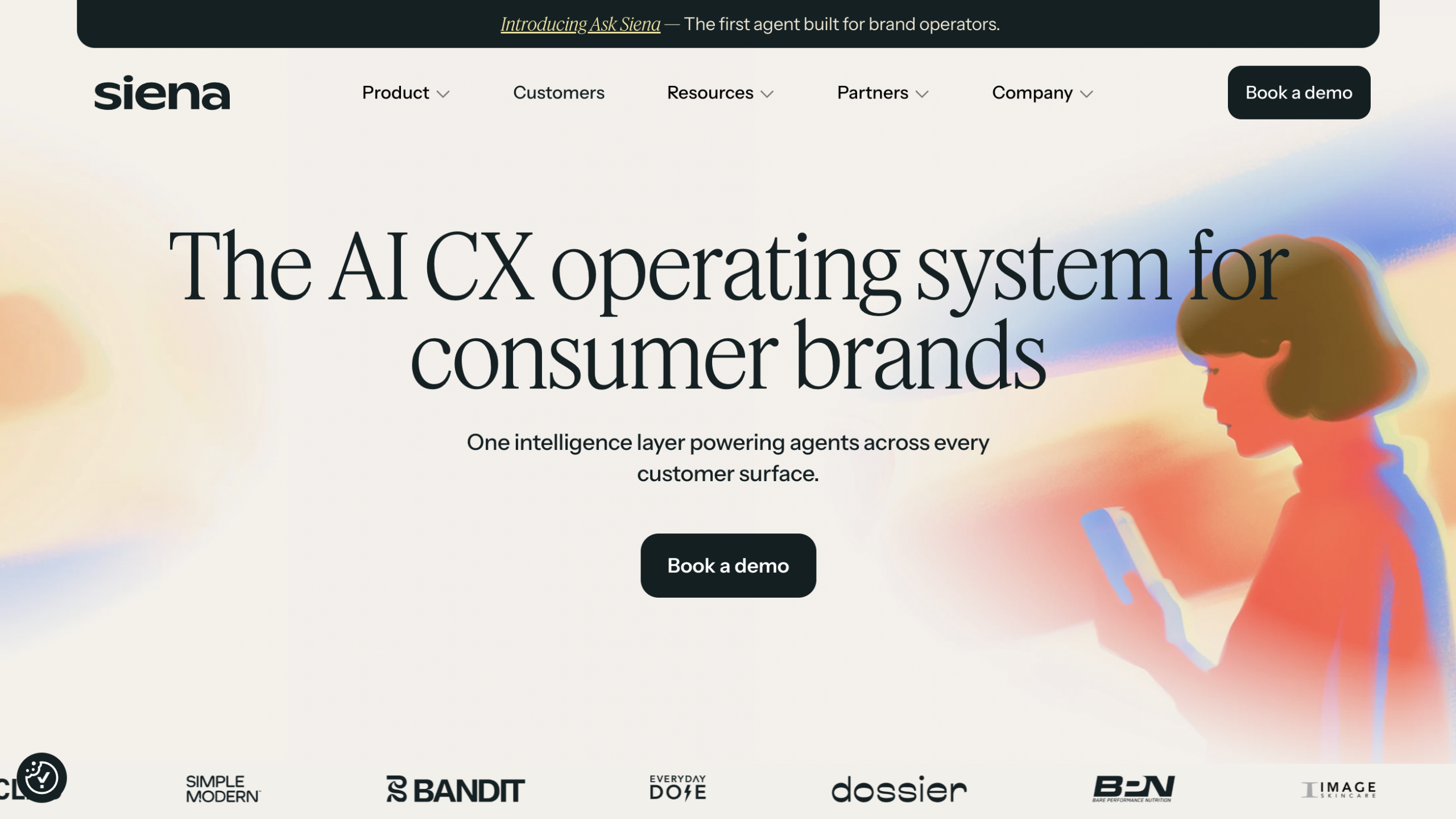
Best for: Ecommerce teams that want automation across an established helpdesk and commerce stack
Siena is worth considering when your support work crosses several systems. A subscription change may involve one service, a return another, and the conversation itself a helpdesk. The useful question is whether Siena can connect those parts for the requests your team receives.
Siena’s integration catalog gives concrete examples of the work its connections support:
For a subscription business, test a request that crosses both the helpdesk and subscription service. That shows whether the customer receives a confirmed change or a reply that still leaves the work with your team.
Strengths: Siena covers several specialist ecommerce systems, which can matter more than a long list of generic channels. Its platform includes an unlimited sandbox, giving your team room to test behavior before directing customer conversations to it.
Limitations: The platform fee is payable in addition to automation usage and your existing helpdesk costs. Sandbox testing can expose errors; it cannot guarantee that every production answer or action will be correct. Confirm what counts as an automated ticket, how repeat contacts are treated and which implementation services your quote includes.
Pricing: Siena publishes a platform fee of $750 per month, plus $0.90 per automated ticket. It also asks for ticket volume and team size to prepare a quote. Your total also includes the helpdesk you keep and any services specified in the quote.
A lower AI rate is useful only after you know what it measures and what else you need to buy. These September 2026 price components are starting points, not quotes for equivalent workloads. Vendor pricing links and conditions appear in the product sections above.
| Option | Relevant base charge | AI usage basis | Include in your estimate |
|---|---|---|---|
| 1. YourGPT | Professional $79/month billed annually for the custom workflows discussed | AI Credits included with the selected plan | Credit usage by model and workload plus retained tools |
| 2. Intercom Fin | Intercom Essential $29/seat/month billed annually; higher plans $85 or $132 | Fin from $0.99/outcome in addition to seats | Intercom subscription plus AI usage and optional add-ons; external-helpdesk deployments retain that helpdesk’s cost |
| 3. Richpanel | Confirm current seat price in writing | AI-handled conversations at the quoted rate | Seats, AI usage, commitment and add-ons |
| 4. Gorgias | Basic helpdesk $50/month billed annually | AI add-on $27/month includes 30 automated interactions; $1.50 each beyond allowance | $77/month combined on annual billing, plus AI and helpdesk overages and optional channels |
| 5. Zendesk | Suite Team $55/agent/month billed annually | Automated resolutions under the selected agreement | Seats plus additional AI usage and optional features |
| 6. Siena AI | $750/month platform fee | $0.90 per automated ticket | Existing helpdesk and agreed implementation scope |
For each finalist, calculate the subscription, human seats, AI usage and required add-ons over the same period. Include any helpdesk you retain. Keep one-time migration and implementation costs separate so you can see both the ongoing bill and the first-year expense.
A handled conversation, a billable outcome and a successful AI resolution are different measurements. For your own comparison, define success as a correctly completed request within your rules and without human involvement. Report billable handoffs separately. Then divide the relevant recurring software cost by the number of conversations meeting that same success definition, rather than comparing vendors’ headline percentages.
If a broader support-platform change is on the table, our ecommerce chatbot comparison covers additional options. For this shortlist, the next step is a focused pilot.
The product comparison narrows the list. A pilot shows whether those products can handle your store’s work. Choose two finalists and give each the same approved knowledge, policies and representative historical conversations, including exceptions that required a person.
Keep these checks separate so a fast answer cannot hide an incomplete action:
Count each conversation once when reporting successful AI resolutions, even if a failed case has several problems. An initial pilot reveals configuration gaps; it does not establish a reliable resolution rate for every future request.
Yes, if the tools let you route a limited set of requests or one channel separately. Keep the existing process available for other requests. Give each conversation a clear owner so two automations do not answer it or take the same action. Expand only after the pilot confirms that answers, actions and handoffs work as intended.
You can use source material your business owns, such as product information, policies and help articles, in the replacement’s supported training formats. Do not assume vendor-specific rules or configurations will transfer automatically. Refresh outdated policies and test the new agent’s interpretation before routing customers to it.
Begin with the refund cases your team can define clearly and test safely. Set the required identity checks, eligibility rules and approval boundaries before enabling the action. A connected refund tool needs those controls around it. Keep exceptions with a person until you have verified how the agent handles them.
Retain the policies, automation rules, reports and conversation records you are entitled to export and still need. Decide which open conversations move and which the current team will finish. Historical tickets may remain in your existing helpdesk; a separate archive can be enough if you are changing it. Confirm retention requirements and access before ending the old service.
A successful switch leaves your team with fewer unresolved requests and a system it can maintain. Keeping your existing helpdesk can reduce migration work; moving to a different workspace may be worthwhile when the inbox itself is part of the problem.
Use the pilot results to decide what to move first. Expand only when the new setup completes the required actions, gives people enough context to handle exceptions and stays within the budget you agreed. That evidence is more useful than a vendor’s headline automation rate.
Create your agent in YourGPT, train it on your business knowledge, and connect the tools it needs to answer questions and take action.

Move from Gorgias with a verified ticket archive, tested AI workflows, human handoff and a channel cutover plan before ending your subscription.

TL;DR The Gorgias AI Agent is the automation layer inside the Gorgias helpdesk, split between a Shopping Assistant for pre-purchase conversations and a Support Agent for post-purchase support. A connected Shopify store is required, and Gorgias documentation rules out platforms such as BigCommerce, Magento, and WooCommerce for the AI Agent. Billing runs on two separate […]


TL;DR Gorgias is the closest Richpanel alternative for Shopify stores that need native order actions directly inside support tickets. YourGPT fits stores that want one AI agent handling requests across web, WhatsApp, Instagram, and email, while Tidio and Re:amaze suit smaller teams looking for lighter, lower-cost options. Richpanel’s AI pricing starts around $500/month for two […]

TL;DR Shopify Inbox is a good free option for stores that only need basic storefront chat and simple customer conversations. Stores usually look for alternatives when they need multichannel support, stronger team workflows, or automated order actions. YourGPT is strongest for cross-channel AI automation, Gorgias for Shopify-native order workflows, and Tidio for smaller stores that […]
TL;DR Tidio recently restructured its top paid plan, and many 2026 reviews still describe the old pricing model. Confirm current pricing directly on Tidio’s site before budgeting. Lyro, Tidio’s AI agent, runs on Anthropic’s Claude rather than ChatGPT. Only the Premium tier carries a guaranteed resolution rate, well below the average Tidio advertises elsewhere. Billing […]
TL;DR Drift’s situation goes well past “post-acquisition.” Clari and Salesloft announced a formal sunset after a major OAuth breach pushed Drift offline for weeks. Two of the other usual “alternatives” are getting bought too. Salesforce closed its acquisition of Qualified and signed a deal to acquire Intercom, now Fin. The real split is budget and […]