What Is Poe AI Chat? Features, Pricing & Best Alternatives in 2026

Rajni
Last updated on September 29, 2026
Poe AI Chat is a multi-model platform from Quora that gives users access to leading models from OpenAI, Anthropic, Google, xAI, and Meta through one subscription.
It works well for comparing models, drafting content, and casual research, but it is designed for direct AI conversations rather than deploying agents across websites, apps, or customer support channels.
Free access suits light use, while paid plans unlock premium models and higher limits. Businesses needing no-code agents for support, sales, or operations may find platforms such as YourGPT more suitable.
Poe AI Chat brings models such as OpenAI’s GPT, Anthropic’s Claude, and Google’s Gemini into one platform. In 2026, the main question is no longer what Poe offers, but whether its convenience justifies the subscription cost and whether it is capable enough for more than personal use.
This guide explains how Poe works, what its features and pricing plans include, and how it compares with alternatives that offer greater control, stronger business capabilities, or better long-term value.
By the end, you should have a clearer idea of whether Poe fits your personal, creative, research, or professional needs.
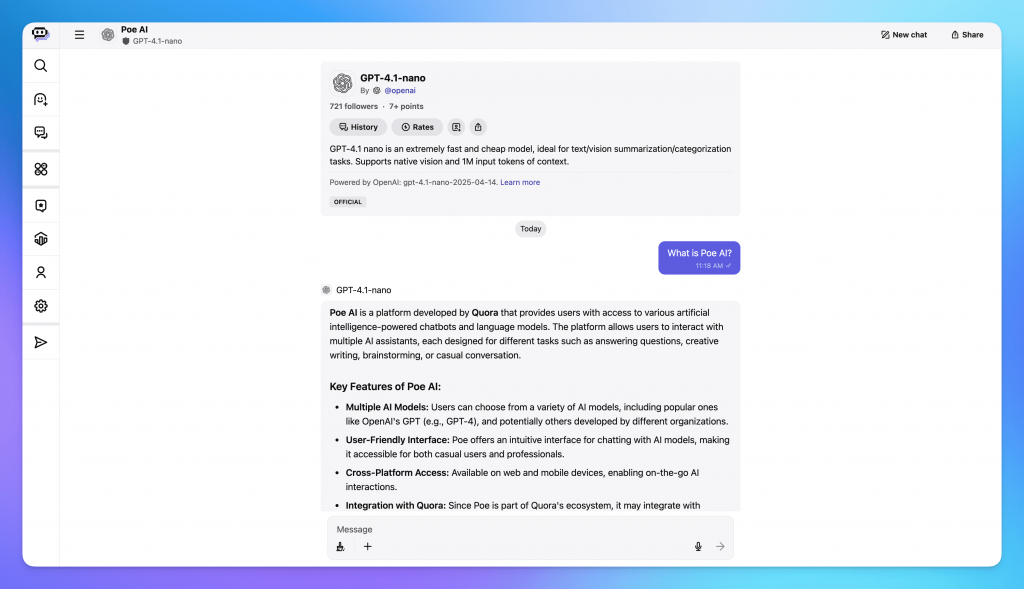
Poe AI Chat is a multi-model chatbot aggregator built by Quora, first launched in December 2022 and opened to the public in early 2023. Instead of building its own AI, Poe connects users to roughly 100 AI models from providers including OpenAI, Anthropic, Google, xAI, Meta, DeepSeek, and Mistral, plus dedicated image and video generation tools, all inside one subscription.
Poe stands for Platform for Open Exploration.
On the platform, users can:
Poe runs on web, desktop, and mobile, with conversations synced across devices. Its main strength is convenience. Comparing different models side by side no longer means switching apps or subscriptions.
Poe AI Chat lets users compare models, build bots, and generate content without leaving one interface:
| Plan | Price (Monthly) | Points | Best For |
|---|---|---|---|
| Free | $0 | Limited daily points | Casual and occasional use |
| Starter | $4.99/month | 10,000 per day | Budget-conscious users who need more than the free tier |
| Premium | $19.99/month | Approximately 660,000 per month | Regular multi-model use |
| Premium Plus | $49.99/month | 2.5 million per month | Power users, longer sessions, and heavier media generation |
| Pro | $99.99/month | 5 million per month | Developers and users handling demanding workloads |
| Pro Max | $249.99/month | Up to 8.3 million per month | Maximum throughput and high-volume individual or creator use |
Here’s the list of 6 Best Poe AI Alternatives to Consider in 2026:
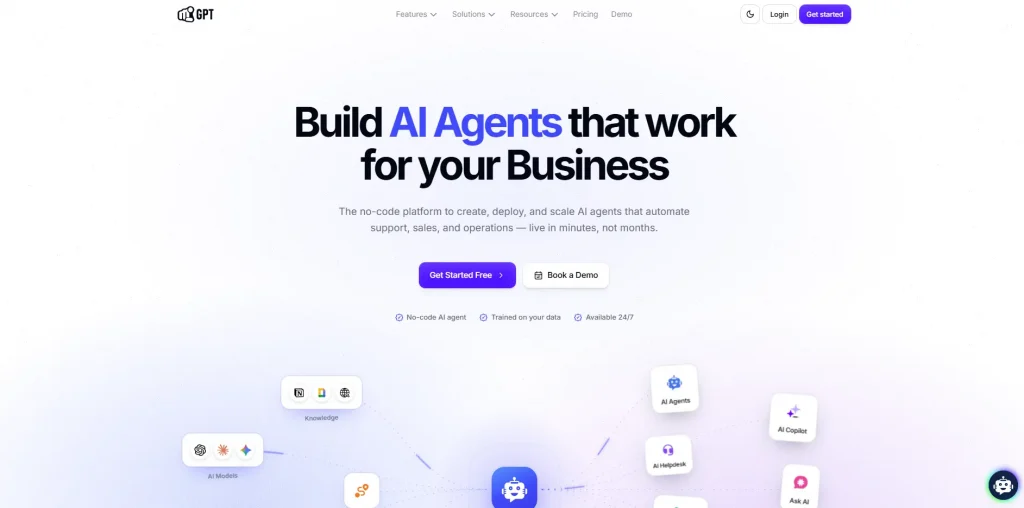
YourGPT is a no-code AI platform for customer service, sales, and operational automation. Teams connect their business data, policies, and rules to build AI agents that handle customer queries, qualify leads, and take multi-step actions across connected systems and APIs.
If you’re also preparing to present your product or AI solution, you can quickly build an investor-ready deck using a pitch deck maker tool.
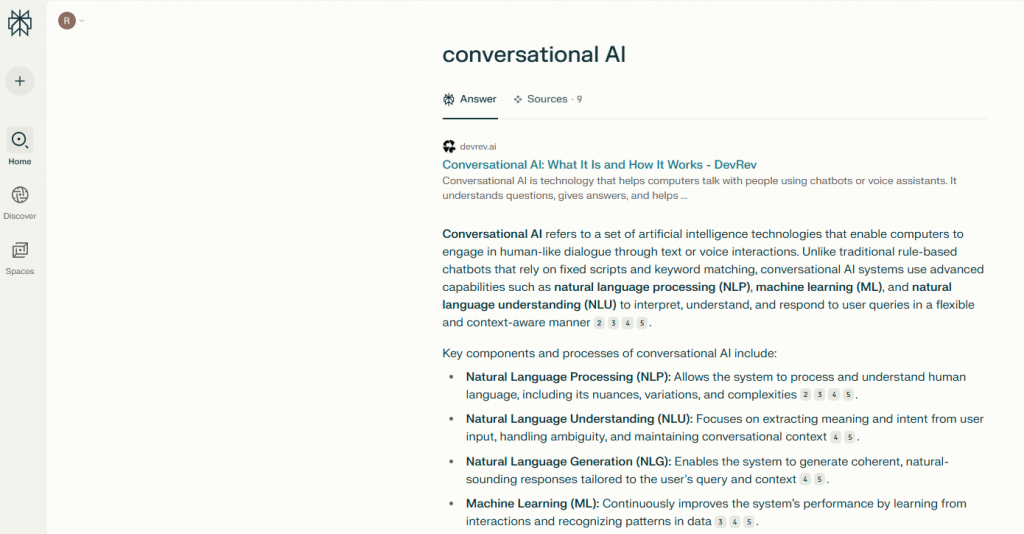
Perplexity AI is a real-time AI search assistant designed to answer factual questions with accuracy and speed. It’s built for users who want concise, reliable answers backed by sources making it especially useful for research and content validation.
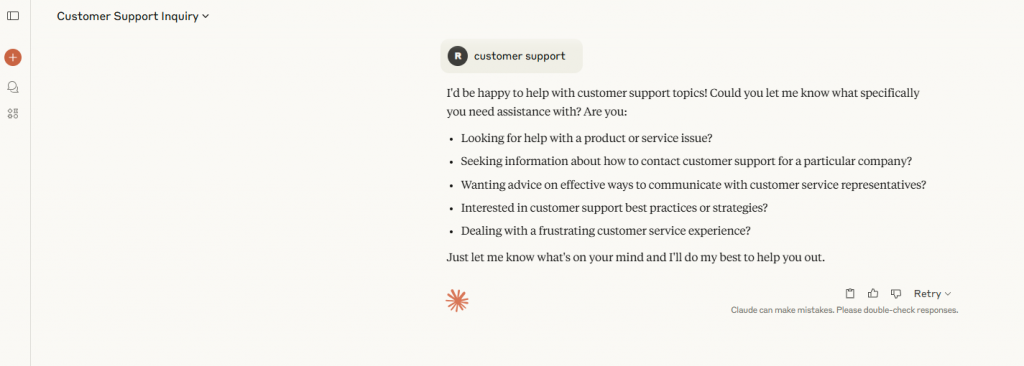
Claude is an AI chatbot developed by Anthropic, focused on safety, helpfulness, and ethical responses. It excels in thoughtful reasoning, long-context understanding, and detailed writing tasks—ideal for writers, researchers, and developers.
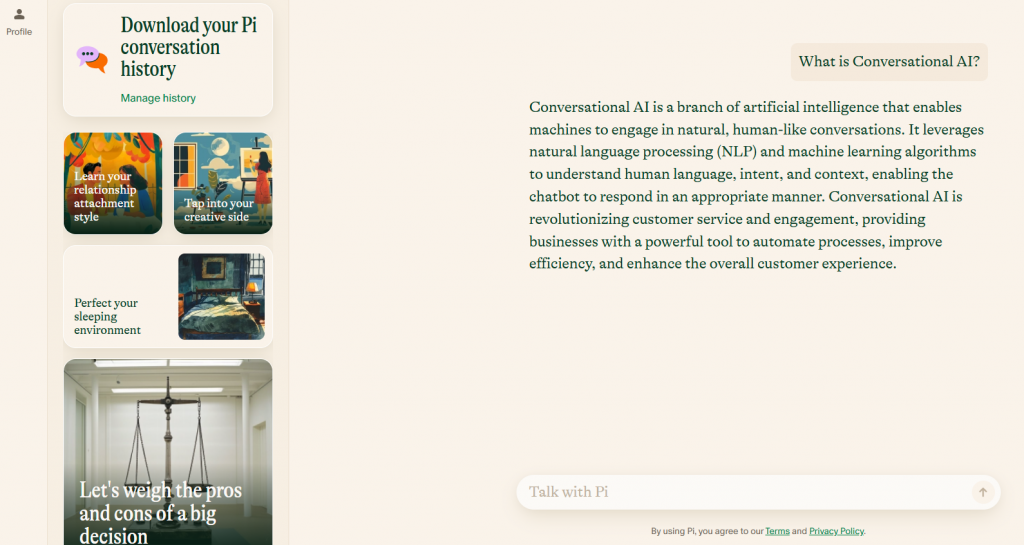
Pi is a personal AI developed by Inflection AI that emphasises emotionally aware, polite conversations. It’s built to feel like a supportive companion, helping with daily thoughts, goal setting, and calm, productive dialogue.
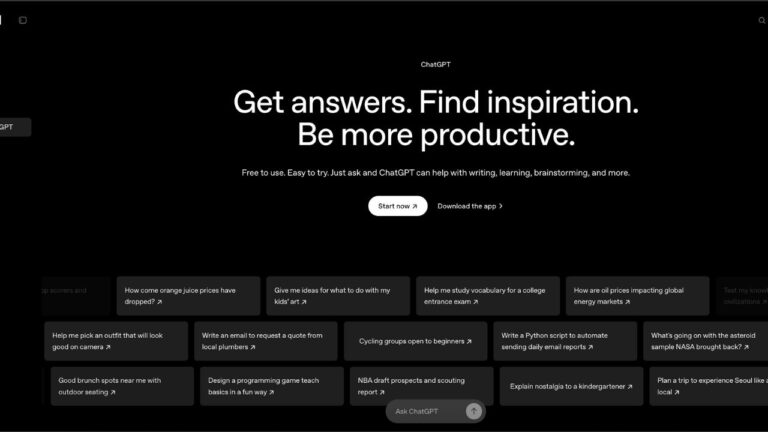
ChatGPT is OpenAI’s flagship conversational AI, known for its versatility in writing, code generation, brainstorming, and everyday assistance. It supports GPT-3.5 and GPT-4, including the faster GPT-4-turbo variant.
If you’re evaluating AI tools for your site, also review the non-AI layer – the widgets and interactive elements that handle contact forms, social proof, reviews, and lead capture. Elfsight covers this with 90+ ready-made website widgets that install without a developer. While AI tools handle the conversation, Elfsight handles the overall website experience.
With a dozen credible options on the market, the decision usually comes down to one question: what job does the AI actually need to do? Work through these before you pick a plan.
1. Start with the use case, not the feature list. Research, creative writing, personal reflection, and business automation are different jobs, and no single tool is built to do all four well. A model built for conversation won’t route support tickets, and a platform built for workflow automation is overkill for someone who just wants a writing partner.
2. Decide if you need a conversation or an outcome. Some tools are built to answer questions well. Others are built to connect to your systems, run multi-step workflows, and complete the task without you in the loop. If the goal is resolving tickets or qualifying leads, you’re not looking for a chatbot you’re looking for a customer service AI that can take action on its own.
3. Check where it needs to live. An assistant confined to its own app is fine for personal use, but a business usually needs the AI where its customers already are — website chat, WhatsApp, Instagram, email. If you’re serving people across several channels, omnichannel deployment stops being a nice-to-have.
4. Match the control to the stakes. Casual use rarely needs more than a good general-purpose assistant. Business use usually does: training on your own documents and policies, choosing which model runs behind the scenes, and handing off to a human when the AI hits its limit.
5. Read the pricing model, not just the price. Point-based and per-message plans can look cheap and still get expensive fast once usage climbs. Flat pricing with add-on credits is easier to forecast, and a free or low-cost tier is often enough if your use is genuinely occasional.
6. Weigh setup time against your team’s technical depth. No-code builders get non-technical teams live in a day. Developer-facing platforms trade that speed for more control worth it if someone on the team has the time to configure it properly.
8. Run the same task through two or three tools before deciding. A quick side-by-side on your own content or your own query reveals more about accuracy, tone, and speed than any comparison table, including this one.
Yes, Poe has a permanent free plan, though its daily point allowance was cut to about 300 points in March 2026, down from roughly 3,000. Paid plans start at $4.99 a month for the Starter tier.
Poe connects to roughly 100 models from OpenAI, Anthropic, Google, xAI, Meta, DeepSeek, and Mistral, plus image and video generation tools, all under one subscription.
Not really. Poe is built for direct conversations with AI models, not for deploying an agent that handles support tickets or sales conversations on a website or WhatsApp. Platforms like YourGPT are built for that job.
Poe cut its free daily point allowance by about 90 percent in March 2026 without changing the price or announcing the change, so the same $0 plan now covers far less daily use.
For someone who regularly switches between models, often yes. The $19.99 Premium plan covers access to many models for less than two or three separate subscriptions, though each app’s own paid plan still has the highest usage caps and newest features.
Claude and Perplexity suit research and long-form writing. Pi AI and ChatGPT work well for everyday personal use. YourGPT and EverHelp are built for support, sales, and workflow automation.
No. Poe’s prompt bots and YourGPT’s no-code builder both let someone create a bot or agent from plain instructions, with no programming required.
Poe AI Chat gives users an easy way to try multiple AI models in one place. It works well for light tasks and quick comparisons. But for more control, deeper automation, or long-term projects, it may not be the best fit.
If you’re building something real, such as customer support, sales automation, or research workflows, you need a tool built for those goals. YourGPT offers no-code tools, custom training, and full chatbot control. Claude and Perplexity are strong options for writing and analysis. Pi AI and ChatGPT are better suited for personal use, everyday assistance, or content tasks.
Choose the platform that matches your actual needs. A good AI tool should support your workflow, scale with your tasks, and help you get real results.
YourGPT lets you build no-code AI chatbots trained on your content. Deploy across chat, voice, email, WhatsApp, and more—with full customization and team-ready features.
No credit card required • 7 days access • Works with Framer
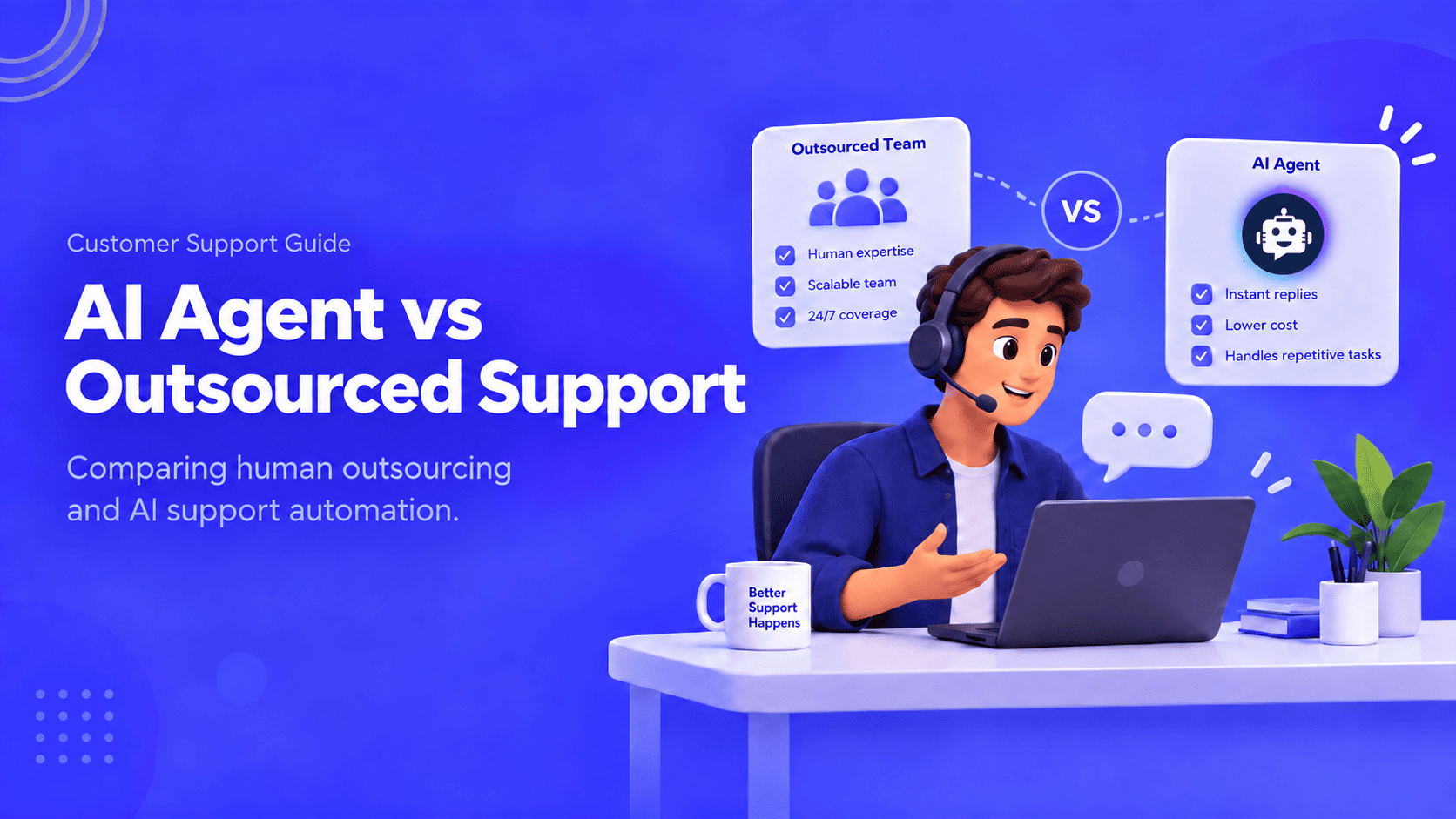
Compare outsourcing customer service with an AI agent using your own ticket mix, a cost model you fill in, and a clear rule for a hybrid split.
Export the Zendesk ticket archive, train an AI Agent on the help center, and test one real ticket before you stop the old queue.


Compare six Yuma alternatives by ecommerce capabilities, helpdesk compatibility, pricing and human handoffs to choose a replacement for your support team.


Move from Gorgias with a verified ticket archive, tested AI workflows, human handoff and a channel cutover plan before ending your subscription.
TL;DR The Gorgias AI Agent is the automation layer inside the Gorgias helpdesk, split between a Shopping Assistant for pre-purchase conversations and a Support Agent for post-purchase support. A connected Shopify store is required, and Gorgias documentation rules out platforms such as BigCommerce, Magento, and WooCommerce for the AI Agent. Billing runs on two separate […]

TL;DR Gorgias is the closest Richpanel alternative for Shopify stores that need native order actions directly inside support tickets. YourGPT fits stores that want one AI agent handling requests across web, WhatsApp, Instagram, and email, while Tidio and Re:amaze suit smaller teams looking for lighter, lower-cost options. Richpanel’s AI pricing starts around $500/month for two […]