15 Must-Have Features for a Customer Support Chatbot

Rajni
Last updated on June 30, 2026

A customer support AI chatbot helps businesses answer customer questions instantly, reduce repetitive tickets, and improve the overall support experience.
It can handle real-time product questions, order tracking, payments, FAQs, and basic troubleshooting while allowing human agents to focus on complex issues.
This guide explains what a support chatbot is, its business benefits, and the essential features to look for, including omnichannel support, analytics, human handoff, voice agents, and strong security.
Online shoppers expect answers in seconds.
Delay their decision and you lose the sale. In fact, 70% abandon their carts if they don’t get support on time.
A well-designed AI chatbot helps customers in real time recommending products, resolving payment failures, tracking orders, and guiding them to the right purchase.
When implemented correctly, it increases conversions, lowers support load, and keeps customers from dropping off mid-purchase.
In this blog, you’ll learn:

A customer support chatbot is software that automatically responds to customer questions through text or voice interactions. It handles common issues quickly without the need of intervention of human agent.
It identifies exactly what customers mean when they ask questions. If a customer can’t pay at checkout, the chatbot immediately fixes the payment issue. If someone wants product suggestions based on their previous purchases, it proactively shows relevant options.
This direct understanding of customer needs helps businesses quickly resolve issues, improve sales conversions and build trust by consistently solving problems as they occur.
Businesses commonly use support chatbots across multiple channels including websites, messaging apps such as WhatsApp, Facebook Messenger or directly within mobile applications.
AI chatbots help support teams respond faster, reduce repetitive work, and deliver consistent help across every customer conversation.
1. 24/7 Customer Support :
Customers do not always reach out during business hours. AI chatbots provide instant answers at any time of day, helping users solve common issues, check information, or move forward without waiting for an agent.
2. Scalable Support During Busy Periods :
Sales campaigns, holidays, product launches, and outages can quickly increase support volume. Chatbots handle repetitive inquiries automatically, so your team can manage more conversations without adding extra staff.
3. Higher Agent Productivity :
AI chatbots take care of simple questions like order status, pricing, refunds, account access, and product details. This reduces repetitive tickets and allows human agents to focus on complex issues that require judgment and empathy.
4. Lower Support Costs :
By automating routine conversations, businesses can reduce the time and resources spent on basic support. This helps control support costs while maintaining fast response times for customers.
5. Better Customer Insights :
Every chatbot conversation reveals what customers are asking, where they are getting stuck, and what information is missing. Teams can use these insights to improve FAQs, update product documentation, refine onboarding, and train support agents more effectively.
Together, these benefits help businesses improve response speed, support more customers, reduce operational pressure, and deliver a better overall customer experience.

Choosing the right customer support chatbot can greatly improve customer satisfaction and help your business run more smoothly. Here are 15 key features to look for that will boost both customer experience and efficiency:
A complete AI suite combines chatbots, AI helpdesk, and autonomous AI agents. This integration enables your team to handle everything from basic queries to complex tasks within a single system, improving efficiency and customer satisfaction.
Chatbot creation shouldn’t depend on technical expertise. A no-code AI builder allows your business teams—marketing, sales, and support to quickly deploy customised bots. This means faster implementation and reduced operational costs.
Customers communicate via multiple channels, including WhatsApp, Telegram, Messenger, and Slack. Omni-channel integration ensures your chatbot delivers consistent and timely support, enhancing the customer experience across all touchpoints.
Accuracy in responses depends on training data. Chatbots trained on diverse data sources—FAQs, previous interactions, databases, and internal knowledge bases—offer precise answers. This builds customer trust and satisfaction.
Managing complex interactions clearly is crucial. Sequential agents effectively handle multi-step conversations like technical support, detailed bookings, or multi-stage sales processes, ensuring consistent and clear customer interactions.
Immediate responses improve customer satisfaction. AI-first chat support ensures instant replies anytime, significantly reducing wait times and allowing your team to focus on critical issues requiring human intervention.
Complex customer issues require human involvement. Smooth human handoff transfers conversations effortlessly from chatbot to support staff, ensuring customers receive timely, personalised attention without repetitive explanations.
Customer needs continuously change. Self-learning AI automatically analyses interactions and customer feedback. This ensures your AI chatbot remains accurate, relevant, and continually improving without extra manual input.
Clear analytics highlight chatbot performance and areas for improvement. Detailed insights into conversations, resolution rates, and satisfaction scores help your team identify actionable improvements and demonstrate business impact.
Proactively engaging customers can recover lost opportunities. Engage features initiate helpful interactions based on customer actions, like reminding users about abandoned carts or addressing issues before they escalate.
Brand consistency builds trust. Custom branding allows full alignment of chatbot visuals and voice with your brand identity, increasing customer trust and engagement.
Voice interaction adds convenience. Voice-enabled chatbots allow customers to interact naturally using speech, ideal for tasks like appointment bookings, order inquiries, or hands-free assistance.
Providing outdated information harms trust. Auto reindexing ensures the chatbot’s knowledge base stays updated regularly with the latest product details and FAQs, ensuring accurate and reliable responses.
Global customers expect localised support. Multilingual chatbots communicate naturally in over 100 languages, enabling effective global customer service and ensuring clear communication worldwide.
Protecting customer data is critical. Choose a chatbot with robust security measures, including encryption, strict access controls, and compliance audits. This protects sensitive information and maintains customer trust.

When choosing a chatbot platform, it’s important to evaluate it carefully to ensure it meets your specific business requirements. Use these key criteria to guide your evaluation:
Start by clearly defining your goals. Consider whether the chatbot aligns with your industry requirements, scale, and business objectives. Prioritise platforms specifically designed for your business type and customer interactions.
Assess the platform’s user-friendliness. Your team should find the chatbot easy to set up, manage, and update. Prioritise solutions offering intuitive interfaces and straightforward management tools to avoid unnecessary complexity.
Evaluate how customisable the platform is. It should adapt easily to your brand identity, customer interaction style, and unique business processes. Look for chatbots that offer flexible configuration options and allow seamless customisation.
Ensure the chatbot integrates smoothly with your existing systems like CRM, helpdesk, marketing automation tools, and analytics software. Robust integrations help streamline processes, improve efficiency, and deliver unified customer experiences.
Assess platform stability and performance. The chatbot should handle high traffic volumes without performance issues. Choose a solution known for reliability, quick response times, and the ability to scale with your business growth.
Research the vendor’s reputation thoroughly. Consider customer reviews, case studies, and industry recognition. Confirm the vendor provides strong customer support, regular updates, and timely assistance for troubleshooting and ongoing maintenance.
Instead of just looking at pricing, consider the value and results the chatbot platform brings to your business. Understand clearly what you’ll pay in total, including setup fees, licenses, maintenance costs, and other charges. Focus on platforms that clearly show how they’ll boost your business through better customer service, increased efficiency, and higher sales.
Using these evaluation criteria helps you select a chatbot platform that fits your business needs, ensuring long-term value and sustained customer satisfaction.
To measure the performance of your chatbot, track these key metrics:
Measure how effectively your chatbot resolves customer queries without human intervention. A high resolution rate indicates accurate and helpful automated responses.
Regularly collect feedback from customers after chatbot interactions. High CSAT scores confirm customers find the chatbot helpful and satisfactory.
Track the chatbot’s response speed. Faster response times typically enhance customer satisfaction and retention.
Evaluate how actively customers interact with your chatbot. High engagement rates suggest the chatbot successfully meets customer needs and delivers valuable interactions.
Monitor how frequently the chatbot needs to escalate queries to human agents. A lower escalation rate indicates a chatbot is effectively handling more queries independently.
If your chatbot supports sales or lead generation, measure how many interactions result in successful conversions or sales. Higher conversion rates demonstrate tangible business value.
Calculate the financial benefits versus the total costs of implementing and maintaining your chatbot. Positive ROI indicates your chatbot adds measurable value to your business. (Calculate AI ROI).
Regularly reviewing these metrics helps continually improve your chatbot’s performance, ensuring it consistently delivers maximum value to your business.
A customer support AI chatbot is a tool that answers customer questions automatically through chat or voice. It helps with FAQs, order tracking, payments, product questions, and basic troubleshooting without making customers wait for a human agent.
It gives instant replies, handles repetitive questions, reduces support tickets, and helps human agents focus on complex issues that need judgment, empathy, or personalised support.
Yes. A good customer support chatbot should work across websites, WhatsApp, Messenger, Telegram, Slack, mobile apps, and other channels so customers get consistent help wherever they contact your business.
A chatbot should hand off to a human when the issue is complex, sensitive, urgent, or cannot be solved with automated answers. A smooth handoff helps customers avoid repeating the same details again.
Look for no-code setup, omnichannel support, multi-source AI training, human handoff, analytics, multilingual support, custom branding, integrations, voice agents, auto knowledge updates, and strong security.
Track resolution rate, response time, customer satisfaction score, engagement rate, escalation rate, conversion rate, and ROI to understand how well the chatbot improves support and reduces workload.
A well-designed chatbot turns routine questions into fast, reliable answers and frees your team for higher-value work. Choose a platform with the 15 essential features outlined here, then automate your top ticket types and enable multilingual support to serve every customer. Track response time, deflection rate, and CSAT to know exactly where to improve.
Use YourGPT’s no-code builder to launch your bot in hours, not weeks. Each week, review any unanswered queries, tweak one conversation flow, and update your linked knowledge base as products change. Over time, you’ll cut support costs, boost agent focus on complex issues, and give every customer a consistent, personalised experience. Start now to make your support a true growth driver.
YourGPT includes every feature you just saw—no code, trained on your data, ready for production. Go live today and cut ticket load instantly.
No credit card • 7 days full access
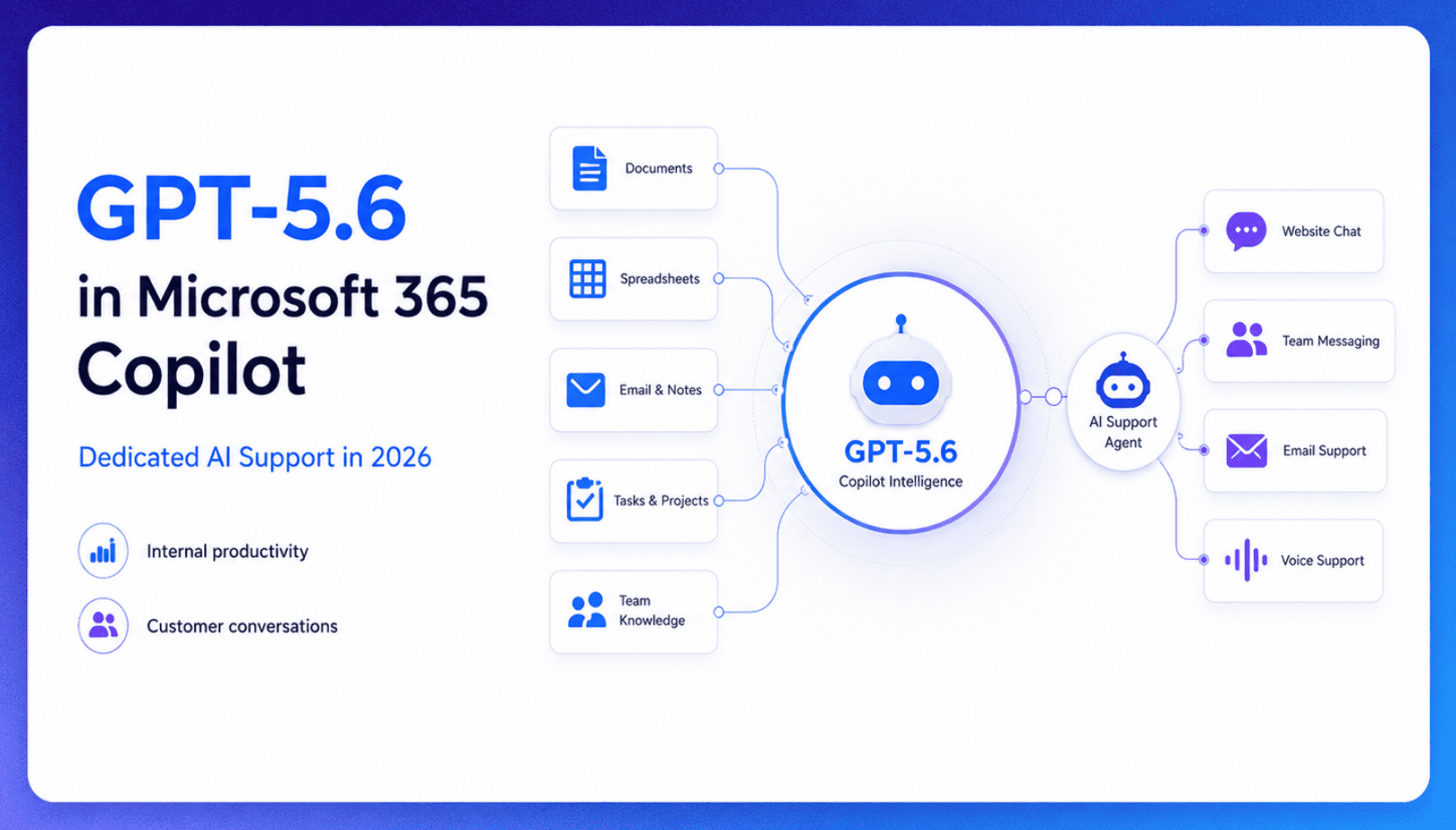
TL;DR Microsoft made GPT-5.6 the preferred model across Word, Excel, PowerPoint, Copilot Chat, and Cowork on July 9, 2026, focusing on internal workplace productivity rather than customer-facing support. Dynamics 365 Service Agent also reached general availability, but it mainly helps human support representatives manage cases within Microsoft’s existing permission structure and requires separate licensing. A […]

TL;DR Cheap frontier models now compete for the same high-volume support workloads, with DeepSeek V4 remaining the lowest-cost option in this comparison. Kimi K2.6 and GLM-5.2 are open-weight and self-hostable, while Qwen 3.7 Plus is proprietary and available only through an API. Claude Haiku 4.5 is the only model here that its developer explicitly recommends […]
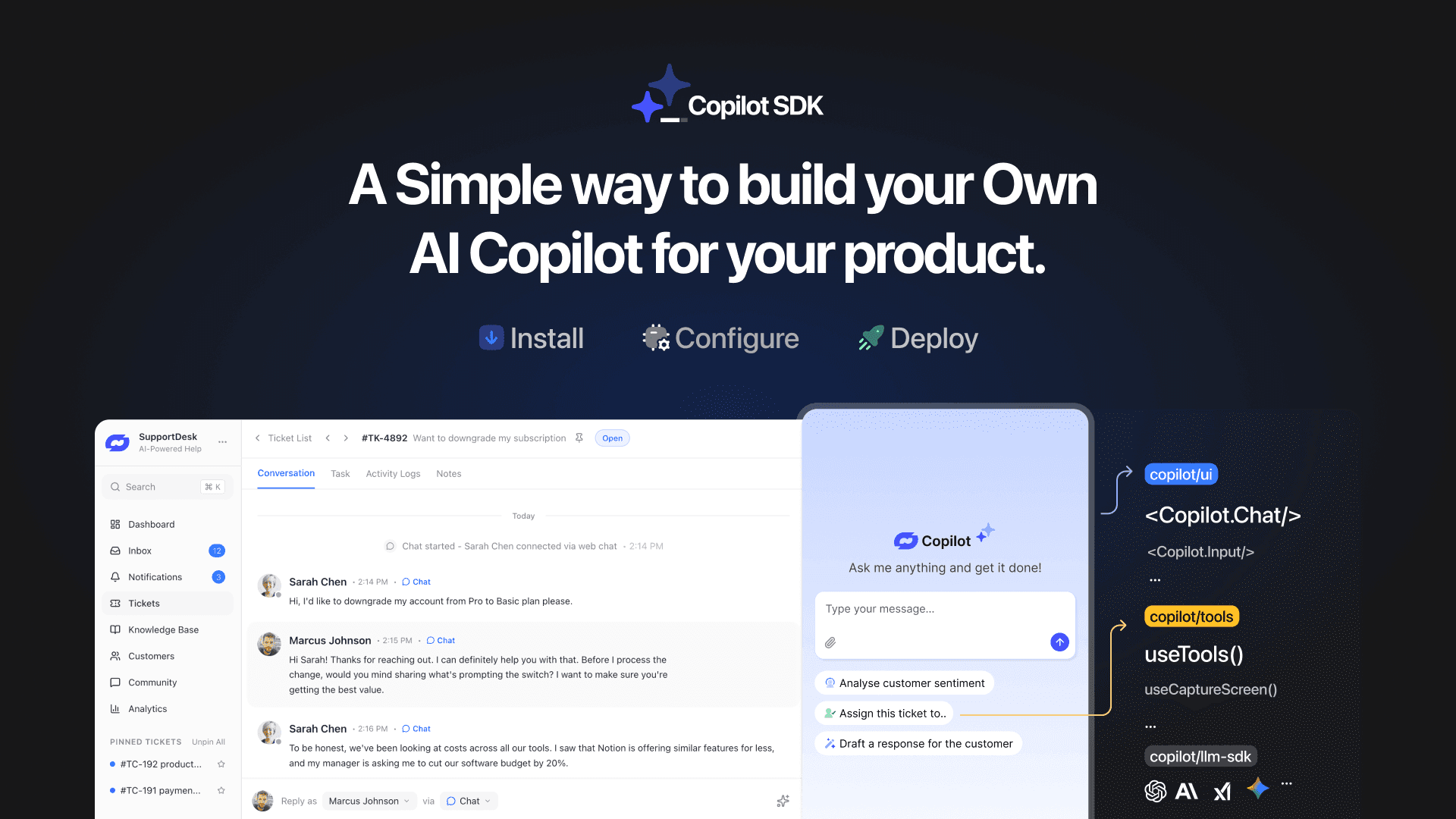
TL;DR YourGPT Copilot SDK is an open-source SDK for building AI agents that understand your application state, user context, and what is happening inside your product. Instead of working like isolated chat widgets, these agents connect directly with your product and can take real actions within existing workflows. This helps teams build contextual AI experiences […]
TL;DR YourGPT 2.0 adds AI Studio for building, testing, and debugging automated workflows. It includes native MCP integration for more than 100 tools, upgraded voice agents, and native SDKs for iOS and Android applications. With shared context across web, WhatsApp, Instagram, Telegram, and mobile, YourGPT turns conversations into real actions across support, sales, and operations. […]

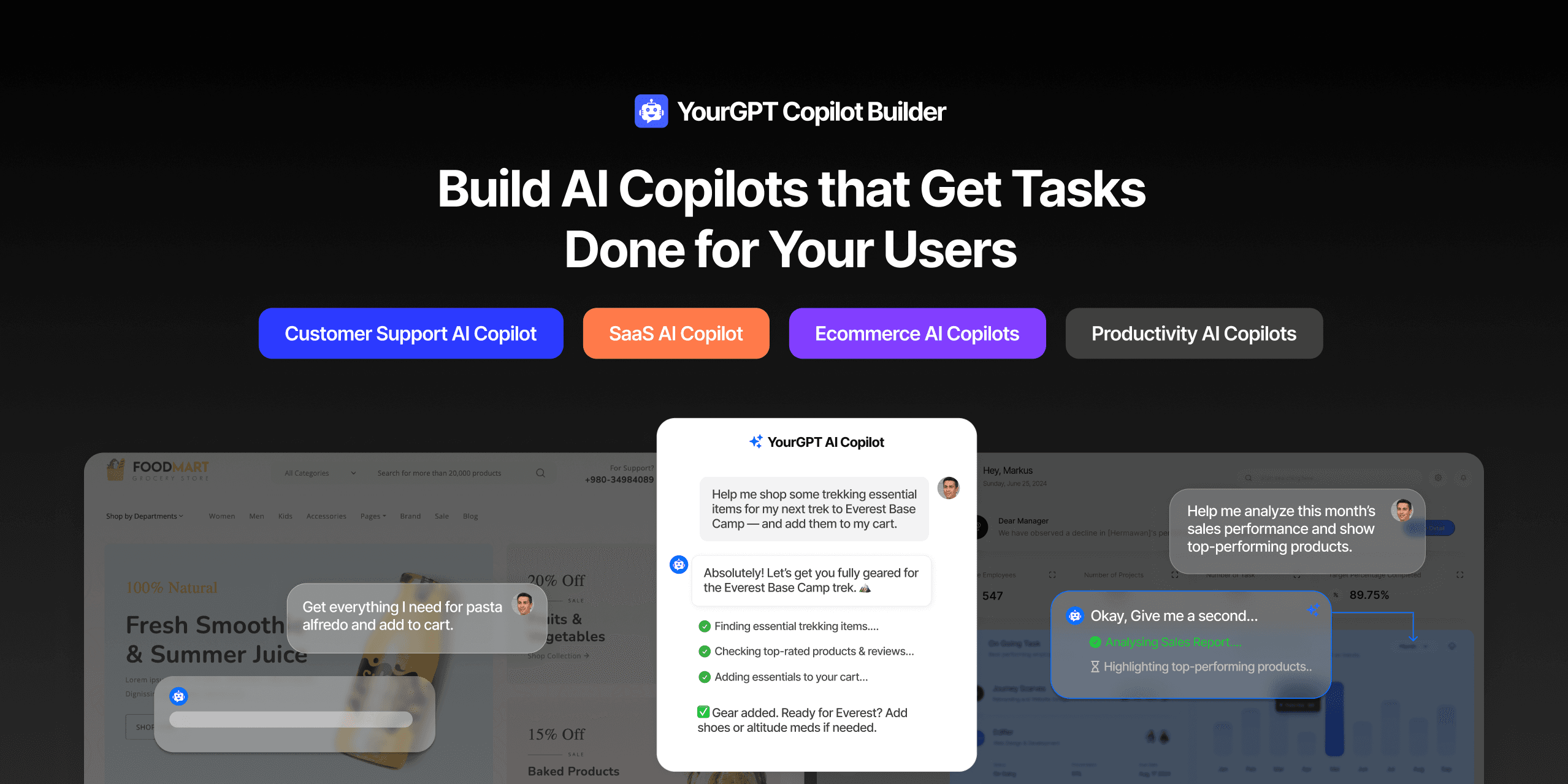
TL;DR Most AI tools provide answers but still leave users to complete the task through search results, settings pages, or checkout flows. AI Copilot Builder closes that gap by executing registered actions directly inside the product instead of only explaining what to do. Search, cart updates, account changes, and multi-step bookings can all happen within […]
TL;DR Building an AI-powered Telegram bot does not require custom development. BotFather provides the Telegram bot token, while a no-code platform like YourGPT handles AI training, free-form conversations, and the Telegram connection. This guide covers the full setup, from creating the bot in BotFather to connecting it with YourGPT and taking it live. Most Telegram […]
