AI for Lead Generation: Practical Ways to Grow Your Revenue

Rajni
Last updated on March 31, 2026
Most businesses do not struggle to generate leads. They struggle to know which ones are worth acting on.
Forms get filled, DMs arrive, emails are opened, and chats happen across multiple tools. Some prospects convert. Most do not. The real problem is that there is no reliable way to tell, early enough, which signals actually matter.
This is where AI changes the process. Companies using AI for lead generation report up to 50% more qualified leads and conversion rates that are nearly 47% higher. Not because they contact more people, but because they stop treating every lead the same.
AI evaluates real behavior across websites, emails, chats, and content interactions. It identifies intent patterns, ranks prospects by likelihood to convert, and signals when outreach will have the highest impact. Decisions move from guesswork to evidence.
Instead of manually reviewing leads or reacting late, teams focus on prospects who are already showing buying intent. Outreach becomes timely, relevant, and consistent.
This blog explains how AI fits into an existing lead generation process. You will learn how predictive scoring prioritizes leads, how automated qualification filters low-intent inquiries, and how enrichment tools turn basic contact data into actionable insight.
The goal is not full automation. The goal is clarity. When you know which leads matter and why, growth becomes predictable instead of reactive.
An AI lead generator is software that identifies which prospects are most likely to become customers by analyzing real behavior across your digital touchpoints. Instead of relying on form fills or manual scoring, it evaluates how people interact with your website, emails, chats, and content to determine buying intent.
Unlike traditional lead generation tools that collect contacts and leave prioritization to humans, an AI lead generator qualifies leads automatically. It understand patterns from past conversions and applies those insights to new prospects, helping businesses focus on leads that show genuine interest.
For example, when someone visits your pricing page multiple times, engages with product emails, downloads a case study, or interacts through chat, the system recognizes these actions as strong intent signals. That prospect is ranked higher immediately, without anyone reviewing spreadsheets or assigning scores manually.
What makes an AI lead generator effective is its ability to improve over time. It tracks which leads convert into customers and adjusts how it evaluates future prospects. If leads from a certain industry convert more often, similar profiles are prioritized. If demo engagement consistently leads to sales, that behavior carries more weight in scoring.
This approach creates practical benefits across the business. Sales teams spend less time chasing low-intent inquiries and more time speaking with prospects who are ready to move forward. Marketing efforts become more precise because outreach is based on actual behavior rather than assumptions or static rules.
The result is a lead generation process that is clearer, more predictable, and easier to scale. By focusing attention on high-intent prospects, an AI lead generator helps businesses improve conversion rates while reducing wasted effort.
Many buying signals already exist inside your product and support conversations. When someone asks detailed questions about integrations, visits across multiple pages, or revisits pricing, they are not browsing casually. They are evaluating. Most businesses collect these signals but never connect them.
AI changes this by turning everyday interactions into usable lead intelligence.
Every conversation your AI agent has reveals something about interest level. Someone asking “Can this integrate with Shopify?” is different from “How do I reset my password?” One is evaluating, one is using.
AI tracks these patterns across all interactions. It notices when contacts progress from basic questions to implementation details. When someone moves from “What features do you have?” to “How does enterprise pricing work?” your system should flag this shift.
Your existing chatbot conversations, help article views, and feature exploration already contain this data. AI just makes it visible and actionable.
Lead qualification improves when it is based on behavior rather than static inputs. Page visits, feature exploration, chatbot usage, and repeated interactions all indicate interest in different ways.
AI combines these actions into a unified view of engagement. A contact who reviews API documentation, tests workflows, and explores advanced features shows stronger intent than someone who submits a form and never engages again.
By focusing on observed behavior, lead prioritization reflects real interest instead of assumptions or incomplete signals.
Buying intent is rarely a single action. It appears as a pattern. Increased activity within a short period, deeper feature exploration, and more specific questions often occur when prospects actively compare options.
AI monitors engagement over time and identifies acceleration in activity. When usage intensity increases, the system recognizes this as a high-intent window and highlights it immediately.
This timing matters. Reaching out during active evaluation leads to more relevant conversations than contacting prospects after interest fades.
Most CRM records contain contact details and deal stages but lack behavioral history. Without context, sales teams do not know what the prospect explored, what questions they asked, or what triggered interest.
When AI-generated behavioral data flows into CRM systems, records become more informative. Sales teams can see recent interactions, content viewed, features tested, and topics discussed with AI agents.
This context supports informed outreach. Conversations begin with understanding rather than discovery, which improves relevance and efficiency.
Your AI agent can identify high-intent questions during normal support interactions. When someone asks about API limits, data residency, or enterprise features, these signal evaluation, not casual browsing.
Using AI Studio, you can build workflows that respond helpfully while routing qualified leads appropriately. The agent answers their question and notifies sales simultaneously. No awkward “Would you like to speak with someone?” interruptions.
Prospects get the information they need. You identify opportunities automatically. Follow-up happens with context about their specific interests.
The impact shows in conversion rates and deal velocity. Teams stop chasing contacts who were never serious. They focus on prospects whose behavior indicates real buying intent. Sales conversations start with relevant context instead of cold discovery calls. Cycles shorten because you’re reaching people at the right moment.
AI-powered tools can transform how you find, qualify, and engage leads resulting in a more efficient sales process and higher revenue. Let’s look at the most effective ways to put AI to work:
AI chatbots do more than just greet visitors they create real conversations that help you capture and qualify leads. Chatbots can answer questions, share product information, and guide visitors to the next step, whether that’s a demo request, newsletter signup, or a tailored resource.
For example, an AI-powered chatbot on your website can start by asking a visitor what brought them there. Based on their responses, it can suggest relevant content or book a call with a sales rep turning casual visitors into engaged prospects.
Chatbots and conversational AI are available 24/7, making sure you don’t miss out on leads even when your team is offline. They handle repetitive tasks, so your sales team can focus on building relationships and closing deals.
AI algorithms analyze data points like website visits, email interactions, and purchase history to assign each lead a score. This score reflects how likely the lead is to convert. Instead of manually sorting through a long list of prospects, your team can immediately focus on the most promising ones.
AI saves time by separating high-quality leads from the rest. This means your sales team can prioritize efforts, build stronger relationships, and close deals faster.
AI enables personalization based on behavior, not static attributes. Instead of sending the same message to every lead, content and outreach are adapted to what a prospect has already shown interest in.
For example, someone reviewing pricing and case studies may receive follow-up content focused on implementation or results, while another exploring documentation may see technical resources.
This alignment increases relevance and reduces unnecessary outreach, making communication more effective.
Social platforms contain ongoing conversations that reflect interest, evaluation, and comparison. AI tools monitor engagement patterns, keywords, and interactions that suggest buying intent.
This information supports targeted outreach and advertising by focusing on users already discussing related needs or solutions. Rather than relying only on broad targeting, campaigns are informed by observed behavior.
Social media becomes a source of qualified signals rather than just visibility.
AI improves website performance by analyzing how visitors interact with pages, forms, and calls to action. Engagement data is used to identify friction points and opportunities for improvement.
Chatbots assist visitors directly by answering questions and collecting context before a sales conversation begins. At the same time, AI-driven testing evaluates which layouts, messages, or prompts lead to stronger engagement.
The website adapts based on usage patterns instead of static assumptions.
AI tools collect and verify data like email addresses, job titles, and company information from multiple sources. This ensures your lead database is accurate and up-to-date. AI also adds context, such as company size or recent news, to help your team approach leads in a more informed and personalized way.
Complete and verified lead profiles help your team avoid wasted time and make every conversation more relevant.
AI analyzes past sales data to forecast future behaviors, such as which leads are most likely to buy, when they’re ready to buy, and which channels are most effective. It can also identify patterns that reveal untapped opportunities like new market segments or overlooked lead sources.
Predictive analytics helps your team stay ahead by reaching out at the right time with the right message, increasing conversion rates and driving revenue.
Each of these AI-powered methods brings a layer of intelligence and efficiency to your lead generation process. By combining them, you’ll not only generate more leads but also improve the quality of those leads turning your sales process into a well-oiled revenue machine.
AI lead generation uses machine learning to identify and qualify potential customers automatically. It tracks how prospects interact with your website, emails, and content, then analyzes these behaviors to predict who’s most likely to buy. The system learns from past conversions and continuously improves its predictions, helping your sales team focus on leads that actually matter instead of chasing everyone equally.
AI lead generation platforms typically range from $50 to $500 per month for small businesses, and $1,000 to $5,000+ monthly for enterprises. The cost depends on lead volume, features needed, and integrations required. Most companies see ROI within 60 to 90 days as conversion rates improve and sales cycles shorten. This is significantly cheaper than hiring additional sales staff while often delivering better qualification accuracy.
No. AI handles data analysis, lead scoring, and qualification tasks that waste your team’s time. Sales reps still build relationships, handle complex conversations, negotiate deals, and close sales. AI simply tells them which prospects to prioritize and when to reach out. Think of it as giving your team better intelligence, not replacing their judgment. The most successful implementations use AI to eliminate grunt work so reps can focus on what actually requires human skills.
Most businesses see measurable improvements within 60 to 90 days. Initial setup takes 1 to 2 weeks, then the AI needs time to learn your specific conversion patterns. Early results include better lead prioritization and faster response times. By month three, you’ll typically see higher conversion rates as the system identifies which behaviors predict purchases in your specific business. Results compound over time as the AI gets smarter with more data.
Yes. Most AI lead generation platforms integrate with popular CRMs like Salesforce, HubSpot, and Pipedrive through native connections or APIs. The AI pulls data from your CRM to understand which leads converted historically, then pushes updated scores and insights back into your existing system. Your sales team continues using the tools they already know while getting better intelligence. Setup typically takes a few hours to a few days depending on customization needs.
AI lead generation works best with behavioral data like website visits, page views, time on site, email opens and clicks, content downloads, and feature usage. It also uses historical conversion data to learn patterns. You don’t need perfect data to start, but accuracy improves with cleaner information. The system needs at least a few months of historical leads and outcomes to identify patterns. If your data is scattered across multiple tools, integration helps AI build complete prospect profiles.
Reputable AI lead generation platforms comply with GDPR, CCPA, and other data protection regulations. Look for providers with SOC 2 certification, encrypted data storage, and clear privacy policies. You’re responsible for obtaining proper consent for tracking and data collection. The AI processes behavioral data to identify patterns, not to expose individual personal information. Choose platforms that let you control data retention, allow deletion requests, and provide transparency about how information is used.
Absolutely. Small businesses often benefit most from AI lead generation because they have limited sales resources. Even with smaller lead volumes, AI helps prioritize the few prospects that matter most. Many platforms offer affordable entry-level plans starting around $50 to $100 monthly. The key is choosing tools that don’t require large data science teams to operate. Look for platforms with simple setup, clear interfaces, and support for businesses at your scale.
Marketing automation follows rules you set: if someone does X, then do Y. AI lead generation learns patterns on its own and adapts based on outcomes. Automation might send an email when someone downloads content. AI figures out which downloads actually predict purchases and adjusts scoring accordingly. You can use both together—AI identifies high-value leads and automation handles follow-up sequences. AI makes automation smarter by telling it who deserves immediate attention versus who can wait.
AI accuracy improves with data quality and volume. Well-implemented systems typically achieve 70 to 85% accuracy in identifying high-intent leads compared to 50 to 60% with traditional manual scoring. The AI gets smarter over time as it learns from more conversions. Accuracy depends on having clean historical data, consistent tracking, and enough lead volume for pattern recognition. Systems work best when they’ve analyzed at least several hundred past leads and their outcomes.
Lead generation does not need more tools or more activity. It needs clarity about intent and timing.
AI provides that clarity by connecting signals your business already produces. Support conversations, page visits, feature usage, and content engagement all reveal interest when they are evaluated together. When these signals are aligned, teams gain a clear view of who is ready to engage and when it matters most.
The real advantage comes from knowing which prospects deserve attention before time is spent on them. AI recognizes patterns across thousands of interactions and highlights the ones that consistently lead to meaningful conversations. This allows teams to act with confidence instead of relying on assumptions.
This approach works best when AI supports decision-making rather than replacing it. Automation handles qualification and prioritization. Humans focus on conversations, relationships, and outcomes. Clear context around why leads are prioritized helps teams trust the process and act quickly.
If you already use YourGPT for customer support, much of this intelligence already exists. Your AI agents interact with prospects every day. Those conversations contain intent signals that can guide follow-ups, timing, and outreach without additional effort.
Start with one improvement. Identify a place where better timing or clearer prioritization would help. Measure the impact. Expand from there.
The goal is not full automation. It is better focus. When teams know who to engage and why, lead generation becomes more predictable, efficient, and aligned with real demand.
YourGPT analyzes behavior across chats, website activity, and content engagement to identify high-intent prospects and help your team act at the right moment.
The 12 customer service metrics to track when an AI agent resolves tickets, with a formula for each and a baseline built from your own last month.

Calculate cost per ticket with one formula and a free calculator, then compare it with the cost of a conversation an AI agent resolves.
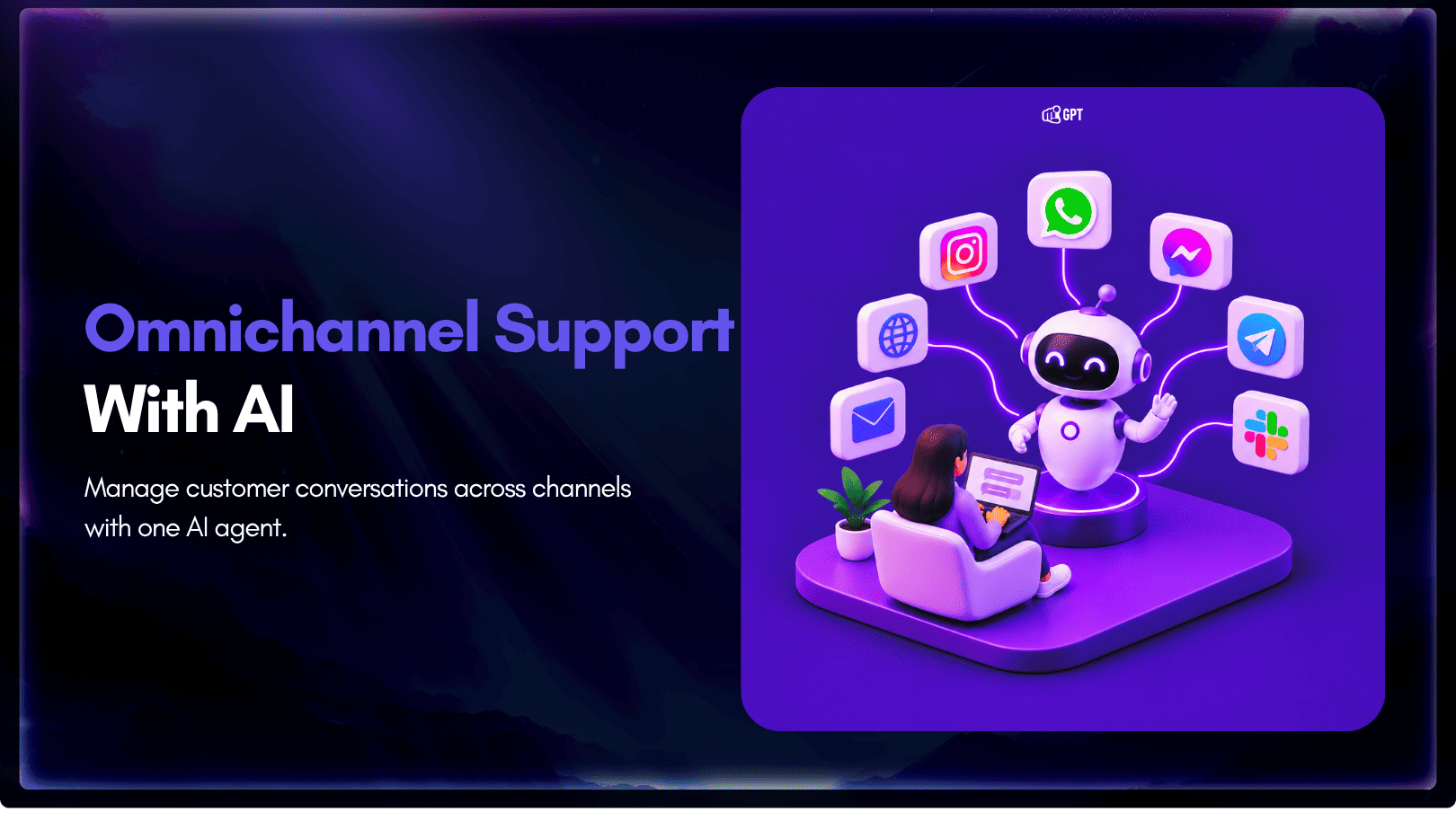
Omnichannel support means every channel answers from the same knowledge. Train one AI agent, pick your first channel, and test that answers match.
Self-learning AI agents log the questions they miss. Learn how human review turns those gaps into trained answers and how to run the weekly loop.
Train an AI agent on your return policy, connect the Shopify template in AI Studio to check real orders, and route exceptions to your team.
WISMO means Where Is My Order. Measure your WISMO share from last month’s tickets, fix the tracking gaps, and let an agent answer order status.