Agent Mining: The Next Phase of Human–AI Collaboration

Rajni
Last updated on March 19, 2026
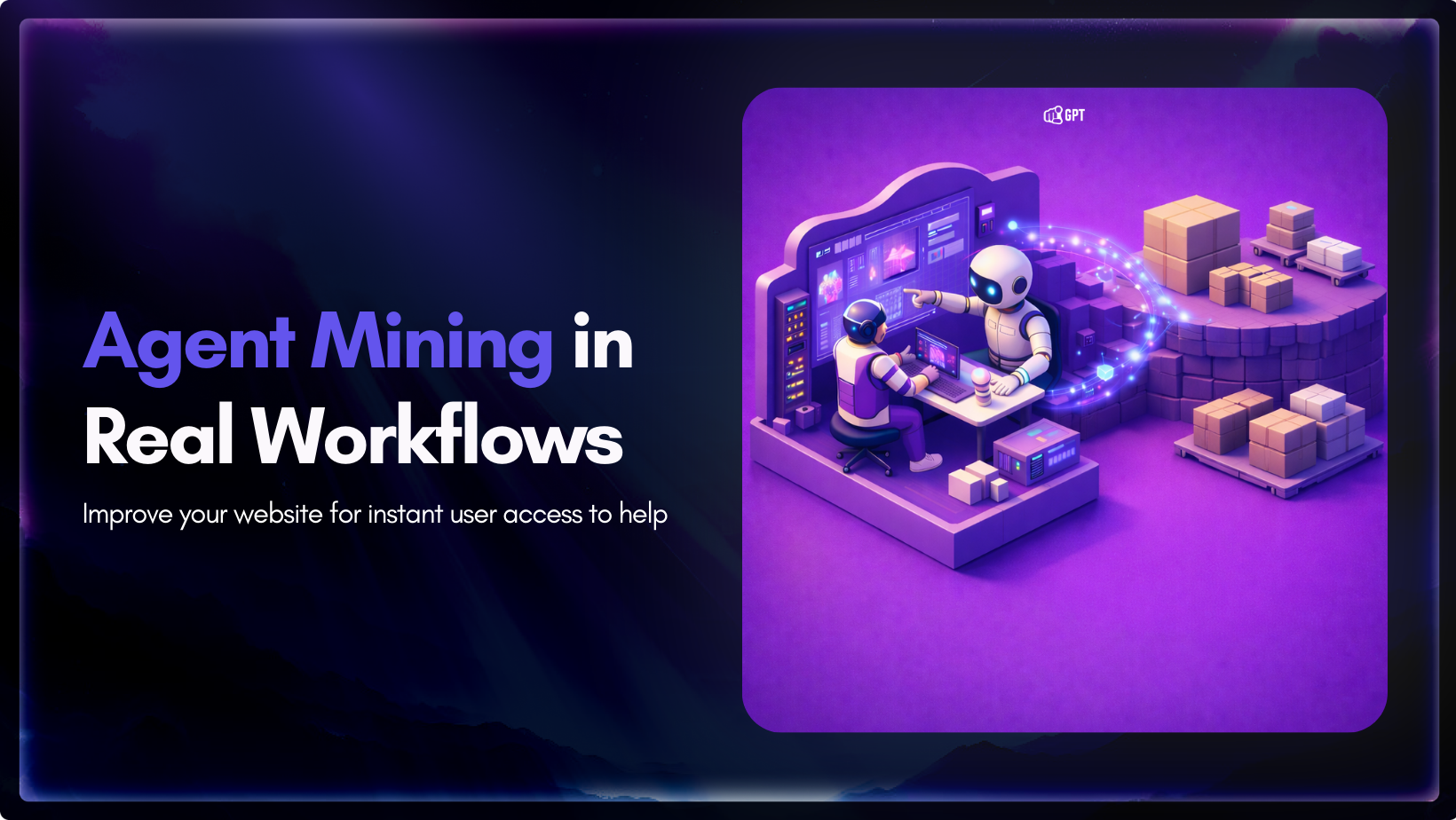
Agent mining shifts AI from answering questions to executing real work across systems through controlled, repeatable workflows with verification.
By automating repetitive operations with guardrails and observability, agents reduce friction, improve consistency, and let humans focus on decisions and edge cases.
For a decade, AI was mostly framed as something that answers. It explains, summarizes, and chats. Useful, yet oddly limited. Most real work is not a single answer. It is a chain of small actions: open a system, gather context, make a change, validate the result, handle exceptions, and report back.
That gap between answering and executing is where friction lives. Teams do not struggle with knowing what to do. They struggle with doing it across systems, consistently, at scale. Workflows stretch across dashboards, CRMs, ticketing tools, spreadsheets, APIs, and internal approvals. Each step is simple on its own, but together they create operational drag.
Agent mining is the next phase: AI that can execute. Not as a magical autonomous employee, but as a controlled, iterative operator that learns the structure of work and turns repeatable action patterns into managed loops. Instead of stopping at insight, it moves into implementation, under supervision and within clear boundaries.
In this blog, we examine what agent mining actually means, how it differs from traditional AI assistants, and why it signals a practical shift in how humans and machines collaborate inside real systems.
Agent mining is the practice of deploying AI agents with controlled, observable access to real systems (like apps, APIs, databases, browsers, and messaging platforms) so they can execute iterative work on your behalf. Reliably, repeatedly, and with measurable outcomes.
The focus here is intentionally practical and non-hype. Agent mining is an operational shift already underway, not a speculative future. The questions are about guardrails, trust, and where value shows up first.
Agent mining is not a new word for chatbots, and it’s not a story about swarms of agents collaborating with each other. The core idea is simpler: give an AI agent carefully controlled access to real tools (APIs, databases, browsers, internal dashboards, message queues) and let it complete work the way a human would, but without fatigue and with repeatable precision.
A useful mental model:
If you’re coming from the chatbot world, agent mining is what happens when you move from “knowledgebase + Q&A” to dynamic, action-oriented behavior. You’re connecting the model to real-time external services and workflows, not just static content. This is the same shift described in “From Knowledgebase to Dynamic Actions: AI Chatbot Functions With Real-Time External Services,” where chatbots evolve from static responders to tools that execute functions such as bookings, updates, and transactions in real time.
Agent mining is happening because two things finally aligned: AI got capable enough to execute reliably, and the infrastructure to support it caught up.
For years, we had models that could write convincing responses. What we didn’t have was execution that held up under real conditions. An agent that crashes on step three of a ten-step workflow isn’t useful. An agent that can’t explain why it failed is worse than useless.
That’s changed. Systems like OpenClaw now provide what agents need to work in production: reliable tool calling, browser automation that logs every step, workflow orchestration, and full observability into what the agent actually did. The infrastructure gap closed.
Modern agents can now execute multi-step workflows without constant hand-holding. They can call APIs, query databases, control browsers, and verify their work before making irreversible changes. When something breaks, they can log it, escalate cleanly, and hand off context to a human without leaving a mess.
The technical pieces came together:
But there’s also a human factor. Humans get bored doing repetitive tasks. We get tired and inconsistent under load. We context-switch poorly and make avoidable mistakes. Machines don’t experience fatigue, boredom, or “off days.”
Where work is repetitive, accuracy-sensitive, and follows rules with known exceptions, machines now have both the structural advantage and the technical capability to execute reliably. Agent mining captures that advantage by turning knowledge into execution. An agent can perform the same sequence 1,000 times with the same checklist, log every step, and improve through feedback.
The primitives aren’t experimental anymore. They’re production-ready. Companies are already using agents to resolve support tickets, enrich leads, reconcile invoices, and monitor systems. Not as pilots. As core operations.
There’s a tension at the heart of agent execution that most teams don’t think about until it bites them: you need agents that can think creatively, but not too creatively.
People often treat machine creativity as binary. Either it’s impossible, or it’s dangerous. In practice, it’s neither. Models can produce novel ideas and combine patterns in unexpected ways. The problem isn’t creativity itself. It’s unbounded creativity in contexts where precision matters.
In agent mining, you actually want agents to:
This kind of creativity is valuable. It’s what makes agents useful beyond simple automation. A support agent that can only handle tickets matching exact templates isn’t much better than a decision tree.
The issue shows up when creativity isn’t bounded by verification. An agent that invents a policy that doesn’t exist, fabricates a tracking number, or makes up a discount code isn’t being helpful. It’s hallucinating in ways that break trust and create operational mess.
Unbounded creativity looks like:
This is where most “hallucination” problems actually come from. Not because the model is broken, but because the system around it doesn’t force verification.
The solution isn’t to eliminate creativity. It’s to contain it within verification loops.
Unbounded creativity = entertaining but risky
Bounded creativity + validation = powerful and reliable
In practice, this means agents should:
Many so-called hallucinations disappear once agents can retrieve real-time data from APIs, pull static truth from RAG layers, and run verification steps before committing to actions. The problem shifts from “the model made something up” to “we didn’t give it the tools to check reality.”
Hallucination isn’t just a model problem. It’s a systems problem. And systems problems have systems solutions.
If you’re waiting to deploy agents until they can “discover new markets” or “invent breakthrough strategies,” you’re thinking about this backwards.
Right now, agents win in unglamorous territory: augmenting workflows that already exist. That’s where ROI is easiest to measure and risk is easiest to control. The work isn’t creative or strategic. It’s repetitive, rules-based, and tedious. Which is exactly why it’s perfect for agents.
Instead of asking an agent to do something ambitious and vague, you ask it to:
These aren’t the tasks that get highlighted in product demos. That’s the point. Agent mining thrives where humans are least suited: repetitive loops, long checklists, and exception handling that requires cross-referencing multiple systems.
Once these loops are stable and measurable, something interesting happens. The line between “augmentation” and “replacement” gets thinner, especially in white-collar work that’s mostly about moving information between systems.
This is the same pattern already visible in RAG-powered chatbots. The bot handles the repetitive questions (password resets, order tracking, policy lookups). Humans handle the edge cases and complex judgment calls (angry customers, refund disputes, technical troubleshooting that requires deep product knowledge).
Agent mining extends that pattern from “answering” into “doing.” The agent doesn’t just tell you what’s wrong with an order. It updates the status, triggers a reshipment, and notifies the customer. It doesn’t just explain a policy. It applies it and logs the decision with citations.
Augmentation is easier to trust because:
Discovery work (finding new opportunities, inventing strategies, exploring untested ideas) requires judgment, intuition, and comfort with ambiguity. Agents aren’t there yet. But they don’t need to be. There’s massive value in getting the boring stuff right.
Agent mining changes how AI fits into everyday work. Early tools focused on answering questions and producing content. Now attention is moving to the repetitive steps that sit between systems and slow teams down.
What makes this shift practical is control. When agents work with clear boundaries, check their actions, and operate inside real tools, they become reliable parts of daily operations rather than experiments.
A good place to start is with one workflow that already causes friction. Look for tasks where people copy data between tools, follow the same checklist every day, or spend time verifying information. Support triage, CRM updates, routine reports, and reconciliations are common starting points.
As these processes stabilize, agents can take on longer workflows across multiple systems. Over time, this reduces manual effort and improves consistency, while people focus on decisions and edge cases.
Agent mining is not about removing humans from work. It is about removing repetitive execution so teams can spend more time on problem-solving and work that benefits from human judgment.
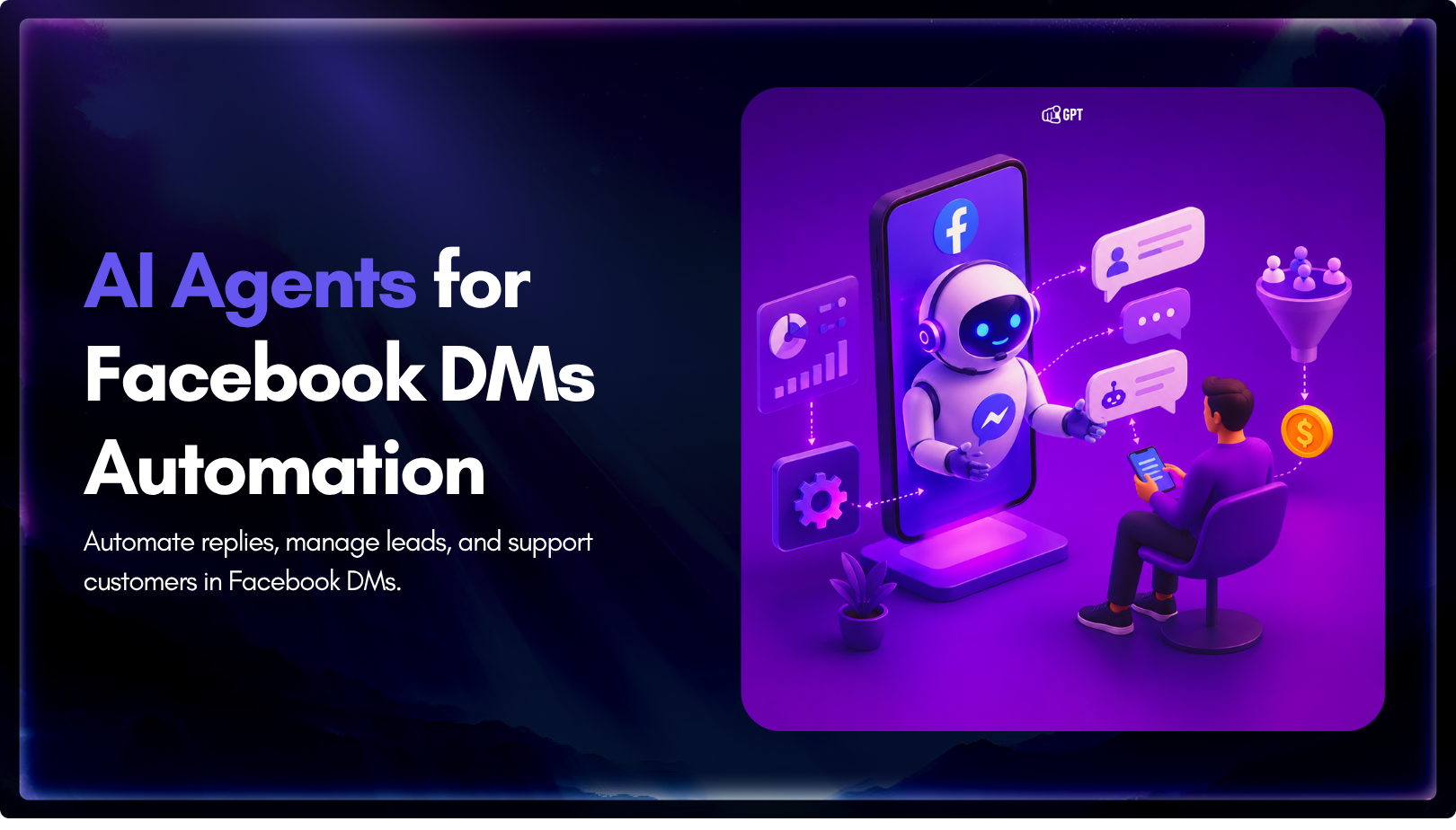
TL;DR A Messenger AI agent helps businesses respond to Facebook Page DMs faster, answer customer questions using business data, and guide visitors toward the next step. With YourGPT AI for Messenger, businesses can enable 24/7 auto-replies, rich messages, multilingual support, human handoff, an omnichannel inbox, and no-code workflow automation. Facebook Page DMs are often where […]
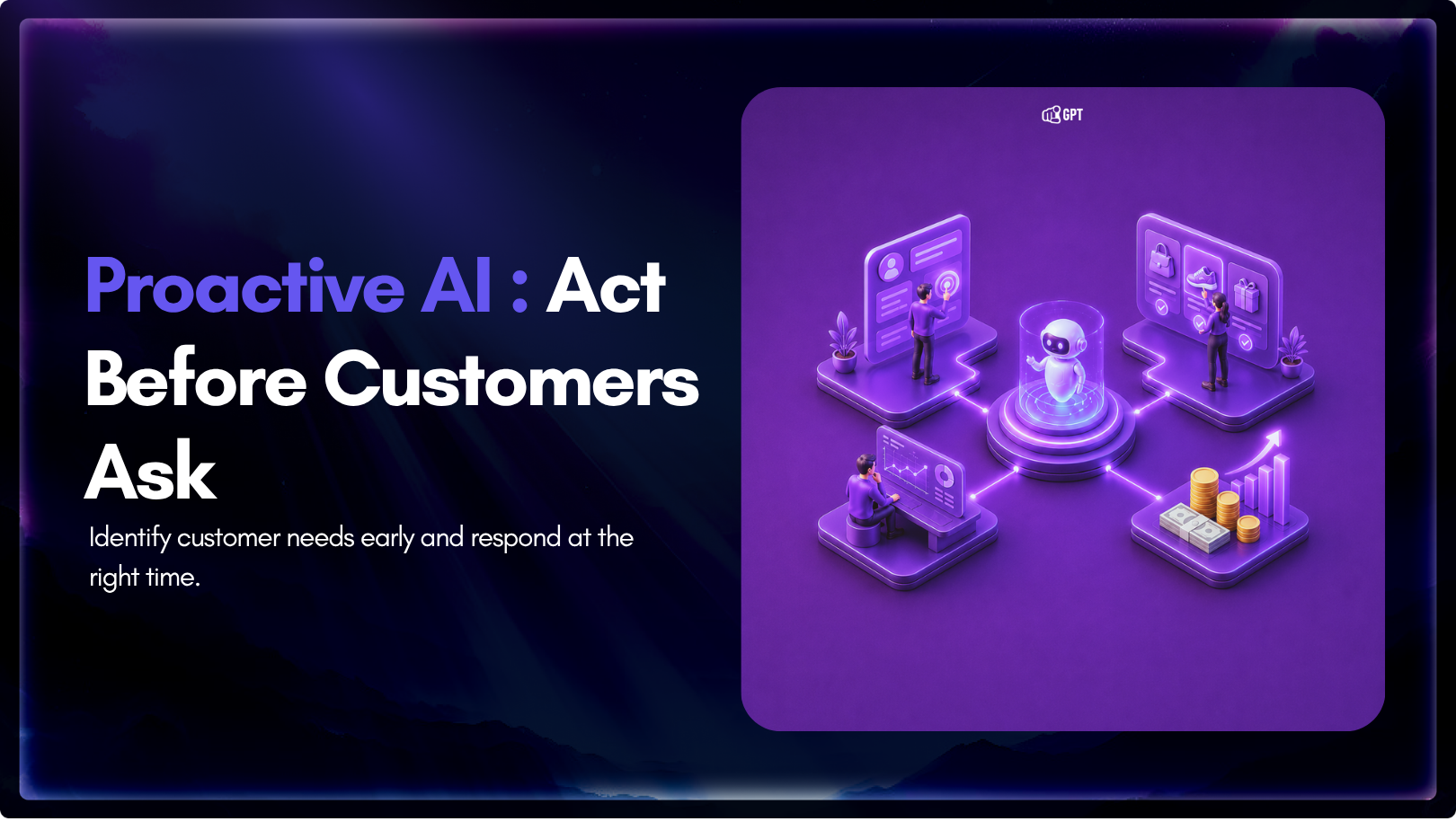
Proactive AI is not a new category. It is just a shift in how you use the systems you already have. Instead of waiting for a customer to ask for help, you step in earlier, when the signal is there, but the request has not happened yet. Most teams are still reacting. A ticket comes […]
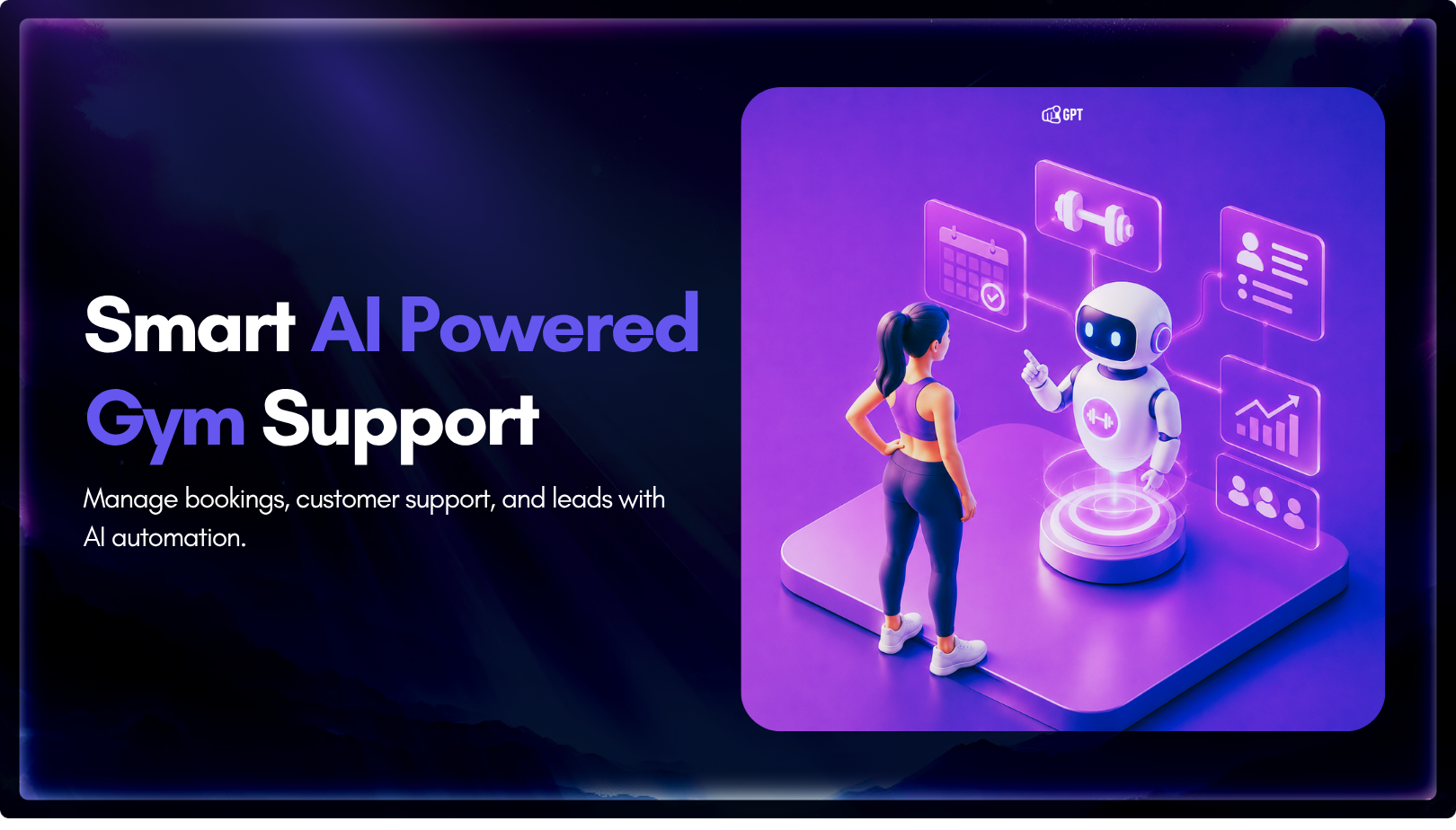
TL;DR An AI agent for gyms helps fitness businesses capture website leads, answer routine member questions, support trial bookings, guide class enquiries, and hand complex conversations to staff with context. The best setup uses approved business knowledge, clear escalation rules, CRM or workflow connections, and safe human handoff so gyms can reduce missed enquiries, improve […]
TL;DR Building a WooCommerce AI chatbot takes about 10 minutes and requires no coding. With YourGPT, you can train the chatbot on your store data, connect WooCommerce using REST API and webhooks, answer product and order questions, capture leads, support cart recovery, and extend the same AI assistant across your website, WhatsApp, Instagram, and other […]
TL;DR AI agents are becoming part of everyday business operations across customer support, sales, onboarding, and internal workflows. In customer support, they are commonly used to answer questions, automate billing support, track orders, handle repetitive requests, collect information, route conversations, and assist human agents with context and actions. Some platforms focus mainly on conversational replies, […]
TL;DR YourGPT and Asana work best together when conversations can turn into structured tasks without manual handoff between support, ops, or project teams. You can connect them through Asana MCP, YourGPT AI Studio, or viaSocket, depending on whether you need agentic control, custom workflow logic, or a fast no-code setup. Start simple: use one clear […]