What Is Proactive Customer Service? Examples, Benefits, and Best Practices

Rajni
Last updated on July 24, 2026
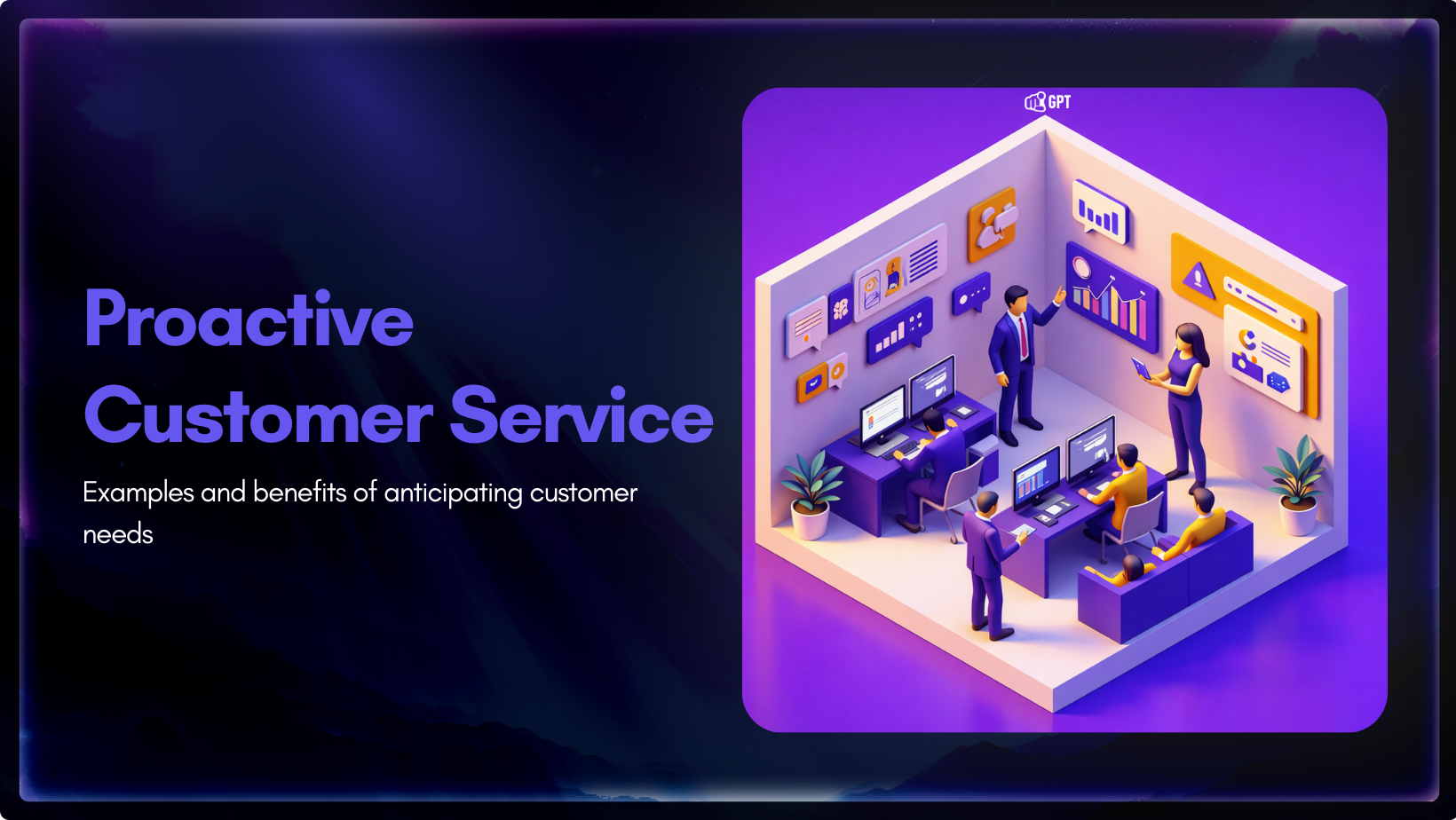
Proactive customer service means identifying and resolving problems before customers have to report them.
Teams monitor signals such as payment failures, delivery delays, and usage drops, then respond with a fix or a clear update before a ticket is created.
The 4S framework, Signals, Segments, Scripts, and Systems, makes this process repeatable while reducing support costs, repeat contacts, and customer frustration.
Most customer service moments begin long before a ticket is created.
Something feels off. A payment does not go through. A delivery update stops moving. A user gets stuck at the same step and tries again. Customers usually pause, check, retry, and wait before they decide to ask for help.
Proactive customer service works inside that pause. It identifies early signals, communicates before uncertainty turns into frustration, and resolves issues before customers have to spend effort reaching out.
This is not about being faster at replies or sending more messages. It is about timing, clarity, and fixing problems close to where they start. When done well, customers stay informed, feel supported, and keep moving even when something goes wrong.
In this blog, we explore what proactive customer service looks like in real operations. You will see how it differs from reactive support, where it fits into everyday workflows, and how teams measure its impact using practical, outcome-focused metrics.

Proactive customer service means identifying and resolving customer issues before the customer has to report them. Instead of waiting for a ticket, teams monitor early signals like delivery delays, payment failures, error spikes, and usage drops, then act during the gap between when a problem starts and when a customer would normally reach out. The result: fewer support tickets, less customer effort, and issues resolved before frustration builds.
A shipment stalls, but the customer checks tracking for two days first. A payment fails twice, but they try another card first. A user abandons setup at the same step, searches the docs, finds nothing, and leaves. These aren’t edge cases. They’re the default customer journey.
The system runs in two parts. First, you watch for signals that show up ahead of complaints delivery delays, error rate spikes, repeated failed actions, sudden drops in usage. These patterns usually point to a specific issue, not random noise. Second, you respond with something that removes the customer’s need to reach out at all: a clear explanation, an automatic fix, or guidance that appears right as confusion starts.
Over time, the focus shifts. Response speed stops being the target. Prevention frequency becomes it. A stalled shipment triggers an alert before the customer notices. A failed payment kicks off an automatic retry with a short note attached. Setup friction gets flagged to product teams, backed by real user data instead of a guess.
The outcome isn’t measured in tickets deflected. It’s measured in customers who never had to spend energy getting clarity. They hear from you first. That’s the difference between support as a cost center and support as a retention engine.
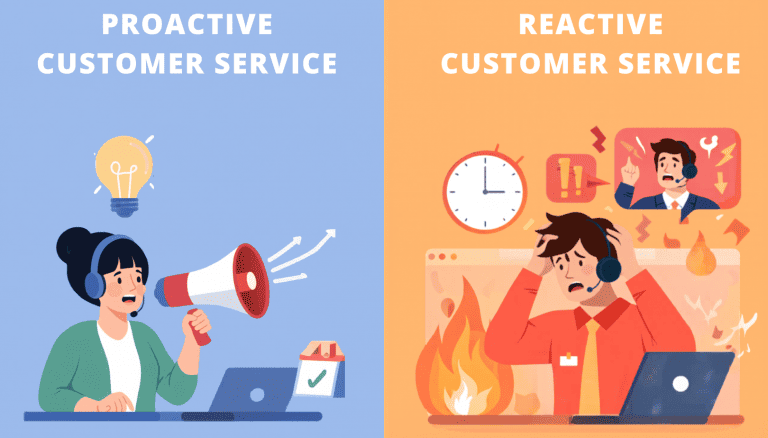
Most support teams do not intend to be reactive. It happens by default. Tickets arrive, agents reply, issues close, and the cycle repeats. Over time, customer service becomes a queue to manage rather than a system designed to reduce problems.
That is where proactive customer service changes the equation.
Instead of waiting for customers to report issues, proactive teams look for early warning signs, communicate before questions arise, and reduce how often the same problems reach support at all. The goal is not faster replies. The goal is fewer moments where customers feel stuck, uncertain, or frustrated.
When done well, proactive support shifts work upstream. Problems get addressed closer to their origin, and customers experience fewer interruptions in the first place.
The difference between proactive and reactive support is not philosophical. It shows up clearly in how teams work and how customers feel.
| Aspect | Reactive Customer Service | Proactive Customer Service |
|---|---|---|
| Starting point | Customer reports an issue | Team detects risk or patterns early |
| Timing | After the problem is felt | Before the problem escalates |
| Customer experience | Frustration followed by resolution | Clarity and reassurance from early communication |
| Support workload | High volume of repetitive tickets | Lower volume, fewer repeat contacts |
| Communication | Customer-initiated | Brand-initiated and contextual |
| Use of data | Used to explain past issues | Used to predict and prevent future ones |
| Team focus | Clearing backlogs and escalations | Removing friction and root causes |
| Cost impact | Higher cost per ticket | Lower cost through prevention |
| Long-term outcome | Teams stay busy | Customers stay confident |
Scenario: Payment failures increase due to a gateway issue.
Reactive approach:
Customers attempt payment, see failures, and contact support one by one. Agents explain the same issue repeatedly. Ticket volume spikes. Resolution depends on how quickly customers reach out.
Proactive approach:
The issue is detected early through error patterns. Affected customers receive a short update with clear next steps and alternative payment options. A status notice is shared. Most customers continue without contacting support.
The technical issue is identical in both cases. What changes is the customer’s effort and the team’s load.
Proactive customer service reduces the need for customers to ask for help at all. That is where support stops feeling transactional and starts reinforcing trust.
Proactive customer support changes both what reaches your team and how often customers feel the need to ask for help. Instead of handling issues one at a time after frustration builds, teams reduce how many problems customers experience in the first place.
A large share of support tickets are not caused by technical failure. They are caused by uncertainty. Customers reach out when they are unsure what is happening, what to do next, or whether something is broken.
Clear status updates, early notifications, and visible guidance remove that uncertainty. When customers understand the situation, many routine questions never get sent.
Reactive support scales linearly. More customers usually means more tickets and more agents.
Proactive support behaves differently. Automated updates, contextual in-product guidance, and reliable self-service answers handle repeat questions without agent involvement. As usage grows, ticket volume grows more slowly, which gives teams room to scale without continuously expanding headcount.
Customers do not judge support only by how fast replies arrive. They judge it by how much effort they had to spend getting clarity.
Proactive communication reduces that effort. Questions are answered before they are asked. Guidance appears before users get stuck. The experience feels calmer, more predictable, and easier to trust.
Issues are unavoidable. When customers are informed early, they feel respected even if the outcome is not ideal. Proactive support signals that the company is paying attention and communicating honestly. Over time, that consistency builds confidence in the brand.
Not every unhappy customer complains. Many disengage quietly.
Proactive support surfaces and addresses small problems while customers are still engaged and receptive. By reducing friction across the experience, teams protect retention without relying on discounts, escalation, or last-minute recovery efforts.
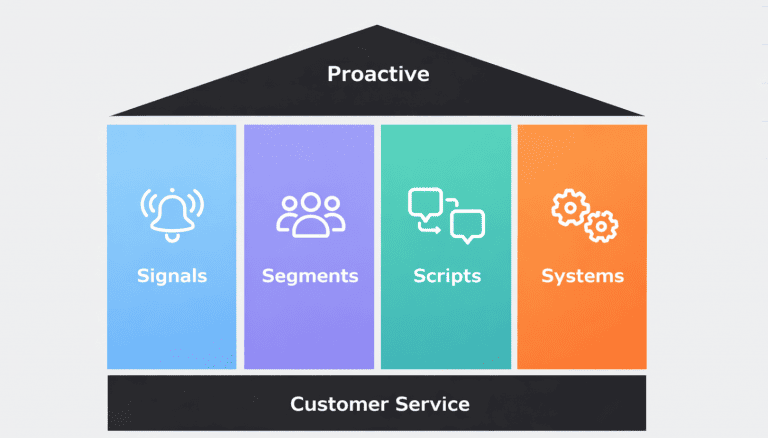
Proactive customer service fails when it depends on memory. One check-in might help a single customer, but it won’t stop the next hundred tickets. What teams need is a system that runs itself one that spots problems before customers notice, knows exactly who needs to hear what, and acts without waiting for someone to remember.
The 4S framework gives support teams four practical questions to answer every week.
Most customer problems don’t arrive as tickets. They arrive as patterns. A delivery stalls for three hours. Payment retries jump from 2% to 8%. Error rates climb after a release, but only for Chrome users. New customers stop at the same setup step three days in a row. Refund requests cluster around one feature.
These aren’t complaints yet. They’re early warnings. Teams that track them don’t wait for the inbox to fill up. They intervene while customers are still waiting for clarity, not demanding answers.
The value of signals isn’t perfect prediction. It’s early awareness.
Proactive communication fails when it becomes noise.
Not every customer needs the same message, even when the issue is identical. A billing hiccup requires immediate outreach for paid accounts, but trial users can wait. A shipping delay matters more in Germany than in Canada. New customers need context that experienced ones already have.
Segmentation keeps outreach focused. It limits messages to affected customers, sent through channels they actually check. Fewer messages go out, but the ones that do land with relevance.
Customers don’t reach out because they’re upset. They reach out because they’re unsure.
An effective proactive message removes that uncertainty immediately. It explains what changed, how it affects them, what action they need to take (if any), and when they’ll hear next.
When those points are missing, customers reply with follow-up questions. When they’re present, customers move on without contacting support at all.
Good scripts don’t try to sound comforting. They aim to be complete.
Proactive support collapses when it depends on individuals remembering to act.
Systems make it dependable. Monitoring tools trigger workflows. Automation routes issues to the right team. Knowledge base articles appear at the exact moment of confusion. Escalations reach human agents with full context already attached.
Once these systems are in place, proactive support becomes routine. Customers see fewer surprises. Teams see fewer sudden spikes.
Proactive customer service works when it saves customers time, lowers mental effort, and fixes issues before they interrupt progress. These six methods focus on what customers actually experience, not internal metrics.
When something breaks, customers do not just want acknowledgement. They want direction.
Clear incident updates explain what is affected, what is not, and what customers should do right now. If there is a workaround, it is shared immediately. If there is no fix yet, the next update time is stated clearly.
This removes anxiety, prevents repeated follow ups, and stops vague messages from turning small issues into escalations.
Customers often encounter small obstacles or moments of confusion long before they decide to reach out for help.
By monitoring failed actions, repeated attempts, sudden usage drops, or clear onboarding steps, teams can spot friction early. This allows support to step in before customers feel blocked.
The value to the user is simple. Help arrives at the moment of confusion, not after frustration builds.
Few things create more uncertainty than waiting without information.
When an order stalls, customers should hear from the company before they feel the need to ask. A short update with a revised timeline, tracking link, and brief explanation reduces worry immediately.
This prevents repetitive “Where is my order?” messages and reassures customers that someone is paying attention.
Many cancellations happen not because customers truly want to leave, but because something along the way made staying too difficult.
A thoughtful cancellation flow recognizes this. Instead of pushing customers to reconsider, it helps them solve the real problem whether that’s pausing a subscription during a busy season, fixing a billing hiccup, understanding usage limits, or making it easy to take their data with them. The goal is to remove friction, not apply pressure.
For customers, this approach feels fair and human. For the business, it often turns a goodbye into a “see you later,” preserving trust and keeping the door open for future engagement.
Customers search using their own words, not internal product terms.
Effective self service content mirrors the phrases customers use in tickets and search. Articles stay focused on outcomes and next steps rather than feature explanations.
When users can find clear answers quickly, they move forward without needing support at all. That is the fastest resolution from the customer’s perspective.
Not every unhappy customer reaches out. Many just stop using the product.
Monitoring incomplete setup, sudden inactivity, or repeated failures allows teams to intervene while the issue is still fixable. Outreach focuses on the user’s goal and the next clear step, not promotions or generic check ins.
This catches problems early and prevents silent churn.
Proactive customer service earns its place when it changes outcomes customers actually feel. The right metrics show whether customers spend less effort getting clarity, whether the same problems stop repeating, and whether your team is doing less cleanup work over time.
You do not need a long list of numbers. Focus on the signals that connect directly to customer friction and review them consistently.
The clearest indicator of effective proactive customer service is a noticeable drop in repetitive support tickets for the same issue.
Identify one recurring problem and implement a proactive measure such as sending early notifications, improving self-help content, or providing real-time status updates. If the number of tickets for that issue decreases, your proactive strategy is working. If not, refine the timing or clarity of your communication.
This metric directly shows whether your proactive actions are preventing customers from needing to contact support.
When customers return with follow-up questions, it signals that the initial response lacked clarity.
Track reopened tickets or repeat contacts within a short period after resolution. A consistent decline in these follow-ups indicates that your proactive communication is addressing customer concerns more completely and building confidence.
Fewer repeat inquiries mean customers are getting the answers they need the first time.
Proactive service should make problem-solving effortless for customers.
After resolving an issue, ask customers how easy it was to get clarity or a solution. Monitor these responses over time. A lower effort score means customers find it simpler to resolve issues, showing that your proactive approach is reducing friction.
Ease and guidance matter more than just speed in creating a positive experience.
During service disruptions, customers value timely and transparent updates more than immediate fixes.
Measure the time between an incident occurring and when customers receive the first meaningful update. The shorter this gap, the more effectively you’re managing expectations and reducing frustration.
Quick, informative communication helps maintain trust and minimizes inbound complaints during incidents.
Proactive customer service not only helps reduce the number of support requests but also builds stronger relationships with customers by showing that you care about their experience before problems arise.
Track retention metrics such as churn rate, refund requests, and dispute frequency after implementing proactive improvements like better onboarding or billing transparency. When these numbers improve, it’s a clear sign that proactive service is enhancing customer trust and satisfaction.
This metric highlights the long-term business value of proactive support.
Proactive customer service success is measured by consistent progress, not one-time wins.
Review your metrics monthly. Look for steady improvement across multiple areas, such as ticket reduction, customer effort, and retention. When these indicators move in the right direction over time, it shows that proactive service is becoming part of your company’s culture.
Consistency across metrics is the strongest proof that your proactive support strategy is delivering lasting results.
It shows up in small moments—like delivery updates before customers ask, or fixes sent alongside failure notifications. Customers experience fewer interruptions and often don’t recognize it as “support” at all.
Good communication is only part of it. Proactive service uses systems that detect problems early and eliminate the need for customers to contact support in the first place.
Most start by solving one recurring issue—like shipping delays or onboarding confusion—completely. Expanding after that foundation is more effective than trying to fix everything at once.
Yes—if the message helps them take action. Customers appreciate timely, relevant updates when something impacts them. Silence or vague notices feel careless.
Sending vague updates like “We’re aware of the issue.” Without clear next steps, timing, and impact, these messages increase anxiety and support tickets.
Trigger messages based on real events, not schedules. Customers are receptive when communication directly relates to something happening in their journey.
Yes. It improves satisfaction by preventing issues before they escalate. Customers don’t have to chase answers, leading to lower ticket volumes and higher trust.
Look for recurring issues. Repetition is a strong signal. If a question or problem keeps showing up, proactive service can address the root cause and improve the experience.
No, it supports them. By handling repetitive issues automatically, agents can focus on complex, high-value conversations where human judgment is essential.
Benefits often show up within weeks—like fewer tickets after shipping alerts go out. Larger improvements like onboarding or root-cause fixes typically pay off within one to two months.
Proactive customer service is not about predicting everything perfectly. It is about noticing where customers hesitate, get confused, or feel unsure, and stepping in a little earlier the next time. When that happens, fewer people need to ask for help, and the ones who do arrive calmer and better informed.
Teams do not struggle because they lack tools or effort. The real problem is that recurring issues never get traced back to their source.
Here’s where to start this week: pull your last 30 days of tickets and find the single most common question. Not the most urgent one, the most common. Solve that one moment completely, whether it’s a delivery update, a payment retry, or a setup step that trips people up. Watch what happens to that ticket category over the next two weeks before you touch anything else.
Over time, this stops being a project and becomes routine. Platforms like YourGPT make it easier to run at scale, detecting patterns, triggering timely guidance, and routing root causes to the right team across every channel a customer uses. But it all starts with one resolved moment, not a new tool. Customers trust you more because they stop having to guess. Support teams spend less time typing out identical replies to identical problems.
That’s when customer service stops feeling reactive and starts working in your favor, quietly, in the background, on every account you’re not looking at right now.
YourGPT helps you detect issues early, send timely updates, and resolve problems across channels without increasing support workload.

AI agents can now find and buy products for shoppers. See what agentic commerce changes for a Shopify store and which support jobs stay yours.

Build a Halloween shopping assistant for Shopify with YourGPT. Set up product recommendations, stock checks, cart actions and human support before launch.


See what a good customer effort score looks like, how to word and calculate CES on each scale, and which support habits raise customer effort.

Tier 1 support handles first contact. See how Tiers 0 to 3 differ and what changes when an AI agent becomes your first line.
The 12 customer service metrics to track when an AI agent resolves tickets, with a formula for each and a baseline built from your own last month.
Calculate cost per ticket with one formula and a free calculator, then compare it with the cost of a conversation an AI agent resolves.