Top 10 Reasons Your Business Needs an AI Help Desk

Rajni
Last updated on August 27, 2026

AI help desks combine a centralized knowledge base, multilingual search, and automated self-service to help customers find answers without opening a support ticket.
This reduces repetitive support requests, helps teams resolve more complex issues faster, and keeps support available around the clock.
With 67% of customers preferring self-service, according to Zendesk, AI help desks can improve customer access to support while lowering operational costs.
AI help desks use artificial intelligence to enhance customer and internal support. They come with a smart knowledge base, intelligent search in multiple languages, help you automated self-service and a lot of AI powered features, which allows them to handle your support inquiries smoothly and efficiently.
In fact, 67% of customers prefer self-service over speaking to a representative, making AI help desks a valuable upgrade for modern businesses.
If your support team is busy with too many inquiries, an AI help desk can help. It handles repetitive tasks so your team can focus on more complex issues. This means customers receive answers without requiring the staff members. Equip your support team with the tools they need to work efficiently.
AI help desks use artificial intelligence to improve customer and internal support operations. They provide a centralized knowledge base, intelligent search capabilities, and automate repetitive tasks through self-service, reducing the workload on support teams.
This helps businesses provide faster, consistent customer support, ensuring customers receive timely and accurate assistance.
With these objectives in mind, let us explore ten important reasons why your business should consider adding an AI help desk today.
Below are the 10 important reasons why your business should implement an AI help desk:
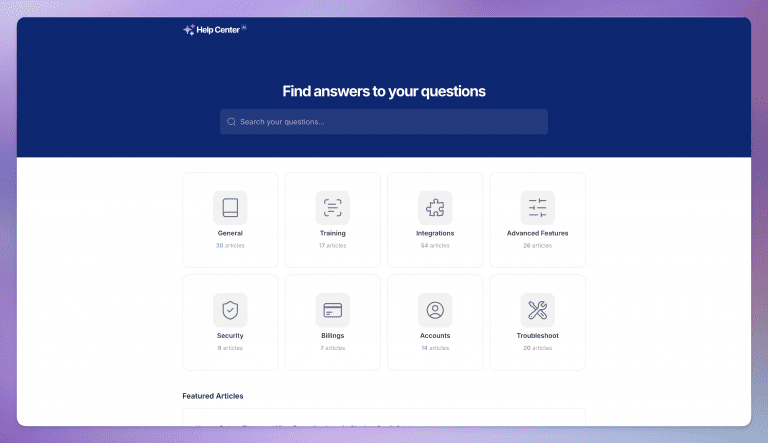
AI-powered help desks offer advanced self-service options, including knowledge bases. These resources use natural language processing (NLP) to provide relevant information tailored to the user’s specific needs.
Implement an AI-driven knowledge base to help your customers to find answers quickly, reducing the number of support tickets and freeing up your agents for more complex issues
AI help desks can integrate AI chatbot that can communicate on all channels like email, chat, social media into a single, unified system. This ensures that no customer inquiry goes unnoticed and all information remains accessible to your support team.
Consolidate your communication platforms into one AI help desk system to improve response times and provide a consistent customer experience across all channels.
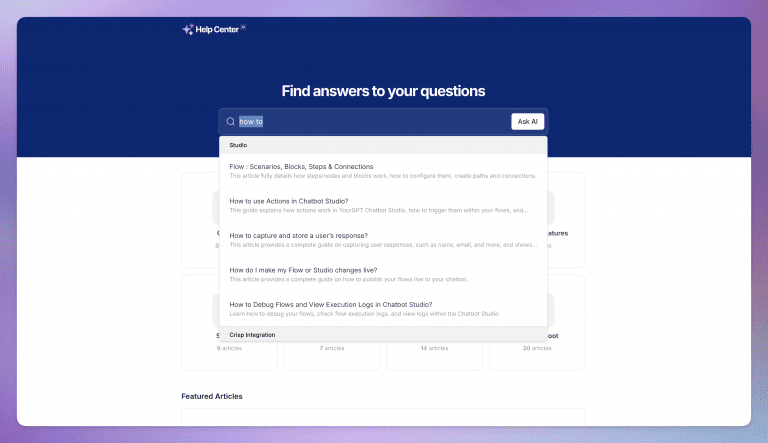
Using advanced AI search algorithms, AI help desks deliver real-time responses to common customer questions. By analyzing key elements of queries and utilizing past interactions, they provide accurate and timely answers.
Implement AI chat search capabilities in your help desk to provide customers with instant and relevant responses.
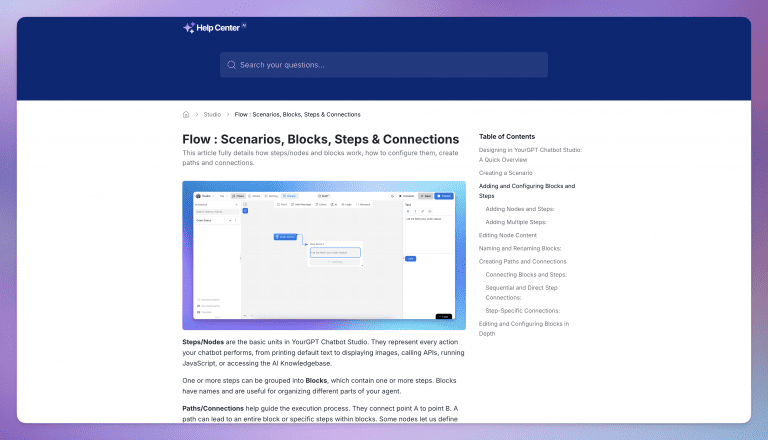
AI help desks provide around-the-clock self service support that ensure your customers receive assistance at any time, regardless of their location. AI systems don’t require breaks, offering continuous service without interruptions.
Deploy an AI help desk to offer 24/7 self service support, enhancing customer satisfaction and accommodating global customer bases without increasing staffing costs.
Automating repetitive tasks like categorizing inquiries helps reduce operational costs significantly. AI systems handle routine functions, allowing your support agents to focus on issues that require human insight.
Use Help desk to reduce costs and maximize your team’s efficiency by reallocating resources to more strategic tasks.
By handling low-level, repetitive tasks, AI help desks free up your support team to focus on more important and complex issues. This not only increases productivity but also improves job satisfaction among support agents.
Boost your team productivity by connected AI chatbot with your helpdesk
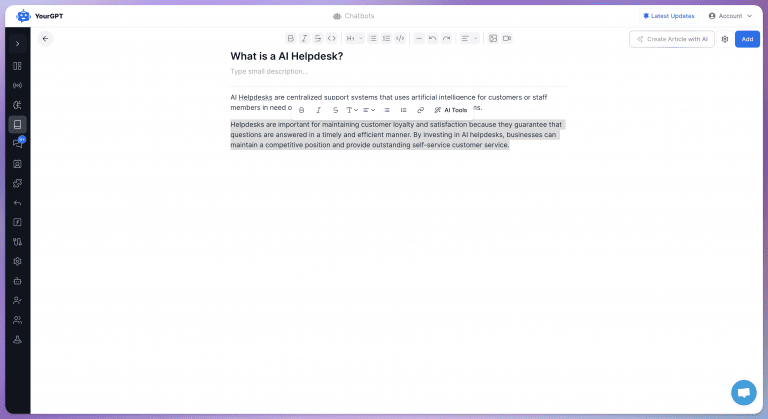
AI help desks include AI writing tools that quickly create articles for the knowledge base. You can import content from links, documents, or even YouTube videos, and the tool will generate articles automatically. This makes it easier to keep your knowledge base current without a lot of manual work.
Use the AI writing tool to quickly generate articles that address common customer questions, ensuring your knowledge base is always up to date and informative..
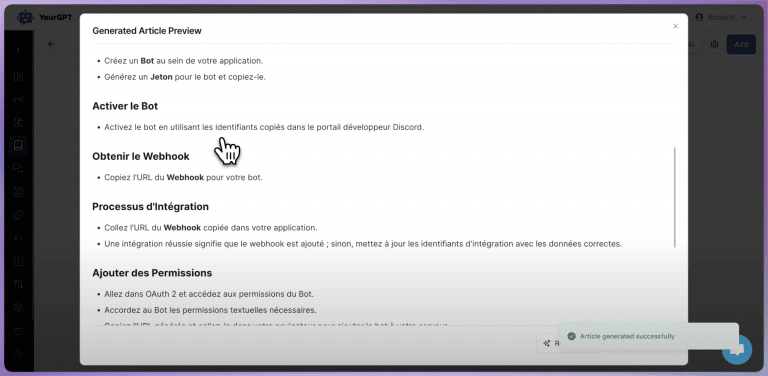
AI help desks make it easy to support customers in multiple languages without needing a specialized multilingual team. Advanced AI provides real-time translations, breaking down language barriers.
Expand your customer base globally by offering multilingual support using AI Helpdesk, create and converter articles with AI.
AI help desks don’t just answer questions they offer smart recommendations. For customers, they provide links to related articles or content that could help solve their issues. For support agents, AI tools offer insights into similar tickets or suggest troubleshooting guides.
Customize your AI help desk to provide personalized recommendations, enhancing the support experience for both customers and agents.
AI can improve based on customer interaction. The more they interact with customers, the better they become at predicting needs and delivering accurate solutions.
Monitor and update your AI help desk over time to ensure it adapts to your business and meet the changing customer expectations.
No. It takes over repetitive, high-volume questions such as order status, password resets, and pricing lookups, so your team can focus on issues that actually need a person. Most businesses using an AI help desk still keep human agents for escalations, complex complaints, and situations that require judgment.
Setup time depends mostly on how much existing documentation you have for the knowledge base. If you already have help articles, product FAQs, or past support tickets, much of the work involves importing and organizing that content. Businesses starting with little documentation may need more time because the AI needs reliable source material to answer accurately.
It depends on the platform’s data handling practices. Before choosing a vendor, confirm how customer data is encrypted, whether it is used to train models beyond your account, what access controls are available, and which security or compliance certifications the platform holds.
It can reduce support costs when it handles genuinely repetitive tickets and prevents the same questions from reaching human agents repeatedly. The results depend heavily on the quality of the knowledge base. If customers cannot get useful answers through self-service, they will still contact support and overall ticket volume may remain unchanged.
Yes. Platforms like YourGPT’s AI help desk can detect a customer’s language and respond in it using the same underlying knowledge base instead of requiring a separate translated version of every article. This is especially useful for businesses supporting customers across multiple regions and languages.
Implementing an AI help desk is a practical necessity for providing excellent customer service. AI solutions allow your business to scale support, increase efficiency, and improve customer satisfaction without significant cost increases.
By offering features such as 24/7 availability, multilingual support, and continuous learning, AI help desks provide a higher level of service compared to traditional models.
Investing in an AI help desk today will give your business a advantage, enabling you to meet the growing demands of the market while maintaining high-quality customer care.
Answer customer questions instantly, automate repetitive support tasks, and hand off complex conversations to your team when needed.
No credit card required
Tier 1 support handles first contact. See how Tiers 0 to 3 differ and what changes when an AI agent becomes your first line.
The 12 customer service metrics to track when an AI agent resolves tickets, with a formula for each and a baseline built from your own last month.

Calculate cost per ticket with one formula and a free calculator, then compare it with the cost of a conversation an AI agent resolves.
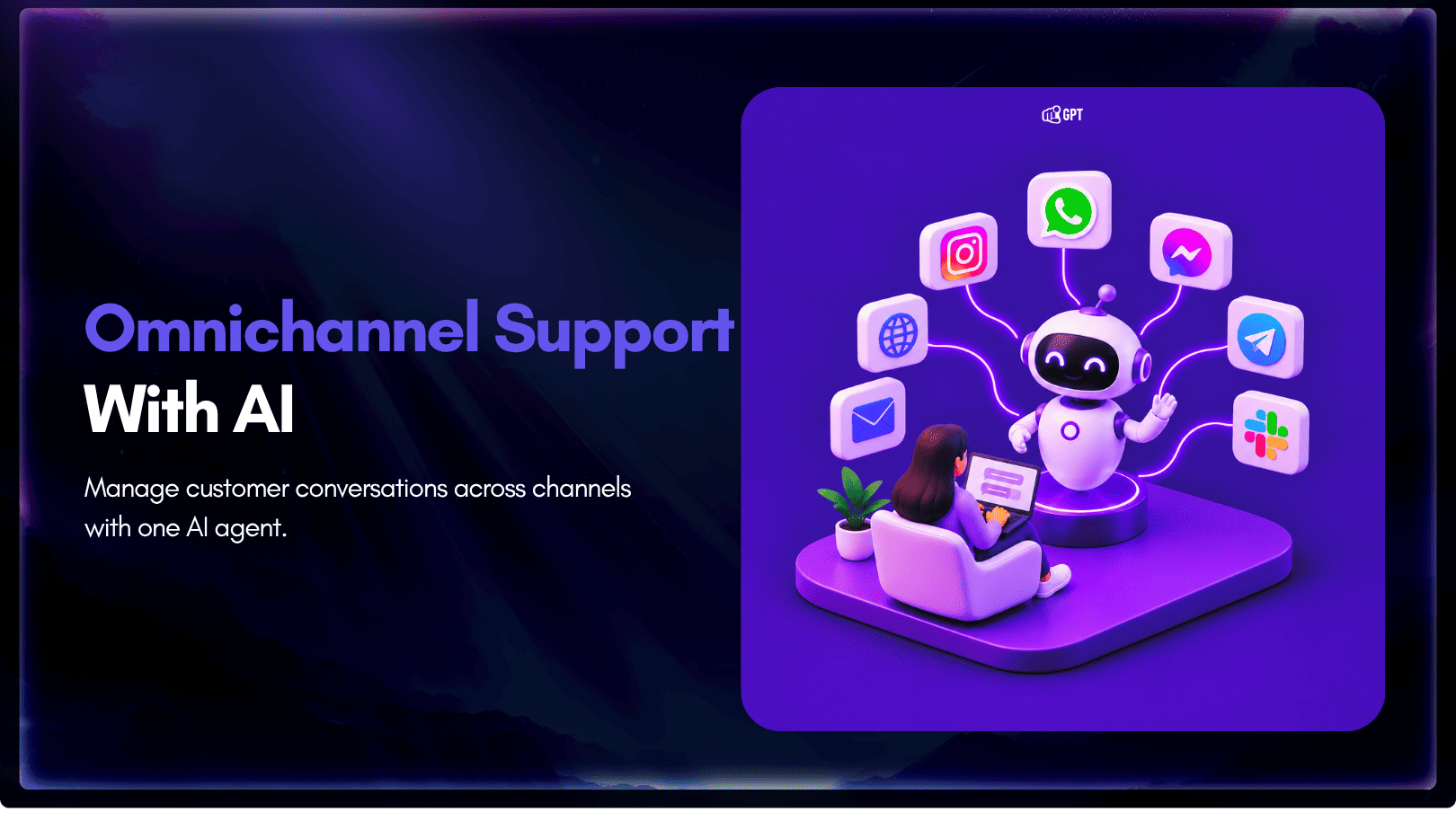
Omnichannel support means every channel answers from the same knowledge. Train one AI agent, pick your first channel, and test that answers match.
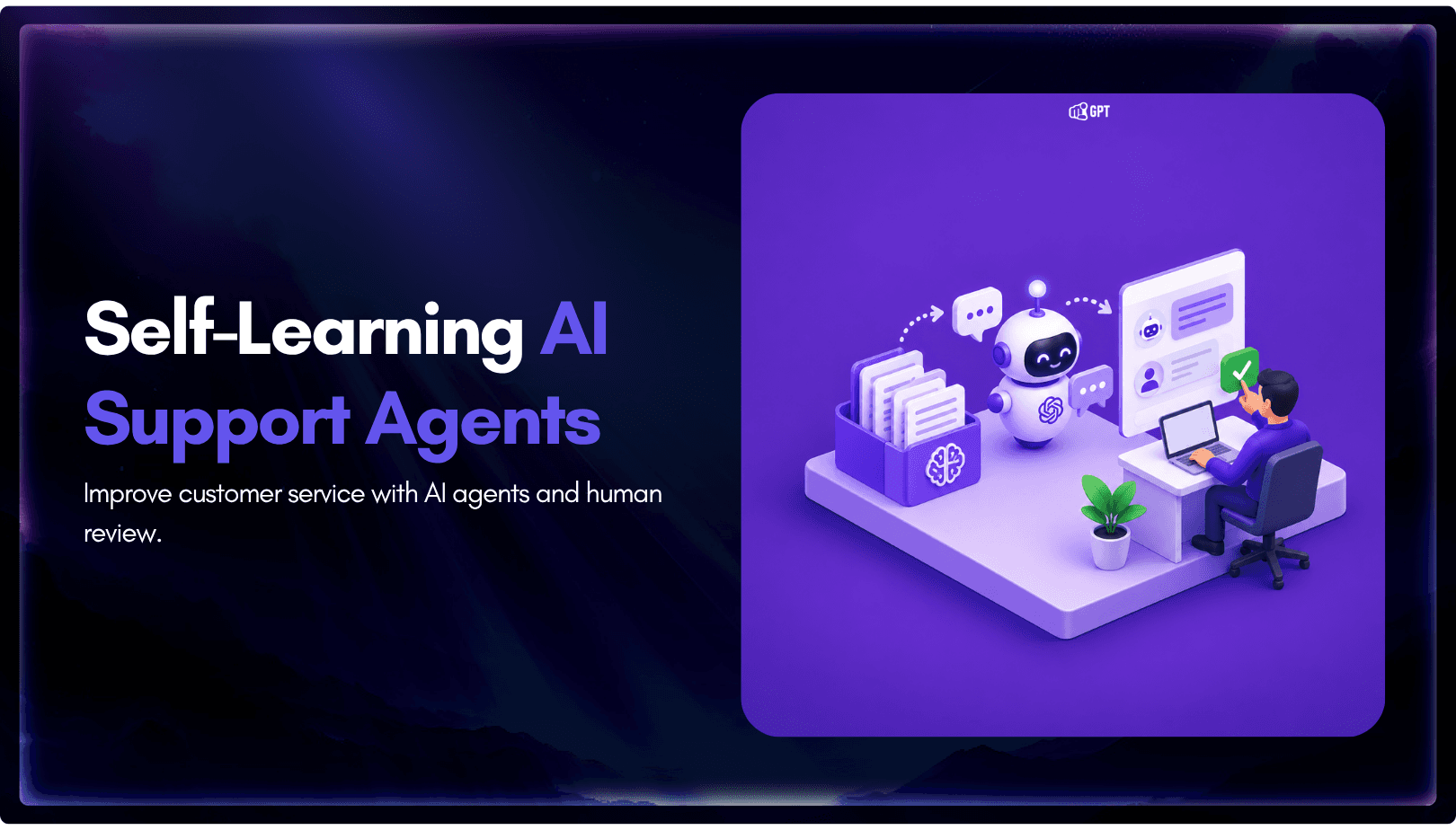
Self-learning AI agents log the questions they miss. Learn how human review turns those gaps into trained answers and how to run the weekly loop.
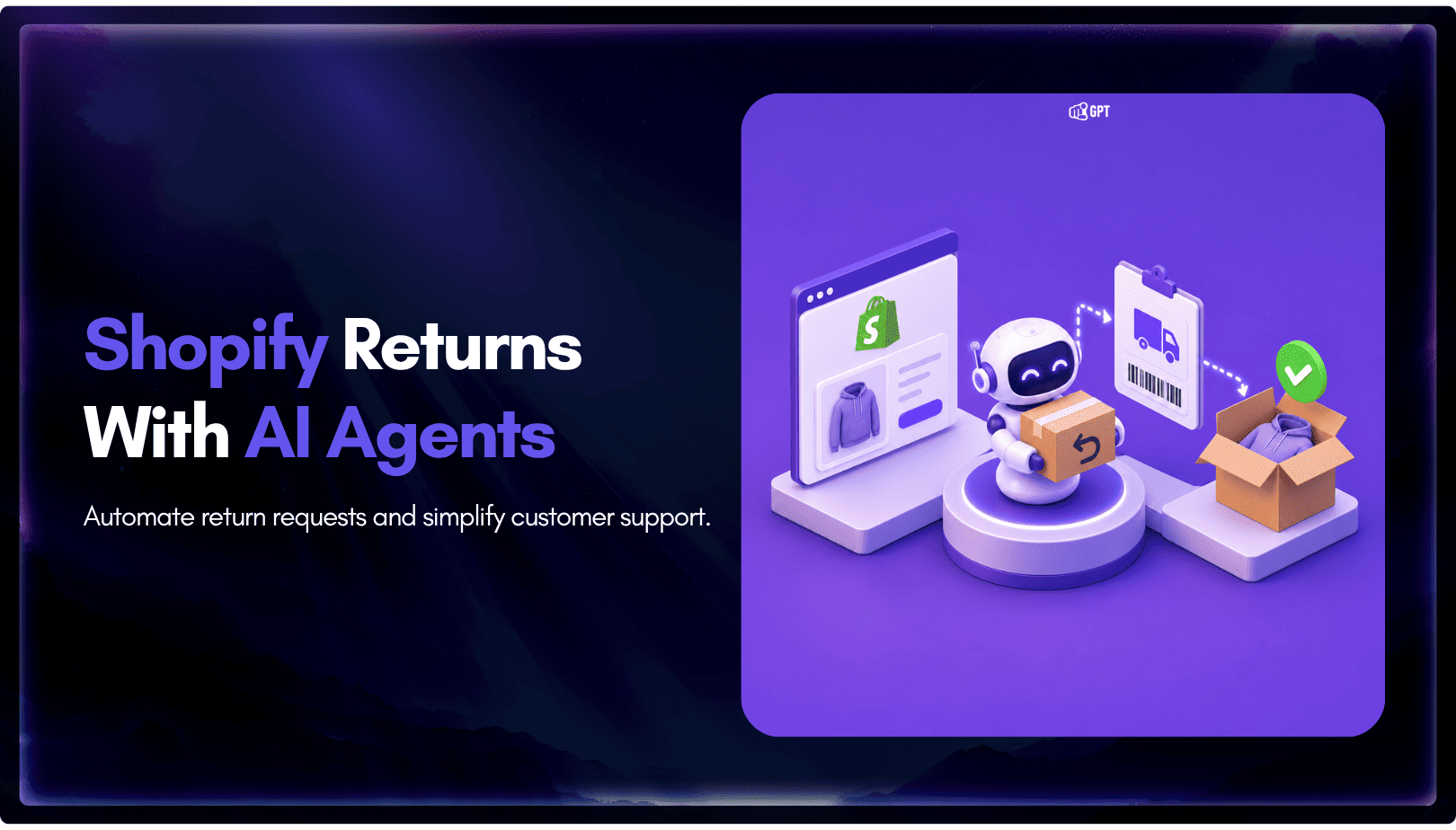
Train an AI agent on your return policy, connect the Shopify template in AI Studio to check real orders, and route exceptions to your team.