Customer Service Metrics and KPIs to Track When AI Handles Support
The 12 customer service metrics to track when an AI agent resolves tickets, with a formula for each and a baseline built from your own last month.

How to Calculate Cost Per Ticket in Customer Support
Calculate cost per ticket with one formula and a free calculator, then compare it with the cost of a conversation an AI agent resolves.

Omnichannel Customer Service With One AI Agent on Every Channel
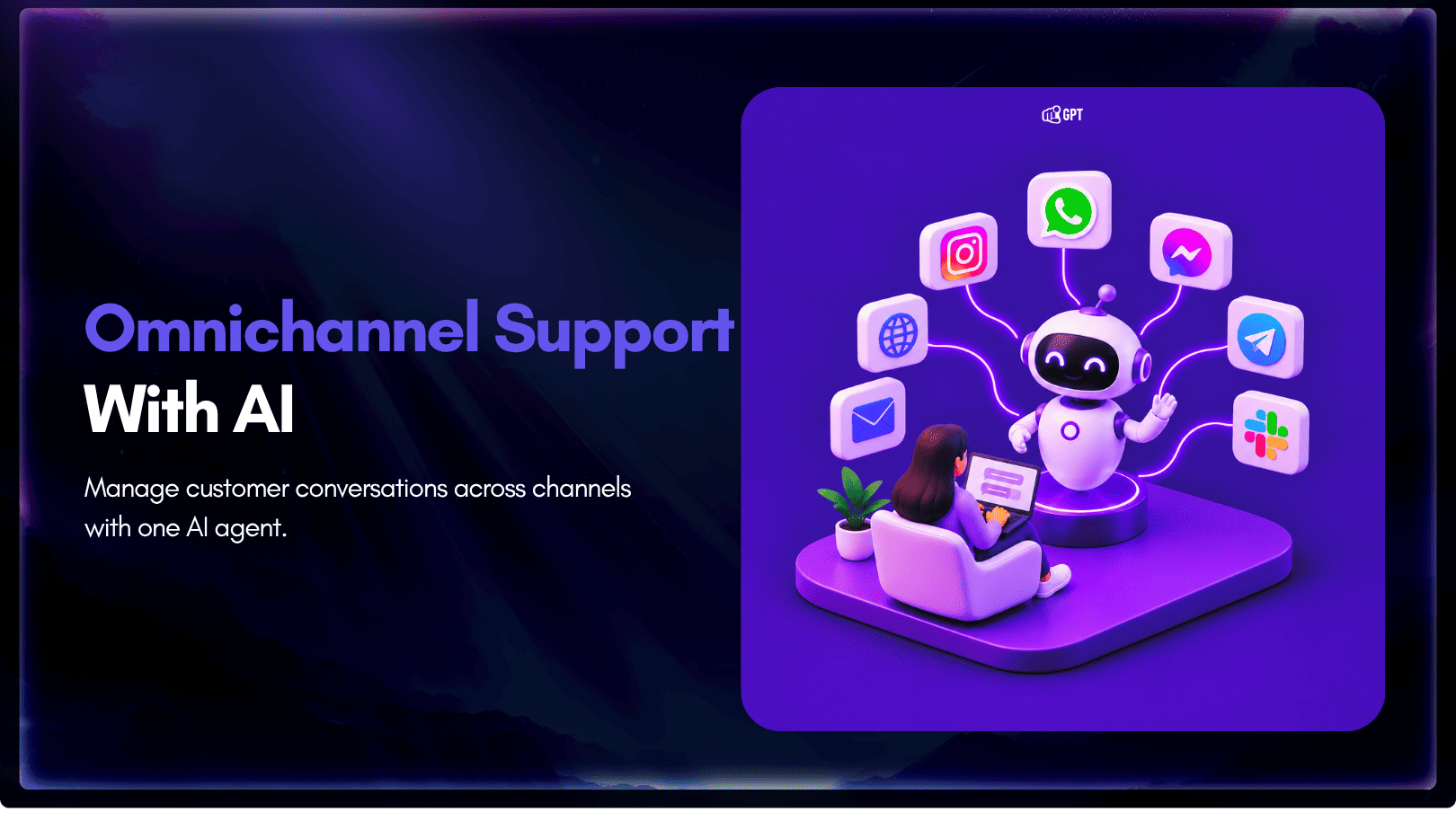
Omnichannel support means every channel answers from the same knowledge. Train one AI agent, pick your first channel, and test that answers match.
How Self-Learning AI Agents Improve Support With Human Review
Self-learning AI agents log the questions they miss. Learn how human review turns those gaps into trained answers and how to run the weekly loop.
How to Automate Shopify Returns With an AI Agent
Train an AI agent on your return policy, connect the Shopify template in AI Studio to check real orders, and route exceptions to your team.
What Is WISMO? How to Cut “Where Is My Order” Tickets
WISMO means Where Is My Order. Measure your WISMO share from last month’s tickets, fix the tracking gaps, and let an agent answer order status.
How to Run WordPress Customer Support Without Hiring
Run WordPress customer service alone. Train a YourGPT agent on your help pages, test it on real tickets, install the plugin, and get only the exceptions.
What is a good AI resolution rate for Shopify?
Learn how to judge Shopify AI resolution rates with clear formulas, a worked example, ticket-level checks and practical ways to improve support quality.
B2B Customer Service: AI Agents Built for Complex Support
TL;DR B2B customer service means supporting multiple people within the same account, including end users, admins, finance or procurement contacts, and executive sponsors, each with a different definition of a resolved ticket. Traditional support bots handle one conversation at a time and often lose account context when requests move between contacts, channels, or teams, forcing […]
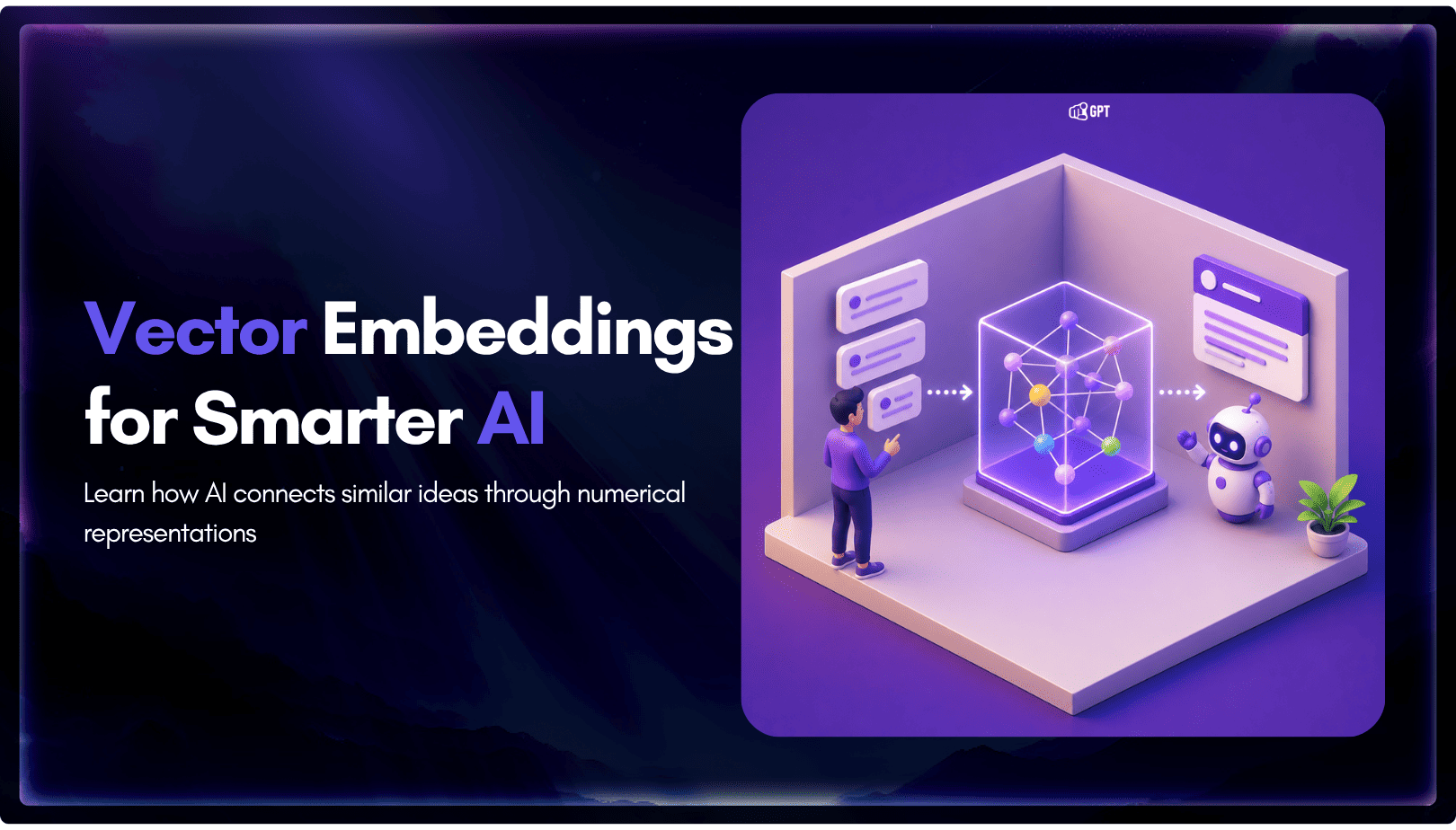
Vector Embeddings Explained: How AI Chatbots Actually Understand Text
TL;DR A vector embedding is a list of numbers that represents meaning, placing similar concepts closer together in a mathematical space. AI chatbots use embeddings to match questions by meaning rather than exact wording, which is a core part of retrieval-augmented generation (RAG). Anthropic recommends Voyage AI for embeddings, while OpenAI, Google, and Cohere provide […]
What Is an FAQ Chatbot? How It Works, Examples, and How to Build(2026)
TL;DR An FAQ chatbot answers repetitive questions by matching user queries with a knowledge base and returning grounded responses using rules, AI retrieval, or both. Modern FAQ chatbots use confidence checks to deliver instant answers for strong matches and fall back to broader retrieval or human handoff when confidence is low. Rule-based bots work well […]
Multimodal Chatbots: Image and File Upload Workflows That Actually Deflect Tickets
TL;DR Multimodal chatbots let customers share photos, screenshots, documents, video, or audio directly in a conversation, giving AI more context than text alone. YourGPT’s Attachment Capture node in AI Studio can collect these files mid-conversation, while vision-capable AI models can analyze and understand their contents. Key use cases include ecommerce returns, insurance and warranty claims, […]