Best AI Customer Support for Consumer Electronics Retailers (2026)

Rajni
November 18, 2026
AI customer support for electronics retailers should answer from product manuals, guide customers through a fix, and handle store actions such as starting a return. In the five storefront chats we could access, the warranty and return answers we checked were accurate, but only two assistants gave step-by-step fixes. Use the table below to shortlist two or three tools that work with your store platform, then test each one with the same 10 real support tickets.
Electronics customers ask questions a clothing store never sees, such as whether a soundbar works with a TV that only has an optical port or why earbuds won’t play hi-res audio on an iPhone. Those answers live in manuals, spec sheets and warranty terms, and a wrong one turns into a return.
To see how AI agents handle that in practice, we opened the support chat at 12 online stores that sell electronics on November 15, 2026, and five of them let us ask real questions about the products they sell. Those agents never invented a policy. Only two of five walked us through an actual troubleshooting fix, three well-known deployments asked for an email or phone number before the first message, and two brands featured in vendor case studies now run assistants they built themselves.
This comparison puts those results next to each tool’s documentation and published pricing. If you are still deciding which support jobs to hand to AI, map them first with ecommerce customer service with AI agents.
A customer sends in a faulty headset from a bundle and asks for a replacement. The order shows the bundle’s SKU, but the warranty claim applies to the headset itself. The agent needs to identify the item, verify the purchase, and collect its serial number if the claims process requires it. Otherwise, it could open a claim against the wrong product or promise a replacement the store hasn’t approved.
For electronics retailers, AI customer service needs to handle three parts of the case:
A useful trial includes two versions of the same claim. Give the agent a matching order and serial number in one, then introduce a mismatch in the other. Check whether it opens the first claim correctly and sends the second to a person with enough context to make a decision.
Vendor demos show the vendor’s chosen example, so we went to stores that run each tool. At each store we confirmed which AI the page loaded, then tried to chat as an anonymous shopper. We prepared four questions about products that store sells: one on compatibility or specs, one on troubleshooting, one on warranty or returns, and one asking whether we were talking to a human or an AI.
Five stores let us in: WHOOP and Loftie, which run their own assistants, Educator Collars on Tidio, Fairphone on Zendesk and the print shop Niini on YourGPT. At the other seven, a sign-up form, weekday-only chat hours or a security check stopped us before the first message. We checked every answer we got against the brand’s own help pages.
Five patterns came out of those conversations, and each one changes how you should run a trial.
The warranty and return answers we checked matched the retailers’ published policies. WHOOP and Loftie were the only two assistants that gave troubleshooting steps we could follow in chat. WHOOP walked us through resyncing, rebooting, and re-pairing a sensor. Loftie explained that its clock connects to 2.4 GHz Wi-Fi and suggested what to try next.
Educator Collars linked to a pairing guide. When we asked for the steps in chat, the assistant said they weren’t in its knowledge base. In your own trial, tell the assistant that the first step didn’t work and see whether it uses that information to suggest the next check.
Sonos asked for a first and last name, an email address, and a phone number. MPB and Petlibro required an email address. Those details can help a support team follow up on a warranty claim. For a shopper asking which cable comes in the box, the form adds a step before they can ask.
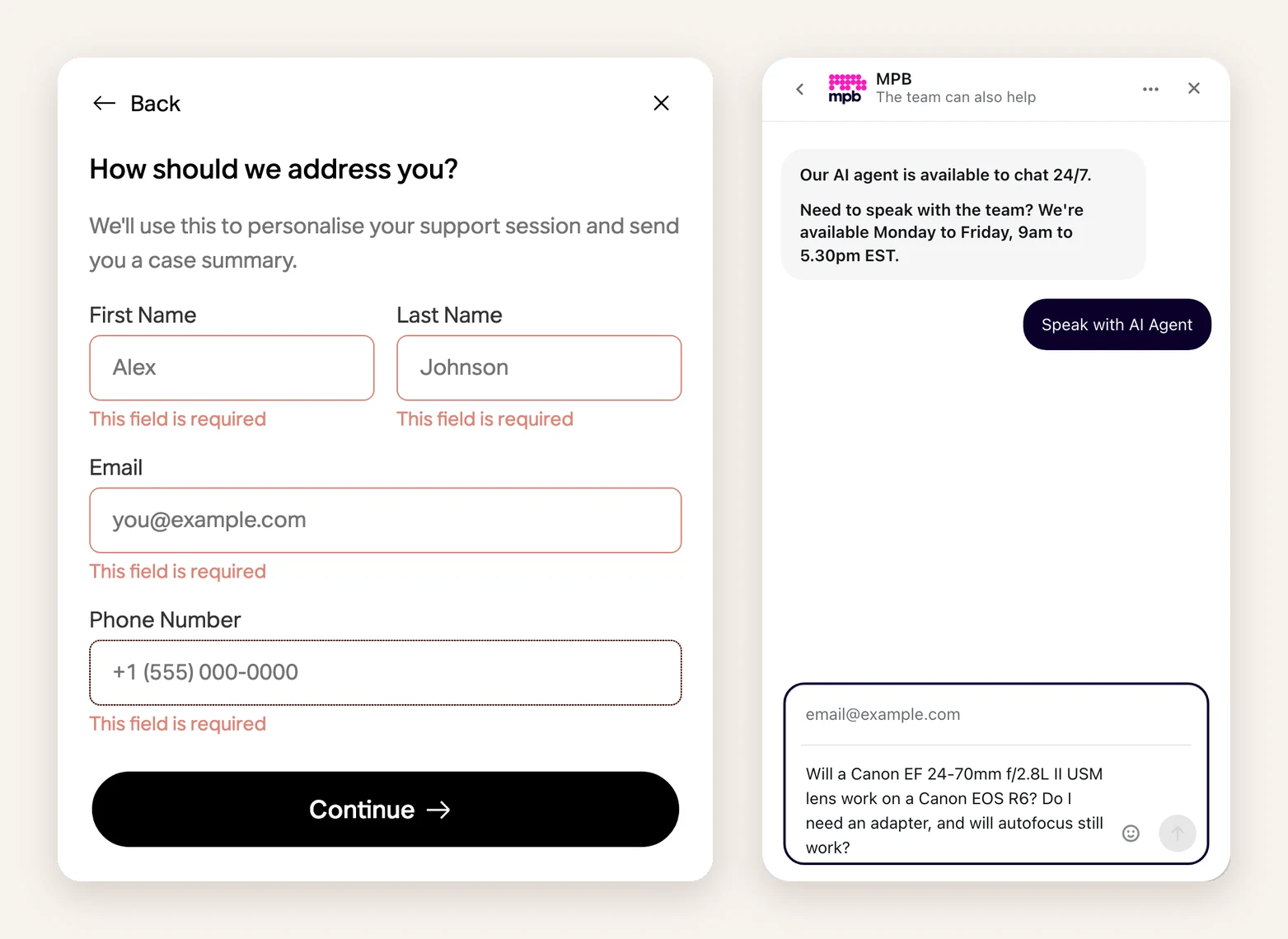
Most of the chats we accessed displayed an AI label before we typed. All five assistants identified themselves as AI during the conversation. Open your own chat as a first-time shopper and check whether the interface makes it clear who’s responding and when a person takes over.
Siena’s case study describes its work with Loftie. The chat we tried used Louisa, which Loftie says is operated by Deliberate Studio. If a case study influences your shortlist, ask for a current retailer reference that uses the same channel and handles the kinds of requests you plan to automate. Loftie’s privacy policy · Siena’s Loftie case study
These findings reflect the five storefront chats we could access. For the wider comparison, we used vendor documentation, published pricing, and case studies to assess capabilities such as order changes, returns, and helpdesk handoffs.
We reviewed 16 AI support platforms and shortlisted 10. We used vendor documentation, pricing pages, and integration directories to assess what each platform supports. Where we could access a live store chat, we recorded what happened as a shopper. We attribute case study figures to the vendors that published them.
The table below brings those checks together so you can shortlist tools by the store platform you use and the support requests you need to handle.
Start with the workflow your team needs to handle, such as answering a compatibility question, changing a Shopify order, or guiding a customer through setup. Then compare what each platform charges for. A ticket, a conversation, and a billable AI outcome can mean different things.
| Tool | Shortlist for | Standout capability | Billing unit |
|---|---|---|---|
| 1. YourGPT | No-code AI agents for teams of any size | Answers from your manuals and spec sheets, then checks a warranty, starts a return or books a repair in your own systems through Functions, APIs and MCP | Plan with AI Credits, from $39 a month billed annually |
| 2. Gorgias | Shopify brands that want one helpdesk bill | AI cancels orders and edits addresses in Shopify | Ticket plan plus $0.90 to $1.00 per AI resolution |
| 3. Fin | Adding AI to an existing helpdesk | Runs on Intercom, Zendesk, Salesforce and others | $0.99 per outcome plus helpdesk seats |
| 4. Zendesk | Large teams that need cited answers and QA | Sources on every answer and QA across AI and human chats | Seats from $55 plus automated resolutions |
| 5. Sierra | Enterprise setup and troubleshooting by voice | Collects device diagnostics in 55+ languages | Custom, outcome based |
| 6. Ada | Multilingual support across chat, email, and phone | Runs store actions and hands off cases to agents | Custom pricing per conversation or resolution |
| 7. Yuma AI | Pay per resolution on top of a helpdesk | Charges only for fully resolved tickets | Per resolution, from $14,400 a year |
| 8. Siena AI | Warranty claims with photo and video diagnosis | Reads customer videos to diagnose faults | $750 a month plus $0.90 per automated ticket |
| 9. Salesforce Agentforce | Retailers already on Salesforce | Shares data with Service Cloud and Commerce Cloud | $2 per conversation or Flex Credits |
| 10. Tidio | Small stores starting for free | Free plan with 50 AI conversations | Free, then plans plus Lyro conversations |
Each review below covers what the tool does, what we saw in testing and where it stops.
A tool that answers product questions may need extra setup to look up an order, start a warranty claim, or transfer a call to your helpdesk. Each profile shows which support jobs the platform fits, what your team needs to configure, and how the vendor charges. Findings from storefront chats are identified where
YourGPT is a no-code AI platform for customer service, sales, and operations. Retailers can use one agent to answer from product manuals and spec sheets across web chat, messaging apps, email, SMS, and phone. In AI Studio, teams can build workflows that check orders or start returns through connected systems.
Self Learning flags questions the agent couldn’t answer so your team can review and add approved corrections. That gives retailers a way to fill gaps in setup instructions, compatibility details, and warranty policies as customer questions come in.
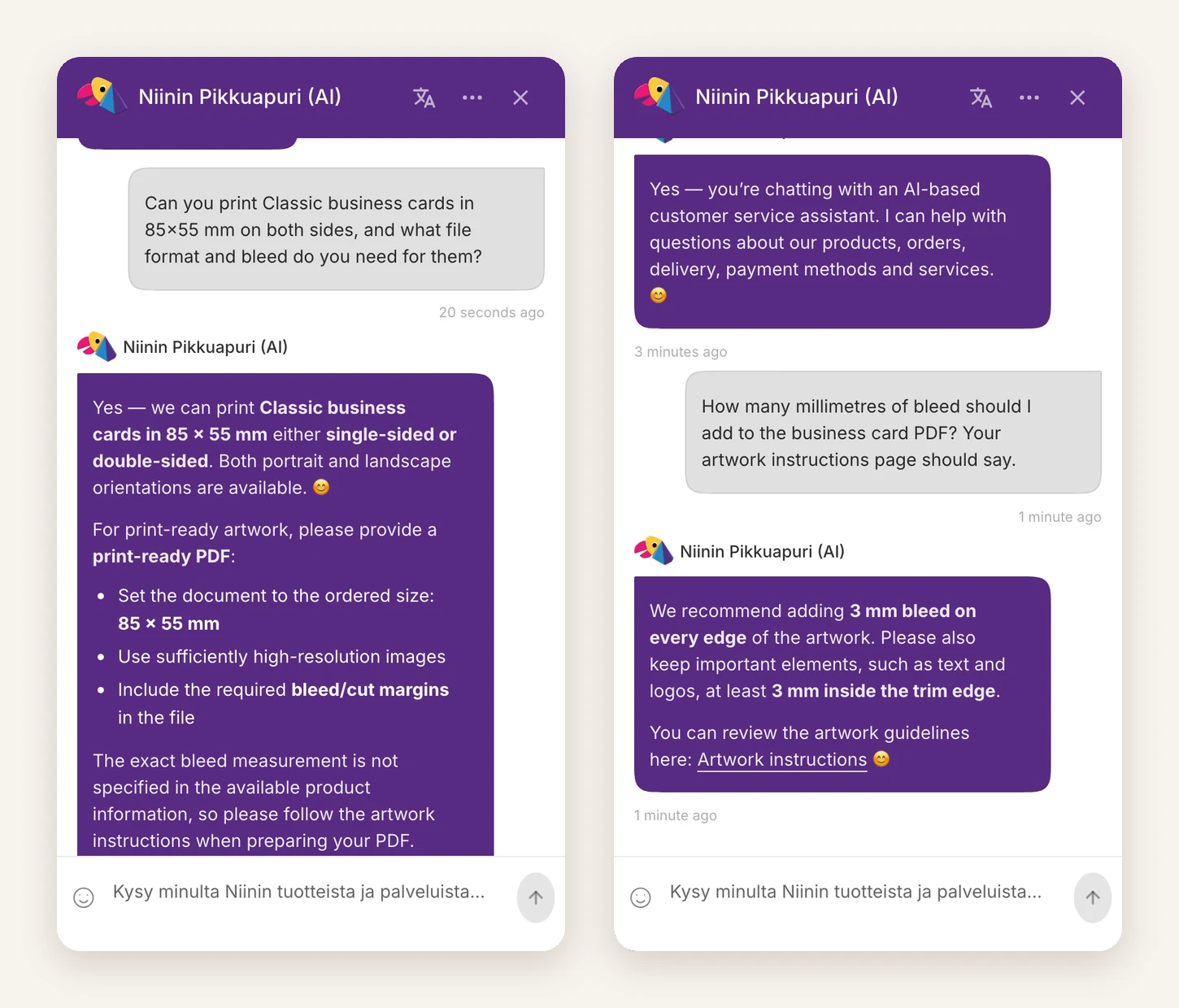
We tested YourGPT at Niini, a Finnish print retailer. The agent answered questions about business card size and returns, but needed a follow-up to find the exact 3 mm bleed requirement and link to its source. For electronics retailers, that’s a reason to test specific details such as port compatibility and power ratings before launch.
Advanced integrations and custom actions may require technical configuration and testing. The broader workflow tools may be more than a small team needs for basic FAQ automation.
YourGPT pricing lists Essential at $39, Professional at $79 and Advanced at $349 per month billed annually, or $59, $129 and $499 month to month. Enterprise uses a custom annual contract. Plans run on AI Credits rather than per ticket or per resolution, so estimate usage with a sample of real conversations.
Best for: Shopify brands that want the helpdesk and the AI agent on one bill
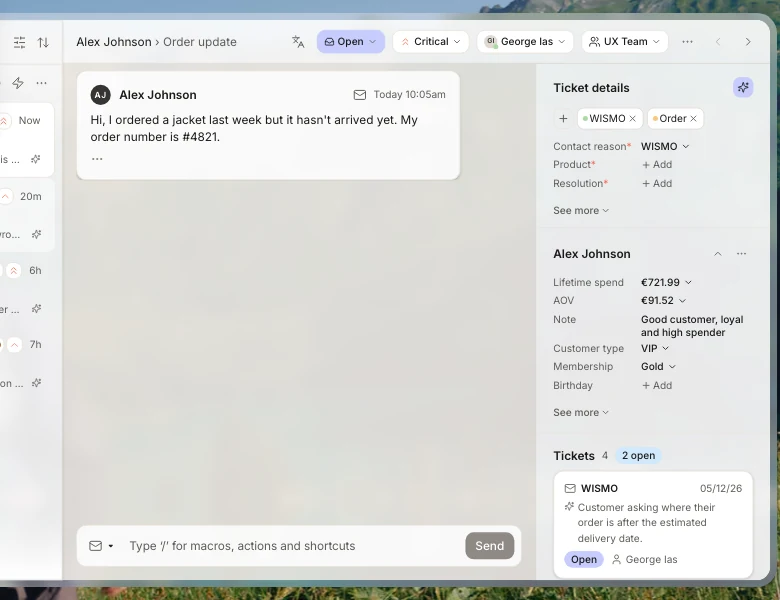
Gorgias is the helpdesk many Shopify brands already use, and its AI agent works inside it. Open a ticket and the sidebar shows the customer’s lifetime spend, orders and past conversations, which is the context your team needs when the AI hands a fault report over. The agent learns from your help centre and documents, follows Guidance rules written in plain English and reads images customers send.
Its headline electronics story is Audien Hearing, which sells rechargeable hearing aids. Audien’s case study reports around 9,000 self-service resolutions a month, first response times 88% faster, CSAT up from 80 to 86 and a 5% lower return rate. We could not confirm any of it ourselves: on a Sunday, from outside the US, Audien’s site showed no chat at all, and its support page lists weekday chat hours.
Order actions depend on Shopify, so stores on Adobe Commerce, BigCommerce or WooCommerce lose the main advantage. On current pricing, a ticket the AI resolves can carry both a ticket fee and an automation fee. We found no evidence that the AI agent answers phone calls.
On monthly billing, Gorgias pricing runs from Starter at $10 for 50 tickets to Basic at $60 for 300, Pro at $360 for 2,000 and Advanced at $900 for 5,000. Annual billing lowers Basic, Pro and Advanced to $50, $300 and $750, and Enterprise is custom. AI resolutions cost $0.90 each on most annual plans and $1.00 on monthly plans. Before you commit, model the combined Gorgias bill for your ticket volume.
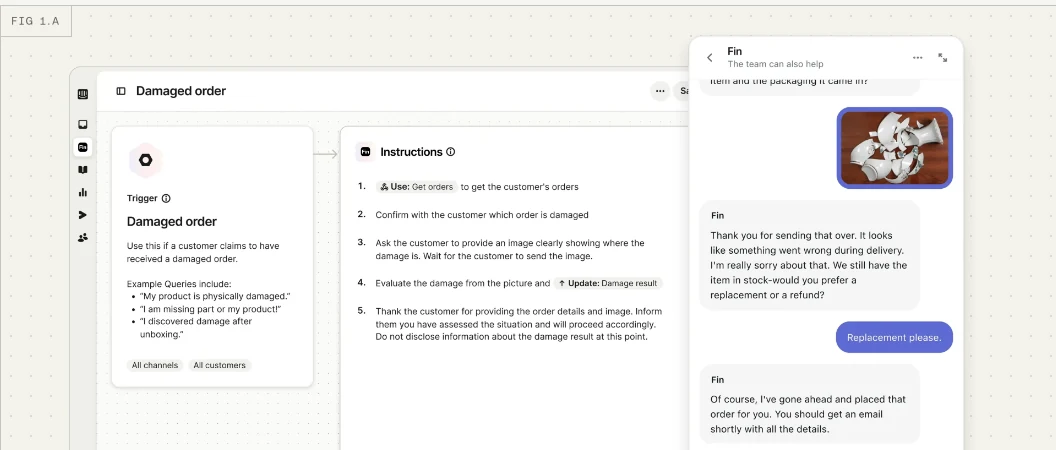
Best for: Teams that want to add an AI agent without changing the helpdesk they already run
Fin began as Intercom’s AI agent and now runs on top of Zendesk, Salesforce and other helpdesks as well as Intercom. In June 2026, Salesforce agreed to acquire Fin, so read renewal terms closely on a multi-year contract.
The part that matters for electronics is Procedures: multi-step workflows such as asking for a photo of the damage, checking the order date and offering a replacement, tested in simulation before launch. We found Fin live at MPB, the used camera marketplace, where the chat says “Our AI agent is available to chat 24/7.” MPB asks for an email before the agent answers, so we could not test it anonymously. MPB’s case study is candid about tuning: around 10,000 resolutions a month in 5 languages, with resolution rising from 25 to 30% at launch to 48%.
Per-outcome billing on top of seats is harder to forecast during peak weeks. Technical product questions take longer to tune than order tracking, as MPB’s numbers show. The pending Salesforce acquisition adds roadmap uncertainty for teams on other helpdesks.
Fin pricing is $0.99 per outcome, with a minimum monthly commitment when Fin runs on another helpdesk. Intercom seats are separate on annual billing: Essential lists at $29 per seat (currently $19 for new customers), Advanced at $85 and Expert at $132. If per-outcome billing worries you, compare Fin alternatives by billing model.
Best for: Large omnichannel teams that need cited answers and quality review
Zendesk includes AI agents in every Suite and Support plan. They follow procedures written in plain language, take actions through connectors and MCP, and learn from past resolutions. Since May 2026, Zendesk sorts automated resolutions into tiers and verifies a conversation before it counts as a verified resolution.
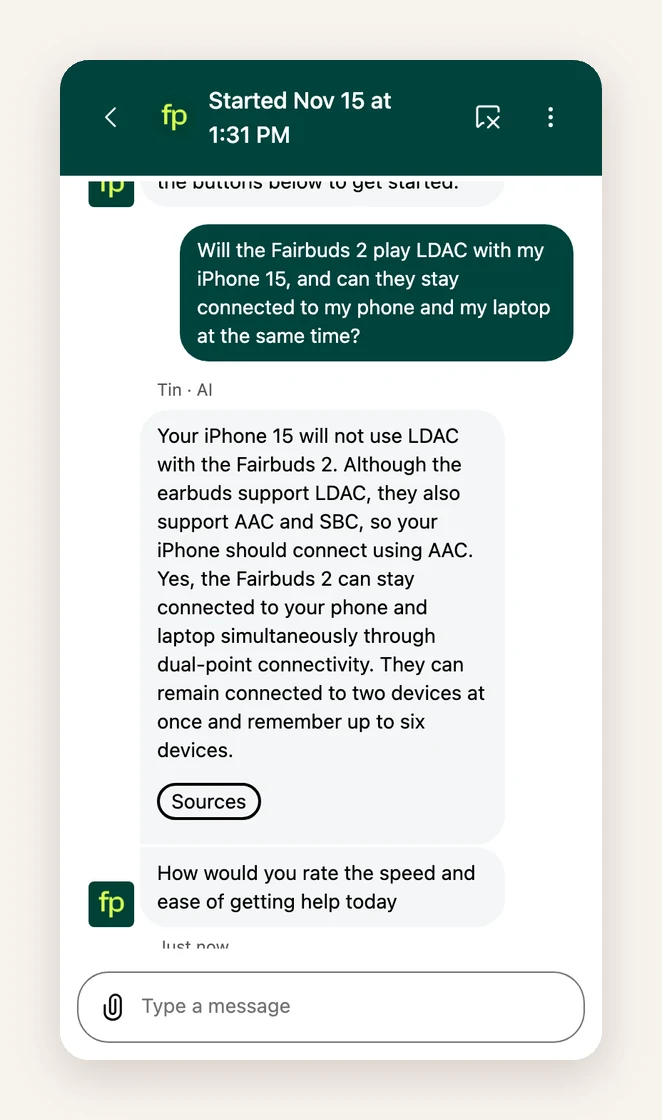
We tested it at Fairphone, which sells modular phones and earbuds, and it handled the trickiest spec question in our test. “Your iPhone 15 will not use LDAC with the Fairbuds 2,” it said, explaining that the phone falls back to AAC and that the earbuds connect to two devices at once and remember six. Both facts match Fairphone’s help centre, and the Sources button linked the two right articles. The warranty answer matched Fairphone’s warranty page too.
Two setup choices held it back. Our troubleshooting question went into a scripted “software or hardware” button menu and never reached the AI. When we asked whether we were talking to a human, the first reply opened with “No, you’re speaking with an AI assistant” before a second message corrected it.
Costs build across seats, AI add-ons and resolutions beyond the allowance. Scripted menus can block questions the AI could answer, so audit where each intent routes. Smaller stores will pay for scale they do not use.
Zendesk pricing lists seats from $19 per agent per month for Support Team, $55 for Suite Team and $115 for Suite Professional on annual billing. Automated resolutions draw from a monthly allowance, and Zendesk bills extra resolutions on top. To see the total for a real team, budget Zendesk AI agents for 10 seats.
Best for: Enterprise brands with heavy setup and troubleshooting volume, including by phone
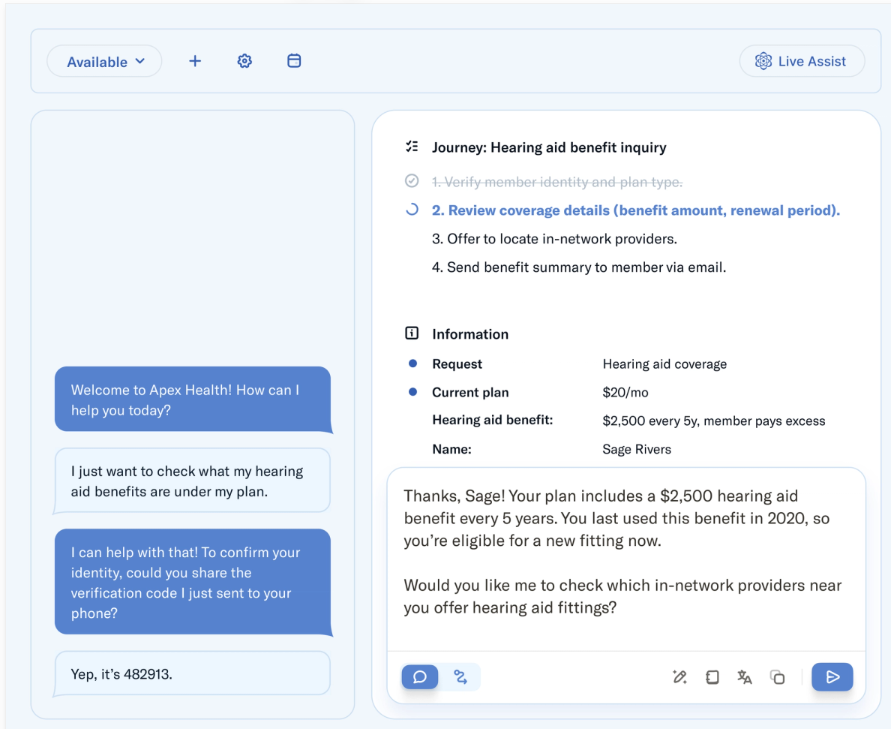
Sierra builds AI agents for large consumer brands, and it has the clearest electronics deployment on this list. At Sonos, the agent covers the first 30 days of ownership: it guides setup, collects diagnostics, fixes problems after a router change, handles orders and returns, and escalates to a person with a summary of the issue when it cannot finish.
We confirmed that the Sonos support chat runs Sierra, but Sonos asks for a first name, last name, email and phone number before the conversation starts, and we do not hand personal details to support agents for a review. That form is Sonos’s choice, and it means the agent with the strongest troubleshooting brief here is also the hardest to try. On voice, Sierra’s agent at ecoATM, the electronics recycling kiosk company, handled more than 30% of inbound calls in its first month.
There is no public pricing and no self-serve trial. Implementation is a project rather than a weekend setup. If you need published prices, compare Sierra alternatives.
Sierra prices by outcome under a custom contract, and it does not publish rates.
Best for: Electronics retailers that need multilingual support across chat, email, and phone.
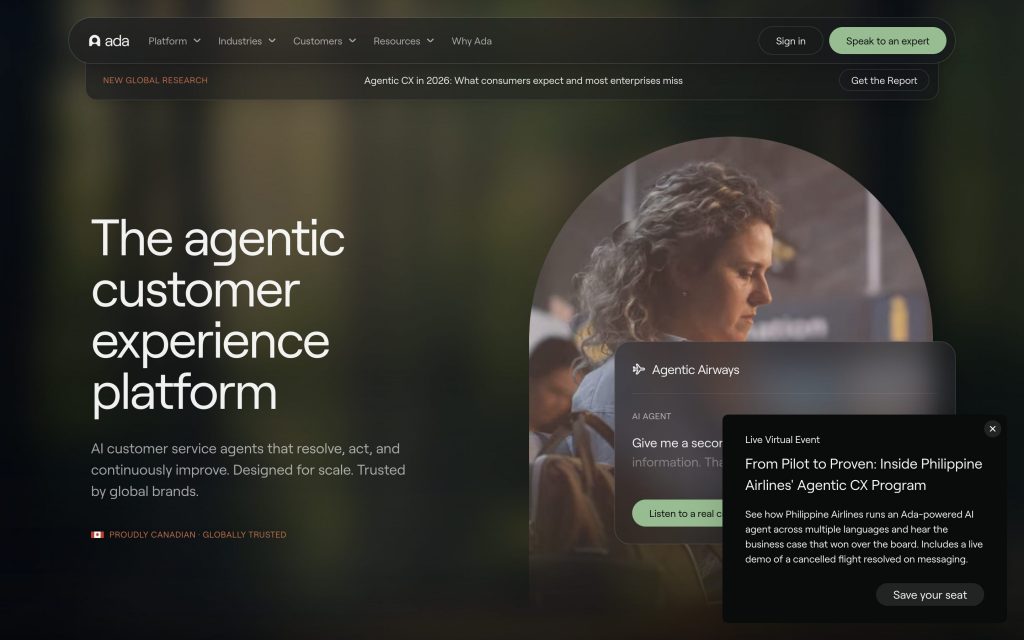
Ada can answer from approved support content, retrieve information from connected systems, and route cases to a person. A retailer could configure it to collect a device model and order number, look up the purchase, and send a warranty request to the support team for review. This profile is based on Ada’s public documentation.
Voice supports a subset of Ada’s languages. Check your priority languages by channel, especially if customers rely on phone support. Order lookups and warranty actions depend on the systems you connect and the workflows you configure.
Ada offers custom conversation-based pricing and a resolution-based option for some enterprise customers. Ask what counts as a billable conversation and whether voice usage changes the quote.
Best for: Ecommerce brands that want to pay only for tickets the AI fully resolves
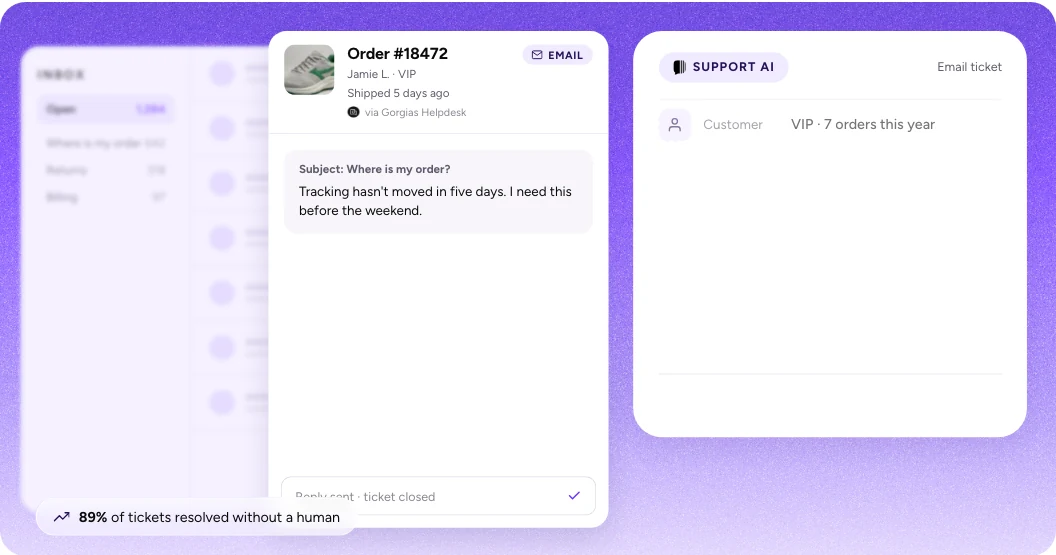
Yuma AI is customer service automation built for ecommerce. It usually sits on top of your existing helpdesk, such as Gorgias, Zendesk, Gladly, Kustomer, Re:amaze, Front or Salesforce Service Cloud, and resolves tickets end to end by taking actions. A bad week for the AI is a cheap week for you, because conversations and escalations are not charged.
Its electronics example is Petlibro, which makes connected pet feeders and water fountains. We confirmed Yuma’s own chat widget on Petlibro’s site, but it asks for a name and email first, so we did not test it. Petlibro’s case study says Yuma fully automates 79% of its tickets, including hardware troubleshooting, with about 20% lower support costs.
Intercom, Freshdesk and HubSpot are not on the published helpdesk list. Its own vendor still bills you for the helpdesk underneath. Setup goes through Yuma’s account team rather than self-serve.
Yuma pricing charges only for fully resolved tickets. Yuma’s 2026 platform comparison states plans start at $14,400 a year for 12,000 resolutions, an effective $1.20 per resolution, falling at higher volumes.
Best for: Shopify hardware brands where warranty claims and visual diagnosis drive volume
A warranty claim needs a serial number, proof of purchase and a look at the fault, so AI agents usually hand it to a person. Siena AI lists warranty claims as a core action alongside replacements, refunds, shipping labels and returns, and it can review a video the customer sends to see what is wrong. That helps when a speaker crackles or a screen flickers and a text description gets you nowhere.
Siena is an AI layer on top of Gorgias, Zendesk, Kustomer, Intercom or Gladly, and it suits a brand that sells its own hardware more than a multi-brand reseller. A caution on proof: Siena’s most-cited hardware case study is Loftie, the smart alarm clock maker, but Loftie’s support page now runs a custom assistant called Louisa with no sign of Siena. Louisa answered our questions accurately. Ask Siena for a current electronics reference before you sign.
The platform fee applies before any automation. Shopify is the only ecommerce platform it lists, and it has no voice channel. Your helpdesk vendor still bills separately for the helpdesk underneath.
Siena pricing is a $750 monthly platform fee plus an automation pack at $0.90 per automated ticket.
Best for: Retailers whose store runs on Salesforce Commerce Cloud and whose team works in Service Cloud
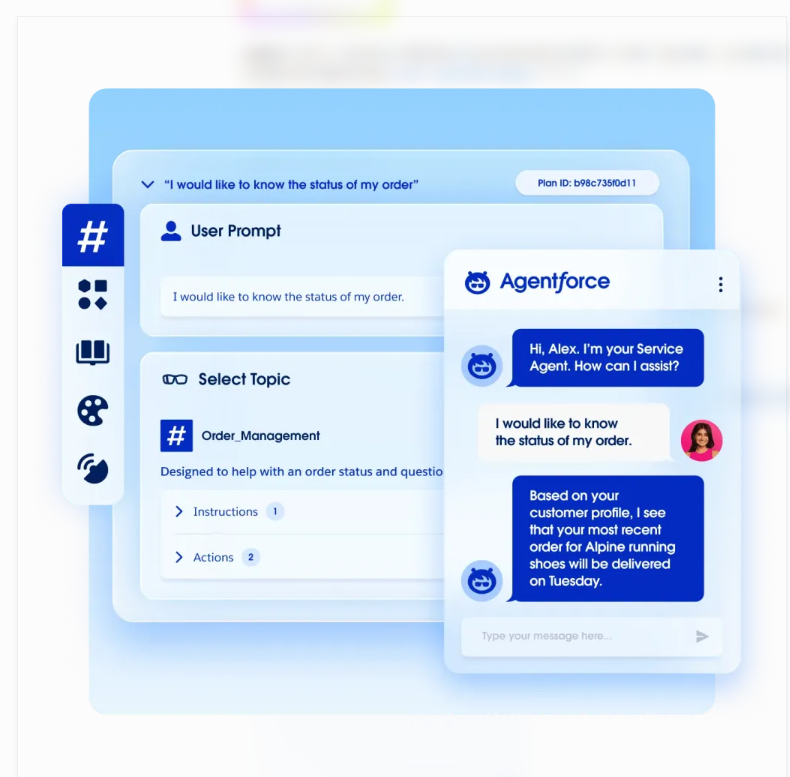
Agentforce is Salesforce’s AI agent platform. Because it is native to Service Cloud and Commerce Cloud, the agent sees orders, cases and customer history without a connector. In June 2026, Salesforce made its Agentforce Commerce agents generally available, so one agent can cover shopping and service, and with the Fin acquisition pending, Salesforce now owns two of the agents on this list.
The closest electronics-adjacent deployment is GE Appliances, which says it resolves more than 25% of consumer requests autonomously. Its agent troubleshoots by appliance type, pulls order status from Oracle through MuleSoft and escalates to a live rep, and it went live in 7 weeks.
When we visited, GE’s website chat was a Salesforce chat offered weekdays from 8 a.m. to 8 p.m. ET “to connect with an agent,” and hidden outside those hours. GE keeps rescheduling and warranty work with human reps, a sensible pattern for high-value products.
Most retailers need an implementation partner. There is no native connector for Shopify, Adobe Commerce or BigCommerce. The learning curve is steep for small teams.
Agentforce pricing is $2 per conversation, or Flex Credits at $500 per 100,000 credits, where a service action uses 20 credits. Service Cloud starts at $25 per user per month.
Best for: Small electronics stores that want an AI agent live this week at little cost
Tidio combines live chat with Lyro, an AI agent that learns from your support content, answers common questions and checks Shopify order status.
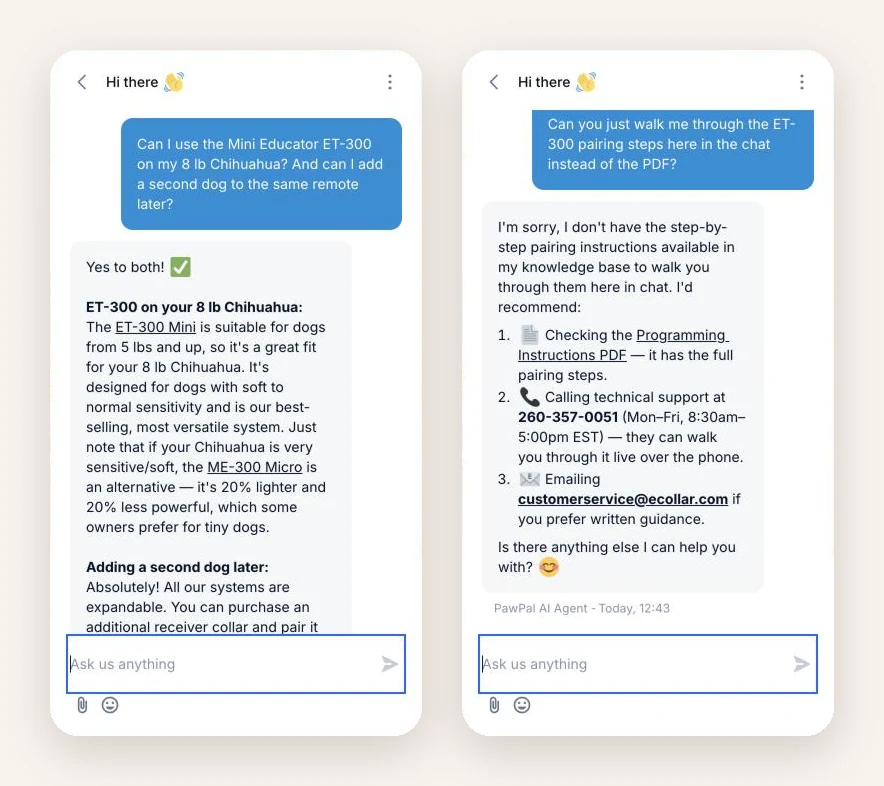
We tested it at Educator Collars, a K9 Electronics store that sells remote training collars, where the agent is branded PawPal, and its pre-sales answer read like a good store assistant.
Asked whether the ET-300 would suit an 8 lb Chihuahua and take a second dog later, it said “Yes to both” and noted the 5 lb minimum. It also suggested a lighter model for very sensitive dogs and linked the extra receivers and collar straps a buyer would need. The 2-year warranty answer was right too.
Troubleshooting is where it stopped: asked how to re-pair a collar, it linked a PDF and a phone number, and when we asked for the steps in chat, it said it did not have them. Pasting those steps into the knowledge base as text would turn that deflection into a resolution.
Lyro could not read the steps inside a linked PDF in our test, so troubleshooting content needs to be loaded as text. Actions beyond order status need custom work, and there is no voice channel. Costs rise with conversation volume. If you outgrow it, compare Tidio alternatives with deeper store actions.
Tidio pricing includes a free plan, paid plans from $24.17 a month billed annually, and Lyro from $32.50 a month for 50 conversations.
Two of the most useful agents in our test were not vendor products at all. WHOOP and Loftie both run assistants they built in-house, and both had appeared in vendor case studies before.
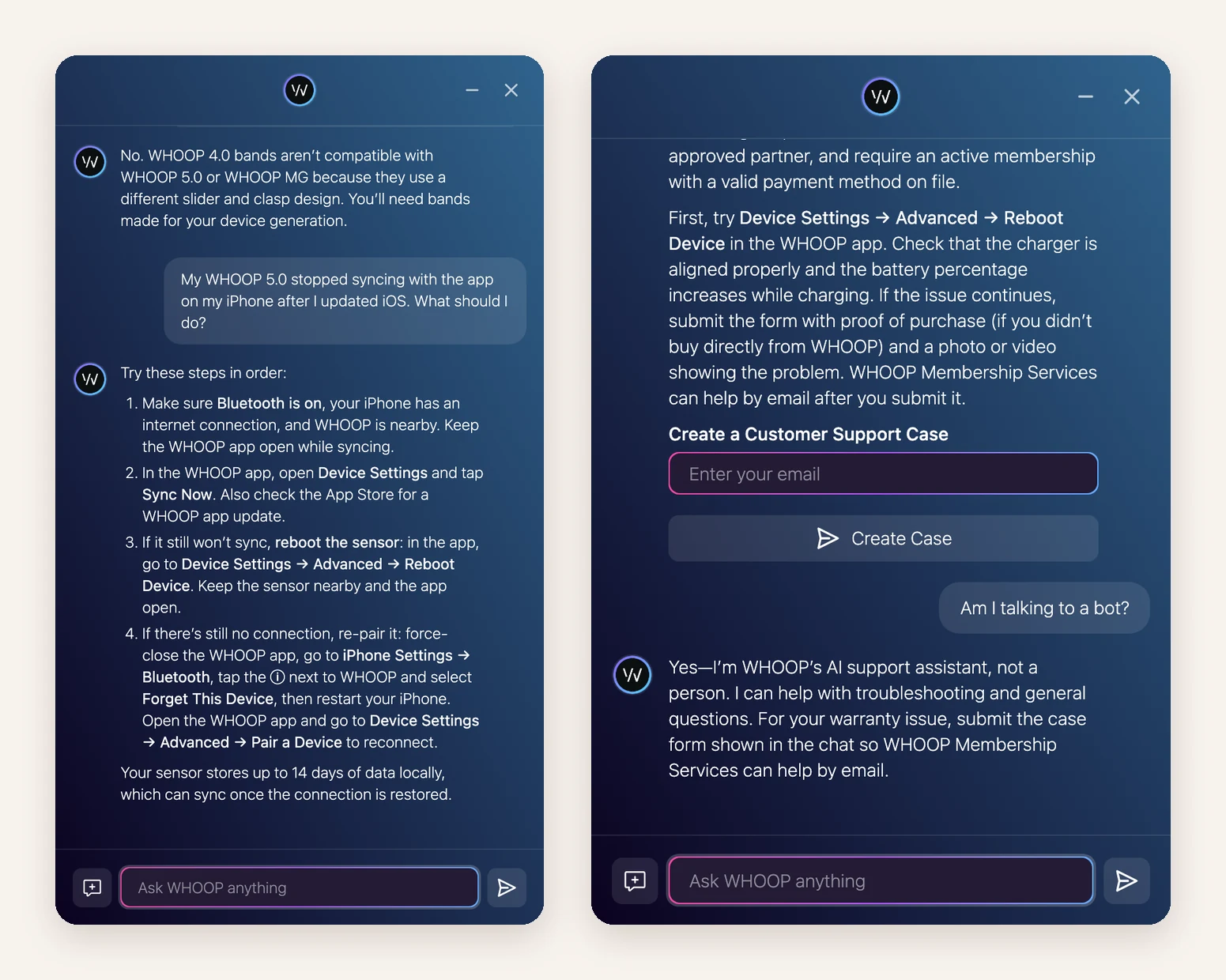
WHOOP’s assistant gave the most complete troubleshooting answer we saw. Asked why a WHOOP 5.0 stopped syncing after an iOS update, it gave four steps that escalate in a sensible order, from Sync Now to rebooting the sensor to re-pairing. It named the exact menu paths and added that the sensor stores 14 days of data. That last line answers what the customer is really worried about.
Loftie’s assistant led each answer with the verdict, such as “The Clock connects only to 2.4 GHz Wi-Fi,” and then offered workarounds.
Building in-house means owning retrieval, guardrails, evaluation, handoff and compliance indefinitely, which suits a brand with WHOOP’s engineering team. For everyone else, these two set the standard to hold a vendor to: the verdict first, real troubleshooting steps and plain AI disclosure. Neither cited a source, which is one area where Zendesk’s agent did better.
Our test made one thing clear: the first 10 real questions tell you more than any demo. Before you sign, load your own manuals, policies and a test order into each trial, then pull one real ticket from your queue for each row below and score the answer.
| Ticket type | Pull this from your queue | A pass looks like |
|---|---|---|
| Compatibility | A question about whether a product works with another device | Answers from your spec sheet and admits when the manual does not say |
| Specs | A question about wattage, codec, port or size | The exact figure from product data with no rounding |
| Setup | A pairing, Wi-Fi or firmware problem | Steps in the chat, from simple to drastic, not only a PDF link |
| Order status | A where-is-my-order ticket | Verifies identity, pulls live tracking and gives a date |
| Address change | A request to change delivery details | Changes it before shipping and explains clearly after |
| Opened-box return | A return of an opened product | Applies your exact window and restocking rules, then starts the return |
| Warranty claim | A fault reported months after purchase | Asks for serial number and photo, checks status and starts a claim or escalates |
| Legal rights | An EU or UK customer asking about a fault after a year | States the legal guarantee correctly or hands off |
| Handoff | A customer asking for a person | Transfers with the conversation and order attached |
| Disclosure | A customer asking whether they are chatting with AI | Says it is an AI clearly the first time |
Then open your own store’s chat in a private window, the way a customer would, and check whether a form appears before the first message and whether the agent is on outside business hours. After launch, score the same tickets with a customer support QA framework and benchmark resolution, quality and cost against your old numbers.
Start with your store platform and the hardest job in your queue, then use this table to narrow the trial list to two or three tools.
| Your situation | Start your trials with |
|---|---|
| Small store on Shopify or WooCommerce | YourGPT for actions, WhatsApp and voice, or Tidio for the lowest entry cost |
| Growing Shopify brand already on Gorgias | Gorgias AI agent, or Yuma and Siena as layers on top |
| Hardware brand with heavy setup and warranty volume | YourGPT, Siena and Yuma, tested on the 10 tickets above |
| Large retailer on Zendesk or Adobe Commerce | Zendesk AI agents, Fin on Zendesk or YourGPT with Zendesk |
| Enterprise brand with heavy phone volume | YourGPT or Sierra for voice and chat on one agent, or Agentforce on Salesforce |
| Multi-country retailer with strict return rules | Zowie |
If you sell mainly on Shopify, compare Shopify AI chatbots for options built around that platform. The questions below cover what the comparison leaves open.
Yes, when it fixes setup problems before the customer gives up, because many electronics returns are working products the buyer could not set up. Load troubleshooting steps as text rather than only as PDFs, and offer guided setup in the first days after delivery. Audien Hearing’s Gorgias case study reports a 5% lower return rate.
Only when the conversation needs it. A form gives you a case record and a follow-up address, but it adds friction for shoppers with quick pre-sales questions. A practical middle path is to let the agent answer anonymously and ask for an email only when it needs to look up an order or open a warranty claim.
A store can launch a basic agent for product questions and order status in a day or two. Connecting order data, returns, warranty systems and handoff rules usually takes two to six weeks. GE Appliances reports going live on Agentforce in 7 weeks, and MediaMarkt Poland launched Zowie in about a month.
In the EU, yes. Article 50 of the EU AI Act, in force since August 2, 2026, requires AI that interacts with people to disclose it at the latest at the first interaction. Every agent in our test that answered disclosed being AI, and most labeled themselves before the first message.
Expect the first savings on repeated tickets such as order status and return policy, and treat anything beyond that as unproven until you measure it. A Gartner survey found that just 4% of customer service leaders have achieved the return they expected from AI. Record your cost per ticket before launch, automate the repeated questions first, and add troubleshooting once your guides are loaded and tested.
For electronics retailers, what happens after the chat closes tells you whether the help worked. If shoppers follow the setup instructions and contact you again about the same fault, review where they got stuck. Track repeat contacts and returns by product model so recurring issues are easier to spot.
Use those patterns to fix problems at the source. Repeated questions about which adapter to buy point to a gap on the product page. Customers getting stuck at the same setup screen point to a gap in the quick-start guide. If the same fault appears across several orders, flag it for the product team. Use what you learn to decide which support tickets to automate with AI.
Train an agent on your manuals and policies, then run your 10 real tickets through it.
Model the cost of Zendesk AI agents with your ticket volume, then test order lookups, handoffs, and billing against your own support queue.
TL;DR Agentforce is Salesforce’s AI agent platform, built into its Sales, Service, and Field Service clouds, letting agents read and write live CRM records and execute multi-step tasks instead of only replying with text. Pricing splits into three parallel models built for different use cases, and picking the wrong one for a given deployment can […]

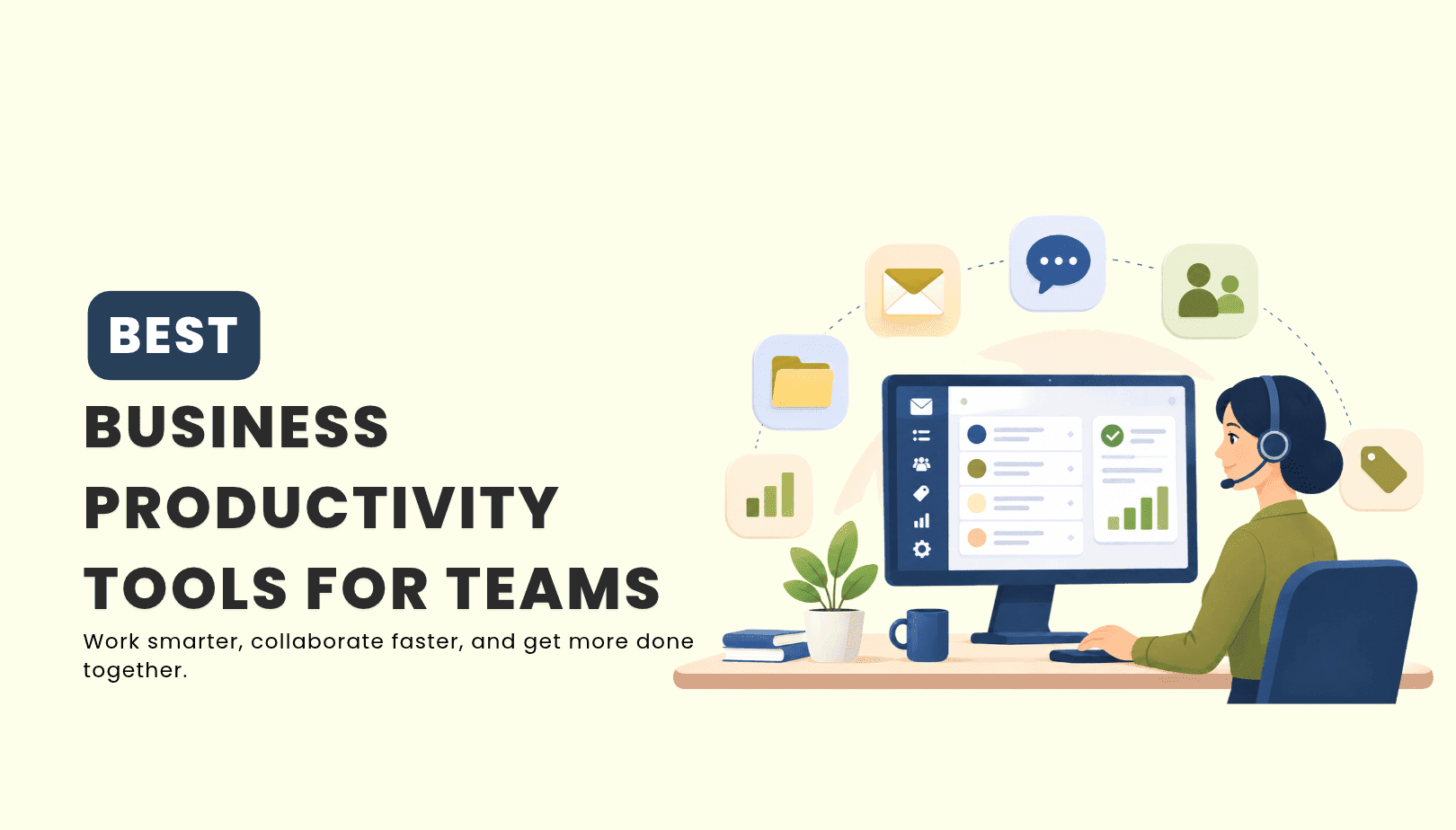
TL;DR The best business productivity tools help teams reduce repetitive work, improve collaboration, and save time. This guide compares 10 tools for 2026, including YourGPT, Proton Pass, Notion, Semrush, CoAnimator, Loom, Canva, Cal.com, Jira, and Airtable. Each tool serves a different purpose, from AI automation and project management to content creation and scheduling. Rather than […]
TL;DR Salesforce offers powerful CRM capabilities, but implementation and ongoing management can increase costs for smaller teams. Pipedrive and Nutshell simplify pipeline management, while HubSpot and Zoho CRM offer broader automation. Freshsales, monday CRM and Copper suit specific workflows. For customer support and lead qualification, YourGPT Chatbot works alongside your CRM, starting at $39/month billed […]

TL;DR Yellow.ai has spent a decade building an enterprise conversational AI platform out of Bangalore, and in 2026 it is asking Wall Street to value it at half a billion dollars while cutting a third of its staff and rebuilding its core product around a new “agentic interface” called Nexus. Both moves showed up in […]

Prepare a replacement support agent, test real requests and human handoff, then switch the storefront while keeping ownership of unfinished conversations.