Built for Dental Scheduling Logic
Applies appointment types, provider availability, treatment durations, and chair constraints so bookings reflect real clinical capacity.

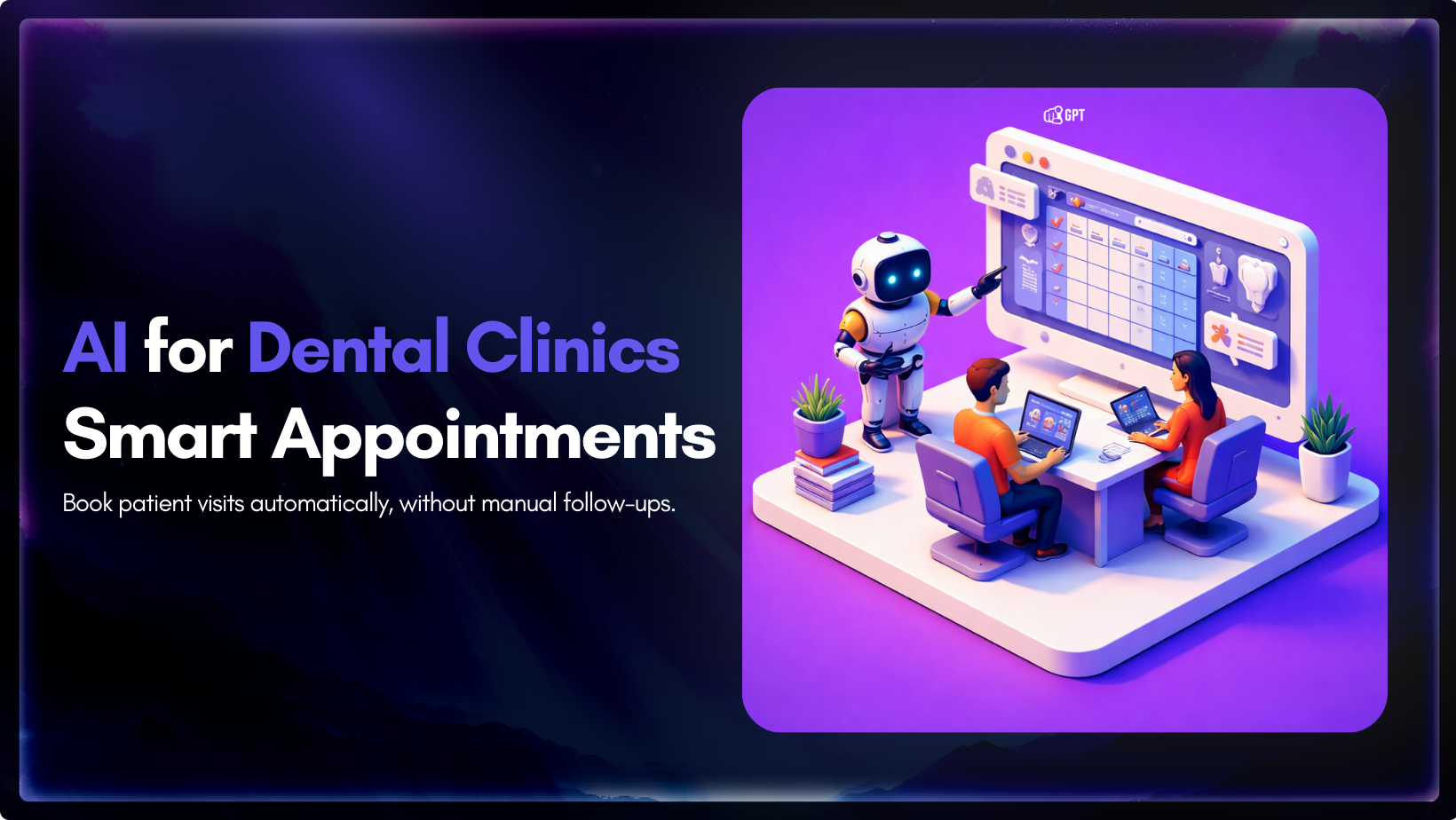
Every appointment booked is a business moment for a dental clinic. It is the point where patient intent converts into confirmed revenue. When scheduling feels accessible and straightforward, patients commit to care with confidence.
Yet many dental practices still depend on phone-based scheduling during limited office hours. This restricts when and how patients can book, particularly during peak clinic times or after business hours when demand is highest. Front desk teams juggle incoming calls while managing insurance verification, walk-ins, and patient coordination. This workload creates bottlenecks and missed opportunities.
Patient expectations have evolved. Patients expect instant access to healthcare services, the ability to book on their own schedule, and minimal friction in the process. For many, the booking experience shapes their first impression of a clinic long before they sit in the treatment chair.
AI-powered appointment booking addresses this gap by automating scheduling, confirmations, and rescheduling across chat, messaging, and voice channels. Clinics configure availability, business rules, and scheduling constraints once. Patients book, modify, or cancel appointments anytime without staff involvement.
This blog examines how AI appointment booking works in dental practices, explores the drivers behind its growing adoption, and demonstrates how it expands patient access while reducing operational burden on clinic teams.
AI appointment booking is a scheduling system that manages patient appointments without requiring continuous front desk involvement. Patients can book, reschedule, or confirm visits on their own, while clinics retain full control over provider availability, treatment types, appointment length, and scheduling rules.
This approach differs from traditional online scheduling by handling real booking situations. Patients rarely know the exact appointment name or duration. They describe symptoms, reference a previous visit, or explain timing constraints. The system works through this information step by step, clarifies what is needed, and schedules the visit accurately, similar to how an experienced front desk team would.
From the patient perspective, booking feels immediate and straightforward. From the clinic perspective, the schedule remains accurate and workable without constant manual intervention.
AI appointment booking is not a single feature. It is a combination of systems designed to handle the specific scheduling challenges dental clinics face daily.
Patients do not speak in clinical terms. They say things such as “my filling broke,” “my gums hurt,” or “I need to come back for what the doctor mentioned last time.”
The booking system listens to these requests, asks targeted follow-up questions, and maps the response to the correct appointment type and duration. This reduces incorrect bookings and avoids situations where patients arrive scheduled for the wrong service or with insufficient time blocked.
Some patients are comfortable calling. Others prefer text or online chat. Many want to book after work hours when the clinic is closed.
AI booking systems support voice calls, SMS, website chat, and messaging channels so patients can book in the way that suits them. This removes dependency on a single channel and reduces missed booking opportunities.
The system connects directly to the clinic’s scheduling or practice management software. It checks provider hours, appointment length requirements, and existing bookings before offering any time slots.
Because availability is checked in real time, appointments are placed where they fit. Staff do not need to fix scheduling errors later, and providers are not overbooked.
Not every appointment belongs with the same provider or needs the same amount of time. New patient exams, emergency visits, follow-ups, and procedures all require different handling.
AI booking systems account for these differences. They route appointments to the appropriate provider, block the correct amount of time, and recognize urgent requests that should be scheduled sooner.
Over time, the system also adjusts based on patient behavior, such as frequent rescheduling or preferred appointment times.
Standard online booking tools are built around forms and fixed options. They work only when patients already know what to select. Dental scheduling rarely works that way.
Instead of forcing patients to choose from dropdown lists, AI booking guides them through a short conversation. The system asks only what is necessary to place the appointment correctly.
This reduces confusion, shortens booking time, and lowers the chance that a patient abandons the process.
Before finalizing a booking, the system confirms details such as treatment type, duration, and provider requirements. This step prevents common problems like underbooked exams or incorrect provider assignments.
Clinics spend less time correcting schedules, and patients arrive better prepared.
Dental schedules include variations in appointment length, provider specialization, shared equipment, and treatment sequencing.
AI booking systems are designed to work within these constraints. Basic booking tools typically ignore them, which leads to manual fixes and workflow disruptions.
When a requested time is unavailable, the system suggests realistic alternatives based on availability. The booking process continues instead of stopping.
This simple change significantly increases the number of completed bookings.
AI appointment booking changes scheduling from a task that interrupts staff throughout the day into a system that runs consistently in the background. Patients get quicker access to appointments. Clinics maintain control over their schedules. Front desk teams spend less time managing calendars and more time supporting patients in person.
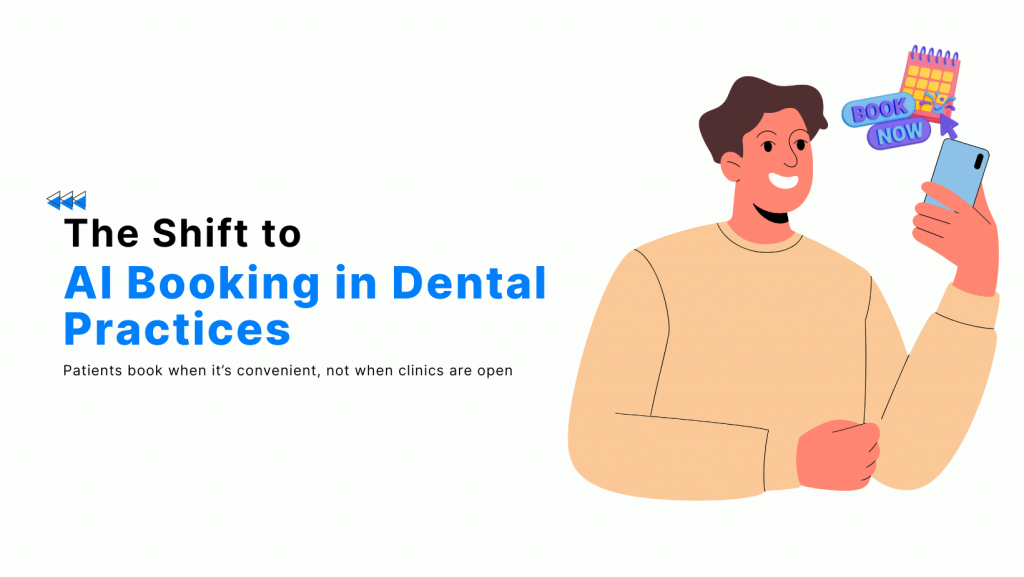
Appointment booking is no longer a passive admin function. It is one of the earliest points where revenue is either captured or lost. In most dental practices, the outcome of scheduling decisions shows up weeks later as empty chair time, compressed schedules, or front desk overload.
Patients now search, compare, and attempt to book in a single sitting. If booking is not possible at that moment, they do not pause the process. They continue searching. By the time a clinic opens or returns a call, the decision has often already been made elsewhere.
This shift matters because a large portion of booking attempts happen outside office hours. Evening and weekend searches are common, especially for working adults and parents. Phone-based scheduling cannot respond during these windows, which means demand is silently lost. These are not missed calls that convert later. They are opportunities that never reappear.
Patients often evaluate whether a clinic feels easy to work with before reviewing credentials, services, or pricing. The ability to book instantly signals responsiveness and organization. Clinics without this option may never reach the evaluation stage, regardless of care quality.
Front desk staff are expected to manage scheduling while handling insurance verification, payments, walk-ins, and patient questions. Calls arrive in bursts, not evenly. Missed calls are unavoidable. Voicemail follow-ups rarely convert, and few clinics have a reliable way to measure how much demand disappears at this stage.
AI appointment booking changes how this demand is handled. It captures booking intent the moment it appears, applies clinic rules consistently, and places appointments without requiring staff to be available. The front desk regains time for in-clinic coordination, while the schedule stays fuller and more predictable.
For dental practices, this is not about adopting new technology for its own sake. It is about preventing silent revenue loss, reducing operational strain, and aligning scheduling with how patients actually behave today.
Most dental practices still operate on scheduling systems designed decades ago. At the time, patients called during business hours, waited on hold, and accepted whatever appointment was available. That behavior has changed. The systems have not.
Today, scheduling is one of the biggest friction points in dental operations. Not because clinics are failing, but because the workflow no longer aligns with how patients search for care, make decisions, and expect to book.
When a patient books by phone, the process follows the same pattern. They call. A front desk staff member answers, assuming they are not already on another call. The patient explains what they need. The calendar is checked. A few time options are offered. Details are manually entered into the practice management system.
Each scheduling call takes 3-5 minutes. In a clinic handling forty such calls a day, that adds up to 2-3 hours spent purely on booking. That is a significant portion of a full shift devoted to repetitive, rules-based work.
When call volume increases, capacity does not. Staff numbers are fixed. Calls roll to voicemail. Some patients try again. Most do not.
At that point, appointment access is no longer limited by chair availability. It is limited by how many people are available to answer phones.
Manual scheduling only works when the clinic is open. Many patients search for care during lunch breaks, evenings, or weekends, when front desks are unavailable. When booking is not possible at the moment intent exists, patients do not wait. They continue searching and book with the first clinic that allows immediate confirmation.
Errors are also unavoidable in a manual process. Wrong appointment types get selected, time blocks are too short or too long, and scheduling conflicts appear later in the day. These issues are not caused by poor training. They are the natural result of manual data entry performed under time pressure and frequent interruption.
Front desk staff carry too much responsibility at once. Scheduling happens alongside insurance verification, billing questions, walk-ins, prescription requests, and in-clinic coordination. Constant task switching reduces focus, increases fatigue, and makes consistency difficult to maintain.
From the patient’s perspective, the experience is uneven. Booking outcomes depend entirely on who answers the phone, how busy they are, and how familiar they are with the schedule and providers. There is no built-in standardization, which means the same request can produce different results on different days.
Some practices added online booking tools to improve access. Patients can select a time without calling, which helps in simple scenarios.
In practice, most of these tools function as static calendars. Patients are asked to choose from appointment categories such as new patient exam, cleaning, or restorative work. A patient experiencing tooth pain often does not know which option applies. They guess incorrectly or abandon the process and call the clinic instead.
These systems don’t ask follow-up questions or assess urgency. Instead of guiding users through decisions, they accept selections without any surrounding context.
As a result, most clinics with online booking still handle the majority of appointments by phone. Access improves slightly, but the underlying workflow remains unchanged.
Scheduling still depends on staff availability. Errors still surface later in the day. After-hours demand remains uncaptured. Nothing improves automatically.
Patients now expect immediate access and confirmation, consistent with nearly every other service they use. Dental scheduling has not kept pace.
This gap is where AI appointment booking fits. Not by replacing people, but by removing repetitive, rules-driven work that does not require human judgment and allowing staff to focus where they add real value.
YourGPT acts as an appointment access layer that applies clinic rules, checks availability in real time, and reduces front desk load while working with your existing systems.
Applies appointment types, provider availability, treatment durations, and chair constraints so bookings reflect real clinical capacity.
Patients can schedule via chat on your website or messaging channels, including outside office hours when many requests are otherwise lost.
Patients explain what they need in plain language. YourGPT interprets intent and confirms the right appointment without rigid forms.
Checks live scheduling data before confirming to prevent double bookings, incorrect time blocks, and conflicts that disrupt clinic flow.
Surfaces earlier openings when cancellations create gaps, helping fill chair time and maintain a consistent daily schedule.
Automates booking, confirmations, and rescheduling. Teams stay involved where judgment is needed, not for repetitive scheduling tasks.
Centralizes scheduling logic across providers, extended hours, and multiple locations, reducing admin overhead as you grow.
Integrates with current scheduling and practice management tools so clinics keep established workflows while closing operational gaps.
Let’s examine a detailed comparison across multiple dimensions:
| Aspect | Traditional Scheduling | AI Appointment Booking |
|---|---|---|
| Appointment access | Limited to office hours and staff availability | 24/7, including nights and weekends |
| Response speed | Depends on workload; callbacks can be delayed | Instant replies at the time of patient intent |
| Peak demand handling | One conversation per staff member; queues form quickly | Handles multiple booking requests at once without delays |
| After-hours bookings | Voicemail or missed opportunities | Requests can convert into confirmed appointments |
| Consistency | Varies by staff member and daily workload | Consistent experience across channels and times |
| Accuracy | Manual entry increases the risk of incorrect appointment types, times, or durations | Uses scheduling rules and real-time availability checks |
| Chair utilization | Cancellations often leave gaps that remain unfilled | Open slots can be surfaced for rebooking |
| Staff workload | Staff spend significant time on repetitive scheduling tasks | Routine scheduling is reduced so staff can focus on patients |
| Scalability | Growth usually requires additional staff | Supports growth with less added administrative overhead |
| Cost behavior | Costs rise with volume, training, and staff turnover | Operating costs remain more predictable as volume grows |
| Patient perception | Can feel difficult to reach during busy or closed hours | Feels responsive and easier to schedule |
| Operational limits | Bound by staff time and phone capacity | Not limited by concurrent conversations |
AI booking only creates value when it operates inside the same system your team already trusts. If appointments need to be copied, corrected, or double-checked, the AI is not reducing work. It is shifting it.
Real integration means the AI does not sit alongside your scheduling system. It works within it.
In a properly integrated setup, the AI follows the same rules, sees the same availability, and updates the same records as your front desk. Anything less introduces friction, errors, and eventual resistance from staff.
Before confirming any appointment, the AI must reference the live schedule, not a delayed snapshot.
That includes provider availability, operatory usage, blocked time, and existing bookings. If the AI confirms appointments based on outdated data, staff are forced to resolve conflicts manually. Once that happens more than a few times, the system stops being trusted.
Accurate, real-time visibility is non-negotiable.
A confirmed appointment should appear instantly in the practice management system exactly as if a staff member entered it.
That means the correct appointment type, duration, provider, location, and patient record are populated without follow-up edits. Partial or incorrect entries create cleanup work, which defeats the purpose of automation.
When staff open the schedule, they should not be able to tell whether an appointment was booked by a human or by AI.
Dental scheduling is not generic. Each clinic operates with rules that protect workflow and revenue.
A real integration enforces those rules automatically. New patients receive the correct exam length. Emergencies are triaged appropriately. Providers are scheduled according to scope and preference. Buffer time is respected for complex procedures.
If the AI needs staff approval for routine decisions, it is underpowered. If it ignores clinic logic, it becomes dangerous.
Integration must work both ways.
When staff move, cancel, or reschedule an appointment, the AI must see that change instantly. Otherwise, reminders go out with incorrect details, confirmations become inaccurate, and patients lose confidence.
Two-way sync ensures that every system stays aligned throughout the day, even during high-volume or high-change periods.
Most scheduling breakdowns stem from system issues rather than patient behavior. They happen because systems fall out of sync.
True integration removes that risk. It creates a single source of truth, shared by staff and AI alike. Appointments stay accurate, rules are applied consistently, and changes propagate instantly without extra effort.
When integration is done correctly, AI booking does not feel like a tool staff have to manage. It feels like a natural extension of the scheduling process they already use. That is when automation delivers real operational value.
Setting up AI appointment booking with YourGPT typically takes a day if you follow the straightforward process. For clinics requiring custom integrations with practice management systems like Dentrix or Open Dental, setup may extend to 2-3 days depending on your technical experience and IT support availability.
The platform uses a no-code approach, which means most of the configuration happens through a visual interface without writing code. This section walks through the actual implementation process.
Before creating your AI agent, prepare the information it needs to handle bookings accurately. Document your appointment types with standard durations new patient exams, routine cleanings, emergency visits, and specialized procedures. List which providers handle which services, and note your office hours and scheduling policies.
If your clinic has specific protocols for emergencies or new patients, write those down as well. Having this information ready before you begin makes the setup process significantly faster.
Visit the YourGPT website and create your account. The signup process asks for basic information like your clinic name, email, and preferred data storage region. Set your time zone correctly since this affects how appointment times display to patients.
Once registered, you access the YourGPT dashboard where you can create your appointment booking agent.
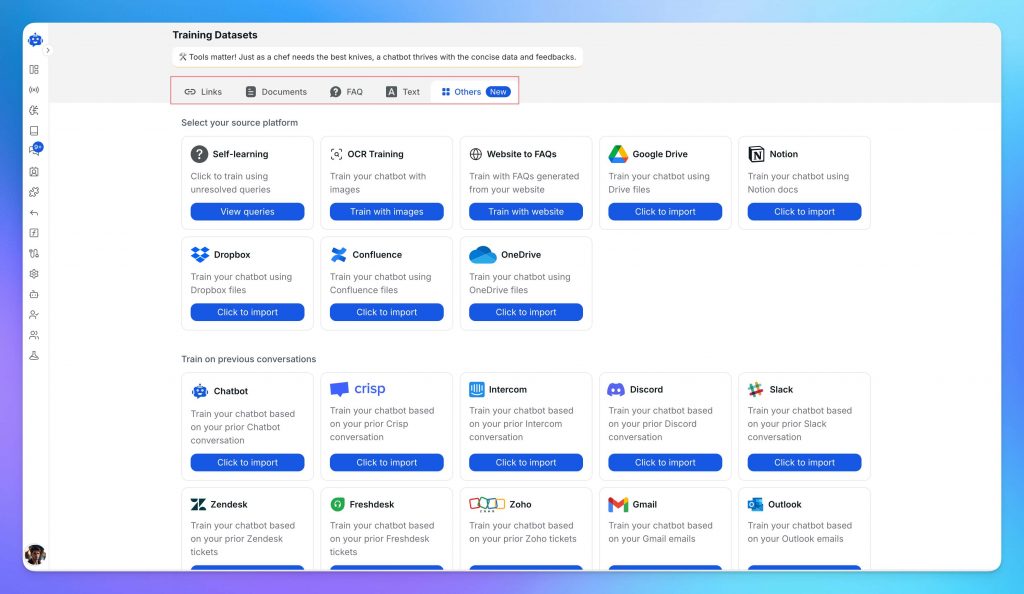
YourGPT allows you to train your chatbot or AI agent using your custom data without any coding. You can use multiple data sources to teach the system about your clinic.
Start by uploading documents that explain your services, appointment types, and policies. This could be existing documents from your website, a services brochure, or a simple text file you create specifically for training. Include information about what each appointment type involves, how long it takes, and which provider performs it.
Add your frequently asked questions and answers. Common topics include insurance acceptance, what patients should bring to appointments, cancellation policies, and office hours. The more comprehensive your training data, the better your AI agent handles patient questions.
You can upload this information through multiple methods: drag and drop PDF or Word documents, paste text directly into the interface, provide your website URL to import content automatically, or add FAQs as structured question-answer pairs. YourGPT processes all this information and uses it to power conversations with patients.

Personalize how your AI agent looks and communicates to match your clinic’s brand. Choose colors for the chat widget that align with your website design. Upload your clinic logo to appear in the chat interface. Write a welcoming message that patients see when they first interact with the agent.
The customization happens through YourGPT’s no-code builder, where you configure settings through simple forms and dropdown menus rather than editing code.

This step determines how your AI agent communicates with patients. Set the purpose clearly your agent is a scheduling assistant that helps patients book, reschedule, or cancel appointments.
Define the tone and style you want. Most dental clinics prefer friendly and professional communication. The agent should be patient and clear, showing empathy when someone mentions pain or anxiety. Configure whether responses should be concise or more detailed, formal or conversational.
Establish personality traits like helpfulness and organization. The agent should always try to find appointment options that work for the patient, confirm details carefully before finalizing bookings, and provide clear next steps.
Set response structure preferences. Specify whether the agent should use short paragraphs, how it should present multiple appointment options, and what confirmation details to provide. You can configure the agent to format responses in ways that feel natural for your patients.
Add restrictions on what the agent should not do. It should not provide medical advice, diagnose conditions, or share private patient information. Configure it to escalate complex situations to your staff things like insurance verification, special accommodation requests, or medical emergencies that need immediate attention.

Connect your AI agent to your actual appointment scheduling system. YourGPT supports integration with various platforms through simple connections.
For basic setups, you can integrate with Google Calendar, Calendly, or similar booking tools. These integrations typically require authenticating your account and granting the necessary permissions. The AI agent can then check availability in real-time and create appointments directly in your calendar.
For clinics using dental practice management software like Dentrix, Open Dental, or Eaglesoft, custom integration may be required. This is where the timeline extends to 2-3 days if you do not have technical experience. You may need to work with your IT team or YourGPT support to establish the connection properly. The integration ensures that appointments booked through the AI appear immediately in your practice management system with all necessary details.
The integration connects your AI agent to your existing tools and workflows. Once configured, the system checks real-time availability before offering appointment slots to patients, preventing double bookings and scheduling conflicts.

Add the AI agent to your website using a simple code snippet that YourGPT provides. Copy the embed code from your dashboard and paste it into your website’s HTML. The chat widget appears on your site immediately, typically in the bottom right corner where patients expect to find it.
You can also connect the AI agent to your preferred social channels for broader reach. YourGPT supports multiple communication channels beyond your website. Connect the agent to WhatsApp for patients who prefer messaging, integrate with Facebook Messenger if your clinic uses it for patient communication, or set up SMS capabilities for text-based booking.
Each channel connection follows a similar process: authenticate your account, grant permissions, and configure how the agent appears in that channel. The same AI agent handles conversations across all channels, maintaining consistent booking logic regardless of where patients reach you.
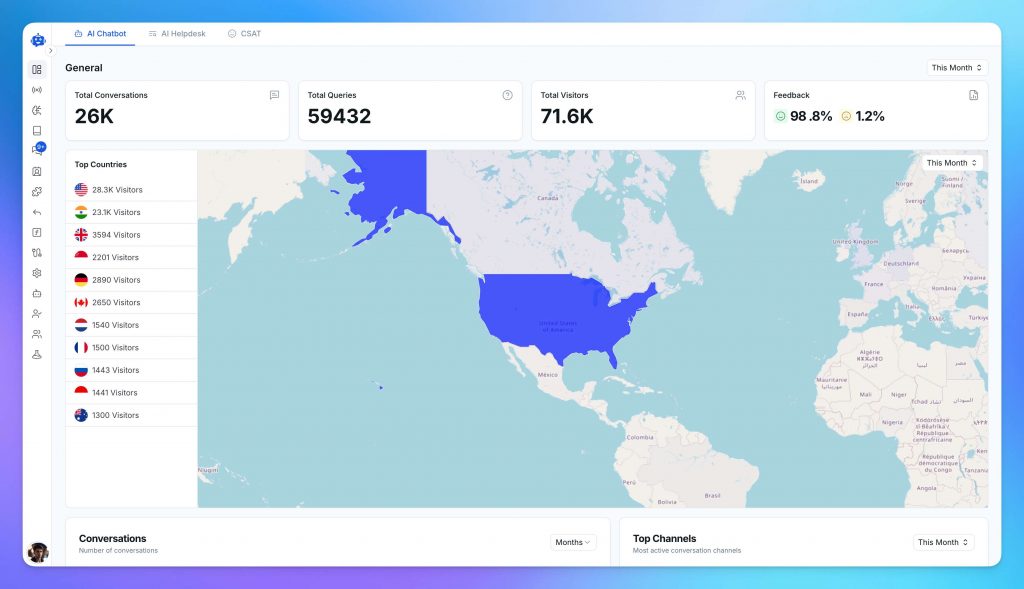
Publish your AI agent and watch it interact with patients in real-time. Start with a controlled launch where you monitor initial conversations closely. Check that appointment types are being assigned correctly, times offered match actual availability, and bookings sync properly to your scheduling system.
During the first few days, review conversation logs to identify any confusion points or common questions the agent struggles with. You can refine the training data and responses based on these real interactions. Most clinics find that minor adjustments in the first week significantly improve performance.
Track key metrics like how many bookings complete successfully, what times patients request most frequently, and where patients abandon the booking process. YourGPT provides analytics that help you understand usage patterns and optimize the experience.
Once the system runs smoothly, it operates with minimal oversight. The AI handles routine bookings automatically while escalating complex situations to your staff as configured. Your team focuses on exceptions and cases requiring human judgment rather than managing every scheduling request manually.
AI appointment booking delivers results when it is treated as an operational change rather than a simple software upgrade. Practices that struggle tend to repeat the same mistakes, each of which weakens trust in the system and slows adoption.
Fit Check
AI appointment booking works well for most modern clinics, but it is not universal. These are the common cases where automation may not deliver immediate value without preparation or a phased rollout.
If daily booking requests are infrequent and your team handles them easily without missed calls or delays, ROI may be limited in the short term.
In these cases, the constraint is patient demand, not access or capacity.
AI requires structure. If appointment types, durations, provider roles, or emergency handling are unclear, automation will struggle until rules are established.
AI can still work here, but preparation must come first.
If booking depends on case-by-case judgment, full automation may not be appropriate. Clinics in this category often need partial automation first.
AI performs best when scheduling decisions can be expressed as clear rules.
AI booking assumes patients can use digital or voice-based channels. Clinics relying only on in-person or phone-only interactions may see limited benefit.
AI booking improves quickly, but it will not be flawless on day one. Practices expecting zero exceptions without monitoring or adjustment often get frustrated early.
AI appointment booking acts as a digital front desk that follows your clinic’s scheduling rules. Patients explain what they need in plain language, just as they would on a call. The system asks clarifying questions, checks real-time availability, and books the correct appointment directly into your schedule. Staff do not need to re-enter or correct bookings afterward.
In practice, most patients find it easier than calling. They do not need to know appointment names, durations, or provider details. They simply describe their issue and follow simple prompts. Because there is no waiting on hold or rushed conversation, patients often complete bookings faster and with fewer errors.
Yes, and this is where many clinics see immediate impact. AI booking runs alongside phone scheduling, not instead of it. While staff are busy with patients or other calls, the AI continues to capture new bookings. This prevents missed calls from turning into lost patients and keeps appointment demand flowing even during peak hours.
The system is designed to prevent this before it happens. AI booking asks follow-up questions to clarify symptoms, urgency, and prior visits. It applies your clinic’s rules to match the request to the correct appointment type and duration. Compared to rushed manual entry, incorrect bookings drop significantly.
Urgent symptoms can be identified during the booking conversation. Based on how the clinic defines emergencies, the system can route patients to emergency slots, prioritize same-day availability, or alert staff for review. The clinic remains in control of how urgency is handled while still offering immediate access to patients in pain.
After-hours requests are one of the biggest sources of lost demand. AI booking captures patients at the exact moment they decide to schedule, even late at night or on weekends. Instead of leaving voicemails or waiting for callbacks, patients receive confirmed appointments immediately. Clinics often see a noticeable increase in bookings outside office hours.
It reduces workload by removing repetitive scheduling tasks. Routine bookings, confirmations, cancellations, and reschedules are handled automatically. Front desk teams spend less time answering the same questions and more time on in-clinic coordination, insurance issues, and patient interactions that require human judgment.
Most clinics notice changes within the first few weeks. After-hours bookings increase first, followed by fewer missed calls and more stable daily schedules. Over time, reduced interruptions and fewer scheduling errors lead to better chair utilization and less end-of-day cleanup for staff.
Yes, especially if the practice misses calls, handles scheduling alone, or operates with limited front desk coverage. The value is not about size, but about access. Even small practices lose patients when booking is unavailable. AI booking helps capture demand without adding staff or extending office hours.
The most successful clinics start with clear scheduling rules and roll out automation gradually. They involve front desk staff early, define appointment types and durations clearly, and monitor early bookings for adjustments. AI works best when it enforces a well-defined process, not when it tries to fix unclear workflows.
AI appointment booking has become a practical necessity for dental practices that want to capture patient demand when it actually occurs. Missed calls, after-hours searches, and delayed callbacks quietly drain revenue. Allowing patients to book the moment they decide removes that loss.
The real impact is consistency. Scheduling rules are applied the same way every time, calendars stay accurate, and chair time is used more effectively without adding pressure on staff. Front desk teams spend less time managing phones and more time supporting patients in the clinic.
Practices that succeed with AI booking start small, define clear scheduling rules, and track meaningful signals such as after-hours bookings and time spent on scheduling. Results usually become visible within weeks, not months.
AI booking does not replace people. It removes repetitive work that prevents teams from doing their best work. Platforms like YourGPT support this shift by fitting into existing workflows rather than forcing clinics to change how they operate.
At its core, AI appointment booking reduces friction between patient intent and provider availability. Clinics that remove that friction become easier to book, easier to work with, and better positioned to grow without scaling overhead.
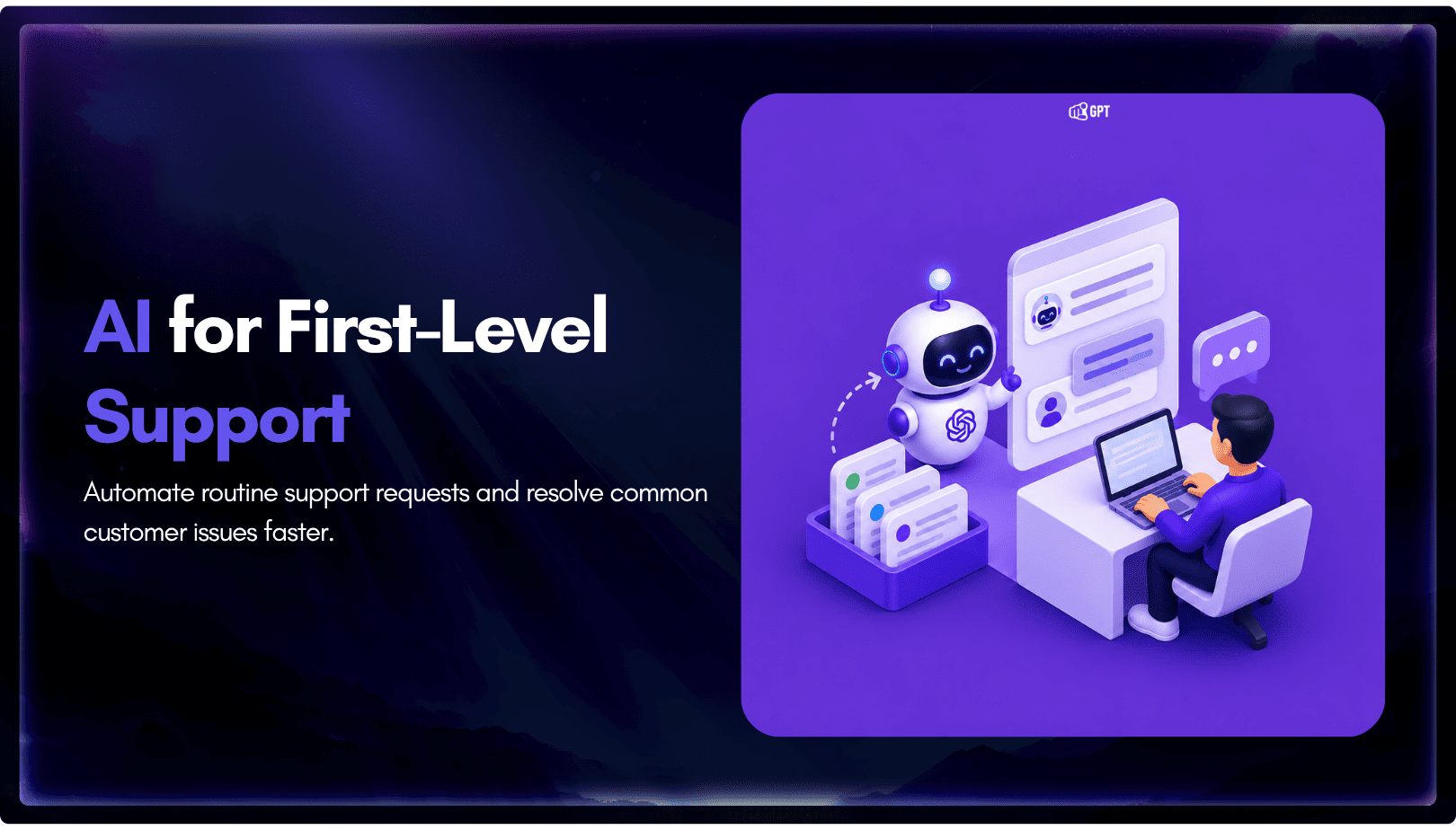
Tier 1 support handles first contact. See how Tiers 0 to 3 differ and what changes when an AI agent becomes your first line.
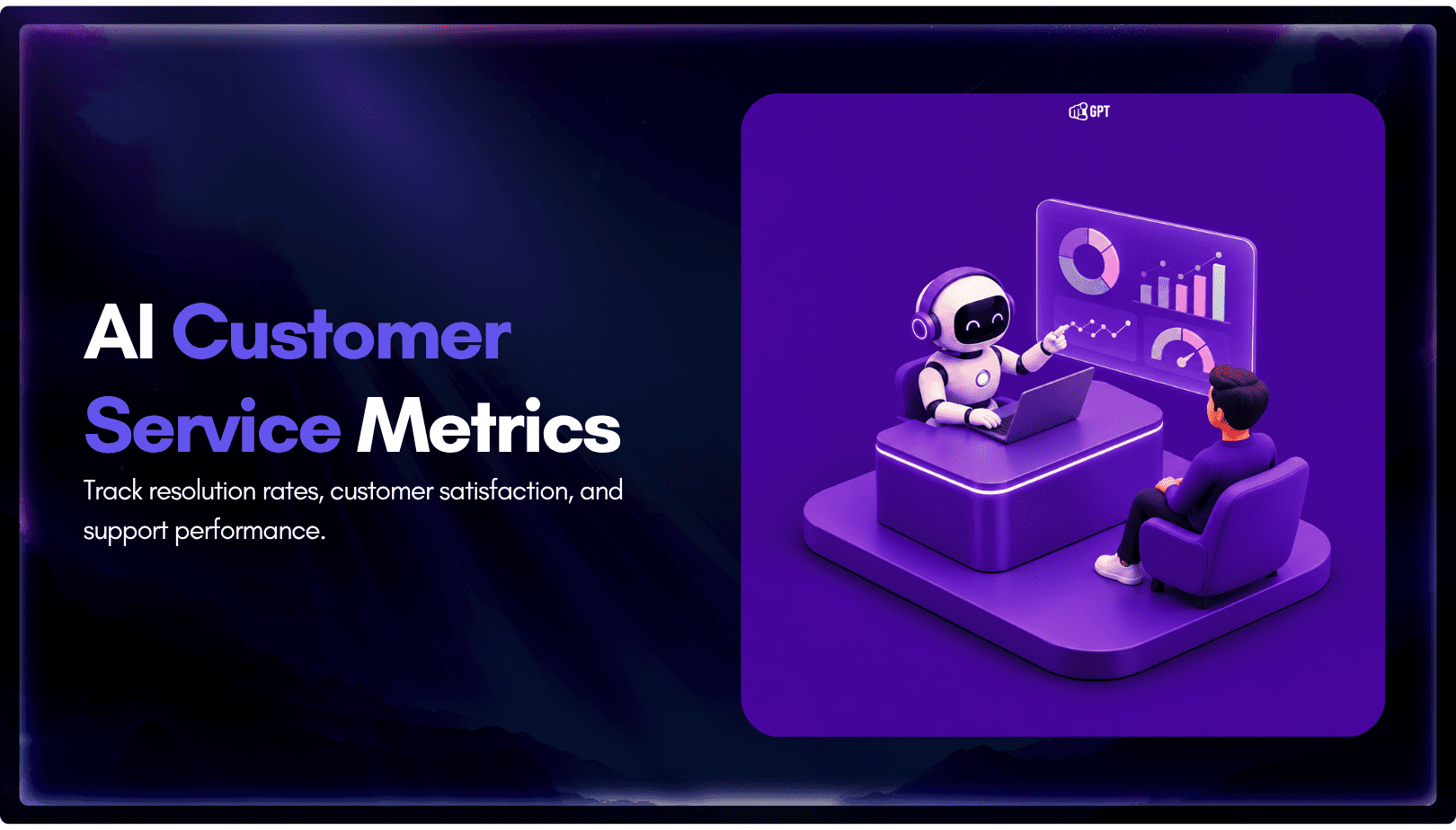
The 12 customer service metrics to track when an AI agent resolves tickets, with a formula for each and a baseline built from your own last month.

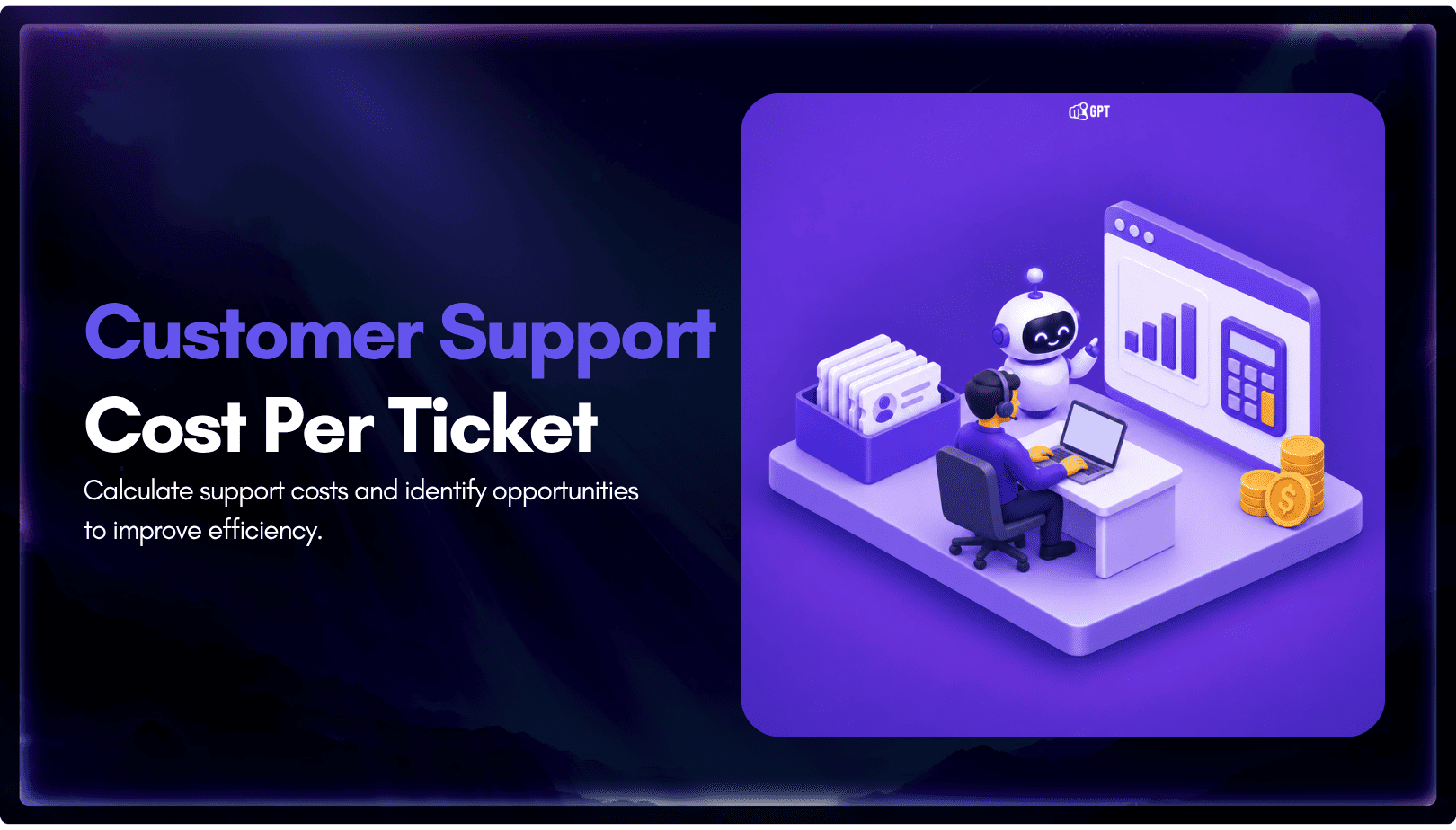
Calculate cost per ticket with one formula and a free calculator, then compare it with the cost of a conversation an AI agent resolves.
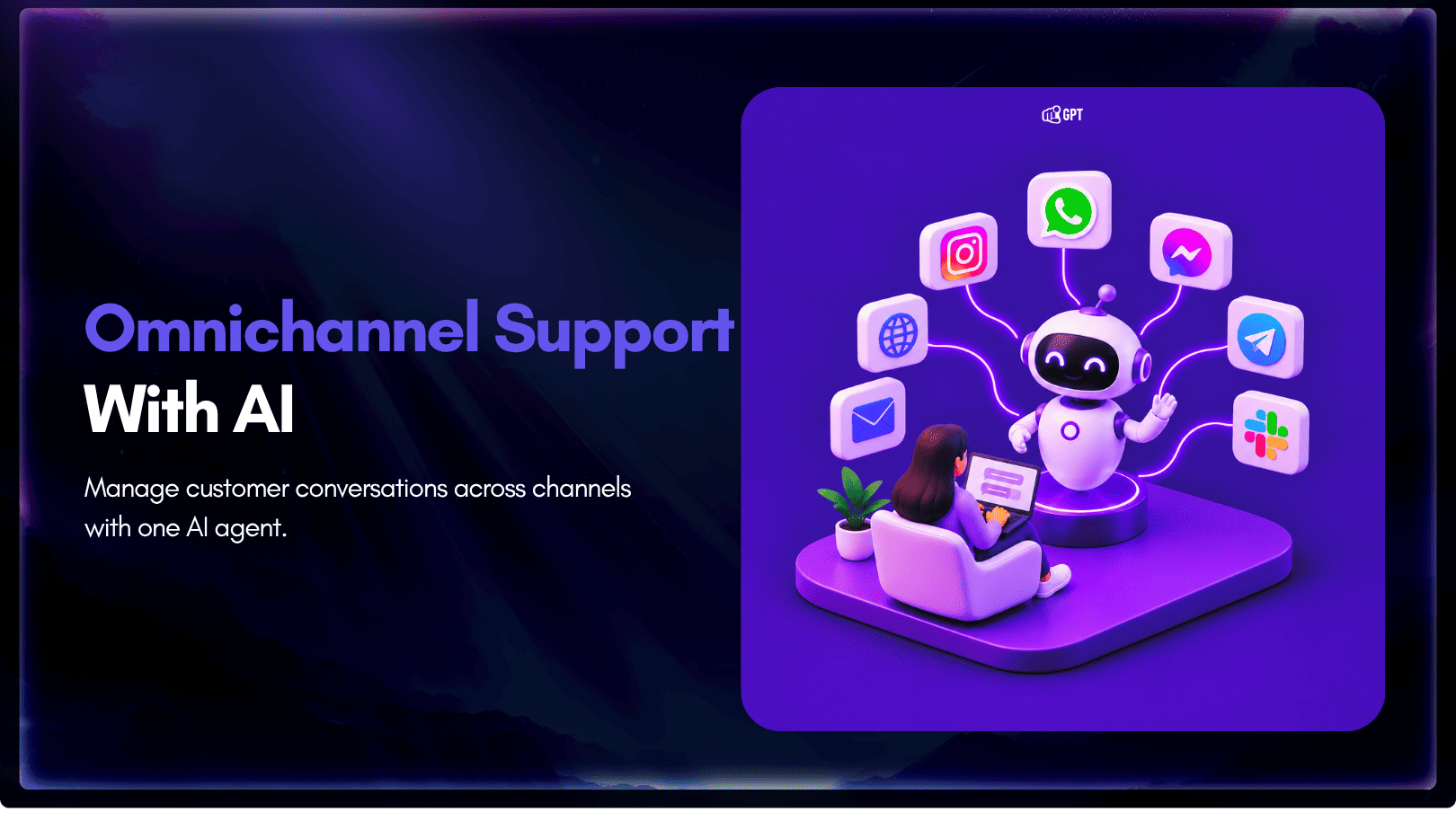
Omnichannel support means every channel answers from the same knowledge. Train one AI agent, pick your first channel, and test that answers match.
Self-learning AI agents log the questions they miss. Learn how human review turns those gaps into trained answers and how to run the weekly loop.
Train an AI agent on your return policy, connect the Shopify template in AI Studio to check real orders, and route exceptions to your team.