Best 10 Forethought Alternatives in 2026

Rajni
Last updated on September 7, 2026
Forethought’s opaque pricing and lengthy setup have pushed support teams toward more transparent, faster-to-deploy alternatives.
YourGPT leads with predictable plans, no-code deployment, and omnichannel coverage across chat, WhatsApp, and voice.
Zendesk, Intercom, Salesforce Service Cloud, and other established platforms follow, covering needs from small support desks to regulated enterprises, with real feature details and named limitations to help guide the choice.
Forethought is an AI-powered support automation platform designed to build intelligent agents for ticket deflection and intent-based workflows, primarily targeting mid-market and enterprise support teams managing high volumes of tickets.
This blog reviews ten Forethought options in 2026 that offer clearer pricing, faster deployment, and better customization. The selection ranges from no-code builders for small businesses to enterprise-grade platforms and social media solutions. Each platform helps businesses create, manage, and scale AI-driven support with greater efficiency and transparency.
| Platform | Best For | Pricing | Main Limitation |
|---|---|---|---|
| 1. YourGPT | No-code AI support, sales, and omnichannel automation | Essential $39/month. Professional $79. Advanced $349. Enterprise custom. | Advanced automation features require paid plans |
| 2. Zendesk Support Suite | Established support teams needing mature ticketing and workflows | Support Team $19/agent. Suite Team $55. Suite Professional $115. Suite Enterprise $169. | Costs rise quickly with AI, automation, and larger teams |
| 3. Intercom | SaaS teams focused on in-app messaging and lifecycle engagement | Essential $29/seat/month. Advanced $85. Expert $132. | Can become expensive as teams and automation needs grow |
| 4. Freshdesk | Small and mid-sized teams wanting affordable ticketing and quick setup | Growth $18/agent/month. Pro $59. Enterprise $95. | AI and complex workflow capabilities are more limited |
| 5. Salesforce Service Cloud | Large enterprises already using Salesforce CRM | Starter $25/user/month. Professional $100. Enterprise $165. Unlimited $330. | Complex implementation and Salesforce admin expertise required |
| 6. Kayako | Teams prioritising smooth AI-to-human support handoffs | Custom pricing — contact sales. | No public pricing and less advanced AI than AI-first platforms |
| 7. Kore.ai | Regulated enterprises needing advanced NLP, security, voice, and chat | Essential $50/month. Advanced $150. Enterprise custom, often starting around $300K/year. | High enterprise cost and technically demanding setup |
| 8. ServiceNow CSM | Large enterprises with complex cross-departmental workflows | Custom enterprise pricing based on implementation and required modules. | Long implementation cycles and high total cost of ownership |
| 9. Helpshift | Mobile apps and gaming companies needing embedded in-app support | Feedback+ free. Starter $150/month for 250 issues. Growth and Enterprise custom. | Less suitable for web-first teams and costs rise with issue volume |
| 10. Gladly | Retail and eCommerce brands focused on personalised omnichannel service | Hero $150/agent/month. Superhero $180. Enterprise custom. | Higher cost and a people-centred model that may require process changes |
YourGPT stands out in this comparison as an AI-first support platform built around no-code deployment, omnichannel automation, and predictable pricing. Zendesk, Intercom, Freshdesk, Salesforce Service Cloud, and other alternatives also provide AI capabilities, but most structure support around traditional helpdesks, ticketing systems, CRM workflows, or messaging platforms.
An AI agent-led approach puts the agent, connected knowledge, automated actions, channels, and human handoff at the centre of the support workflow. This makes it easier for teams to automate customer conversations across chat, WhatsApp, voice, and other channels without relying on lengthy technical implementations. More traditional platforms remain stronger where mature ticketing, complex enterprise workflows, deep CRM integration, or specialised compliance requirements are the priority.
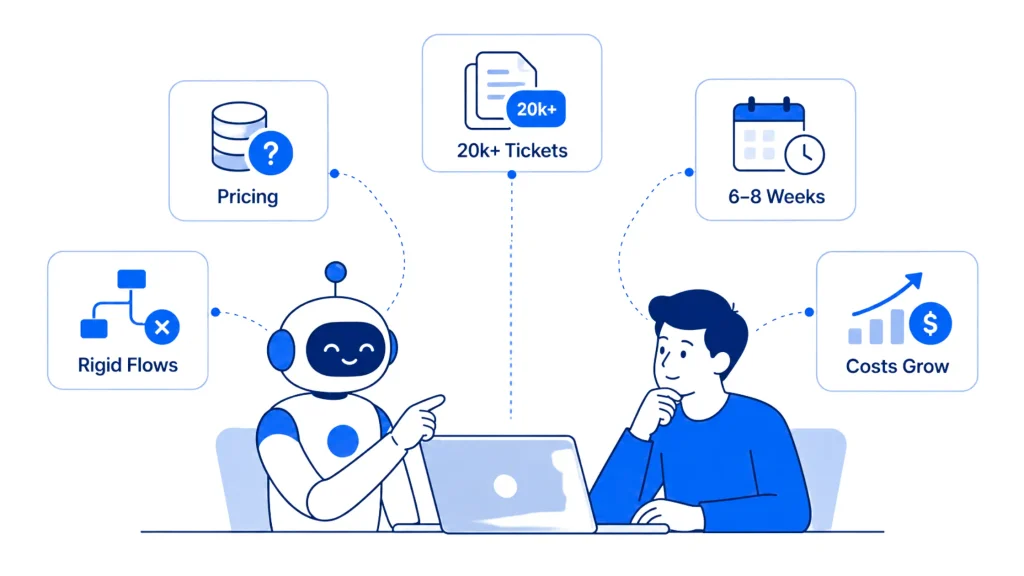
Businesses are exploring alternatives to Forethought primarily due to several practical challenges that impact budgeting, implementation, and flexibility.
Forethought is an AI-powered support automation platform aimed at mid-market and enterprise teams with high ticket volumes. However, user feedback reveals common pain points driving the search for other solutions:
1. Opaque Pricing : Forethought does not publish standard pricing, requiring multiple sales calls to get a quote. Costs vary widely with usage, making predictable budgeting difficult for many teams.
2. High Data Requirements : Users often need to provide 20,000 or more historical tickets for training, which is unfeasible for startups or small teams looking to implement AI support quickly
3. Lengthy, Technical Setup : Deployment typically takes 6–8 weeks, involving ongoing data cleanup and intent maintenance. This demands dedicated technical resources, which many teams lack.
4. Rigid Workflow Constraints : Customizing workflows to specific business needs often requires add-ons or professional services, limiting agility and control over customer journeys.
5. Cost Escalation Risks : Additional AI features, extra communication channels, and advanced workflow modules can significantly increase total costs beyond initial estimates, complicating expense management as ticket volume grows.
For organizations facing these issues, alternative platforms provide clearer pricing, faster implementation, and more flexible automation capabilities without sacrificing AI sophistication.
These platforms make AI support easier to access, scale, and budget helping businesses avoid the complexities associated with Forethought’s model.
Every entry in this comparison is built from official vendor documentation, published pricing pages, and live help center resources. Competitor blog posts, sponsored rankings, and secondhand feature grids were excluded. Where a vendor doesn’t publish a specific threshold, this review names the exact number a buyer still needs to get from sales before committing.
Each platform is checked against the same seven questions:
This is a documented-capability comparison, not a taste test. The plan-by-plan breakdown that follows checks each of the ten platforms below against these seven questions directly.
Forethought has high starting costs, unclear pricing, and automation that is hard to adjust. These issues can get in the way as support teams grow. We reviewed ten better alternatives for customer support in 2026 so you can choose the one that works best for your team.

YourGPT is an AI-first platform for building and deploying AI agents without coding. It helps businesses manage customer support, sales, and operations from a single workspace that connects effortlessly with websites, WhatsApp, Slack, Messenger, Instagram, LINE, email, and voice channels.
Unlike Forethought’s hidden pricing, YourGPT publishes its plans:
All plans include a free trial, and pricing scales predictably with usage. No surprise fees or hidden costs.
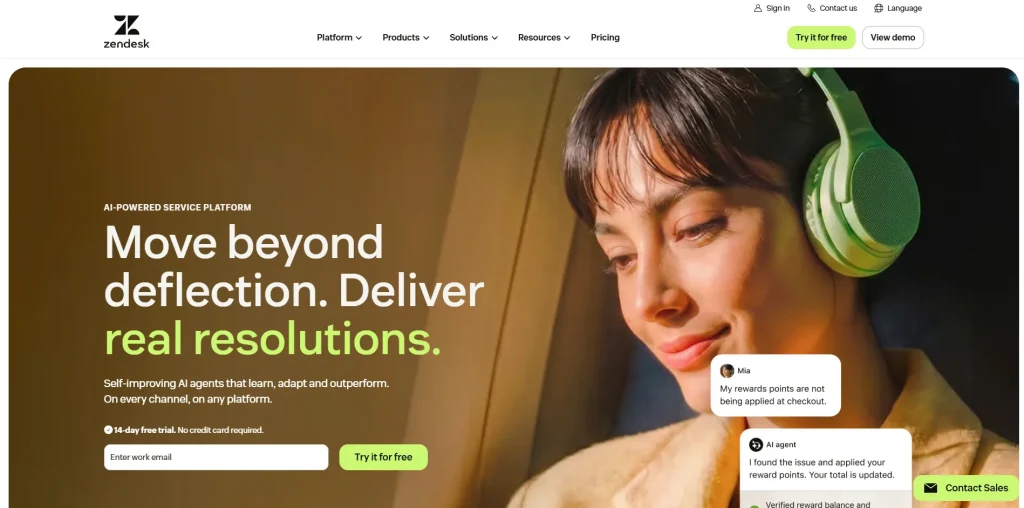
Zendesk is one of the most established platforms for customer support, offering ticketing, live chat, voice, a knowledge base, and workflow automation in one system. It is widely used by larger organisations that need a mature, scalable solution with extensive integration support.
Support Team: $19/agent/month
Suite Team: $55/agent/month
Suite Professional: $115/agent/month
Suite Enterprise: $169/agent/month
AI capabilities often require add-on purchases, increasing the total cost.
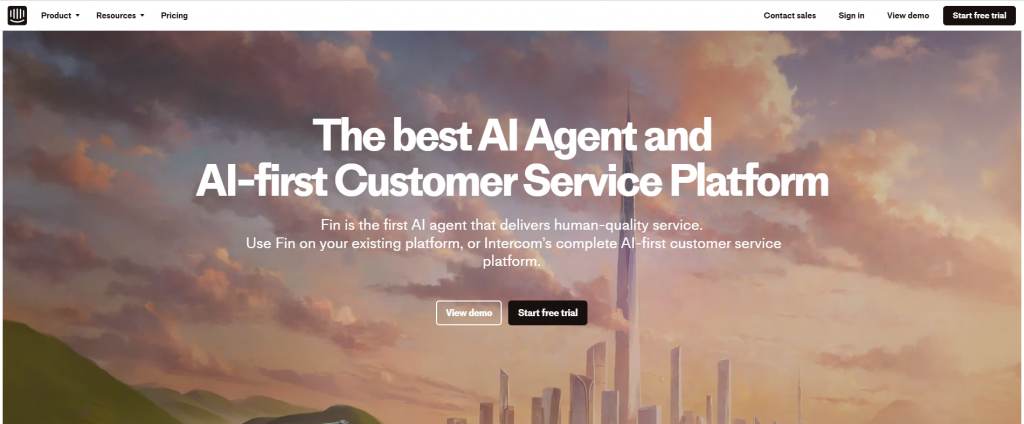
Intercom is a conversational platform centred around real-time messaging and in-app engagement. It is built for product-led SaaS companies that want to communicate directly inside their product while automating parts of the support workflow. Intercom combines live chat, behavioural targeting, and product tours in one system, with Fin AI powering automated responses.
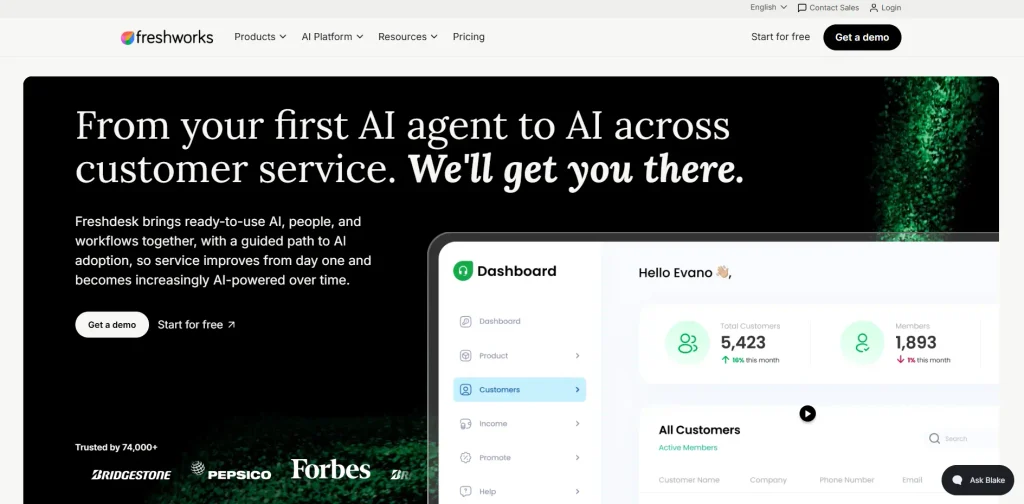
Freshdesk is an affordable customer support platform designed for teams that want a straightforward, easy-to-use system. It offers quick setup, simple ticket management, and useful automation. With Freddy AI, it helps small and mid-sized teams handle customer questions across multiple channels.
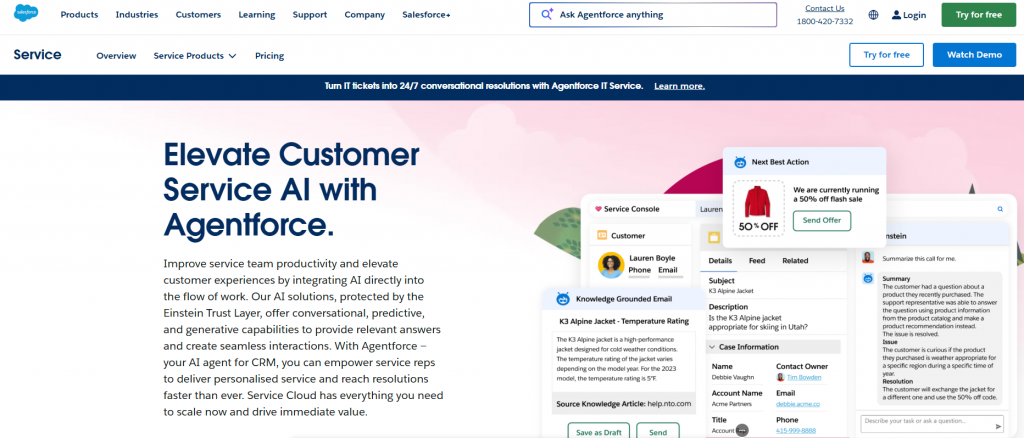
Salesforce Service Cloud is an enterprise-grade customer support platform designed for organisations that need advanced automation, deep CRM connectivity, and a unified view of every customer interaction. It offers powerful workflow customisation, extensive analytics, and tight integration across the Salesforce ecosystem. With Agentforce and Einstein AI, large teams can automate case management, improve routing accuracy, and make data-driven support decisions at scale.

Kayako is designed for teams that want a balance between AI-driven efficiency and human support. Its focus is on smooth transitions, intelligent routing, and preserving full conversation context when escalating from AI to a human agent. This makes Kayako a good fit for companies that value personalised support while still adopting AI automation.
Kore.ai is built for large enterprises that need conversational AI, strong NLP capabilities, and strict security controls. It supports both voice and chat automation, making it suitable for industries that require high accuracy, compliance, and large-scale deployments. With custom workflow building and deep integration options, Kore.ai is designed for highly technical teams managing complex automation projects.
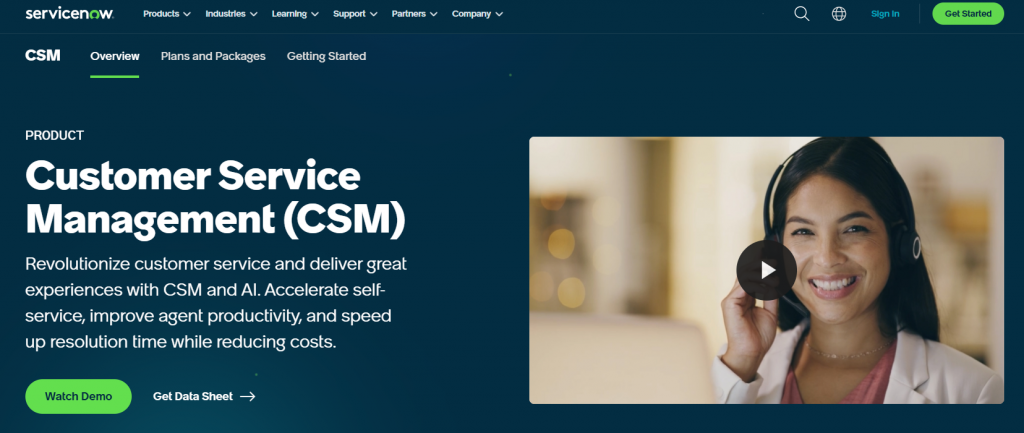
ServiceNow Customer Service Management (CSM) extends the company’s ITSM foundation into customer service, offering powerful workflow automation and deep operational visibility. It is designed for large enterprises that need complex case management, cross-departmental workflows, and strong integration with internal systems. With AI insights and self-service capabilities, ServiceNow CSM helps organisations streamline high-volume, process-driven support operations.
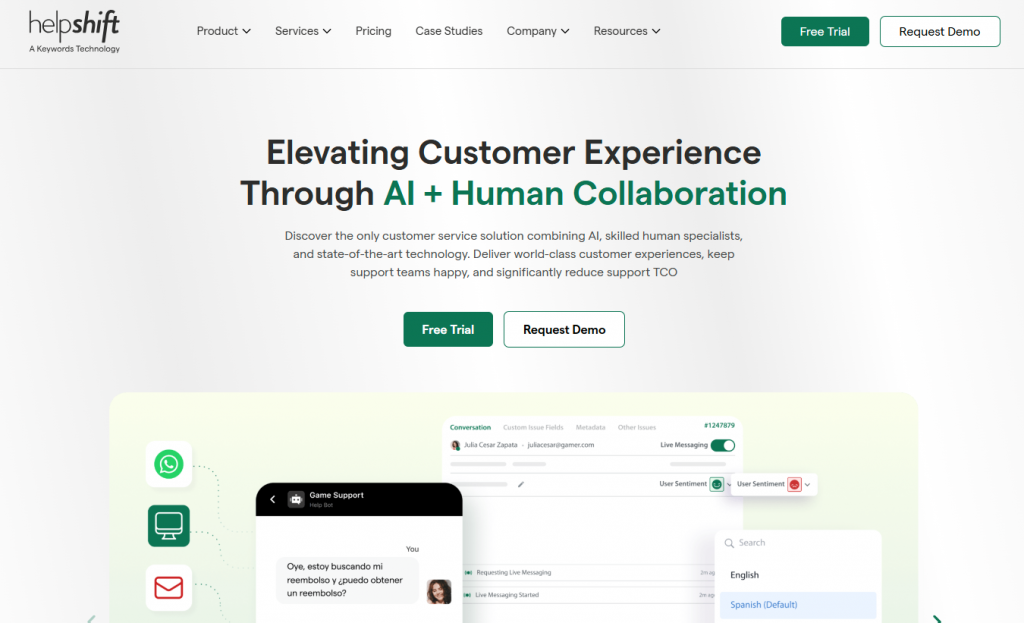
Helpshift is designed specifically for mobile apps and gaming companies that need fast, in-app customer support. Its mobile SDK allows teams to deliver embedded chat experiences directly inside their apps, while AI agents and automated workflows help reduce manual workload. With real-time analytics and an issue-based pricing model, Helpshift offers a flexible approach for teams managing high mobile traffic.
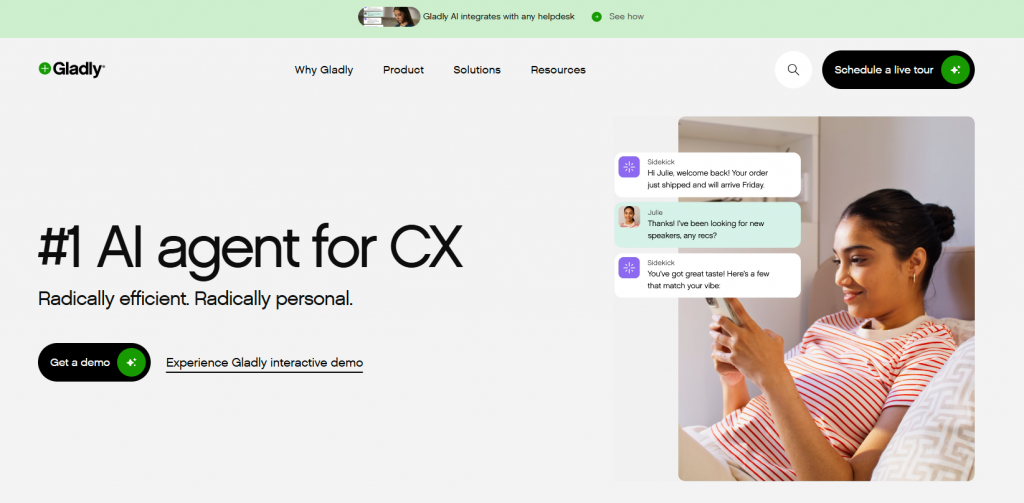
Gladly is designed to replace traditional ticket-based systems with a people-centered support model. Instead of breaking conversations into ticket numbers, Gladly keeps every interaction across all channels organized under a single, lifelong customer conversation. With native voice, messaging, and automation, Gladly helps teams deliver personalised service at scale, especially for retail and consumer brands.
Here’s a quick comparison of all 10 Forethought alternatives:
| Platform | Best For | Main Strength | AI & Automation | Omnichannel Fit | Main Limitation |
|---|---|---|---|---|---|
| 1. YourGPT | SMBs, mid-market, and enterprises wanting AI-first support automation | No-code AI agents with knowledge grounding, workflows, and backend actions | Deep multi-step workflows, API actions, RAG, and feedback-driven improvement | Strong across web chat, WhatsApp, voice, and other messaging channels | More advanced automation capabilities sit within paid plans |
| 2. Intercom | Product-led SaaS teams focused on in-app support and engagement | Strong combination of messaging, shared inbox, journeys, and Fin AI | Strong AI support with product-led automation and customer journeys | Strong for in-app messaging, chat, email, and social support | Can become expensive as seats and advanced AI usage increase |
| 3. Zendesk | Established support teams managing high ticket volumes | Mature ticketing, reporting, SLAs, integrations, and agent workspace | AI assistance combined with macros, triggers, routing, and workflows | Strong across email, chat, voice, and social channels | AI add-ons and per-agent pricing can raise total costs quickly |
| 4. Freshdesk | Small and mid-sized teams wanting affordable customer support | Straightforward ticketing, collaboration, SLAs, and quick deployment | Freddy AI, routing rules, scenarios, and basic support automation | Good multi-channel coverage across email, chat, phone, and social | Less flexible for highly complex enterprise automation |
| 5. Salesforce Service Cloud | Large enterprises already operating within the Salesforce ecosystem | Deep CRM connectivity and a unified view of customer data | Enterprise automation through Agentforce, Einstein, APIs, and flows | Broad contact-center coverage across chat, voice, email, SMS, and social | Complex implementation and ongoing Salesforce admin requirements |
| 6. Kayako | Teams prioritising hybrid AI and human customer support | Context-preserving handoff between automated and human support | AI routing, basic automation, escalation, and support workflows | Covers core digital support and messaging channels | AI and backend automation are more limited than AI-first alternatives |
| 7. Kore.ai | Regulated enterprises requiring advanced NLP and conversational automation | Enterprise-grade conversational AI with strong security and control | Complex dialog flows, NLP, backend APIs, and developer-driven automation | Strong across web, voice, mobile, and enterprise messaging | Requires technical expertise and can be expensive for smaller teams |
| 8. ServiceNow CSM | Enterprises managing complex service and cross-department workflows | End-to-end workflow automation across customer service and IT operations | Advanced workflow engine, service intelligence, APIs, and automation | Strong across portals, chat, phone, service systems, and internal workflows | Long implementation cycles and high total cost of ownership |
| 9. Helpshift | Mobile apps and gaming companies needing embedded support | Mobile-first support through native SDKs and in-app messaging | AI agents, copilots, issue routing, triggers, and in-app workflows | Excellent for mobile and in-app support, less focused on web-first teams | Costs can rise with issue volume and lower plans offer fewer AI features |
| 10. Gladly | Retail and D2C brands focused on personalised customer relationships | People-first support built around a persistent customer conversation | Sidekick AI, routing, self-service, and customer-context automation | Strong across voice, SMS, email, chat, and social channels | Higher pricing and an opinionated people-first model may require process changes |
Selecting the right support automation platform starts with understanding how well it matches your team’s skills, business goals, and long-term plans. The ideal Forethought alternative should help you automate faster, improve resolution times, and scale support without adding operational friction.
1. Match the Platform with Your Team’s Skills
Before comparing features, assess how technical your team is. If your team is non-technical, choose a platform that offers quick setup and visual automation without writing code. YourGPT fits well here because it supports simple no-code building and also provides deeper workflow options when needed. If your team includes engineers or IT specialists, tools like Salesforce Service Cloud, ServiceNow CSM, or Kore.ai give you more control and advanced customisation.
2. Define Your Use Case Clearly
Different teams adopt AI support tools for different outcomes. If your goal is reducing ticket load and improving first response times, YourGPT, Intercom, and Zendesk are effective options. If you need structured case management or complex workflow automation, Salesforce Service Cloud or ServiceNow CSM may fit better. For mobile-focused products, Helpshift delivers strong in-app experiences. Knowing your goals helps you select the platform that aligns directly with your support priorities.
3. Look for Ready Integrations
Smooth integration with your existing systems is essential. Check whether the platform connects easily with your CRM, helpdesk, e-commerce platform, and communication channels such as WhatsApp, email, Instagram, or voice. YourGPT, Intercom, Zendesk, and Salesforce offer broad integration support. Enterprise ecosystems are better supported by Kore.ai and ServiceNow, while Helpshift specialises in mobile integrations.
4. Choose Transparent and Predictable Pricing
Clear pricing is important when planning long-term support budgets. Select platforms that offer straightforward plans instead of unpredictable usage-based charges. Predictable pricing helps you manage costs as your customer volume grows. Always consider the total cost, including onboarding, setup, and potential add-ons.
5. Prioritise Features that Matter Most
Focus on features that directly improve your support workflow. Look for a no-code builder, human handoff, analytics, and multi-channel coverage. Automation should be easy to use without deep technical setup. YourGPT offers both simplicity and advanced automation, making it suitable for a range of teams. Intercom and Zendesk are strong for messaging workflows, while Salesforce Service Cloud and Kore.ai offer extensive enterprise capabilities.
6. Look for Long-Term Value
The right platform should continue delivering value as your business grows. Evaluate how well it reduces manual work, improves customer response times, and simplifies daily operations. Choose a solution that supports your long-term growth, keeps maintenance low, and provides measurable improvements over time.
Small support teams typically look for a platform that skips a long professional-services setup and a heavy historical-ticket requirement. Freshdesk fits this profile directly, with published per-agent pricing and a fast self-serve signup. Platforms built for enterprise ticket volume, like Salesforce Service Cloud or ServiceNow CSM, add complexity most small teams don’t need at that stage.
Forethought does not publish a standard rate card, so a specific quote generally requires multiple sales conversations. Zendesk and Freshdesk post per-agent rates directly on their pricing pages, and other platforms on this list use flat monthly plans with set price tiers. Salesforce Service Cloud lists published per-user pricing by edition, though many mid-market and enterprise deals still get negotiated. ServiceNow CSM and Kore.ai sit closest to Forethought’s model, publishing no rate card at all.
Forethought’s own implementation guidance calls for 20,000 or more historical tickets to train intent models effectively, a bar many small and mid-sized teams can’t clear. The requirement varies widely across alternatives. Platforms that train on existing website content, documents, and FAQs need only a fraction of that volume to get running. Enterprise platforms such as Kore.ai and ServiceNow CSM still expect a substantial configuration and data investment before automation performs reliably at scale.
Channel coverage varies significantly across this list. Zendesk and Gladly both handle voice, chat, and social messaging inside one workspace, while Helpshift focuses specifically on mobile in-app messaging and SDK integration for gaming and consumer apps. Teams that need WhatsApp, Instagram, or voice support alongside standard ticketing should check each vendor’s channel list directly, since coverage differs even among platforms that market themselves as omnichannel.
Salesforce Service Cloud, ServiceNow CSM, and Kore.ai sit at the higher end of implementation time, since deployment usually depends on a certified partner, custom workflow configuration, and, for Kore.ai, contact-center-grade NLP tuning. Self-serve, no-code platforms on this list sit at the faster end, since setup doesn’t require a professional-services engagement to go live.
Several platforms on this list support workflow customization without requiring an engineering team. YourGPT’s AI Studio uses a visual, drag-and-drop canvas for multi-step workflows, API calls, and conditional logic, with a plain-English prompt that can generate a working flow directly. Freshdesk and Zendesk also offer visual automation builders, though deeper logic on either typically requires add-ons or admin-level configuration. Platforms built for enterprise deployments, such as Salesforce Service Cloud and Kore.ai, typically route custom workflow changes through implementation partners and professional services engagements.
Organizations already standardized on Salesforce or ServiceNow for other functions often find it easier to extend that platform’s Service Cloud or CSM module for support, since data, permissions, and reporting already live in the same system. Teams considering a clean-slate build outside that stack should weigh a no-code platform’s faster setup against the deeper native integration Salesforce and ServiceNow offer for existing customers.
Finding the right support platform is not just about features. It is about what actually works for your team. Forethought brought AI to customer service early, but many teams today want something faster to set up, easier to understand when it comes to pricing, and flexible enough to fit how they really work.
YourGPT understands this well. You can get it running quickly, customize it without needing a developer, and use it across all the channels your customers prefer, such as WhatsApp, Instagram, email, and voice. The pricing is clear and grows with your business. There are no surprises or long setup times.
Other platforms also have their strengths. Salesforce Service Cloud and Kore.ai are good for large companies that need deep customization. Intercom works well with SaaS products and in-app messaging. Freshdesk is a budget-friendly option with solid features, and Helpshift focuses on mobile app support.
Choose an AI system that is simple to start, easy to maintain, and built to support real support operations. YourGPT gives teams the control they need without long setup or complex steps.
Designed for modern support teams focused on clarity and speed
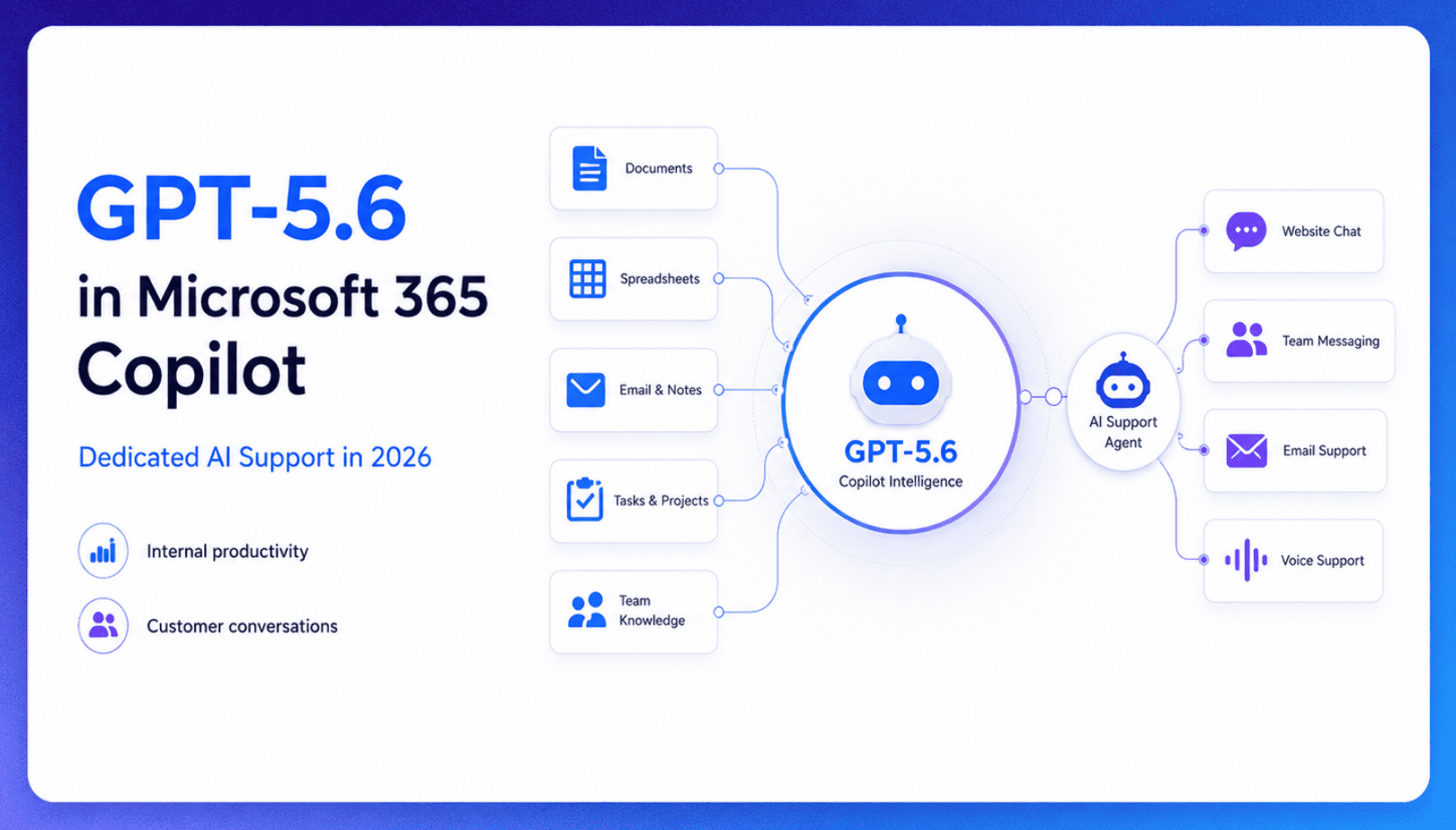
TL;DR Microsoft made GPT-5.6 the preferred model across Word, Excel, PowerPoint, Copilot Chat, and Cowork on July 9, 2026, focusing on internal workplace productivity rather than customer-facing support. Dynamics 365 Service Agent also reached general availability, but it mainly helps human support representatives manage cases within Microsoft’s existing permission structure and requires separate licensing. A […]

TL;DR Cheap frontier models now compete for the same high-volume support workloads, with DeepSeek V4 remaining the lowest-cost option in this comparison. Kimi K2.6 and GLM-5.2 are open-weight and self-hostable, while Qwen 3.7 Plus is proprietary and available only through an API. Claude Haiku 4.5 is the only model here that its developer explicitly recommends […]
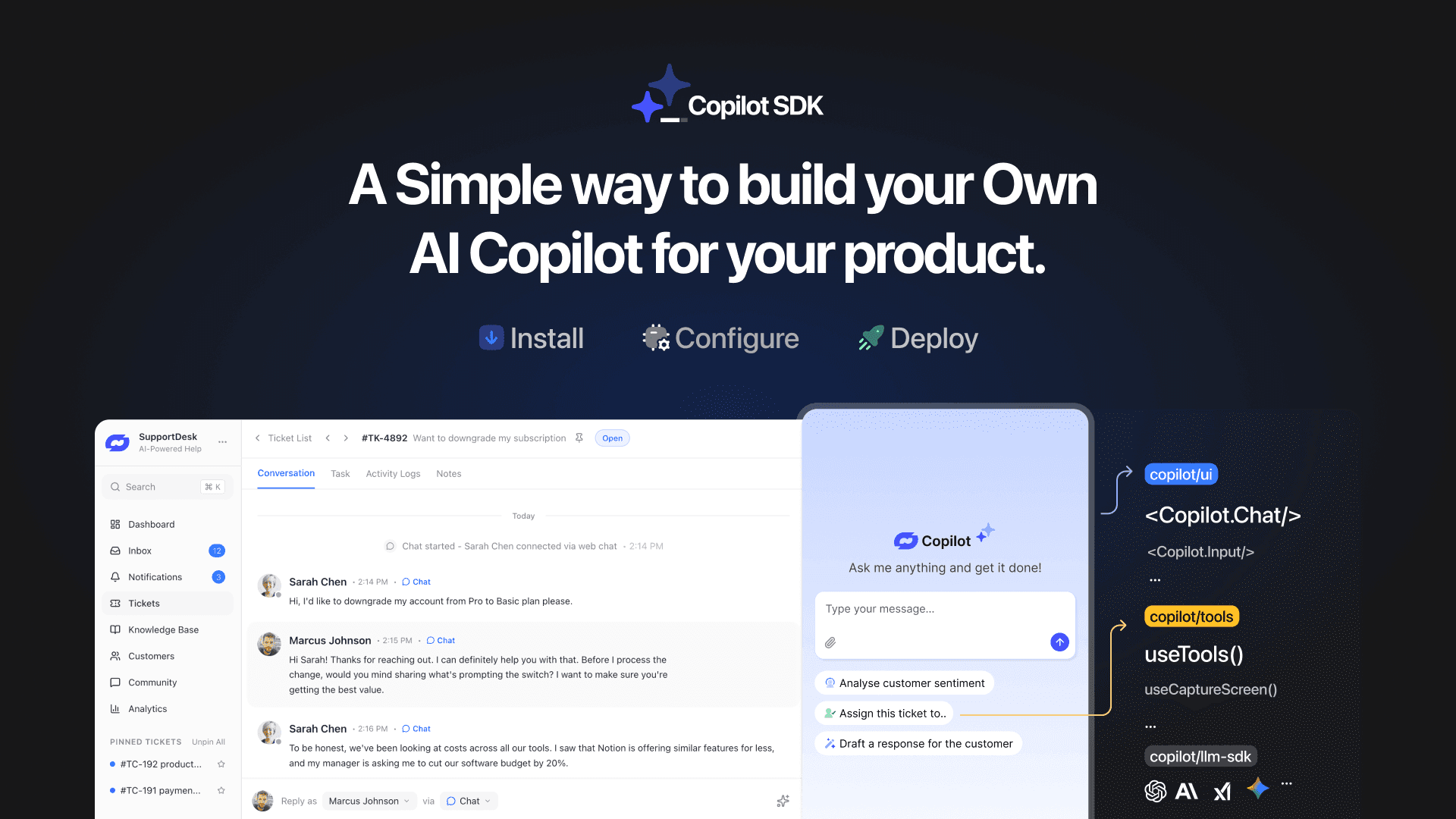
TL;DR YourGPT Copilot SDK is an open-source SDK for building AI agents that understand your application state, user context, and what is happening inside your product. Instead of working like isolated chat widgets, these agents connect directly with your product and can take real actions within existing workflows. This helps teams build contextual AI experiences […]
TL;DR YourGPT 2.0 adds AI Studio for building, testing, and debugging automated workflows. It includes native MCP integration for more than 100 tools, upgraded voice agents, and native SDKs for iOS and Android applications. With shared context across web, WhatsApp, Instagram, Telegram, and mobile, YourGPT turns conversations into real actions across support, sales, and operations. […]

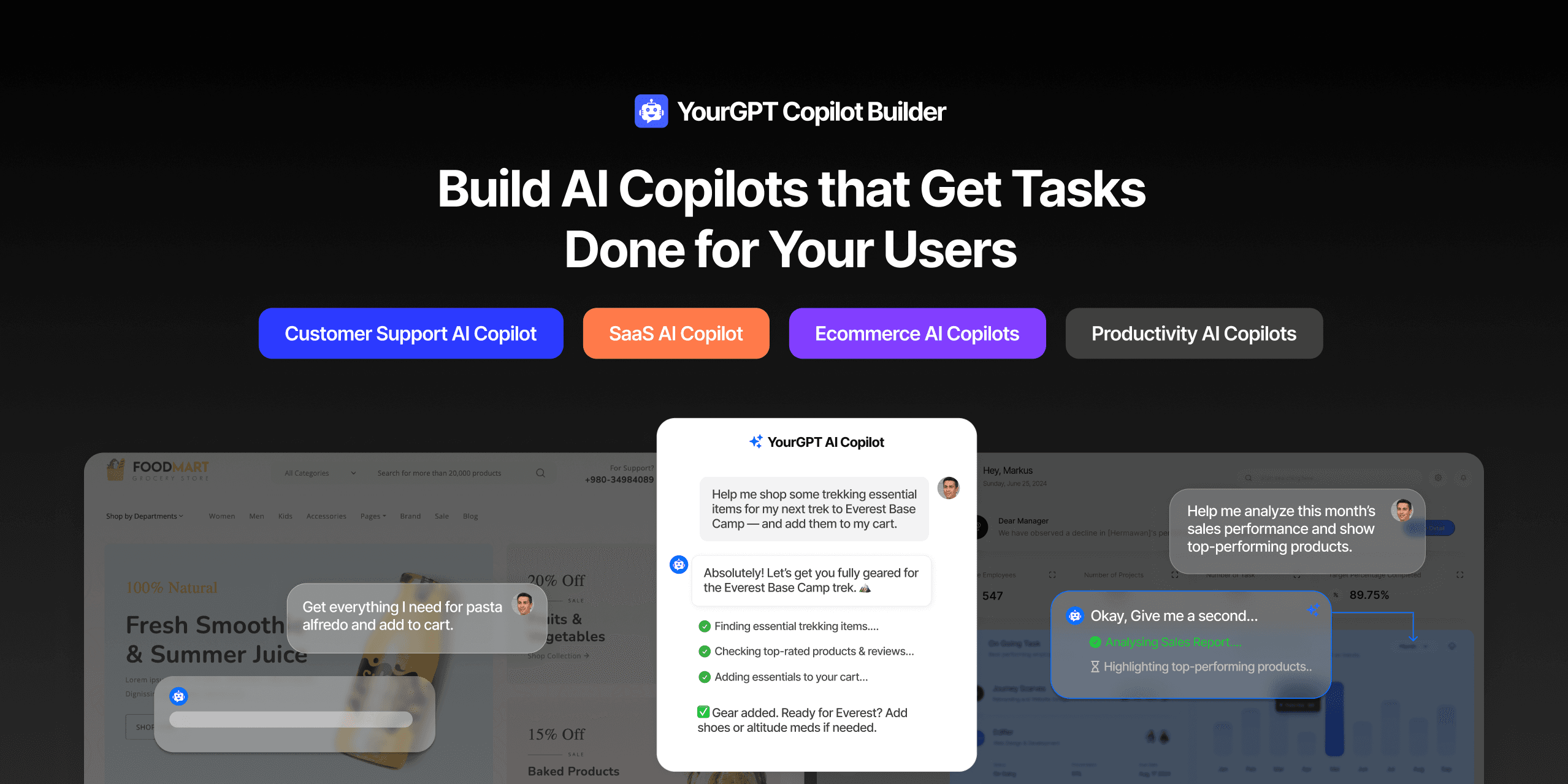
TL;DR Most AI tools provide answers but still leave users to complete the task through search results, settings pages, or checkout flows. AI Copilot Builder closes that gap by executing registered actions directly inside the product instead of only explaining what to do. Search, cart updates, account changes, and multi-step bookings can all happen within […]
TL;DR Building an AI-powered Telegram bot does not require custom development. BotFather provides the Telegram bot token, while a no-code platform like YourGPT handles AI training, free-form conversations, and the Telegram connection. This guide covers the full setup, from creating the bot in BotFather to connecting it with YourGPT and taking it live. Most Telegram […]
