YourGPT AI vs Sierra AI: Which AI Agent Platform Fits Your Team?

Rajni
Last updated on July 13, 2026
YourGPT is the better fit for CX leaders, support teams, founders, growth teams, and enterprise buyers who want an AI agent platform they can evaluate quickly, launch confidently, and scale seriously.
Sierra is positioned for big brands that prefer a more managed, high-touch buying and rollout process.
The real distinction is not “small tool versus enterprise platform.” It is accessible enterprise AI that is easier to evaluate and expand versus a more managed platform that often starts with a heavier sales cycle and more upfront commitment.
AI customer service is evolving fast. Modern businesses need more than basic tools that answer common questions. They need AI agents that can understand customers, solve problems, automate workflows, support sales, assist human teams, and operate across every important communication channel.
That is where Sierra AI and YourGPT come in. Both platforms help businesses use AI to improve customer experience, but they take different approaches.
YourGPT is built for businesses that want a flexible, no-code AI platform for customer support, sales automation, lead generation, helpdesk automation, voice support, and AI copilot assistance. It is suitable for SMBs, mid-market teams, and enterprises that want powerful automation without heavy setup or unpredictable costs.
Sierra AI is designed mainly for large enterprises that need advanced AI agents for complex customer journeys. It focuses on managed deployments, deep system integrations, voice automation, enterprise compliance, and outcome-based pricing.
In this comparison, we’ll break down Sierra AI vs YourGPT across AI capabilities, channels, integrations, pricing, automation features, and best-fit use cases to help you choose the right platform for your business.
This comparison is based on publicly available data, including official product pages, documentation, pricing pages, trust and security pages, developer resources, and public product announcements. Where relevant, it also incorporates third-party sources such as G2, Capterra, marketplace listings, customer reviews, and independent pricing or implementation analyses.
Official sources are used for product capabilities, channels, setup paths, security claims, and pricing when a company publishes them. Third-party sources are used only for buyer sentiment, implementation context, and market-level pricing estimates.
Sierra does not publish public pricing, which makes cost comparisons harder. As a result, any Sierra budget figures referenced in this article come from third-party analyses, implementation reports, or market estimates rather than Sierra itself. They should be viewed as directional estimates, not official Sierra pricing.
YourGPT is built for teams that want to start fast and scale without changing platform philosophy.
Sierra is built for companies that already expect a more managed, sales-led enterprise rollout.
This distinction matters because AI agents are not bought once and admired from a distance. They are operated. They need new workflows, tighter escalation rules, better routing, updated campaign logic, cleaner handoff, and constant review from the people closest to customers.
If the platform is hard to access, every lesson arrives later. If the platform is easy to test but too shallow to scale, the team outgrows it. YourGPT is strong because it avoids both problems: accessible at the front, serious enough at the back.
| Feature | YourGPT | Sierra AI |
|---|---|---|
| Easy setup | ✓ | – Guided enterprise rollout |
| Training & data | ✓ | ✓ |
| Self-learning AI | ✓ | ✓ |
| Persistent memory | ✓ | ✓ |
| Advanced automation | ✓ | ✓ |
| Multi-step workflows | ✓ | ✓ |
| API & backend actions | ✓ | ✓ |
| Omnichannel | ✓ Web, WhatsApp, Telegram, Messenger, Slack, voice, mobile app |
✓ Chat, SMS, WhatsApp, email, voice |
| Unified inbox | ✓ | – |
| Mobile app | ✓ | – |
| Browser extension | ✓ | – |
| Integrations | ✓ 100+ integrations e.g Whatsapp, Instagram, HubSpot, and custom integrations |
✓ 40+ prebuilt plus custom enterprise integrations |
| Brand & workflow control | ✓ | ✓ |
| Analytics & reports | ✓ | ✓ |
| Voice AI | ✓ | ✓ |
| AI copilot | ✓ | – |
| Campaigns & outbound | ✓ | – |
| Security & compliance | ✓ SOC 2 Type II, GDPR, ISO standards |
✓ SOC 2, HIPAA, GDPR, PCI, CCPA, ISO 27001, ISO 42001 |
| Pricing | ✓ Public pricing · from $39/month |
– Custom · contact sales |
| Best fit | SMBs, mid-market, and enterprises wanting fast setup, omnichannel, mobile, voice AI, and pricing visibility | Large enterprises needing managed deployment, deep integrations, and enterprise-grade rollout |
Sierra AI is an enterprise conversational AI platform that helps companies build AI agents for customer experience. Sierra was co-founded by Bret Taylor and Clay Bavor, and its official site positions the company around “better, more human customer experiences with AI.”
Sierra AI agents go beyond scripted replies by understanding context, following business rules, and taking action across channels like chat, voice, email, WhatsApp, SMS, and ChatGPT.
Founded in 2024, Sierra is primarily aimed at enterprise brands with large customer volumes, complex processes, and the budget for custom implementation.
Sierra is not weak. A good comparison should not pretend it is.
Its public positioning is polished because it has real material behind it. Sierra shows major customer logos, broad channel coverage, outbound voice, proactive engagement, recommendations, Agent Studio, Agent SDK, trust controls, and compliance signals including SOC 2, ISO 27001, ISO 42001, HIPAA, GDPR, and EU AI Act references.
Its constellation-of-models story also gives enterprise buyers a clear answer to a real concern: how the system manages quality, supervision, and orchestration across customer interactions.
For a large B2C brand with a mature procurement process, a dedicated CX transformation team, and appetite for a managed rollout, Sierra can make sense. It gives that buyer confidence, structure, and a premium narrative.
The mistake is treating that narrative as proof that Sierra is automatically the better platform for every serious team.
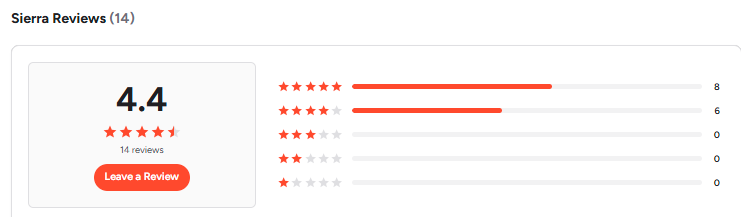
YourGPT is an AI-first, no-code platform that helps businesses create and manage custom AI agents for customer support, sales, workflow automation. It combines messaging, workflow automation, and analytics with full control over data, integrations, and security, making it adaptable across industries.
The platform includes an AI agent builder, live chat, helpdesk tools, self-learning AI, and multilingual support. This allows businesses to provide real-time assistance and engagement at scale.
Founded in 2023, YourGPT is adopted by SaaS providers, e-commerce companies, and enterprises that want to improve customer interactions with AI-driven efficiency.
YourGPT is not just a basic chatbot. A good comparison should recognize that it is built for teams that want practical AI automation without a long enterprise rollout.
Its strength is combining ease of use with platform depth. YourGPT offers a no-code AI agent and chatbot builder, AI Helpdesk, AI Studio, live chat, human escalation, analytics, workflow automation, multilingual support, and deployment across websites, apps, WhatsApp, Instagram, Messenger, Slack, Telegram, LINE, email, and voice.
It also provides important trust signals, including SOC 2 Type II, GDPR compliance, encryption, access controls, regular audits, and ISO standards, which matter for businesses handling customer data.
For SaaS providers, e-commerce companies, and enterprises that need faster setup, flexible customization, and multichannel support, YourGPT can make strong sense.
The mistake is assuming that a premium enterprise narrative automatically makes another platform the better choice for every serious team.
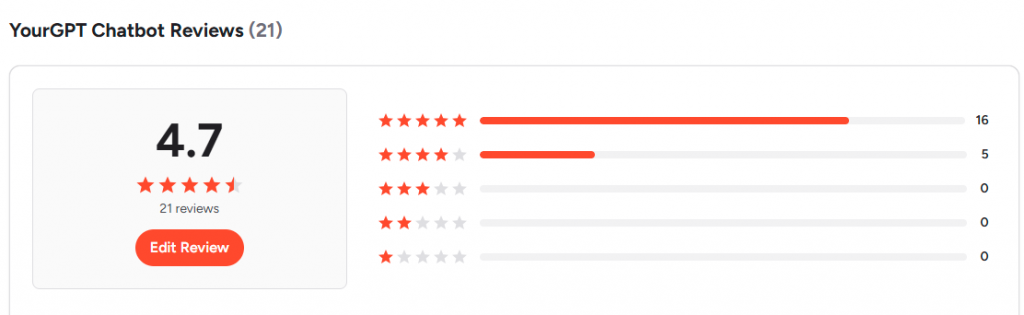
YourGPT and Sierra AI are both serious AI agent platforms.
Sierra is built for large brands that can absorb custom pricing, large-scale rollout complexity, and a more guided operating model. YourGPT is built for teams that want to launch faster, keep more control in-house, and still have access to advanced capabilities when the rollout grows.
That is the comparison buyers should care about. Not which vendor sounds more advanced in a demo, but which platform fits the way their team actually wants to buy, launch, and improve AI agents.
| Decision Area | YourGPT | Sierra AI |
|---|---|---|
| Pricing visibility | Public pricing starts at $39/month billed annually | No public price card |
| Trial access | 7-day free trial, no credit card required | No public self-serve trial |
| Build path | AI Studio for no-code workflow building, with API and SDK paths for deeper work | Agent Studio, Agent SDK, and a more guided enterprise rollout model |
| Channels | Web, WhatsApp, Instagram, Telegram, Slack, Email, Voice, Mobile SDKs | Chat, SMS, WhatsApp, Email, Voice, ChatGPT |
| Human handoff | Public handoff patterns and Phone AI transfer to human agents | Greater emphasis on orchestration, supervision, and assisted agent operations |
| Campaign & outbound workflows | Contacts, segments, campaigns, outbound calling APIs, and multichannel workflow automation | Not a primary focus in public product positioning |
| Enterprise controls | SSO, API access, annual contracts, dedicated support, custom development, branded applications | Strong enterprise packaging, compliance posture, and large-brand focus |
| Best buyer fit | Growth-stage to enterprise teams that want flexibility, visibility, and hands-on control | Large enterprises seeking a more managed rollout model from the start |
The table is useful because it shows the gap before implementation starts.
A founder can validate a support workflow before committing to a major software purchase. An enterprise team can run a pilot within a single business unit without requiring every stakeholder to participate in a full platform evaluation from the start.
Accessibility is often misunderstood in enterprise software.
Some buyers see public pricing, trial access, and no-code setup and assume the platform must be less serious. That assumption is outdated.
Modern teams do not adopt AI in one clean, top-down motion. A support team tests escalation. A growth team tests outbound or re-engagement. A product team tests in-app support. A regional business unit tests WhatsApp. If the platform works, the rollout expands. If it does not, the team learns before budget and political capital are wasted.
YourGPT fits that pattern. It lets teams start with less friction while still offering the pieces larger buyers ask for later: SSO, APIs, annual contracts, dedicated support, custom development, voice, mobile SDKs, and branded mobile deployment.
That is why “accessible” should not be read as “basic.” In this category, access is how serious adoption starts.
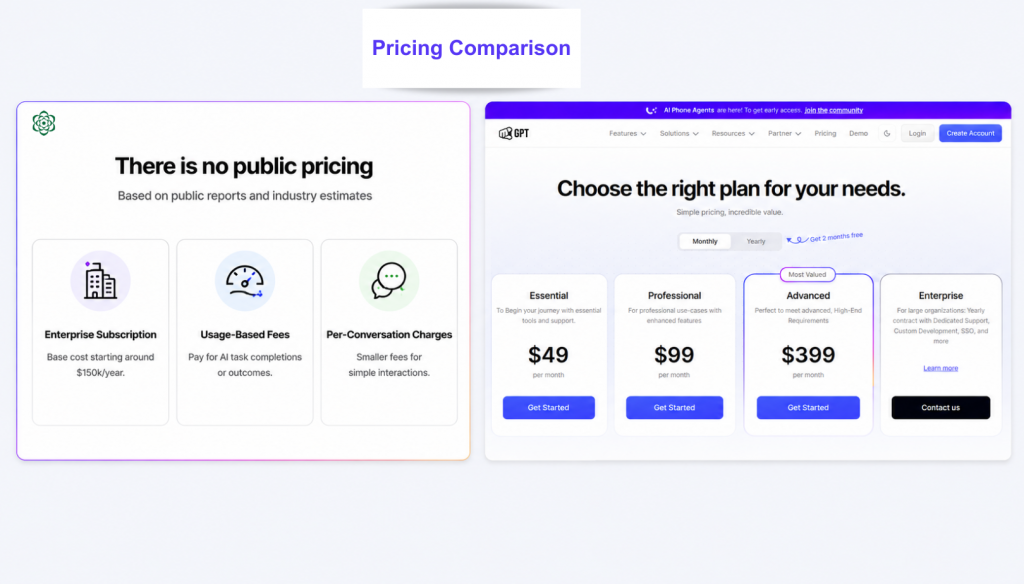
YourGPT publishes pricing. Sierra does not.
That single difference changes the first month of evaluation. YourGPT’s pricing page gives buyers an entry point and a visible path into larger-team requirements. The same public page references annual contracts, SSO, API access, dedicated support, and custom development.
Sierra’s official site talks about outcome-based pricing, but it does not publish a rate card. Third-party pricing analyses from Featurebase, OpenNash, and Quiq commonly place Sierra in six-figure annual territory, often starting around $150,000 or more once rollout and implementation are considered. Those are external estimates, not Sierra-published prices, so they should be treated carefully.
The price number is not the only issue. The buying behavior is the issue.
Private pricing tends to move evaluation toward sales calls, finance review, procurement, and internal justification before a team has learned much from the product. Public pricing lets a team test earlier, identify workflow gaps earlier, and decide whether the platform deserves a larger rollout.
For CX and support leaders, that time matters. The first month should produce product evidence, not only meeting notes.
YourGPT should not be positioned as the “SMB option” against Sierra.
That is not accurate enough.
YourGPT is better described as a platform that serves the full adoption curve: growth teams, mid-market companies, and enterprise teams that want to begin with a real use case before expanding. Its public docs and pricing materials support that position.
The enterprise-readiness checklist is concrete:
That is the right story for YourGPT: enterprise-grade, accessible to everyone.
The phrase matters because it avoids two bad narratives at once. It does not pretend YourGPT is only a simple self-serve chatbot. It also does not force the product into the old enterprise habit of hiding everything behind a sales gate.
The earlier version underplayed this.
AI agents are not only for answering inbound questions. CX and growth teams also care about re-engagement, follow-up, reminders, lead qualification, proactive support, and customer outreach campaigns.
YourGPT has stronger public proof here than the previous draft showed. Its contacts documentation covers contacts, tags, lists, and companies. Its Phone AI documentation includes programmatic outbound calling use cases such as appointment reminders, lead qualification calls, customer outreach campaigns, and proactive customer support. The YourGPT blog also publicly discusses YourGPT Campaigns. Combined with AI Studio and multichannel deployment, that makes the platform useful beyond a passive support widget.
Sierra should not be described as if it has no outbound or proactive motion. Its Voice page says it supports inbound and outbound calls. Its outbound-calls article says outbound voice is one of Sierra’s fastest-growing features. Its Agent Data Platform material discusses audiences, outcomes, inventory, triggers, recommendations, and proactive engagement.
The difference is packaging and access. Sierra frames outbound and proactive engagement as part of a larger enterprise data and orchestration system. YourGPT makes campaign and outreach foundations feel closer to the teams that actually build, test, and run them.
That is a meaningful difference for growth teams and CX leaders. A campaign workflow wrapped in a managed enterprise rollout is not the same buying experience as a campaign workflow a team can test, inspect, and improve quickly.
Launch day is a weak benchmark. The real test starts after customers interact with the agent.
That is when teams discover the practical problems:
YourGPT’s advantage is that these fixes stay closer to the operator. AI Studio gives teams a direct builder surface. Smart learning improves from feedback and previous conversations. Phone AI supports transfer to humans. APIs and SDKs give technical teams room to extend the system when the use case becomes more complex.
That mix matters. No-code control helps the operator. APIs help the technical team. Voice and handoff protect the customer experience. Campaign foundations help teams move from reactive support to customer lifecycle work.
Sierra’s day-two story is different. It emphasizes supervision, observability, model orchestration, automated updates, experiments, outbound voice, recommendations, and proactive insights. That is strong for organizations that want a more structured operating layer. It is less ideal for teams that want more direct control without making every change feel like a platform program.
Choose YourGPT if you are:
Choose Sierra if you are:
Sierra is easier to frame as a premium enterprise decision. YourGPT is easier to put into motion across the business.
That is the difference that matters.
YourGPT is better for businesses that want flexible AI support, sales automation, omnichannel deployment, voice AI, mobile access, and predictable pricing. Sierra AI is better for large enterprises that need managed AI agent deployment and complex backend integrations.
Yes. YourGPT is built for no-code setup, so teams can create AI agents, train them on business data, and launch faster. Sierra AI usually fits companies that prefer a guided enterprise rollout for more complex customer journeys.
YourGPT offers more predictable pricing with published plans and a yearly option around USD 4,188. Sierra AI uses custom enterprise and outcome-based pricing, so businesses usually need to contact sales for a quote.
Yes. YourGPT includes voice AI as part of its broader support, sales, and automation platform. Sierra AI also has strong enterprise voice automation for large-scale customer service operations.
YourGPT is better suited for combined support and sales automation because it includes AI agents, lead capture, helpdesk automation, AI copilot, workflows, and multichannel engagement. Sierra AI is stronger for enterprise customer experience automation and complex service operations.
Sierra and YourGPT are both building AI agent platforms for businesses that want to move beyond basic chatbots. Both focus on handling customer conversations, connecting workflows, and making AI useful inside real support and service operations.
The difference is in platform accessibility and control. Sierra presents a more guided buying and rollout path, with strong emphasis on orchestration, and managed deployment. YourGPT gives teams a more visible path to start, test, and expand through public pricing, trial access, voice AI, human handoff, APIs, and custom workflow options.
That matters because AI agent adoption is not only a product decision. It is also an execution decision. Teams need a platform they can understand, launch, measure, and improve without waiting for every step to become a long sales or implementation process.
YourGPT makes the case for practical adoption: faster access, clearer entry points, and enough flexibility to support both early deployments and more advanced operational needs as the use case grows.
The better platform is the one that gives your team control over the rollout without hiding the path forward.

TL;DR Zoho Desk keeps its strongest AI assistant, native live chat, and process automation behind Professional and Enterprise, and that gap drives most of the switching. YourGPT builds AI agents that resolve support, sales, and operations requests directly instead of routing everything into a ticket queue. Freshdesk, Zendesk, and HubSpot Service Hub offer a more […]
TL;DR Claude Opus 5 launched on July 24, 2026, at half the API token price of Fable 5, while matching or outperforming it on several agentic benchmarks. On AA-Briefcase, Opus 5 scored higher than Fable 5 at high and max effort while costing substantially less per task. Fable 5 still leads on some coding evaluations […]

TL;DR Voiceflow’s official pricing page no longer displays public self-serve plan prices. As of July 2026, it separates pricing into a usage-based Agencies & Partners plan and a Businesses plan that requires contacting sales, replacing the older Starter, Pro, and Business tiers. Most third-party pricing trackers still reference the previous structure, consistently listing Pro at […]
TL;DR Fin, the AI agent formerly sold under the Intercom name, uses a per-outcome pricing model. Salesforce agreed to acquire the company in June 2026, but the deal has not closed yet. Zendesk AI Agents, Salesforce Agentforce, Freshworks Freddy AI, Gorgias, Tidio, and Kustomer suit teams that want AI built into a helpdesk or CRM […]
TL;DR An AI receptionist answers calls, qualifies leads, and books appointments without a live agent, helping businesses reduce missed calls and cover after-hours demand. Pricing can be based on calls, minutes, monthly plans, or human staffing, and lower-priced plans may exclude essential features such as appointment booking and call transfers. This guide compares pricing, features, […]
TL;DR n8n can build AI agents, but memory, tools, evaluation, and deployment often require manual setup and ongoing maintenance. Zapier, Make, Activepieces, Gumloop, and viaSocket combine AI agents with workflow automation, each balancing ease of use, integrations, and customization differently. Relevance AI and Dust focus on agent-first experiences with stronger support for multi-agent coordination, memory, […]