AI Agents for Law Firms: A Practical Deployment Guide

Rajni
Last updated on July 13, 2026
AI agents help law firms respond faster, collect the right client information, and streamline routine administrative work. Their real value comes from helping firms move inquiries forward efficiently by understanding the client’s needs, gathering relevant details, scheduling consultations, and ensuring attorneys have the context they need before the conversation begins.
The most successful deployments focus on improving the client experience while making internal workflows more efficient. When designed around firm processes, AI agents can support client onboarding, consultation scheduling, document collection, follow-up communication, and case routing, allowing legal teams to spend more time on legal work and less time on repetitive administrative tasks.
AI agents are becoming practical tools for law firms that want faster intake, better client communication, and cleaner handoffs without adding more manual work.
When a potential client reaches out, speed and clarity matter. An AI agent can respond instantly, collect the right matter details, identify urgency, and guide the inquiry to the right person at the firm. This helps attorneys and staff start each conversation with better context instead of spending time gathering basic information from scratch.
For growing firms, the value is simple: more responsive client service, more consistent intake, and fewer routine tasks pulling attention away from legal work. With the right workflows, clear boundaries around legal advice, and secure client communication channels, AI agents can support the firm’s existing process while keeping attorneys in control.
This blog explains how AI agents for law firms work, where they create real value, what to consider before choosing one, and how to deploy one safely without disrupting your current operations.
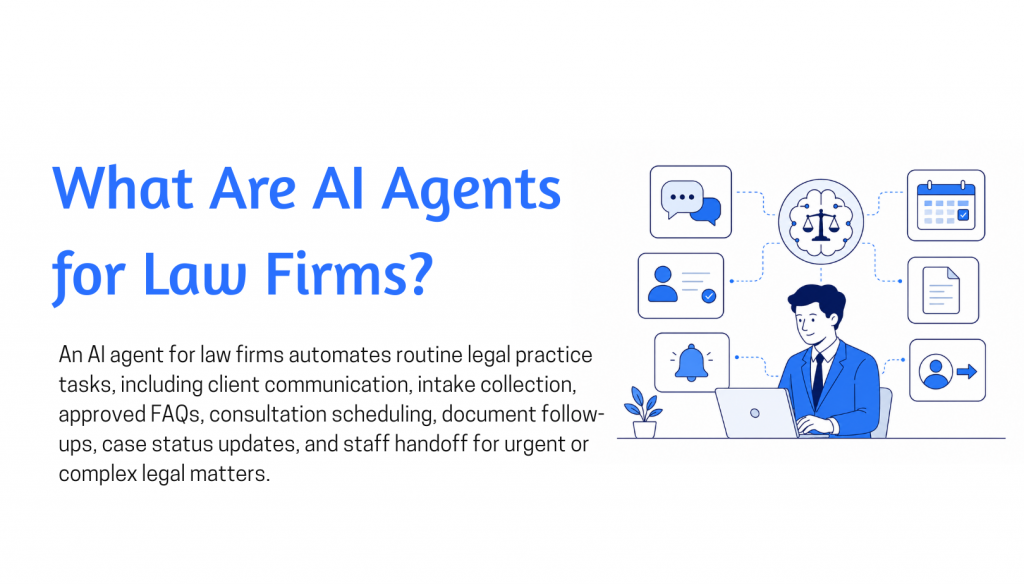
AI agents for law firms are systems that help manage client communication, matter qualification, routing, and follow-up across channels such as website chat, voice, SMS, email, and messaging apps. Unlike traditional legal chatbots that simply retrieve answers from a static FAQ or knowledge base, AI agents can understand intent, ask relevant follow-up questions, gather the information needed for the matter, apply firm-specific workflows, and guide each inquiry toward the appropriate next step.
In practice, that means a prospect does not have to wait until the next business day just to learn whether the firm handles their issue, what information to prepare, or how to book a consultation. It also means intake staff do not have to reconstruct every inquiry manually from a messy voicemail, half-complete form, or vague after-hours message.
For example, if a prospect submits a message saying, “I think my employer wrongfully terminated me and I need help urgently,” the agent does more than provide office hours or a contact form. It identifies the matter type, gathers the relevant intake information, applies the firm’s intake rules, and routes the inquiry to the appropriate attorney or practice group.
The value is not the conversation itself. The value is the action that follows.
That action may include qualifying new leads, collecting conflict-check information, answering approved questions about fees and firm processes, scheduling consultations, routing urgent matters to staff, supporting appointment changes, and escalating situations that require legal judgment.
Modern legal AI agents work across multiple communication channels, including website chat, voice, email, SMS, and WhatsApp. This allows firms to maintain a consistent intake process regardless of how a client reaches out.
Clients expect legal help to be responsive, clear, and easy to access from the first interaction. For law firms, that first interaction often shapes whether a prospect books a consultation, shares key matter details, or continues searching for another option.
AI agents help firms create a faster and more consistent intake experience. When someone reaches out after hours, during a busy court day, or while the front desk is handling multiple requests, the agent can respond immediately, collect essential information, and guide the inquiry toward the right next step.
This is especially valuable for high-intent matters. A person looking for a criminal defense attorney, a family law consultation, or urgent business legal advice usually wants direction quickly. An AI agent can identify the matter type, capture urgency, and prepare the request for staff without requiring the client to wait for the next available call back.
The operational benefit is just as important. Many law firm questions follow repeatable patterns: consultation fees, office hours, scheduling, practice areas, required documents, and general process questions. These do not always require attorney judgment, but they do require accurate and timely responses.
AI agents also improve intake quality. When matter type, contact details, urgency, opposing party names, and preferred contact method are collected early, attorneys and staff begin the conversation with better context. That means fewer repeated questions, cleaner handoffs, and more prepared consultations.
For modern firms, AI agents are not just a speed tool. They create a more organized communication layer across website chat, phone, email, SMS, and WhatsApp, helping the firm stay responsive while keeping attorneys focused on legal work that requires their expertise.
A legal AI agent is not defined by how quickly it responds. It is defined by how accurately it handles inquiries, follows firm policies, moves matters forward, and supports staff without creating additional risk. The following capabilities separate a useful legal AI agent from a simple question-and-answer system.
The first job is not answering. It is classification. Is this a new matter, an existing client question, a scheduling issue, a document request, a billing question, or an urgent escalation?
The system should adapt by practice area and inquiry type. A family law request does not need the same logic as a personal injury, criminal defense, employment, or estate planning inquiry.
It should explain firm process, gather information, and offer next steps. It should not evaluate case strength, recommend strategy, interpret law for the prospect, or say anything a reasonable person would treat as legal advice.
That action might be booking a consultation, routing to a practice group, creating a task for staff, flagging urgency, or preparing a structured handoff summary.
If the inquiry reaches a human, the attorney or coordinator should not have to start over. They should see who the person is, what they need, how urgent it is, what information was already gathered, and what the recommended next step is.
That last point matters more than vendors often admit. The best AI agent is not the one that talks the longest. It is the one that makes the human’s next move easier.
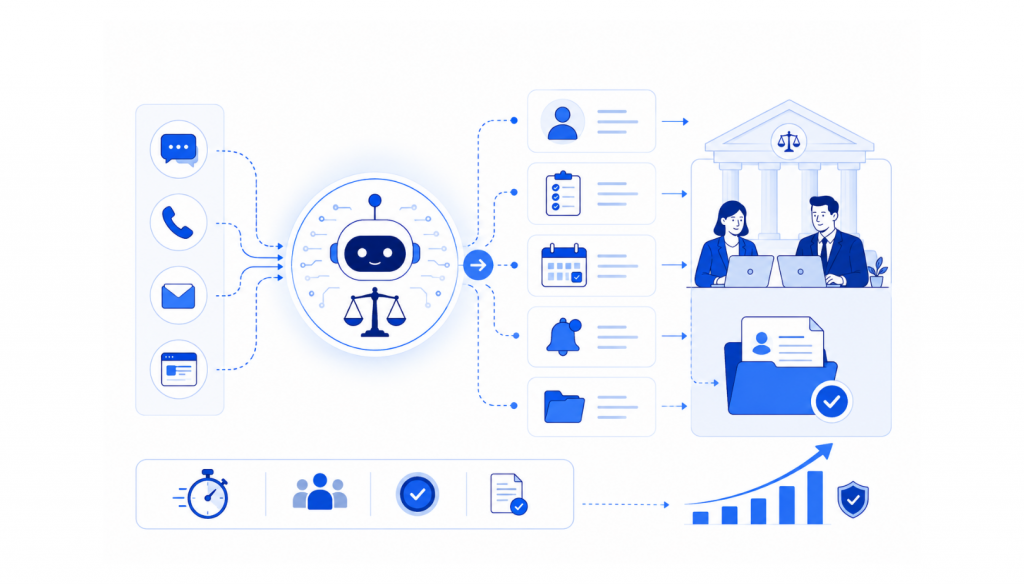
AI agents create the most value in law firm workflows that are high-volume, repeatable, and time-sensitive. These are the areas where staff spend significant time collecting information, answering the same questions, or routing requests before legal work can begin.
The strongest ROI usually comes when the agent is deployed in front-office workflows first. Intake, scheduling, FAQs, and routing are easier to define, easier to test, and easier to measure than complex legal analysis. Once those workflows are stable, firms can consider broader use cases such as document review support, research assistance, or deadline tracking.
This is where a lot of weak content on the topic goes wrong. It treats every legal workflow as equally ready for AI. They are not.
Law firms should be cautious about automating:
Around the world, legal regulators and professional bodies are reaching a similar conclusion: lawyers remain responsible for the work, even when AI is involved. The American Bar Association’s Formal Opinion 512 is one example.
It highlights duties such as competence, confidentiality, supervision, communication, candor, and reasonable fees when using generative AI tools. Similar principles appear across legal jurisdictions. The core message is consistent: AI can assist with legal workflows, but ethical and professional responsibility remains with the lawyer and the firm.
Choosing a legal AI agent is not just about finding a tool that can answer questions. The right system should fit your firm’s intake process, communication channels, compliance needs, and client experience standards.
The best legal AI agent is the one that improves response speed while preserving professional judgment. It should make intake easier, not riskier.
For a law firm, the value of an AI agent is how quickly it turns a client message into a useful, actionable next step for the right person at the firm.
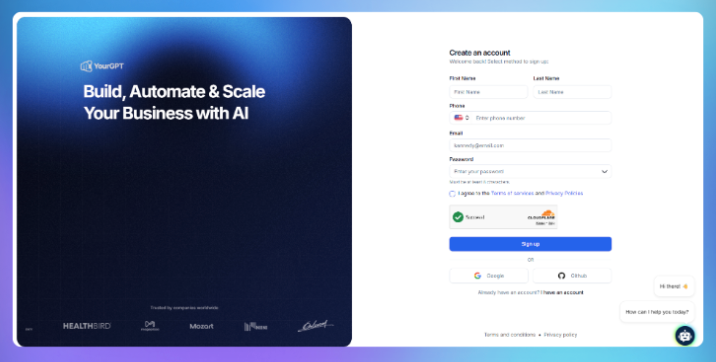
Start by creating a YourGPT account and setting up a new agent for your firm. Do not try to automate every firm workflow on day one. Start with the one area that creates the most repeated, low-value work for your intake team.
For most law firms, that means one of three starting points: new matter inquiry handling, consultation scheduling, or FAQ responses about fees and practice areas. A focused first version is easier to test, easier to control, and easier to trust. Once it is running reliably, expand.
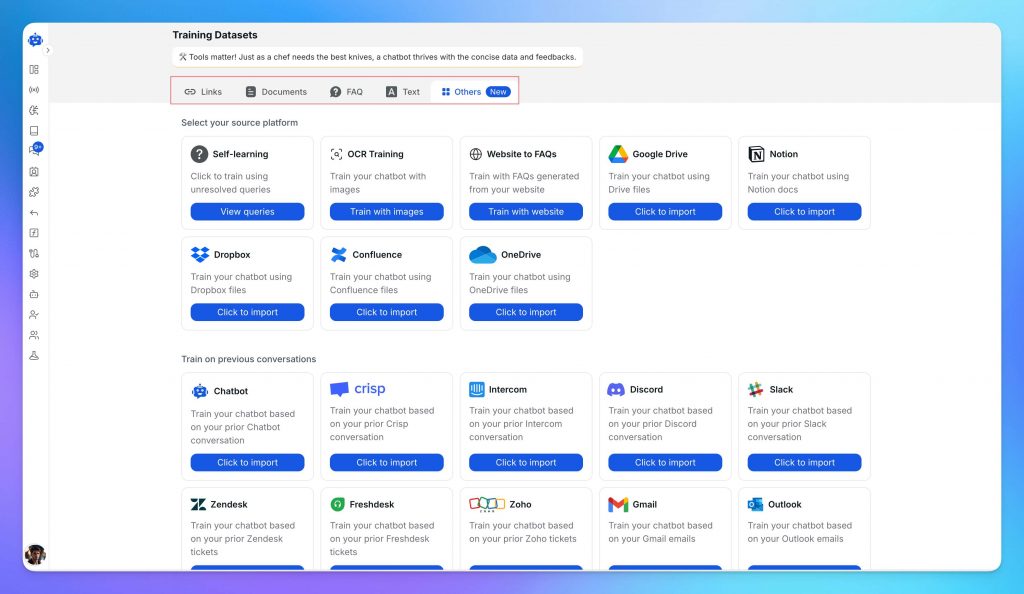
Train the agent on the information your firm already uses to answer client questions: practice area descriptions, attorney profiles, fee structures, consultation processes, office hours, and intake FAQs.
Before adding this material, review it carefully. Remove outdated fee information, old attorney bios, practice areas the firm no longer handles, and anything that does not reflect how your team currently speaks to clients. The agent will reflect the quality of what you give it.
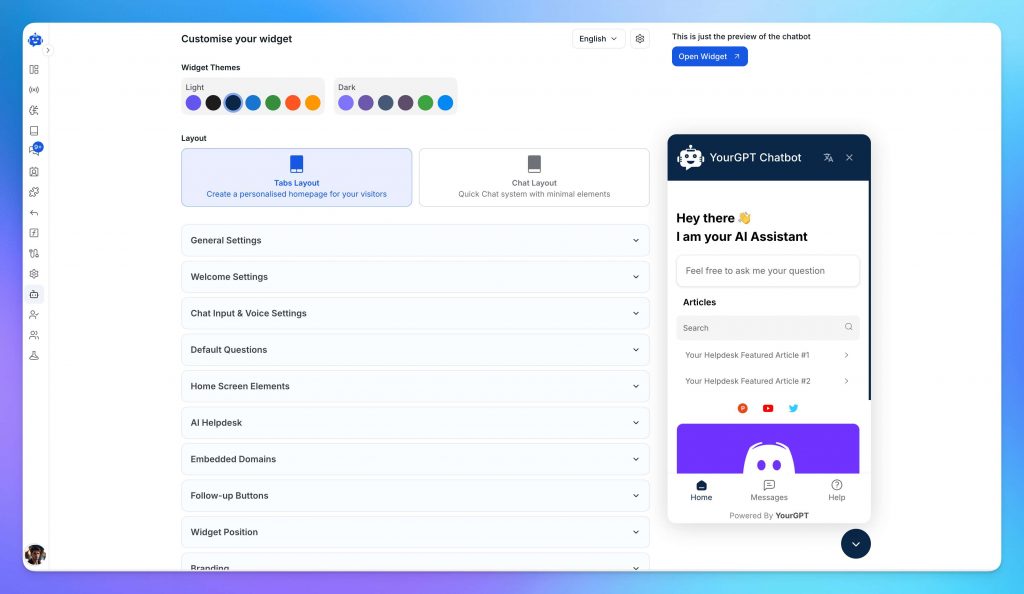
Shape the agent around how your firm actually handles different inquiry types.
A personal injury intake might collect the incident type, date, injuries, and whether a police report was filed. A family law matter might ask about whether children are involved, the county of residence, and any upcoming hearing dates. A criminal matter collects only the minimum approved details and routes to staff immediately.
Decide what the agent should ask, what it should confirm, and when it should stop and hand off. The goal is not a long questionnaire inside a chat window. The goal is enough information so the attorney’s next action is clear.
Set the agent’s role and limits explicitly. Define what it can do: answer questions about the firm, collect intake information, explain processes, confirm appointments, and route inquiries.
Then define what it must not do. The agent should not assess the strength of a case, recommend a legal strategy, predict an outcome, or give any response a reasonable person would treat as legal advice. For inquiries involving criminal matters, emergency protection orders, or any situation where the client appears to be in immediate legal jeopardy, the agent should collect only the minimum required details and escalate immediately.
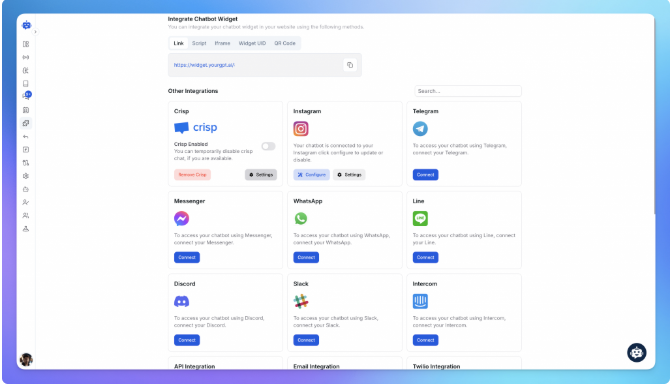
Connect the agent to the channels where your clients already reach out. Before going live, test it against real conversations your firm receives. Build your test set from actual intake call notes, WhatsApp messages, contact form submissions, and the questions your front desk handles every week.
Test different versions of the same request: a detailed, well-organized inquiry and a message that just says “need a lawyer asap.” For each test, check four things: does the answer match firm policy, does the agent collect the right details, does it avoid legal advice, and does the handoff give the team enough context to continue without making the client repeat themselves.
Once the main scenarios are working, go live and monitor the first real conversations closely.
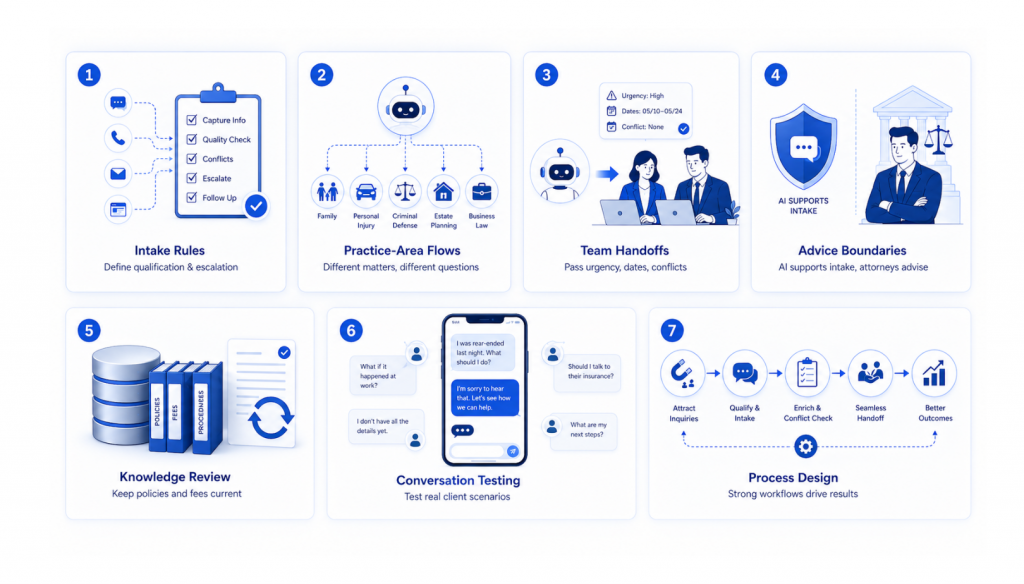
Most law firms already have strong intake and communication processes. The challenge is translating those processes into clear workflows that an AI agent can follow consistently.
The most successful deployments start by documenting how the firm already handles client communication, qualification, escalation, and attorney involvement.
Many firms rely on experienced intake coordinators and staff who know which inquiries need immediate attention, which matters fall outside the firm’s scope, and when an attorney should become involved.
Before deploying an AI agent, these decisions should be converted into clear intake rules and escalation paths. The more structured the process, the more consistent the results.
Not every legal matter follows the same intake process.
Family law, personal injury, criminal defense, estate planning, and business law all require different information at the first point of contact. A well-designed AI agent should adapt its questions based on the matter type rather than relying on a single intake flow for every inquiry.
One of the biggest opportunities for improvement is creating better handoffs between the AI agent and the legal team.
Instead of simply notifying staff that a new inquiry has arrived, the handoff should include key details such as matter type, urgency, contact information, relevant dates, and any information required for conflict screening.
The more context provided, the easier it is for attorneys and staff to continue the conversation efficiently.
AI agents should support communication and intake, not replace legal judgment.
Every deployment should include clear boundaries around what the agent can discuss, which questions require escalation, and when an attorney should take over the conversation.
Strong guardrails help maintain compliance while ensuring clients receive the appropriate level of professional guidance.
An AI agent is only as effective as the information it has access to.
Practice areas, consultation policies, attorney profiles, fee structures, and firm procedures evolve over time. Regular reviews help ensure responses remain accurate and aligned with current firm policies.
Clients rarely communicate in perfect, structured sentences.
They may provide incomplete details, ask multiple questions at once, or describe situations in highly emotional terms. Testing the agent with real intake scenarios helps ensure it performs well under everyday conditions.
Most AI implementation challenges are not technology problems. They are workflow design opportunities.
When firms define intake rules, establish clear escalation paths, maintain approved knowledge sources, and regularly review performance, AI agents become a reliable extension of the client intake process rather than a separate system to manage.
An AI agent for law firms manages routine client communication and intake workflows. It answers approved questions, collects matter details, routes urgent cases, and prepares handoff summaries for staff. It works best when built around the firm’s actual intake process and practice area requirements.
Yes. When the firm defines clear availability rules and connects the agent to the appropriate scheduling process, the agent can collect matter type, urgency, preferred time, and contact details, and either confirm the appointment or pass the request to staff for confirmation.
No. A legal AI agent supports the intake team, not replaces it. It handles repeated questions, after-hours inquiries, and initial lead qualification so paralegals can focus on active matters and clients who need direct human attention.
The agent can recognize urgency signals and escalate accordingly. For criminal matters, custody emergencies, or protection order requests, it should collect the minimum approved details and route to staff immediately. It should not attempt to assess the legal situation.
At minimum, a legal AI agent should collect the client’s name, contact details, matter type, urgency, and whether the client is new or referred. For specific practice areas, additional details such as incident date, opposing party names, or county of residence may be needed before the attorney can prepare for the consultation.
AI is safer when it operates within a secure, auditable environment where the firm controls the data. Client information should never be processed through public AI training models. Every interaction should be logged and reviewable by firm leadership.
Start with one high-volume workflow such as new matter intake, consultation scheduling, or FAQ handling. Train the agent on approved firm content, define UPL boundaries and escalation rules, test with real client message patterns, and expand only after the first workflow is running reliably.
AI agents are becoming part of the modern legal operations stack, helping firms manage growing inquiry volumes, improve responsiveness, and create a more consistent client experience. When deployed thoughtfully, they support the administrative side of legal services while allowing attorneys to focus on analysis, advocacy, negotiation, and client counsel.
The most effective implementations are not built around replacing human interaction. They are built around removing friction from the client journey. From the first inquiry to consultation scheduling, document collection, and ongoing communication, AI agents help ensure that information moves efficiently between clients and legal teams.
For law firms, the opportunity is not simply automation. It is creating a more organized, accessible, and scalable practice. Firms that establish clear workflows, define responsibilities, and align AI with existing processes can improve service delivery without disrupting the professional standards clients expect.
Platforms like YourGPT make this possible across websites, WhatsApp, email, voice, and other communication channels. With customizable workflows, customizable workflows, appointment scheduling, and human handoff capabilities, legal teams can deliver a more seamless client experience while maintaining full control over every legal decision and client relationship.
Learn how to judge Shopify AI resolution rates with clear formulas, a worked example, ticket-level checks and practical ways to improve support quality.
TL;DR B2B customer service means supporting multiple people within the same account, including end users, admins, finance or procurement contacts, and executive sponsors, each with a different definition of a resolved ticket. Traditional support bots handle one conversation at a time and often lose account context when requests move between contacts, channels, or teams, forcing […]
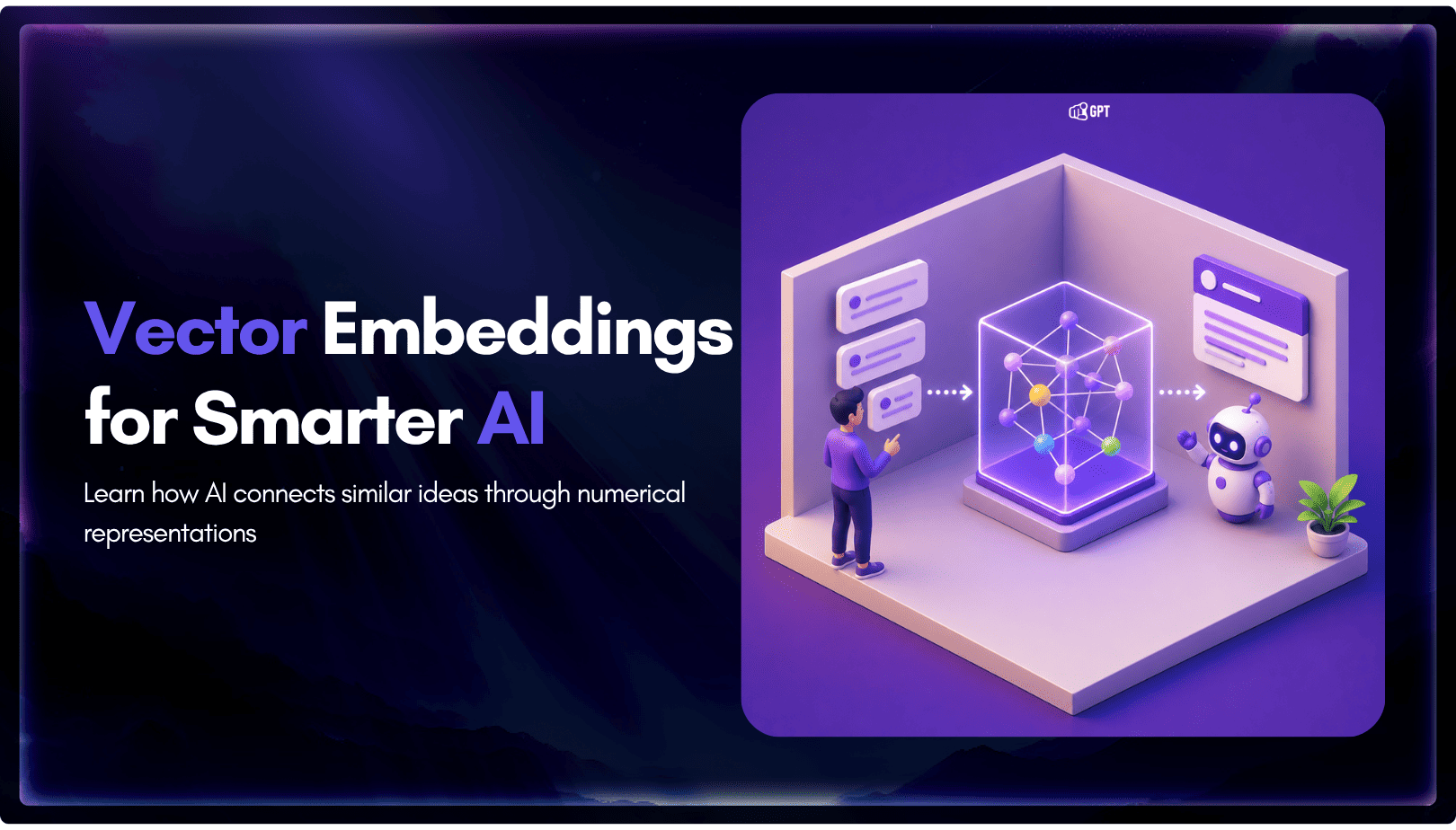
TL;DR A vector embedding is a list of numbers that represents meaning, placing similar concepts closer together in a mathematical space. AI chatbots use embeddings to match questions by meaning rather than exact wording, which is a core part of retrieval-augmented generation (RAG). Anthropic recommends Voyage AI for embeddings, while OpenAI, Google, and Cohere provide […]

TL;DR An FAQ chatbot answers repetitive questions by matching user queries with a knowledge base and returning grounded responses using rules, AI retrieval, or both. Modern FAQ chatbots use confidence checks to deliver instant answers for strong matches and fall back to broader retrieval or human handoff when confidence is low. Rule-based bots work well […]
TL;DR Multimodal chatbots let customers share photos, screenshots, documents, video, or audio directly in a conversation, giving AI more context than text alone. YourGPT’s Attachment Capture node in AI Studio can collect these files mid-conversation, while vision-capable AI models can analyze and understand their contents. Key use cases include ecommerce returns, insurance and warranty claims, […]
A customer asks where their order is. A traditional bot pastes a tracking link and calls it done. An agentic system checks the carrier API, sees the shipment stuck at a depot, applies a credit under the delay policy, updates the CRM, and messages the customer before they’ve had time to get annoyed. Same question. […]