AI for Restaurants: Bookings, Orders, and Support Automation

Rajni
July 27, 2026
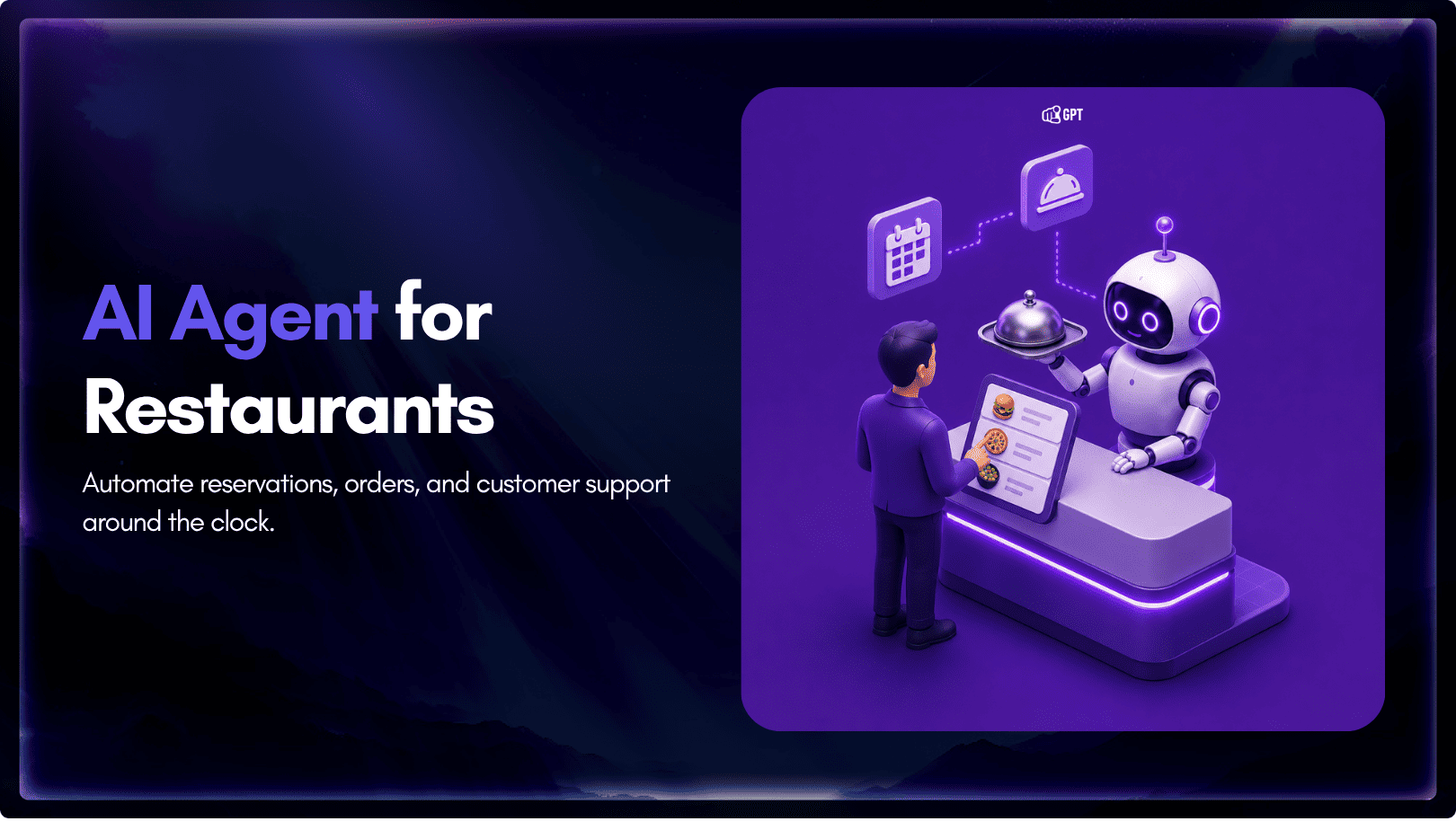
Restaurant AI agents help reduce staffing pressure by handling reservations, food orders, and customer inquiries around the clock without increasing headcount.
Unlike basic chatbots, they integrate with booking systems, POS platforms, and messaging channels to automate reservations, order processing, and routine customer support.
The biggest benefits include automated reservation management, order intake across phone, web, and WhatsApp, and instant answers to menu, hours, dietary, and promotion questions.
Getting started is simple with a no-code setup train the AI on your menu and policies, connect your customer channels, and configure staff handoffs for complex requests.
Restaurants are one of the few businesses where a ringing phone during the dinner rush can mean lost revenue and poor customer support. Every staff member is focused on serving guests, preparing orders, or managing the dining room. When no one can answer the call or respond to customer enquiries, potential customers often hang up, book a table elsewhere, or place an order with a competitor without your team ever knowing the opportunity was missed.
AI agents change that. They can answer calls, manage reservations, take pickup and delivery orders, respond to menu and dietary questions, and handle late-night website inquiries without interrupting your staff. Unlike basic chatbots or automated phone menus, AI agents understand conversations, complete tasks, and seamlessly hand complex requests to your team when needed.
This blog explains how AI agents work in real restaurant operations, which workflows deliver the biggest return when automated, what should remain human-led, and how to build a reliable system that performs even during your busiest service hours.
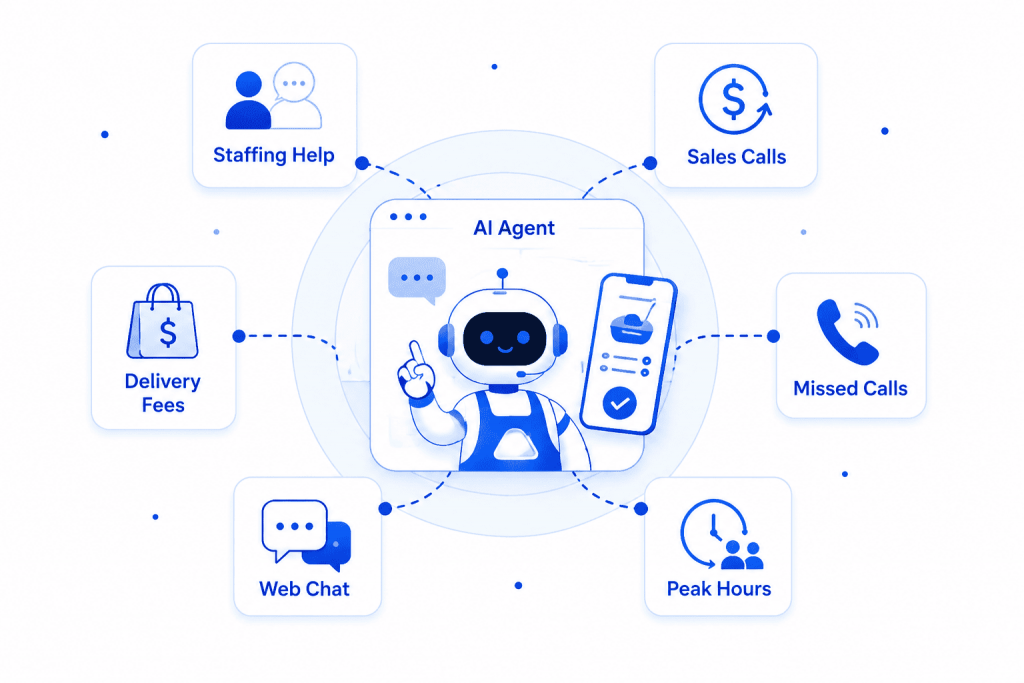
Six pressures are driving the shift, and they compound each other.
A restaurant AI agent connects to your channels, trains on your content, and handles guest conversations from end to end. It reads what the guest is asking, pulls the right answer from your menu or policy documents, and takes the next step: confirming a booking, logging an order, answering a dietary question, or routing to staff when the situation calls for it.
The key distinction from a basic chatbot is what happens after the reply. A chatbot returns information. An AI agent acts on the conversation: it books, confirms, routes, and hands off with full context. Guests do not need to follow up with a phone call to complete what they started.
What a restaurant AI agent handles:
Conversations that should always go to a human include complaints from unhappy guests, exceptions to reservation policies, event contracts, refund approvals, and anything requiring managerial judgment. The agent collects the details and routes with full context before stepping back.
These three use cases consistently generate the clearest return on a restaurant’s first AI deployment, roughly in the order most operators should tackle them.
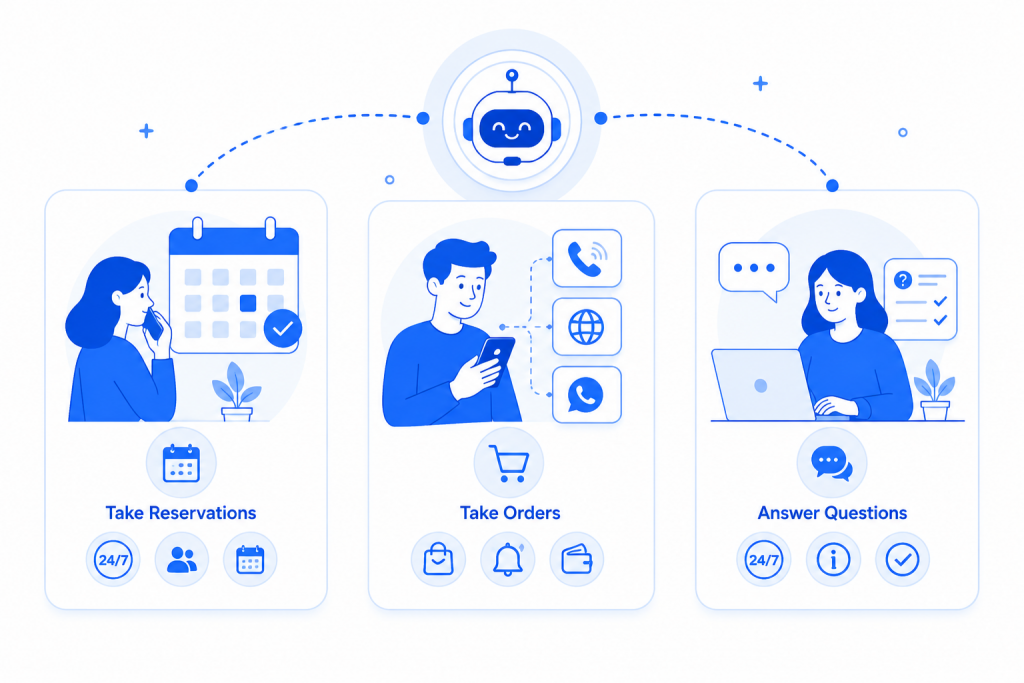
Reservation management is the clearest fit for AI in restaurants. When a guest calls at 7:30 PM on a Friday to book a table, the host is already checking in three parties. The call goes unanswered. The guest books elsewhere. Here is what an AI agent handles instead:
Order intake is where AI agents for restaurants generate the most measurable revenue impact. Phone orders remain a primary channel for independent operators, pizzerias, and formats where third-party commissions make app-based ordering expensive. Every missed call during service is a lost order. Across phone, WhatsApp, and web chat, a single trained agent handles:
YourGPT covers all three surfaces (voice via PhoneAI, WhatsApp via native integration, website via embeddable widget) with consistent answers from the same knowledge base. See the YourGPT 2.0 feature overview for how the voice agent and omnichannel ordering work in practice.
Restaurants field the same questions thousands of times a year: hours on Sunday, vegan options, parking, walk-in policy, private event bookings, allergen details. These are not hard questions, but they arrive at unpredictable hours and pull staff away from service. An AI agent trained on your menu, hours, location details, event policies, and allergen list handles:
Food decisions are often made late at night. A guest researching a dinner reservation at 11 PM who gets a real answer books. One who hits a dead chatbox or a 24-hour contact form response time goes elsewhere.
Restaurant AI works best when the rules are clear. It can answer questions, confirm reservations, and take orders all day long. But some conversations need judgment, flexibility, and genuine human interaction.
When a guest is unhappy about a meal, requesting a refund, or asking for an exception to a booking policy, the goal isn’t for the agent to solve the problem on its own. It’s to make the handoff fast and complete.
For example, when someone reports a poor dining experience, the agent can acknowledge the issue, collect the reservation details, and let the guest know a manager will follow up shortly. The same pattern applies to large private events, special requests, and anything the agent isn’t trained to resolve on its own. Instead of guessing or making a promise it can’t keep, the agent gathers the right information and passes everything to the right person.
This keeps a guest from repeating themselves while giving staff full context before they step in. A simple routing rule covers most cases:
The best restaurant AI handles routine conversations well and recognizes exactly when to step aside, letting automation add efficiency without coming at the cost of the personal service guests expect from a restaurant.
Getting a restaurant AI agent live is faster than most operators expect. The steps below take you from a blank account to a working agent on your website and WhatsApp.

Go to app.yourgpt.ai/create-account and create an account. The 7-day free trial requires no credit card.
Inside the dashboard, create a new agent for your restaurant. Give it a name that fits your brand. The name appears in the chat widget and any WhatsApp greeting, so it should sound like a natural extension of your team rather than a generic “Bot.”
Start with one use case. Do not try to automate reservations, orders, and support all at once on the first day. Pick the channel or workflow that generates the most repeated work for your team: typically phone order intake or reservation handling.
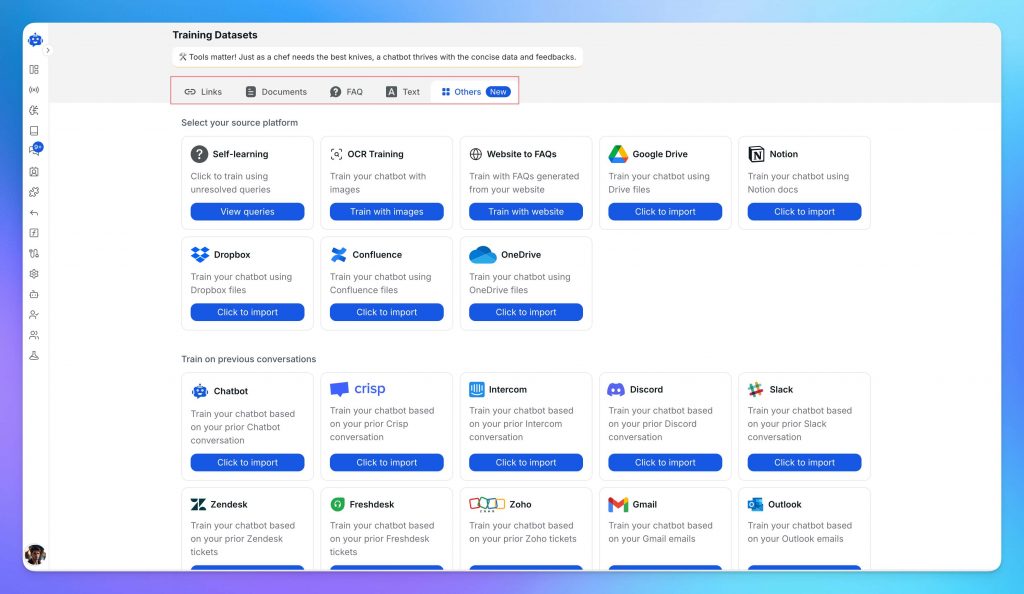
The agent answers from what you train it on. Weak training produces weak answers. Spend time here.
Upload or paste the following:
Clean the content before uploading. Remove outdated pricing or seasonal menus you no longer run. If your allergen information has caveats (“our kitchen handles nuts”), those must be in the document so the agent communicates them accurately.
The agent should sound like a knowledgeable team member, not a marketing brochure. Review the training content as if you are onboarding a new host: would they be able to answer the ten most common guest questions from this material alone?
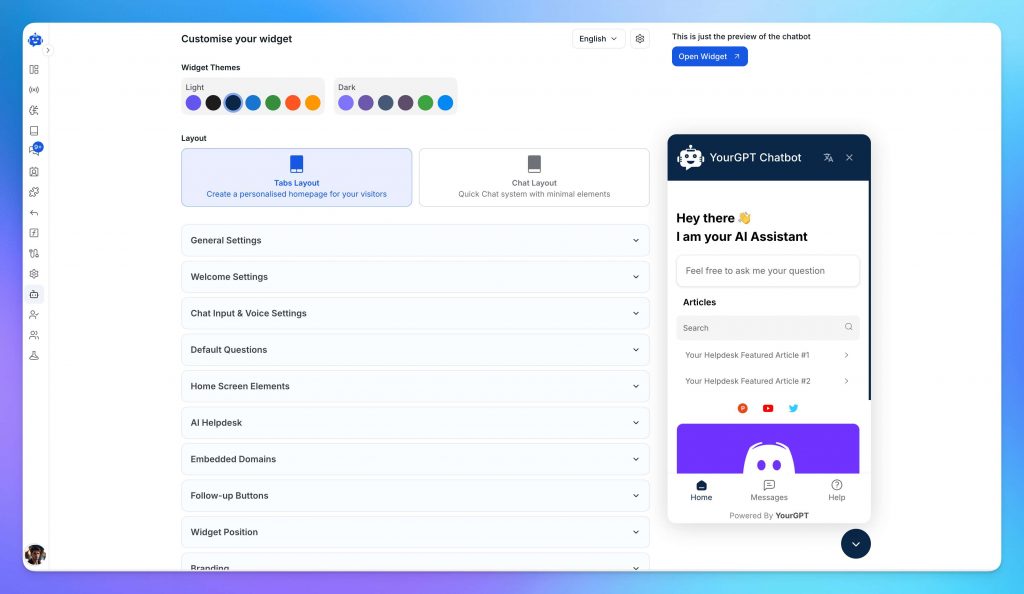
Your agent should sound like your restaurant. A neighborhood trattoria and a fast-casual burger spot need different voices.
Inside YourGPT, adjust the persona: set a name, choose a communication tone (warm and conversational, efficient and direct), and write a brief system prompt that defines the agent’s role.
Then define the escalation rules. Use the logic nodes in AI Studio to create conditional paths: if a message contains certain keywords (complaint, refund, allergy emergency, 15 people), route to a staff notification or a human handoff.

The agent lives where your guests already contact you.
For most restaurants, priority channels are:
Once connected, test each channel against real guest scenarios, not sanitized demo questions. Use your actual inquiry history: the order modifications, the late-night questions about dietary restrictions, the group booking enquiries, the table change requests. The agent should handle these before it goes live.
For Instagram and Messenger enquiries, those can be added as additional channels once the core setup is stable.
Activate the agent and stay close to it for the first week.
Review every conversation. Look for:
Tighten the training content based on what you find. Add missing menu details, update hours if they changed, refine the escalation triggers.
A restaurant AI agent improves when you treat it like a new team member in their first week: capable, but needing feedback to get sharper.
Some restaurant interactions are safe to automate outright, while others depend on judgment a system shouldn’t make alone. The table below breaks down ten common scenarios:
| Interaction Type | AI Agent | Human Required |
|---|---|---|
| Reservation booking and confirmation | Yes | Only for exceptions |
| Pickup/delivery order intake | Yes | Only for complex modifications |
| Standard menu and dietary questions | Yes | For severe allergy cases |
| Hours, location, parking | Yes | No |
| Order status follow-up | Yes (if integrated with POS) | No |
| Complaint about food or service | No | Always |
| Refund or compensation request | No | Always |
| Large group / private event booking | Intake only | Confirmation by team |
| Allergy emergency question | Approved menu info only | Escalate to manager |
| Table assignment preferences | Acknowledge only | Human decides |
The dividing line is risk and judgment. Repeatable, rule-based interactions with clear correct answers belong to the AI. Anything involving money, health, or guest emotion belongs to a human.
An AI agent is only effective if it meets guests where they already prefer to communicate. Every channel serves a different purpose, and the best place to start is the one generating the most missed opportunities for your restaurant.
A phone call usually signals immediate intent. Guests calling your restaurant are often ready to reserve a table, place an order, or ask a question before making a decision. Unfortunately, these calls often come during lunch and dinner rushes when staff are busiest.
A voice AI agent answers every call instantly, takes reservations, records pickup or delivery orders, and answers common questions without putting guests on hold. For restaurants that rely heavily on phone orders such as pizza, Chinese, Indian, or Thai restaurants this is often the first and most valuable workflow to automate.
Many guests prefer messaging over calling. WhatsApp lets them place an order, confirm a reservation, ask questions, and receive updates without leaving the conversation.
Because chats remain available after they’re sent, guests can easily return to previous messages to check pickup times or booking confirmations. For restaurants where WhatsApp is widely used, it can become one of the most effective channels for increasing direct orders and reducing dependence on third-party delivery platforms.
Your website is where many customers make their final decision. They browse the menu, compare options, check opening hours, or look for dietary information before booking or ordering.
An AI agent can answer these questions instantly, recommend menu items, explain allergens, and guide guests toward completing a reservation or order. Removing even small points of friction at this stage can improve conversion rates.
Instagram and Facebook Messenger may not receive the same volume as phone or website traffic, but they are often the first place potential guests reach out.
Questions about private events, table availability, business hours, or promotions can arrive at any time. An AI agent responds immediately, captures the enquiry, and routes it to your team when necessary, ensuring potential customers aren’t left waiting until the next business day.
You don’t need to automate every channel on day one.
Look at where your restaurant loses the most opportunities today. If unanswered phone calls are common, begin with voice AI. If most enquiries arrive through WhatsApp, start there. If your website attracts heavy traffic but few bookings, add an AI chat assistant first.
Expanding one channel at a time allows you to improve the guest experience, measure results, and build confidence before rolling out AI across the rest of your customer touchpoints.
Most restaurant AI projects fail for simple reasons, not because the technology doesn’t work. Avoiding these common mistakes will help your agent deliver a better experience from day one.
Guests ask practical questions about menus, allergens, reservation policies, opening hours, and delivery options. If your AI only learns from marketing pages, it will struggle to answer the questions that matter most. Train it using accurate, up-to-date operational content.
Begin with one high-impact use case, such as reservations, phone orders, or customer enquiries. Once the agent performs reliably, expand it to additional workflows and channels. A gradual rollout makes it easier to monitor quality and improve performance.
AI should follow your restaurant’s policies, not create exceptions. Complaints, refunds, policy exceptions, and other sensitive requests should always be passed to a staff member who can make the right decision.
Menus change, seasonal specials rotate, prices are updated, and holiday hours vary throughout the year. Review conversations regularly to identify missing information and update your knowledge base so the agent continues to provide accurate answers.
The most successful restaurant AI agents are not the ones with the most features. They are the ones trained with accurate information, introduced gradually, and refined through real customer conversations.
Here is what YourGPT handles across a restaurant operation:
Start with the 7-day free trial and build your first agent on your menu content. The pricing page covers the plans if you need to compare options before committing.
A restaurant AI agent handles reservation requests and confirmations, phone and WhatsApp order intake, menu and dietary questions, hours and location enquiries, waitlist management, and feedback collection. For anything requiring managerial judgment, such as complaints, refunds, or policy exceptions, it collects the guest’s details and routes the conversation to staff with full context.
Most platforms let you configure how the agent introduces itself. Being transparent is generally the best approach. Guests who know they are speaking with an AI assistant usually respond more positively than those who discover it later. The agent can introduce itself as the restaurant’s digital assistant.
No. A restaurant AI agent handles repetitive communication such as bookings, phone calls, FAQs, and after-hours enquiries, allowing your staff to focus on serving guests in the restaurant. It supports your team rather than replacing it.
A single AI agent can support website chat, WhatsApp, voice calls, Instagram DMs, Facebook Messenger, and email. Since every channel uses the same knowledge base and business rules, guests receive consistent answers wherever they reach you.
Initial setup usually takes only a few hours. Upload your menu, policies, and operating hours, configure the AI agent’s tone and escalation rules, and connect your preferred channels. YourGPT requires no coding, and providing complete information from the start helps the agent perform better immediately.
A well-configured AI agent acknowledges when it doesn’t know the answer, informs the guest that a staff member will assist, and transfers the conversation with complete context. It should never guess or fabricate information. Repeated unanswered questions indicate that the knowledge base should be updated.
Yes. Guest information such as names, phone numbers, booking details, and dietary notes is managed according to your data retention settings. YourGPT is SOC 2 Type II certified and GDPR compliant. Restaurants should also review their account settings and Data Processing Agreement before deployment.
YourGPT offers a 7-day free trial with no credit card required. Paid plans start at $59 per month (monthly billing). Visit the pricing page for the latest plans and feature details.
Restaurant AI delivers the most value when it handles repetitive tasks while your team focuses on providing great hospitality. By automating reservations, order intake, and routine customer enquiries, restaurants can reduce missed opportunities, improve response times, and increase customer satisfaction through faster, more consistent service.
Start with one workflow that creates the biggest impact, train the agent on accurate operational information, and define clear handoff rules for situations that require human judgment. As your business grows, you can expand AI across more channels and workflows with confidence.
With the right approach, an AI agent becomes a reliable extension of your restaurant team, helping you improve operational efficiency while delivering a better experience for every guest.
TL;DR B2B customer service means supporting multiple people within the same account, including end users, admins, finance or procurement contacts, and executive sponsors, each with a different definition of a resolved ticket. Traditional support bots handle one conversation at a time and often lose account context when requests move between contacts, channels, or teams, forcing […]
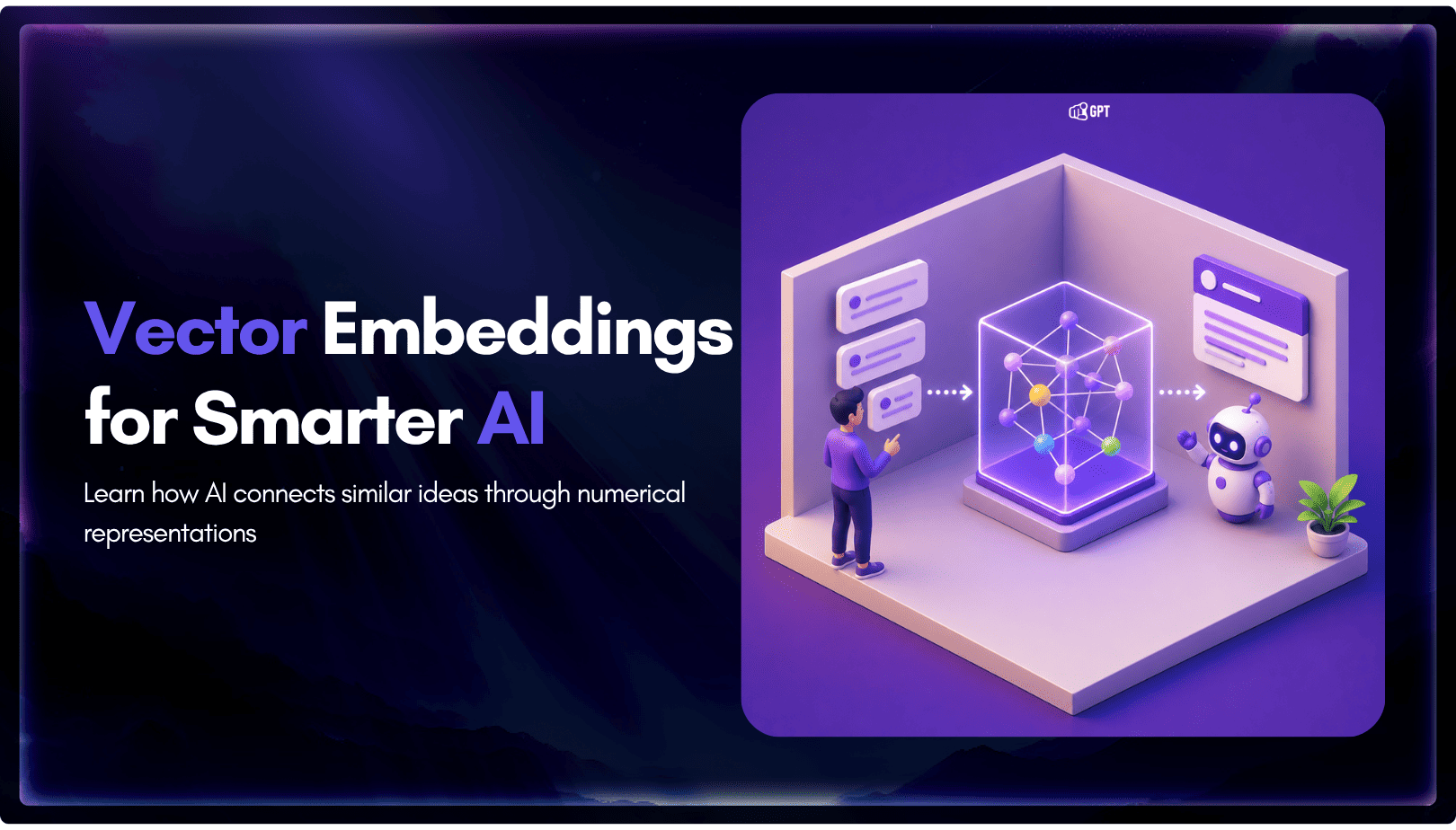
TL;DR A vector embedding is a list of numbers that represents meaning, placing similar concepts closer together in a mathematical space. AI chatbots use embeddings to match questions by meaning rather than exact wording, which is a core part of retrieval-augmented generation (RAG). Anthropic recommends Voyage AI for embeddings, while OpenAI, Google, and Cohere provide […]

TL;DR An FAQ chatbot answers repetitive questions by matching user queries with a knowledge base and returning grounded responses using rules, AI retrieval, or both. Modern FAQ chatbots use confidence checks to deliver instant answers for strong matches and fall back to broader retrieval or human handoff when confidence is low. Rule-based bots work well […]
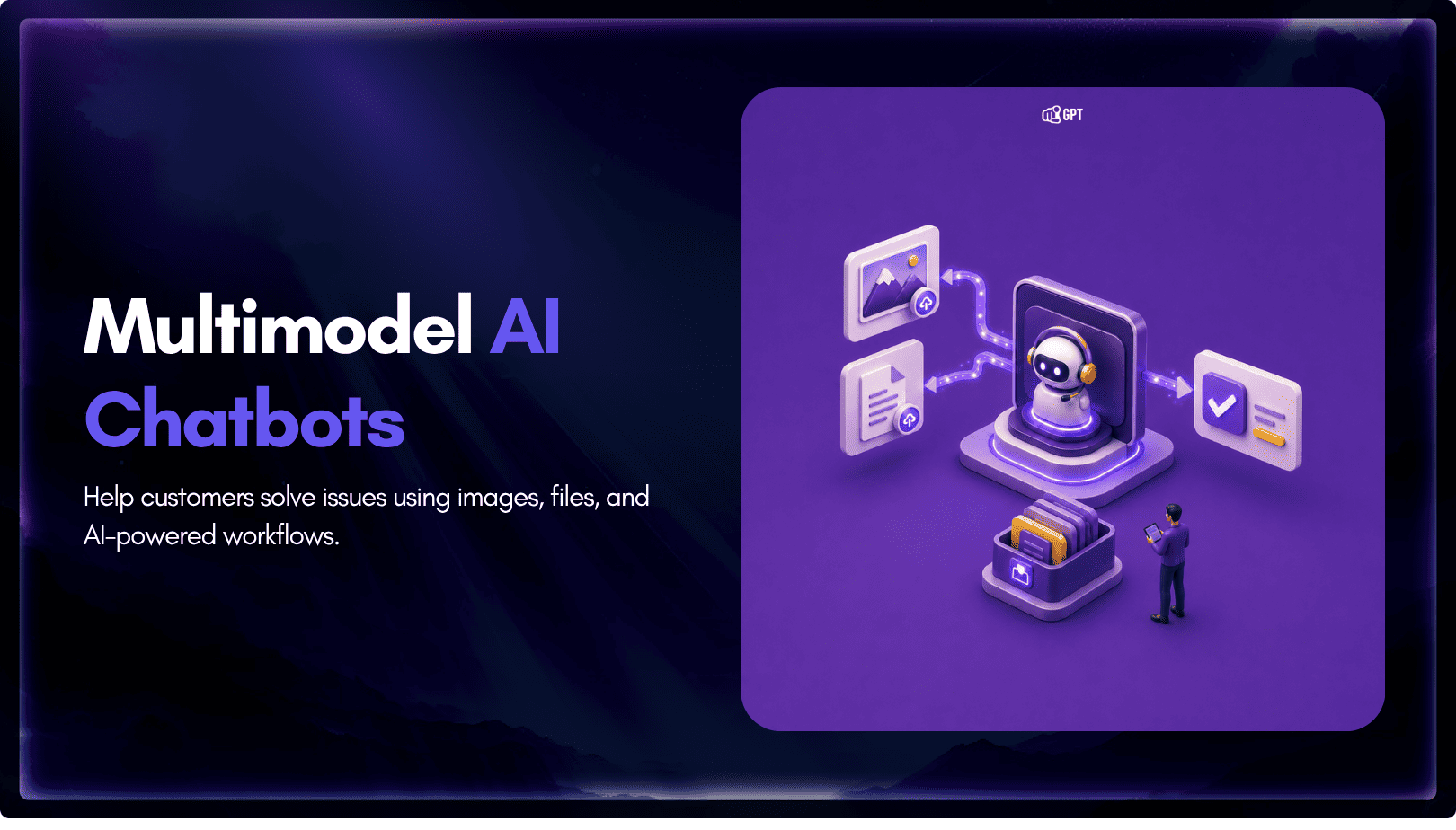
TL;DR Multimodal chatbots let customers share photos, screenshots, documents, video, or audio directly in a conversation, giving AI more context than text alone. YourGPT’s Attachment Capture node in AI Studio can collect these files mid-conversation, while vision-capable AI models can analyze and understand their contents. Key use cases include ecommerce returns, insurance and warranty claims, […]
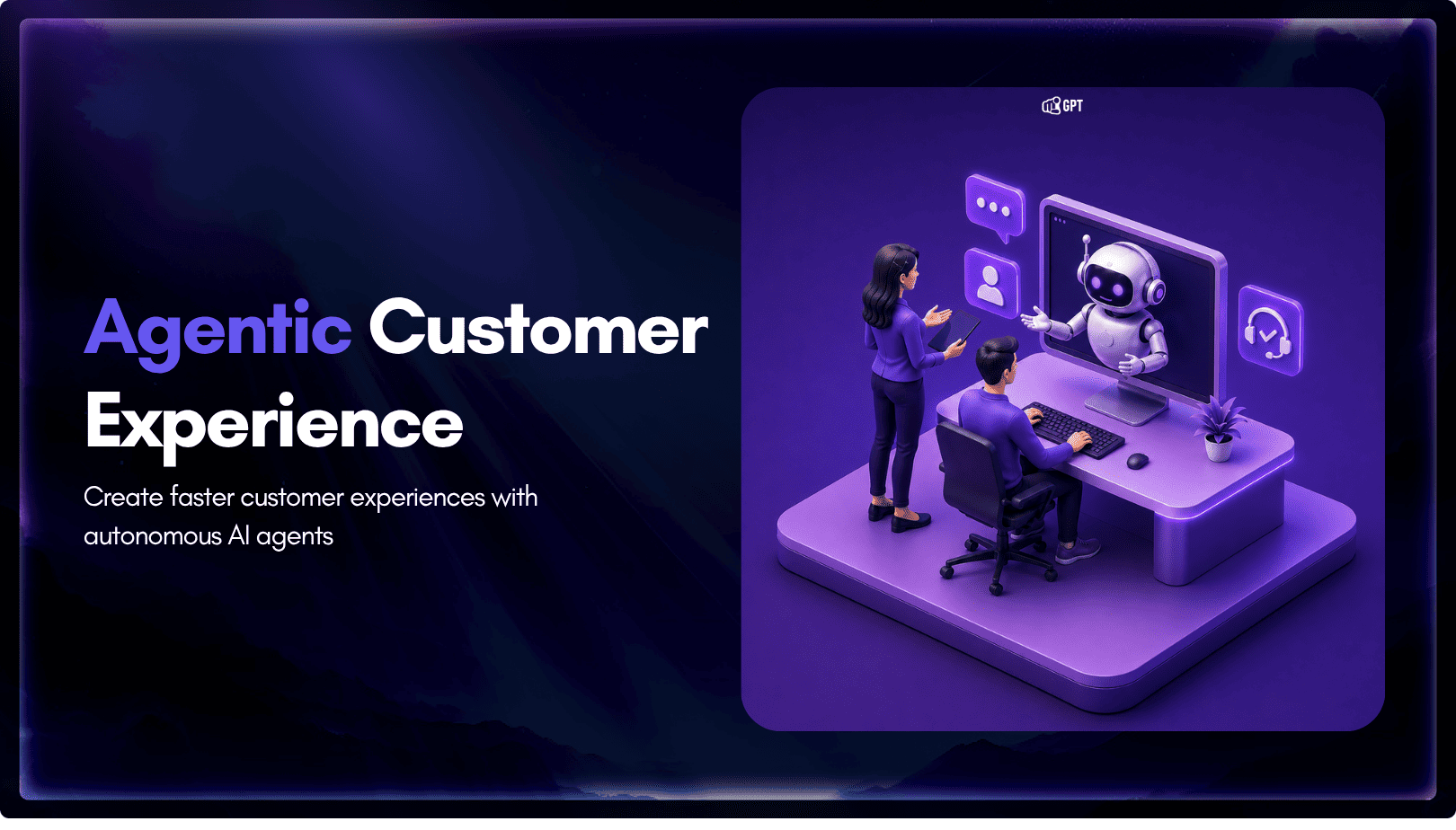
A customer asks where their order is. A traditional bot pastes a tracking link and calls it done. An agentic system checks the carrier API, sees the shipment stuck at a depot, applies a credit under the delay policy, updates the CRM, and messages the customer before they’ve had time to get annoyed. Same question. […]
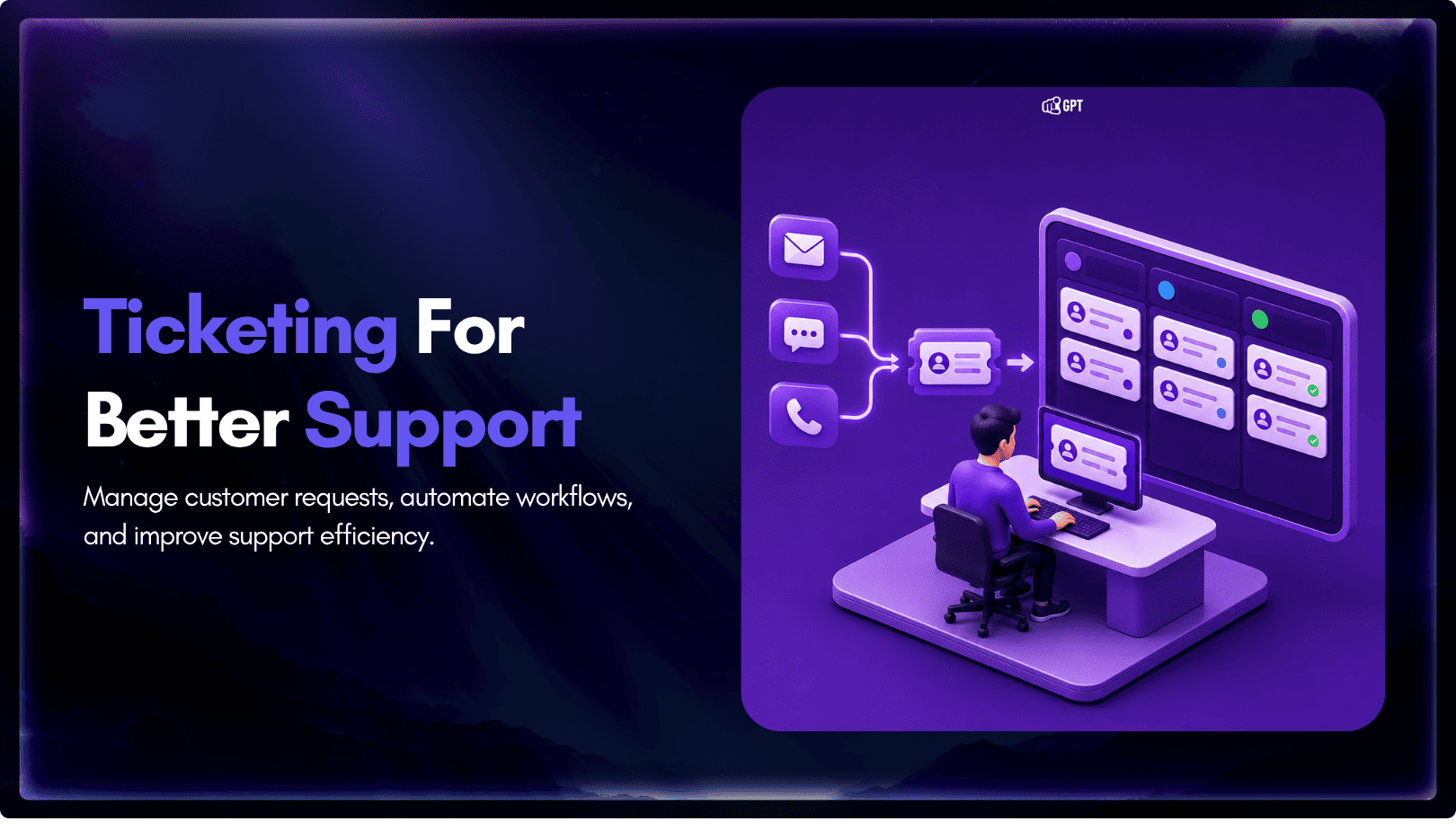
TL;DR A ticketing system converts requests that arrive by email, chat, phone, or web form into trackable records with an owner, a status, and a priority level. Centralizing requests this way cuts response delays, gives support teams visibility into backlogs, and creates a record useful for reporting and audits. Options range from lightweight help desk […]