Copilot SDK vs Vercel AI SDK: Which One Should You Choose for Your Product?

Rajni
Last updated on May 4, 2026
AI SDK choice depends less on model capability and more on how much of the UI, context, and interaction layer is already handled for you.
Toolkits that start from low-level building blocks require more custom work, while copilot-focused SDKs reduce the need to design frontend shells and context handling from scratch.
Teams that prioritize in-product copilots and faster implementation often benefit from starting with a system that already aligns UI, context, and model interaction into a cohesive experience.
AI SDKs have changed how quickly teams can add large language models to web applications. Features such as real-time responses, easy model switching, and ready-made chat interfaces now help developers ship AI functionality in a short time. For many SaaS products, this opened the door to practical AI use inside everyday tools, especially for automating customer support, handling repetitive questions, and assisting users directly inside the product.
AI is integrated into daily product use, and expectations rise. Users want more than just answers; they want assistance completing work directly within the product. This creates new requirements for live data, permissions, safe actions, and consistent behavior across the app.
The SDK you choose shapes how well these needs are handled.
Two tools often compared here are YourGPT Copilot SDK and Vercel AI SDK. Both are open source and help teams build with modern language models. But they start from different assumptions about how AI should work inside a product.
This article compares how each SDK fits real SaaS use cases, what kinds of problems they are built to solve, and which approach makes more sense when AI becomes part of core product workflows.
At a high level, both SDKs help teams build modern AI experiences. Both support multi-model workflows. Both can be used in production. Both can power chat-like interactions.
But they start from different product assumptions.
Vercel AI SDK starts from primitives. It gives teams the building blocks to design their own AI experience. That is powerful if you want control over architecture, presentation, and orchestration.
YourGPT Copilot SDK starts closer to a packaged in-product assistant. It is aimed at teams that want AI to feel embedded inside their software rather than bolted onto it later.
This difference sounds subtle, but it changes the entire implementation path.
A primitives-first SDK asks:
How do you want to build your AI experience?
A product-native assistant SDK asks:
How quickly do you want to launch an AI assistant that already feels like part of your app?
If your roadmap is centered on AI customer support, in-app guidance, account-aware assistance, or workflow help embedded directly in the product, that second path becomes much more attractive.
| Feature | YourGPT Copilot SDK | Vercel AI SDK |
|---|---|---|
| Core Purpose | Built for teams that want to ship a product-native AI copilots inside their SaaS app with more of the agentic layer already packaged. | Built as a flexible AI toolkit for building custom chat, generation, structured output, and agent experiences. |
| Default Starting Point | Starts closer to a ready-made in-product assistant experience. | Starts with composable primitives that developers assemble into their own product experience. |
| UI Experience | Stronger fit when you want a visible assistant layer embedded directly into the product without designing every UI pattern from scratch. | Best when you want full control over how chat, completion, structured data, and assistant UX appear across your app. |
| Agent and Tool Support | Good fit for product-facing assistants that need tools and app-connected behavior inside guided flows. | Strong for teams that want to define custom tool loops, agent behavior, and orchestration themselves. |
| Context Handling | More attractive when app-aware assistance and product context are central to the user experience. | Flexible, but teams typically define and pass their own context patterns as part of implementation. |
| Framework Fit | Best for teams that want a faster path to an embedded assistant, especially in React-heavy product environments. | Best for teams that want broad framework flexibility and a toolkit they can shape across different surfaces. |
| Development Style | Opinionated enough to reduce assistant-shell work and speed up embedded product delivery. | Developer-driven and highly composable, with more responsibility left in application code. |
| Best Use Case | In-product assistants, support copilots, onboarding guidance, account-aware product help, and workflow-facing AI surfaces. | Custom AI interfaces, multi-surface AI products, bespoke assistant experiences, and teams that want to own every layer. |
| Main Tradeoff | More opinionated. That is a strength when the abstraction matches your product, but less ideal if you want every layer fully custom. | More flexible. That is a strength for control, but it can leave more product-surface work on your roadmap. |
| Who Should Choose It | Teams that want AI to feel like a native part of the product quickly and cleanly. | Teams that want a general-purpose AI foundation and are comfortable assembling the final experience themselves. |
When comparing YourGPT Copilot SDK and Vercel AI SDK, return on investment is less about licensing and more about how much engineering effort is required to build, scale, and maintain production-grade AI inside a SaaS product.
Both SDKs are open source. The difference shows up in development velocity today and technical debt tomorrow.
Vercel AI SDK delivers strong short-term efficiency for shipping AI interfaces. Teams can launch streaming chat, text generation, and model-driven features quickly with minimal backend setup.
Where teams typically invest more effort over time is in building supporting systems around the SDK, including:
• shared context preparation layers
• permission and role enforcement logic
• workflow sequencing and retries
• execution state tracking
• UI synchronization across product screens
For interaction-focused tools, this overhead remains manageable.
For workflow-driven products, this orchestration layer often grows into a sizable internal system that must be maintained as features expand.
Copilot SDK is designed to eliminate much of this repeated infrastructure work from the start.
Instead of building orchestration, context flow, and execution control separately, teams work within a structured copilot runtime where these concerns are already standardized.
This typically results in:
• faster development of in-product AI workflows
• fewer edge cases caused by inconsistent context handling
• easier debugging of AI-driven behavior
• lower maintenance as product complexity grows
Engineering time is spent defining what the copilot should do rather than rebuilding AI plumbing across features.
Vercel AI SDK maximizes speed for shipping AI interactions.
YourGPT Copilot SDK maximizes speed and stability for shipping AI as part of product systems.
For teams experimenting with AI features, interface-level SDKs often deliver quick wins.
For teams integrating AI deeply into business workflows, product infrastructure becomes the main cost driver.
That is where Copilot SDK tends to produce stronger long-term returns.
As AI becomes embedded into core product flows, the challenge shifts from generating responses to running reliable, auditable, and maintainable AI systems inside real applications.
YourGPT Copilot SDK is designed around this reality. Instead of relying on scattered prompt logic and custom orchestration layers, copilots operate within a structured runtime where context, execution, and workflow behavior follow consistent rules.
This approach makes AI features easier to debug, safer to extend, and more predictable in production. Teams can trace how decisions were made, control what actions can run, and evolve workflows without rewriting supporting infrastructure each time new use cases appear.
Over time, this reduces technical debt and prevents AI logic from spreading across the codebase in fragile ways.
Vercel AI SDK remains an excellent choice for quickly building interactive AI features and real-time interfaces. But when AI becomes responsible for business-critical operations, product-level governance and execution structure become essential.
Copilot SDK provides that foundation from the start, allowing teams to scale AI as part of their product systems rather than layering complexity on top of simple interaction tools.
Vercel AI SDK is the stronger choice when flexibility is the main goal.
That is true for teams that:
This is a big point.
Many comparison articles flatten Vercel AI SDK into a “chat SDK.” That is too narrow. The stronger reason to choose it is not simplicity. It is control.
If you are building a custom AI platform inside your app, or if you expect multiple AI workflows to evolve in different directions, Vercel AI SDK gives you a broader foundation. You can keep the assistant minimal in one part of the product, render structured objects elsewhere, stream custom UI in another surface, and evolve each flow independently.
For engineering-heavy teams, that freedom can be more valuable than having a faster default shell.
YourGPT Copilot SDK becomes more compelling when the assistant itself is part of the product strategy.
That usually means:
This is why the distinction matters so much for SaaS products.
Once AI moves inside the product, UI and context stop being secondary concerns. They become the experience.
That is where a product-native approach can create leverage. Instead of spending the first part of the roadmap deciding how the assistant opens, how it presents itself, how it stays consistent across screens, and how it connects to product-facing help patterns, the team can move closer to real product behavior sooner.
This is also where YourGPT’s ecosystem matters more. If your roadmap touches embedded support, AI-driven help, or product-connected conversations, there is a natural bridge from AI chatbot use cases into a more deeply embedded assistant model. And if the value of the assistant depends on connecting into your product systems, workflows, or channels, YourGPT’s broader integration layer becomes directly relevant to the implementation story.
In short, Vercel helps you build whatever AI layer you want.
YourGPT helps you move faster when the thing you want is a real in-product assistant.
The difference between Copilot SDK and Vercel AI SDK becomes clear once AI moves into daily product workflows.
Teams don’t just use them differently. They end up building different kinds of AI-powered experiences.
Copilot SDK is chosen when AI must operate inside real systems and workflows.
Teams use it to:
• guide users through onboarding and setup
• work with live customer and account data
• trigger backend actions and updates
• coordinate multi-step product processes
• automate internal operations
Here, AI behaves like a product feature. It understands application state, respects permissions, and completes real tasks.
This reduces manual work while keeping automation aligned with business logic.
Vercel AI SDK is commonly used to power AI-driven interfaces.
Typical use cases include:
• real-time chat assistants
• content generation tools
• AI-powered search and suggestions
• prompt-based productivity features
• interactive AI components in dashboards
In these setups, AI focuses on fast responses while the application handles context and workflows.
In practice, teams that want AI to run workflows and automate real operations naturally gravitate toward Copilot SDK, while teams focused on improving conversations and interactive features often choose Vercel AI SDK. Many SaaS products begin with chat-style AI and gradually move toward deeper automation as users expect more from intelligent systems. That shift is where product-native copilots become most valuable, allowing AI to move beyond responses and actively participate in how work gets done inside the product.
Early AI features are easy to ship. The real challenge begins when AI becomes part of daily product workflows, touching live data, permissions, and multi-step processes.
At that stage, teams are no longer solving model integration. They are managing system behavior.
Pressure usually shows up as duplicated context logic, inconsistent workflow outcomes, permission edge cases, fragile prompt chains, and rising maintenance effort. These are architectural issues rather than model limitations.
Vercel AI SDK continues to perform strongly at the interaction layer. Streaming remains smooth, provider switching stays simple, and UI hooks scale cleanly.
What grows over time is the orchestration around each model call. Teams build internal systems for shared context handling, workflow coordination, permission enforcement, execution monitoring, and cross-feature consistency. As products mature, more engineering effort shifts from shipping AI features to maintaining this infrastructure.
Copilot SDK centralizes context, execution, and workflows inside a single runtime.
Instead of layering new systems as complexity increases, teams extend structured actions and workflows that automatically stay consistent across the product. This requires some upfront planning but results in far lower long-term complexity and maintenance.
YourGPT Copilot SDK is built for teams that want AI to work inside their software, not beside it. It enables copilots to interact with real systems by reading product state, following access rules, triggering actions, and guiding users through workflows. It’s commonly used in onboarding flows, in-app automation, support operations, and internal tools.
Vercel AI SDK is mainly used to create AI-powered chat interfaces, writing assistants, and real-time AI features. It simplifies model calls and streaming UI, making it easy to build conversational or generative tools. It focuses more on content generation than action execution within product logic.
Teams often need more than chat when users expect AI to complete real tasks—like updating records or navigating multi-step flows. At that point, context, permissions, and workflow control become essential, which is where Copilot SDK offers significant advantages.
Yes. Vercel AI SDK performs well for chatbots, streaming UIs, and prompt-driven tools at scale. However, it’s not designed to manage action workflows or enforce business logic, which must be implemented separately.
As SaaS products mature, users want more than just answers—they want AI to take action, fix issues, and guide processes. Simple chat tools rely on fragile prompt logic. Copilot SDK supports structured workflows and product-native automation for better long-term scalability.
Not usually. Copilot SDK includes context flow, workflow execution, and action handling. Teams integrate these into existing systems without rewriting backend infrastructure. Most effort is focused on workflow definition and permission modeling.
Yes. The SDK uses a stable interface for AI models, so teams can switch providers for cost or performance reasons without changing the frontend or workflow logic.
For chat or UI-based tools, Vercel AI SDK scales well. But for automation and deeper product logic, Copilot SDK scales better by keeping workflows, rules, and context handling centralized.
No. Many startups adopt Copilot SDK early to avoid architectural rewrites later. It supports growth by enabling AI-driven automation from the beginning.
If you’re adding conversational AI, content tools, or UI assistants, Vercel AI SDK is ideal. If you need AI to handle workflows, enforce rules, and act within your app, Copilot SDK is the better fit.
AI is no longer a feature teams bolt onto SaaS products. It is becoming part of how work actually happens inside software.
The moment AI moves beyond simple chat and content generation into real workflows, the underlying architecture starts to matter. Handling live context, enforcing permissions, coordinating actions, and keeping behavior predictable at scale are product challenges, not model challenges.
Vercel AI SDK excels at helping teams ship AI interactions quickly. It is a great choice for conversational features, real-time responses, and prompt-driven tools. Where it stops is product orchestration. As AI takes on more responsibility, teams must design and maintain their own systems for context, workflows, and execution.
YourGPT Copilot SDK approaches AI from the opposite direction. It treats copilots as part of the product itself. Context, actions, and workflows live inside a unified runtime, allowing AI to operate safely within real application logic rather than around it.
For teams experimenting with AI interfaces, lightweight SDKs can be enough.
For teams building AI-driven products, automation, and in-product workflows, a product-native copilot architecture becomes essential.
That is where YourGPT Copilot SDK delivers long-term clarity, lower maintenance overhead, and a foundation that scales as AI becomes central to how SaaS products operate.
Turn AI from a chat feature into a real part of your product. Connect copilots to workflows, application state, and real actions without building custom infrastructure.
Open source · Self-hosted · Works with any LLM · No lock-in
TL;DR Ada CX is a no-code enterprise AI platform for automating support across chat, voice, email, and messaging. Pricing is quote-only, with no public plans or self-serve signup. Admin reviews are generally positive, while end-customer feedback is more mixed. Ada supports SOC 2 Type II, GDPR, HIPAA, PCI DSS, and AIUC-1 certification. Ada CX shows […]

TL;DR CustomGPT.ai is a no-code RAG platform for building AI agents on business content. Pricing starts at $99/month for Standard and $499/month for Premium, with lower rates on annual billing. Enterprise typically ranges from $2,000 to $6,000/month. The Standard plan includes 500 query credits, 2 AI agents, and 1 team member. These limits differ from […]
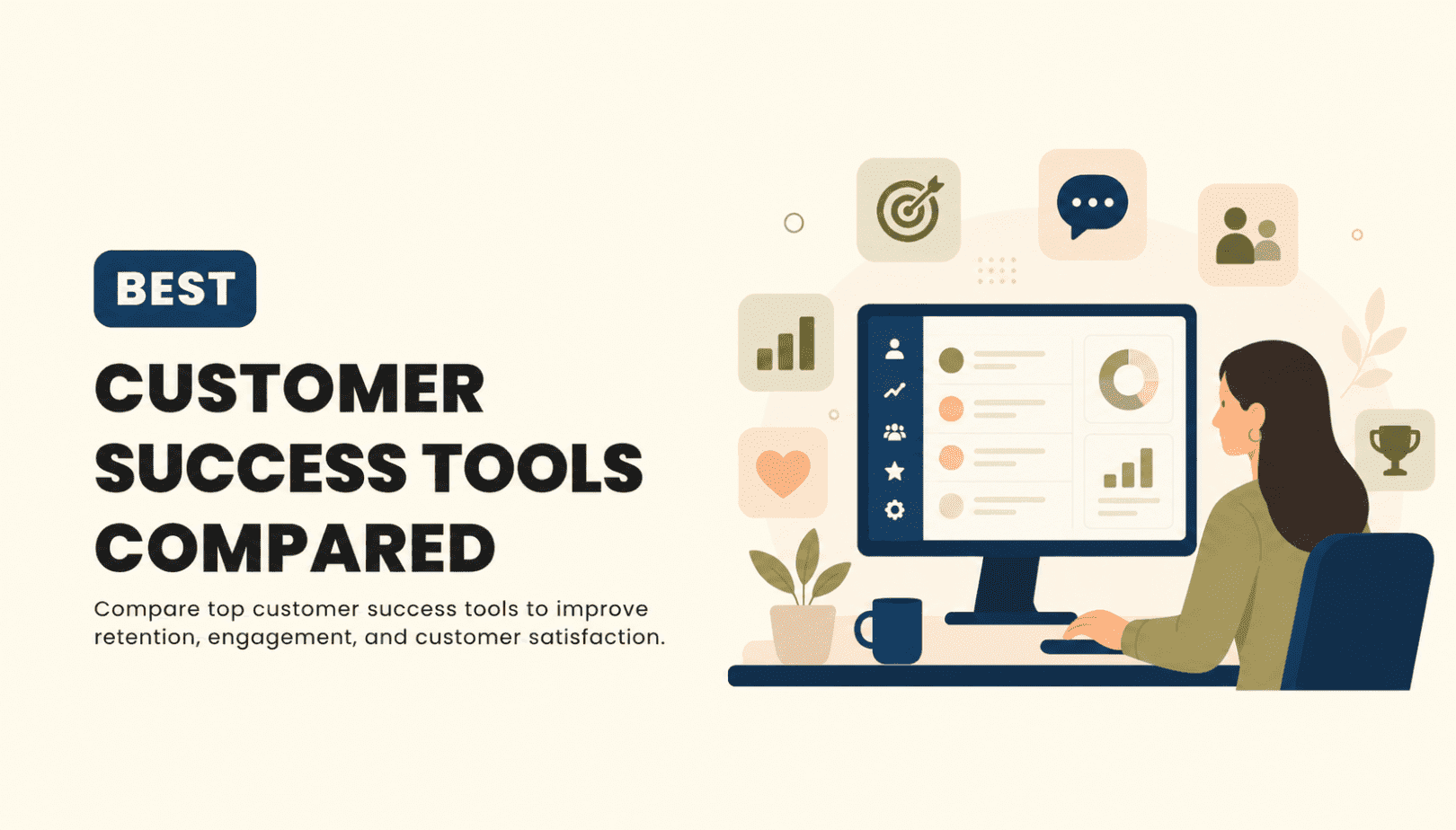
TL;DR Customer success tools fall into two groups: dedicated CS platforms such as Gainsight, ChurnZero, Totango, Planhat, Vitally, and Custify, and support or AI-agent tools such as Freshdesk, YourGPT, and Intercom. None of the six dedicated CS platforms publish list pricing, and third-party estimates can vary widely for the same tool. AI agent adoption in […]

TL;DR Zoho Desk keeps its strongest AI assistant, native live chat, and process automation behind Professional and Enterprise, and that gap drives most of the switching. YourGPT builds AI agents that resolve support, sales, and operations requests directly instead of routing everything into a ticket queue. Freshdesk, Zendesk, and HubSpot Service Hub offer a more […]
TL;DR Claude Opus 5 launched on July 24, 2026, at half the API token price of Fable 5, while matching or outperforming it on several agentic benchmarks. On AA-Briefcase, Opus 5 scored higher than Fable 5 at high and max effort while costing substantially less per task. Fable 5 still leads on some coding evaluations […]
TL;DR Voiceflow’s official pricing page no longer displays public self-serve plan prices. As of July 2026, it separates pricing into a usage-based Agencies & Partners plan and a Businesses plan that requires contacting sales, replacing the older Starter, Pro, and Business tiers. Most third-party pricing trackers still reference the previous structure, consistently listing Pro at […]