ChatGPT vs. Purpose-Built Support AI: What Actually Changed in 2026

Rajni
Last updated on July 13, 2026
OpenAI shipped workspace agents inside ChatGPT Business and Enterprise in April 2026, giving the product the ability to plan multi-step work and act inside connected tools.
The update narrows the gap between ChatGPT and dedicated AI agents for internal work, but it does not replace customer-facing support platforms. Workspace agents live in the ChatGPT sidebar and Slack, not on a website widget, WhatsApp, or a mobile app.
Purpose-built support platforms still lead on omnichannel deployment, grounding in your own help content, human handoff with full context, and conversation-level outcome reporting.
If your team uses ChatGPT to draft replies or summarize tickets, keep doing that. If customers are talking to the AI directly, the workspace agents update does not replace the case for a dedicated platform.
OpenAI added workspace agents to ChatGPT Business and Enterprise in April 2026, and within a week LinkedIn filled up with posts declaring that dedicated customer support platforms were now redundant. Anyone comparing ChatGPT to purpose-built support AI right now is really asking one question underneath the hype. Does this update change what belongs on a customer-facing channel?
That claim does not survive contact with what workspace agents actually do. They run inside a company’s ChatGPT workspace or in Slack. They prepare month-end close, triage internal software requests, and summarize product feedback pulled from Slack and support channels. None of that touches a live customer conversation.
Mostly, no. The reasons come down to where the agent lives, what it is grounded on, and what happens the moment it hits a question it cannot answer.
OpenAI introduced workspace agents on April 22, 2026, as an evolution of Custom GPTs. Powered by Codex, they plan and execute multi-step work such as preparing reports, writing code, and responding to messages, and they keep running in the cloud after a person closes the chat window. They ship in research preview for ChatGPT Business, Enterprise, Edu, and Teachers plans, admins can turn them on with role-based controls, and OpenAI ran them free until May 6, 2026, when credit-based pricing started.
Teams build one by describing a recurring workflow in plain English from the Agents tab in the sidebar. Once built, an agent can be shared across a workspace, so a team builds it once and everyone uses the same version. OpenAI’s own example is an accounting team that automated parts of month-end close, from journal entries to variance analysis, and had the agent generate the workpapers a human reviewer needs.
That is real capability. It is also entirely internal. Nothing in OpenAI’s announcement points these agents at a customer-facing channel.
2026 has turned “AI agent” into a label almost every vendor slaps on a chat interface. The distinction that actually matters is architectural, not marketing (see our fuller breakdown of how AI agents, chatbots, and virtual assistants actually differ if you want the full taxonomy). An agent reasons about a task, calls tools, and keeps working across multiple steps toward a goal. A chatbot answers a question and stops, waiting for the next message.
By that definition, ChatGPT Free and Plus are still chatbots with some tool access bolted on. Workspace agents move ChatGPT Business and Enterprise into agent territory, but only for tasks inside the company’s own drives, inboxes, and messaging apps that the workspace connects to.
Support conversations are not internal tools. They are customer-facing. That is exactly where the architecture stops matching the job.
Look at what ChatGPT Business and Enterprise actually connect to: Microsoft 365, Google Drive, Slack, GitHub, Linear, Figma. Every one of those is an internal system. None is a customer channel.
A few specific gaps follow from that:
None of this is a knock on the product. ChatGPT Business and Enterprise are being built for internal work, and workspace agents are a genuine step forward on that front. The gap only shows up when someone tries to stretch the same tool onto a customer-facing support role it was never built for.
Dedicated support platforms are built around the opposite assumption. The AI is talking to a customer, in real time, across whatever channel that customer picked.
Intercom’s Fin now resolves an average of 67% of customer inquiries across its full customer base, spanning more than 40 million conversations, as of its April 2026 update. That number exists because Intercom built Fin specifically to be measured against it, with a resolution-rate metric baked into the product from day one.
YourGPT takes the same category approach with a different feature mix (see the full ChatGPT vs. YourGPT product comparison for a side-by-side). Agents ground answers in a company’s own website, help center, and documents rather than general internet knowledge, using RAG tied to whatever the business actually trains it on: a sitemap, a Notion workspace, a Confluence space, uploaded PDFs, or raw text. Deployment covers WhatsApp, Instagram, Telegram, Slack, Discord, a website widget, and native iOS and Android SDKs from a single build, so a team configures the agent once instead of rebuilding it per channel. When the agent hits its limit, it hands off to a human with the full conversation history attached rather than starting the person over.
The workflow layer is where the comparison to ChatGPT’s workspace agents gets more direct. YourGPT’s AI Studio turns a plain-English prompt into a multi-step workflow with its own auto-debug, and it connects to outside tools natively through MCP, the same protocol OpenAI uses for its own connectors, so an agent can pull live order status or CRM data mid-conversation instead of only answering from static training content. A self-learning loop improves accuracy from real conversations and human feedback over time, model choice spans OpenAI, Anthropic, Google, and xAI, and the analytics dashboard reports resolution rate, CSAT, and sentiment per conversation, the outcome-level reporting that section four of this piece points out ChatGPT’s workspace tools don’t provide. More than 10,000 teams currently run support, sales, or ops agents on the platform.
The pattern across purpose-built platforms is the same regardless of vendor. The product is designed around one job, resolving a customer’s question on the channel where they showed up, and every feature traces back to that job.
Side by side, the gap looks like this:
| Header label | ChatGPT Business / Enterprise | Purpose-built support agent (e.g. YourGPT) |
|---|---|---|
| Customer-facing deployment | No native channel. Internal ChatGPT app and Slack only | WhatsApp, Instagram, website widget, native iOS/Android SDKs, and more from one build |
| Grounding | General knowledge plus connected internal drives and docs | RAG tied specifically to a company’s site, help center, and uploaded content |
| Escalation | Admin-level access controls, no support-queue routing | Human handoff with full conversation history preserved |
| Outcome reporting | Internal usage analytics | Resolution rate, CSAT, and sentiment per conversation |
| Pricing model | Per-seat, built for employee headcount | Scales with conversation and channel volume |
This matters more than it gets credit for, because a support conversation routinely contains a customer’s order number, address, and sometimes payment details.
On ChatGPT Free and Plus, content used to train OpenAI’s models is opt-out by default, meaning a conversation can feed model training unless someone actively turns that off. Business and Enterprise plans do not train on workspace data by default, which closes that specific gap.
But Enterprise’s controls, SCIM, Enterprise Key Management, role-based access, audit logs, are built to govern which employees can see which internal documents. They are workspace-governance tools, not customer-data-handling tools. Putting a customer’s PII into a ChatGPT conversation, even on Enterprise, routes that data through a system built for employee productivity, not one designed around customer data retention rules and per-conversation isolation.
Purpose-built support platforms build compliance around the conversation itself. YourGPT displays SOC 2 Type II and GDPR compliance across its site as a baseline for the product handling those exact conversations. Whatever platform you evaluate, verify current certifications directly with the vendor before treating them as settled. They change, and a stale claim in a comparison post helps no one.
Klarna did not use plain ChatGPT for its 2024 support overhaul. The company built a custom assistant on OpenAI’s models, replacing roughly 700 support roles and, at its peak, handling close to three-quarters of customer conversations. By early 2026, Klarna was quietly rehiring. Repeat contact rates had climbed, and CEO Sebastian Siemiatkowski told Bloomberg the company had gone too far chasing cost savings at the expense of service quality.
The lesson is not that purpose-built agents fail where ChatGPT would have succeeded. Klarna’s system was purpose-built, and it still failed, because it was reportedly optimized to close tickets quickly rather than resolve the underlying problem. A poorly configured agent produces the same bad outcome no matter which category it started from.
That is exactly the gap that grounding answers in real content, defining clear escalation rules, and catching contradictions across training sources are meant to close. Picking the right category of tool is step one. Configuring it around the outcome you actually want is the part that determines whether the Klarna story becomes your story too.
The internal use cases hold up well. Drafting a first-pass reply for a support agent to review and edit. Summarizing a long, messy ticket before a human picks it up. A workspace agent that pulls last week’s most common complaints into a first draft of a new help-center article. In each case, a wrong answer costs a few minutes of a teammate’s time, not a customer relationship.
That is the dividing line worth remembering. Internal tasks tolerate an occasional wrong answer because a human checks the output before it reaches anyone else. Customer-facing conversations do not have that buffer. The AI’s answer is the interaction, in real time, with your brand attached to it.
Workspace agents make ChatGPT genuinely more useful for the people inside your company. They do not make ChatGPT a customer support platform. The two products are solving different problems, and OpenAI built this update for the first one.
If you’re running support through ChatGPT Plus or Business today with a person editing every reply before it goes out, that workflow still works, and workspace agents can speed up the drafting step. If customers are talking directly to the AI with no human in the loop, the question was never really about ChatGPT’s capability. It was about deployment surface, grounding, escalation, and reporting, and a purpose-built agent still wins on all four.
If you’re ready to see what that looks like without the DIY integration work, YourGPT plans start at $39/mo on annual billing and include a free trial with no credit card required. Check current plans and features or build a support agent in AI Studio to see it against your own help content.
If you’re at the point of actually deciding between stretching ChatGPT further or bringing in a dedicated platform, our build vs. buy breakdown for AI agents walks through that decision in more depth.
TL;DR Insurance platforms are using AI to automate claims support, quote intake, and policy servicing, reducing reliance on call centers and static forms. This guide compares five commonly shortlisted platforms: YourGPT, Ada, Sierra AI, Decagon, and Forethought. None are purpose-built exclusively for insurance, so configuration flexibility and proven insurance use cases matter. Pricing ranges from […]

TL;DR The core distinction is retrieval versus training. RAG pulls outside documents into a prompt when an answer is generated, while fine-tuning changes a model’s weights during a separate training step. The 2026 shift matters because OpenAI’s wind-down of its self-serve fine-tuning platform, announced in May 2026, closed off the default path many teams expected […]
TL;DR Real deployments show measurable results. Georgia Tech’s Jill Watson achieved 78.7% classroom question accuracy compared with 30.7% for a stock OpenAI Assistant, while Georgia State’s Pounce chatbot improved enrollment outcomes in a randomized controlled trial. The strongest use cases are admissions, student services, and staff workload reduction rather than homework assistance. Guardrails matter more […]
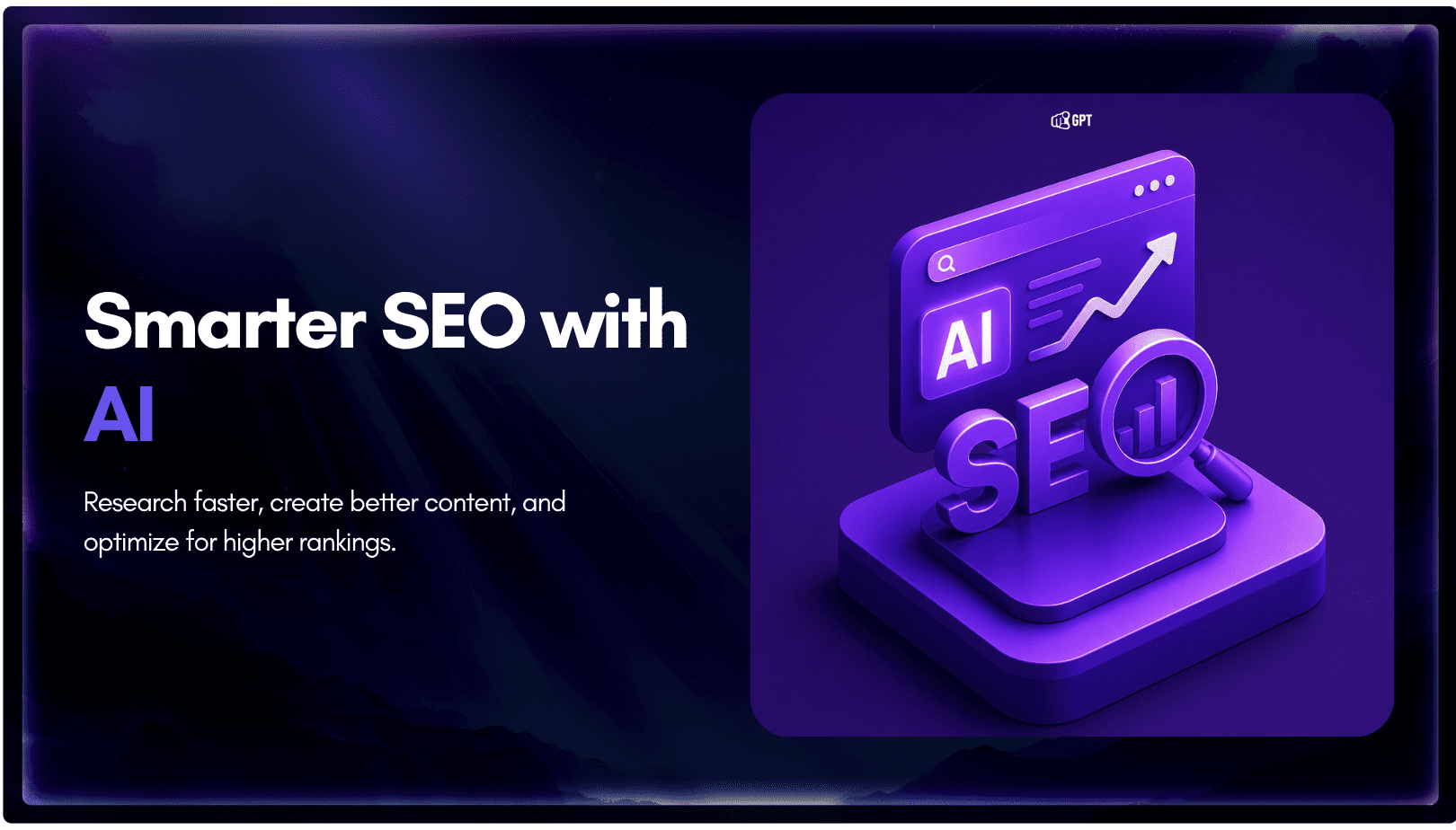
TL;DR AI is now part of most SEO workflows, but the real advantage comes from using it within a disciplined process rather than simply producing content faster. As Google AI Overviews and tools like ChatGPT answer more queries directly, content must be structured to earn both traditional search rankings and citations from AI assistants. AI […]
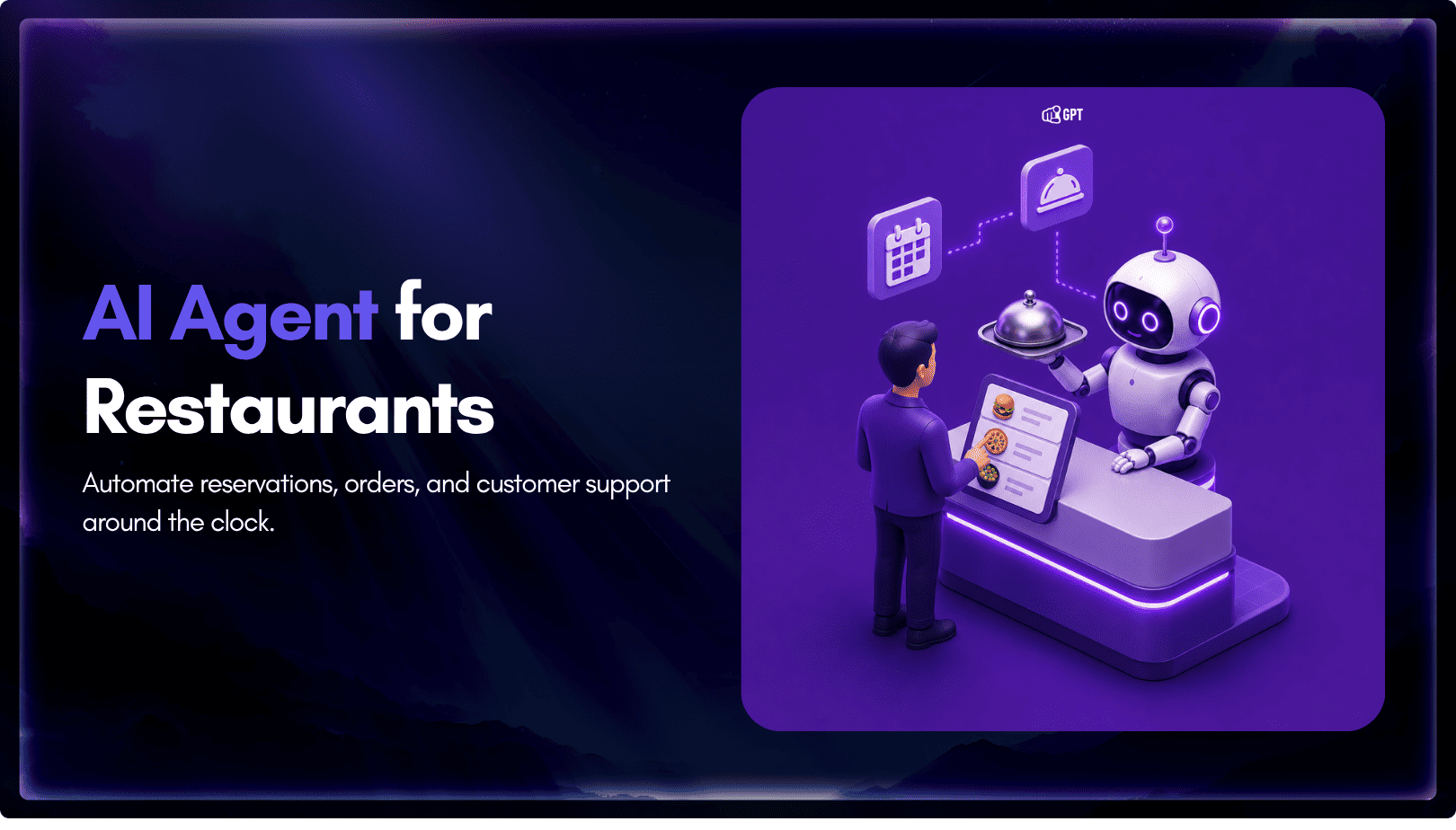
TL;DR Restaurant AI agents help reduce staffing pressure by handling reservations, food orders, and customer inquiries around the clock without increasing headcount. Unlike basic chatbots, they integrate with booking systems, POS platforms, and messaging channels to automate reservations, order processing, and routine customer support. The biggest benefits include automated reservation management, order intake across phone, […]
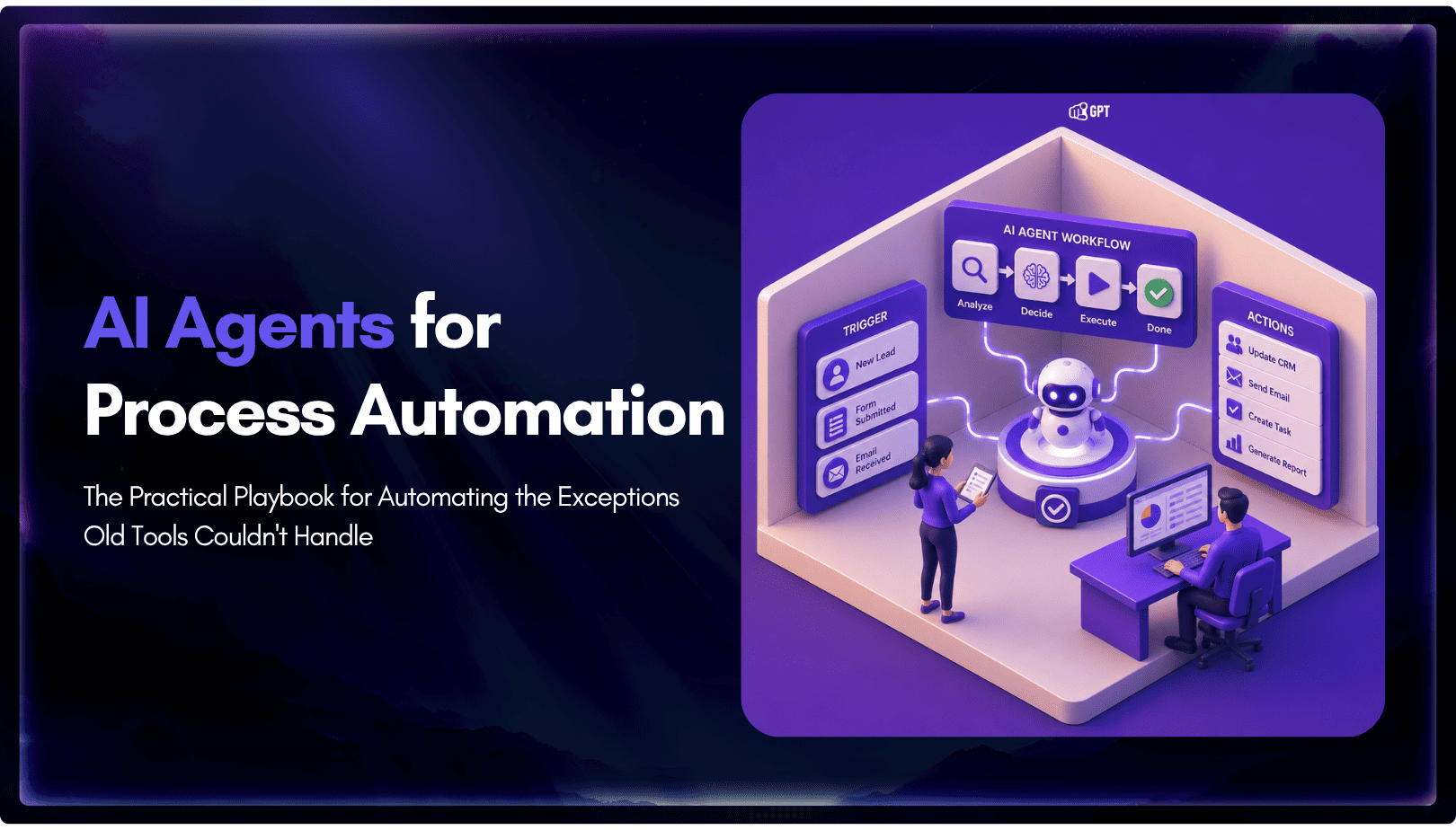
TL;DR Business process automation with AI agents lets software plan multi-step work, call tools, and handle exceptions instead of following fixed scripts like traditional RPA. AI agents can adapt when a process changes, but that flexibility also requires clear permission boundaries, reliable data, and human oversight for consequential actions. Start with one repetitive process, document […]