How to Integrate AI Agent in React Native (2026)

Rajni
Last updated on August 13, 2026
Add an AI chatbot to your React Native app in under 10 minutes, with no backend changes required.
Install the YourGPT SDK, grab your widget ID from the dashboard, then wrap your app in the provider component and open the bot with a single hook.
It runs in a WebView on both iOS and Android, pulling answers straight from your existing knowledge base.
React Native has simplified cross-platform mobile app development, allowing developers to build for both Android and iOS within a unified workflow. As user expectations have changed fast, apps are often required to provide intelligent, context-aware experiences instead of relying solely on visual appeal and smooth navigation.
Integrating conversational AI into mobile apps has become essential in today’s market. Modern chatbots handle customer inquiries, provide product recommendations, and offer round-the-clock assistance all within your app. For example, companies have reported up to 20% increases in repeat purchases after deploying 24/7 chatbots in their applications.
But building a chatbot from scratch is complex. YourGPT provides a production-ready AI solution that integrates into React Native applications in under 10 minutes.
In this hands-on tutorial, I’ll walk you through the complete integration process for native iOS and Android platforms from installation to deployment. Whether you’re building for e-commerce, fintech, healthcare, or any other domain, you’ll have actionable guidance for adding intelligent automation to your mobile app.
Adding a chatbot inside your app isn’t just convenient it’s an experience upgrade. Here’s what makes it valuable:
YourGPT’s no-code builder makes it easy to train, personalize, and deploy your AI assistant across web, WhatsApp, and now your React Native mobile app.
Before starting, make sure you have:
Before integrating the AI bot into your React Native app, you need to create and configure your AI assistant in the YourGPT platform. This section covers the complete setup—from account creation to obtaining your widget ID.
Getting started with YourGPT is straightforward and free. Follow these steps:
No Credit Card Required: YourGPT offers a free 7 day trial that’s perfect for testing and small projects. You can upgrade anytime as your needs grow.
Once your account is ready, create the chatbot that will power conversations inside your React Native application.
Steps to create your chatbot:
https://yourcompany.com)You’ll need the Widget ID to connect your chatbot to React Native.
How to find it:
https://widget.yourgpt.ai/1240281d-8254-4173-af6e-q69777ac9013

npm:
npm install @yourgpt/react-native-sdkyarn:
yarn add @yourgpt/react-native-sdknpm:
npm install react-native-webviewyarn:
yarn add react-native-webviewcd ios
bundle install
bundle exec pod install
cd ..With packages installed, you’re ready to implement the chatbot in your app.
In your App.tsx or main entry file, wrap your app with the YourGPTProvider component:
import React from 'react';
import { SafeAreaView } from 'react-native';
import YourGPTProvider from '@yourgpt/chatbot-reactnative';

function App(): JSX.Element {
  return (
    <SafeAreaView style={{ flex: 1 }}>
      <YourGPTProvider widgetId="YOUR_WIDGET_ID">
        {/* Your app components */}
      </YourGPTProvider>
    </SafeAreaView>
  );
}

export default App;Important: Replace "YOUR_WIDGET_ID" with the actual widget ID you copied in Step 1.3.
Create a new file at components/OpenBot.tsx:
import React from 'react';
import { Button } from 'react-native';
import { useYourGPT } from '@yourgpt/chatbot-reactnative';

export default function OpenBot() {
  const { open } = useYourGPT();

  return <Button onPress={open} title="Open Chatbot" />;
}That’s it! Your YourGPT chatbot is now ready to use. When users press the button, the chatbot will open in a modal overlay.
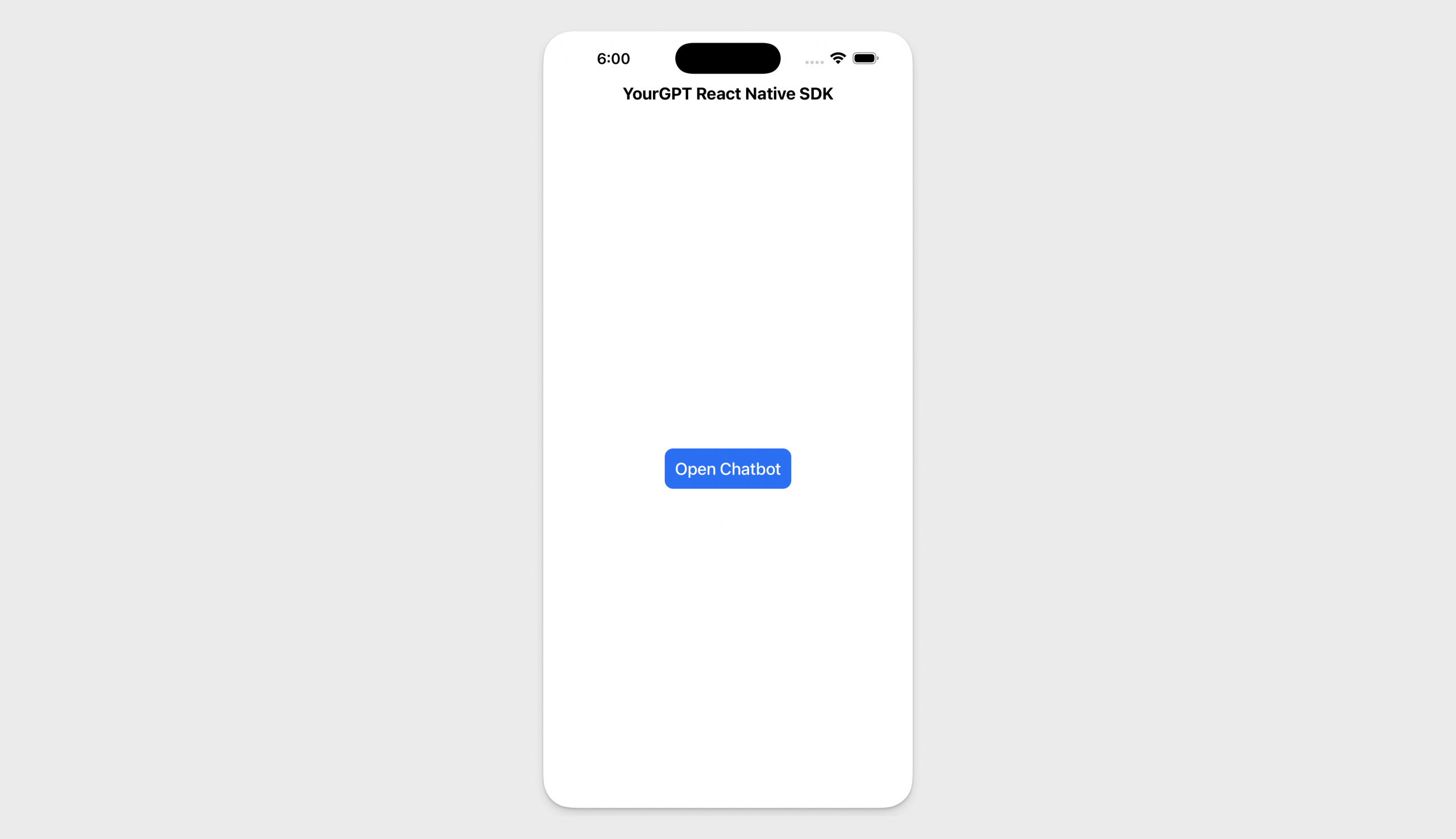
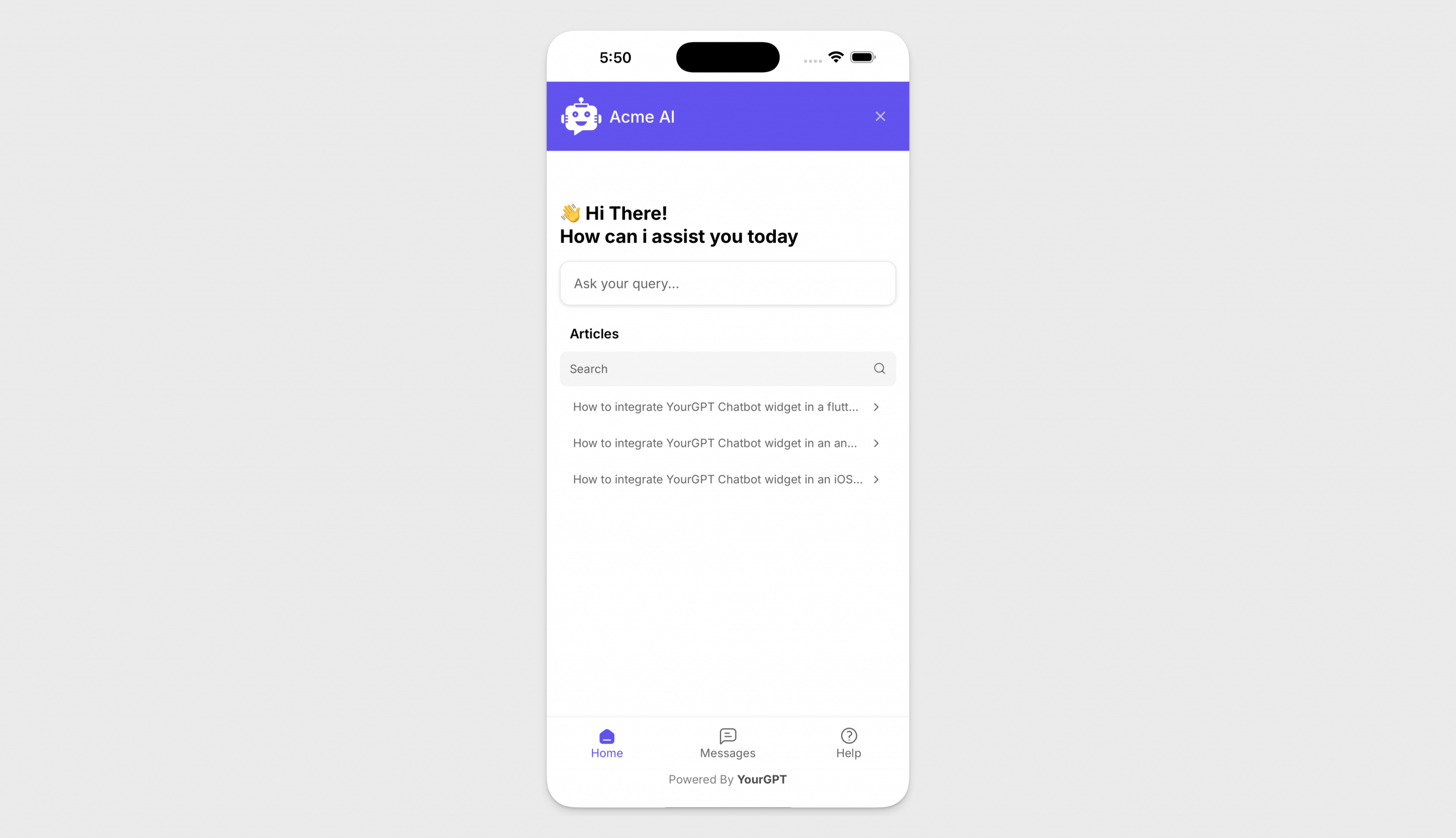
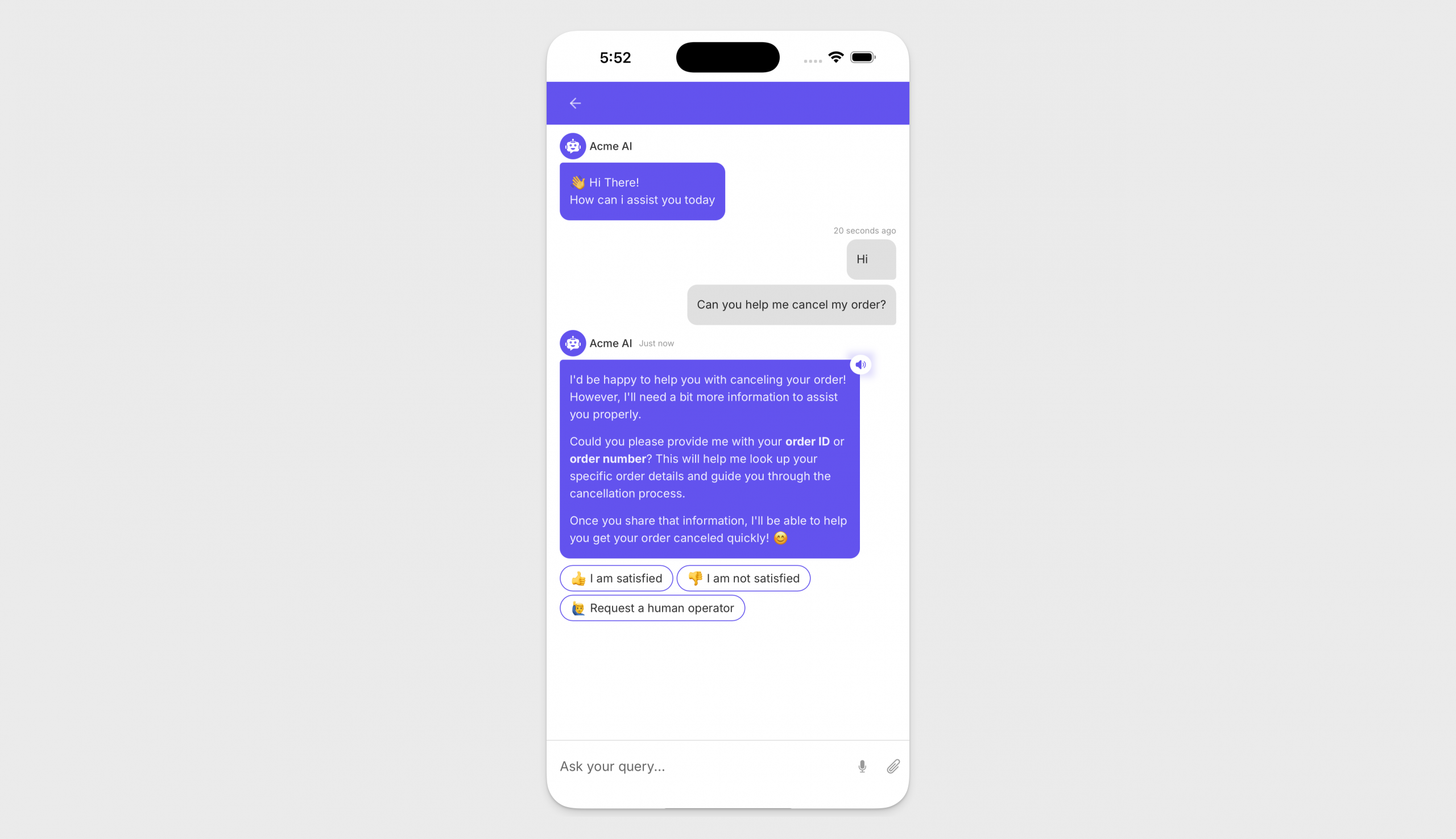
The YourGPTProvider requires only your widget ID:
<YourGPTProvider
  widgetId="your-widget-id"  // Required
/>For additional customization options and advanced configuration, check out the official YourGPT React Native SDK repository on GitHub.
Before deploying to production, thoroughly test your chatbot:
You’re now part of a growing community of developers building intelligent mobile experiences. Here’s how to stay connected:
This makes YourGPT one of the fastest ways to add an AI assistant to your React Native mobile application.
No. The YourGPT SDK runs the chatbot inside a WebView, so it connects to your existing knowledge base without touching your backend code or API layer. You install the SDK, wrap your app in the provider, and the chatbot pulls answers from what you’ve already trained it on.
Yes. Since the chatbot runs inside react-native-webview rather than as separate native modules, the same widget ID and configuration work on both platforms. iOS needs the extra pod install step, but the chatbot UI and behavior stay consistent across devices.
The chatbot loads inside its own WebView instance rather than blocking your app’s main JS thread. Load time depends mostly on the user’s network connection, the same as any embedded web widget. Testing under different network conditions before shipping is worth the extra ten minutes.
Yes. YourGPT offers a free 7-day trial with no credit card required, which is enough time to build and test a working chatbot end to end. You can decide whether to upgrade once you’ve seen it running in your own app.
Both. The only requirement is an existing React Native project, whether it started with Expo or the CLI. The install steps for the SDK and react-native-webview are the same either way.
You can train it on your own content. When setting up the chatbot, you can add a website URL, upload PDF, DOCX, TXT, or CSV files, write manual Q&A pairs, or connect Drive, Notion, or Confluence. It then answers from that knowledge base instead of giving generic responses.
You just turned your React Native app into something smarter. Your users can now get help instantly without leaving the app. No more waiting for email replies or digging through FAQ pages.
But here’s what really matters: this chatbot will handle about 70% of your customer support questions automatically. That means fewer tickets for your team, faster responses for your users, and actual data on what people are struggling with in your app.
And you built this in 15 minutes. No backend setup. No machine learning degree required. Just a WebView that works on both iOS and Android.
What to do next:
Customize the styling to match your brand. Add the chat button to your main screens where users actually need help. Test it on real phones, not just the simulator. Check your YourGPT dashboard regularly to see what questions come up most. Then update your knowledge base based on real conversations.
The integration is done. Now make it better.
Happy coding! 🚀
Add in-app chat support to your SaaS or mobile app. Place it on the screens where users stall, pass who they are, and hand hard cases to your team.
Group new-account tickets by onboarding stage, train an AI agent on your docs, and place it in the product where new users get stuck.

AI agents can now find and buy products for shoppers. See what agentic commerce changes for a Shopify store and which support jobs stay yours.
Build a Halloween shopping assistant for Shopify with YourGPT. Set up product recommendations, stock checks, cart actions and human support before launch.

See what a good customer effort score looks like, how to word and calculate CES on each scale, and which support habits raise customer effort.
Tier 1 support handles first contact. See how Tiers 0 to 3 differ and what changes when an AI agent becomes your first line.