Top 6 Chaindesk Alternatives in 2026

Rajni
Last updated on April 23, 2026
Chaindesk works for basic chatbot use cases, but growing teams often look for alternatives with stronger AI capabilities, better integrations, and true multi-channel support.
Modern platforms focus on resolving queries, not just answering them, with automation that can handle workflows, reduce manual effort, and scale support operations more effectively.
Tools like YourGPT, Desku reflect different approaches, from AI-first automation to product-focused support, so the right choice depends on your channels, workflow complexity, and integration needs.
Chaindesk is a no-code platform used to build AI chatbots for customer engagement and basic automation. It suits teams that want to get started quickly with chatbot-driven support or self-service. However, as requirements grow around customization, integrations, workflow depth, or scale, some businesses begin evaluating other options.
In 2026, chatbot platforms cover a much broader range of use cases than simple question-and-answer flows. Many teams now expect chatbots to connect with internal systems, support multiple channels, handle complex workflows, and adapt as business needs change. When those expectations increase, reviewing alternatives becomes a practical step rather than a replacement driven by dissatisfaction.
This blog outlines six Chaindesk alternatives that businesses consider in 2026. Each platform is reviewed based on core features, pricing approach, and real-world use cases, helping you compare options and choose a solution that fits both current needs and future growth.
Chaindesk is a widely used platform for building AI-powered chatbots, especially appealing to businesses looking for a no-code solution. However, there are situations where organizations may benefit from considering alternative platforms:
Chaindesk is designed for straightforward automation, which works well for simple use cases. However, businesses dealing with complex customer questions, multi-step problem solving, or context-heavy conversations may find its AI capabilities limiting. Platforms with more advanced natural language processing and intent handling can better understand varied phrasing, maintain context across turns, and respond accurately to nuanced queries. This becomes especially important as customer expectations shift toward more natural and flexible interactions.
While Chaindesk covers core chatbot functionality, it may fall short for teams that support customers across multiple communication channels. Businesses operating on platforms such as WhatsApp, Telegram, or email often need consistent behavior and shared logic across all touchpoints. Many alternatives are built with omnichannel support at the core, allowing teams to manage conversations centrally and deliver a more uniform experience regardless of where the customer reaches out.
As chatbots become part of daily operations, integration requirements tend to grow. Businesses often need chatbots to interact with CRM systems, order management tools, internal databases, or custom APIs. Chaindesk’s integration options can be restrictive in these scenarios, making it harder to connect chatbots with existing workflows. Platforms that offer broader integration capabilities allow chatbots to retrieve data, trigger actions, and update systems in real time, reducing manual work for teams.
A chatbot that performs well at lower volumes may struggle as interaction volume and workflow complexity increase. Growing businesses often require stronger infrastructure to maintain performance, reliability, and response quality under heavier loads. In such cases, platforms designed with scalability in mind are better suited to support increasing demand, advanced routing, and more sophisticated conversation handling without degradation.
Chaindesk relies heavily on predefined templates, which helps teams get started quickly but can limit flexibility over time. Businesses with specific branding requirements, unique customer journeys, or specialized workflows may need deeper control over conversation design and interface behavior. Alternatives that offer more customization options make it easier to adapt chatbot experiences to changing business needs and align them closely with operational goals.
Exploring alternatives to Chaindesk allows businesses to address these limitations and select a solution that better supports long-term growth, operational complexity, and evolving customer engagement strategies.
1. YourGPT AI Chatbot: A no-code chatbot platform with 100+ languages support (multilingual), voice recognition, and advanced features like code execution.
2. Dante: AI chatbot platform for building knowledge-based assistants trained on your content.
3. Instadesk: Drag-and-drop chatbot builder with advanced automation and CRM integration for personalized experiences.
4. Desku: AI-powered chatbots combined with helpdesk tools for multi-channel support and ticket automation.
5. ChatFlow: Dynamic chatbot creation with guided conversation flows and analytics across multiple platforms.
6. Gleap.io: Chatbot and feedback tool for tracking user sentiment and improving customer satisfaction.
Let’s assess these alternatives based on their features, ease of use, customer support quality, integration compatibility, and unique advantages.

YourGPT is an AI-first platform for building and deploying intelligent AI agents without coding. It helps businesses manage customer support, sales, and operations from a single workspace that connects effortlessly with websites, WhatsApp, Slack, Messenger, Instagram, LINE, email, and voice channels.
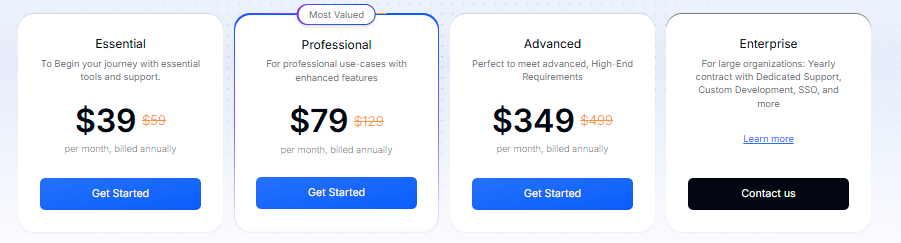
YourGPT AI Chatbot offers flexible pricing plans tailored to different business requirements:
YourGPT AI Chatbot is an excellent choice for businesses looking to enhance their customer engagement through AI-driven tools. Its no-code setup, multilingual capabilities, and broad integration options make it a versatile solution for addressing a wide range of customer support and operational needs.
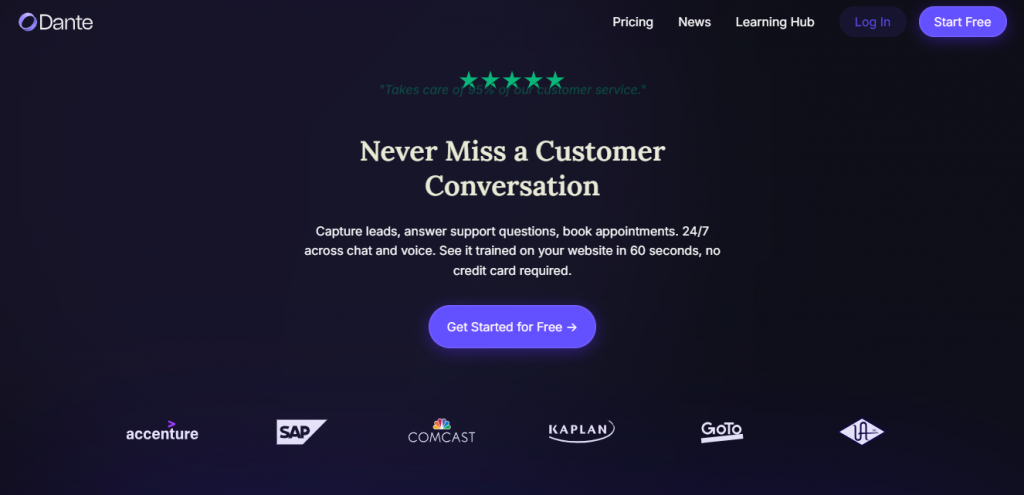
Dante is an AI chatbot platform designed to help businesses create knowledge-based assistants trained on their own content. It focuses on enabling teams to build chatbots that can answer questions accurately using documents, websites, and internal data sources, making it suitable for support and information retrieval use cases.
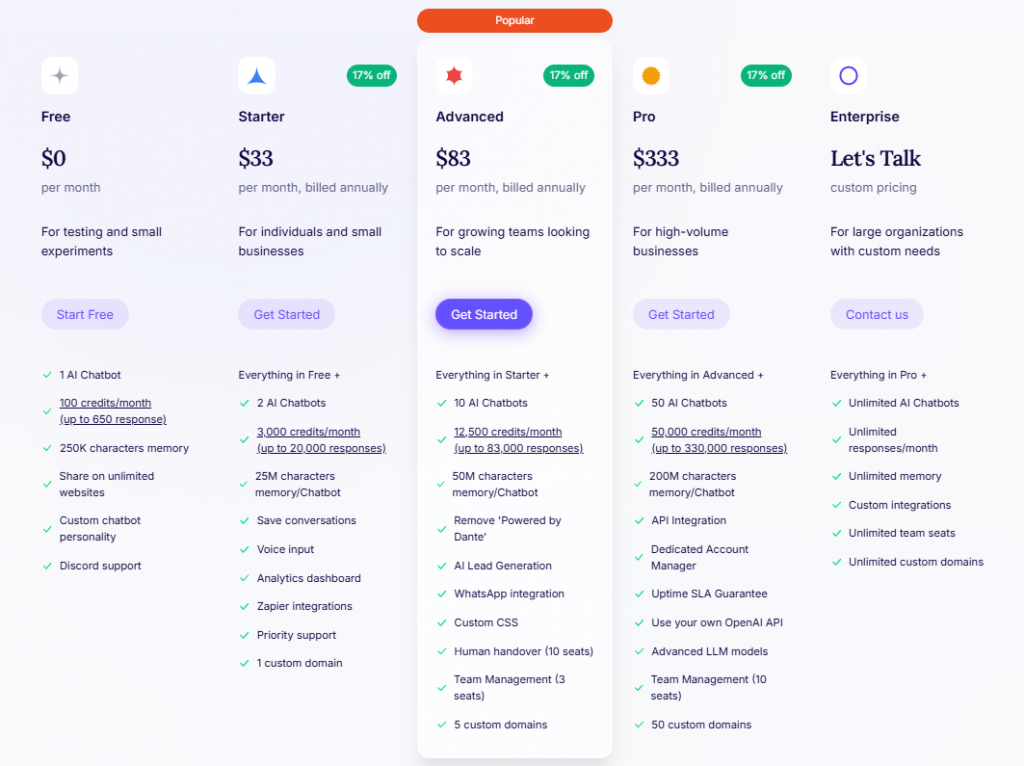
Dante is a good choice for businesses that want to build AI assistants around their knowledge base and improve information access. It works best for question-answering scenarios rather than full workflow automation or task execution.

Instadesk is a customer support and engagement platform that combines chatbots, live chat, and helpdesk capabilities into a single system. It is designed for teams that want to manage customer conversations across multiple channels while maintaining visibility into support workflows and customer data.
Instadesk typically offers tiered pricing based on features, number of agents, and usage. Exact pricing details may vary and usually require direct consultation with the vendor.
Instadesk is a suitable option for businesses that need a centralized customer support platform with chatbot automation, CRM context, and multi-channel communication. It works best for teams prioritizing operational visibility and support efficiency over advanced AI-driven automation.

Desku is a customer support platform that combines live chat, chatbots, and helpdesk tools into a unified system. It is designed to help teams manage customer conversations, automate routine support tasks, and maintain visibility across multiple communication channels.
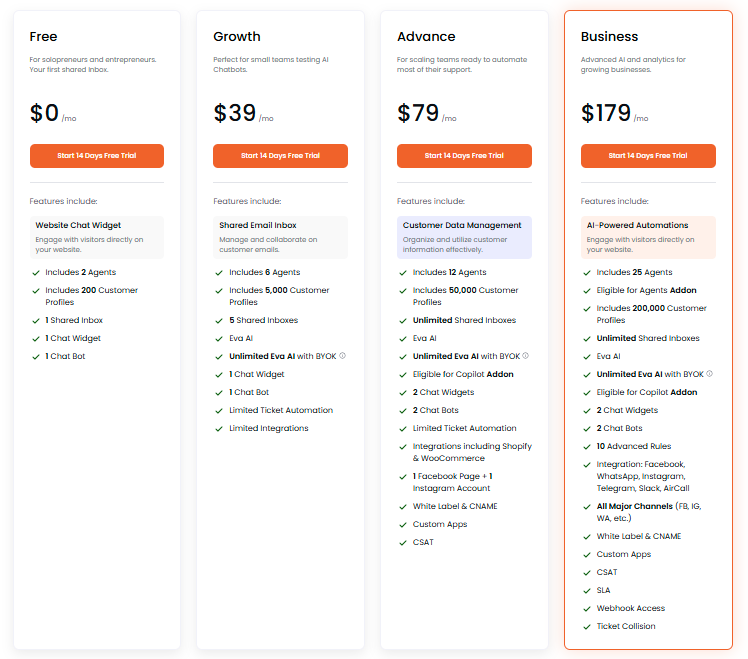
Desku is a practical choice for businesses looking for a combined helpdesk and chatbot solution to manage customer support efficiently. It is best suited for teams that prioritize ticket management and multi-channel visibility over advanced AI-driven automation.

ChatFlow is a chatbot platform focused on helping businesses design and automate conversational workflows across websites and messaging channels. It is built for teams that want structured conversation flows, basic automation, and flexibility without requiring heavy technical setup.
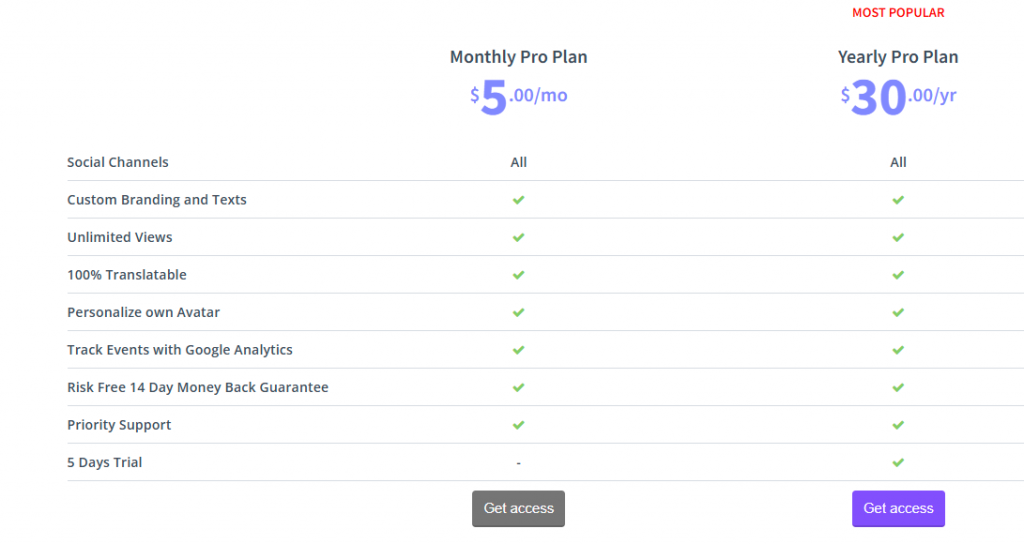
ChatFlow is a suitable option for businesses that want control over structured chatbot flows and basic automation across multiple channels. It works best for predictable use cases where clear logic and guided interactions are more important than advanced AI reasoning.
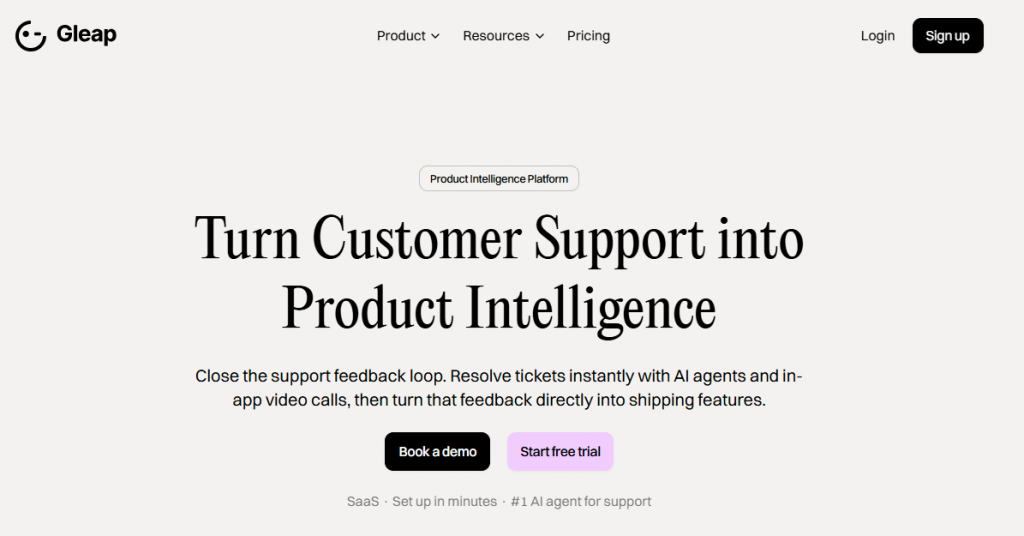
Gleap.io is a customer feedback and engagement platform designed to help teams collect, manage, and act on user feedback directly within their products. It combines in-app feedback, bug reporting, and conversational tools to give product and support teams better visibility into user issues and experience gaps.
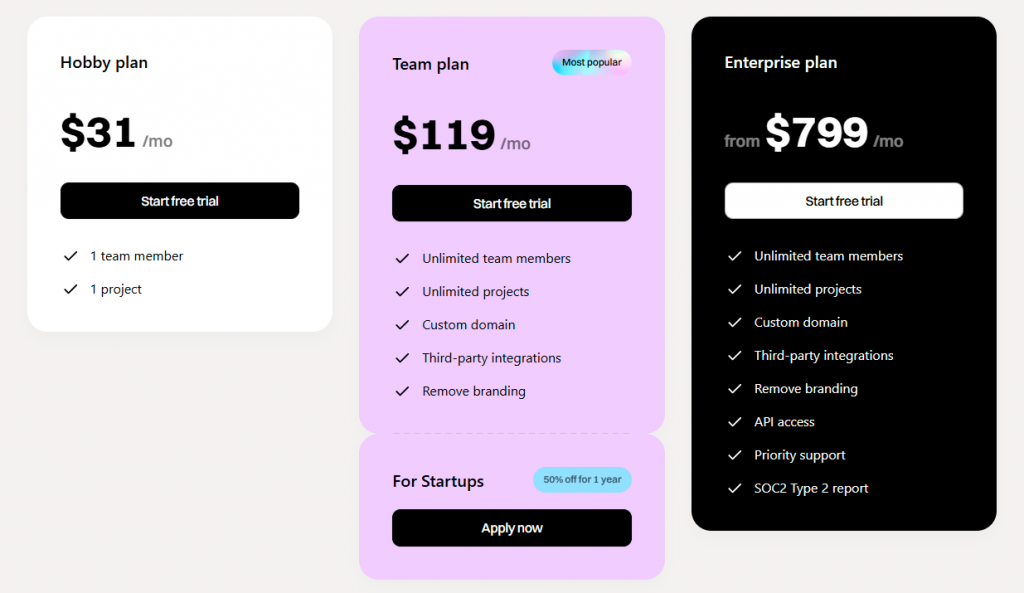
Gleap.io is a strong choice for teams that prioritize user feedback, bug tracking, and product improvement. It works best as a complement to customer support or chatbot platforms rather than a replacement for full conversational automation.
Chaindesk works well for basic chatbot needs, but businesses seeking advanced features like scalability, deeper customization, or better integration may need other options.
YourGPT AI Chatbot offers features like multilingual support, voice recognition, and code execution, making it a versatile choice for businesses with diverse requirements.
Identify your specific needs, such as better integrations or advanced AI capabilities, and compare platforms based on their features, usability, and support offerings.
Yes, platforms like Dante and Desku provide intuitive tools and affordable plans, making them ideal for small businesses focusing on customer engagement.
Many alternatives, such as Instadesk and ChatFlow, offer seamless integration with CRMs, email platforms, and other tools to streamline workflows.
Gleap.io stands out for combining real-time chat with customer feedback collection, making it a good choice for improving user satisfaction.
Platforms like YourGPT AI Chatbot and Instadesk are built to support increasing customer interactions and operational demands, making them suitable for scaling businesses.
The right Chaindesk alternative depends on what role the chatbot plays in your business today and what you expect it to handle next. Instead of comparing features in isolation, it helps to start with how conversations flow, where automation is required, and which systems the chatbot must connect to.
For teams that rely on chatbots to handle structured workflows, multilingual conversations, or operational tasks beyond basic support, platforms such as YourGPT are often considered because they support deeper customization, multiple channels, and action-based automation. These capabilities matter when chatbots are expected to assist across support, sales, or internal operations rather than act as a simple FAQ layer.
If your primary goal is understanding user feedback and improving product experience, tools like Gleap.io can be more suitable. In these cases, the chatbot acts as a feedback collection point rather than a workflow engine, which shifts the evaluation criteria toward reporting, issue tracking, and insight generation.
For growing teams that need reliability at higher volumes and smoother connections with existing systems, platforms such as Instadesk and ChatFlow are often assessed for their scalability and integration support. As usage increases, performance consistency and system connectivity become more important than rapid setup.
Ultimately, choosing a Chaindesk alternative is about fit, not breadth. The best platform is the one that supports your current workflows without friction and can adapt as those workflows evolve, rather than forcing workarounds as requirements grow.
Choosing the right Chaindesk alternative comes down to how well the platform fits your real operating needs, not how many features it lists. Ease of use determines whether your team can actually maintain and improve the chatbot over time. Scalability ensures the platform continues to perform as volumes and workflows grow. Advanced AI and omnichannel support matter only if they align with how customers already interact with your business.
Integration is often the deciding factor. A chatbot that cannot connect cleanly with your existing ai tools quickly becomes an isolated system that creates more manual work instead of reducing it. Platforms that integrate smoothly into your current stack allow chatbots to support end-to-end workflows rather than just answer surface-level questions.
By evaluating alternatives through these lenses, ease of use, scalability, feature depth, and integration fit, you can move beyond trial-and-error adoption. The right platform should support your current use cases while remaining flexible enough to adapt as customer expectations and business requirements change.
Join thousands of businesses transforming customer interactions with YourGPT AI
No credit card required • 7 days access • Limited time offer
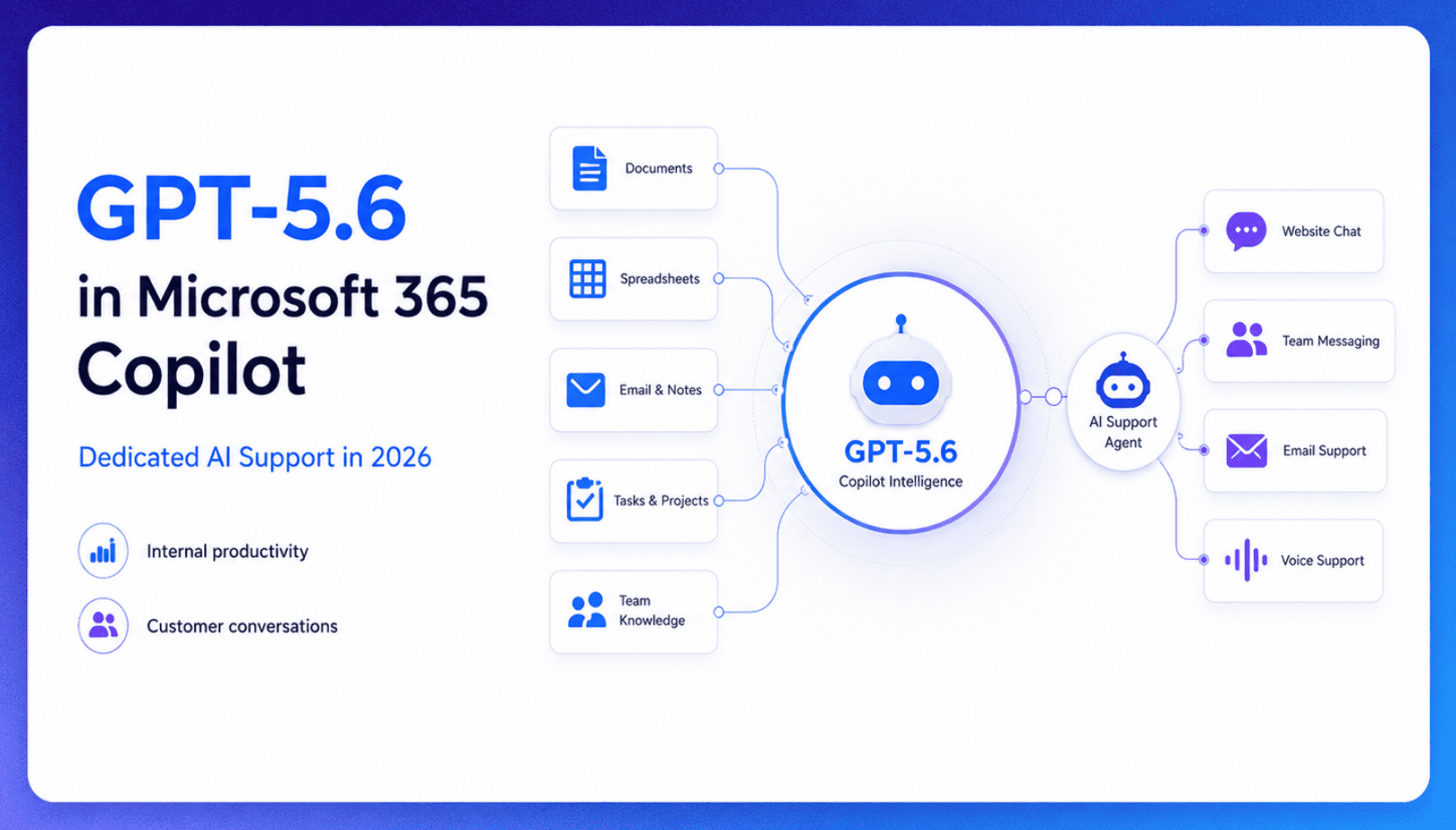
TL;DR Microsoft made GPT-5.6 the preferred model across Word, Excel, PowerPoint, Copilot Chat, and Cowork on July 9, 2026, focusing on internal workplace productivity rather than customer-facing support. Dynamics 365 Service Agent also reached general availability, but it mainly helps human support representatives manage cases within Microsoft’s existing permission structure and requires separate licensing. A […]

TL;DR Cheap frontier models now compete for the same high-volume support workloads, with DeepSeek V4 remaining the lowest-cost option in this comparison. Kimi K2.6 and GLM-5.2 are open-weight and self-hostable, while Qwen 3.7 Plus is proprietary and available only through an API. Claude Haiku 4.5 is the only model here that its developer explicitly recommends […]
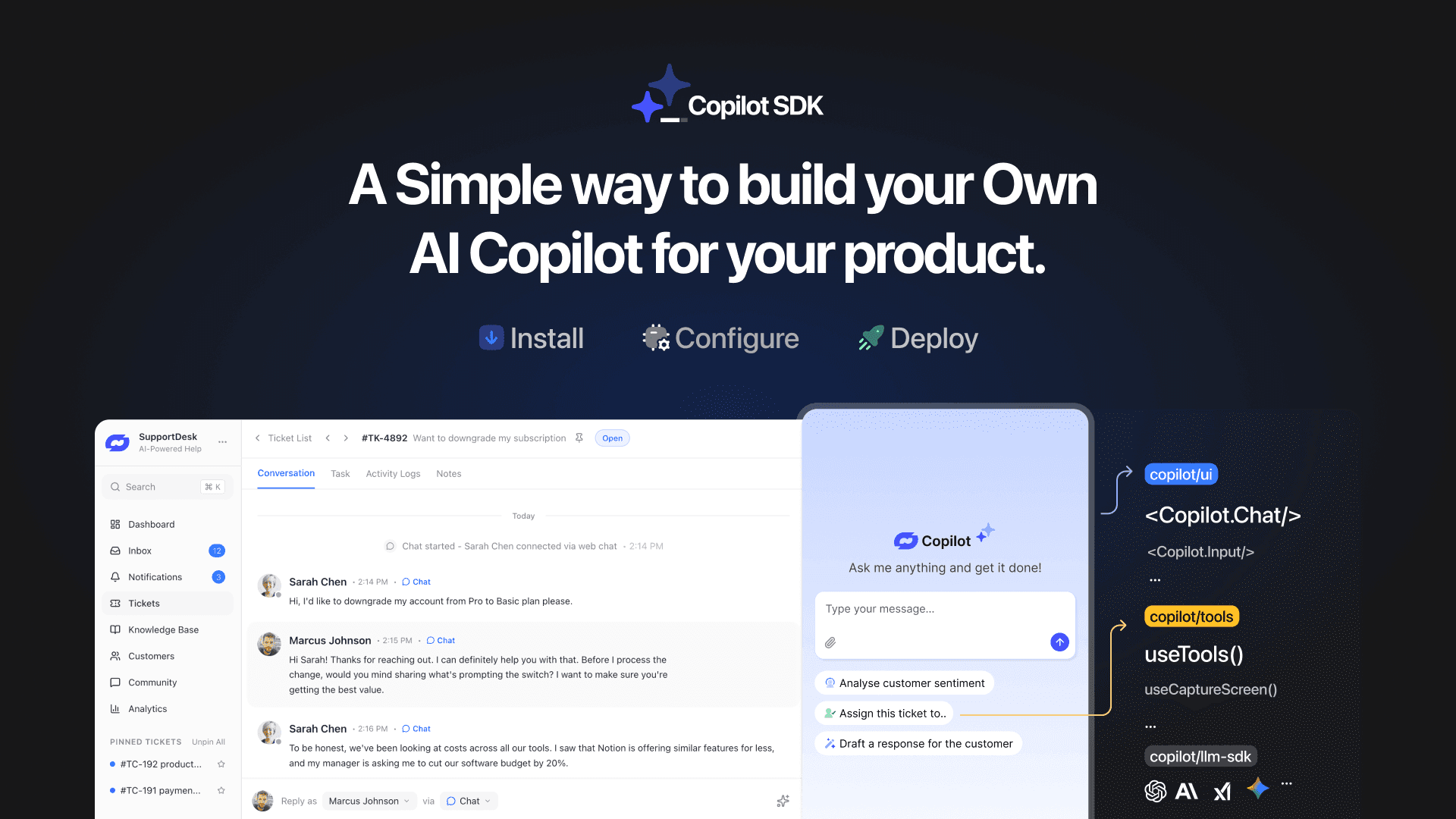
TL;DR YourGPT Copilot SDK is an open-source SDK for building AI agents that understand your application state, user context, and what is happening inside your product. Instead of working like isolated chat widgets, these agents connect directly with your product and can take real actions within existing workflows. This helps teams build contextual AI experiences […]
TL;DR YourGPT 2.0 adds AI Studio for building, testing, and debugging automated workflows. It includes native MCP integration for more than 100 tools, upgraded voice agents, and native SDKs for iOS and Android applications. With shared context across web, WhatsApp, Instagram, Telegram, and mobile, YourGPT turns conversations into real actions across support, sales, and operations. […]

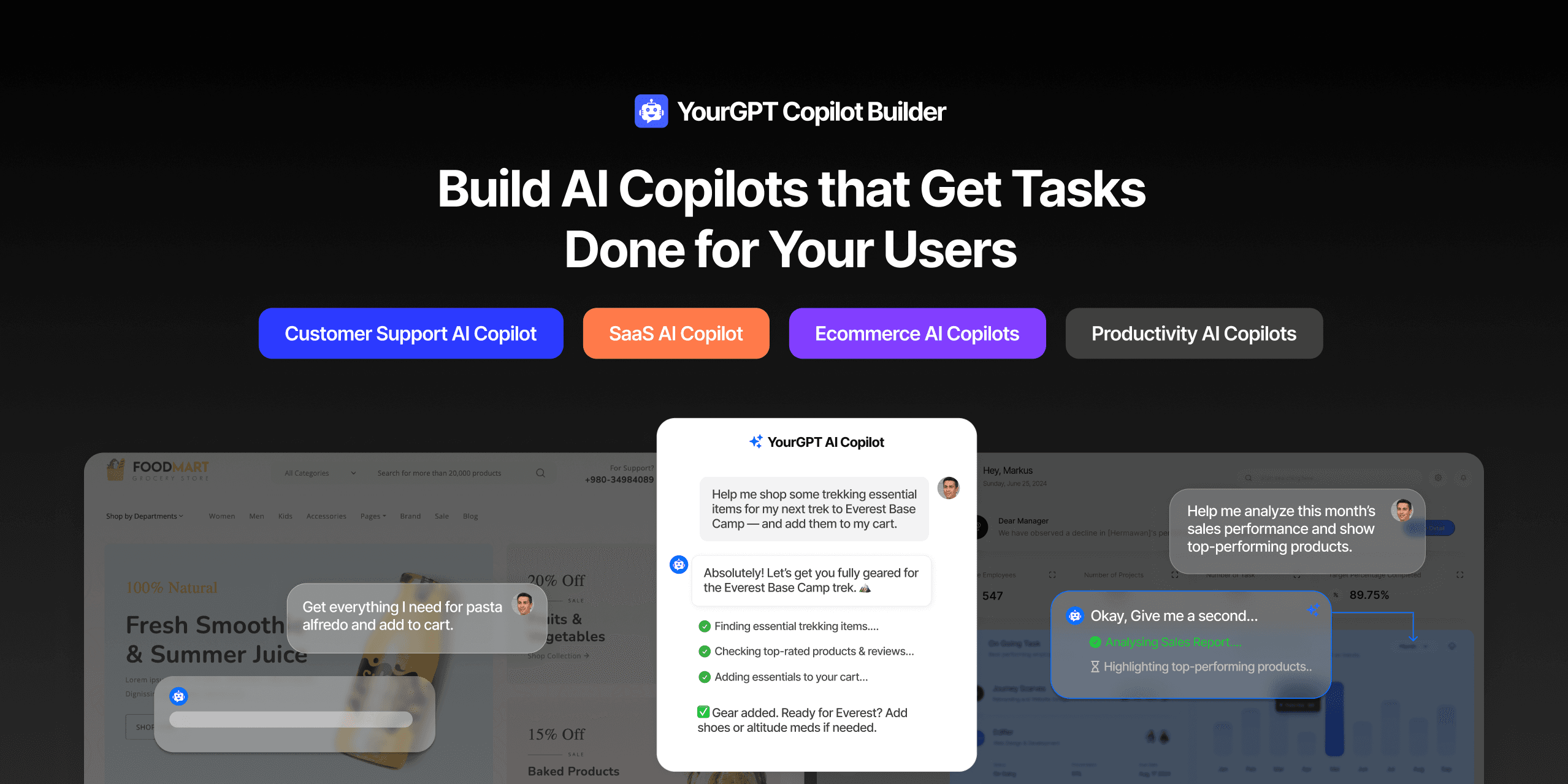
TL;DR Most AI tools provide answers but still leave users to complete the task through search results, settings pages, or checkout flows. AI Copilot Builder closes that gap by executing registered actions directly inside the product instead of only explaining what to do. Search, cart updates, account changes, and multi-step bookings can all happen within […]
TL;DR Building an AI-powered Telegram bot does not require custom development. BotFather provides the Telegram bot token, while a no-code platform like YourGPT handles AI training, free-form conversations, and the Telegram connection. This guide covers the full setup, from creating the bot in BotFather to connecting it with YourGPT and taking it live. Most Telegram […]
