7 Best BoldDesk Alternatives

Rajni
Last updated on June 29, 2026
TL;DR
BoldDesk works for basic support but has limits in automation, reporting, integrations, and scalability.
Alternatives like YourGPT, Freshdesk, and HelpScout offer advanced workflows and omnichannel support.
These tools help teams respond faster, manage more complex operations, and scale efficiently.
BoldDesk is a cost-effective help desk solution well-suited to small teams seeking straightforward ticket management and multi-channel support. It offers better fundamentals for teams managing basic to moderate support volumes.
However, as support operations scale, certain constraints may emerge. Growing teams often encounter limitations with advanced workflow customization, sophisticated analytics and reporting, extensive third-party integration options, and feature-rich mobile capabilities. These gaps can lead to increased manual processes, potentially affecting response times and the ability to manage high-complexity or high-volume scenarios at scale.
Teams experiencing these constraints are increasingly exploring more comprehensive platforms that provide advanced automation, deeper analytics, extensive integration ecosystems, and the technical depth needed to support rapid growth and operational complexity.
In this blog, we explore 7 compelling BoldDesk alternatives for 2026 and evaluate how each platform addresses the evolving needs of scaling support teams.
BoldDesk offers essential help desk features, including multi-channel support (email, live chat, social media, phone), AI-powered ticketing, no-code automation rules and triggers, SLA management, custom fields, built-in knowledge base, team collaboration tools, and interactive reporting all delivered through an affordable, intuitive interface ideal for small to mid-sized teams.
However, as support operations grow in volume or complexity, several limitations become apparent, based on consistent user feedback from G2, Gartner Peer Insights, Capterra, and other review platforms in 2025–2026.
Here are the main reasons teams look for alternatives:
| Platform name | Best for |
|---|---|
| YourGPT | AI agents that resolve support tasks end to end across web, WhatsApp, and messaging with workflow management control |
| Freshdesk | Omnichannel customer support with ticketing, collaboration tools, and reporting for growing teams |
| Help Scout | Simple, human-style support with shared inbox, knowledge base, and lightweight workflows |
| Gladly | Customer service platform focused on personalized conversations and unified customer profiles |
| Kommunicate | Chat-based support combining bots and agent collaboration for websites and in-app service |
| HappyFox | Helpdesk platform with multi-channel ticketing, knowledge base, and limited automation features |
| BotPenguin | Quick bot deployment for websites, WhatsApp, and social media with simple workflows |
Below is a curated list of the top 7 BoldDesk alternatives. Each platform is reviewed based on features, strengths, and pricing.
Best for: AI-driven teams that want autonomous agents to manage support, sales, and operations while executing real actions across web chat and messaging channels.
YourGPT is an AI-first platform for building and running AI agents that support customer interactions, sales, and internal operations across websites, apps, and messaging channels. It provides a no-code builder for standard agents and an AI Studio for advanced workflows, enabling teams to create both simple and complex AI agents without technical effort.
Teams can start with simple knowledge-based bots trained on documents, websites, FAQs, or internal content, then scale to complex automations that handle real business actions—all without coding.
Best for: Customer support teams that need a structured helpdesk with ticket management, workflow automation, and multichannel support across email, chat, and social platforms.
Freshdesk is a cloud-based customer support and help desk platform by Freshworks. It brings together customer messages from email, chat, phone, social media, and messaging apps into a single workspace. Teams can track, organize, and respond to tickets efficiently in one place.
The platform also offers tools for task management, self-service portals, reporting, and workflow management. It is designed to help businesses of all sizes manage support operations, improve response times, and maintain consistent customer service across multiple channels.
Best for: Support teams that prefer a shared inbox helpdesk with simple collaboration, email-driven workflows, and lightweight automation suited for small and growing businesses.
Help Scout is a customer support platform built for simplicity and human-centered service. It gathers conversations from email, live chat (via Beacon), Instagram, Messenger, and other messaging channels into clean, shared inboxes that resemble familiar email threads. This avoids the complexity of traditional ticketing systems, allowing teams to respond quickly, retain full context across channels, and collaborate easily with internal notes, @mentions, collision detection, and saved replies.
The platform features a strong knowledge base (Docs) for multilingual, searchable articles and FAQs, plus Beacon for proactive live chat, in-app messaging, and instant AI-powered answers. These tools help customers self-serve and cut down on repetitive tickets.
Best for: Customer service teams that prefer a conversation-focused platform designed to manage long-term customer relationships across voice, chat, email, SMS, and social channels.
Gladly is an AI-powered, people-centered customer service platform that puts customers, not tickets, at the center of every interaction. It unifies all communications into a single, lifelong conversation across channels like voice, email, chat, SMS, social messaging (including Facebook Messenger and Instagram), and more. This provides agents with complete historical context, preferences, and profiles.
This ticket-free approach eliminates the need for customers to repeat information. It enables radically personal, efficient, and relationship-driven support that boosts loyalty, retention, lifetime value, and operational efficiency.
Best for: Businesses that want chatbot automation alongside live chat, enabling teams to manage customer conversations across websites, mobile apps, and messaging platforms.
Kommunicate is a customer support automation tool that combines chatbots and live chat in one system. It helps businesses manage conversations across websites, mobile apps, and messaging channels from a unified interface.
Teams can build no-code chatbots, automate common queries, and connect the platform with existing help desk or CRM tools. More complex issues can be handed over to human agents without interrupting the conversation flow.
Best for: Support teams that need a structured helpdesk with ticket management, workflow automation, and multi-channel communication across email, chat, phone, and social platforms.
HappyFox is a cloud-based help desk platform that centralizes customer and internal requests from email, live chat, phone, social media, web forms, and more into one ticketing system.
It streamlines workflows for teams of any size, supports cross-department collaboration (customer support, IT, HR, etc.), and includes AI tools for faster resolutions, strong automation, customizable self-service portals, and scalable operations
Best for: Small businesses that want simple chatbot automation for websites and messaging apps to handle FAQs, capture leads, and support basic customer conversations.
BotPenguin is a no-code, AI-powered chatbot and automation platform that lets businesses build and deploy intelligent chatbots across multiple channels without any coding. It supports website widgets, WhatsApp Business API, Facebook Messenger, Instagram, Telegram, Microsoft Teams, and more, with seamless omnichannel management from a single dashboard.
The platform combines generative AI (powered by models like ChatGPT, Claude, Gemini), no-code builders, live chat handoff, lead generation, marketing automation, and strong integrations to deliver 24/7 support, capture qualified leads, book appointments, answer queries, and streamline customer engagement for businesses of all sizes.
Choosing the right customer support or helpdesk tool can significantly impact your team’s efficiency and customer satisfaction. The best tool depends on your business needs, team size, and the way your customers communicate. Below are the key factors to consider when evaluating options.
1. Ease of Use and Setup: A tool that is easy to use lets your team start assisting customers quickly. Complex setups can slow onboarding and create frustration. This allows staff to focus on handling support rather than learning the system.
2. Channels You Need to Support: Support channels should match where your customers communicate most. Missing messages on social, chat, or email can lead to dissatisfaction. Choosing the right channels ensures no query is left unanswered.
3. Workflow and Process Management: Automation should handle repetitive tasks such as ticket assignment or follow-ups. This reduces errors and saves time. Staff can then focus on issues that require human judgment.
4. Self-Service and Knowledge Base: A help center or FAQ lets customers resolve common questions on their own. This lowers ticket volume and speeds up resolution for more complex issues. It also improves overall customer satisfaction.
5. Integration with Other Tools: Integration with CRMs, e-commerce platforms, and messaging apps reduces manual work. It prevents data gaps and ensures teams have a complete view of customer interactions.
6. Security and Scalability: Strong security protects sensitive customer information. Scalability allows the system to grow with your business without slowing operations. This keeps service reliable even as demand increases.
Choosing the right tool ensures your team can manage customer requests effectively, respond faster, and provide consistent support. This helps improve satisfaction and allows your business to handle growth without added strain.
YourGPT, Freshdesk, and LiveAgent are suited for mid-size teams. They offer workflow automation, multi-channel support, and customizable reporting, providing the flexibility and scalability to handle growing ticket volumes efficiently.
Platforms like YourGPT, Freshdesk, and Gladly support email, chat, social media, and messaging apps, and handle multiple languages. This lets teams provide consistent, efficient support for global or diverse customer bases.
BoldDesk is a help desk platform that helps businesses manage customer support tickets across email, chat, and other channels. It provides basic automation, reporting, and ticket tracking, but offers limited workflow customization and integrations, which can be a challenge for growing teams.
The best AI tool depends on your business needs and team size. It should automate routine tasks, assist agents with context-aware suggestions, and handle inquiries across multiple channels efficiently. Integration with existing systems and scalable workflows ensures consistent service quality.
Look for workflow automation, omnichannel support, detailed reporting, and mobile access. Strong integration with existing systems and scalability are also essential to ensure your support operations can grow efficiently with your business.
You might switch if your team needs advanced automation, detailed reporting, or broader integrations. BoldDesk can be limiting for complex workflows, high ticket volumes, or multi-channel support. A more capable platform improves efficiency, scalability, and overall support quality.
AI chatbots handle routine queries instantly and provide 24/7 support. Live agents manage complex or sensitive issues with human judgment. Using both together automates repetitive tasks while maintaining high-quality interactions.
YourGPT, Freshdesk, and Jira Service Management support multi-step workflows and conditional routing. They also handle SLA rules and integrate with other systems, reducing manual tasks and ensuring tickets are managed efficiently and consistently.
Scalability ensures your support system can handle more tickets, agents, and channels as your business grows. It helps maintain fast responses, consistent service, and efficient workflows without frequent tool changes.
Limited mobile functionality can slow responses and delay ticket resolution. Without full access to messages and updates, support suffers. Strong mobile capabilities keep teams responsive, especially for remote or high-volume operations.
Growing support teams often encounter limits with BoldDesk when managing complex workflows, detailed reporting, or multiple communication channels. Alternatives such as YourGPT, Freshdesk, HelpScout, and Gladly provide broader functionality, more flexible tools, and improved visibility into support operations, making it easier to handle higher ticket volumes and maintain consistent customer service.
Among these, YourGPT offers a reliable framework for organizing customer service and support processes across channels. Its customizable workflows and structured ticket management help teams respond efficiently, track performance, and maintain continuity without adding operational complexity. This makes it a practical choice for teams that need consistency and clarity in their customer service operations.
Choosing a support platform that can expand alongside your team is critical. Scalable systems allow organizations to manage growth, maintain service standards, and deliver reliable customer service while handling increasing customer demands without compromising on efficiency or response quality.
YourGPT connects customer conversations with workflows, business tools, and operational data to automate support and streamline every interaction across channels.
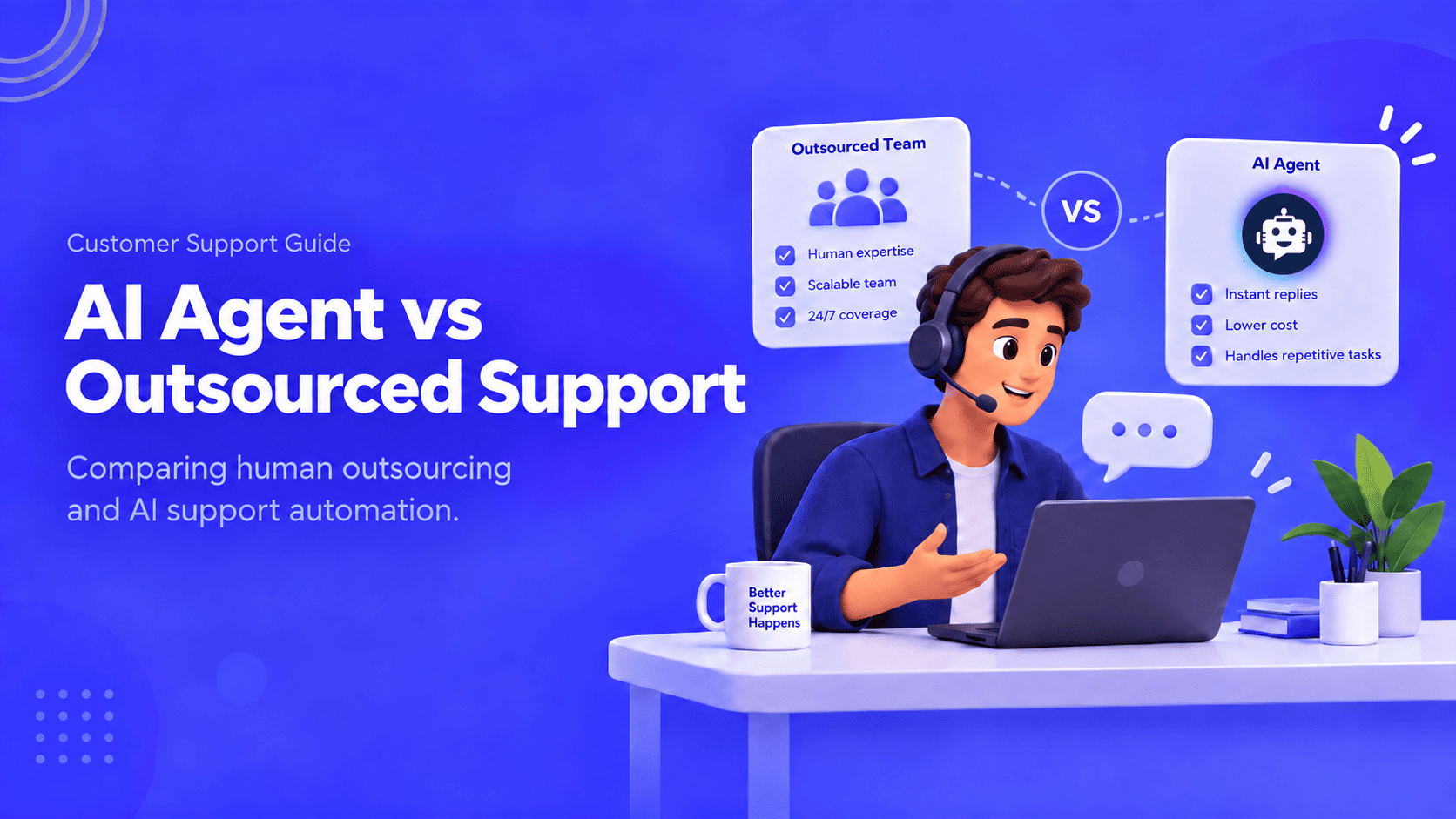
Compare outsourcing customer service with an AI agent using your own ticket mix, a cost model you fill in, and a clear rule for a hybrid split.
Export the Zendesk ticket archive, train an AI Agent on the help center, and test one real ticket before you stop the old queue.


Compare six Yuma alternatives by ecommerce capabilities, helpdesk compatibility, pricing and human handoffs to choose a replacement for your support team.


Move from Gorgias with a verified ticket archive, tested AI workflows, human handoff and a channel cutover plan before ending your subscription.
TL;DR The Gorgias AI Agent is the automation layer inside the Gorgias helpdesk, split between a Shopping Assistant for pre-purchase conversations and a Support Agent for post-purchase support. A connected Shopify store is required, and Gorgias documentation rules out platforms such as BigCommerce, Magento, and WooCommerce for the AI Agent. Billing runs on two separate […]

TL;DR Gorgias is the closest Richpanel alternative for Shopify stores that need native order actions directly inside support tickets. YourGPT fits stores that want one AI agent handling requests across web, WhatsApp, Instagram, and email, while Tidio and Re:amaze suit smaller teams looking for lighter, lower-cost options. Richpanel’s AI pricing starts around $500/month for two […]