Top 12 WhatsApp Business API Solutions Compared (2026)

Rajni
Last updated on May 8, 2026
As WhatsApp becomes a core business channel, teams outgrow the basic app and need API-based tools for scale. Platforms such as YourGPT, Respond.io, and Yellow.ai support advanced automation and multi-team workflows, while WATI fits smaller teams needing a simple shared inbox and light automation.
WhatsApp has become one of the most important channels for customer communication. With billions of active users and far higher open rates than email, businesses increasingly depend on it for support, sales, and customer follow-ups.
As conversation volume grows and more team members handle chats, the standard WhatsApp Business App starts to fall short. It lacks the structure, visibility, and control needed to manage customer conversations at scale. The result is fewer dropped conversations, faster resolutions, and a support operation that actually scales.
This is where the WhatsApp Business API becomes necessary. It allows businesses to connect WhatsApp with internal systems, manage conversations centrally, and handle higher message volumes without losing context.
Today’s WhatsApp API providers offer much more than basic messaging. Many include automation, chatbots, shared inboxes, CRM integrations, and analytics. Choosing the right provider directly affects customer experience, team productivity, and long-term scalability.
Most teams start using WhatsApp because it is simple. One device, one person replying, and conversations stay manageable. At this stage, the WhatsApp Business App does what it is meant to do.
The shift happens when WhatsApp stops being a secondary channel and becomes part of daily communication channel. Message volume increases, more team members need access, and conversations span support, sales, and operations. The app stays the same, but the effort required to manage work around its limits keeps growing.
Different businesses reach this stage at different times. Ecommerce teams experience it early as order and support volume increases. Clinics encounter it when coordination expands across staff or locations. B2B teams reach it when inbound leads arrive daily and must move into a CRM without manual effort. In each case, WhatsApp begins to carry more responsibility than the app was designed to support.
The WhatsApp Business API supports this transition by making WhatsApp workable as operational infrastructure. If usage is light, the app is enough. When WhatsApp becomes central to how work gets done, the API helps teams stay organised as they grow.
Below is a detailed comparison of the best WhatsApp API providers in 2026. These platforms were selected based on automation depth, ease of use, reliability, onboarding experience, team collaboration tools, AI capability, and ecosystem strength.

YourGPT is a AI First platform that provides an end-to-end WhatsApp API solution for support, sales and operations. It combines multichannel messaging, AI agents, workflow automation and CRM syncing in one system. The platform is built for teams that want to centralize conversations, eliminate repetitive manual work, and handle growing message volumes without losing context.
As a result, businesses respond faster, maintain consistency across every customer interaction, and scale their operations without adding headcount.

WATI is a WhatsApp-focused platform built for small and medium teams that want an easy shared inbox and simple automation. It helps businesses manage customer queries, organize teams and run basic workflows without technical expertise. It is often chosen for its clean interface and quick setup.
It works well for businesses in the early stages of scaling their WhatsApp operations, particularly in e-commerce, education, and service-based industries. Teams that want to get started quickly without complex setup will find WATI a practical fit.
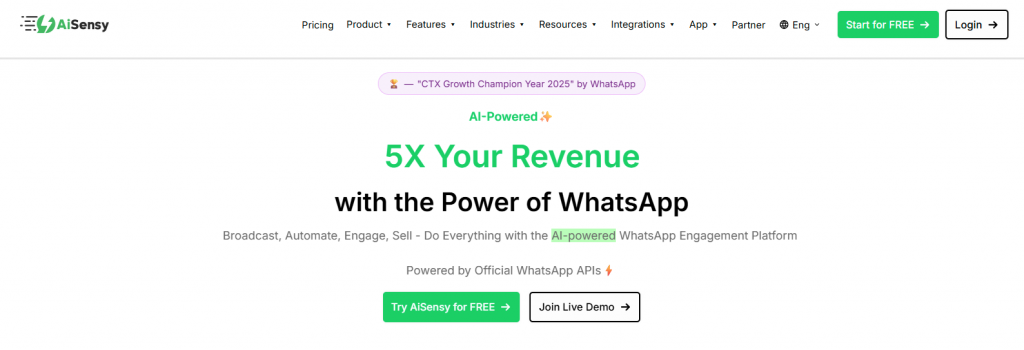
AiSensy is widely used by small businesses for WhatsApp marketing, broadcasts and chatbot workflows. The platform emphasizes ease of use, fast onboarding and campaign-driven communication. It is especially popular with businesses that rely on WhatsApp for promotions and engagement.
It suits D2C brands, coaches, and early-stage startups that need a quick way to reach customers at scale. For businesses focused on driving campaign performance rather than managing complex support operations, AiSensy offers a practical solution without a steep learning curve.
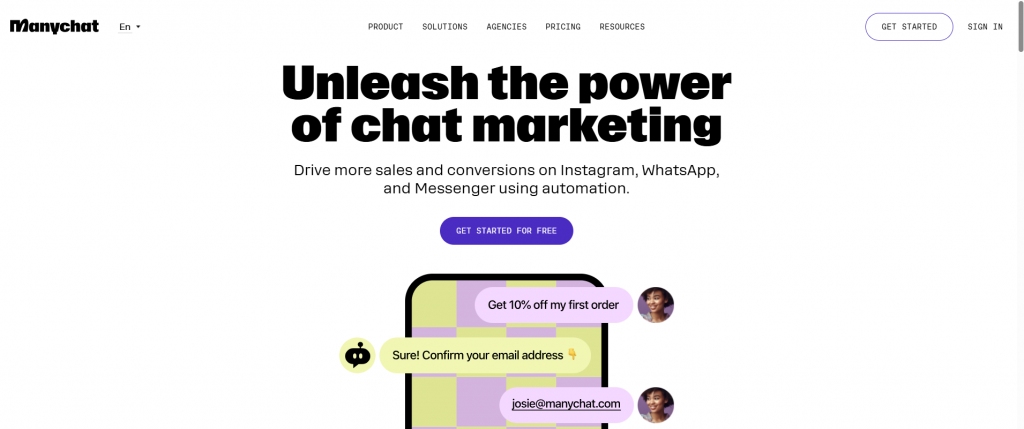
ManyChat is designed primarily for marketers building WhatsApp, Instagram and Facebook funnels. It offers a visual flow builder, growth tools and automation for lead capture and nurturing. Businesses use ManyChat to run ad-connected journeys and conversational campaigns.
It is a good fit for performance marketers, agencies, and growth teams that prioritize top-of-funnel engagement over post-sale support. Brands running paid social campaigns across Meta platforms will find ManyChat particularly effective at converting ad clicks into active WhatsApp conversations.

Yellow.ai is an enterprise conversational AI platform offering natural language automation, multi-channel messaging and AI-driven workflows. It is built for large organizations that require intelligent virtual agents, orchestration and integration with enterprise systems.
The platform is well suited for industries such as banking, healthcare, retail, and telecom, where automating high volumes of customer interactions across multiple touchpoints is a core operational need. Organizations that have outgrown simpler tools and need a system capable of handling enterprise-level complexity will find Yellow.ai a reliable fit.
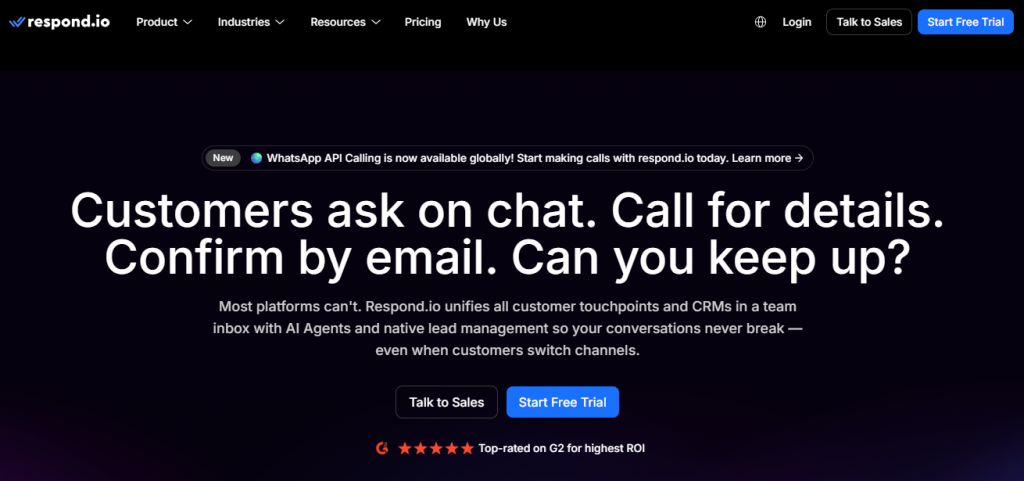
Respond.io is an omnichannel customer conversation platform built for mid-to-large teams. It brings messaging from WhatsApp, Instagram, Messenger, TikTok and other channels into one workspace, supported by automation and reliable performance. It helps businesses manage customer conversations at scale and keep communication organized across channels.
It is commonly used by companies that operate across multiple markets and messaging platforms, particularly in industries like retail, logistics, and financial services. Teams that need a centralized workspace to handle high conversation volumes without switching between tools will find Respond.io a practical fit.
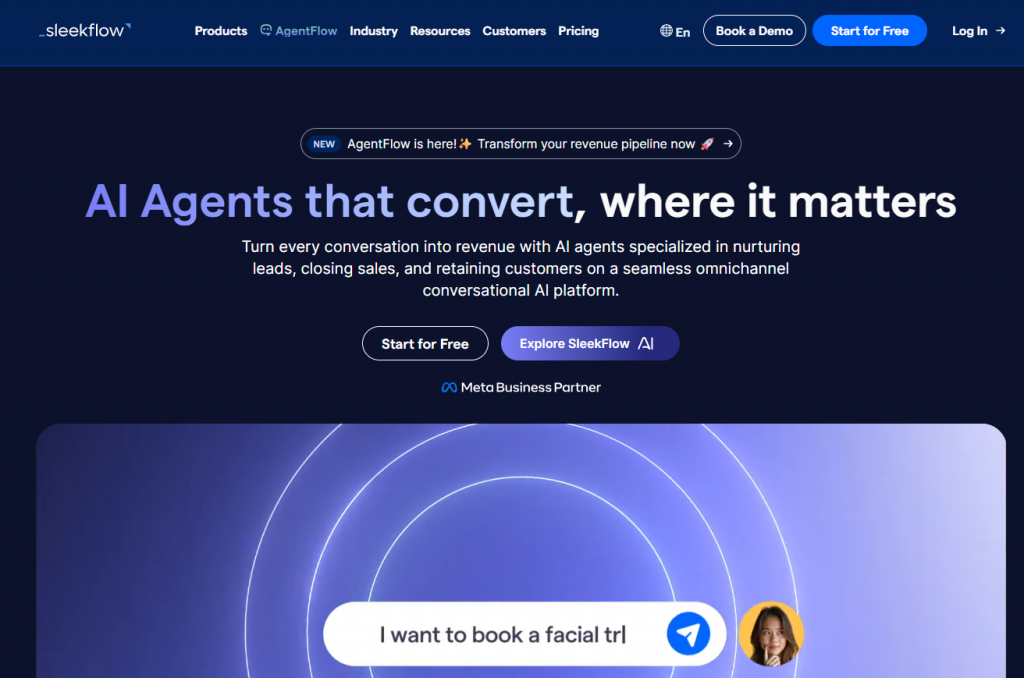
SleekFlow focuses on multichannel customer communication with strong ecommerce capabilities. It helps businesses automate order updates, remarketing flows and journey messaging. It is popular with retail and ecommerce brands that lean heavily on WhatsApp.
The platform also supports revenue attribution, allowing teams to track which conversations and campaigns contribute directly to sales. This makes it a practical choice for brands that want to connect customer engagement with measurable business outcomes.
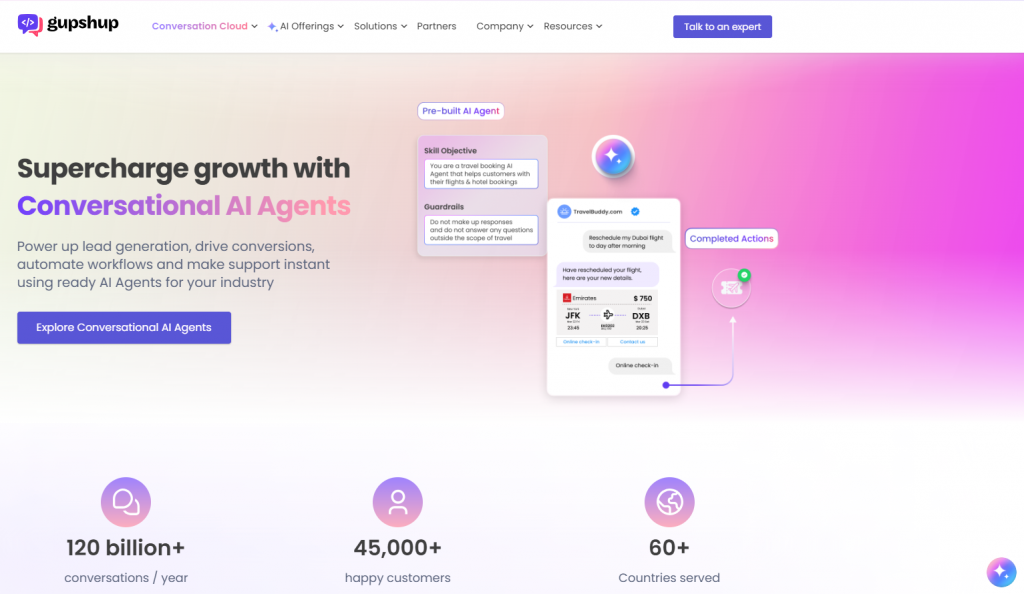
Gupshup is a developer-first messaging platform known for its APIs and delivery infrastructure. It supports WhatsApp and other channels through flexible APIs, making it suitable for teams that want to build custom conversational solutions and high-volume flows.
With a strong presence in regions like India, Southeast Asia, and Latin America, it is widely used by businesses that depend on reliable message delivery at scale. Teams with in-house development resources will find Gupshup’s tools flexible enough to support customized communication setups.

Interakt is a WhatsApp-first CRM, marketing, and support automation platform built for small and medium businesses that want to manage customer engagement from one place. It helps teams handle WhatsApp conversations, run campaigns, automate replies, and manage customer interactions without needing a complex technical setup.
The platform is especially useful for D2C brands, ecommerce stores, and growing businesses that rely heavily on WhatsApp for sales and support. With features like shared inbox, broadcasts, Shopify automation, WhatsApp catalog, and AI chatbot capabilities, Interakt is a practical fit for teams that want to combine marketing, commerce, and customer support in one dashboard.
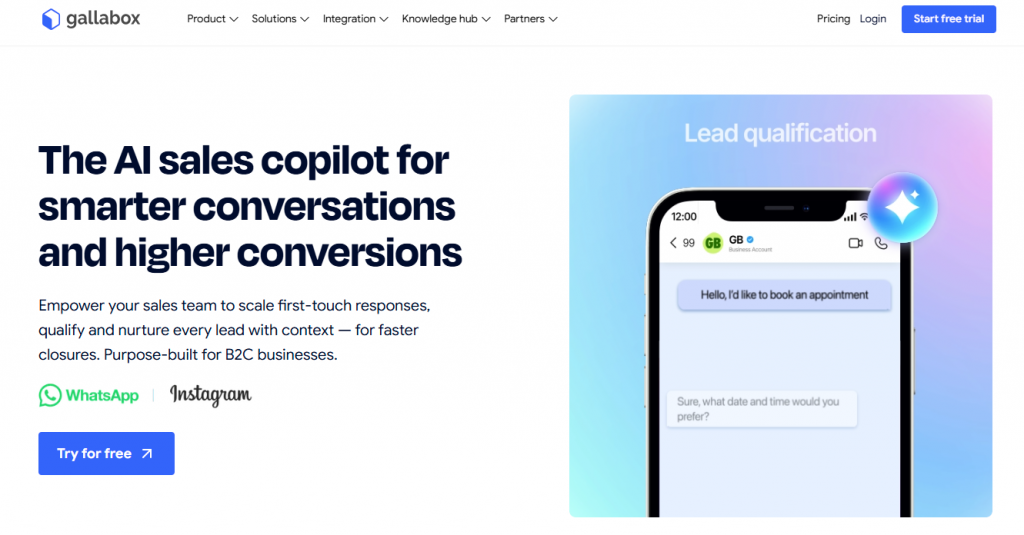
Gallabox is a WhatsApp CRM platform built for small and medium teams that need simple lead management and collaboration. It focuses on ease of use, shared inbox workflows and basic automation for customer engagement.
The platform also offers pipeline visibility and contact tagging, helping sales-focused teams stay organized as they move leads through different stages. It is a practical starting point for businesses that want CRM-like structure without the complexity of a full enterprise system.
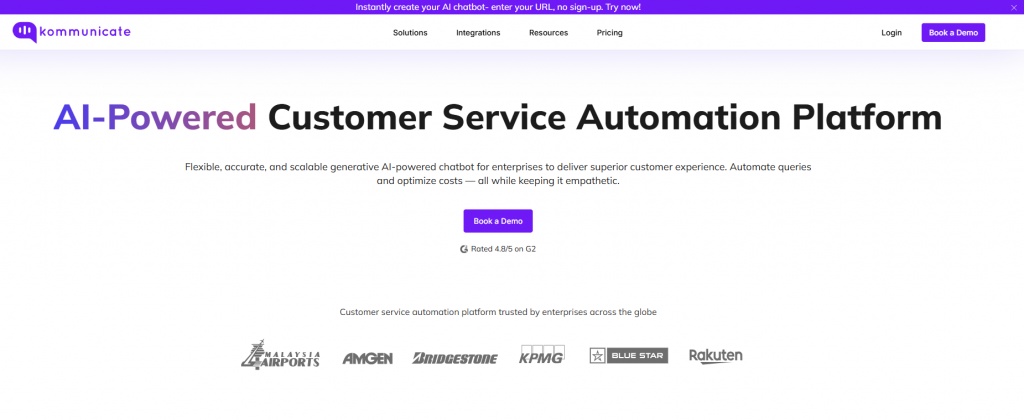
Kommunicate is a support automation platform offering WhatsApp, web and in-app chat integrations. It allows businesses to deploy AI chatbots and hybrid support workflows to reduce repetitive queries and manual workloads.
One of its distinguishing features is a smooth bot-to-human handoff, ensuring customers are transferred to a live agent at the right moment without losing conversation context. It also integrates with platforms like Dialogflow and Amazon Lex, making it a flexible option for teams that have already invested in existing bot infrastructure.
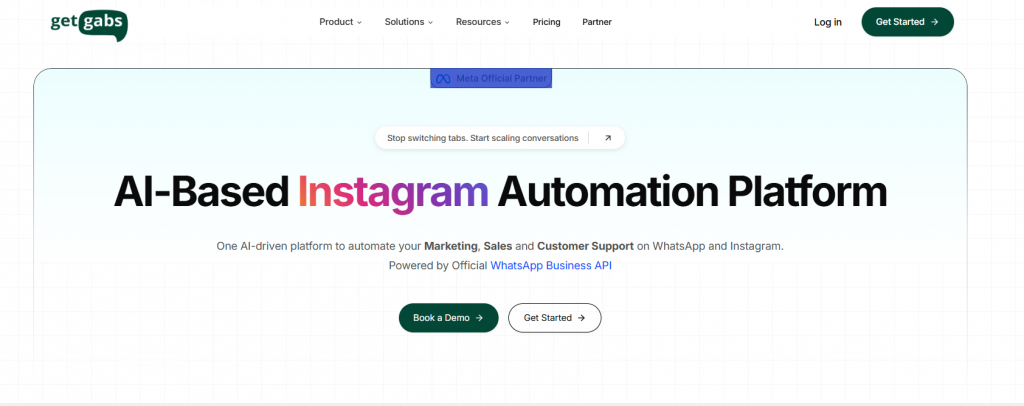
Getgabs is a WhatsApp-focused business API platform built for teams that want to manage marketing, sales, and customer support conversations from one place. It helps businesses automate customer interactions, send WhatsApp campaigns, manage leads, and improve response times without using multiple separate tools.
It works well for growing businesses that are scaling their WhatsApp communication, particularly in e-commerce, SaaS, agencies, and service-based industries. Teams looking for automation, campaign management, and customer handling in a single dashboard may find Getgabs a practical fit.
A great API does more than just connect you to WhatsApp. It influences speed, automation depth, multichannel reach, message deliverability and long-term scalability.
Here is an improved side-by-side comparison across the factors buyers care about most.
| API | Channels Supported | AI & Automation | CRM Integrations | Reliability & Scale |
|---|---|---|---|---|
| YourGPT | WhatsApp, Instagram, Messenger, Telegram, LINE, Web Chat | ✅ AI agents and advanced workflow automation | ✅ Supports HubSpot, Salesforce and other CRMs | Designed for growing teams and high-volume operations |
| WATI | WhatsApp, Instagram DM | ⚠️ Basic no-code automation | ⚠️ Limited CRM integrations | Stable for small and midsize teams |
| AiSensy | ⚠️ Campaign-focused bot automation | ⚠️ Limited CRM connectivity | Ideal for SMB campaigns and engagement | |
| ManyChat | WhatsApp, Instagram, Facebook Messenger | ✅ Visual flow automation builder | ⚠️ Integrations via third-party tools | Reliable for marketing and funnel workflows |
| Yellow.ai | WhatsApp plus web, app and messaging channels | ✅ Enterprise-level AI automation | ✅ Connects with CRMs and enterprise systems | Suitable for large-scale deployments |
| Respond.io | WhatsApp, Instagram, Messenger, TikTok, Web and more | ✅ Advanced automation and routing | ✅ Supports Salesforce, HubSpot and others | High uptime for mid and large teams |
| SleekFlow | WhatsApp, Instagram, Facebook Messenger | ✅ Ecommerce-focused automations | ⚠️ Integrations depend on the tech stack | Reliable for ecommerce and retail messaging |
| Gupshup | WhatsApp and other channels via API | ⚠️ Automation through custom code | ⚠️ CRM support via API and custom setups | Strong for high-volume, developer-led use cases |
| Interakt | WhatsApp, Instagram | ✅ AI chatbot, no-code chatbot, broadcasts and ecommerce automation | ✅ WhatsApp CRM, Shopify and ecommerce integrations | Good for SMBs, D2C brands and ecommerce teams scaling WhatsApp sales and support |
| Gallabox | ⚠️ Basic workflows and follow-ups | ⚠️ WhatsApp CRM-style lead management | Good for SMBs needing simple collaboration and lead tracking | |
| Kommunicate | WhatsApp, Web Chat, In-app Chat | ✅ AI and rule-based support automation | ⚠️ Integrations vary by plan | Reliable for support teams using chatbots |
| Getgabs | ✅ AI-powered chatbot, no-code chatbot, drip campaigns and ecommerce automation | ✅ Built-in WhatsApp CRM and CRM integration support | Suitable for growing businesses managing marketing, sales and support at scale |
Choosing the right WhatsApp API depends on your automation needs, team size and customer communication goals. YourGPT, Respond.io and Yellow.ai work well for advanced multichannel setups, while WATI, AiSensy and Gallabox support simpler WhatsApp workflows. Each platform solves a different problem, so the best WhatsApp API is the one that matches your message volume, integration needs and long-term engagement strategy.
The best WhatsApp API is the one that fits the way your team works. Every business handles conversations differently, so the goal is not to chase the most features, but to match the platform to your daily workflow. The points below highlight what actually matters when comparing providers in 2026.
Your message load is often the simplest way to narrow choices. Teams handling steady or high traffic need a platform that keeps delivery smooth during peak hours. YourGPT, Respond.io, Gupshup, and Yellow.ai manage volume well and hold up under pressure.
If your team handles a lighter stream of chats, a more straightforward platform such as WATI, AiSensy, or Gallabox will feel easier to manage without overwhelming you with advanced tools you will not use.
Some teams rely heavily on automated flows. Others only need quick replies.
If your workflows include order confirmations, CRM updates, payment reminders, or multi-step actions, platforms like YourGPT, Yellow.ai, and Respond.io offer far more control.
For simple FAQ responses or light follow-up messages, WATI, AiSensy, and Gallabox do the job without adding complexity. ManyChat remains strong for WhatsApp-based marketing and audience journeys.
When more than one person handles conversations, the inbox experience becomes important. YourGPT and Respond.io offer clean assignment rules, internal notes, and routing options that help teams stay organized.
Kommunicate works well for teams that want a balance between automation and human replies.
If only one or two people manage the inbox, you will not need all the collaboration tools found in the larger platforms.
Your API should connect smoothly with the ai tools you already use. YourGPT, SleekFlow, and Respond.io provide broader integration support across CRMs, ecommerce platforms, and helpdesk systems. Yellow.ai fits companies that manage deeper internal systems or complex data flows.
AiSensy and Gallabox focus on simpler setups, which is fine for smaller businesses but limiting for teams that rely on detailed syncing or automated data handling.
Some APIs get you running quickly. AiSensy, WATI, Gallabox, and ManyChat usually complete activation faster because they simplify onboarding. YourGPT and Respond.io take a more guided approach that helps teams design workflows and configure automation the right way from the start.
Enterprise-focused tools like Yellow.ai may require planning calls or phased onboarding.
If your customers message you on multiple platforms, multichannel support is worth considering. YourGPT, Respond.io, SleekFlow, and Yellow.ai unify WhatsApp, Instagram, Messenger, Telegram, and web chat into one shared workspace.
WATI, AiSensy, and Gallabox focus mainly on WhatsApp. ManyChat works best for brands building Meta-based funnels.
Your internal processes determine how flexible your API needs to be. YourGPT, Respond.io, and Yellow.ai support complex workflows, API calls, and logic-driven automation for sales, support, and operations.
WATI, AiSensy, and Gallabox work well for businesses that need basic flows without heavy customization. Gupshup suits teams that prefer building more of their logic through code.
WhatsApp now sits at the center of how many businesses speak with their customers. When the volume grows, the tools behind that communication matter just as much as the conversations themselves. A strong API keeps messages moving, helps teams stay organised and makes automation practical instead of overwhelming.
The platforms reviewed in this guide cover a wide range of needs. Some are built for small teams getting started, while others focus on large operations that rely heavily on workflows and integrations. YourGPT stands out because it brings messaging, automation and team tools into one place, which helps companies avoid juggling separate systems as they scale.
Choosing a API is not only about sending messages. It affects how quickly your team can reply, how smoothly information flows between departments and how customers feel after interacting with your business. If the platform is reliable and easy to work with, it becomes something your team depends on every day.
For companies that rely on WhatsApp as a core channel, the decision should be made with the long term in mind. The right API will support your current setup and still have room for your future plans. With the right foundation in place, WhatsApp can serve as a stable and efficient channel for both your team and your customers.
Use YourGPT to launch AI-powered WhatsApp workflows for support, sales, campaigns, and customer engagement.

Compare six Yuma alternatives by ecommerce capabilities, helpdesk compatibility, pricing and human handoffs to choose a replacement for your support team.


Move from Gorgias with a verified ticket archive, tested AI workflows, human handoff and a channel cutover plan before ending your subscription.

TL;DR The Gorgias AI Agent is the automation layer inside the Gorgias helpdesk, split between a Shopping Assistant for pre-purchase conversations and a Support Agent for post-purchase support. A connected Shopify store is required, and Gorgias documentation rules out platforms such as BigCommerce, Magento, and WooCommerce for the AI Agent. Billing runs on two separate […]

TL;DR Gorgias is the closest Richpanel alternative for Shopify stores that need native order actions directly inside support tickets. YourGPT fits stores that want one AI agent handling requests across web, WhatsApp, Instagram, and email, while Tidio and Re:amaze suit smaller teams looking for lighter, lower-cost options. Richpanel’s AI pricing starts around $500/month for two […]
TL;DR Shopify Inbox is a good free option for stores that only need basic storefront chat and simple customer conversations. Stores usually look for alternatives when they need multichannel support, stronger team workflows, or automated order actions. YourGPT is strongest for cross-channel AI automation, Gorgias for Shopify-native order workflows, and Tidio for smaller stores that […]
TL;DR Tidio recently restructured its top paid plan, and many 2026 reviews still describe the old pricing model. Confirm current pricing directly on Tidio’s site before budgeting. Lyro, Tidio’s AI agent, runs on Anthropic’s Claude rather than ChatGPT. Only the Premium tier carries a guaranteed resolution rate, well below the average Tidio advertises elsewhere. Billing […]