9 Customer Success Tools Compared for 2026

Shreya Sharma
August 18, 2026
Customer success tools fall into two groups: dedicated CS platforms such as Gainsight, ChurnZero, Totango, Planhat, Vitally, and Custify, and support or AI-agent tools such as Freshdesk, YourGPT, and Intercom.
None of the six dedicated CS platforms publish list pricing, and third-party estimates can vary widely for the same tool.
AI agent adoption in customer service has grown sharply, with Salesforce’s move to acquire Intercom’s AI agent business pointing to where the market is heading.
AI agents work best alongside a CS platform by handling support volume that customer success teams should not need to manage manually.
Most customer success teams are still running the same health-score-and-spreadsheet workflow they had in 2022, except now the spreadsheet has a churn-prediction model bolted on. That gap between what CS platforms promise and what a small team can operate day to day is where a lot of 2026 buying decisions are getting made, especially for teams building out a broader retention strategy.
Nine tools show up on nearly every shortlist for a reason. Six are purpose-built customer success platforms, and none of them publish pricing that survives contact with a sales call. Freshdesk, YourGPT, and Intercom publish clear self-serve pricing, since ticketing and AI agent tools tend to sell that way even when a dedicated CSP doesn’t.
This guide breaks down what each tool actually does, what it costs as far as that’s knowable, and where AI agents fit into a CS stack that increasingly can’t be built on health scores alone.
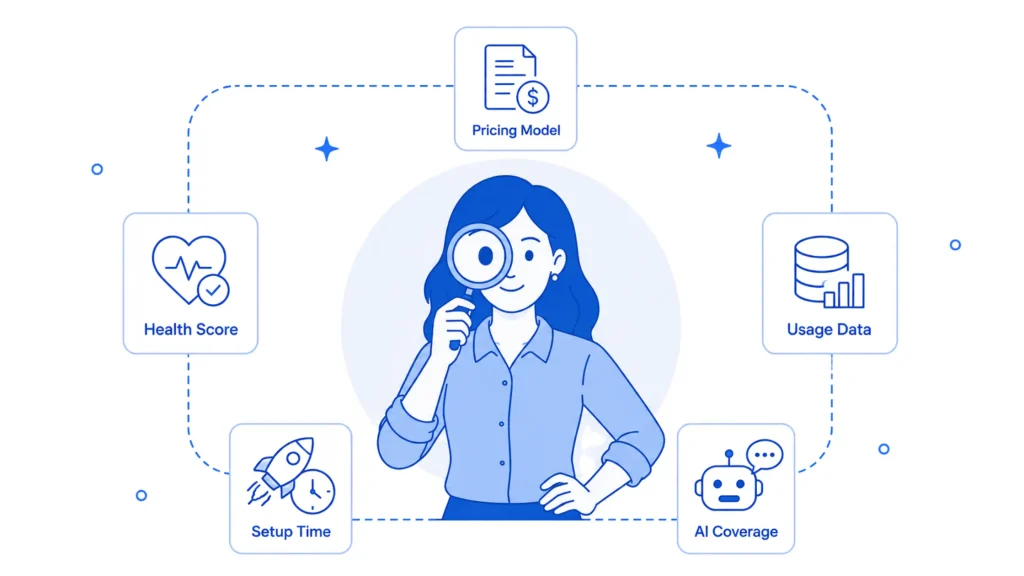
Before comparing platforms, it helps to know which questions separate them:
| Platform | Best For |
|---|---|
| Gainsight | Enterprise customer success, health scoring, product analytics, and customer education |
| ChurnZero | Usage-driven health scoring and early churn detection |
| YourGPT | AI-powered support, sales conversations, and multichannel automation |
| Vitally | Product-led SaaS teams using a modern data stack |
| Totango | Enterprise customer success with composable CS products |
| Planhat | Account-based customer success and configurable dashboards |
| Custify | B2B SaaS teams needing faster customer success implementation |
| Freshdesk | Ticketing, help desk workflows, and AI-assisted support |
| Intercom (Fin) | AI-first customer support across chat, email, and voice |
Nine tools worth knowing for customer success teams in 2026, covering health scoring, renewal workflows, and AI-driven support.
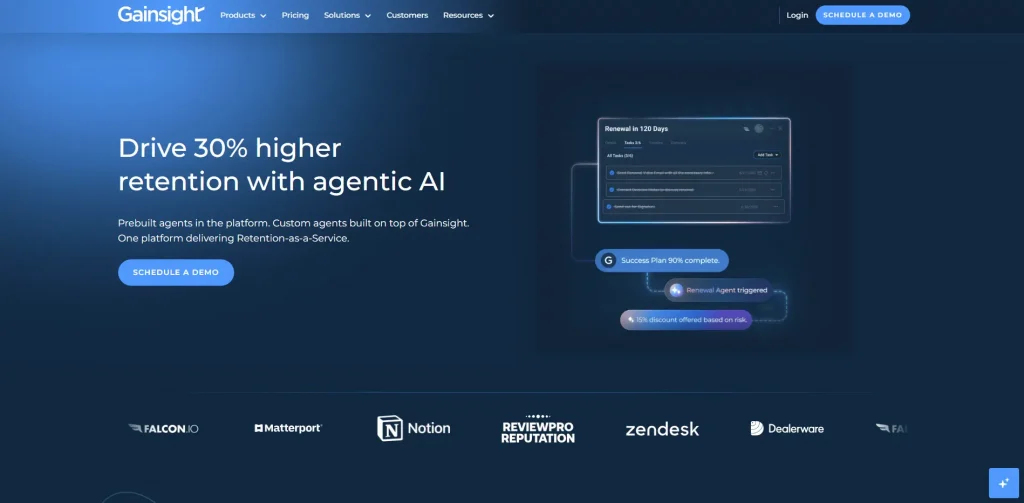
Gainsight is the platform most enterprise CS orgs benchmark against. Its CustomerOS suite bundles Gainsight CS (health scoring and playbooks), Gainsight PX (product analytics), Skilljar (customer education), and Staircase AI agents into one system built for companies managing thousands of accounts. Gainsight puts its own customer base at more than 2,000 companies, spanning onboarding through renewal inside a single connected workflow.
The platform also scores each account’s growth readiness and pushes qualified expansion leads directly into a company’s CRM, per Gainsight’s own product pages. Gainsight also states it was named a Leader in Gartner’s Magic Quadrant for Customer Success Management Platforms.
Best for. Enterprise CS teams with dedicated ops resources and the budget for a multi-month implementation.
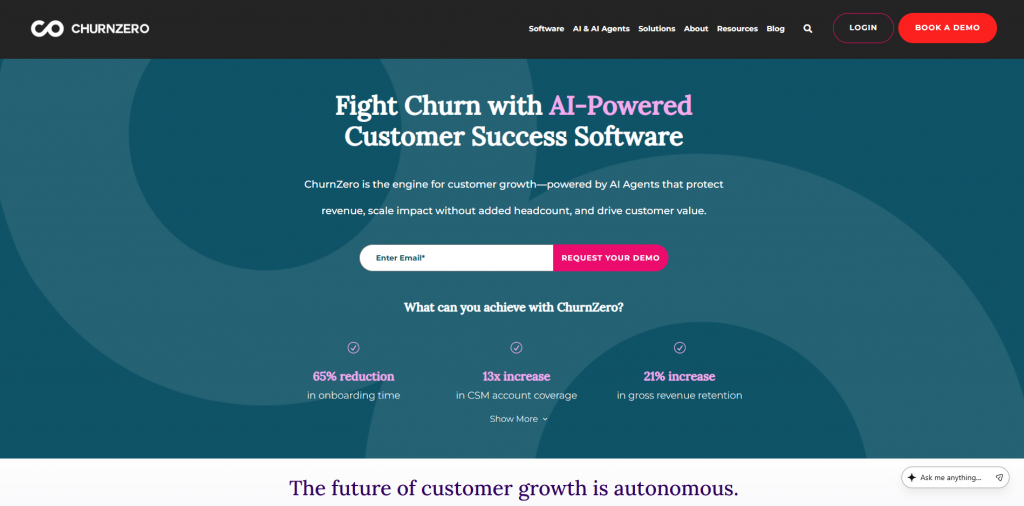
ChurnZero connects directly to a company’s product to read usage patterns in near real time. That’s its main differentiator from platforms that rely more heavily on manual CSM updates. Founded in 2015, the company is remote-first with offices in Washington, D.C. and Amsterdam. ChurnZero also markets itself as the first customer success platform to embed native, CS-specific generative AI directly into its workflows.
Success Insights, a machine learning feature, scans account data for churn patterns that health scores alone might miss. The platform connects to more than 70 business tools, per its own site.
Best for. Mid-market SaaS teams that want usage-driven health scores without Gainsight’s implementation overhead.
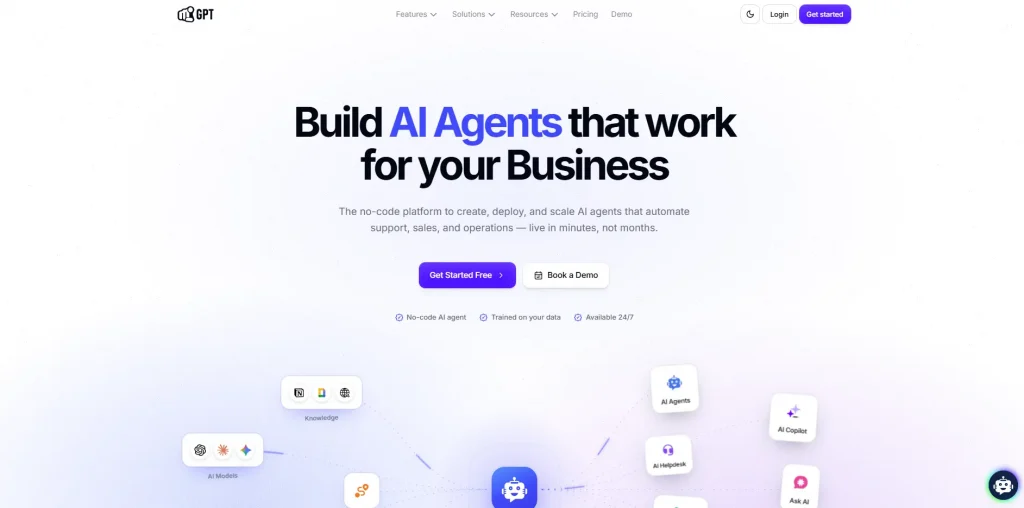
YourGPT is a no-code AI agent platform for automating customer support, sales, and operations across web, WhatsApp, Slack, and other channels from one system. It carries no health-scoring or renewal-forecasting layer of its own. Agents reason through multi-step requests, pull answers from a company’s own data, and take actions such as updating an order or escalating a conversation with full context. YourGPT’s 2.0 release added an AI Copilot that builds an agent from a plain-English description.
The platform also displays SOC 2 Type II and GDPR compliance badges on its site. Model providers are configured with privacy-first settings, including zero-day data retention, according to the platform’s own security documentation.
Best for. Teams that want AI agents absorbing support and sales ticket volume alongside a CS platform, not replacing one.
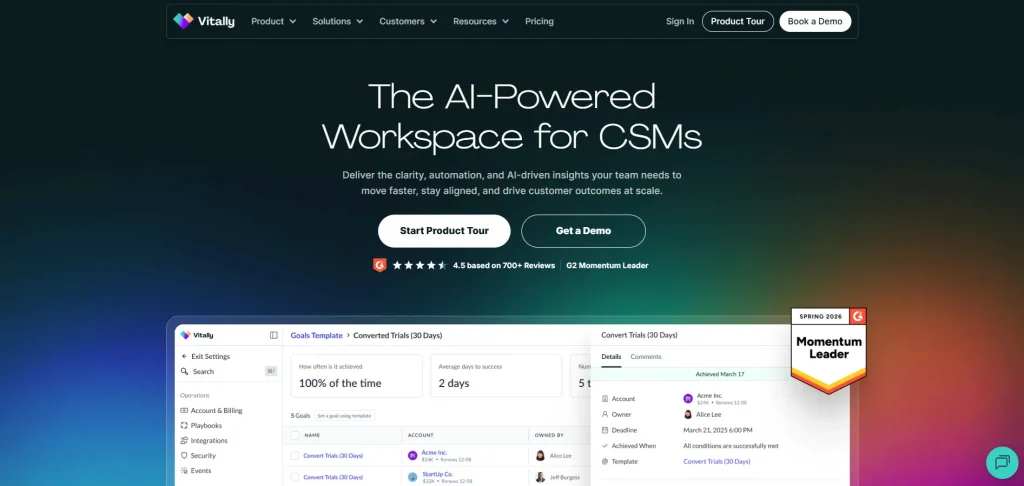
Vitally leans harder into modern data infrastructure than most competitors, with native support for warehouse tools like Snowflake and BigQuery alongside the usual CRM connections. Vitally counts SaaS companies like Segment, Zapier, and Productboard among its customers, per its own marketing materials.
The company also holds a 4.5 rating across more than 700 reviews on G2, shown as a badge on its own site. Vitally runs a free resource hub called Vitally Labs, offering churn and ROI calculators. It also publishes direct comparison pages against Planhat, Totango, Gainsight, and ChurnZero, several of the same platforms covered here.
Best for. Product-led or hybrid SaaS teams already invested in a modern data warehouse.
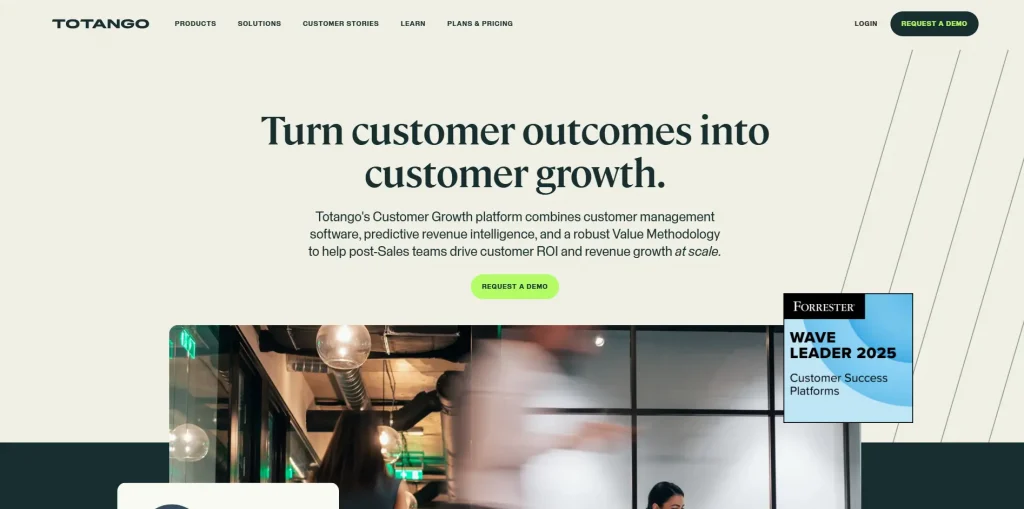
Totango restructured in 2024, merging with Catalyst and folding its AI churn-prediction engine into a separate product called Unison. What used to be one tool is now three: the core Totango CSP, Unison AI, and Catalyst. Totango lists customers including SAP, GitHub, Schneider Electric, and Aircall on its own marketing materials.
The company positions its combined offering as a Customer Revenue Optimization suite, aimed at large and fast-growing businesses rather than early-stage teams.
Best for. Enterprise teams that want a composable, mix-and-match platform over one monolithic system, and are comfortable evaluating three related products.
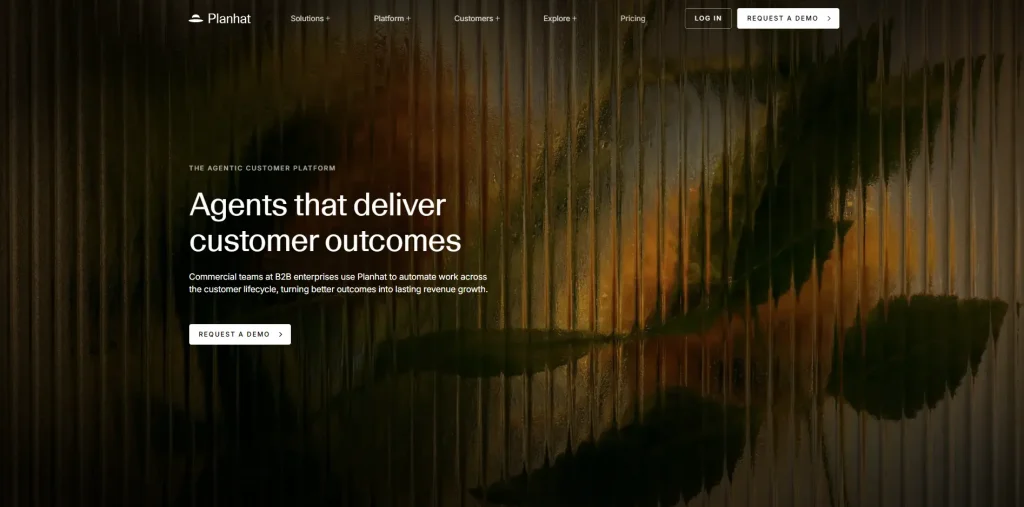
Planhat prices per customer account rather than per internal seat, so every user on the team gets a login without inflating the bill. Planhat’s customers include Nasdaq, Dropbox, Trustpilot, and Nutanix, according to its own site. The company has also been named a Leader in Gartner’s Magic Quadrant for Customer Success Management Platforms.
Planhat also holds Cisco’s CX Partner of the Year 2025 award and appears in IDC’s MarketScape for Worldwide Customer Success Applications.
Best for. Teams that want to roll the platform out broadly across sales, support, and CS without per-seat cost scaling.
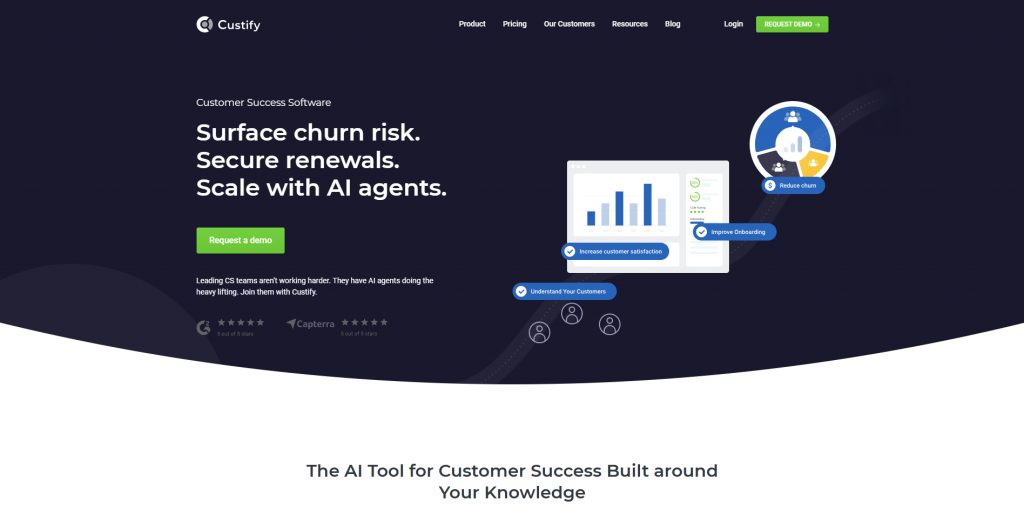
Custify is built specifically for B2B SaaS companies and stays narrower in scope than Gainsight or Totango, which shows up in both its feature set and its typical customer size. Custify maintains active GDPR compliance and holds ISO 27001 certification, per its own security page.
Customer testimonials on its site describe teams handling several times more accounts after switching from spreadsheets to the platform. The company has also picked up several G2 badges, including Best Support and Momentum Leader.
Best for. Small to mid-market B2B SaaS teams that want core CS functionality without an enterprise implementation.
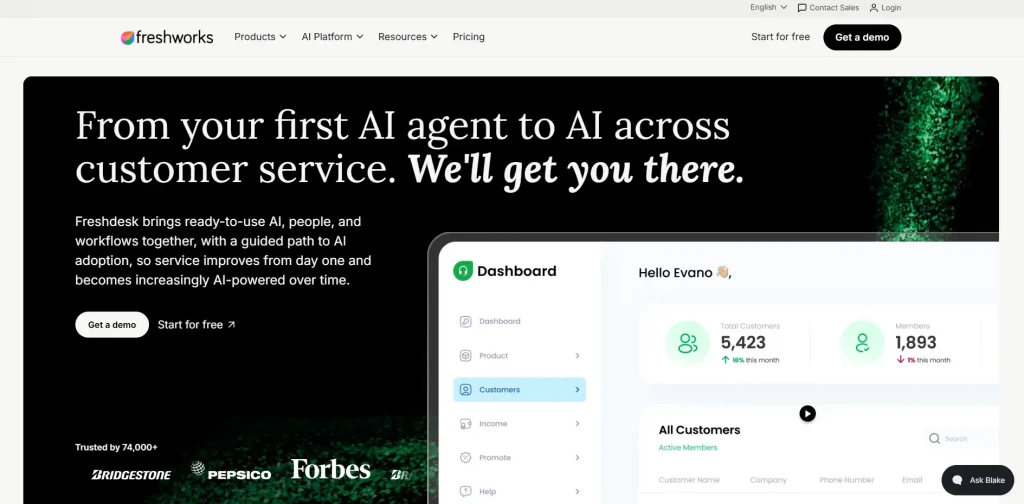
Freshdesk is a help desk first and a customer success tool second, but enough CS teams use it for support ticketing alongside a dedicated CSP that it belongs on this list. Freshdesk says it’s trusted by more than 74,000 businesses worldwide, including Pearson, PepsiCo, and Klarna. Freshworks, its parent company, also sells Freshdesk alongside Freshservice for IT teams and Freshsales for CRM.
The 14-day free trial opens with full Enterprise-tier access before a plan is chosen, and the company charges no cancellation fees regardless of when a subscription ends.
Best for. Support-heavy teams that need ticketing and a knowledge base more than health scoring, and want a lower entry price than a dedicated CSP. For more options in this category, see the full AI help desk roundup, or a direct comparison against YourGPT.
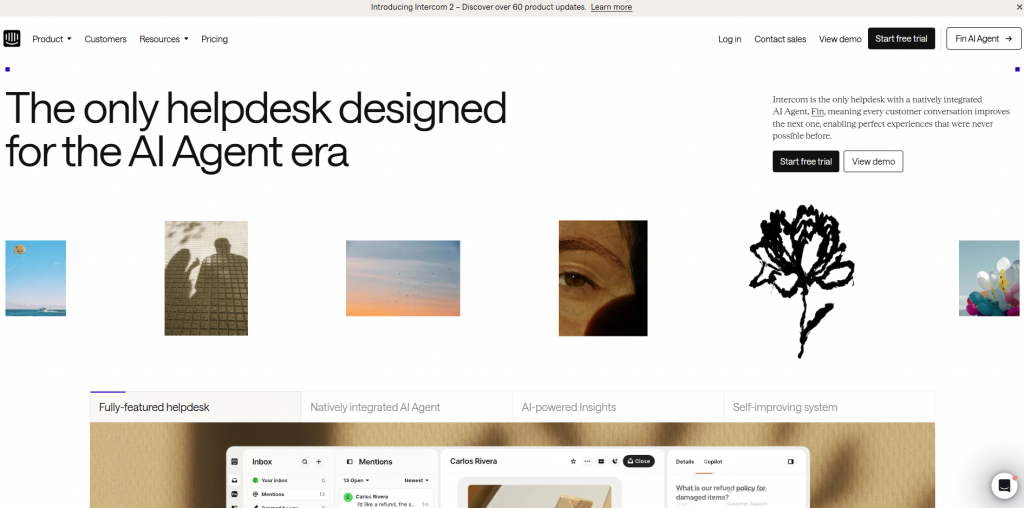
Intercom rebranded around its AI agent, Fin, in mid-2026, and the rename turned out to be a preview of a much bigger move. In June 2026, Salesforce signed a definitive agreement to acquire Fin for approximately $3.6 billion, folding its AI agent technology into Agentforce. The deal is signed but not yet closed. Intercom highlights customer results such as a 96% drop in resolution time at Synthesia and a 50% resolution rate at Robin, according to case studies on its own site.
The company also backs Fin with what it calls a “million dollar guarantee” and offers startups up to 93% off through an early-stage program..
Best for. SaaS and digital product companies that want support tightly connected to onboarding and product engagement, and are comfortable with usage-based AI pricing on top of seats.
| Tool | Category | Pricing Model | Core Focus | Customer Success Capabilities | Key Strengths |
|---|---|---|---|---|---|
| Gainsight | Enterprise CS platform | Custom, quote-based | Enterprise account health and lifecycle management | Health scoring, automated playbooks, product analytics, customer education | Broadest feature depth on this list, deep Salesforce integration |
| ChurnZero | Mid-market CS platform | Custom, per account + seats | Real-time usage-driven churn prevention | Real-time usage tracking, health scores, in-app messaging, segmentation | Earlier risk detection than manual-input tools, broad CRM and support integrations |
| YourGPT | AI agent platform | Flat monthly tiers | Automating support and sales conversations | AI agent workflows, RAG-grounded responses, human-in-the-loop handoff, omnichannel deployment | One platform across every channel, model choice, published flat-tier pricing |
| Vitally | CS platform | Custom, per account | Product-led health scoring on a modern data stack | Usage-based health scores, Hubs workspaces, AI copilot, warehouse integrations | Native Snowflake and BigQuery integration, lighter implementation than enterprise CSPs |
| Totango | Enterprise CS platform (3 products) | Custom, per seat/account | Composable, modular customer success operations | SuccessBLOCs workflow templates, standalone churn prediction via Unison AI, seat-tiered access | Prebuilt workflow library, Unison AI works independently of the core CSP |
| Planhat | CS platform | Custom, per account | Account-based rollout across sales, support, and CS | Configurable dashboards, lifecycle tracking, customizable health-score weighting | Unlimited users on every plan, modular add-ons |
| Custify | CS platform | Custom, quote-based | B2B SaaS customer success out of the box | Customer 360 view, renewal and onboarding playbooks, built-in NPS and CSAT | Purpose-built for B2B SaaS, faster implementation than an enterprise CSP |
| Freshdesk | Help desk | Tiered, per agent/month | Ticketing and support operations | Tiered ticketing, SLA management, Freddy AI Copilot and AI Agent add-ons | Free plan, large Freshworks integration ecosystem |
| Intercom (Fin) | AI-first support platform | Per seat, plus per resolution | AI-resolved support tied to onboarding | Fin AI Agent resolution, proactive messaging, product tours, agent copilot | End-to-end resolution across channels, Salesforce-backed roadmap once the acquisition closes |
With nine options and mostly quote-based pricing, the fastest way to narrow this list is to start from five details about the buyer, not the tools.
A customer success tool is software that helps a business track account health, predict churn, and manage renewal and expansion workflows across a book of customers. The category also includes support and AI agent platforms that customer success teams lean on for ticket volume, even though those tools don’t score health on their own.
A customer success platform like Gainsight or ChurnZero scores account health and triggers playbooks for a CSM to act on. A help desk like Freshdesk manages incoming tickets. Some tools, including Intercom and YourGPT, combine support and AI agents into one system.
Six of the nine tools in this guide, all dedicated CS platforms, price by quote. Cost depends on factors like customer account volume, seat count, and which modules a business buys, so vendors route every deal through a sales conversation with no fixed rate card published.
Real numbers are hard to pin down since none of the six dedicated CS platforms publish pricing. Third-party cost trackers commonly place annual contracts in the five to six figure range, though estimates for the same tool can disagree by an order of magnitude, so any specific figure should be confirmed directly with the vendor before budgeting against it.
No. A CS platform scores health and forecasts renewals. An AI agent resolves a support conversation directly. They solve different problems, and the strongest customer success stacks in 2026 run both.
Custify and YourGPT both keep setup light and pricing visible before a sales call, which suits a small team better than an enterprise-scale CSP built for thousands of accounts.
Gainsight and Totango carry the deepest feature sets on this list, built for CS organizations with dedicated ops resources and the budget for a multi-month implementation.
YourGPT is an AI agent platform built to automate support and sales tickets, complementing the health-scoring work a CS platform already does. It absorbs the ticket volume a CSM team shouldn’t have to handle by hand, freeing that team for renewal and expansion work, and it’s designed to run alongside a CS platform rather than stand in for one.
Six of the nine tools here withhold pricing until a sales call happens, and the ones that do publish pricing still charge per seat or per resolution in ways that scale fast once volume climbs. None of that is a reason to skip the category. It’s a reason to walk into each demo already knowing what the actual problem is: health scoring and renewal workflows point toward a dedicated CSP, while high ticket volume increasingly points toward AI-driven support automation running alongside one. For a closer look at what to check before signing on with either kind of tool, see what to evaluate before buying an AI agent.

Compare six Yuma alternatives by ecommerce capabilities, helpdesk compatibility, pricing and human handoffs to choose a replacement for your support team.

Move from Gorgias with a verified ticket archive, tested AI workflows, human handoff and a channel cutover plan before ending your subscription.

TL;DR The Gorgias AI Agent is the automation layer inside the Gorgias helpdesk, split between a Shopping Assistant for pre-purchase conversations and a Support Agent for post-purchase support. A connected Shopify store is required, and Gorgias documentation rules out platforms such as BigCommerce, Magento, and WooCommerce for the AI Agent. Billing runs on two separate […]


TL;DR Gorgias is the closest Richpanel alternative for Shopify stores that need native order actions directly inside support tickets. YourGPT fits stores that want one AI agent handling requests across web, WhatsApp, Instagram, and email, while Tidio and Re:amaze suit smaller teams looking for lighter, lower-cost options. Richpanel’s AI pricing starts around $500/month for two […]
TL;DR Shopify Inbox is a good free option for stores that only need basic storefront chat and simple customer conversations. Stores usually look for alternatives when they need multichannel support, stronger team workflows, or automated order actions. YourGPT is strongest for cross-channel AI automation, Gorgias for Shopify-native order workflows, and Tidio for smaller stores that […]
TL;DR Tidio recently restructured its top paid plan, and many 2026 reviews still describe the old pricing model. Confirm current pricing directly on Tidio’s site before budgeting. Lyro, Tidio’s AI agent, runs on Anthropic’s Claude rather than ChatGPT. Only the Premium tier carries a guaranteed resolution rate, well below the average Tidio advertises elsewhere. Billing […]