The 9 best Freshdesk AI Alternatives to try in 2026

Rajni
Last updated on July 27, 2026
Freshdesk works well for basic ticketing, but growing teams often outgrow it due to limits in AI automation, scalability, and workflow flexibility. :contentReference[oaicite:0]{index=0}
Modern alternatives focus on reducing ticket volume, not just managing it, with stronger automation, omnichannel support, and better system integration.
Platforms like YourGPT, Zendesk, and Intercom reflect different approaches, from AI-first resolution to structured ticket management, so the right choice depends on your workflow, scale, and support model.
Freshdesk is a well-known customer support platform known for its simple setup and features like ticket management and workflow automation. However, as customer needs grow, many businesses seek more advanced tools to stay competitive.
Freshdesk often faces challenges like limited customization, basic AI features, and integration issues. Growing businesses often seek alternatives that offer more flexibility and advanced capabilities.
This blog lists the top 9 Freshdesk alternatives in 2026, highlighting their features, integrations, and scalability for better customer support and workflows.
Freshdesk is a popular choice for businesses seeking to streamline customer support with ticket management, automation, and self-service features. However, as customer expectations evolve, some businesses may find that Freshdesk doesn’t fully meet their growing needs.
Exploring alternatives to Freshdesk allows businesses to find a platform that offers more advanced AI, greater scalability, and deeper customization, better suited to their evolving customer support needs.
| Rank | Platform | Best For | Quick Take |
|---|---|---|---|
| 1 | YourGPT | AI-first automation across support, sales, and operations | Built for teams that want autonomous AI agents to resolve queries, automate workflows, and reduce ticket volume across multiple channels. |
| 2 | Zendesk | Enterprise customer service operations | Strong ticketing system with automation, omnichannel support, and advanced analytics for scaling support teams. |
| 3 | Intercom | Conversational AI support and engagement | Focuses on real-time messaging, AI automation, and customer engagement rather than traditional ticketing. |
| 4 | Help Scout | Simple, email-first support teams | Lightweight help desk with shared inbox, automation, and reporting for teams that prefer simplicity. |
| 5 | Helply | AI-native B2B customer support | Resolves requests, assists agents, and surfaces churn and growth signals using connected customer and business data. |
| 6 | Zoho Desk | Cost-effective multi-channel support | Offers automation, AI tools, and deep integrations within the Zoho ecosystem for growing teams. |
| 7 | Front | Shared inbox and team collaboration | Helps teams manage customer conversations with clear ownership, collaboration, and automated workflows. |
| 8 | LiveChatAI | AI-driven live chat automation | Focused on real-time chat, automated responses, and improving customer engagement with AI workflows. |
| 9 | HappyFox | IT and internal service desk teams | Best suited for internal support workflows with ticketing automation, reporting, and self-service portals. |
Here are the top Freshdesk alternatives in 2026, covering both ticket-first tools and AI-first platforms designed to handle growing support volume more efficiently.
These alternatives provide various features to help businesses improve customer service, streamline support operations, and enhance user engagement.
Disclosure: YourGPT is our product. We included it because teams replacing Freshdesk often compare classic help desks with AI-first support platforms. Rankings are based on fit by use case, current product capabilities, and official pricing or product information reviewed in April 2026.
Let us explore these alternatives based on key criteria such as features, pricing, user interface, customer support, integration options, and unique selling points.
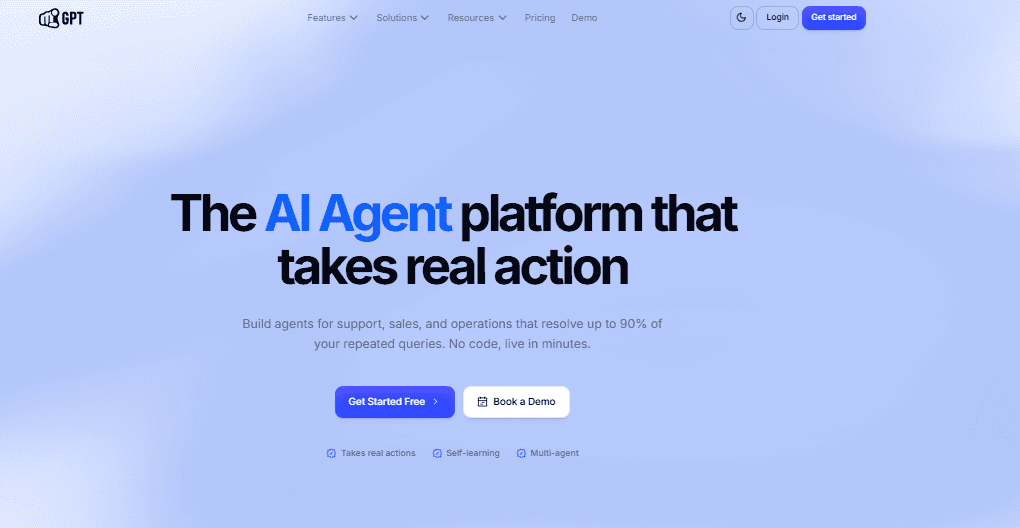
YourGPT is an AI-first platform for building ai agents that take real action across customer support, sales, and operations. Deploy them across websites, apps, and messaging channels to resolve repetitive queries, automate workflows, and reduce manual work without code.
It provides a no-code builder for creating standard agents and an AI Studio for designing advanced, workflow-driven automation. Teams can define logic, connect APIs, and control how agents behave across different scenarios without writing code.
YourGPT goes beyond traditional chatbots. It can execute multi-step actions in real time, interact with business systems, and complete tasks end to end rather than just responding to queries. This includes workflows such as resolving support requests, updating records, triggering actions, and guiding users through structured processes.
The platform supports multi-channel deployment across web, WhatsApp, email, and messaging platforms, allowing businesses to manage interactions from a unified system. It also includes features like human handoff, workflow control, and performance tracking, so teams can monitor outcomes and refine how agents operate over time.
Instead of focusing only on conversations, YourGPT is built to move work forward.
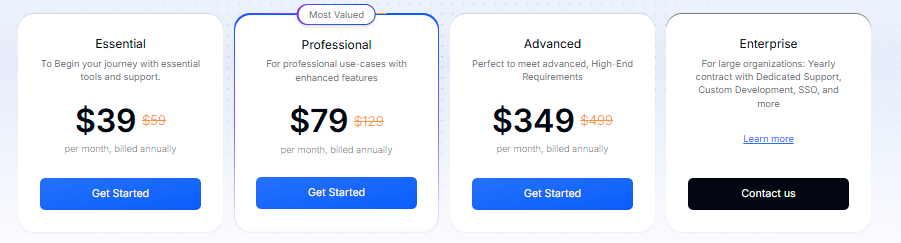
YourGPT Chatbot Pricing is designed to meet every business needs
YourGPT AI Chatbot provides a most advanced solution for businesses looking for freshdesk alternative to implement AI-powered customer support and engagement tools. With its no-code and low code approach, multilingual capabilities, and omni channel integration options, it is the top choice among businesses.
Discover how YourGPT AI chatbot can streamline your customer service
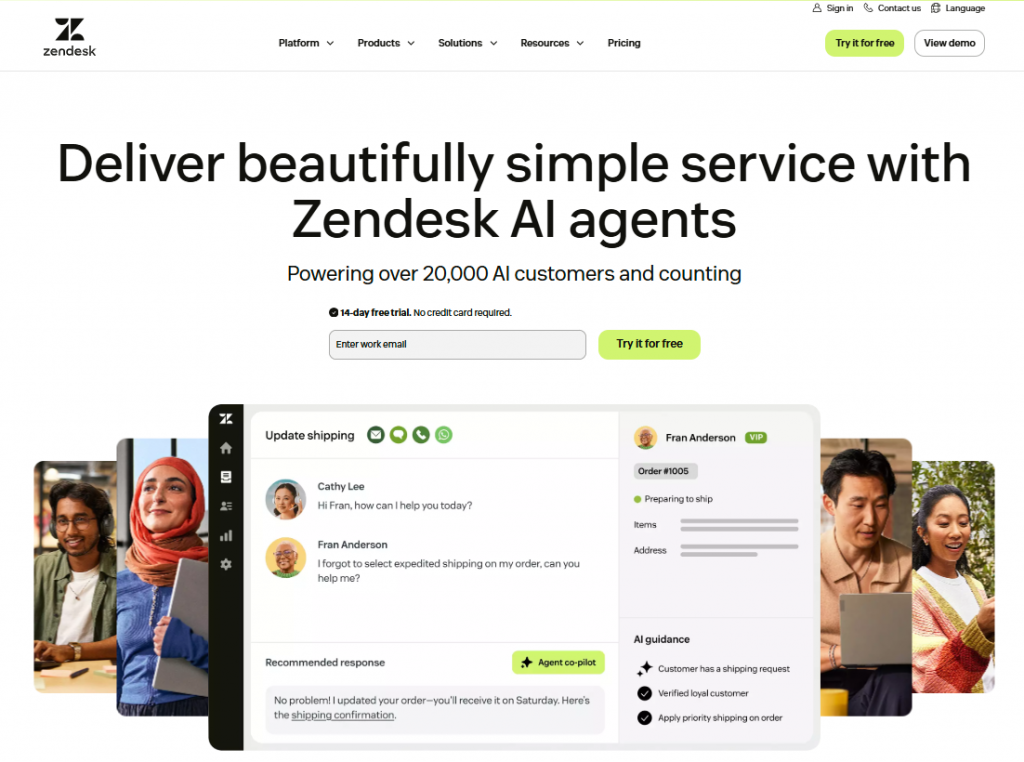
Zendesk is a customer service platform built to manage support operations across multiple channels with a structured, ticket-first approach.
It provides a centralized system for handling customer conversations through email, chat, phone, and social channels, along with workflow automation to route, prioritize, and manage tickets efficiently. Teams can configure rules, SLAs, and processes to maintain consistency at scale.
Zendesk focuses on organizing and optimizing support workflows. It helps teams track customer issues, manage response times, and maintain visibility across large volumes of interactions rather than executing tasks directly.
The platform includes automation features, AI-assisted responses, and reporting tools to improve agent productivity and monitor performance. Its analytics and dashboards help teams measure resolution time, workload distribution, and overall support efficiency.
Zendesk is designed for teams that need structure, control, and scalability in managing customer support operations.
Pricing starts at $19 per month, with additional features available in higher-tier plans for advanced functionality.
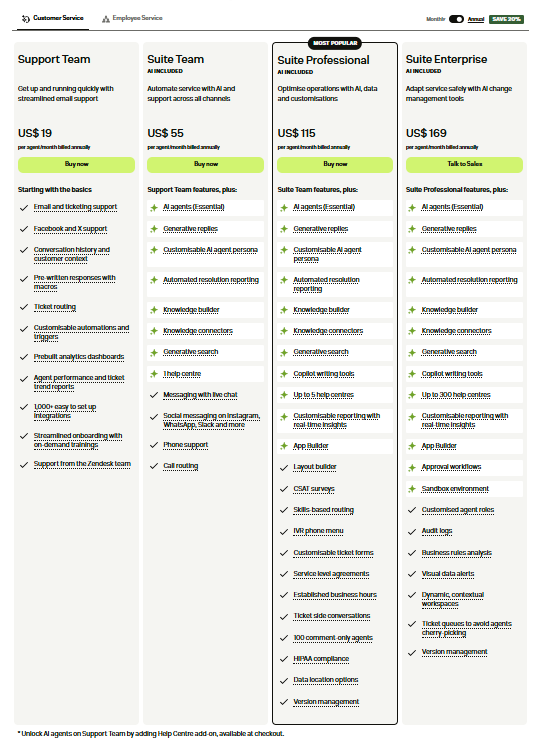
Zendesk provides a comprehensive solution for businesses that require an advanced ticketing system and omnichannel support. Its powerful features, automation capabilities, and robust integrations make it a top choice for businesses looking to improve their customer service operations.
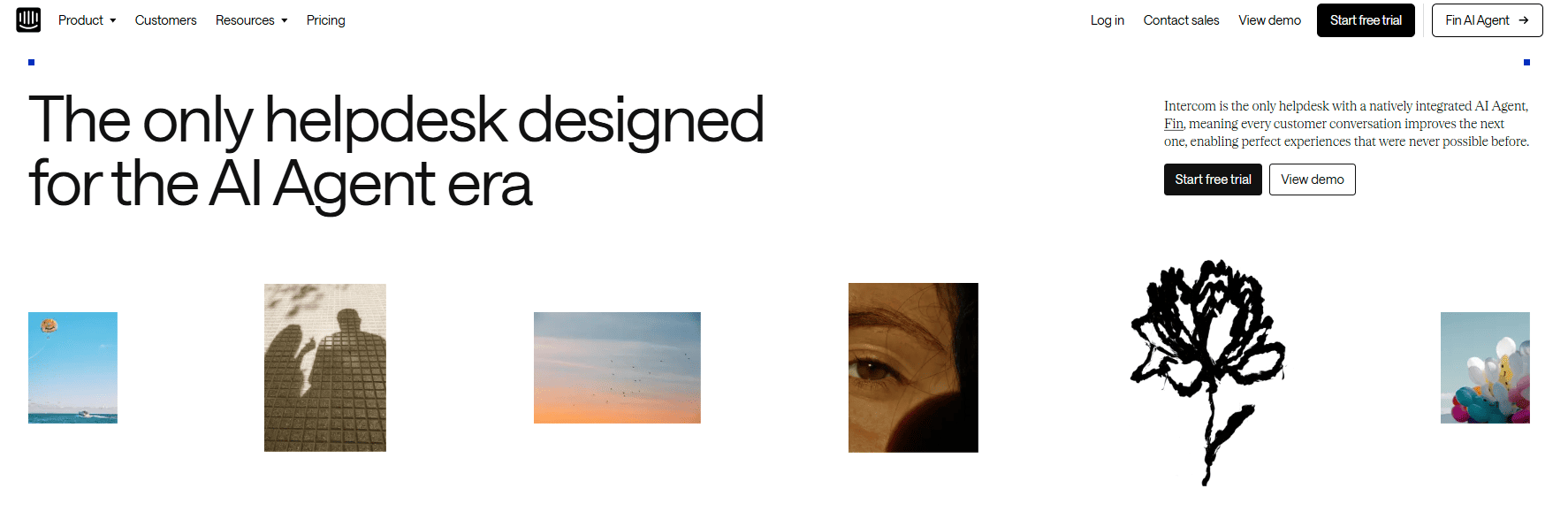
Intercom is a customer messaging platform built for real-time, conversational support with AI-driven automation.
It provides a unified inbox for managing customer interactions across chat, email, and in-app messaging, along with tools to automate conversations, route queries, and assist agents during live interactions.
Intercom focuses on running ongoing customer conversations rather than organizing them into traditional tickets. Its AI capabilities help handle common queries, guide users through self-service flows, and support agents with suggested responses and context during interactions.
The platform includes features for proactive messaging, onboarding flows, knowledge base integration, and performance tracking, allowing teams to manage both support and engagement from a single system.
Intercom is designed for teams that prioritize conversational support, real-time engagement, and a blend of AI automation with human interaction.
Pricing is seat-based with additional costs for AI-powered features and advanced automation. Costs can increase quickly with high volumes or extensive AI usage.
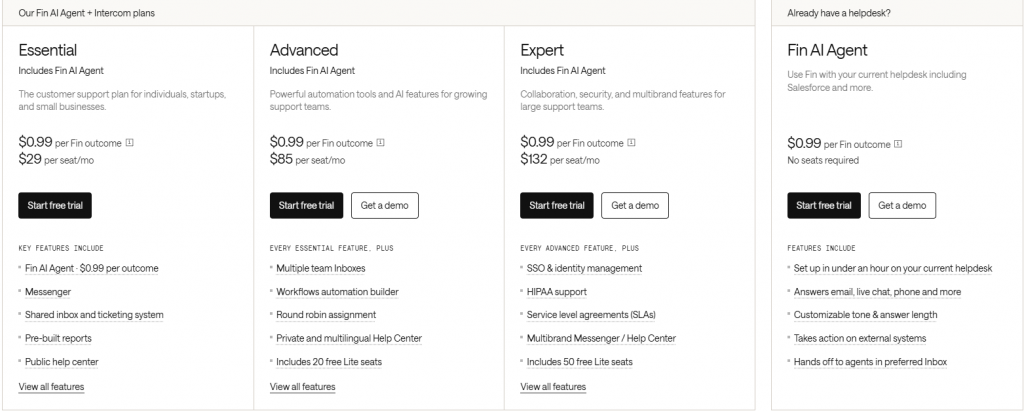
Intercom is ideal for teams looking to move from ticketing toward real-time, conversational, AI-powered support. Its focus on autonomous agents, engagement, and workflow automation makes it a strong choice for product-led and SaaS businesses, but careful consideration of pricing and workflow readiness is recommended.
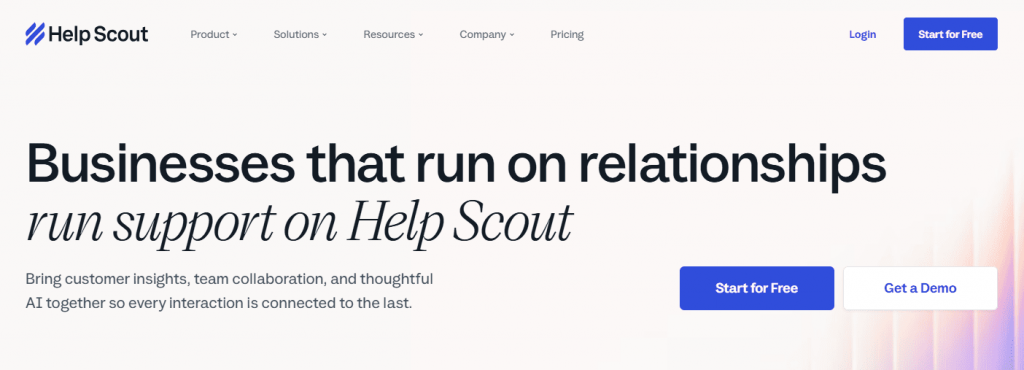
Help Scout is a customer service platform designed for teams that want simple, email-first support with minimal operational overhead.
It provides a shared inbox for managing customer conversations across email and chat, along with basic automation to organize, assign, and respond to requests efficiently without complex setup.
Help Scout focuses on clarity and ease of use rather than heavy workflow automation. It helps teams manage conversations, maintain context, and deliver consistent responses without the complexity of traditional ticketing systems.
The platform includes features like knowledge base support, reporting, and integrations with common business tools, allowing teams to streamline communication while keeping workflows lightweight.
Help Scout is best suited for teams that value simplicity, fast adoption, and a clean support experience over advanced automation or large-scale operational control.
Pricing starts at $20 per user per month, with advanced features available in higher-tier plans.
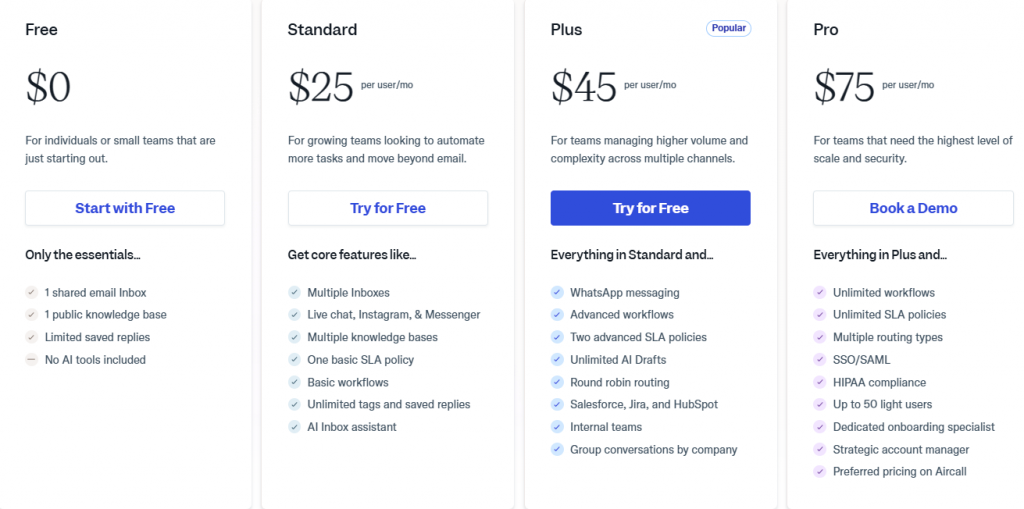
Help Scout stands out as a robust yet simple platform that enables businesses to provide high-quality customer support. Its easy-to-use interface, omnichannel support, and automated workflows make it an excellent choice for businesses looking to streamline their support operations and improve team collaboration.
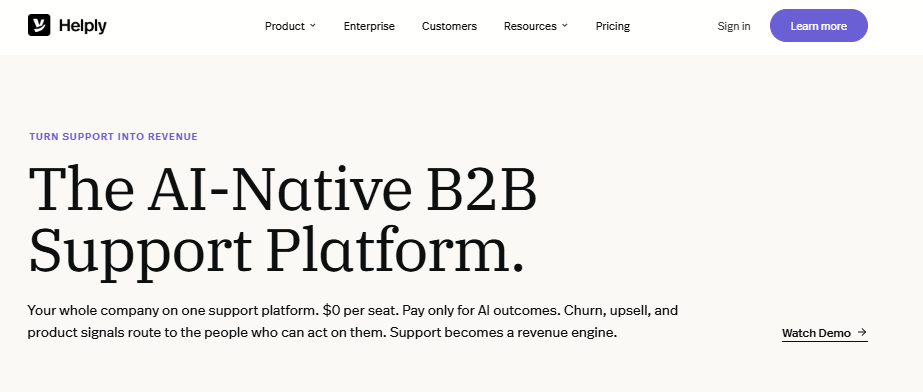
Helply is an AI-native B2B customer support platform that connects customer conversations with CRM, billing, product usage, and account data.
Its AI agent resolves support requests and takes actions across connected business systems, including refunds, plan changes, and account updates. For conversations that require human involvement, its AI assistant drafts context-aware replies using ticket history and customer account data.
Helply also analyzes support conversations for churn risk, upsell opportunities, competitor mentions, and feature requests. These signals can then be routed to support, customer success, sales, and product teams.
The platform brings email, live chat, in-app messaging, Slack Connect, and WhatsApp into one shared workspace.
$1 per ticket, with unlimited seats and unlimited AI included.
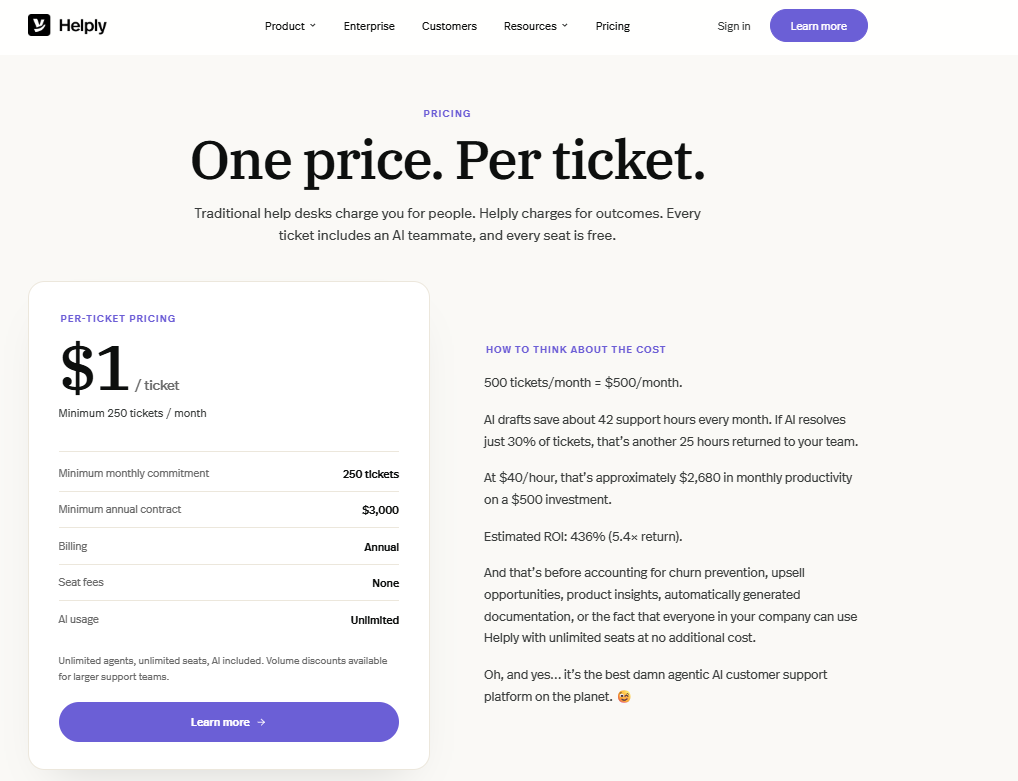
Helply is best for B2B companies that want to combine customer support, AI automation, and account intelligence without paying additional seat fees. It is especially strong for teams that want to resolve requests, assist human agents, and surface churn, upsell, and product signals from customer conversations.
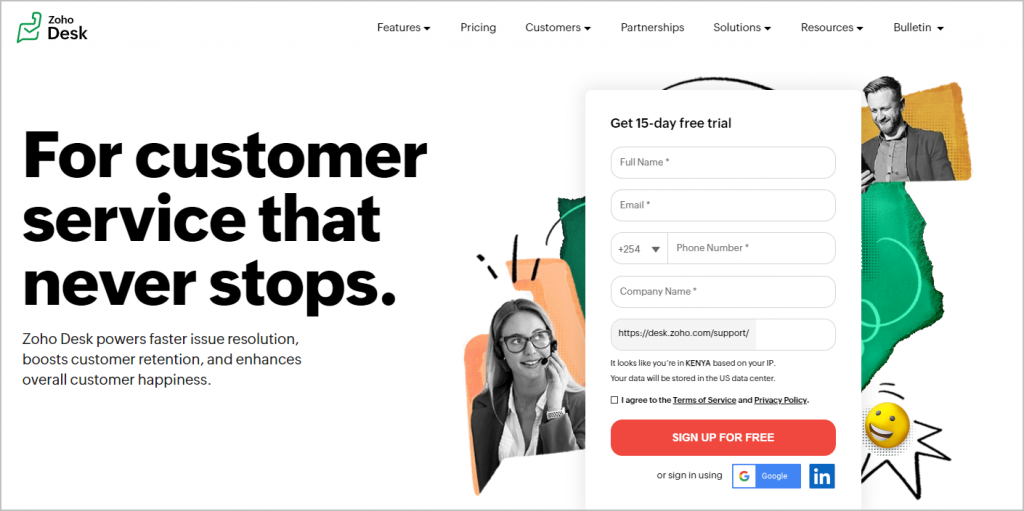
Zoho Desk is a help desk platform built for teams that need broad support capabilities with a focus on cost efficiency and flexibility.
It provides a multi-channel support system covering email, chat, phone, and social channels, along with automation tools to manage tickets, assign tasks, and streamline workflows.
Zoho Desk combines traditional ticketing with AI-assisted features to improve response handling, routing, and basic automation. It supports configurable workflows and integrates closely with other business systems, especially within the Zoho ecosystem.
The platform includes reporting, SLA management, and customization options that allow teams to adapt the system to their support processes while maintaining control over operations.
Zoho Desk is best suited for teams that want a full-featured help desk with flexible configuration and lower cost compared to enterprise-heavy platforms.
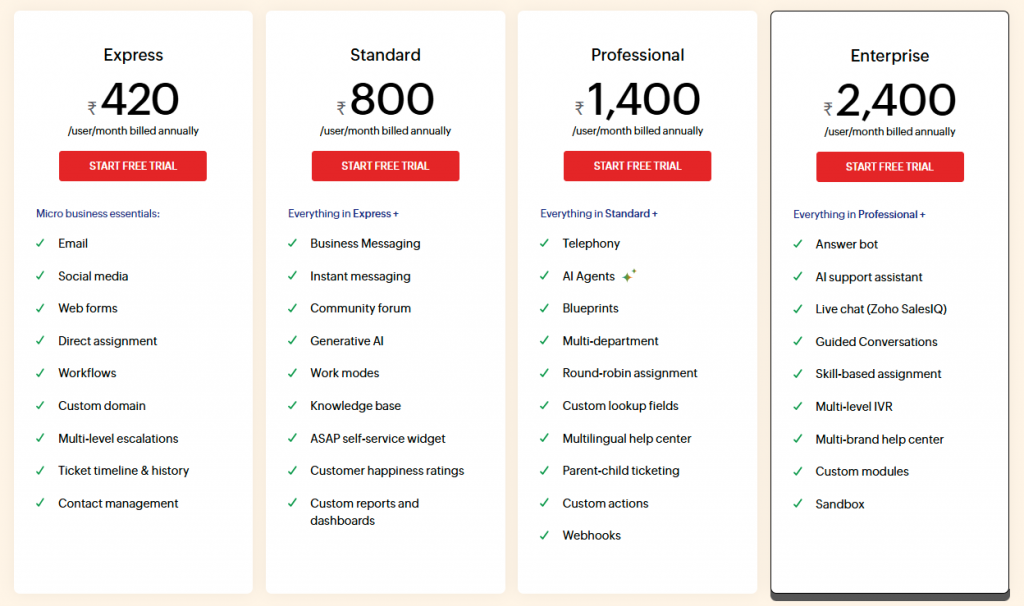
Zoho Desk is best for teams that need full-featured help desk capabilities with AI and multi-channel support but want to avoid premium enterprise pricing. It’s especially strong for businesses already invested in the Zoho ecosystem.
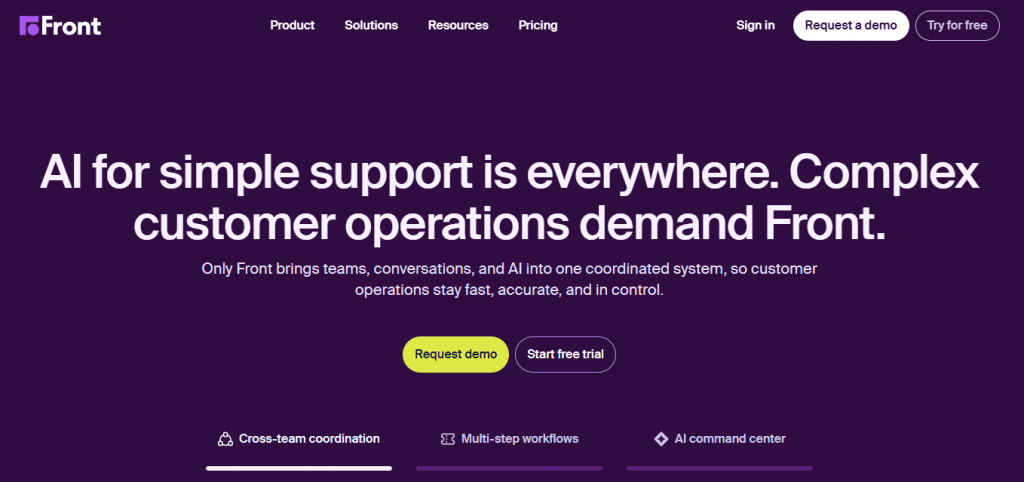
Front is a customer communication platform built for teams that manage service, operations, and account workflows through shared inboxes.
It provides a unified interface for handling conversations across email, chat, SMS, and social channels, with assignment rules and collaboration tools to maintain clear ownership and accountability.
Front focuses on keeping conversations human and context-rich rather than converting them into traditional tickets. It enables teams to work together on messages, add internal notes, and manage workflows without losing the flow of real communication.
The platform includes AI-assisted features, automation rules, and analytics to improve response times, consistency, and team coordination across different types of interactions.
Front is best suited for teams that prioritize collaboration, transparency, and conversation-driven workflows over structured, ticket-heavy support systems.
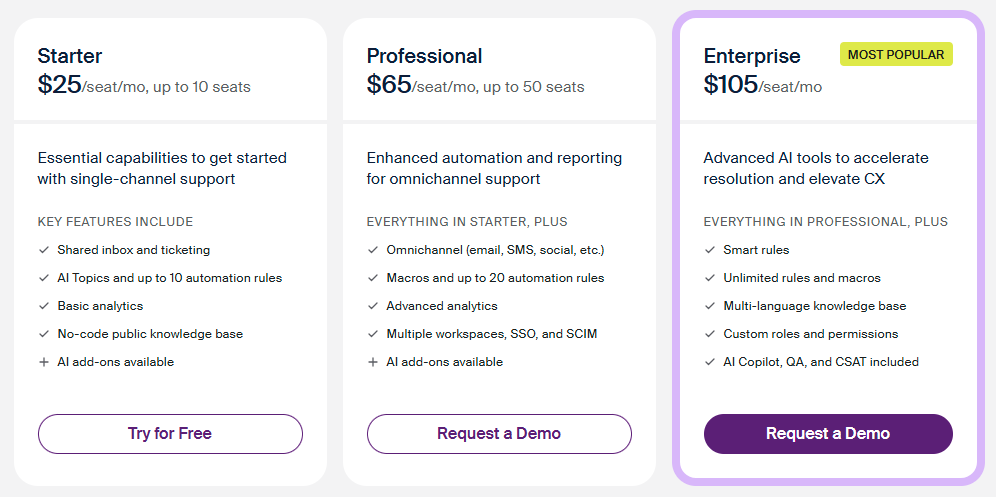
Front is best for teams that want faster collaboration, accountability, and AI-enhanced workflows without losing the context of real conversations. It works especially well for operations-heavy teams, account management, or high-touch support environments.
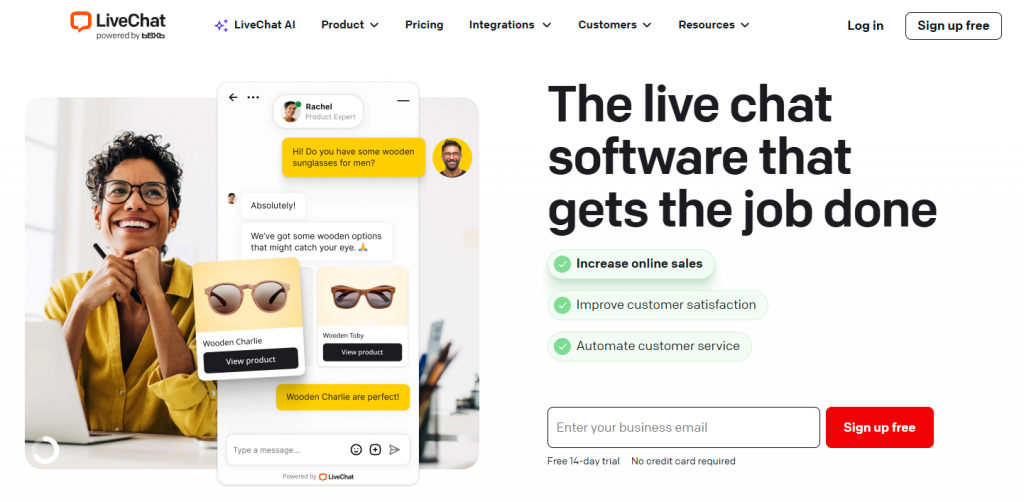
LiveChatAI is a customer support platform focused on real-time chat automation using AI-powered conversations.
It provides tools to deploy chat-based support across websites and messaging channels, allowing businesses to handle common queries instantly and reduce response time.
LiveChatAI centers on conversational automation rather than full workflow execution. It helps answer questions, guide users, and assist agents during live interactions, but is primarily designed for chat-first environments.
The platform includes features like automated responses, conversation tracking, and basic workflow customization, along with integrations to connect with existing support systems.
LiveChatAI is best suited for teams that want to improve real-time engagement and automate chat interactions without replacing their broader help desk setup.
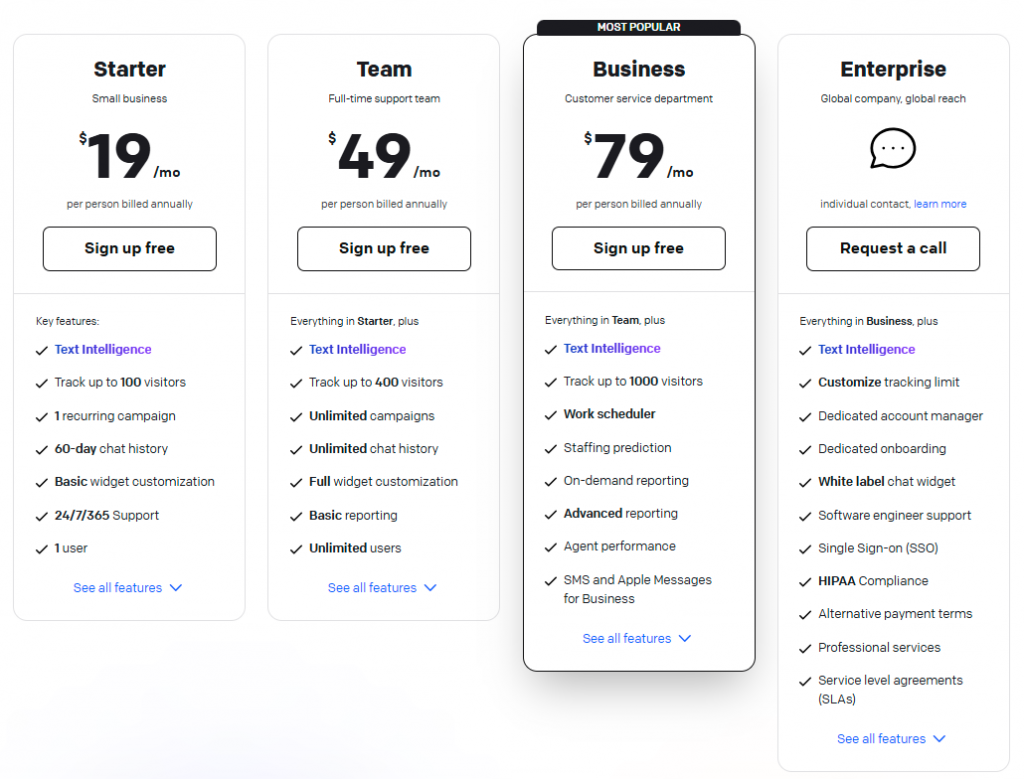
LiveChatAI is a powerful solution for businesses looking to provide efficient customer service and automate routine tasks. Its AI-powered features, multi-channel support, and seamless integration capabilities make it a strong alternative for businesses aiming to optimize their customer support experience.
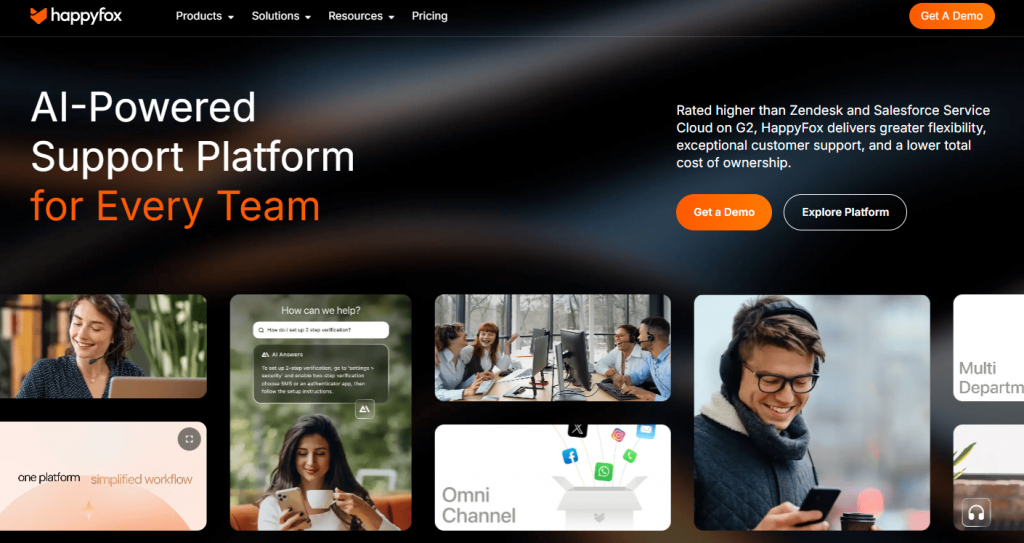
HappyFox is a help desk platform built for teams that manage IT support and internal service desk workflows.
It provides a structured ticketing system with automation to route, assign, and track requests across internal teams and customer-facing support channels.
HappyFox focuses on organized service management rather than conversational or AI-first support. It helps teams handle incidents, service requests, and internal operations with clear processes and reporting.
The platform includes features like self-service portals, workflow automation, and performance tracking, allowing teams to maintain visibility and control over support operations.
HappyFox is best suited for organizations that need structured, process-driven support for IT and internal services rather than real-time, AI-driven customer interaction.
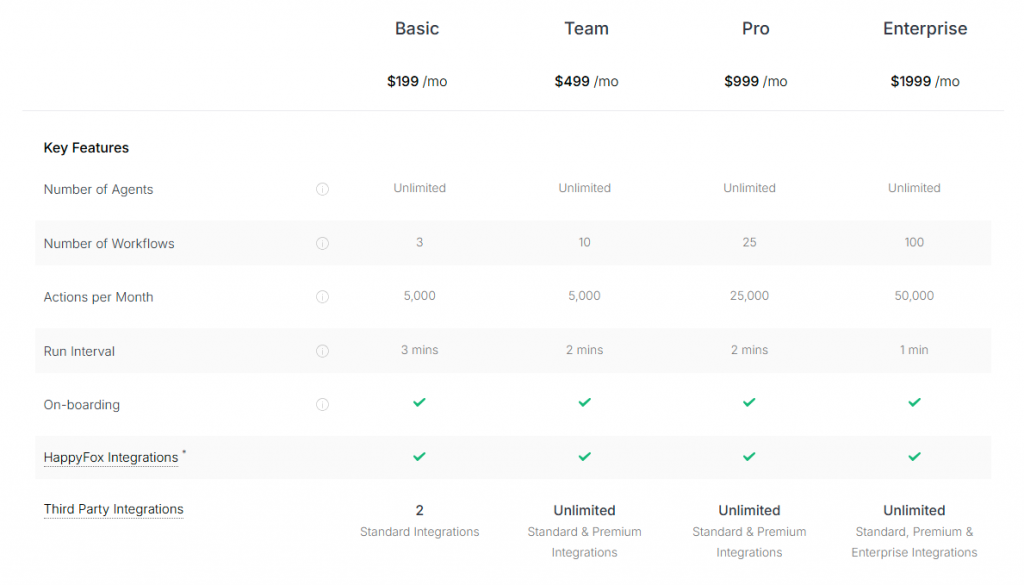
HappyFox is best for teams that need IT-focused help desk capabilities with automation, reporting, and integration options, particularly for internal support or IT service management.
| Tool | Best for | Starting price | AI approach | Tradeoff |
|---|---|---|---|---|
| YourGPT | Reducing tickets through AI-led resolution | From $39/month | Autonomous agents executing workflows across channels | Less legacy ecosystem than older platforms |
| Zendesk | Structured, large-scale support operations | From $19/agent/month | AI layered on top of ticketing workflows | Complex setup and higher total cost at scale |
| Intercom | Conversational, real-time customer engagement | From $29/seat/month + usage | AI agents for chat-first automation and routing | Costs increase quickly with scale and usage |
| Help Scout | Simple, low-overhead email support | Usage-based | Light AI for replies and summaries | Not built for automation-heavy workflows |
| Helply | B2B support tied to revenue and account intelligence | $0 per seat, outcome-based | AI agents using CRM, billing, product, and account context | Best suited to B2B teams with connected customer data |
| Zoho Desk | Cost-conscious teams needing full feature depth | Region-based | AI integrated within help desk workflows | Complex interface and setup overhead |
| Front | Team collaboration around conversations | From $25/seat/month | AI copilot supporting human workflows | Limited for ticket-heavy support environments |
| LiveChatAI | Chat-first automation and engagement | Custom / varies | AI chat automation for real-time support | Not a full help desk replacement |
| HappyFox | IT and internal service desk workflows | From $39/agent/month | Basic automation and reporting | Limited AI-first capabilities |
Switching from Freshdesk should solve real problems, not just replace a tool. Before evaluating options, get clear on the criteria that separate useful alternatives from ones that only look good on paper.
Choose a ticket-first alternative (Zendesk or Zoho Desk) if your main pain is operational complexity inside support. Choose an AI-first alternative (YourGPT or Intercom) if your main pain is volume, repetitive questions, slow response times, or channel sprawl.
Switching from Freshdesk is a workflow decision, not just a tool change. Be clear on what you want to fix before picking a new platform.
Answer these before you move:
Also check:
Teams that get this right decide how support should work first, then choose a tool that fits. goals upfront make the transition faster, less disruptive, and more effective.
It depends on what is not working right now. If your issue is managing tickets, tools like Zendesk or Zoho Desk may fit better. If your issue is too many incoming tickets, you need a solution that reduces volume rather than just organizing it.
Evaluate your daily challenges. If your team faces repetitive queries, slow responses, or scattered communication channels, switching can help. If operations are mostly smooth, optimizing your current setup may be enough.
A help desk manages conversations through tickets, while an AI-first platform aims to resolve those conversations before they reach your team. The difference lies in how support is handled, not just features.
Not necessarily. Moving between help desks usually keeps volume the same. Ticket reduction happens when AI is used to resolve issues without human intervention.
Look for platforms focused on automation and resolution. Tools like YourGPT or Intercom handle customer intent directly, unlike traditional systems that revolve around ticket queues.
The real cost is not just per-seat pricing. It includes how many issues are resolved without agents, time saved, and how many tools you can eliminate from your tech stack.
Migration difficulty depends on preparation. Clean data and clear workflows make the process straightforward. Most delays happen due to unclear processes rather than technical limitations.
Issues often arise from copying outdated workflows or using unreliable knowledge base content. Poor content quality can limit the effectiveness of any new system.
AI can handle more than FAQs when properly configured. It works well for tasks like order tracking, account updates, and troubleshooting. Complex or sensitive issues still require human support.
Enterprise teams often need structure, reporting, and control, making traditional help desks a safer choice. However, adding an AI layer is essential if reducing ticket volume is a priority.
The biggest mistake is choosing a tool before defining support workflows. Successful teams first decide how support should function, then select a platform that aligns with those needs.
Focus on outcomes such as response time, resolution time, ticket volume, cost per resolution, and customer satisfaction. If these metrics do not improve within a few months, adjustments are needed.
The best Freshdesk alternative depends on how your team works and where your current support setup falls short.
Some platforms are stronger for AI automation, while others are better for ticketing, live chat, shared inboxes, or B2B support. Compare each option based on your support channels, integrations, pricing, reporting needs, and how much automation your team will actually use.
It is also worth testing the platform with real customer conversations before making a decision. The right tool should help your team respond faster, reduce repetitive work, and keep customer context in one place without adding unnecessary complexity.
Choose the option that solves your biggest support challenge today and can still support your team as your business grows.
Join thousands of businesses transforming customer interactions with YourGPT AI
No credit card required • Full access • Limited time offer
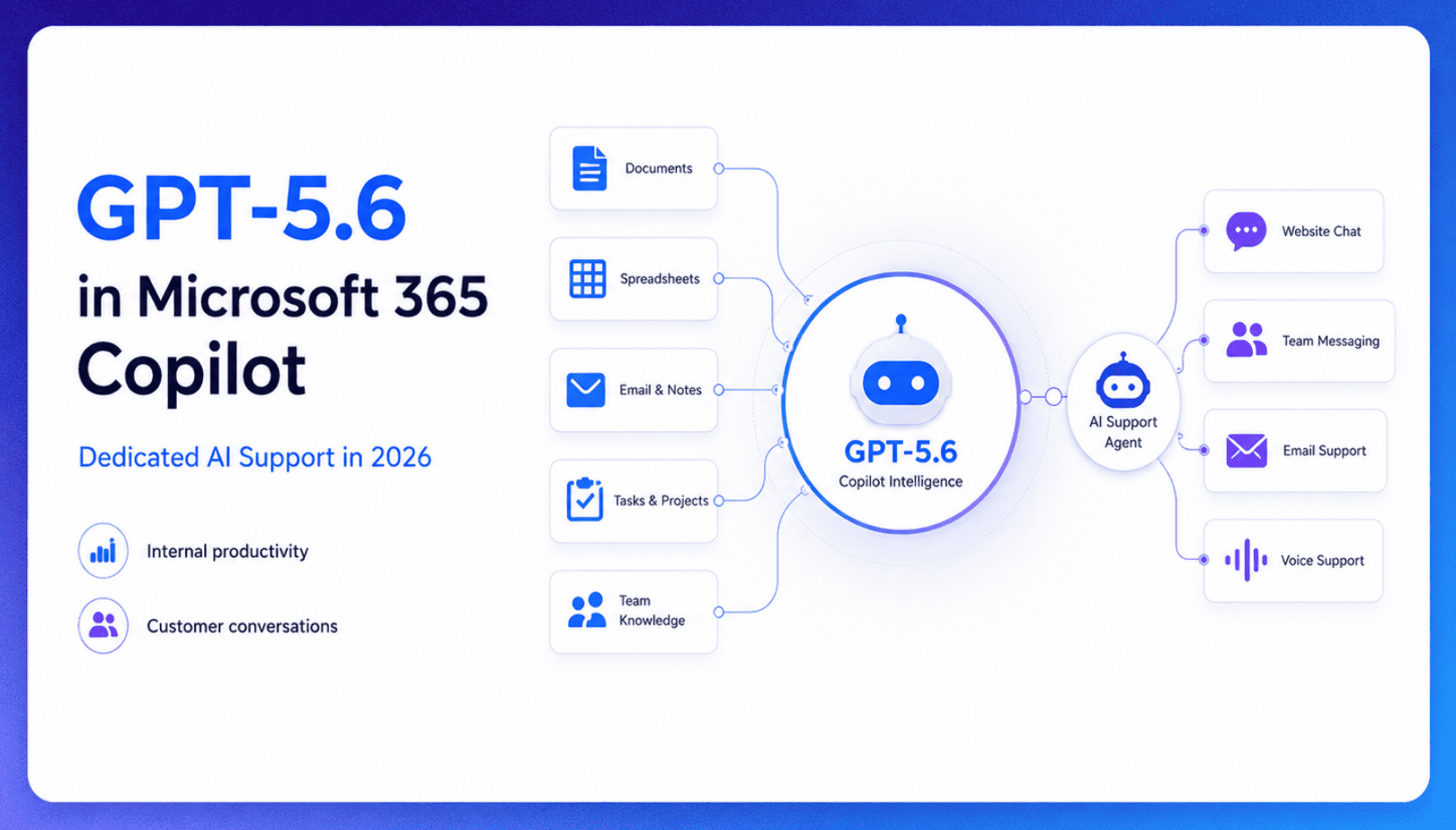
TL;DR Microsoft made GPT-5.6 the preferred model across Word, Excel, PowerPoint, Copilot Chat, and Cowork on July 9, 2026, focusing on internal workplace productivity rather than customer-facing support. Dynamics 365 Service Agent also reached general availability, but it mainly helps human support representatives manage cases within Microsoft’s existing permission structure and requires separate licensing. A […]

TL;DR Cheap frontier models now compete for the same high-volume support workloads, with DeepSeek V4 remaining the lowest-cost option in this comparison. Kimi K2.6 and GLM-5.2 are open-weight and self-hostable, while Qwen 3.7 Plus is proprietary and available only through an API. Claude Haiku 4.5 is the only model here that its developer explicitly recommends […]
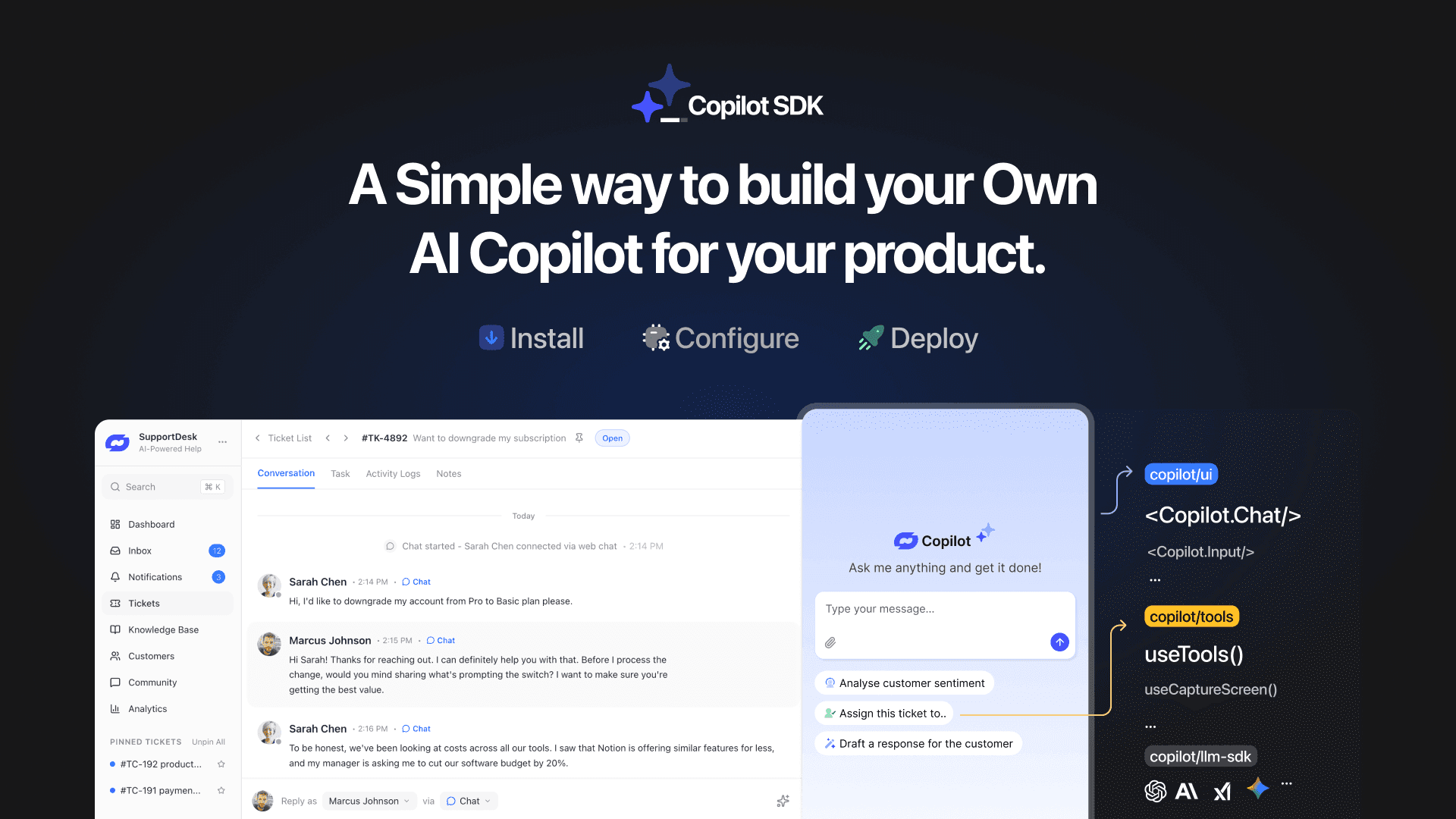
TL;DR YourGPT Copilot SDK is an open-source SDK for building AI agents that understand your application state, user context, and what is happening inside your product. Instead of working like isolated chat widgets, these agents connect directly with your product and can take real actions within existing workflows. This helps teams build contextual AI experiences […]
TL;DR YourGPT 2.0 adds AI Studio for building, testing, and debugging automated workflows. It includes native MCP integration for more than 100 tools, upgraded voice agents, and native SDKs for iOS and Android applications. With shared context across web, WhatsApp, Instagram, Telegram, and mobile, YourGPT turns conversations into real actions across support, sales, and operations. […]

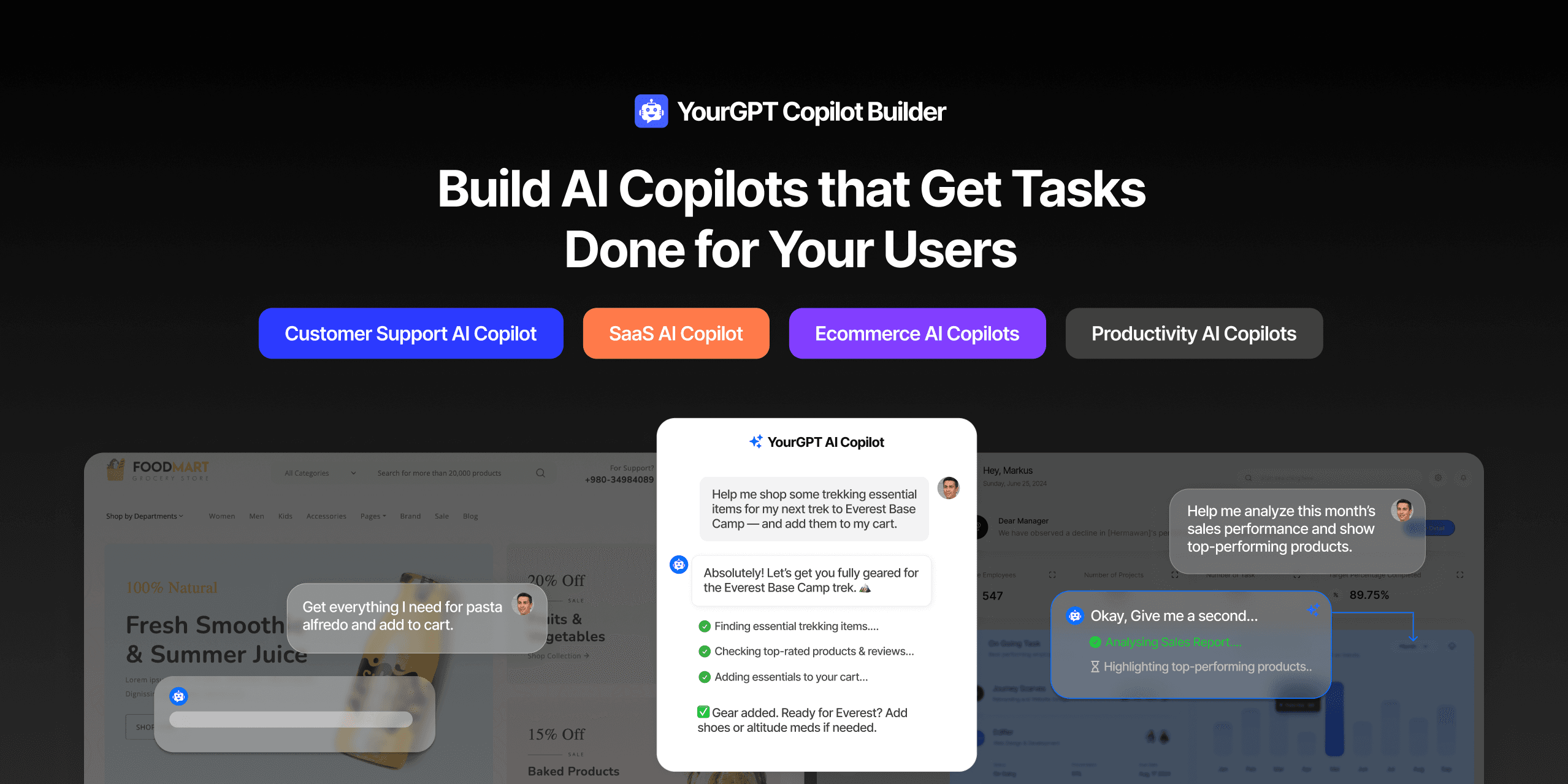
TL;DR Most AI tools provide answers but still leave users to complete the task through search results, settings pages, or checkout flows. AI Copilot Builder closes that gap by executing registered actions directly inside the product instead of only explaining what to do. Search, cart updates, account changes, and multi-step bookings can all happen within […]
TL;DR Building an AI-powered Telegram bot does not require custom development. BotFather provides the Telegram bot token, while a no-code platform like YourGPT handles AI training, free-form conversations, and the Telegram connection. This guide covers the full setup, from creating the bot in BotFather to connecting it with YourGPT and taking it live. Most Telegram […]
