Live Chat vs AI Chatbots: Best Customer Service Option 2026

Akansha
Last updated on June 5, 2026

Deciding between live chat and AI chatbots for your business can have a big impact on how effectively you serve your customer. Understanding the strengths and limitations of each option will help you make a choice that best meets your needs.
Live chat provides real-time interaction, allowing your team to offer a personal touch and immediate assistance. However, it is generally available only during business hours, which means support is unavailable outside of these times.
On the other hand, AI chatbots are online 24/7 and can handle many chats at the same time. This means customers get instant replies at any hour. But, the question remains: do AI chatbots handle customer queries as well as human agents?
AI chatbots stay available around the clock and handle many conversations at once, so customers get quick answers at any time. They work well for everyday requests and routine questions. At the same time, human agents add judgment, context, and real connection. To understand how both work together in modern support teams, read our detailed guide on AI vs Human customer support.
In this article, we will explore the advantages and disadvantages of live chat versus chatbots. This comparison will help you decide which option aligns better with your business requirements and enhances your customer service experience.

Live Chat is a real-time customer support service that allows businesses to communicate with their customers through a chat interface on website or mobile. Through live chat, customers can receive personalised assistance with various queries product inquiries, technical issues, billing questions, or other concerns.
Live chat messaging is now a standard expectation for customers who seek quick, personalized service. It enables businesses to build relationships by providing a human touch and enhancing customer satisfaction.
Live chat messaging is now essential as customers expect quick, personalized responses. It helps businesses build stronger relationships by providing a personal touch and enhancing customer satisfaction.
By using these features, businesses can improve customer service, boost satisfaction, and drive growth through better retention and new conversions.

An artificial intelligence (AI) chatbot is a conversational agent that interacts with users via text or voice using advanced AI models for natural language processing (NLP). Based on user input, LLMs enable chatbots to produce human-like responses, enhancing the efficiency and naturalness of the discussion.
AI chatbots are transforming customer support by providing businesses with efficient, scalable communication tools. HubSpot reports that 90% of customers expect an “immediate” response when they have a service question. This highlights the increasing demand for AI solutions that offer instant, 24/7 assistance.
AI chatbots are enhancing customer support with efficient, scalable, and cost-effective solutions. Here’s how they improve customer service:
AI can help businesses to provide better experiences, work more quickly, and enhance customer service. Though excellent in many areas, artificial intelligence chatbots must be paired with human support for complex issues needing human knowledge and compassion.
Popular customer support tools with different purposes and powers are live chat and artificial intelligence chatbots. Their main contrasts with regard to pros and drawbacks of live chat and artificial intelligence chatbots are shown here:
| Feature | Live Chat | AI Chatbot |
|---|---|---|
| Staffed by | Human agents | Automated AI-powered responses |
| Availability | Limited to agent working hours | 24/7 availability |
| Response Time | May have wait times depending on agent availability | Near-instant responses |
| Handling Capacity | Limited by number of available agents | Can handle multiple conversations simultaneously |
| Personalization | High degree of personalization possible | Also highly personalized |
| Complex Queries | Can handle complex, nuanced issues | May struggle with complex or unexpected queries |
| Cost | Higher operational costs due to staffing | More cost-effective, especially at scale |
| Empathy | Can provide empathetic, human touch | Lacks true empathy, though some can simulate it |
| Learning & Improvement | Requires training of human agents | Can continuously learn and improve |
| Language Support | Limited by agents’ language skills | Can offer multilingual support more easily |
| Accuracy | Generally high, but subject to human error | Consistent responses, but may make mistakes with unfamiliar queries |
| Integration | Live chat platform can be integrated with CRM systems | Often easier to integrate with various tools and platforms |
Many businesses are now using a hybrid approach, combining live chat and AI chatbots. This method uses AI chatbots for routine queries and provides human interaction for complex issues or customer preference.
When choosing a AI chatbot with live chat feature for customer support, YourGPT AI Chatbot offers a solution that combines both. It provides the efficiency of AI chatbots and the personal touch of human interaction when needed. YourGPT AI’s chatbot handles various customer inquiries quickly and accurately. The AI chatbot can:
However, there are times when human intervention is preferable. So integrates live chat support with its AI chatbot. The live chat feature allows for..:
YourGPT AI Chatbot offers the best of both:
YourGPT AI’s solution also offers additional features to enhance the customer support experience:
With YourGPT AI, you don’t have to choose between chatbots and live chat. The platform combines both, enhancing efficiency and offering personalized support.
AI chatbots provide instant, 24/7 support and reduce wait times. They use natural language processing to deliver relevant responses and improve overall customer satisfaction.
Yes. Live chat is managed by human agents, allowing real-time conversations and better handling of complex or sensitive issues.
Yes. AI chatbots automate routine queries and reduce manual workload, which can lower operational costs and improve efficiency.
Yes. Most AI chatbots support multiple languages, allowing businesses to serve global customers without needing large multilingual teams.
A combined approach works best. Chatbots handle repetitive queries quickly, while human agents manage complex conversations that require context and judgment.
Yes, most AI chatbots can connect with tools such as CRM systems, help desks, and messaging platforms. This helps manage conversations, automate workflows, and keep data organized.
Setup time depends on the platform and use case. Basic chatbots can be deployed in a few hours, while more advanced setups with integrations and workflows may take a few days.
Pricing varies by platform, features, and usage. Many tools offer flexible plans based on conversations, users, or integrations, allowing businesses to scale as needed.
AI chatbots engage visitors, answer questions instantly, guide users through the buying process, and capture lead information, helping improve conversions.
Choosing between live chat and AI chatbots comes down to understanding your business goals and customer expectations. Live chat delivers real-time, personalized assistance with a human touch, while AI chatbots offer instant, 24/7 support and efficient handling of routine queries.
To get the best out of your customer support, use both live chat and AI chatbots. Each has its own strengths, and together they provide a well-rounded support system.
By combining live chat and AI chatbots, businesses can deliver a seamless customer service experience. This hybrid approach ensures customers receive immediate, efficient, and personalised support whenever they need it.
Incorporating live chat and AI chatbots into your customer support strategy will enhance customer service, increase satisfaction, and drive business growth.
Join thousands of businesses transforming customer interactions with YourGPT AI
No credit card required • 7 days access • Limited time offer
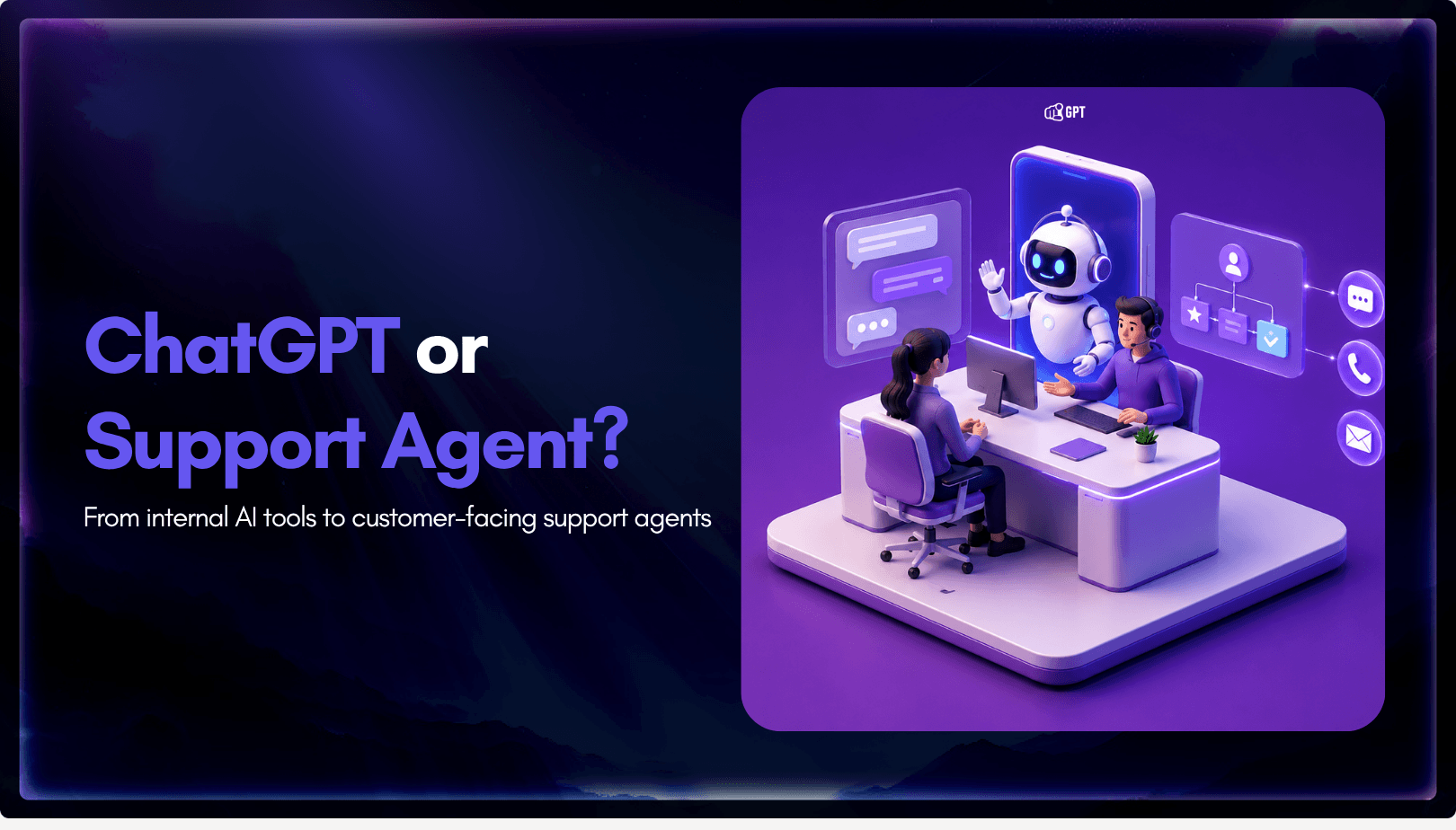
TL;DR OpenAI shipped workspace agents inside ChatGPT Business and Enterprise in April 2026, giving the product the ability to plan multi-step work and act inside connected tools. The update narrows the gap between ChatGPT and dedicated AI agents for internal work, but it does not replace customer-facing support platforms. Workspace agents live in the ChatGPT […]
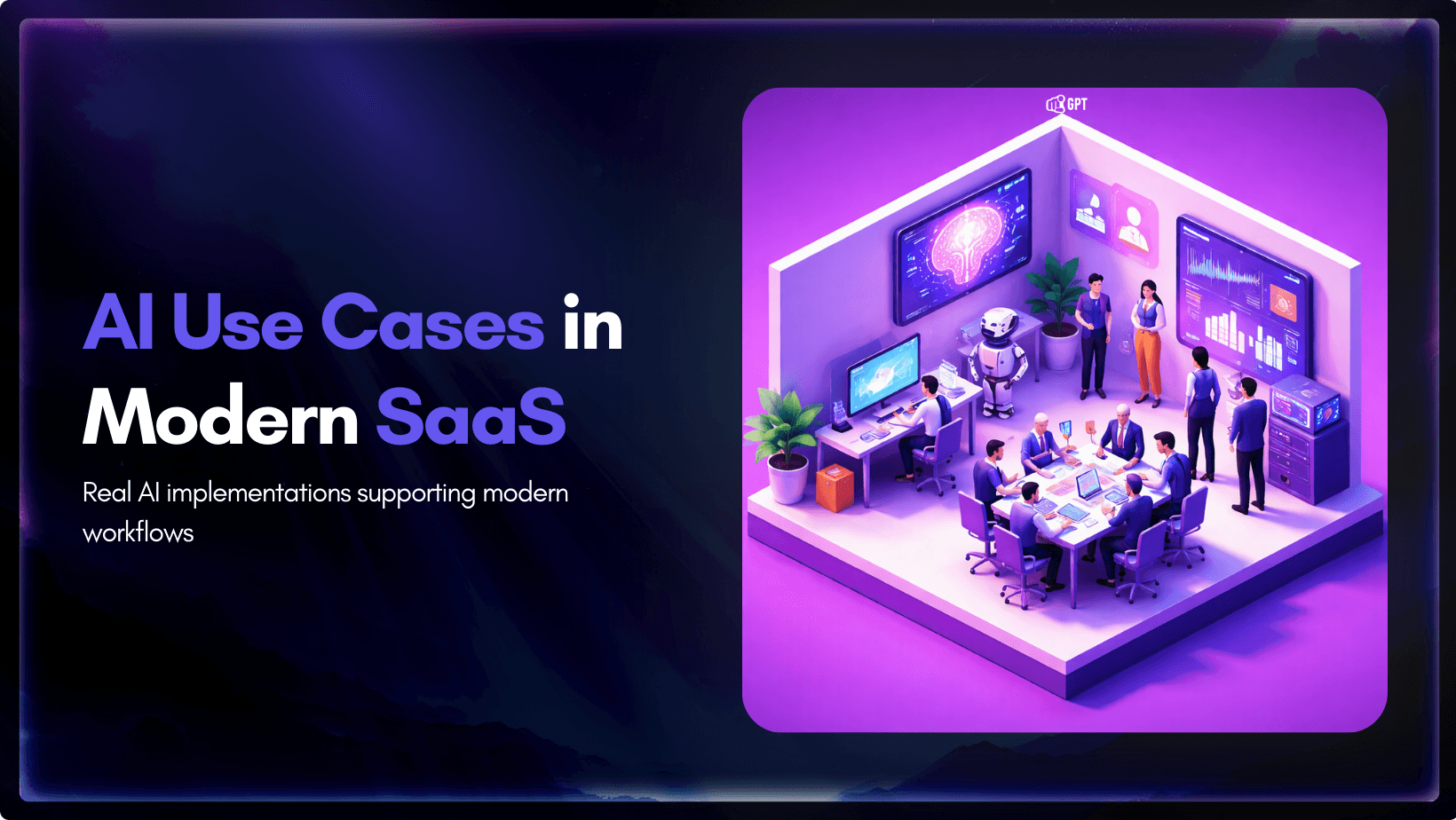
AI has become part of how modern SaaS products operate in everyday use. It appears in small but meaningful moments, such as when a support request is resolved without delay, when onboarding adapts to how a user actually works, or when routine account changes happen without manual intervention. These experiences shape how teams and customers […]

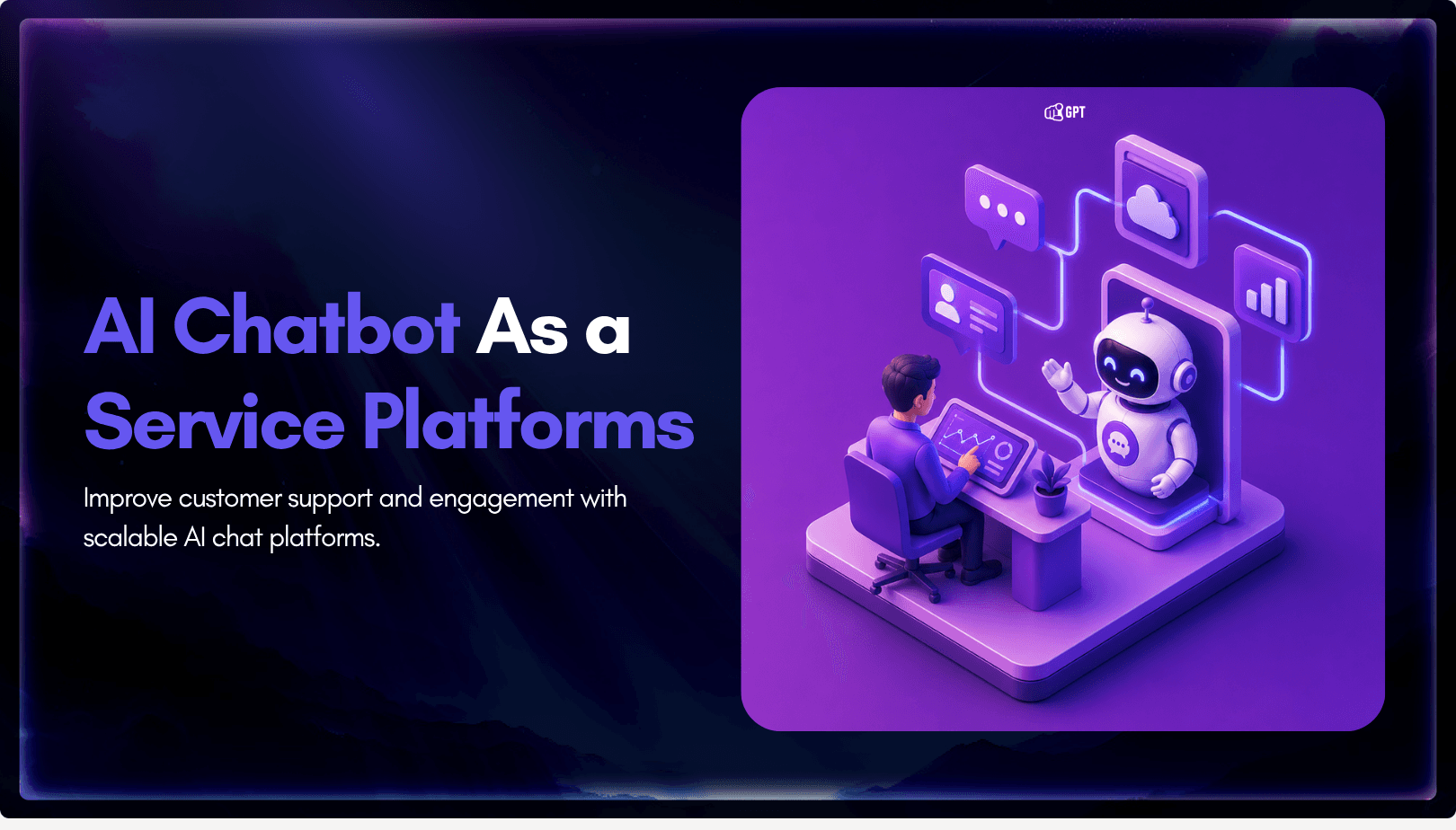
Customer conversations have become one of the most important parts of the customer experience, but they are also one of the hardest to scale. Businesses today are expected to provide instant responses across websites, messaging apps, social media, and support channels without significantly increasing support costs or team size. This shift has made Chatbot as […]
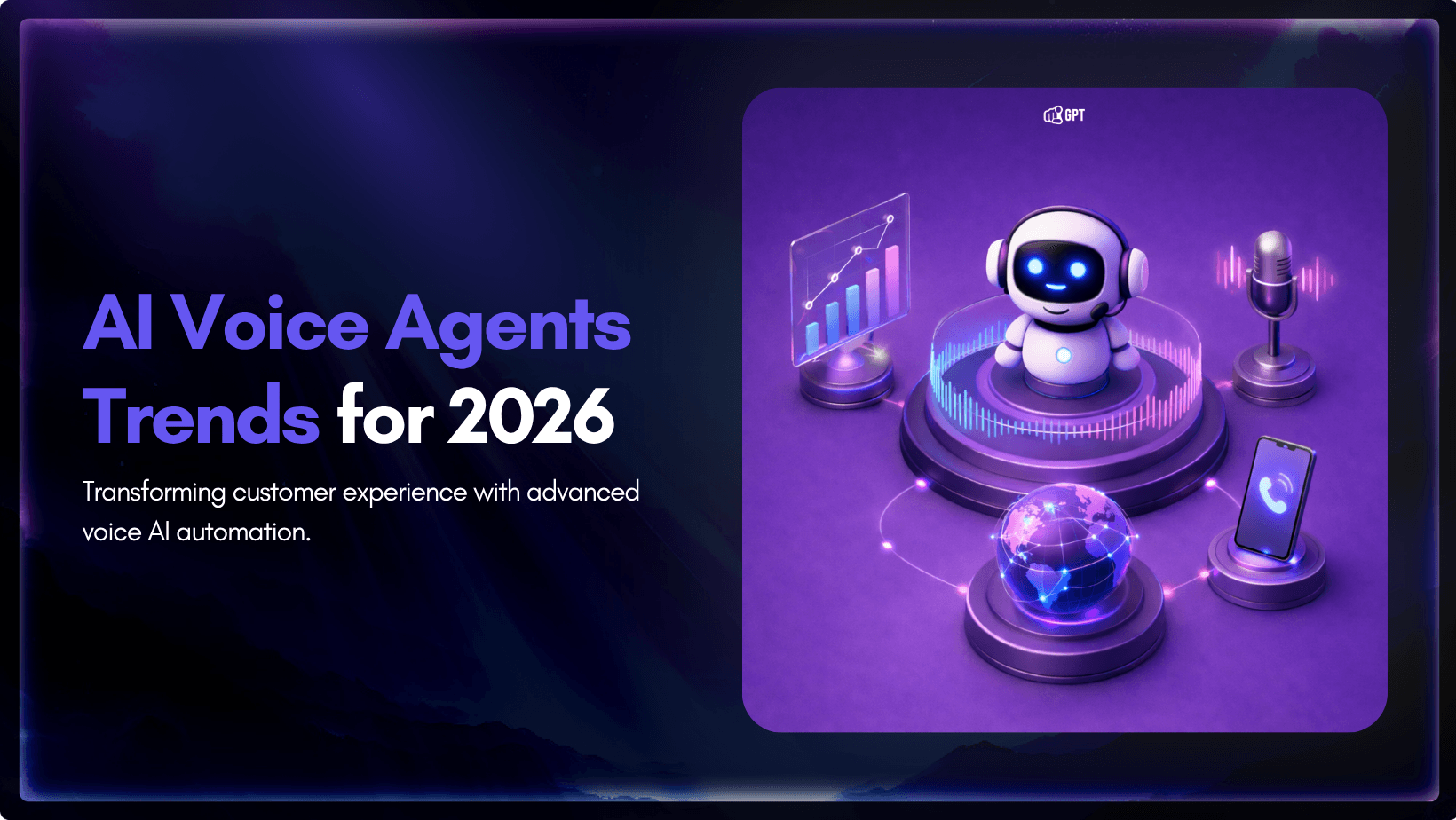
TL;DR AI voice agents have moved past answering questions to resolving real issues and completing tasks across business systems, working from a caller’s intent instead of a fixed script. Five trends define where the technology stands in 2026: real-time adaptive conversations, emotion-aware responses, full-duplex interaction, multilingual and accent handling, and brand-level voice personalization. The payoff […]
TL;DR Validating an AI project helps teams understand how it performs before production. A structured validation process covers user intent, knowledge, task completion, safety boundaries, and overall reliability, making it easier to deploy agents with clear expectations and measurable performance. Building an agent used to be the hard part. Deloitte’s research found that only 11% […]

TL;DR AI chatbots are transforming ecommerce by handling order tracking, returns, customer support, and sales conversations in real time. However, many brands fail because their chatbots rely on static FAQs instead of live store data, leading to poor customer experiences. This blog explains how successful brands use AI chatbots to improve support, recover revenue, and […]