AI Chatbot Statistics 2026: Trends, Challenges, and Insights

Akansha
Last updated on July 21, 2026
AI chatbots have expanded beyond customer support into sales, marketing, and internal operations, with adoption increasing across nearly every industry in 2026.
Not every chatbot statistic published online is reliable, so this guide explains how to verify sources, identify cherry-picked data, and cross-check claims before trusting them.
Consumer comfort with chatbots continues to grow worldwide, while self-service has become the preferred first option for resolving simple questions and problems.
B2B and B2C companies adopt chatbots for different reasons, including workflow automation and lead generation for businesses, and faster, more personalized support for consumers.
AI chatbots have moved well past simple customer support. In 2026, businesses use them across sales, marketing, and internal operations, and adoption keeps climbing as more companies fold AI into how they operate.
That growth comes with a lot of noise. Chatbot statistics circulate constantly online, and not all of them hold up to scrutiny, some are outdated, some are cherry-picked, and some can’t be traced back to a real source at all.
This blog pulls together the chatbot statistics that matter most heading into 2026, drawn from named, checkable research, and starts with a straightforward question: how should these numbers actually be read.

AI chatbot stats can be helpful, but it’s important to question them. Don’t just accept them without thinking. Here’s why:
That raises a real question: how can a business tell which numbers are worth trusting?

To ensure you are working with reliable data:
You don’t have to worry about all these; we have done our research, and we picked the chatbot statistics. Now that’s clear, let’s go through the most chatbot statistics for 2026.
In 2026, AI chatbots are not just support tools they’re used in sales, marketing, internal operations, and more. The stats below highlight their growing business impact.
To begin, let’s look at adoption.


See why an AI help desk is becoming a must-have for modern companies. It outlines how AI-driven help desks reduce costs, improve efficiency, and enhance customer experiences.
Market growth and consumer spending are closely linked and vital metrics for business success.

Consumer engagement and preferences are essential for business success today, enabling brands to connect with customers. By genuinely understanding what consumers want and creating meaningful interactions, businesses can boost loyalty and drive sales in a crowded market.

The chatbot market is projected to grow from $15.57 billion in 2025 to $46.64 billion by 2029, reflecting a 24.53% CAGR, according to Research and Markets. (Global NewsWire)
Customer experience is key to business success because it influences customer satisfaction, loyalty, and growth. By focusing on great service and using technology to understand what customers want, businesses can build strong relationships and stand out from their competitors.
Interested in creating a robust self-service AI-driven helpdesk from the ground up? Follow the step-by-step process in this guide, which covers essential planning, tool selection, and implementation tips.
AI chatbots are transforming B2B and B2C sectors by improving communication and customer service.
B2B AI chatbots automate tasks, assist in lead generation, and improve efficient workflow and productivity.
In B2C, they enhance customer experience with personalised support and product recommendations. Now let’s compare two major business segments:
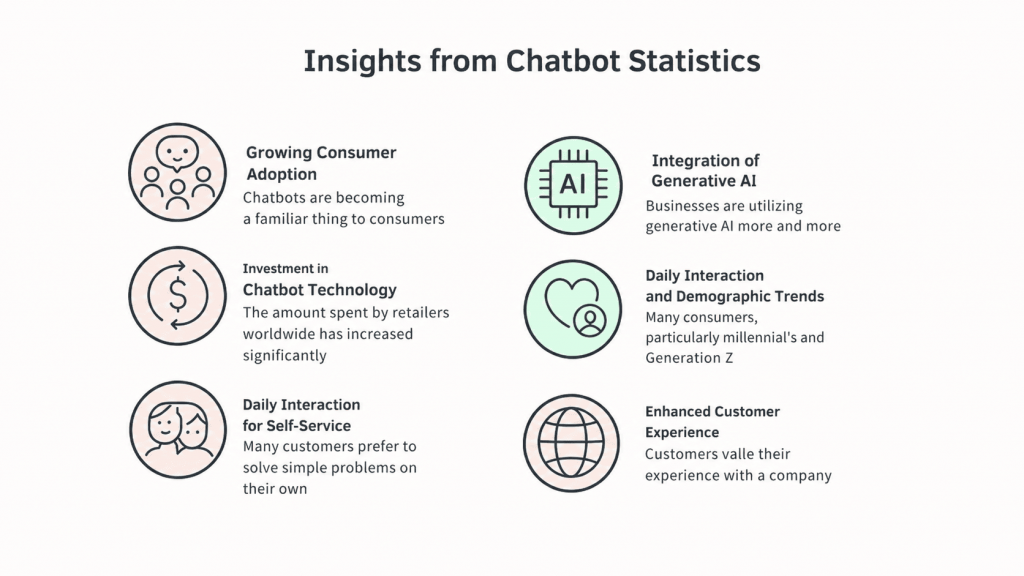
From all this, a few clear insights emerge:
The statistics make it clear: adoption is rising, and businesses are prioritising AI-driven interactions.
Explore these for deeper insights on implementation, use cases, and comparisons.
Reliability varies considerably. Some statistics come from named research organizations such as Salesforce or McKinsey, while others are repeated across marketing blogs without a clear original source or enough context. Checking who published the figure and how the data was collected matters more than the number alone.
Adoption is broad rather than limited to one industry. Customer support remains a major use case, while sales, marketing, and internal operations are also growing quickly as generative AI becomes part of more business workflows.
They can reduce costs by handling repetitive questions that would otherwise require agent time. The actual savings depend on the chatbot’s setup, training quality, integrations, and the types of conversations it handles, so no single percentage should be treated as a guaranteed result.
B2B teams often use chatbots for lead qualification, appointment booking, and workflow automation because their sales cycles involve more back-and-forth communication. B2C businesses rely more on product recommendations, order support, and personalized service because customer interactions are generally shorter and higher in volume.
Businesses should track response time, resolution rate, CSAT, escalation rate, and conversation volume rather than relying on adoption figures alone. A chatbot that handles many conversations but resolves very few issues independently may not be reducing the support team’s workload.
No. Chatbots are best suited to repetitive and well-documented questions, while complex, sensitive, or unusual issues still require human judgment. This is why human handoff remains an important part of a reliable chatbot system.
Start with a narrow, repetitive use case such as answering FAQs, checking order status, or qualifying leads. Platforms such as YourGPT let businesses create a no-code AI chatbot, train it on existing content, and deploy it without requiring a dedicated engineering team.
The pattern across these numbers is consistent: chatbots have moved from a nice-to-have into a standard part of how businesses handle support, sales, and daily operations. The companies seeing the most benefit aren’t just deploying a chatbot, they’re tracking the right metrics, training it on real content, and keeping a human available for the moments that need one.
Self-service keeps growing because it solves a real problem. Customers want fast answers without waiting in a queue, and a well-trained chatbot delivers that without the tradeoffs a static FAQ page or a long hold time usually brings.
None of this means chatbots replace judgment. It means the businesses that treat adoption as a starting point, not a finish line, checking results, refining training, adjusting where it falls short, are the ones actually seeing the gains these statistics describe.
Join 10000+ Business using YourGPT AI to transform business operations!
No credit card required • 7 days access
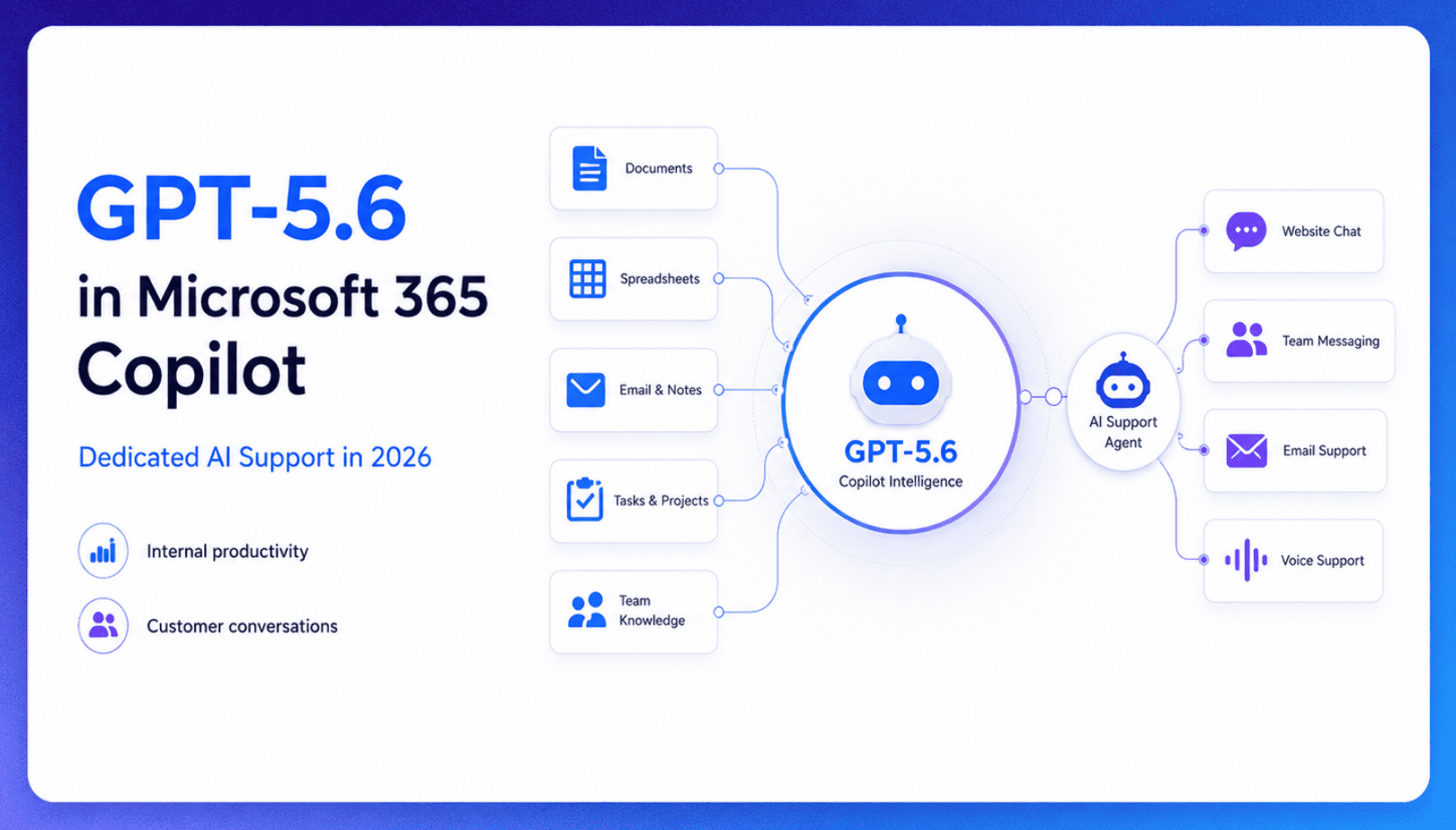
TL;DR Microsoft made GPT-5.6 the preferred model across Word, Excel, PowerPoint, Copilot Chat, and Cowork on July 9, 2026, focusing on internal workplace productivity rather than customer-facing support. Dynamics 365 Service Agent also reached general availability, but it mainly helps human support representatives manage cases within Microsoft’s existing permission structure and requires separate licensing. A […]

TL;DR Cheap frontier models now compete for the same high-volume support workloads, with DeepSeek V4 remaining the lowest-cost option in this comparison. Kimi K2.6 and GLM-5.2 are open-weight and self-hostable, while Qwen 3.7 Plus is proprietary and available only through an API. Claude Haiku 4.5 is the only model here that its developer explicitly recommends […]
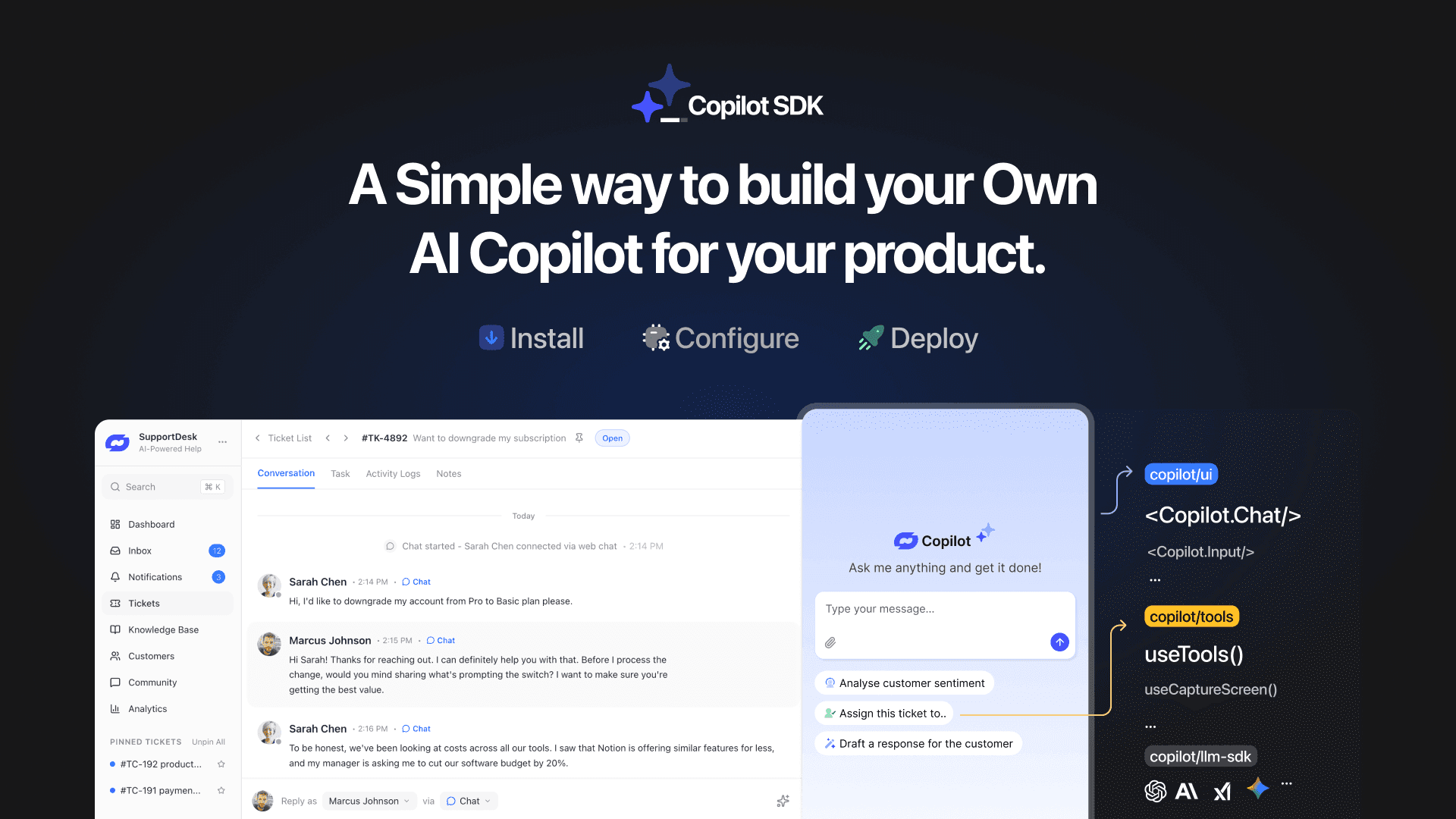
TL;DR YourGPT Copilot SDK is an open-source SDK for building AI agents that understand your application state, user context, and what is happening inside your product. Instead of working like isolated chat widgets, these agents connect directly with your product and can take real actions within existing workflows. This helps teams build contextual AI experiences […]

TL;DR YourGPT 2.0 adds AI Studio for building, testing, and debugging automated workflows. It includes native MCP integration for more than 100 tools, upgraded voice agents, and native SDKs for iOS and Android applications. With shared context across web, WhatsApp, Instagram, Telegram, and mobile, YourGPT turns conversations into real actions across support, sales, and operations. […]

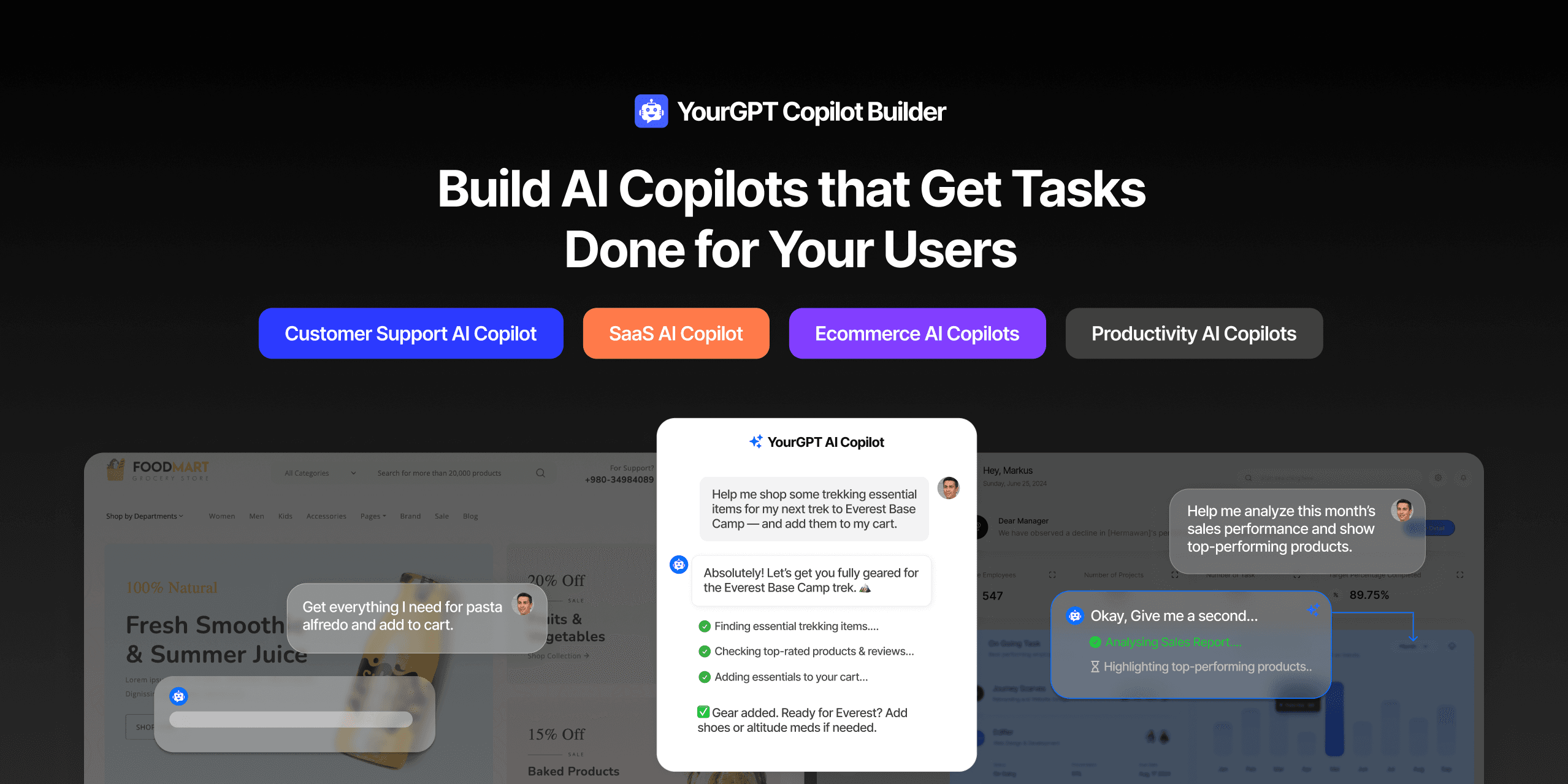
TL;DR Most AI tools provide answers but still leave users to complete the task through search results, settings pages, or checkout flows. AI Copilot Builder closes that gap by executing registered actions directly inside the product instead of only explaining what to do. Search, cart updates, account changes, and multi-step bookings can all happen within […]
TL;DR Building an AI-powered Telegram bot does not require custom development. BotFather provides the Telegram bot token, while a no-code platform like YourGPT handles AI training, free-form conversations, and the Telegram connection. This guide covers the full setup, from creating the bot in BotFather to connecting it with YourGPT and taking it live. Most Telegram […]
