AI Agents for Airlines: Use Cases, Benefits, and Better Customer Support

Mitali
June 2, 2026
Airline disruptions create a surge of interconnected requests that traditional support systems struggle to handle efficiently. Flight cancellations often trigger rebooking, baggage, compensation, and service inquiries simultaneously, forcing customers through multiple queues and disconnected processes.
Airline customer support is tested most during disruptions.
A single cancellation can trigger rebooking requests, baggage questions, refund claims, missed connection issues, and loyalty queries at the same time. Each request often depends on data from separate systems, including booking platforms, fare rules, baggage tracking, and customer profiles.
During normal operations, agents can manage this complexity. During delays, cancellations, or weather events, request volume rises quickly while seat inventory, baggage status, and passenger options keep changing.
Traditional chatbots helped reduce basic FAQs, but they were not built to access live airline systems or complete actions such as rebooking, refund processing, or baggage case creation.
AI agents for airlines address this gap by connecting with operational systems and helping passengers complete tasks faster, while allowing human agents to focus on complex cases.
This blog explains where airline support breaks during disruption, how AI agents help, and what airlines should look for before choosing a solution.
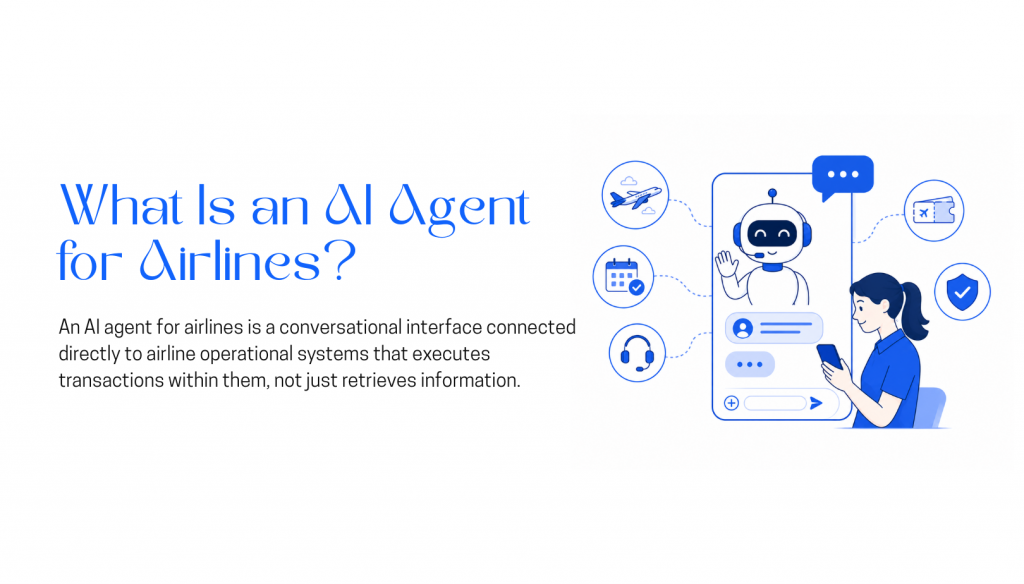
An AI agent for airlines is a customer support system that can understand passenger requests, connect with airline operational systems, and complete tasks inside those systems.
Unlike a basic chatbot, an AI agent does not only provide information. It can take action. For example, it can check a passenger’s booking, review fare rules, find available flight options, start a refund request, trace baggage, or update customer records.
This matters because many airline support requests depend on live operational data. A passenger asking to change a flight may need seat availability, ticket rules, disruption waivers, loyalty status, and payment details checked before the request can be completed.
A useful airline AI agent should be able to:
In simple terms, an AI agent becomes useful when it moves beyond answering questions and starts helping passengers complete real support tasks.
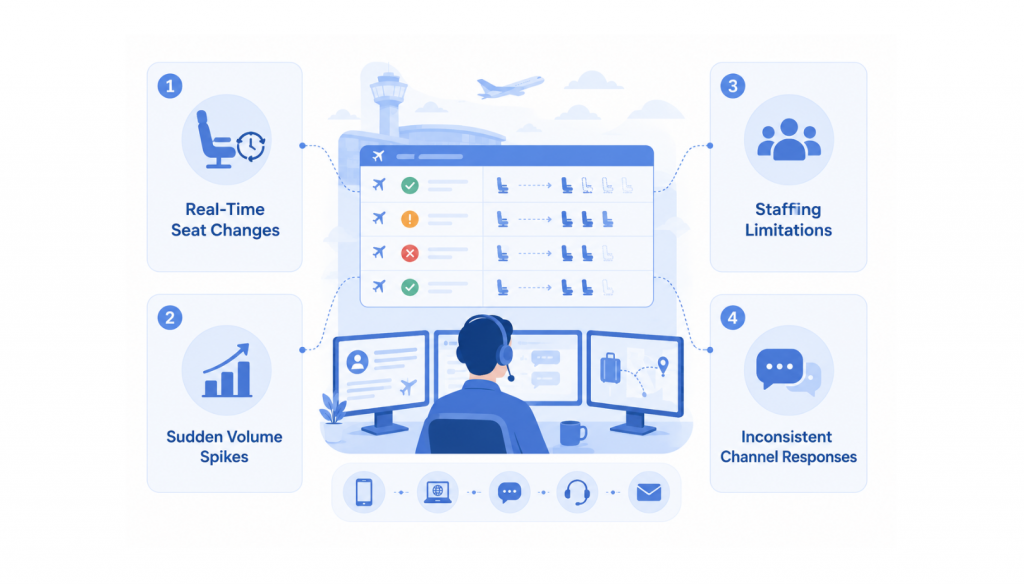
Airline support does not usually fail because teams lack effort. It fails because Interruptions creates many connected problems at once.
When a flight is delayed or cancelled, passengers need answers about rebooking, baggage, refunds, compensation, missed connections, seat changes, and onward travel. Each request may require data from a different system, such as the Passenger Service System, fare engine, baggage platform, loyalty CRM, or departure control system.
This becomes harder during disruption because the situation keeps changing. Seat availability can disappear within minutes. Baggage status may update after a passenger has already contacted support. Waiver rules may apply to some passengers but not others. Agents must check several systems while queues continue to grow.
Four issues usually create the biggest pressure:
As a result, airline support may work well on normal days but struggle when passenger requests increase quickly and systems are not connected enough to respond in real time.
Airlines adopted rule-based chatbots to reduce support workload, but most were built for simple questions rather than operational problem-solving. They could answer FAQs, explain policies, or direct passengers to help pages. But during delays, cancellations, or missed connections, passengers need more than information. They need systems that can check live data, apply airline rules, and complete actions.
Key limitations included:
The result was that traditional chatbots reduced basic FAQ volume, but they did little for the high-pressure cases that create the biggest workload for airline support teams.
AI agents create the most value when they move beyond basic answers and help airlines manage passenger requests, customer engagement, and support workflows that require live data, policy checks, and action across connected systems.
Key applications include:
The value increases when these tasks are handled in one conversation. A passenger with a cancelled flight may need rebooking, baggage information, refund guidance, and travel updates at the same time. AI agents can bring these workflows together for a faster and more connected support experience.
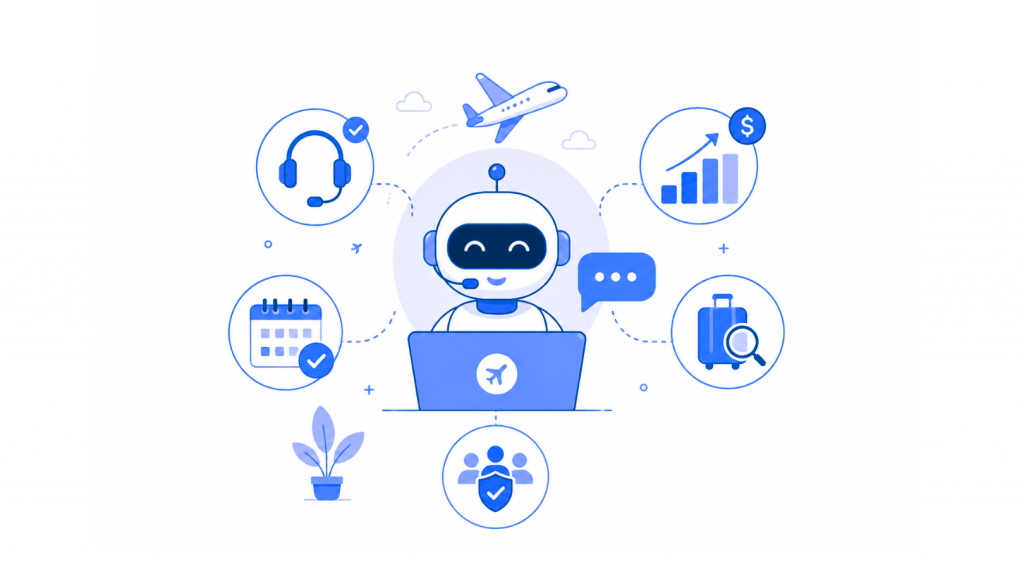
AI agents help airlines do more than automate customer service. When connected to airline systems, they can improve support efficiency, reduce operational pressure, and help passengers resolve issues faster across multiple channels. Unlike traditional travel chatbots that primarily answer questions, AI agents can assist with real support workflows and actions.
For airlines, these benefits show up in several areas:
As passenger expectations continue to rise, AI agents are becoming an important part of modern airline support strategies. They help airlines deliver faster, more consistent service while improving customer experience and maintaining operational efficiency at scale.
Airline AI agents become more useful when they can work with real operational data instead of only answering static FAQs. Passengers do not just ask policy questions. They ask about bookings, missed connections, baggage status, refunds, seat changes, loyalty points, and disruption updates.
To support these requests, an airline AI agent should be able to connect with systems such as:
This is what makes an AI agent different from a basic airline chatbot. A basic chatbot can explain the refund policy. An AI agent can understand the passenger’s booking context, check the fare rule, collect missing details, and route the case to the right team when human approval is needed.
For airlines, this improves support quality during normal travel days and high-pressure disruption periods. During delays, cancellations, weather issues, or irregular operations (IROPS), the AI agent can help passengers get faster answers without overloading the support team.
Airline support requires more than a general customer service tool. Passengers often need help with booking changes, baggage updates, refunds, loyalty queries, and day-of-travel issues that depend on live operational data.
The right AI agent should connect with airline systems, understand support workflows, and assist passenger requests that involve real-time data, policy decisions, and secure actions.
Airlines should evaluate these areas:
Selecting the right AI agent is about more than adding ai automation to support channels. It requires a system that can work with airline operations, support passenger journeys in real time, and escalate complex cases with the right context.
AI agents are intelligent assistants that help airlines answer passenger questions and complete tasks like rebooking flights, tracking baggage, checking refunds, and managing travel changes.
They reduce wait times, handle common requests instantly, and give passengers faster help during delays, cancellations, or peak travel periods.
Yes. When connected to airline booking and fare systems, AI agents can check available flights, apply airline rules, and complete rebooking for eligible passengers.
AI agents can support flight changes, cancellations, baggage tracking, refund requests, seat updates, loyalty queries, travel alerts, and handoffs to human agents.
No. AI agents handle repetitive and structured requests, while human agents manage complex, sensitive, or exception-based cases.
The biggest benefit is faster, more consistent customer support. Airlines can serve more passengers at once while reducing pressure on support teams.
Airline support becomes harder when delays, cancellations, baggage issues, and travel changes create high passenger demand at the same time. In these moments, airlines need more than basic automation; they need systems that can respond with accurate information and support real actions.
AI agents help by connecting support workflows with live airline data, allowing passengers to complete tasks such as rebooking, baggage tracking, refund checks, and travel updates with less friction.
For airlines, this means shorter queues, fewer repeat contacts, and better use of support teams during peak pressure. For passengers, it means faster answers and a smoother experience when travel plans change.
YourGPT helps airlines build AI agents that improve support efficiency, reduce service bottlenecks, and create a more connected passenger experience across the travel journey.
YourGPT helps airlines support passengers with quick answers for flight status, bookings, baggage, cancellations, refunds, and travel updates across every channel.

TL;DR AI agents help law firms respond faster, collect the right client information, and streamline routine administrative work. Their real value comes from helping firms move inquiries forward efficiently by understanding the client’s needs, gathering relevant details, scheduling consultations, and ensuring attorneys have the context they need before the conversation begins. The most successful deployments […]

TL;DR A Messenger AI agent helps businesses respond to Facebook Page DMs faster, answer customer questions using business data, and guide visitors toward the next step. With YourGPT AI for Messenger, businesses can enable 24/7 auto-replies, rich messages, multilingual support, human handoff, an omnichannel inbox, and no-code workflow automation. Facebook Page DMs are often where […]

Proactive AI is not a new category. It is just a shift in how you use the systems you already have. Instead of waiting for a customer to ask for help, you step in earlier, when the signal is there, but the request has not happened yet. Most teams are still reacting. A ticket comes […]
AI agents form the backbone of modern intelligent systems. They give machines the ability to sense what is happening around them, make decisions, and act independently without needing a human to guide every step. From chatbots that resolve customer issues instantly to self-driving cars navigating complex city streets in real time, AI agents power the […]
TL;DR An AI agent for gyms helps fitness businesses capture website leads, answer routine member questions, support trial bookings, guide class enquiries, and hand complex conversations to staff with context. The best setup uses approved business knowledge, clear escalation rules, CRM or workflow connections, and safe human handoff so gyms can reduce missed enquiries, improve […]
TL;DR Building a WooCommerce AI chatbot takes about 10 minutes and requires no coding. With YourGPT, you can train the chatbot on your store data, connect WooCommerce using REST API and webhooks, answer product and order questions, capture leads, support cart recovery, and extend the same AI assistant across your website, WhatsApp, Instagram, and other […]