Best Enterprise Chatbot Platforms: Top 8 Solutions for 2026

Rajni
Last updated on August 5, 2026
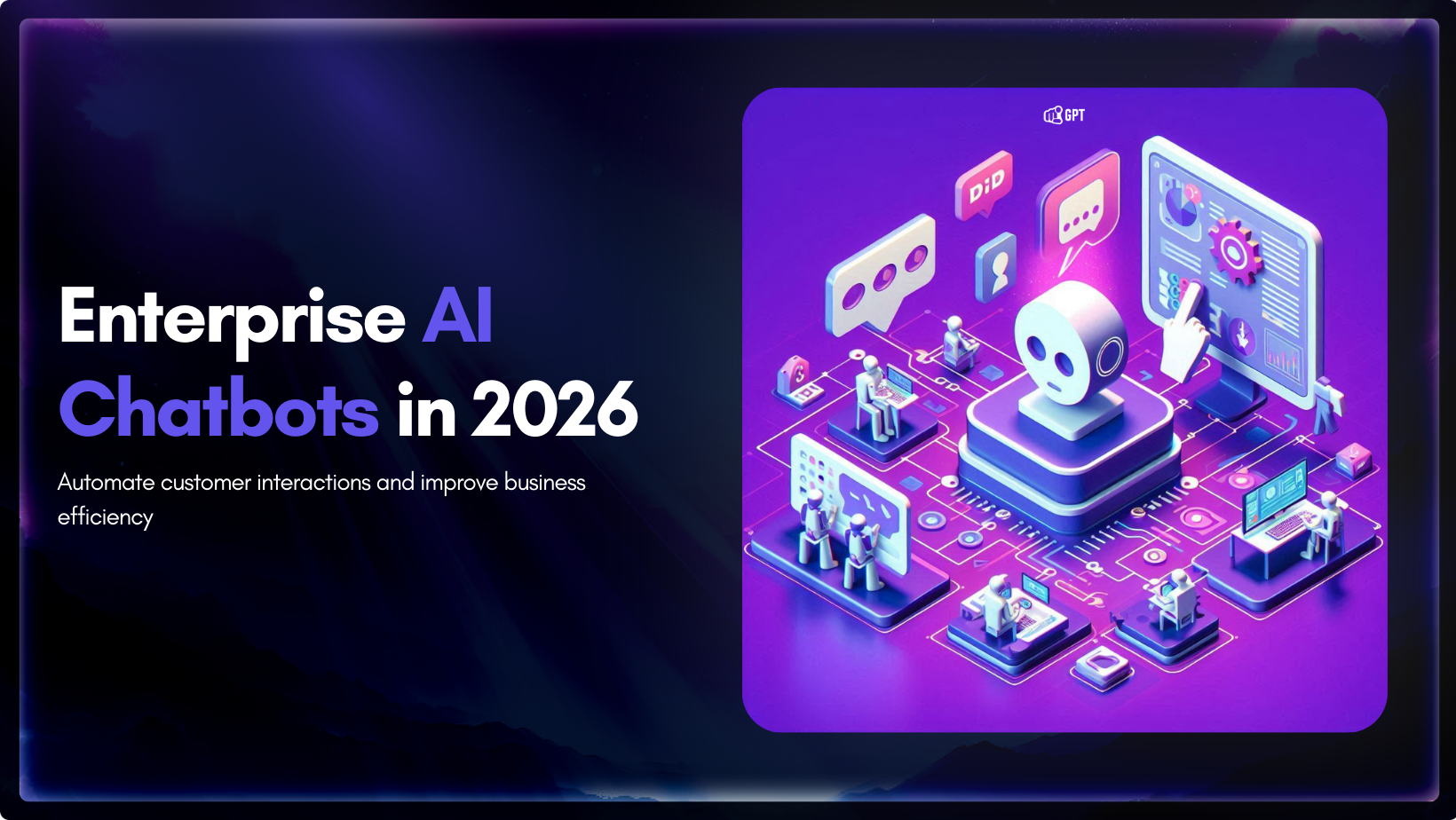
Enterprise chatbots and AI agents now go beyond answering questions they automate support, sales, and business workflows.
Leading platforms like YourGPT, Ada, and Kore.ai combine conversational AI with enterprise integrations to resolve requests and execute tasks.
The best results come from starting with a high-impact use case, measuring business outcomes, and expanding automation as ROI is proven.
Choosing the right platform depends on your integration needs, scalability, and ability to deliver measurable business value.
Enterprise teams are under more pressure than ever in 2026.
Customers expect quick answers. Employees want internal support without long delays. Leaders want to reduce costs, improve efficiency, and still keep the business growing.
For many enterprises, the old setup is starting to break. Support teams are overloaded, workflows are spread across too many tools, and basic chatbots can only answer simple questions. They cannot actually complete tasks, move data between systems, or handle multi-step processes on their own.
That is why more enterprises are moving toward AI agents.
Unlike traditional chatbots, AI agents can take action. They can connect with tools like CRMs, helpdesks, ERPs, and internal knowledge bases. They can answer questions, trigger workflows, update records, route issues, and support teams across departments with less manual effort.
The market is growing quickly too. Grand View Research projects the conversational AI market to pass $27.29 billion by 2030, and enterprise AI agents are becoming a major part of that shift.
But choosing the right platform is not easy. Every vendor claims to automate work, improve support, and reduce costs. The real question is which platform can actually fit your enterprise setup and deliver measurable business value.
This blog compares the top enterprise AI agent platforms, what they are best for, and how to evaluate them based on autonomy, integrations, scalability, and ROI.
Selecting the right chatbot comes down to one question: will it fit your business needs and grow with you? A strong enterprise chatbot does more than answer questions. It integrates with your systems, adapts to different teams, and delivers measurable results, often requiring a kubernetes expert to support scaling, orchestration, and long-term reliability. Use this checklist to guide your decision.
Start by being clear about what you need the chatbot to do. Chatbots serve different purposes across enterprises:
If your business needs fast deployment, look for platforms with ready-to-use templates. If you need unique workflows, choose one that offers deeper customization.
The best chatbot won’t help if it doesn’t connect to your core tools. A good platform should:
Smooth integration prevents data silos and allows different departments to work from the same information.
Even the best technology needs strong support. Look for vendors who will act as partners, not just providers.
A reliable vendor and an engaged user base make it easier to resolve issues, improve performance, and keep pace with AI advancements.
Enterprises have moved past experimenting with chatbots and AI agents. They are making them a core part of digital strategy. In 2026, the decision to adopt AI agents is driven by clear business needs and measurable outcomes.
Large organizations face thousands of repetitive requests every day, from order tracking to password resets. AI agents automate these tasks instantly and allow human teams to focus on more complex cases that require expertise and empathy. Unlike traditional chatbots, AI agents can handle multi-step requests end to end without escalation.
Customers now expect round-the-clock support, regardless of location. AI agents deliver instant responses across time zones and ensure no customer has to wait for help outside business hours. They do this autonomously, without any human backup needed for routine requests.
AI agents provide reliable communication that reflects the brand’s tone and standards across every channel. This consistency builds trust and ensures customers receive accurate information whether they interact via web, mobile, or messaging apps. Because AI agents operate from a centralized knowledge base, every response stays on-brand and up to date.
Enterprises deploy AI agents far beyond customer service. Marketing teams use them to qualify leads, HR teams to respond to employee inquiries, IT teams to troubleshoot issues, and operations teams to process transactions. This cross-department utility amplifies ROI and makes AI agents one of the highest-leverage investments an enterprise can make.
Automation through AI agents reduces the need for large support teams, cutting costs by as much as 40 percent. At the same time, AI agents improve response times and increase customer satisfaction, delivering both cost savings and revenue impact. For instance, ScienceSoft’s HIPAA-compliant voice agent uses Amazon Nova Sonic for human-like scheduling. Integrating with EHR systems, it enables real-time booking without latency, aiming to reduce operational costs by 50% and increase call capacity by 70%.
Enterprise AI agents have evolved well beyond add-ons for customer support. In 2026, they play a central role in improving efficiency, engaging users, and generating business value across the organization.
By deploying AI agents to handle routine tasks and inquiries, enterprises free employees to focus on complex and strategic work. For example, AI agents can instantly answer FAQs about company policies or client orders, allowing human agents to dedicate their time to high-value issues. This creates faster response times and leaner workflows.
AI agents make interactions more dynamic and responsive. Customers benefit from immediate answers and personalized guidance, while employees can quickly access HR or IT information. Research shows that 83% of customers expect immediate engagement on a website, a need AI agents are uniquely equipped to meet.
For enterprises handling thousands of support queries daily, AI agents dramatically shorten ticket resolution times. They resolve common issues instantly, route complex ones to the right teams, and ease the workload on service agents. This improves customer experience while maintaining operational speed.
Enterprises using AI agents often reduce service costs by up to 30%. Their ability to operate 24/7, handle high volumes simultaneously, and scale during peak demand lowers the need for additional staffing and improves cost efficiency.
When paired with CRM and analytics platforms, AI agents turn every interaction into actionable data. They capture customer preferences, identify trends, and provide real-time insights for sales and marketing strategies. This enables smarter segmentation, targeted recommendations, and stronger engagement.
Today’s customers interact across multiple touchpoints such as websites, apps, social media, and messaging platforms. AI agents ensure consistent communication across all of them. This omnichannel presence not only supports customer convenience but also strengthens loyalty by creating seamless brand experiences.
| Platform | Best For |
|---|---|
| YourGPT | AI-first support, sales, and workflow automation |
| Kore.ai | Regulated industries and enterprise automation |
| Ada | Large-scale customer experience automation |
| Yellow.ai | Multilingual global customer engagement |
| Fini | High-volume B2C AI support |
| Genesys | Enterprise contact center automation |
| Salesforce Agentforce | Salesforce CRM workflow automation |
| Haptik | Customer support and WhatsApp automation |
Choosing the right AI chatbot platform depends on your business size, industry, and specific goals. Below are eight leading platforms in 2026, each with unique strengths, features, and considerations to help you decide which one fits best.

YourGPT is an AI-first enterprise agent platform that helps businesses automate customer support, sales, and operations with AI agents that work. Beyond answering questions, YourGPT enables AI agents to execute workflows, access enterprise knowledge, and take actions across connected business systems.
Teams can build no-code AI agents, train them on company knowledge such as PDFs, websites, Notion, and Google Sheets, and deploy them across web, WhatsApp, Instagram, Messenger, email, voice, and other customer channels from a single platform.
With its AI Studio, you can design workflows, connect APIs, automate tasks like order updates, refunds, lead qualification, and appointment booking, all from one place. The platform also includes a unified inbox for managing conversations, seamless human handoff with full context, and real-time analytics to track performance.
YourGPT is built for teams that want faster resolutions, lower support costs, and a system that actually completes tasks, not just conversations.
Custom enterprise pricing based on scale and features.

Custom pricing, typically negotiated for large deployments.

Custom enterprise pricing, based on usage and integrations.

Custom pricing, tailored for enterprises with global operations.
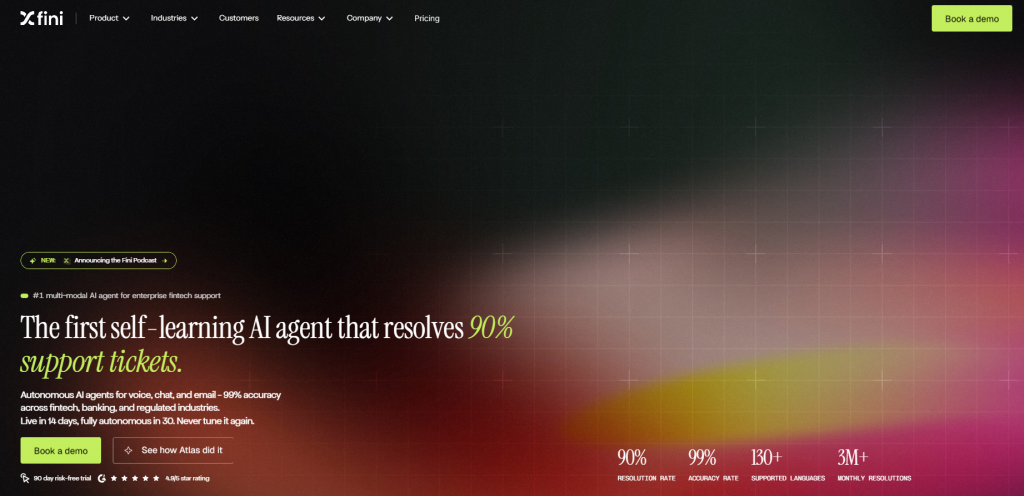
Fini is an autonomous AI customer support agent for enterprises that need to resolve support at scale, not just respond to it. It works across voice, chat, and email on a single reasoning layer and completes requests end to end, taking real actions like refunds, cancellations, identity verification, and subscription updates across connected systems.
It is built for the requirements large B2C operations actually have: a retrieval-free architecture (no RAG, no embeddings) that holds 99% accuracy and minimizes hallucinations, full answer traceability for audit, and enterprise compliance out of the box. Fini connects to existing help desks in minutes, goes live in 14 days, and reaches full autonomy by around day 30.
Usage-based at $0.69 per resolution with no per-seat or platform fees; free Starter tier and custom Enterprise plans; 90-day risk-free trial.
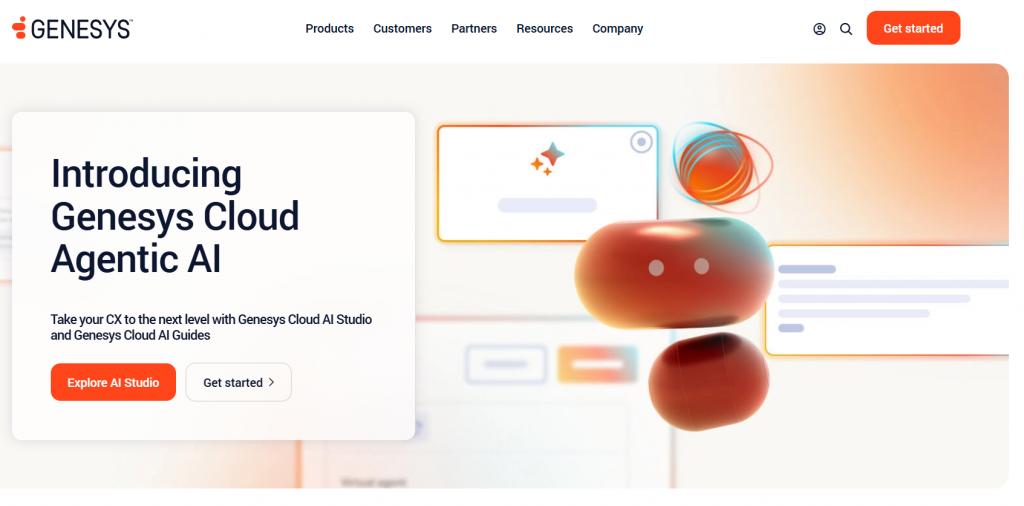
Subscription-based enterprise pricing via Genesys Cloud CX.
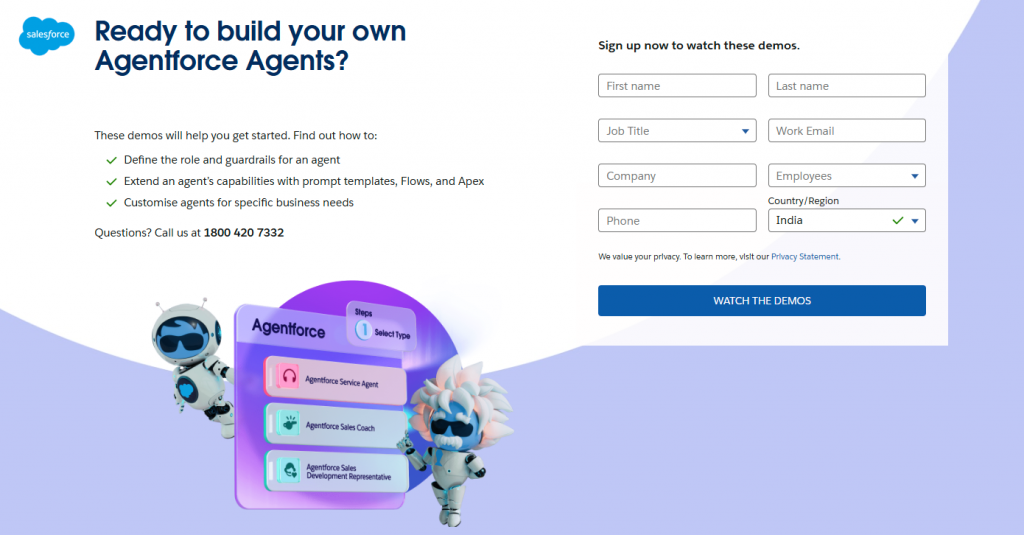
Agentforce is Salesforce’s AI-driven chatbot built directly into its CRM. It is designed to help businesses automate customer support, sales interactions, and internal workflows using real-time CRM data. Because it is natively integrated within Salesforce, it can access customer profiles, past interactions, orders, and tickets to deliver highly personalized responses without additional setup.
Agentforce enables teams to build AI agents that can qualify leads, update records, resolve support queries, and trigger workflows directly inside the Salesforce ecosystem. This reduces the need to switch between tools and ensures that every interaction is logged and aligned with existing business processes.
The platform includes low-code tools for designing conversational flows, along with AI capabilities for intent detection, response generation, and automation. It also supports human handoff, allowing agents to step in when needed with full visibility into the conversation history.
Agentforce is best suited for businesses already using Salesforce that want to extend their CRM into a unified AI-powered system for support, sales, and operations.
Available as an add-on for Salesforce enterprise customers.
Haptik is an enterprise conversational AI platform that helps businesses automate customer support, commerce, and customer engagement across digital channels. It enables organizations to deploy AI-powered chatbots and voice assistants that handle customer queries, automate routine tasks, and deliver personalized experiences at scale.
The platform supports omnichannel deployment across websites, mobile apps, WhatsApp, and other messaging platforms, allowing businesses to manage customer interactions from a single AI layer. Haptik also integrates with enterprise systems such as CRMs, help desks, and backend applications to automate workflows and provide contextual responses.
Haptik includes no-code conversation design tools, analytics dashboards, and human handoff capabilities, making it easier for teams to build, monitor, and optimize AI assistants. Its strong focus on WhatsApp Business and commerce automation makes it particularly popular among retail, telecom, and consumer-facing enterprises.
Haptik is best suited for enterprises looking to scale customer support and conversational commerce while maintaining consistent experiences across messaging channels.
Custom enterprise pricing available on request.
This table compares the leading enterprise chatbot platforms of 2026, focusing on real differentiators like use cases, scalability, deployment flexibility, and best-fit industries.
| Platform | Standout Strengths | Deployment Options | Pricing Insight* |
|---|---|---|---|
| YourGPT | Combines support, sales, and operations in one hub with voice AI and a no-code builder. | Cloud & Hybrid | Custom enterprise plans (usage-based) |
| Kore.ai | Industry-ready AI agents with strong compliance for banking, healthcare, and retail. | Cloud, On-premise & Hybrid | Tiered enterprise contracts |
| Ada CX | High-volume customer support automation with proactive, personalized experiences. | Cloud SaaS | Usage-based, scales with traffic |
| Yellow.ai | Multilingual AI platform supporting 135+ languages across chat and voice. | Cloud SaaS | Enterprise pricing by seats & usage |
| Fini | Autonomous AI support across chat, email, and voice with backend actions. | Cloud + Existing Help Desk | $0.69 per resolution, no seat fees |
| Genesys | Contact center AI with predictive routing and customer journey orchestration. | Cloud (Genesys Cloud CX) | Subscription, contact-center based |
| Salesforce Agentforce | CRM-native AI for support, sales, and workflow automation within Salesforce. | Cloud (Salesforce CRM) | Add-on to Salesforce enterprise plans |
| Haptik | AI-powered chatbots with strong WhatsApp automation and conversational commerce. | Cloud SaaS | Custom enterprise pricing |
An enterprise chatbot is an AI tool that helps large businesses manage customer service, sales, HR, and IT conversations at scale. It works across multiple channels and connects with internal systems like CRMs and ERPs.
A basic chatbot usually answers simple FAQs. An enterprise chatbot can handle millions of conversations, support advanced workflows, and integrate with business tools to improve efficiency.
No. They automate routine tasks, but human agents are still needed for complex or sensitive requests. The best approach is using both together.
Costs vary based on features and usage. Smaller plans may start in the hundreds of dollars per month. Large-scale custom setups can cost thousands.
Industries with high customer interaction see the most value. This includes eCommerce, healthcare, banking, telecom, travel, and HR support.
No. Most platforms provide no-code or low-code builders. For advanced customization, technical support may be helpful.
They respond instantly, work 24/7, and personalize conversations. This reduces waiting time and creates a smoother customer experience.
Yes. They recommend products, guide users through checkout, and suggest upgrades. Many businesses use them to drive conversions.
Yes, leading providers follow strict security standards like GDPR, HIPAA, and SOC 2. Always review the vendor’s policies before choosing.
Look at scalability, integrations with your existing systems, training on your own data, and the level of vendor support. Start with a pilot project to test results before scaling.
Enterprise chatbots and AI agents now work together as part of a single system that supports customer service, sales, and internal operations. They handle conversations, complete tasks, and connect directly with business tools to resolve requests faster. This combination reduces manual effort and allows teams to focus on work that requires judgment and context.
Choosing the right platform comes down to practical fit. Identify one high-impact workflow where delays or volume create problems, such as support resolution, lead qualification, or internal requests. Evaluate how well the platform integrates with your systems, how reliably it completes tasks, and how easily your team can manage and improve it. Start with a focused pilot, track results such as resolution rate and time saved, then expand based on what works. Platforms such as YourGPT show how modern systems combine chatbot interactions with workflow execution in a single setup, which is often what teams need when moving beyond basic automation.
The real advantage comes from using chatbots and AI agents to remove friction from everyday operations. When your system can both communicate and act, it improves response speed, reduces costs, and delivers a consistent experience across channels. This is what helps businesses operate more efficiently and stay competitive as demands continue to grow.
Start building better customer care and satisfaction no coding required. Deliver faster, more consistent support with YourGPT AI.
No credit card required • 7 days access
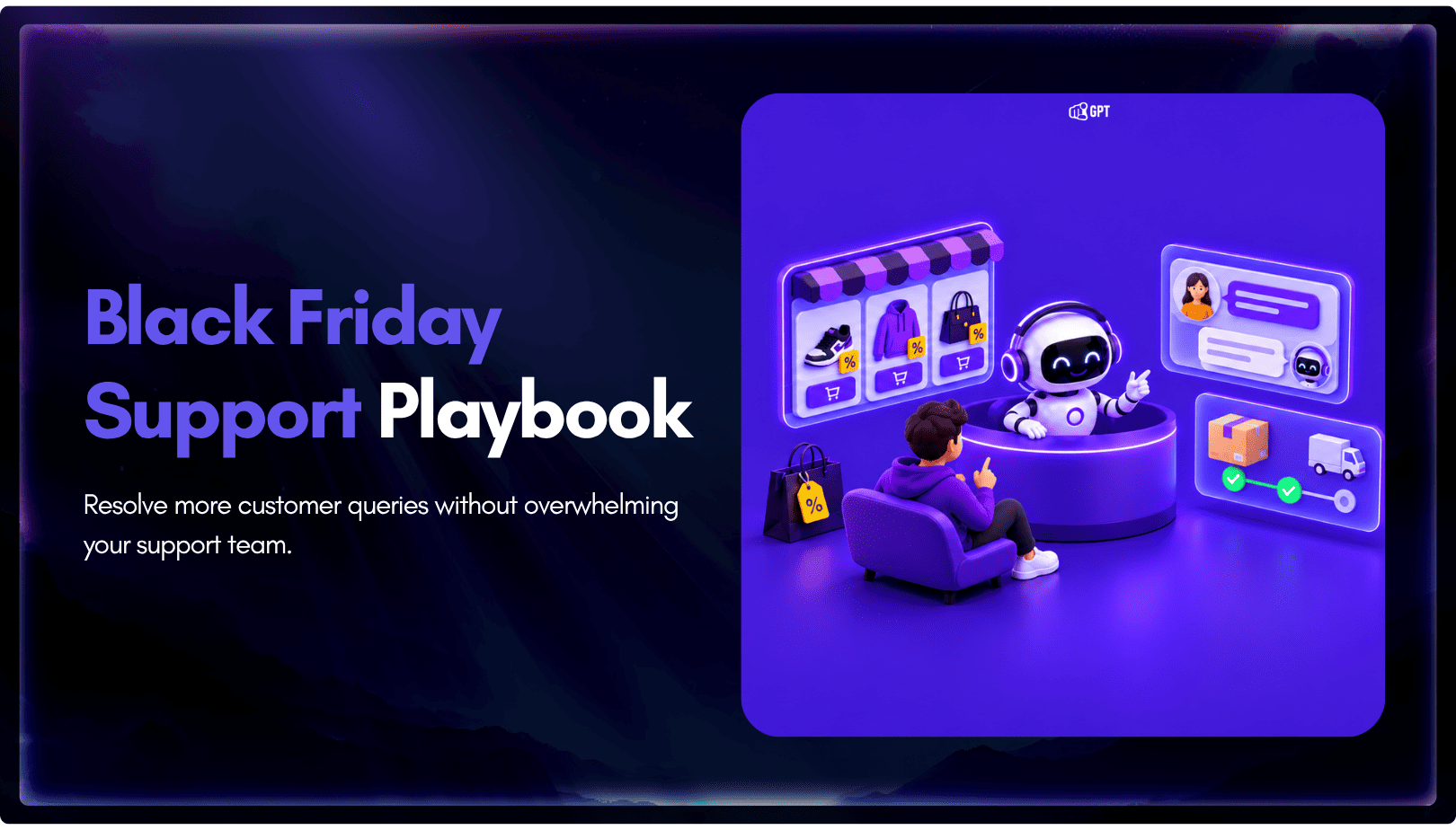
Use YourGPT to help Black Friday shoppers choose products, check orders and understand returns. Prepare your answers and team before the sale.

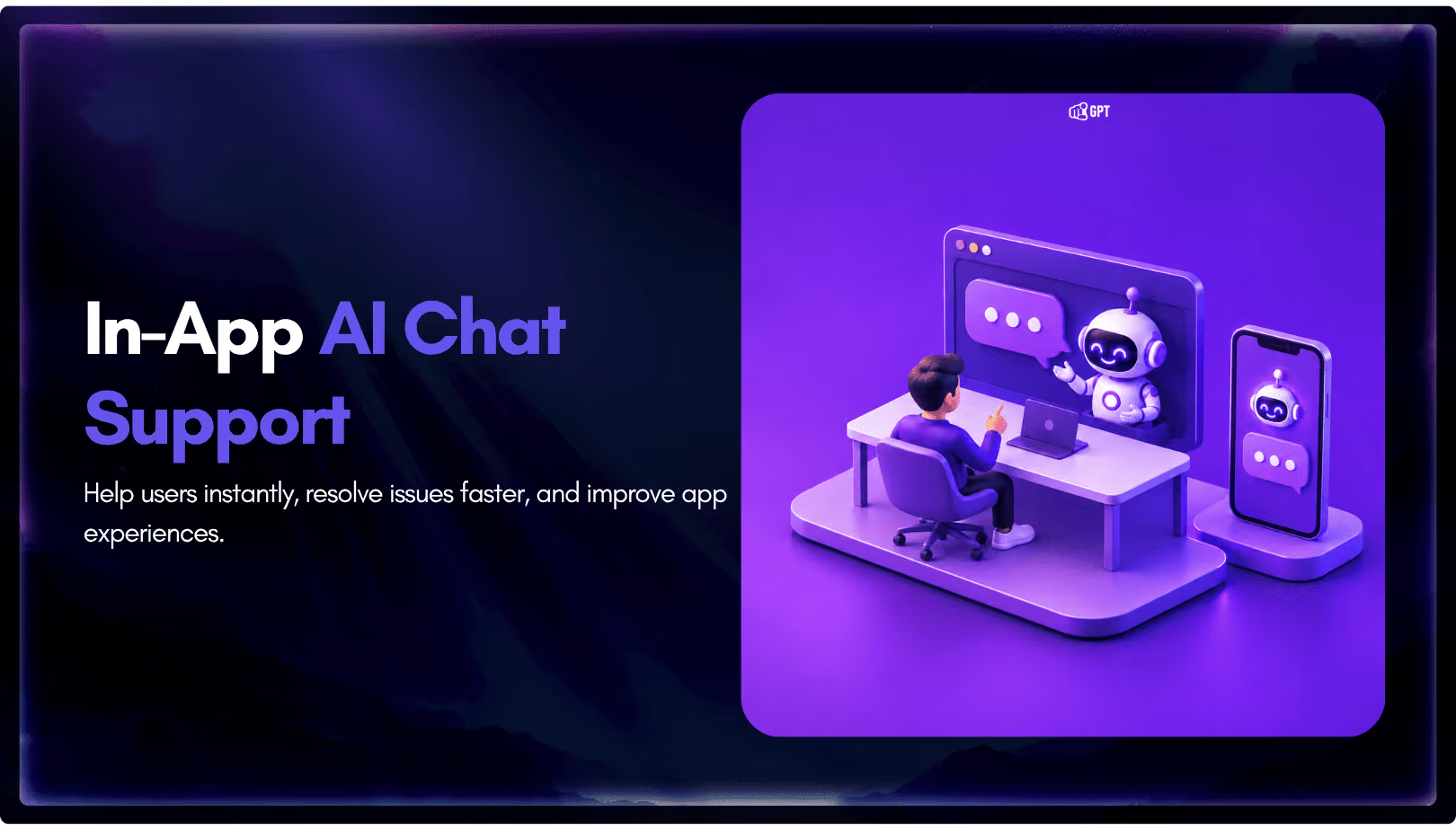
Add in-app chat support to your SaaS or mobile app. Place it on the screens where users stall, pass who they are, and hand hard cases to your team.
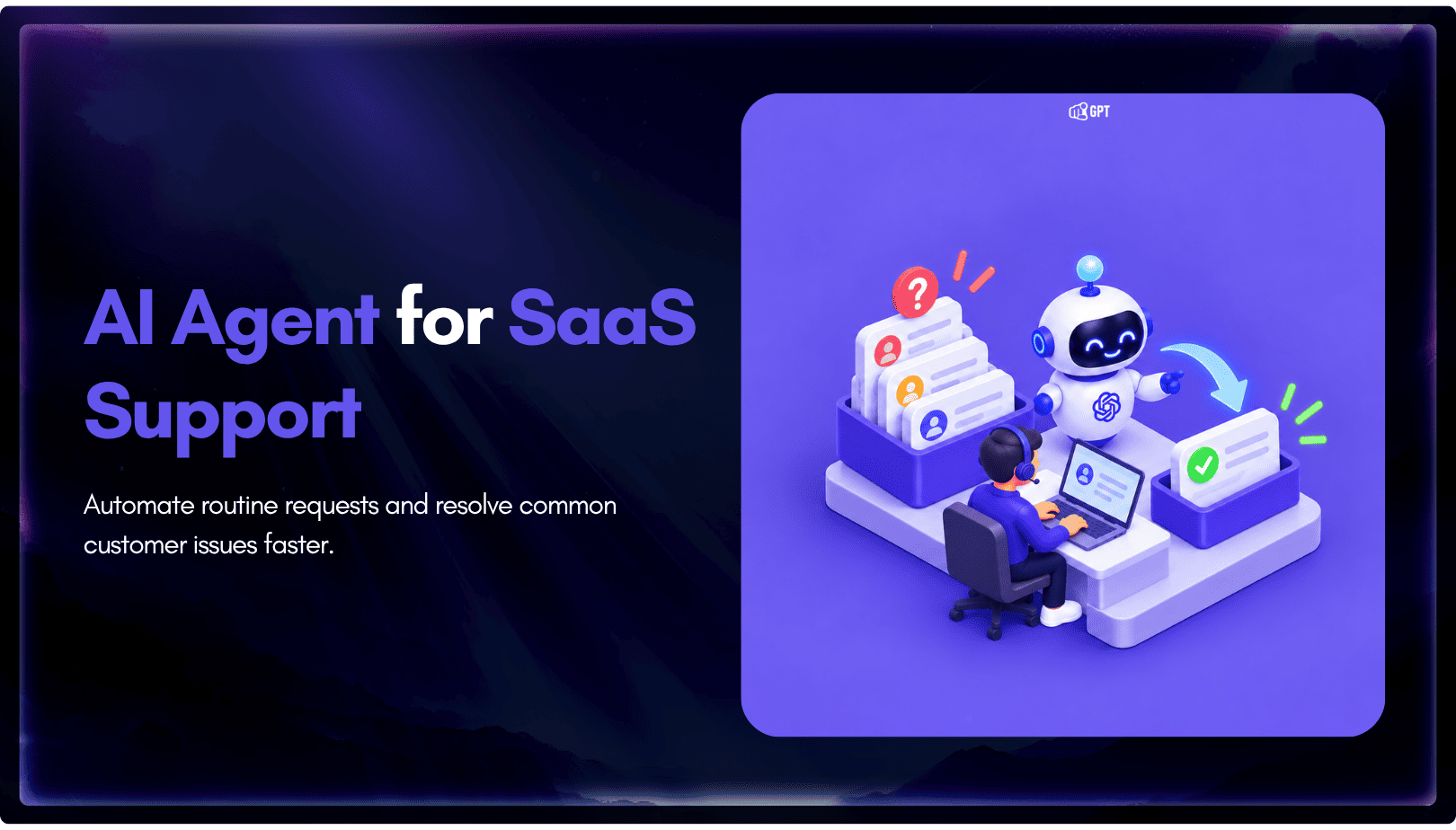
Group new-account tickets by onboarding stage, train an AI agent on your docs, and place it in the product where new users get stuck.
AI agents can now find and buy products for shoppers. See what agentic commerce changes for a Shopify store and which support jobs stay yours.
Build a Halloween shopping assistant for Shopify with YourGPT. Set up product recommendations, stock checks, cart actions and human support before launch.

See what a good customer effort score looks like, how to word and calculate CES on each scale, and which support habits raise customer effort.